
Tag: Digital assets

  • Trump Meets Advisers on CLARITY Act Ahead of Tuesday Vote

    Trump Meets Advisers on CLARITY Act Ahead of Tuesday Vote

    President Donald Trump convened advisers on Friday, September 11, to negotiate the ethics language holding up the Digital Asset Market Clarity Act, four days before a pivotal Senate cloture vote that requires 60 votes to advance the legislation. Politico first reported the closed-door session, citing two people familiar with the talks. Neither the White House nor the negotiators disclosed the outcome. By Sunday, no revised text had circulated. Trump’s crypto policy adviser, Patrick Witt, struck an upbeat tone the following day, writing that it was a “Bad day to be a Clarity Act doomer.” He did not specify what had changed. With the Senate returning Monday, lawmakers have one working day before taking a public position on Tuesday.

    One paragraph of ethics text stalls a 630-page bill

    Lawmakers resolved most of the CLARITY Act months ago. The sole remaining obstacle is a conflict-of-interest provision targeting officials who profit from digital assets—a clause that describes the sitting president with uncomfortable precision. Trump previously accepted a version brokered by Senator Cynthia Lummis, but Senate Democrats and at least one Republican, Thom Tillis, deemed it too weak to secure their votes. Tillis has warned the bill collapses without a White House agreement. The current draft bars officials and their spouses from issuing tokens, yet permits them to hold crypto personally, exempts their children, and sunsets in 2029.

    Trump family collects 75% of $WLFI sale proceeds

    The Trump family launched World Liberty Financial in September 2024, with Donald Trump Jr., Eric Trump, and Barron Trump serving as its web3 ambassadors. The venture operates a governance token, $WLFI, and a dollar-pegged stablecoin, USD1, backed by Treasuries and custodied by BitGo. Under the project’s own disclosures, an entity tied to Trump and family members receives 75% of $WLFI sale proceeds after reserves, and the family holds billions of tokens directly. Trump reported more than $1 billion in crypto income for 2025, including roughly $515 million from $WLFI sales. Senator Elizabeth Warren said the draft does nothing to stop him from “vacuuming up his next $1.4 billion in crypto profits.”

    The token has punished outside buyers, trading below $0.06 while early investors remain locked out of most of their holdings. In August, the Office of the Comptroller of the Currency granted a World Liberty affiliate preliminary approval to pursue a national trust bank charter, which would tie the family’s finances to a federally regulated bank for the first time.

    CLARITY Act splits crypto oversight between SEC and CFTC

    Stripping away the politics, the bill draws the regulatory line the two agencies have contested for a decade. A maturity test determines which regulator governs a token: the network must be fully operational, no single entity may control more than 20% of supply or voting power, and founders cannot hold unilateral upgrade authority. Tokens clearing that threshold move from securities law to commodities law, sharply altering their compliance burden.

    How the maturity test works

    • Network status: Fully operational
    • Control threshold: No single holder controls more than 20% of supply or votes
    • Founder authority: No unilateral upgrade power

    Payment stablecoins fall into a shared SEC-CFTC category, with core rules already established by the GENIUS Act.

    Cloture requires 60 votes; Republicans hold 53

    Tuesday’s vote is a procedural cloture motion to begin debate, not final passage. The arithmetic remains unforgiving. Republicans need at least seven Democrats to cross over, and the likeliest Democratic supporters tied their backing to stronger ethics language that never materialized during the recess. The House demonstrated this coalition can hold when the ethics fight subsides, passing the bill 294–134 in July 2025 with 78 Democrats in favor. The Senate Banking Committee advanced its version 15–9 in May. The floor is where personal stakes become explicit, and where Senator Ruben Gallego is drafting a compromise no one has yet endorsed.

    Cloture math at a glance

    Category Count
    Votes needed to proceed 60
    Republican senators 53
    Additional Democrats required 7+

    Key senator positions

    • Rand Paul (R): Firm no
    • Josh Hawley (R): Firm no
    • Thom Tillis (R): Conditional
    • 7 pro-crypto Democrats: Undecided
    • Kirsten Gillibrand (D): Hard line on ethics

    Disclosure without divestment leaves conflict intact

    The administration’s proposed compromise leans on transparency: officials would report crypto holdings rather than divest. Watchdogs argue disclosure does little when assets are liquid and volatile, because knowing what a president owns does not prevent those tokens from moving on the policies he signs. Warren’s committee staff found the provisions riddled with loopholes and noted enforcement would fall to a Justice Department he appoints. Transparency International reached the same conclusion. Friday’s meeting did not visibly close that gap.

    Failed vote hands crypto to agency rulebooks until at least 2029

    Prediction markets have priced in the difficulty. Polymarket odds of 2026 passage slid from 82% in February to roughly 16% by late August, and Galaxy Digital cut its estimate near 10%. A failed cloture vote would end the bill’s legislative year and leave the industry under regulation by enforcement, with the SEC, CFTC, and OCC each writing pieces of the rulebook on their own terms. The SEC has already proposed exempting certain token offerings from securities registration. That reality has fueled the argument that crypto regulation can advance even if CLARITY stalls—a view gaining traction among executives who would prefer a statute but expect to operate without one. Europe’s MiCA regime is already live and licensing firms, and a prolonged U.S. stalemate cedes that ground abroad.

    A calendar problem looms beyond Tuesday

    A timing issue the vote counts rarely mention compounds the uncertainty. The House has canceled its late-September voting weeks to focus on the midterm campaign, meaning even a Senate substitute would need identical House text or a lame-duck session after the November 3 elections to reach the president’s desk. Tuesday reads less as a finish line than as a signal of whether a 2026 deal remains mathematically alive.
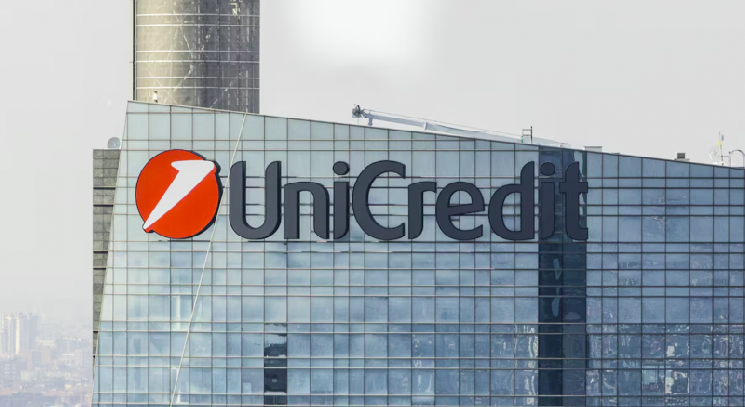

  • UniCredit Weighs Tokenized Products and Crypto Services for Clients, Report Says

    UniCredit Weighs Tokenized Products and Crypto Services for Clients, Report Says

    UniCredit is exploring new digital-asset services, including custody and brokerage, as the Italian lender evaluates building infrastructure to support the sector, Bloomberg reported Friday, citing people familiar with the matter.

    Technology Provider Selection Underway

    The bank is currently selecting a technology provider that would enable it to hold digital assets and facilitate transactions, according to the sources. Potential services remain under discussion, and no final decision has been made.

    Scope of Digital-Asset Offerings

    UniCredit is considering a range of services, including tokenized investment products and fixed-income securities, stablecoin applications for clients, and cryptocurrency exposure. The plans reflect a broader push by European banks into digital assets as the European Union’s Markets in Crypto-Assets (MiCA) regulation provides greater clarity for financial institutions.

    Existing Digital-Asset Initiatives

    UniCredit has so far targeted professional investors and corporations. Earlier this year, the bank offered a structured product tied to BlackRock’s iShares Bitcoin Trust ETF. Late last year, it issued Italy’s first tokenized minibond on a public blockchain. Tokenization refers to issuing and transferring traditional assets using blockchain networks.

    Strategic Partnerships and Investments

    The bank also joined other European lenders in creating Qivalis to develop a euro-denominated stablecoin. This week, UniCredit announced it acquired a minority stake in VC Trade, a German lending markets platform, to expand its digital capital markets capabilities.

  • Billions of Dollars in Virtual Guns: Inside the Economy Running Alongside a Video Game

    Billions of Dollars in Virtual Guns: Inside the Economy Running Alongside a Video Game

    Key Highlights

    • The Counter-Strike 2 cosmetic item market carries an estimated valuation of $7.1 billion.
    • Every item in this marketplace is a purely digital asset with zero impact on gameplay mechanics such as damage, accuracy, or movement.
    • Despite being intangible and functionally cosmetic, these virtual goods sustain a multi-billion-dollar economy driven by rarity, aesthetics, and community demand.

    The $7.1 Billion Valuation

    The cosmetic item ecosystem surrounding Counter-Strike 2 (CS2) has been valued at roughly $7.1 billion, according to current market analyses. This figure reflects the aggregate worth of weapon skins, gloves, agents, stickers, and containers traded across the Steam Community Market and third-party platforms. Unlike traditional in-game purchases that unlock gameplay advantages, every asset in this economy is strictly visual—offering no competitive edge whatsoever.

    How the CS2 Skin Economy Functions

    The marketplace operates on a foundation of scarcity, visual appeal, and community-driven status signaling. Items are obtained primarily through random case openings, mission rewards, or direct purchases, with supply constrained by Valve’s drop rates and collection retirements. Once in circulation, skins trade freely between users, with prices determined by exterior wear condition (Factory New through Battle-Scarred), pattern index, float value, and the presence of rare stickers or StatTrak counters. High-tier items such as the AK-47 | Case Hardened with a “Blue Gem” pattern or the Karambit | Doppler in Sapphire/Ruby/Black Pearl phases routinely command five-figure sums.

    Purely Cosmetic, Purely Digital

    Critically, the source underscores that these assets “can’t be touched and don’t improve damage, accuracy, movement, or any other part of gameplay.” This distinction separates the CS2 economy from pay-to-win models prevalent in other titles. A Dragon Lore AWP skin performs identically to the default variant; its value derives entirely from cultural cachet, historical significance, and the social signaling it enables within the player base. The intangibility of these goods—existing solely as database entries on Valve’s servers—has not prevented them from behaving like speculative commodities, complete with price volatility, investor speculation, and liquidity considerations.

    Market Mechanics and Player Psychology

    Valve Corporation retains a 15% transaction fee (5% Steam fee + 10% CS2-specific fee) on every Steam Community Market sale, creating a direct revenue stream from the secondary market. Third-party marketplaces and peer-to-peer trading networks exist alongside the official platform, often offering lower fees or cash-out options prohibited by Steam’s wallet-only policy. The ecosystem is further fueled by content creators, professional players, and major tournaments—where souvenir packages dropped during Majors become instant collectibles. Psychological drivers such as the endowment effect, fear of missing out (FOMO) during limited-time operations, and the gambler’s fallacy associated with case openings sustain demand despite the absence of utility.

    Why This Matters

    The $7.1 billion valuation positions the CS2 skin economy as one of the largest virtual goods markets in the world, rivaling the GDP of small nations and exceeding the annual revenue of many AAA game studios. It represents a mature case study in digital property rights, platform-controlled economies, and the monetization of cosmetic customization. For regulators, the market raises questions about gambling-adjacent mechanics (case openings), money laundering risks via high-value item transfers, and consumer protections for digital assets that can be revoked or devalued by platform policy changes. For the gaming industry, it validates the “games-as-a-service” model where ongoing revenue derives not from gameplay-altering purchases but from self-expression and social status within a persistent community. Upcoming developments—including potential Source 2 engine optimizations affecting skin rendering, new case collections, and evolving third-party marketplace regulations—will shape whether this valuation expands or contracts.

    Frequently Asked Questions

    Do CS2 skins provide any gameplay advantage?

    No. Skins are purely cosmetic and do not affect damage, accuracy, movement speed, recoil, or any other gameplay mechanic. A weapon with a $10,000 skin performs identically to the same weapon with the default skin.

    How is the $7.1 billion market valuation calculated?

    The figure represents the estimated aggregate value of all tradable CS2 cosmetic items based on current listing prices across the Steam Community Market and major third-party exchanges, multiplied by available supply. It reflects theoretical market capitalization rather than realized liquidity.

    Can CS2 skins be converted into real money?

    On the official Steam Community Market, proceeds remain as Steam Wallet funds and cannot be withdrawn as cash. However, numerous third-party platforms facilitate peer-to-peer sales for real-world currency, operating in a regulatory gray area with varying degrees of legitimacy and user protection.

  • Nike Launches on Solana via Sunrise Initiative

    Nike Launches on Solana via Sunrise Initiative

    Nike Enters Solana Blockchain Through Sunrise Initiative With Backpack Securities

    Nike has officially entered the Solana blockchain ecosystem through the Sunrise initiative, marking a significant milestone in the integration of traditional global brands into the cryptocurrency space. The announcement was made via a tweet from the official @solana account, confirming the collaboration with Backpack Securities as the project issuer.

    Strategic Move Leverages Solana’s Technical Advantages

    This collaboration aims to capitalize on Solana’s high-speed transaction processing and lower fee structure, positioning the network as an attractive platform for enterprise-level blockchain adoption. As digital asset infrastructure continues to mature, Nike’s involvement signals an accelerating trend where established corporations are embracing blockchain technology to enhance operational capabilities and expand their digital reach.

    Project Details and Market Context

    The Sunrise initiative is issued by Backpack Securities and designed to enhance user experience across the Solana platform. Nike’s entry reflects a broader shift toward mainstream adoption of digital assets, with the potential to attract a new wave of users to Solana’s growing ecosystem.

    Currently, Nike’s involvement with Solana does not show specific price movements or volume statistics, indicating the partnership remains in early adoption stages. However, market excitement surrounding the launch could drive increased interest in both brands and their associated digital ecosystems. Traders and analysts will be monitoring how this integration unfolds and its potential impact on market dynamics.

    Nike’s Blockchain Strategy

    As a leading global brand in athletic footwear and apparel, Nike is exploring new technologies to strengthen brand engagement and operational efficiency. By entering the Solana blockchain, the company takes a proactive approach in the evolving digital landscape while complying with industry standards for blockchain implementation.

    Key Metrics for Traders and Observers

    Market participants should monitor how Nike’s collaboration with Solana evolves, particularly regarding user engagement metrics and potential increases in Solana’s transaction volumes. The broader implications of this initiative could influence other major brands to explore similar blockchain partnerships. Observing market reactions will be crucial as this partnership develops.

    This article is for informational purposes only and does not constitute financial advice.

  • Stand With Crypto Launches ‘On the Block’ Tour

    Stand With Crypto Launches ‘On the Block’ Tour

    Stand With Crypto is mobilizing communities ahead of the crucial September 15 cloture vote on the CLARITY Act. Through its ‘On the Block’ tour, the coalition has visited cities including Cincinnati and Des Moines, bringing together crypto advocates, business owners, and lawmakers to discuss the sector’s impact on local economies and Main Street.

    Stand With Crypto’s ‘On the Block’ Tour

    Led by Stand With Crypto, the ‘On the Block’ tour is designed to encourage dialogue between crypto supporters and policymakers while emphasizing voter participation in the legislative process. With the CLARITY Act vote approaching, the grassroots campaign aims to raise the profile of digital asset issues among constituents.

    The tour’s events unite advocates, business owners, and lawmakers to examine crypto-related concerns and highlight the growing role of digital assets in political discussions as the midterm elections approach.

    What We Know About the CLARITY Act Vote

    • Stand With Crypto is conducting the ‘On the Block’ tour in several U.S. cities.
    • The tour seeks to engage voters and lawmakers on cryptocurrency policy.
    • The CLARITY Act cloture vote is scheduled for September 15.
    • Crypto advocates and business owners are encouraged to participate in local discussions.
    • The initiative reflects the increasing importance of digital assets in the U.S. political landscape.

    Potential Impact on Crypto Regulation

    The broader crypto market is showing mixed signals, while advocacy efforts such as the ‘On the Block’ tour seek to strengthen the industry’s role in legislative debates. The upcoming CLARITY Act vote could help establish the direction of future regulations affecting the cryptocurrency sector.

    By holding local events, Stand With Crypto aims to amplify the views of crypto-focused voters and potentially influence lawmakers during a pivotal voting period. The organization is a coalition that advocates for digital assets and their integration into the mainstream economy. It also seeks to ensure that lawmakers understand the potential effects of crypto regulations and address voter concerns about the industry.

    What Comes Next

    Traders and other crypto industry stakeholders should closely follow developments surrounding the September 15 CLARITY Act vote. The result could have a significant effect on the regulatory environment for cryptocurrencies in the United States.

    Ongoing engagement by advocacy groups may also influence future legislative priorities, particularly as more voters express their views on digital assets.

    This article is for informational purposes only and should not be considered financial advice.

    Source: cryptonews.net

  • The Next Trillion-Dollar Currency May Not Be a Stablecoin

    The Next Trillion-Dollar Currency May Not Be a Stablecoin

    A new CoinDesk analysis examines why the next trillion-dollar currency could emerge outside the stablecoin model used today—and why it may not have a name yet.

    What the CoinDesk Analysis Says

    The development is significant because it could alter the outlook for the next trillion-dollar currency. However, the available reporting identifies a specific development without establishing that it represents a completed, industry-wide shift.

    The figures and descriptions remain limited to the scope and claims presented in the source. Further evidence is needed before drawing broader conclusions about the digital-asset market.

    Why It Matters for Digital Assets

    Crypto infrastructure is increasingly linking payments, financial markets and software systems. These connections may create new opportunities for adoption, while also raising questions about security, regulation, liquidity and operational reliability.

    Those factors will help determine whether the reported development advances beyond an initial test, study or proposal. They will also indicate whether the system can support broader participation from users and institutions.

    What Comes Next

    The key milestones will be additional disclosures, implementation details and evidence of adoption by users or institutions. Until those details emerge, the development should be viewed as a dated event rather than a prediction about market prices or a guarantee of future adoption.

    BlockchainReporter has previously covered related digital-asset infrastructure in earlier reporting.

    Source: cryptonews.net