Tag: Digital assets

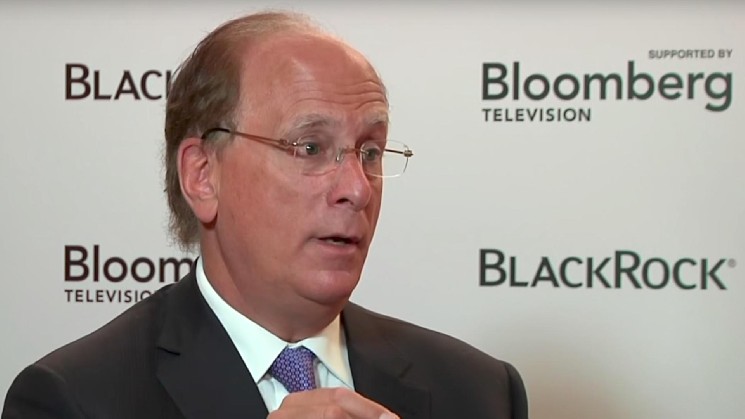
  • BlackRock: AI Agents Will Soon Buy Computing Power and Data Using Stablecoins

    BlackRock: AI Agents Will Soon Buy Computing Power and Data Using Stablecoins

    Key Highlights

    • BlackRock identifies artificial intelligence as a primary catalyst for digital asset adoption, citing autonomous agents’ need for native payment and settlement infrastructure.
    • Stablecoins are positioned as the immediate beneficiary due to their price stability for service pricing and blockchain networks’ 24/7 payment capabilities.
    • The asset manager highlights Coinbase’s x402 protocol as an emerging standard for agent-to-service payments, including API calls, while noting traditional payment networks are also adapting to agentic commerce.

    BlackRock Maps Convergence of AI Agents and Digital Asset Infrastructure

    BlackRock, the world’s largest asset manager, has published research arguing that artificial intelligence will serve as one of the most significant drivers for digital asset adoption in the coming years. The paper centers on the rise of autonomous AI agents—software systems capable of independently executing complex tasks—and their fundamental requirement for programmable, always-on financial infrastructure to operate at machine speed.

    Machine-Native Intelligence Requires Machine-Native Payments

    According to BlackRock’s analysis, AI provides “machine-native intelligence” while digital assets supply the corresponding payment and settlement layer these agents need to act on their decisions without human intervention. The paper illustrates a scenario where an autonomous agent carrying out a task could pay for a data request, book a service, or purchase computing capacity instantly, eliminating the latency and friction inherent in traditional financial systems that require human authorization or operate within limited business hours.

    This architectural fit stems from the programmable nature of blockchain networks and tokenized assets, which allow for conditional, automated value transfer based on code execution rather than institutional intermediaries. For AI agents operating across time zones and negotiating micro-transactions for compute resources or data access, the ability to settle instantly and finality is presented as a functional necessity rather than a speculative feature.

    Stablecoins Emerge as Primary Vehicle for Agentic Commerce

    The research identifies stablecoins as the likely first major beneficiary of this paradigm shift. Their relatively stable value makes them practical for pricing services and settling obligations predictably—a critical requirement for autonomous systems budgeting resources or calculating cost-efficiency in real time. Furthermore, public blockchain networks enable these stablecoin payments to occur around the clock, seven days a week, aligning with the non-stop operational tempo of AI agents.

    BlackRock specifically highlights Coinbase’s x402 protocol as one emerging mechanism facilitating this economy. The protocol is designed to allow agents to pay for online resources—including API calls—directly via HTTP payments, embedding settlement into the web request layer itself. This development signals a move toward standardized, interoperable payment rails for machine-to-machine commerce.

    Traditional Finance Adapts to Agentic Payments Landscape

    While emphasizing the structural advantages of crypto-native infrastructure, BlackRock’s paper acknowledges that existing payment networks are not standing still. The research notes that traditional financial rails are actively adapting to accommodate agentic commerce, suggesting a competitive landscape where both blockchain-based and upgraded legacy systems vie for the high-volume, low-value transaction flows generated by autonomous AI agents.

    Why This Matters

    BlackRock’s endorsement of the AI-agent and digital-asset convergence carries significant weight given the firm’s $10 trillion-plus in assets under management and its growing involvement in tokenized funds and blockchain infrastructure. The paper frames digital assets not as speculative vehicles but as essential utility infrastructure for the next computing paradigm. If autonomous agents become a dominant economic force—as many AI researchers predict—the demand for instant, programmable, global settlement could drive institutional adoption of stablecoins and blockchain payment rails far beyond current crypto-native use cases. The mention of Coinbase’s x402 protocol also underscores how major regulated exchanges are building the middleware to bridge traditional web commerce with onchain settlement. Meanwhile, the acknowledgment that legacy payment networks are adapting signals a broader industry recognition that the future of commerce may be increasingly machine-initiated.

    Frequently Asked Questions

    Why does BlackRock believe AI agents need digital assets for payments?
    BlackRock argues that AI agents require “machine-native” payment infrastructure that operates 24/7, settles instantly, and can be triggered programmatically without human authorization—capabilities that blockchain networks and tokenized assets provide natively.
    What role do stablecoins play in this vision?
    Stablecoins are seen as the immediate primary vehicle because their price stability allows agents to price services and budget resources predictably, while blockchain rails enable round-the-clock settlement.
    What is Coinbase’s x402 protocol and why does BlackRock highlight it?
    x402 is an emerging protocol from Coinbase that enables HTTP-based payments for online resources such as API calls, allowing agents to pay for web services directly at the protocol layer. BlackRock cites it as an example of the middleware being built for agent-to-service commerce.

  • Kakao Pay, KakaoBank Partner with Fireblocks on Stablecoin Memorandum of Understanding

    Kakao Pay, KakaoBank Partner with Fireblocks on Stablecoin Memorandum of Understanding

    Key Highlights

    • Kakao Pay and KakaoBank signed a memorandum of understanding with Fireblocks on September 21, 2026, to explore stablecoin infrastructure and digital asset distribution frameworks tailored to South Korean regulatory requirements.
    • The agreement launches proof-of-concept testing but does not announce a stablecoin launch, investment amount, commercial product, deployment date, or selected blockchain technology.
    • The partnership adds Fireblocks as a second infrastructure provider alongside Kakao Group’s existing July agreement with Circle, while South Korea’s Financial Services Commission and Bank of Korea continue developing the legal framework for won-denominated stablecoins.

    Kakao Group Expands Stablecoin Research With Fireblocks Partnership

    Kakao Pay and KakaoBank have formalized a memorandum of understanding with institutional digital asset infrastructure provider Fireblocks to evaluate stablecoin distribution frameworks and other digital asset services for the South Korean market. Announced by Fireblocks on September 21, 2026, the three-party agreement initiates a proof-of-concept phase designed around Korea’s specific regulatory, security, and service requirements. The companies emphasized that the MoU does not constitute a stablecoin issuance announcement, commit investment capital, authorize a commercial product, or set a deployment timeline.

    Kakao Leadership Directs Joint Stablecoin Task Force

    Fireblocks identified Kakao Pay CEO Shin Won-keun and KakaoBank CEO Yun Ho-young as co-heads of Kakao Group’s Stablecoin Task Force, signaling coordinated executive oversight across the conglomerate’s payments and banking arms. Kakao Pay contributes its consumer payments expertise, while KakaoBank provides the licensed banking component necessary for financial infrastructure integration. Under the MoU, the parties will assess distribution frameworks compatible with domestic rules before advancing to practical PoC testing. No single technical design, blockchain protocol, token standard, reserve structure, custody model, or consumer rollout plan has been publicly selected.

    Executives Outline Strategic Direction Without Committing to Launch

    KakaoBank CEO Yun Ho-young stated the parties expect to combine their technology and expertise to “develop secure and accessible digital asset services.” His statement describes an intended direction and does not confirm a product launch. Kakao Pay CEO Shin Won-keun added that Korea’s developing digital asset market “depends on the reliable flow of digital asset distribution.” Neither Kakao entity disclosed whether a future stablecoin would be issued directly by a bank, another Kakao Group entity, or an outside issuer.

    Fireblocks Brings Institutional-Grade Infrastructure to PoC Phase

    Fireblocks contributes a platform deployed by more than 2,500 institutions, including over 100 banks, supporting custody, settlement, stablecoin payments, tokenization, trading, and compliance operations across more than 200 blockchains. According to the company’s own platform statistics, its network processes more than $200 billion in monthly stablecoin volume through more than 300 payment service providers, fintech companies, and banks—figures presented as Fireblocks network metrics, not Kakao transaction volumes. Fireblocks CEO Michael Shaulov said infrastructure for Korean banks and payment platforms needs to be “engineered to meet institutional requirements from day one.” The agreement does not state whether Kakao Pay or KakaoBank has committed to using Fireblocks in a production environment; PoC testing precedes any potential commercial deployment.

    Fireblocks Agreement Supplements, Does Not Replace, Circle Partnership

    The Fireblocks pact follows Kakao Group’s July agreement with Circle, which covered stablecoin payments, blockchain settlement, and digital asset infrastructure. Under that arrangement, Kakao, Kakao Pay, and KakaoBank planned to study KRW-based digital assets, cross-border payments, and tokenized financial services alongside Circle’s blockchain technology. Crypto.news reported at the time that no won-denominated stablecoin was launched, no launch date was set, and no particular issuance model was confirmed, while Circle CEO Jeremy Allaire had previously said Circle did not plan to issue its own KRW stablecoin. The Fireblocks announcement introduces another infrastructure provider into Kakao Group’s research without replacing or ending the Circle arrangement, though it does not describe Circle’s role in the new PoCs or state whether the two relationships will share technology.

    South Korea’s Regulatory Landscape Remains in Development

    Kakao Group’s dual-infrastructure approach unfolds as South Korea continues shaping its legal framework for digital assets. The Financial Services Commission has indicated its planned framework law will address stablecoins, while regulators prepare rules covering blockchain-based financial infrastructure. In August, the FSC said discussions over the government’s second-stage digital asset legislation were still underway and specifically rejected claims that a proposed ownership cap for major crypto-exchange shareholders had been finalized. The Bank of Korea, in a payment systems report published September 17, disclosed the creation of a Digital Asset Research Section following the Virtual Asset User Protection Act’s enactment, noting the unit has participated in legislative discussions concerning KRW-denominated stablecoins.

    Domestic Peers Advance Parallel Stablecoin Trials

    Kakao is not alone in testing stablecoin systems ahead of final regulations. KB Financial Group completed a proof of concept in May covering won-denominated stablecoin issuance, offline QR payments, merchant settlement, and a Vietnam remittance trial. Toss followed in July with a three-month technology program partnering with Optimism and Sunnyside Labs to examine payment settlement, compliance, and privacy requirements for won-linked stablecoins. These parallel efforts reflect broader industry preparation for a regulatory environment that remains unfinished.

    Why This Matters

    South Korea’s largest internet platform conglomerate is now running dual stablecoin infrastructure evaluations with two of the world’s most prominent institutional crypto infrastructure providers—Fireblocks and Circle—while the country’s financial regulators and central bank actively draft the legal framework that will govern won-denominated digital assets. The absence of a launch commitment, selected blockchain, or issuance model underscores that Kakao Group is prioritizing regulatory alignment and technical validation over speed to market. For the broader digital asset ecosystem, the Kakao-Fireblocks MoU signals how major Asian financial-technology incumbents are approaching stablecoin adoption: through methodical, regulatorily conscious PoC phases with institutional-grade partners, rather than immediate commercial deployment. The outcome of these tests, and the eventual shape of the FSC’s framework law and BOK’s policy stance, will likely influence how other major Korean financial groups—including KB Financial Group and Toss—structure their own stablecoin strategies.

    Frequently Asked Questions

    Has Kakao Group launched a won-denominated stablecoin?

    No. Neither the September Fireblocks MoU nor the July Circle agreement has resulted in a stablecoin launch. Both agreements are explicitly limited to proof-of-concept testing and infrastructure evaluation, with no product, deployment date, or issuance model confirmed.

    Does the Fireblocks partnership replace Kakao’s earlier agreement with Circle?

    No. Fireblocks’ announcement states the new MoU introduces another infrastructure provider into Kakao Group’s stablecoin research without replacing or ending the Circle arrangement. The relationship between the two partnerships—including whether they will share technology—has not been publicly described.

    What regulatory milestones remain before a Korean won stablecoin could launch?

    The Financial Services Commission is still developing its second-stage digital asset legislation, which will include stablecoin provisions, and the Bank of Korea’s new Digital Asset Research Section is participating in legislative discussions. The FSC has cautioned that reported provisions, including ownership caps for major exchange shareholders, have not been finalized.

  • Google and Apple Recruit Crypto Talent as Big Tech Targets Stablecoin and Tokenization Infrastructure

    Google and Apple Recruit Crypto Talent as Big Tech Targets Stablecoin and Tokenization Infrastructure

    Key Highlights

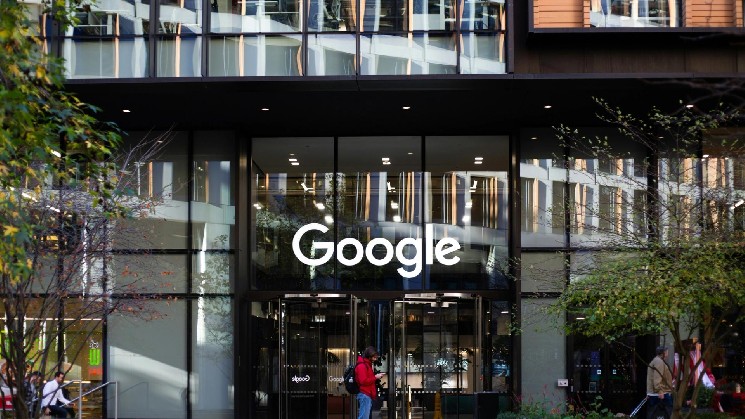
    • Google Cloud is recruiting an Industry Principal Architect in Hong Kong to drive real-world asset tokenization across the Asia-Pacific region, signaling a strategic push into blockchain infrastructure for institutional clients.
    • Apple is seeking an Apple Pay Financial Product Strategy Lead in Cupertino or New York, indicating the iPhone maker is deepening its exploration of digital-asset integration within its payments ecosystem.
    • The job postings confirm that stablecoins, tokenized deposits, and blockchain-based payments are becoming core competencies inside the world’s largest technology and payments platforms, moving beyond crypto-native firms.

    Big Tech Accelerates Digital Asset Hiring Amid Institutional Shift

    Google and Apple are actively recruiting specialized talent for digital asset initiatives, providing the clearest evidence yet that the world’s most valuable technology companies are preparing for a significant expansion of blockchain-based payments, stablecoins, and asset tokenization within their core business lines. The simultaneous hiring pushes reveal a coordinated industry movement where traditional Web2 giants are building the internal expertise necessary to support institutional-grade digital asset infrastructure.

    Google Cloud Targets APAC Tokenization Leadership

    Google Cloud has posted a role for an Industry Principal Architect based in Hong Kong, tasked with working directly with protocol foundations, exchanges, custodians, and financial institutions to tokenize real-world assets across the Asia-Pacific region. The position explicitly requires deep experience with blockchain networks, smart contracts, stablecoin infrastructure, tokenized deposits, and custody technologies. According to the listing, the hire will advise executives and help shape Google Cloud’s Web3 product roadmap as the division seeks to become the preferred cloud provider for digital-asset builders and institutional adopters. The Hong Kong location underscores the strategic importance of the APAC market, where regulatory frameworks in Hong Kong and Singapore are rapidly evolving to accommodate tokenized securities and regulated stablecoins.

    Apple Pay Explores Financial Product Strategy for Digital Assets

    In parallel, Apple is advertising for an Apple Pay Financial Product Strategy Lead to be based in either Cupertino, California, or New York. While the job description does not explicitly mention blockchain or cryptocurrency, the placement within Apple Pay—the company’s vast payments ecosystem that processes billions of transactions annually—suggests a focus on integrating new forms of digital value transfer. The role sits at the intersection of consumer payments, financial services partnerships, and emerging payment rails, positioning Apple to potentially leverage stablecoins or tokenized deposits for faster settlement, cross-border transactions, or new financial product offerings for its hundreds of millions of users.

    Why This Matters

    The hiring activity marks a pivotal inflection point for the digital asset industry. For years, blockchain infrastructure and stablecoin development were largely confined to crypto-native startups and specialist firms. The entry of Google Cloud and Apple signals that the technology has matured sufficiently for hyperscale cloud providers and global payments networks to treat it as a standard enterprise capability rather than an experimental frontier. Google Cloud’s explicit pursuit of institutional custodians and exchanges as clients reflects a broader trend: traditional financial institutions are moving from pilot programs to production deployments of tokenized assets, requiring the security, compliance, and scalability that only major cloud platforms can deliver. Meanwhile, Apple’s exploration within Apple Pay could accelerate consumer-facing adoption of blockchain-based payments by abstracting complexity behind familiar interfaces. Regulators in major jurisdictions are simultaneously finalizing frameworks for stablecoins and tokenized deposits, creating a more predictable environment for Big Tech investment. The next 12 to 18 months will likely reveal whether these hires translate into product announcements, platform integrations, or strategic partnerships that reshape how digital value moves across the global economy.

    Frequently Asked Questions

    Are Google or Apple launching their own cryptocurrencies or stablecoins?

    No. The job listings do not confirm that either company is launching a new crypto product, stablecoin, or blockchain. They indicate that both firms are building internal expertise to support digital asset infrastructure, tokenization services, and potential payment integrations for institutional partners and developers.

    Why is Google Cloud hiring in Hong Kong specifically?

    Hong Kong has emerged as a leading hub for digital asset regulation in Asia, with new licensing regimes for virtual asset trading platforms and active pilots for tokenized green bonds and wholesale central bank digital currencies. The location positions Google Cloud to serve financial institutions and protocol foundations operating under these evolving regulatory frameworks across the broader APAC region.

    What does the Apple Pay role suggest about the company’s direction?

    The Apple Pay Financial Product Strategy Lead role suggests Apple is evaluating how emerging payment rails—including stablecoins, tokenized deposits, and potentially central bank digital currencies—could enhance its payments ecosystem. This could enable faster cross-border settlements, new financial product partnerships, or programmable payment features for merchants and consumers, though no specific product has been announced.

  • Haruko Cyberattack Impacts 15 Clients, Causes Fund Losses for Crypto Tech Provider

    Haruko Cyberattack Impacts 15 Clients, Causes Fund Losses for Crypto Tech Provider

    Key Highlights:

    • Haruko, a London-based digital-asset infrastructure provider, suffered a security breach where an attacker exploited a process vulnerability to extract a user-access token and capture data from system memory.
    • A small amount of client funds and trading data were stolen, with smaller hedge funds described as particularly exposed due to weaker security controls.
    • GSR confirmed it was not impacted, while several other major firms including Bitcoin Suisse and Flowdesk did not respond to comment requests; client login credentials on their own systems were not compromised.

    Haruko Infrastructure Breach Exposes Institutional Crypto Clients

    A cyberattack targeting Haruko, a London-based firm providing portfolio, risk-management, and trade-data infrastructure to institutional digital-asset firms, has resulted in the theft of client funds and trading data. The company’s platform connects with centralized exchanges, custodians, blockchains, and decentralized-finance (DeFi) protocols, giving clients a consolidated view of their positions, transactions, and risk exposure. According to people familiar with the matter who spoke on condition of anonymity because the investigation is private, a small amount of client funds was stolen, and smaller hedge funds with weaker security controls may have been particularly exposed.

    Attack Vector and Data Compromise

    The attacker exploited a vulnerability in one of Haruko’s processes, extracting a user-access token and using it to capture data held in the process’s memory. That memory could have included read-only exchange API details and other data. Clients’ login credentials were not compromised on their own systems; instead, the access token was extracted through a vulnerability in Haruko’s infrastructure. Trading data was also taken during the intrusion.

    Industry Response and Exposure Assessment

    “GSR has not been impacted by any rumored breach,” a company spokesperson said. Bitcoin Suisse, Flowdesk, 3iQ, M2, Ampersan, MNNC, and Trovio did not reply to requests for comment before publication time. The incident underscores the persistent security challenges facing the crypto industry, where transactions are generally irreversible and platforms rely on digital credentials and signing systems that can give attackers direct access to assets.

    Why This Matters

    The Haruko breach highlights the systemic risk posed by infrastructure providers that aggregate access to multiple exchanges, custodians, and DeFi protocols. As institutional adoption of digital assets accelerates, the concentration of API credentials and trade data in centralized platforms creates high-value targets for attackers. The fact that smaller hedge funds with weaker security controls were particularly exposed suggests a tiered risk landscape where resource-constrained firms may suffer disproportionate harm. The incident also demonstrates how memory-resident data—such as read-only API keys—can be weaponized even when full login credentials remain secure, a nuance that may prompt reassessment of token rotation and memory-hardening practices across the sector.

    Frequently Asked Questions

    Was GSR affected by the Haruko breach?

    No. A GSR spokesperson explicitly stated: “GSR has not been impacted by any rumored breach.”

    Were client login credentials stolen from their own systems?

    No. According to messages from Haruko’s Carlile to clients, login credentials were not compromised on client systems. The access token was extracted through a vulnerability in Haruko’s own infrastructure.

    Which other firms were contacted regarding potential exposure?

    Bitcoin Suisse, Flowdesk, 3iQ, M2, Ampersan, MNNC, and Trovio were contacted for comment but did not reply before publication time.

  • S&P Global Quietly Prepares for Round-the-Clock Markets, From Kaiko to OpenZeppelin

    S&P Global Quietly Prepares for Round-the-Clock Markets, From Kaiko to OpenZeppelin

    Key Highlights

    • S&P Global agreed to acquire smart contract security firm OpenZeppelin, expanding its digital asset business into the technology layer underpinning tokenized finance.
    • OpenZeppelin will operate as a separate business unit under CEO Demian Brener, reporting to S&P Global Ratings President Yann Le Pallec; financial terms were not disclosed.
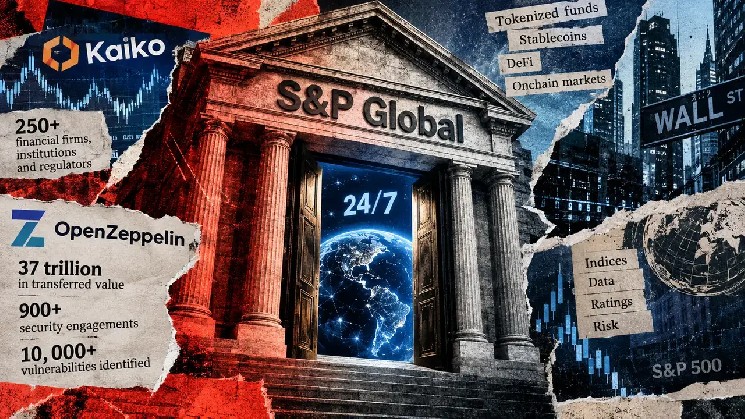
    • The acquisition gives S&P direct exposure to the security infrastructure behind more than $37 trillion in transferred value, over 900 security engagements, and 10,000+ identified vulnerabilities.

    S&P Global Acquires OpenZeppelin to Secure Tokenized Finance Infrastructure

    Financial data and ratings giant S&P Global announced on September 17 an agreement to acquire OpenZeppelin, a leading smart contract security firm whose open-source libraries and audit services underpin a vast swath of the blockchain ecosystem. The move marks a significant deepening of S&P’s push into digital assets, adding a technical risk layer to its traditional financial risk toolkit as institutional capital increasingly migrates to blockchain networks.

    Under the terms of the agreement, OpenZeppelin will continue operating under its own name as a distinct business unit. Chief Executive Demian Brener will remain in charge and report to S&P Global Ratings President Yann Le Pallec. Financial details of the transaction were not disclosed, and the deal remains subject to customary closing conditions.

    Strategic Rationale: Addressing the On-Chain Technology-Risk Layer

    The acquisition targets a specific gap in institutional risk management. As financial products—from stablecoins and tokenized funds to decentralized finance applications—move onto blockchains, institutions face a new category of risk: the software that issues, transfers, and manages those assets. S&P stated that OpenZeppelin will expand capabilities in what it described as the “on-chain technology-risk layer,” including security assessments and benchmarks for digital assets.

    This adds a technical dimension to S&P’s existing financial-risk business. Tokenized funds and stablecoins remain exposed to traditional risks around issuers, collateral, and liquidity, but their operation also depends on smart contracts, permissions, and blockchain infrastructure that introduce technical vulnerabilities. Le Pallec articulated the strategy directly:

    “Our digital assets strategy centers on bringing trusted data, benchmarks and transparent risk assessment to markets as they move onchain.”

    OpenZeppelin’s Model Preserved: Open Source and Developer Trust

    OpenZeppelin has built its reputation on two pillars: its widely used Contracts library, a standard across blockchain applications, and its security teams that review smart contracts and systems before deployment. The company emphasized that its libraries will remain free, open source, and publicly maintained after the acquisition, including future versions. Its audit, engineering, and security work will also continue under the existing team.

    This preservation of the developer model is critical to OpenZeppelin’s adoption. Brener noted that the combination could help OpenZeppelin reach more financial institutions as banks, asset managers, and issuers increase their use of blockchain infrastructure. For S&P, the acquisition provides access to OpenZeppelin’s technical expertise and developer relationships, while OpenZeppelin gains S&P’s institutional relationships, research resources, and distribution channels. S&P said the acquisition is not expected to materially affect its financial results, emphasizing near-term expansion of capabilities rather than a large new revenue stream.

    Why This Matters: Building Infrastructure for 24/7 Markets

    The OpenZeppelin deal is the latest in a series of strategic moves by S&P Global to build infrastructure for markets that increasingly operate around the clock. Three days prior, S&P led a strategic investment in crypto-data provider Kaiko, extending its Series B funding to $110 million alongside participants including DRW, Susquehanna, Royal Bank of Canada, Nasdaq, and BNP Paribas. Kaiko supplies market data and infrastructure to over 250 financial firms, institutions, and regulators, connecting to more than 150 exchanges.

    S&P and Kaiko have already collaborated to bring traditional benchmarks on-chain. In March, they embedded the iBoxx US Treasuries Index into blockchain infrastructure, and earlier this month they combined their digital-asset benchmark businesses into the S&P Kaiko Digital Asset Indices. S&P Dow Jones Indices also helped develop the S&P Digital Markets 50 Index, which Dinari subsequently tokenized using Chainlink for verifiable on-chain pricing.

    Beyond benchmarks, S&P has developed stablecoin stability assessments, issued a credit rating for DeFi protocol Sky, and licensed the S&P 500 for tokenized products. The OpenZeppelin acquisition adds the smart-contract security piece to a stack that now includes: Kaiko for crypto-native pricing and market data, S&P for benchmarks and financial-risk analysis, and OpenZeppelin for smart-contract expertise governing how assets move between investors and applications.

    As trading expands outside traditional exchange hours, always-on markets require continuous prices, collateral valuations, benchmarks, and risk controls. Tokenized assets add software and smart contract risks alongside conventional financial ones. For S&P, this creates an opportunity to extend services it already sells to banks and asset managers into a market where the infrastructure itself is becoming part of the risk assessment. If more securities and funds migrate onto blockchains, institutions may increasingly need a single provider to understand both the asset they hold and the technology that determines how it moves.

    Frequently Asked Questions

    What does OpenZeppelin do, and why is it significant?

    OpenZeppelin is a smart contract security firm whose open-source Contracts library is a widely used standard across blockchain applications. The company has completed over 900 security engagements, identified more than 10,000 vulnerabilities before production, and its infrastructure has supported over $37 trillion in transferred value. It provides both the code libraries developers build on and the audit services that verify contract safety before deployment.

    Will OpenZeppelin’s open-source libraries remain free after the acquisition?

    Yes. OpenZeppelin explicitly stated that its libraries will remain free, open source, and publicly maintained after the acquisition, including future versions. Its audit, engineering, and security work will also continue under the existing team, preserving the developer model that drove its adoption.

    How does this fit into S&P Global’s broader digital asset strategy?

    The acquisition is part of a coordinated buildout that includes a strategic investment in crypto-data provider Kaiko, the launch of on-chain benchmarks like the iBoxx US Treasuries Index and S&P Kaiko Digital Asset Indices, stablecoin stability assessments, a credit rating for DeFi protocol Sky, and licensing the S&P 500 for tokenized products. Together, these pieces give S&P capabilities across market data, benchmarks, financial risk analysis, and now smart-contract technical risk for 24/7 blockchain markets.

  • S&P Global Acquires OpenZeppelin to Expand Tokenized Finance Risk Capabilities

    S&P Global Acquires OpenZeppelin to Expand Tokenized Finance Risk Capabilities

    S&P Global has acquired OpenZeppelin, a leading blockchain security firm, marking a significant expansion of the financial intelligence provider’s digital asset capabilities. The acquisition brings OpenZeppelin’s extensive smart contract auditing expertise under the S&P Global umbrella, extending the company’s reach from entity-level ratings to code-level security assessments.

    OpenZeppelin’s Security Track Record

    Founded in 2015, OpenZeppelin has established itself as a cornerstone of onchain security. The firm provides comprehensive security assessments and secure development services, alongside an open-source smart contract library that underpins many of the largest stablecoins and tokenized funds in the market. According to S&P Global, OpenZeppelin has conducted more than 900 security engagements, identifying over 10,000 vulnerabilities before code reached production environments.

    Leadership Continuity

    Co-founder and CEO Demian Brener will continue to lead the business as its own unit under the OpenZeppelin name, reporting to Le Pallec. This structure preserves the firm’s operational independence while integrating its specialized capabilities into S&P Global’s broader digital asset strategy.

    Strategic Digital Asset Expansion

    The acquisition represents the latest move in S&P Global’s concerted push into digital asset coverage, which has been building for more than a year. The company has published stablecoin stability assessments and issued the first credit rating of a DeFi protocol, Sky. OpenZeppelin’s addition extends this work from rating the entity to rating the underlying code it runs on—a critical layer of infrastructure security.

    Recent Digital Asset Investments

    The deal follows a series of strategic digital asset initiatives by the roughly $120 billion company. On Monday, S&P Global led a strategic investment that extended crypto data firm Kaiko’s Series B funding to $110 million, joined by BNP Paribas, Nasdaq Ventures, Coinbase Ventures, and Royal Bank of Canada. Earlier in September, S&P Dow Jones Indices and Kaiko launched a co-branded digital asset index suite. In March, the two firms tokenized the iBoxx U.S. Treasuries Index.

    Financial Impact

    The transaction is subject to closing conditions and is not expected to have a material impact on S&P Global’s financial results.

  • Mike Novogratz Critiques Crypto Legislative Breakdown

    Mike Novogratz Critiques Crypto Legislative Breakdown

    Novogratz Slams Congress Over Clarity Act Failure

    Prominent crypto investor Mike Novogratz has sharply criticized Congress for failing to advance the Clarity Act, legislation designed to establish a regulatory framework for digital assets in the United States. In a recent social media post, Novogratz detailed how 18 months of bipartisan negotiations collapsed, leaving the industry without the regulatory clarity it has long sought.

    Bipartisan Deal Collapses Amid Ethics Disputes

    According to Novogratz, a compromise on the Clarity Act was within reach before political intransigence derailed the process. He emphasized that ethics concerns became a focal point of disagreement, causing both Republicans and Democrats to prioritize partisan positioning over the long-term health of the cryptocurrency sector. The breakdown underscores deep divisions in Washington over how to regulate digital assets.

    Market Reaction: Uncertainty Persists

    The broader crypto market has shown mixed signals, with major assets lacking substantial price momentum. Traders appear cautious, reflecting the uncertainty highlighted by Novogratz’s comments. Without clear legislative direction, many investors are holding back, awaiting concrete signals from Congress regarding the future of crypto regulation.

    Election Year Dynamics Could Delay Crypto Legislation

    As the U.S. elections approach, Novogratz suggested that crypto policy may not rank as a top-tier issue for voters, overshadowed by pressing concerns such as inflation and immigration. This political reality could further sideline legislative efforts, prolonging the regulatory vacuum that currently hampers industry growth and investor confidence.

    What Traders Should Watch Next

    Market participants should monitor how ongoing political discourse influences sentiment. The regulatory uncertainty could lead to increased volatility in digital asset prices. Shifts in legislative focus as the election nears may either hinder or facilitate progress on crypto legislation, directly impacting the trajectory of the market.

    This article is for informational purposes only and does not constitute financial advice.

  • CLARITY Act Vote Stalls in Senate

    CLARITY Act Vote Stalls in Senate

    Senate Stalls CLARITY Act, Amplifying Crypto Regulatory Uncertainty

    The U.S. Senate failed to advance the CLARITY Act today, a development that injects fresh uncertainty into the digital asset regulatory landscape. According to a report from Fireblocks, the legislative stall threatens to disrupt the independent rulemaking timelines of both the Securities and Exchange Commission (SEC) and the Commodity Futures Trading Commission (CFTC), leaving traders and investors navigating a prolonged period of ambiguity.

    Legislative Gridlock Complicates Agency Timelines

    The CLARITY Act was designed to establish clearer jurisdictional boundaries between the SEC and CFTC regarding digital assets, providing a statutory framework many argue is essential for fostering innovation and investor confidence. With the bill stalled, both agencies continue to draft rules through their existing notice-and-comment processes—a timeline that extends roughly two years into the future.

    Fireblocks highlights that this legislative vacuum forces market participants to operate under overlapping and potentially conflicting regulatory regimes for the foreseeable future. The lack of congressional action effectively cedes the pace and shape of crypto regulation to agency-level proceedings, which may not align with industry needs or market realities.

    Mixed Market Signals Reflect Cautious Sentiment

    The broader cryptocurrency market is currently exhibiting mixed momentum across major assets, a pattern consistent with heightened regulatory sensitivity. The absence of decisive price action suggests traders are adopting a wait-and-see posture, recalibrating strategies around the extended horizon for regulatory clarity.

    Key factors influencing near-term sentiment include:

    • Potential revival of CLARITY Act discussions in the Senate
    • Upcoming SEC and CFTC rule proposals and comment deadlines
    • Shifts in trading volumes tied to regulatory news flow

    What Market Participants Should Monitor

    Stakeholders should track any signals of renewed legislative momentum around the CLARITY Act, as well as formal rulemaking publications from the SEC and CFTC. The interplay between congressional action and agency rulemaking will likely dictate market structure, compliance costs, and the competitive landscape for digital asset services in the U.S. over the next two years.

    This article is for informational purposes only and does not constitute financial advice.

  • Bitcoin Stability Remains Unshaken Despite Regulatory

    Bitcoin Stability Remains Unshaken Despite Regulatory

    Bitcoin Demonstrates Resilience Amid SEC and CFTC Regulatory Developments

    Bitcoin continues to showcase remarkable stability despite ongoing regulatory uncertainty in the cryptocurrency sector. According to crypto commentator @BitGo, the Securities and Exchange Commission (SEC) and Commodity Futures Trading Commission (CFTC) are moving to establish a regulatory framework “due to a lack of progress on Clarity.” The commentary emphasizes that Bitcoin itself does not require this regulatory clarity, as it has “consistently processed blocks on schedule since its inception.” This operational consistency suggests Bitcoin’s fundamental protocol rules remain firmly established regardless of external regulatory shifts.

    Market Overview: Mixed Signals with Bitcoin Stability

    The broader cryptocurrency market currently presents mixed signals, with Bitcoin maintaining a steady presence against the evolving regulatory backdrop. As the SEC and CFTC prepare to intervene, market participants are closely monitoring potential impacts on trading dynamics. Bitcoin’s robust performance through various challenges—including congressional hearings and legislative attempts—reinforces its foundational strength. The uninterrupted processing of blocks further highlights the network’s resilience.

    Key Takeaways

    • Bitcoin processes blocks consistently, demonstrating operational reliability.
    • SEC and CFTC involvement could reshape regulatory oversight of digital assets.
    • Bitcoin’s foundational protocol rules are well-established and unaffected by potential regulatory changes.
    • Current volatility in the broader crypto market contrasts sharply with Bitcoin’s stability.
    • Traders are observing how regulatory actions may influence Bitcoin’s market dynamics.

    Trading Data and Market Sentiment

    Recent Bitcoin trading volume has been relatively thin, yet price stability remains a focal point for many investors. With the SEC and CFTC stepping in, traders might anticipate fluctuations as new regulations are introduced. Observers note that while Bitcoin’s immediate trading data may appear subdued, its long-term prospects remain strong due to its established track record since 2009.

    Bitcoin operates as a decentralized digital currency enabling peer-to-peer transactions without intermediaries. The SEC and CFTC maintain jurisdiction over cryptocurrencies to ensure compliance with securities laws and protect investors, playing a crucial role in shaping the evolving regulatory landscape.

    What to Watch: Regulatory Evolution and Market Impact

    Market participants should monitor how the SEC and CFTC’s regulatory framework evolves and its potential impacts on Bitcoin’s trading dynamics. If new regulations are introduced, they could influence market sentiment and trading volumes. However, Bitcoin’s historical performance suggests it can weather regulatory changes, making it a focal point for long-term investment strategies.

    The information provided is for educational purposes and should not be considered financial advice.

  • Consensus Returns to Hong Kong for Third Year with Expanded AI Focus

    Consensus Returns to Hong Kong for Third Year with Expanded AI Focus

    Consensus Hong Kong Returns for Third Year in February 2027

    Consensus, the flagship event for the crypto and blockchain industry, is set to return to Hong Kong in early February 2027. This marks the third consecutive year the conference will be held in the city, reinforcing its status as a pivotal gathering for the global digital asset community.

    Record Attendance and Evolving Focus

    The previous two editions, held in 2025 and 2026, each attracted over 10,000 attendees. For the 2027 installment, organizers have anchored the agenda around two principal themes: the institutional adoption of digital assets and artificial intelligence (AI). Notably, AI is expected to command greater significance than in prior years, mirroring its accelerating influence on the future of finance and money.

    Hong Kong’s Strategic Position in Digital Assets

    Asia is widely recognized as the leading region for digital asset adoption, and Hong Kong sits at the forefront as a premier hub. The city’s appeal stems from a robust regulatory framework designed for virtual assets, combined with its established role as a global financial center. This environment continues to draw major industry players and institutional capital to the region.

    High-Profile Speaker Lineage

    The caliber of the event is underscored by its recent speaker rosters. The 2026 edition featured a lineup of industry titans, including Richard Teng, co-CEO of Binance; Lily Liu, president of the Solana Foundation; Justin Sun, founder of Tron; and Joseph Lubin, CEO of Consensys. Their participation highlights the conference’s ability to convene the leadership shaping the next generation of Web3 and blockchain infrastructure.