
Tag: Digital asset regulation

  • Ripple CLO Urges Senate to Hear Crypto Holders on CLARITY Act

    Ripple CLO Urges Senate to Hear Crypto Holders on CLARITY Act

    Ripple CLO Urges Senators to Hear From 67 Million Crypto Holders Before CLARITY Act Vote

    Ripple Chief Legal Officer Stuart Alderoty has called on undecided and opposing senators to meet with American cryptocurrency holders before a critical procedural vote on the CLARITY Act scheduled for September 15. In a public post, Alderoty said he contacted the offices of lawmakers who either oppose the bill or have not committed to a position, asking them to engage directly with constituents who own digital assets.

    Appeal Centers on Retail Holder Impact

    Alderoty argued that senators should listen to individual holders rather than limiting their discussions to lobbyists, industry executives, and trade groups. He based his appeal on research from the National Cryptocurrency Association, which estimates that about 67 million people in the United States own cryptocurrency. According to the association’s 2026 survey, around one in four American adults holds some form of digital asset.

    The Ripple executive said the size of the holder population gives individuals a direct stake in legislation that could change how tokens, trading platforms, and other crypto services operate in the United States. His request adds a retail-focused argument to a lobbying campaign that has largely centered on companies, banks, and Washington policy groups.

    Grassroots and Banking Campaigns Intensify

    Reuters reported on September 9 that Stand With Crypto supporters called or emailed members of Congress nearly 50,000 times during August. The advocacy group also arranged meetings and placed opinion articles in local newspapers as senators spent their recess working from their home states.

    Banking organizations have run their own campaign. According to Reuters, the Independent Community Bankers of America has asked local bankers to contact senators over provisions that the group believes could let digital tokens compete with bank deposits and reduce funds available for lending.

    CLARITY Act Faces 60-Vote Cloture Threshold

    The Senate’s September 15 action will not decide whether the CLARITY Act becomes law. Senators are expected to vote at about 2:15 p.m. ET on cloture for the motion to proceed, a step that would allow the chamber to begin formal debate on the legislation. Cloture requires support from 60 senators.

    Republicans hold 53 seats, meaning the bill needs votes from at least seven Democrats or independents, even if every Republican supports moving forward. Full Republican support is not assured, however. As crypto.news reported on September 8, some members of the party have raised concerns about presidential ethics rules, stablecoin rewards, and the treatment of decentralized finance. Republican defections would increase the number of opposition-party votes needed to cross the threshold.

    Senate Majority Leader John Thune filed cloture on the motion to proceed before the August recess, according to a recent bill breakdown. The filing placed the vote one day after senators are scheduled to return to Washington, leaving limited time for negotiations before the chamber acts.

    If cloture succeeds, senators could debate the bill, propose amendments, and later hold a separate vote on passage. Failure to secure 60 votes would prevent the chamber from taking up the measure under the scheduled process.

    Legislative Path and Market Structure Framework

    The legislation would create a federal market structure for digital assets and divide oversight duties between the Securities and Exchange Commission and the Commodity Futures Trading Commission. Its rules would also help determine when a digital asset falls under securities law and when it should be treated as a commodity.

    After passing the House by 294 votes to 134 in July 2025, the measure advanced from the Senate Banking Committee in May 2026 by a 15–9 vote. Only two Democrats supported it at the committee stage, according to the earlier report, leaving Senate leaders with a more difficult calculation for the floor vote.

    Ethics Dispute Threatens Bipartisan Support

    Presidential ethics provisions remain one of the main obstacles in the Senate negotiations. Democrats have sought tighter restrictions on digital-asset activities involving the president, senior government officials, and their families. Their concerns have included crypto businesses connected to President Donald Trump and his relatives, including World Liberty Financial and the Official Trump meme coin. Democratic senators have argued that the pending language does not provide enough protection against conflicts of interest, illicit finance, and possible influence over federal policy.

    Republican lawmakers have offered competing views on whether enough compromise has already been made. Sen. Cynthia Lummis, one of the bill’s main supporters, has blamed Democratic demands for putting the legislation at risk while maintaining that the remaining differences can still be resolved.

    Sen. Mike Rounds gave a more cautious assessment, saying the bill’s prospects don’t look good right now. Sen. Thom Tillis also warned that the measure would fail if lawmakers and the White House showed no interest in closing the gap over ethics provisions.

    Stablecoin Rewards and DeFi Protections Debated

    Stablecoin rewards have created another dispute. Community banks contend that rewards offered on stablecoin balances could draw deposits away from insured banks, while crypto companies oppose restrictions that would prevent third parties from offering such payments.

    Lawmakers have also debated legal protections for decentralized finance software developers. Some senators want stronger safeguards for developers who do not control customer assets, while others have sought rules intended to address money laundering and other illicit financial activity.

    Implications for US Token Holders

    For American token holders, the bill’s division of authority between the SEC and CFTC could affect how trading platforms list assets and which federal rules apply to their transactions. The legislation would also set requirements for intermediaries operating in the U.S. digital-asset market.

    Supporters say a statutory framework would replace part of the uncertainty created when agencies apply existing securities and commodities laws to crypto products. Critics, including several Senate Democrats, have said any framework must include stronger consumer, financial-crime, and ethics protections.

    Ripple Leadership Pushes for Regulatory Certainty

    Ripple executives have repeatedly supported congressional action on crypto market structure. Earlier in September, CEO Brad Garlinghouse called for lawmakers to finish the country’s regulatory framework while saying that making the United States a global center for crypto remained within reach.

    Tight Timeline for Reconciliation

    Even if senators approve the motion to proceed and later pass the bill, the legislative process would not be complete. Any Senate text that differs from the House-approved version would need to be reconciled between the two chambers before it could go to the president.

    The House is scheduled to have only four legislative days in session after September 15 before another recess, giving lawmakers little time to review and approve any changes adopted by the Senate.
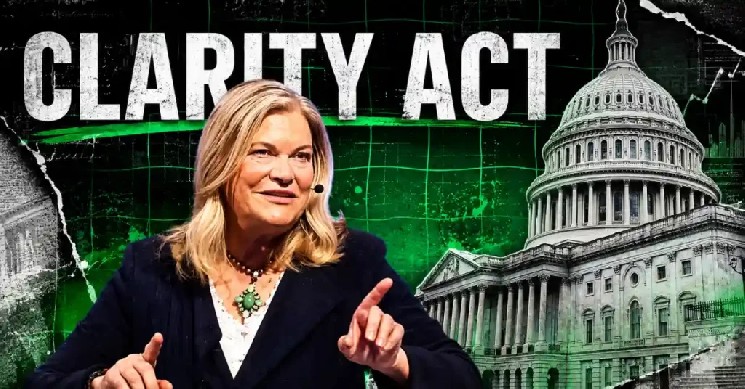

  • Sen. Lummis: CLARITY Act Won’t Fail on Ethics, but Democrats Could Kill Bill

    Sen. Lummis: CLARITY Act Won’t Fail on Ethics, but Democrats Could Kill Bill

    Senator Lummis Defends CLARITY Act Amid Ethics Debate, Warns of Democratic Opposition

    Senator Cynthia Lummis insists the CLARITY Act will not fail over ethics concerns, but warns the bipartisan digital asset legislation could collapse if Democrats refuse to support what she describes as a consumer protection framework. The Wyoming Republican frames the upcoming Senate vote as a pivotal choice between advancing American innovation or ceding financial leadership to China.

    Bipartisan Committee Victory Sets Up September 15 Cloture Vote

    The CLARITY Act cleared the Senate Banking Committee with a 15-9 bipartisan vote, signaling initial cross-party support. However, the legislation now faces a critical procedural hurdle: a cloture motion scheduled for 2:15 p.m. ET on September 15 that requires 60 votes to advance to formal debate.

    With Republicans holding 53 Senate seats, at least seven Democrats or independents must join them if the GOP votes unanimously. Failure to reach the 60-vote threshold would likely stall the bill for the remainder of the congressional session, increasing pressure on negotiators to reach a compromise.

    Lummis: Ethics Not the Obstacle, Democratic Demands Are

    Addressing speculation that ethics provisions could derail the bill, Lummis directly attributed potential failure to Democratic reluctance.

    “If this bill fails, it won’t be because of ethics,” “It will be because Democrats didn’t join Republicans in embracing a bipartisan bill that protected consumers, cements America’s leadership in digital assets, and empowered law enforcement to clamp down on illicit finance.”

    The senator argued that Democratic amendments seek to grant future regulators excessive authority over the cryptocurrency industry, a move she characterizes as overreach that could stifle innovation.

    CLARITY Act Would Split Oversight Between CFTC and SEC

    The legislation aims to establish regulatory clarity by dividing digital asset oversight between the Commodity Futures Trading Commission (CFTC) and the Securities and Exchange Commission (SEC). Lummis emphasized the bill’s consumer protection provisions, particularly in light of the FTX collapse.

    She highlighted that FTX customers endured years of bankruptcy proceedings because existing law lacked a framework for digital assets. Under the CLARITY Act, digital commodities would be classified as customer property in bankruptcy proceedings.

    FTX customers waited for years for bankruptcy courts to claw back their money because current law never built a framework for digital assets. The Clarity Act makes digital commodities customer property in bankruptcy, ensuring consumers are protected and made whole.

    — Senator Cynthia Lummis (@SenLummis) September 8, 2026

    Warning of Decade-Long Delay If Bill Fails

    Lummis has previously cautioned that failure to pass the CLARITY Act could push the next major market structure effort to 2030, costing the United States jobs, investment, and tax revenue. With the cloture vote one week away, she issued a stark choice to her colleagues.

    “Next week, my colleagues have a choice: they can choose American innovation and strong consumer protections, or cede the future of finance to China.”

    The standoff underscores a broader legislative impasse: while both parties acknowledge the need for digital asset regulation, fundamental disagreements over regulatory scope and agency authority threaten to derail the most significant crypto market structure bill in years.

  • Thailand SEC Proposes Retail Access to Regulated Overseas Crypto Derivatives

    Thailand SEC Proposes Retail Access to Regulated Overseas Crypto Derivatives

    Thailand’s Securities and Exchange Commission (SEC) is considering rules that would allow intermediaries to give retail investors access to certain digital asset derivatives traded on overseas markets.

    Under the proposed framework, eligible products would need to closely resemble crypto derivatives already traded in Thailand. The assessment would cover the underlying assets, maturity, leverage and settlement methods.

    The derivatives would also have to trade on an exchange that uses a central counterparty for clearing and is supervised by a regulator affiliated with specified international regulatory or exchange organizations.

    Thailand expands regulated crypto derivatives framework

    The consultation is the latest move by Thailand to bring crypto-linked products into its regulated capital markets. In a notification dated March 5, the SEC formally designated cryptocurrencies and digital tokens as permissible underlying assets for derivatives.

    The regulator is also discussing potential contract specifications with the Thailand Futures Exchange.

    Crypto derivatives that do not meet the proposed conditions would be available only to institutional investors. The SEC said institutions are better equipped to evaluate and manage complex, high-risk products.

    Current rules allow intermediaries to facilitate overseas derivatives investments for retail and high-net-worth clients only when the products resemble derivatives traded domestically. According to the SEC, overseas crypto derivatives require tailored rules because their structures and risk levels can vary.

    The consultation will remain open until Sept. 30. The SEC has not announced an implementation date for the proposed amendments.

  • The Next Trillion-Dollar Currency May Not Be a Stablecoin

    The Next Trillion-Dollar Currency May Not Be a Stablecoin

    A new CoinDesk analysis examines why the next trillion-dollar currency could emerge outside the stablecoin model used today—and why it may not have a name yet.

    What the CoinDesk Analysis Says

    The development is significant because it could alter the outlook for the next trillion-dollar currency. However, the available reporting identifies a specific development without establishing that it represents a completed, industry-wide shift.

    The figures and descriptions remain limited to the scope and claims presented in the source. Further evidence is needed before drawing broader conclusions about the digital-asset market.

    Why It Matters for Digital Assets

    Crypto infrastructure is increasingly linking payments, financial markets and software systems. These connections may create new opportunities for adoption, while also raising questions about security, regulation, liquidity and operational reliability.

    Those factors will help determine whether the reported development advances beyond an initial test, study or proposal. They will also indicate whether the system can support broader participation from users and institutions.

    What Comes Next

    The key milestones will be additional disclosures, implementation details and evidence of adoption by users or institutions. Until those details emerge, the development should be viewed as a dated event rather than a prediction about market prices or a guarantee of future adoption.

    BlockchainReporter has previously covered related digital-asset infrastructure in earlier reporting.

    Source: cryptonews.net