Tag: Carlos Sainz

  • Power Rankings: Who Impressed the Judges at the Azerbaijan Grand Prix?

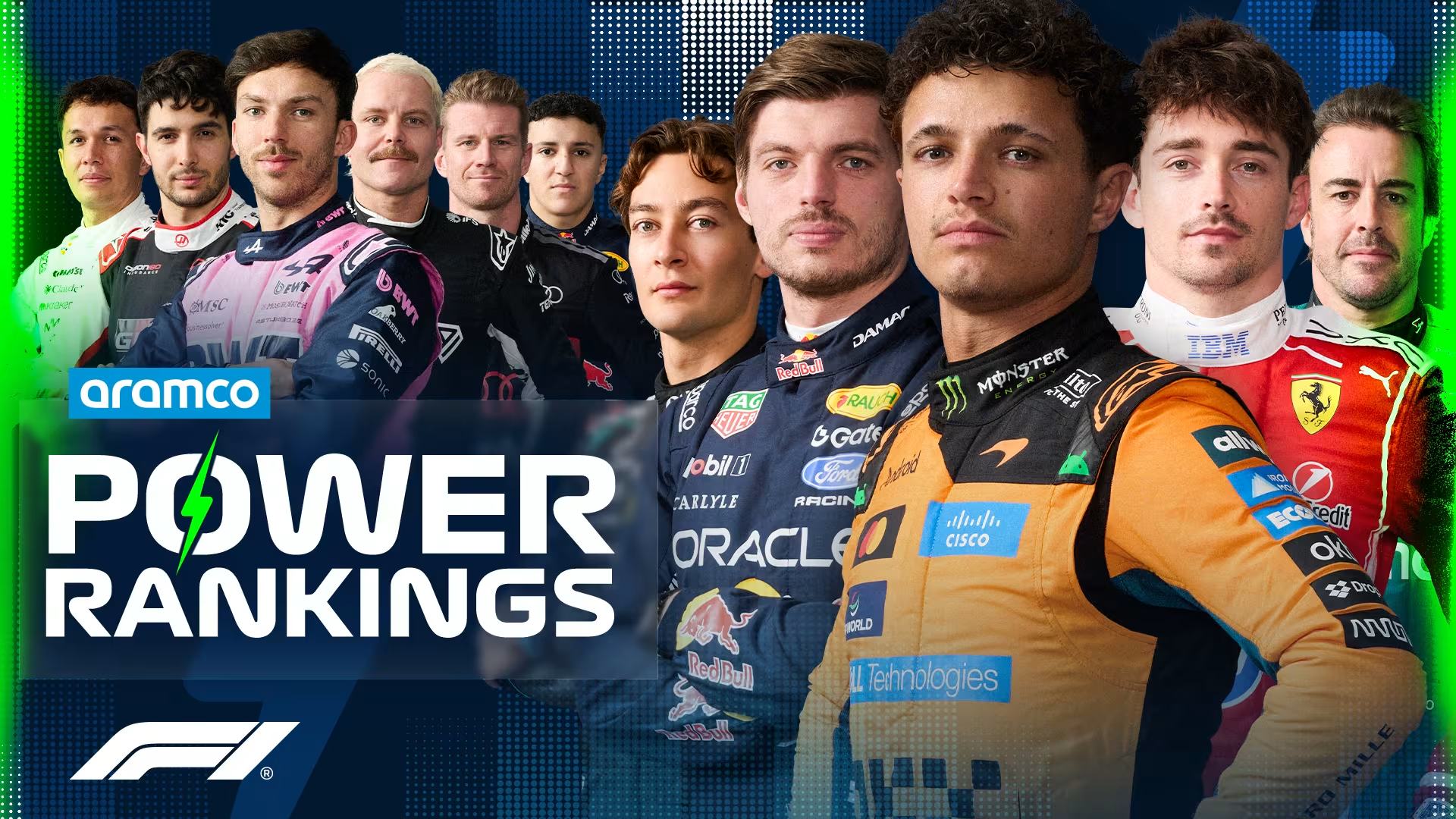
    Power Rankings: Who Impressed the Judges at the Azerbaijan Grand Prix?

    Key Highlights

    • George Russell dominated the Azerbaijan Grand Prix weekend, taking pole position and converting it into victory.
    • Max Verstappen recovered from eighth on the grid to finish second, while Isack Hadjar secured his first proper podium on pure pace in Formula 1.
    • Esteban Ocon, Ollie Bearman, Arvid Lindblad and Carlos Sainz also impressed in the Baku Power Rankings contenders.

    George Russell Leads the Azerbaijan Grand Prix Power Rankings

    George Russell was the standout performer at the Baku City Circuit, producing a dominant Azerbaijan Grand Prix weekend. The Mercedes driver led Thursday practice, took pole position by eight tenths of a second and converted his qualifying advantage into victory despite intense late pressure from Red Bull’s Max Verstappen.

    With Russell delivering across every major session, the Power Rankings judges found little to criticize in his performance. Verstappen, meanwhile, endured a difficult qualifying session after apparent power unit and battery issues left him eighth on the grid, despite having topped final practice earlier that day. The Dutchman responded strongly in the race, moving through the field to finish second and coming close to challenging Russell for victory.

    Hadjar Delivers a Breakthrough Performance

    Isack Hadjar made an immediate impression after spending six weeks away from racing because of a wrist injury sustained during summer-break training. The Formula 1 rookie steadily increased his pace through practice before qualifying fourth in Baku.

    Hadjar maintained that form in the race and converted his strong starting position into what was described as a “first proper podium on pure pace” in F1. His performance placed him among the leading names in the latest Azerbaijan Grand Prix Power Rankings.

    Pierre Gasly also showed strong potential during the weekend, qualifying seventh and aiming for another significant points haul. However, the Alpine driver’s race ended after contact with team mate Franco Colapinto. Gasly was visibly disappointed afterward, saying, “I don’t think I really have words, and I don’t need the words now,” as both Alpine cars finished without points.

    Ocon and Bearman Put Haas in the Points

    Esteban Ocon arrived in Azerbaijan describing himself as a “free agent” for 2027, with his time at Haas appearing likely to end. After starting 14th because yellow flags affected his qualifying lap, Ocon produced a strong recovery drive to finish eighth.

    Ocon finished ahead of Haas team mate Ollie Bearman and was narrowly beaten to the finish line by Racing Bulls driver Arvid Lindblad. Bearman had qualified 11th, just short of reaching Q3, and led the Haas challenge for much of the race. His prospects were affected when he made contact with Kimi Antonelli at a Safety Car restart, allowing Ocon to move ahead.

    Bearman nevertheless finished ninth, giving Haas both cars in the points. The result represented a solid overall recovery for the team and helped underline the strength of its race pace in Baku.

    Lindblad Impresses Despite a Difficult Baku Weekend

    Arvid Lindblad endured a turbulent weekend on the streets of the Azerbaijani capital. The Formula 1 rookie crashed in FP2 for the second consecutive event and then qualified 15th. Reflecting on his approach, Lindblad admitted to “trying to be too special”.

    His race was also complicated by contact with Racing Bulls team mate Liam Lawson at the first Safety Car restart. Lindblad recovered effectively, however, and crossed the line seventh to claim an impressive result despite the setbacks.

    Lawson had been the lead Racing Bulls driver in Azerbaijan after returning from Red Bull, but the collision with Lindblad sent him into a spin. He later remarked sarcastically over team radio, “I love getting taken out by my team mate. That’s pretty sick,”. Lawson recovered some of the lost ground but ultimately finished 12th.

    Leclerc and Sainz Salvage Strong Results

    Charles Leclerc had mixed feelings after qualifying second in Baku. The Ferrari driver was pleased with his grid position but acknowledged that Russell’s pole advantage was considerably larger than expected. In the race, Leclerc was unable to prevent Oscar Piastri and the Red Bull cars from moving ahead, although he regained fourth place when Piastri locked up into Turn 1 late in the race.

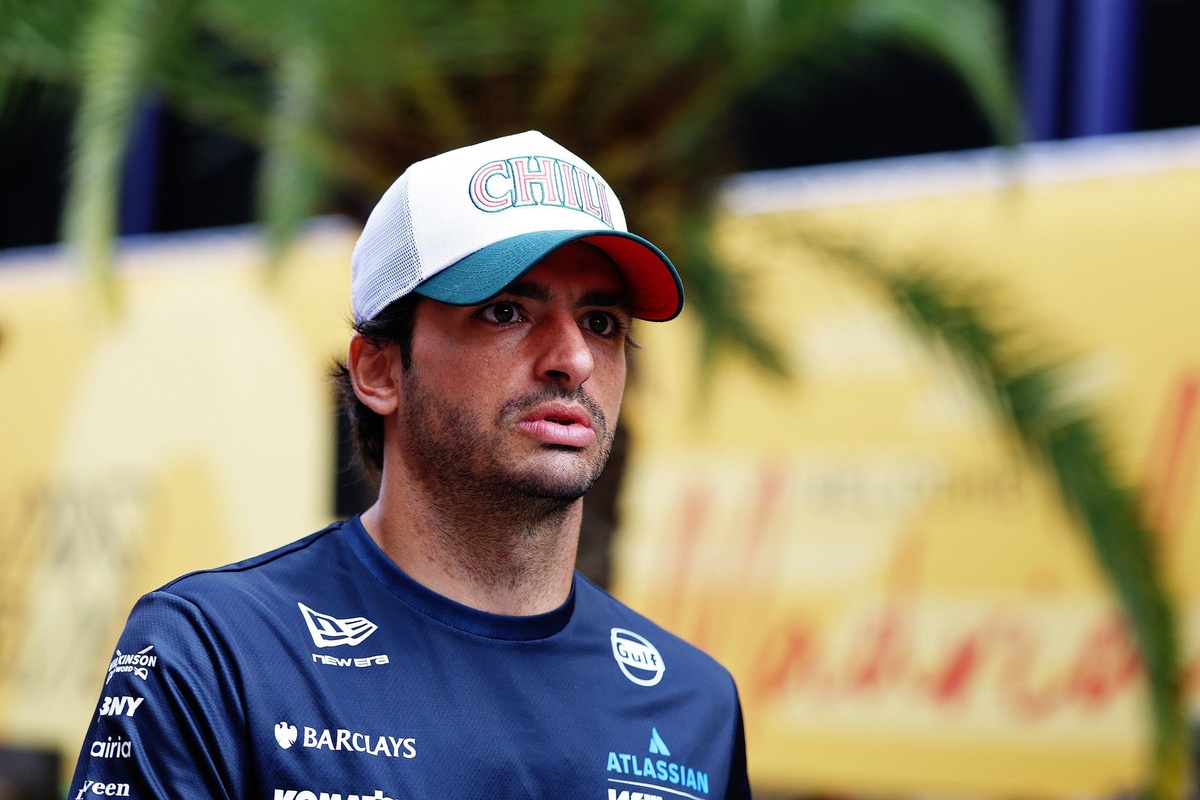
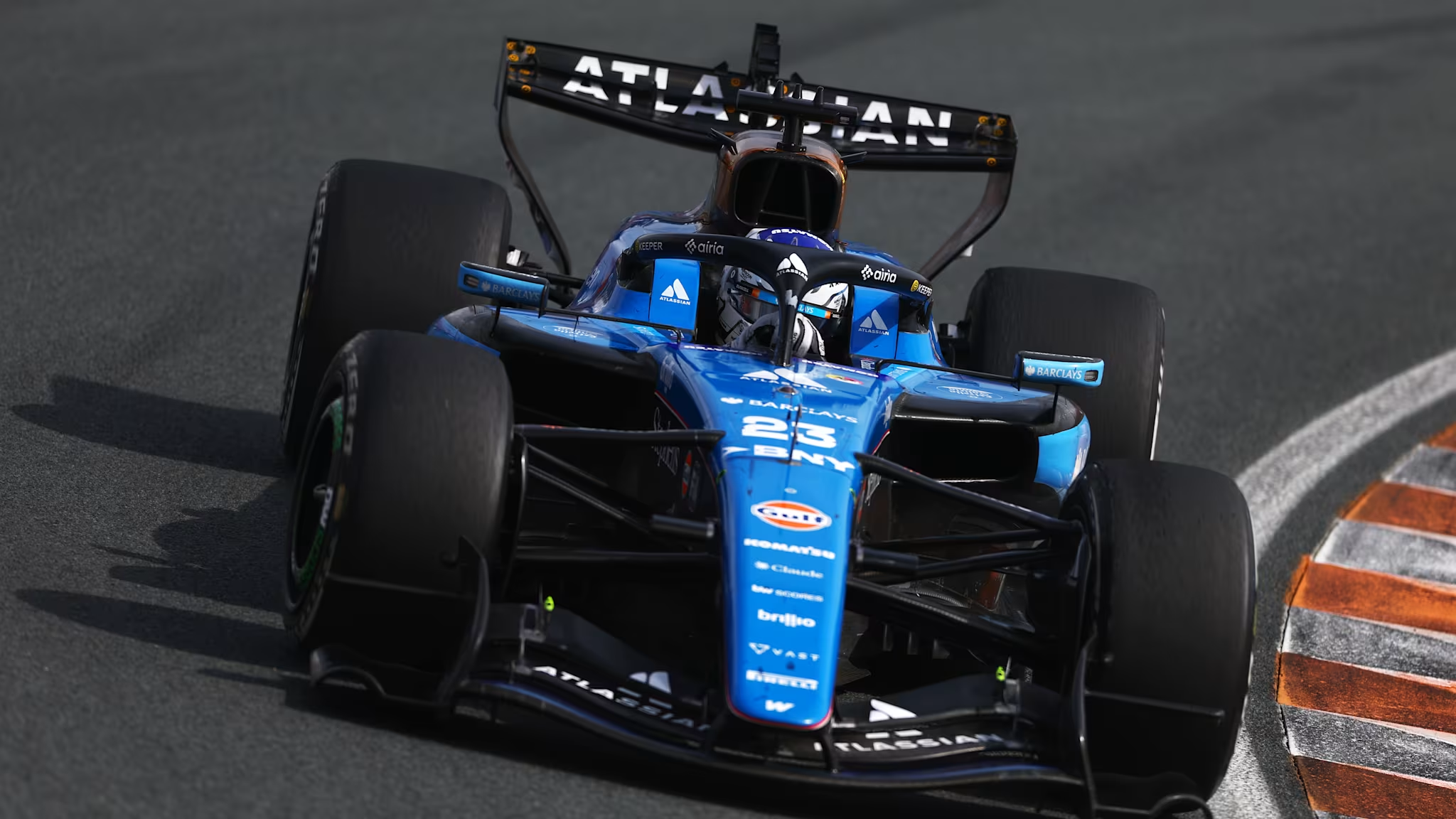
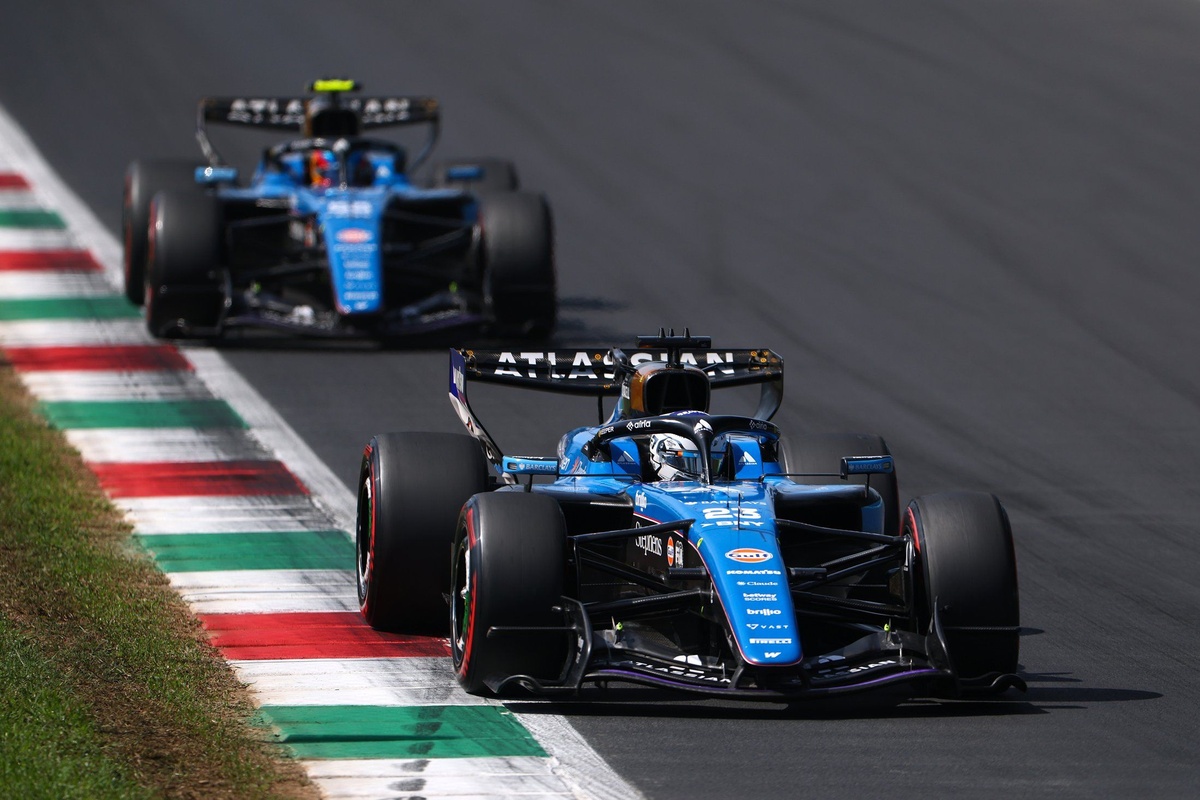
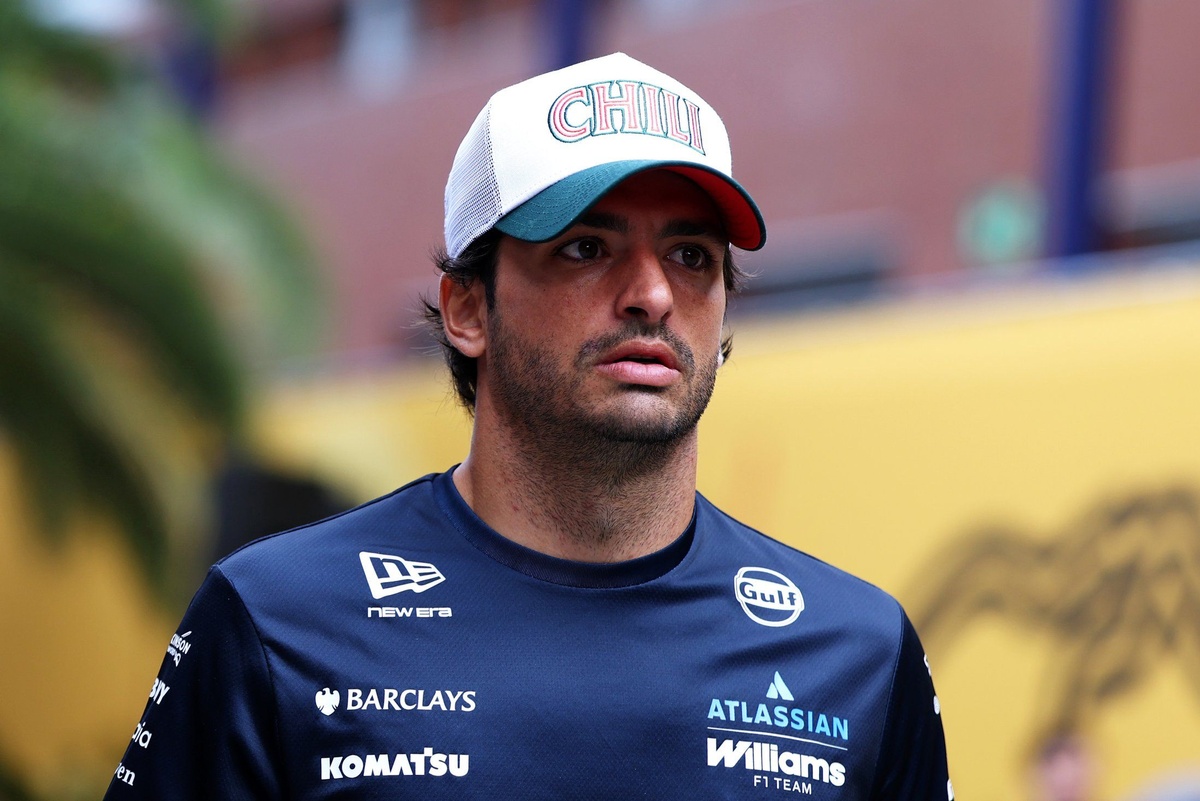
    Williams introduced a substantial package of updates at the Baku City Circuit in an effort to improve its difficult 2026 campaign. Both drivers progressed to Q2, while Carlos Sainz produced a powerful lap to reach Q3.

    Sainz was initially set to start ninth, but a post-qualifying penalty for failing to follow yellow-flag requirements dropped him to 14th on the grid. He still capitalized on the events of the race to secure a morale-boosting point for Williams.

    Perez Heads Cadillac’s Azerbaijan Effort

    Sergio Perez described the Azerbaijan Grand Prix as “one of my best weekends” in the sport after “driving at a high level” from FP1 through to the chequered flag. The Cadillac driver comfortably led the team’s performance with its latest Ferrari power unit.

    Perez mixed it with several midfield competitors and finished 14th. Several retirements contributed to his final position, but his performance still represented a respectable showing for Cadillac in Baku.

    Why This Matters

    The Azerbaijan Grand Prix highlighted the importance of qualifying performance, race recovery and execution around the demanding Baku City Circuit. Russell converted a commanding pole position into victory, while Verstappen demonstrated how strongly a driver can recover from a difficult qualifying result.

    The weekend also provided encouraging signs for several teams and drivers. Hadjar’s podium-level performance, Haas’s double points finish, Lindblad’s recovery to seventh and Sainz’s point after a grid penalty all carried significance in the Power Rankings assessment. Williams’s upgrades also appeared to improve its competitiveness, with both cars reaching Q2 and Sainz making Q3.

    Frequently Asked Questions

    Who led the Azerbaijan Grand Prix Power Rankings?

    George Russell led the Power Rankings after taking pole position and winning the Azerbaijan Grand Prix at the Baku City Circuit.

    How did Max Verstappen perform in Azerbaijan?

    Max Verstappen started eighth after qualifying issues but recovered to finish second, putting pressure on Russell during the closing stages.

    Which drivers narrowly missed the Power Rankings list?

    Audi’s Nico Hulkenberg, Oscar Piastri and Kimi Antonelli narrowly missed inclusion. Hulkenberg finished within one second of a point, while Piastri’s score was affected by a late lock-up and Antonelli’s by his Q1 accident.
  • Alex Albon and Carlos Sainz Reveal Plans for F1 Boys’ Trip

    Alex Albon and Carlos Sainz Reveal Plans for F1 Boys’ Trip

    Key Highlights

    • Alex Albon and Carlos Sainz say a small group of Formula 1 drivers plans to remain in Asia for a boys’ trip between the Bahrain and Singapore Grands Prix.
    • Williams introduced a major FW48 upgrade package at the Azerbaijan Grand Prix, with Sainz qualifying ninth and Albon 13th.
    • Sainz will start the Baku race from 14th after receiving a five-place grid penalty for failing to slow under yellow flags.

    Alex Albon and Carlos Sainz reveal F1 drivers’ Asia trip plans

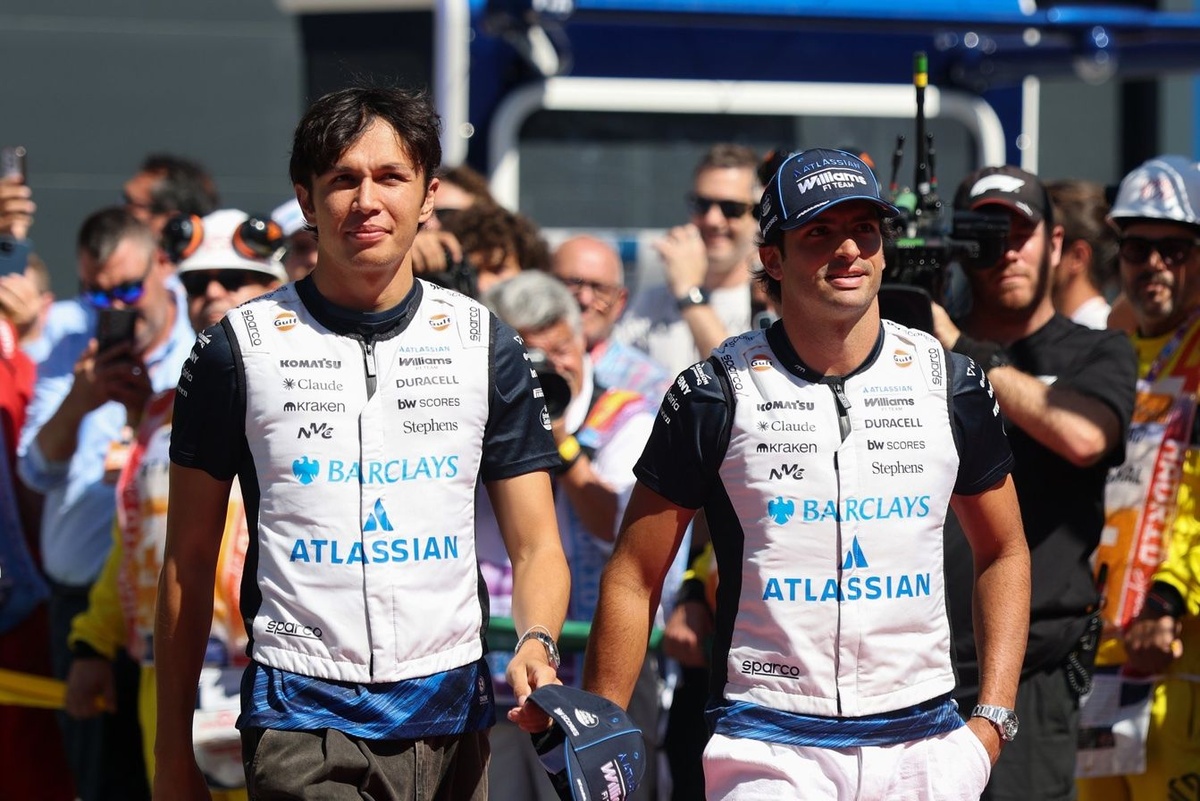
    Williams team-mates Alex Albon and Carlos Sainz have revealed that a small group of Formula 1 drivers will use the gap between the rescheduled Bahrain Grand Prix and the Singapore Grand Prix for a boys’ trip.

    The Bahrain Grand Prix will be held at the Sepang International Circuit in Malaysia because of the conflict in the Middle East. The revised schedule has given drivers the opportunity to remain in Asia between the two races instead of returning to their team bases.

    “We’re going to go on like a boys’ trip, I guess,” Albon said during an interview in the Fan Zone ahead of the Azerbaijan Grand Prix. “I think there are a few drivers where we’re going to hang out.”

    Sainz added: “Yeah, it’s going to be [a boys’ trip]. We just realised no one’s bringing their girlfriend. But it’s not like we’re going to do anything exciting. We’re going to be in a resort in the middle of nowhere.”

    Williams brings major FW48 upgrade to Baku

    The drivers’ travel plans come during an important weekend for Williams, which has introduced a major upgrade package for its FW48 at the Azerbaijan Grand Prix. After arriving at pre-season testing in Bahrain with an overweight car, the Grove-based team has worked on a B-specification car for Baku.

    The upgraded Williams machinery helped Sainz qualify ninth and Albon qualify 13th for the Azerbaijan Grand Prix. However, Sainz will begin the race from 14th after being handed a five-place grid penalty for failing to slow under yellow-flag conditions.

    The Spaniard also received two penalty points, taking his total to four points during the 12-month period. Sainz and Albon currently occupy 16th and 17th in the drivers’ championship, with six and five points respectively.

    Why This Matters

    The revised Formula 1 calendar has created an extended period in Asia between the Bahrain and Singapore races, allowing drivers to avoid returning to their bases between events. For Williams, the Azerbaijan Grand Prix is also an early test of whether its FW48 upgrade can improve the team’s performance after concerns over the car’s weight during pre-season testing.

    The Azerbaijan Grand Prix will take place at the Baku City Circuit at 3pm local time, which is noon UK time. Sainz’s grid penalty means Williams’ qualifying results will not translate directly into its starting positions for the race.

    Frequently Asked Questions

    Which Formula 1 drivers are planning the trip?

    Williams drivers Alex Albon and Carlos Sainz said that a small group of drivers will spend time together in Asia between the Bahrain and Singapore Grands Prix. They did not identify the other drivers involved.

    Why is the Bahrain Grand Prix being held in Malaysia?

    The Bahrain Grand Prix has been rescheduled to the Sepang International Circuit because of the conflict in the Middle East.

    Where will Carlos Sainz and Alex Albon start in Baku?

    Sainz qualified ninth but will start 14th after a five-place grid penalty. Albon qualified 13th and is set to start from that position.

  • Carlos Sainz Handed Five-Place Grid Penalty for Azerbaijan GP After Yellow Flag Breach in Qualifying

    Carlos Sainz Handed Five-Place Grid Penalty for Azerbaijan GP After Yellow Flag Breach in Qualifying

    Key Highlights

    • Carlos Sainz received a five-place grid penalty for the Azerbaijan Grand Prix after stewards ruled he failed to slow for yellow flags in Qualifying at the Baku City Circuit.
    • The Williams driver drops from ninth to 14th on the grid, promoting Franco Colapinto, Ollie Bearman, Liam Lawson, Alex Albon, and Esteban Ocon.
    • Sainz was also handed two penalty points, bringing his 12-month total to four under Formula 1’s penalty regulations.

    Stewards Rule Against Sainz’s ‘Global Lift’ Defense

    Carlos Sainz’s strong qualifying performance for Williams at the Baku City Circuit has been significantly undermined by a post-session stewards’ investigation. The Spaniard had piloted his heavily upgraded FW46 to ninth place in Q3, but was subsequently summoned over a potential breach of yellow flag protocols. After reviewing telemetry, radio communications, and hearing from both Sainz and a Williams team representative, the stewards determined that the driver failed to sufficiently reduce speed in Marshalling Sector 4 while single yellow flags were displayed following Lando Norris’s off-track excursion at Turn 2.

    Decision Document Details Telemetry Evidence

    The stewards’ decision document provides a detailed account of the incident and the reasoning behind the penalty. “Single yellow flags were displayed in Marshalling Sectors 4 and 5, in particular after Turn 2 and on the approach to Turn 3,” the document states, noting that “the yellow indications were clearly visible and SAI had also received a radio warning from the team: ‘Yellow ahead, lift’.” Sainz confirmed at the hearing that he was aware of the yellow flag situation.

    Sainz offered a specific defense regarding his speed management through the flagged zones. “SAI explained that he intended to demonstrate a reduction in speed across the yellow area as a whole. He stated that he did not consider it necessary to reduce speed on the straight and instead intended to demonstrate his response when approaching and exiting Turn 3. He considered this to be a ‘global lift’ covering the consecutive yellow sectors.” He further argued that “the car which had originally caused the yellow was no longer in the run-off area and that he expected the yellow flags to be withdrawn.”

    Stewards Reject Interpretation, Cite Sector-by-Sector Obligation

    The stewards explicitly rejected Sainz’s interpretation of the regulations. “The stewards did not accept this interpretation. Where consecutive marshalling sectors are subject to yellow flag conditions, a driver must demonstrate a significant reaction to reduce speed in each individual yellow marshalling sector. A reduction in a subsequent sector cannot retrospectively satisfy the requirement applicable to the preceding yellow sector.” They further clarified that “the obligation is also not dependent on the driver’s own assessment of whether the original hazard remains present within a particular part of the yellow sector.”

    Telemetry data proved decisive in the ruling. “The telemetry clearly showed that SAI’s reaction to the yellow occurred only in Marshalling Sector 5. There was no meaningful reduction in speed in Marshalling Sector 4, which could realistically be attributed to a response to the yellow. Indeed, SAI recorded his fastest time of the session in Marshalling Sector 4.” Consequently, “the stewards therefore did not accept that the subsequent lift in Marshalling Sector 5 constituted a sufficient ‘global’ response covering both sectors. This is distinguishable from cases where the telemetry demonstrates a significant response to the yellow even though the overall sector time reduction is relatively small.”

    Penalty Applied Under Standard Guidelines

    Summarizing their findings, the stewards concluded: “In the present case, SAI was aware of the yellow, had received an explicit warning from the team, the yellow indications were clearly visible and the telemetry established that he did not demonstrate the required reaction in Marshalling Sector 4. The stewards therefore determine that SAI failed to sufficiently reduce speed under the single yellow flag in Marshalling Sector 4. The standard penalty under the Penalty Guidelines for this infringement during Qualifying is a drop of five grid positions.” The penalty drops Sainz from P9 to P14 for Saturday’s Grand Prix, elevating Franco Colapinto, Ollie Bearman, Liam Lawson, teammate Alex Albon, and Esteban Ocon by one position each.

    Why This Matters

    This ruling reinforces the FIA’s strict enforcement of yellow flag protocols, particularly the requirement for a demonstrable speed reduction in each individual marshalling sector rather than an averaged approach across consecutive zones. The decision highlights the increasing reliance on precise telemetry data to adjudicate compliance, leaving little room for driver interpretation of hazard status. For Williams, the penalty blunts the momentum gained from their significant Baku upgrade package, relegating Sainz to the fifth row while teammate Alex Albon benefits with a promotion to P13. With Sainz now carrying four penalty points on his 12-month license, any further infractions could edge him closer to a race ban threshold of 12 points, adding a layer of disciplinary pressure for the remainder of the season.

    Frequently Asked Questions

    Why was Carlos Sainz penalized in Azerbaijan Qualifying?

    Sainz was penalized for failing to sufficiently reduce speed in Marshalling Sector 4 while single yellow flags were displayed following Lando Norris’s off-track incident at Turn 2. The stewards ruled he did not demonstrate the required reaction in that specific sector, despite lifting in the subsequent Sector 5.

    How does the grid penalty affect the starting order for the Azerbaijan Grand Prix?

    Sainz drops from ninth to 14th on the grid. Franco Colapinto, Ollie Bearman, Liam Lawson, Alex Albon, and Esteban Ocon each gain one position as a result.

    What are the championship implications of the penalty points?

    Sainz now has four penalty points on his FIA Super License for the current 12-month period. Accumulating 12 points within a 12-month window triggers an automatic one-race ban, so this brings him one-third of the way toward that threshold.

  • Carlos Sainz Backs Bold Approach for Williams Junior Will Green’s Racing Future

    Carlos Sainz Backs Bold Approach for Williams Junior Will Green’s Racing Future

    Key Highlights

    • Carlos Sainz advises 13-year-old Williams Academy driver Will Green to prioritize finding the limit over consistency in his transition from karting to single-seaters.
    • The Spanish Formula 1 driver emphasizes that making mistakes while pushing hard is essential for learning and confidence-building at the junior level.
    • Green, the 2026 Karting European Championship junior champion, conducted the interview published on the Williams Racing YouTube channel.

    Sainz Mentors Williams’ Newest Academy Talent

    Carlos Sainz has offered candid guidance to Will Green, the 13-year-old karting prodigy who joined the Williams Racing Academy in December 2024, urging the British youngster to embrace risk-taking over conservative consistency as he prepares for the leap to single-seater competition. The conversation, filmed for the Williams Racing YouTube channel, featured the unique dynamic of Green interviewing the 32-year-old Spanish Grand Prix winner, providing a rare glimpse into how established Formula 1 stars view the developmental pathway.

    Embrace Mistakes to Multiply Talent

    Sainz’s central message focused on the psychological approach required during the formative junior years. “Don’t be afraid to make mistakes. It’s better to push too hard and make mistakes than try and be too conservative,” Sainz said in the video on the Williams YouTube channel. “You are at the age where it’s important to learn as much as possible. So, don’t be scared.” He elaborated that the window for aggressive experimentation is narrow and critical. “Don’t be afraid to make mistakes, risk too much and go for overtakes or last-lap moves that maybe are too risky. I would say that age is the time to do it because that’s when you will learn the most.”

    The Ferrari driver distinguished between productive errors and avoidable blunders. “Always try to be as close to the limit as possible. Obviously, don’t do anything stupid. If you can avoid stupid mistakes, avoid stupid mistakes. But go and take risks because when they pay off, you feel a lot of confidence, and that’s where your talent multiplies. You’re not only talented but also confident.” This philosophy underscores a broader paddock consensus that early-career confidence, forged at the edge of adhesion, is a prerequisite for elite performance.

    A Natural Transition from Karting to Cars

    Reflecting on his own graduation from karts, Sainz offered reassurance regarding the technical adjustment. “I felt that going from karting to cars was quite natural to me. It didn’t feel weird,” he added. “You will jump in a car one day. They will teach you how to drive with the gears, with everything. The first two laps will be strange but then your natural instinct of just pushing flat out whatever they give you will kick in and you will find a way.” The remarks serve to demystify the step up for Green, who currently holds the 2026 Karting European Championship junior title.

    Why This Matters

    The exchange highlights the increasing structure of Formula 1 junior programs, where teams like Williams invest in drivers as young as 13 and facilitate direct mentorship with current race winners. Sainz’s advice aligns with the “find the limit first” doctrine employed by many driver coaches: early consistency often masks a lack of ultimate pace potential. For Green, the 2026 European junior champion, the immediate challenge will be applying this mindset during his first tests in machinery such as the Formula 4 car, where the cost of errors rises sharply compared to karting. Williams’ decision to publish the dialogue publicly also signals a transparency strategy, showcasing their academy culture to sponsors, fans, and future recruits.

    Frequently Asked Questions

    Who is Will Green and what has he achieved?
    Will Green is a 13-year-old British driver announced as a Williams Racing Academy member in December 2024. He recently won the 2026 Karting European Championship junior title.
    What specific advice did Carlos Sainz give about making mistakes?
    Sainz told Green it is better to push too hard and make mistakes than to be too conservative, stating that taking risks at this age is when a driver learns the most and builds the confidence that multiplies talent.
    Where can the full interview be watched?
    The interview conducted by Green with Sainz was published on the official Williams Racing YouTube channel.
  • Williams’ FW48 Upgrade Package in Baku Crucial for Formula 1 Team’s Progress

    Williams’ FW48 Upgrade Package in Baku Crucial for Formula 1 Team’s Progress

    Key Highlights

    • Williams introduces its long-awaited major FW48 upgrade package at the Azerbaijan Grand Prix after a difficult 2026 season marked by weight issues and missed development milestones.
    • Drivers Carlos Sainz and Alex Albon caution that the upgrade may not close the gap to the midfield, as rival teams have accelerated their development pace beyond initial projections.
    • Team Principal James Vowles frames the Baku package as a critical validation of improved processes and simulation tools ahead of the 2027 FW50 project, while acknowledging no guarantees against future missteps.

    Williams Pins Hopes on Baku Upgrade After Difficult 2026 Campaign

    The Azerbaijan Grand Prix represents a pivotal weekend for Williams Racing as the team finally debuts the major upgrade package for its FW48 challenger. The 2026 season has proven painful for drivers Carlos Sainz and Alex Albon, particularly given the promise shown during the previous campaign. Delays forced the squad to miss the Barcelona Shakedown, and when the car eventually hit the track it was significantly overweight and suffered from inherent aerodynamic issues. Like Aston Martin, Williams elected to concentrate resources on a substantial mid-season package, though smaller updates such as a revised front wing for Silverstone and an ongoing weight-reduction programme have been introduced in the interim.

    Midfield Development Race Outpaces Williams’ Progress

    The results underscore the scale of the challenge. Early in the year the drivers secured five points finishes, with Albon’s eighth place in the high-attrition Monaco Grand Prix the high watermark. Since then, however, the team has failed to score a single point, regularly finishing in the P15–P17 range. Improved reliability across the field has played a part, but the primary factor is that rivals have developed at a faster rate while Williams has largely stood still. Albon articulated the shifting landscape after a difficult race in Madrid: I think what’s been interesting this year is most of the midfield teams, they always bring one or two upgrades a year. That’s kind of how it’s gone. This year, even the midfield teams are bringing three or four upgrades a year, and the size of upgrades are huge as well. So if you think of us in a normal year, Baku would have put us back in contention. But we have to be honest with ourselves, the speed of the development race this year is huge – and yeah, we’ve fallen back.

    When the Baku package was signed off months ago, the projected gains looked promising. Yet as midfield competitors have improved, the goalposts have moved. The FW48 will be faster, but the relative gain may not produce the dramatic grid surge originally envisioned. Albon added a sobering assessment of the current deficit: We’re finishing realistically 50 seconds behind the midfield at the minute in a race. So we’re losing a second a lap, more or less, in the race, and this has to be a pretty big upgrade to do it. Let’s see. We know it’s going to be a good step. Is it going to be the full step? I’m hopeful for it, but I don’t think it will be. Unfortunately, we said it last year, but the focus is on next year as well. And we realise we’re too far back at the moment to have a couple of upgrades for this year. We need to focus on next year.

    Sainz and Albon Manage Expectations for Immediate Gains

    Sainz, who qualified second and finished third in Azerbaijan last year — a reminder of Williams’ competitiveness at certain venues — strikes a similarly cautious tone. At his home race he stated: I think that upgrade is going to definitely help us to get ourselves closer to potentially fighting for some points. But realistically speaking, that’s nowhere near where we wanted to be this year, nowhere near what we promised. So, it’s still not enough, and it’s still not where we want to be. It’s an upgrade that will help a bit the motivation of the team and just to look into the weekend with something to look forward to, maybe to potentially get a point or two when we were like we were at the beginning of the year. But it’s nowhere near where we want to be, and I think our biggest hope is putting all the eggs in next year’s basket.

    Sainz’s point about motivation is salient. Even if the Baku package does not propel the team into Q3 contention, delivering the performance gains calculated months ago would demonstrate that the development processes are functioning correctly — a crucial confidence builder for the design team working on the 2027 FW50.

    Vowles Highlights Process Improvements and Simulation Gaps

    The weekend is equally critical for Team Principal James Vowles, the architect of Williams’ long-term revival who recently secured contract extensions from both Sainz and Albon. Vowles has pointed to changes in methodology, the recruitment of key personnel such as Chief Optimisation and Planning Officer Piers Thynne, and upgraded simulation infrastructure as reasons to believe the team will avoid repeating the mistakes that hampered the 2026 car’s genesis. Speaking at Zandvoort, he explained: You’re making a thousand decisions in the winter. You don’t need many of them to be wrong before you start putting yourself into the wrong path. And that’ll be the difference between a few tenths, but a few tenths these days is the between winning a championship or not. You go to the level of what are the big building blocks you’re putting in place? Which is a combination of people, which is different to what we had before. A combination of strength in the team that was different to what we had before. And for us, we had a lack last year at the beginning of ’25 of simulation technology. That actually only came online in November last year. The car was already pretty much done by that point in time. So what we were doing was using educated guessing, and we got some of it wrong. If you look at our rear ride height, we developed at the wrong rear ride height, as did Aston, for that matter, and corrected it. That doesn’t seem like a huge amount. But you’re aerodynamically developing in completely the wrong space, and it’s not driven by anything more than simulation telling you that’s a good direction for whatever characteristic you’re after, and it goes wrong. That error can still be made across any winter, because you’re in a theoretical space against a maximal space.

    Baku Package as Validation for 2027 FW50 Direction

    If the Baku upgrade performs as predicted, it will signal that Williams’ revised workflows and toolsets are yielding results. However, Vowles offers no guarantees that the 2027 development cycle will be flawless: Not for a second am I going to promise anyone, because there’s no championship team that would. What you’re more trying to do is show that there’s enough depth that didn’t exist previously in the ways of working systems, tools, processes, and people that allow you to catch as many of those as possible.

    Why This Matters

    The Azerbaijan Grand Prix serves as a litmus test for Williams’ technical reorganization under James Vowles. The team’s struggles in 2026 — overweight car, delayed upgrades, simulation shortfalls — mirror challenges faced by several midfield outfits, but the accelerated development pace across the grid has exposed those deficiencies more ruthlessly. The ability to deliver a correlated upgrade that matches wind-tunnel and CFD predictions is fundamental to the credibility of the FW50 project, which aims to return Williams to championship contention. Furthermore, the public expectation management by both Sainz and Albon reflects a mature driver–team alignment, essential for maintaining morale during a transition year. The recruitment of figures like Piers Thynne and the belated arrival of advanced simulation tools highlight the infrastructure gap Williams is racing to close before the 2027 regulation cycle.

    Frequently Asked Questions

    What specific upgrades is Williams bringing to the Azerbaijan Grand Prix?

    The article refers to a “major upgrade package” for the FW48, described as the long-awaited mid-season development that the team focused on after missing the Barcelona Shakedown. Earlier smaller updates included a revised front wing at Silverstone and an ongoing weight-reduction programme.

    Why are Sainz and Albon downplaying the immediate impact of the Baku upgrade?

    Both drivers note that rival midfield teams have introduced three or four substantial upgrades this year — more than the typical one or two — moving the performance target significantly since the Baku package was defined. Albon estimates Williams is currently losing roughly one second per race lap to the midfield, so even a “good step” may not be enough to reach the points-paying positions consistently.

    How does this weekend affect Williams’ 2027 FW50 programme?

    A successful correlation of the Baku upgrade would validate the new processes, simulation tools, and personnel (including Chief Optimisation and Planning Officer Piers Thynne) that Team Principal James Vowles has put in place. This validation is critical for confidence in the FW50 development, though Vowles stresses that no team can guarantee a mistake-free winter.

  • Williams Tipped for ‘Huge Step’ Forward at Azerbaijan GP With Major Upgrade

    Williams Tipped for ‘Huge Step’ Forward at Azerbaijan GP With Major Upgrade

    Former Formula 1 driver Juan Pablo Montoya believes Williams is poised for a significant performance leap at the upcoming Azerbaijan Grand Prix, as the Grove-based team prepares to debut a major upgrade package.

    Difficult Spanish Grand Prix Highlights Williams Struggles

    The prediction comes on the back of another challenging weekend for Williams at the inaugural Spanish Grand Prix held at the Madrid circuit. Carlos Sainz saw his home race end in retirement, while teammate Alex Albon could only manage a 15th-place finish. The result compounds a difficult 2025 campaign that sees Williams sitting ninth in the Constructors’ Championship with 11 points, ahead of only Aston Martin and Cadillac.

    Montoya Anticipates “Huge Step” in Baku

    Speaking on F1 TV’s post-race broadcast, Montoya expressed high expectations for the team’s next outing.

    “I want to see what Williams brings,” Montoya said of the Azerbaijan Grand Prix on F1 TV’s post-race broadcast. “I want to see how much of a step Williams really brings. They even told Carlos today, ‘Sorry for all this pain. Next year, we want to make you proud.’

    “Their first big step in the right direction is the next race. So, we’ll see how much of a step in the right direction it is. I think it’s going to be a huge step, and they deserve it. It’s been a rough year for them.”

    Vowles Confirms “B-Spec” Chassis Upgrade

    Team principal James Vowles previously characterized the impending Baku package as a fundamental overhaul of the current machinery.

    “The best way to describe it to you is it’s a B-spec car,” he said in July. “It’s a new chassis, and other bits that go with it at the same time. That will be a large upgrade, that’s true.”

    Vowles emphasized that the upgrade serves a dual purpose: delivering on-track performance and validating the team’s internal engineering and production capabilities.

    “In terms of our direction of travel, we have to – as a business – prove to ourselves that we can do the engineering to the right level of quality, and build a car to the right level of quality in-season – effectively the equivalency of flying the plane and rebuilding it at the same time.

    “We have to prove to ourselves that we have changed from where we were three years ago, and have that capability. And we’re on target to do it at the moment.”

    Azerbaijan Grand Prix as a Defining Moment

    With the “B-spec” car set to debut on the streets of Baku, the Azerbaijan Grand Prix represents a critical milestone for Williams Racing. The event will offer the first tangible evidence of whether the squad’s restructuring under Vowles can translate into competitive performance and close the gap to the midfield.

  • Carlos Sainz Slept the Worst Last Night

    Carlos Sainz Slept the Worst Last Night

    Formula 1’s debut at the Madring circuit in Madrid delivered a spectacle more notable for its procedural tedium than its sporting drama, drawing immediate comparisons to the underwhelming inaugural European Grand Prix in Baku a decade earlier. While the 2016 Azerbaijan race eventually faded into a procession, it at least offered a spectacular visual backdrop through the historic Old City. Madrid’s first outing, staged on the exhibition grounds of IFEMA, lacked even that aesthetic redemption.

    A Circuit Without Identity

    The layout, a blend of permanent facility and temporary asphalt, prompted sharp criticism from Grand Prix Drivers’ Association chairman Alexander Wurz. Speaking in his punditry role for Austrian broadcaster ORF, Wurz described the venue as a concrete channel and questioned its distinctiveness.

    Am I in Australia now, am I in Valencia, am I here in Madrid, where am I? Or in Jeddah? These street circuits always look the same. That means I’m not representing my host city in such a cool way. There’s quite a lot you could do here.

    The comparison to Valencia’s unloved street circuit is unavoidable. Both share an anti-charm defined by wide, featureless straights and heavy braking zones that discourage overtaking. The Madring effectively functions as Monaco for the poor—all the processional frustration with none of the glamour or historical weight.

    Rosberg’s Critique and the Ambassador Role

    Former world champion Nico Rosberg, commentating for Sky Sports, directed pointed criticism at Carlos Sainz for his role as the event’s official ambassador.

    Carlos Sainz was the ambassador. So we need to criticise Carlos Sainz.

    That assessment feels disproportionate. Sainz had no hand in the circuit’s design or its peripheral location—a compromise dictated by the bureaucratic realities of routing a Grand Prix through a historic European city centre. Unlike Baku or Singapore, where the track threads through the urban heart, Madrid’s race sits on the outskirts, a victim of democratic process rather than driver influence.

    Opening-Lap Chaos and a Gamer’s Mistake

    What Sainz can own is his start-line audacity. After a blistering launch that saw him pass three cars into Turn 1, he attempted a move on Yuki Tsunoda that ended with a locked right-front tyre and heavy contact. The Williams driver later characterized the incident with striking understatement.

    small contact with Tsunoda that damaged my floor

    Onboard footage told a different story: a dive-bomb manoeuvre more suited to a PlayStation restart than a 300 km/h reality. The damage terminated his race pace, and a subsequent five-second penalty—this time for squeezing Fernando Alonso toward the wall under braking—compounded a miserable afternoon.

    Alonso’s Fury and Sainz’s Deflection

    The two-time champion did not hide his frustration over team radio.

    Yeah, he squeezed me into the wall, man. The start, he crashed into two people. Now squeezed me to the wall on breaking.

    Sainz’s response was equally revealing.

    I think he complained on the radio so he managed to get me a penalty like always.

    The exchange underscored a fractious dynamic between Spain’s two F1 stars, neither of whom factored in the result. Sainz eventually retired, citing negligible downforce from the floor damage.

    Hopefully this is the last year here in Madrid that I’m fighting for P16 and from next year onwards, I can fight for something more.

    The Williams Gamble and a Career at a Crossroads

    That optimism sits uneasily alongside the cold logic of the driver market. Sainz recently extended his Williams contract, framing it as belief in a long-term project. Yet the subtext is clear: no seat opened at Mercedes, Ferrari, McLaren, or Red Bull. Toto Wolff chose rookie Kimi Antonelli over the experienced Spaniard; Max Verstappen stayed put at Red Bull.

    At 32, with stints at Toro Rosso, Renault, McLaren, and Ferrari behind him, Sainz’s championship window is narrowing. His four Grand Prix wins and reputation for racecraft and commercial acumen guarantee a place in F1’s upper-middle tier, but the trajectory suggests a final chapter defined by midfield scraps rather than title assaults.

    A Missed Pivot to Audi?

    In hindsight, the Audi/Sauber project—where then-team principal Andreas Seidl courted him aggressively—might have offered a clearer path to relevance. A works programme, even a nascent one, carries structural advantages a customer team cannot replicate. By 2026, the regulatory reset could have aligned with Audi’s maturity curve. Williams, by contrast, remains in a rebuilding phase with no guaranteed timeline for front-running competitiveness.

    Where the Talent Belongs

    Sainz possesses the versatility and technical IQ to excel beyond the sprint format. Endurance racing—Le Mans, the Nürburgring 24 Hours—would showcase his consistency, tyre management, and strategic depth against a field that increasingly includes F1 graduates. There, he might yet duel with Verstappen or Antonelli on equal machinery, at the highest level—the kind befitting a driver of his calibre.

    For now, the Madring debut serves as a metaphor: a promising package placed on the wrong circuit, waiting for a breakthrough that the current roadmap struggles to deliver.

  • Max Verstappen Reveals Laid-Back Approach to 100-Driver Silverstone Challenge

    Max Verstappen Reveals Laid-Back Approach to 100-Driver Silverstone Challenge

    Four-time Formula 1 world champion Max Verstappen has revealed he has done absolutely no preparation for his upcoming 30-lap go-kart challenge against 100 competitors at Silverstone next week. The Red Bull Racing driver will start from the back of the grid and attempt to overtake every participant on the historic circuit.

    Verstappen: “I’ll Just Rock Up and Do My Thing”

    Speaking to media ahead of the Spanish Grand Prix in Madrid, the Dutchman displayed his trademark relaxed confidence when questioned about the unique event. The field includes athletes, streamers, content creators, personalities, and fans.

    “No, I didn’t do anything,” he explained when asked if he has looked up who his competitors would be. “I’ll just rock up and have a good time, to be honest. Let’s see how it goes. But yeah, it’s a lot of people.

    “Starting from the back, it’s going to be challenging, but I hope I can catch them all. But we don’t know yet. I don’t even know the format at the moment. So I will just rock up and do my thing.”

    F1 Rivals Weigh In on the Spectacle

    The challenge has drawn attention from Verstappen’s Formula 1 peers, who offered mixed assessments of his chances during their own press commitments.

    Leclerc Urges Caution for Both Sides

    Ferrari driver Charles Leclerc, speaking in Italy, highlighted the potential risks involved with such a large field.

    “I mean, 100 is a lot,” the Monegasque driver explained in Italy. “Honestly, the only advice I’ll give is maybe not to crash into Max, because he’s got a season to finish, and for Max to be careful, because I don’t know how professional those drivers are.

    “But 100 drivers is quite a lot on a track, so I think it will be fun. But obviously, when you’re racing against one of the best drivers in the world, they’ll probably have a tough time.”

    Sainz Predicts Easy Victory Based on Personal Experience

    Williams driver Carlos Sainz provided a more mathematical prediction during the Madrid press conference, drawing on his own recent karting experience.

    “I did a karting race yesterday with my team. Started 20th because we did reverse grid and I was P1 in five laps. So by my calculations, if there are another 20 times five, in 20 laps Max will be P1 for sure. 15-20 laps, or who knows, depends how much overtaking there is. But he will win it easy.”

    The Silverstone event promises to be a unique spectacle, pitting one of motorsport’s greatest current talents against a massive, eclectic grid in identical machinery. With zero preparation and a relaxed mindset, Verstappen appears ready to embrace the chaos.

  • ‘He’s brought Formula 1 back home’ – Carlos Sainz becomes heart of Spanish Grand Prix in Madrid

    ‘He’s brought Formula 1 back home’ – Carlos Sainz becomes heart of Spanish Grand Prix in Madrid

    Formula 1 Returns to Madrid After Four Decades

    Formula 1 returns to Madrid for the first time in over four decades, with the Madring circuit hosting the Spanish Grand Prix. The weekend carries particular weight for Carlos Sainz, the Williams driver who calls the Spanish capital home and serves as an ambassador for the event. For the legions of fans who have followed his career, this is more than a race; it is a homecoming.

    Madrid is a vibrant capital renowned for its music, food, and art, yet for years it lacked the roar of a Formula 1 weekend. That void ends now. Sainz, born and raised in the city, grew up dreaming of exactly this scenario—a home race in the place where he first climbed into a kart at 10 years old.

    “When I think about Madrid, I think about my first karting races,” Sainz says. “That’s where it all started, where I started dreaming about being an F1 driver.
    “Now I get to race in my home town and be the ambassador of the Grand Prix – it’s a privilege, and it’s also a chance to open the door for people from all over the world to discover Madrid at the same time.”

    One of Our Own

    Sainz describes his central role this weekend as an honour, but for Madrid-born supporters, the connection stretches back to his arrival on the world stage. The sense of pride is rooted in the moment he announced himself as a rookie.

    “My first real memory of Carlos is his Formula 1 debut, back in 2015 at the Australian Grand Prix”, says Bea Quevedo. “He qualified eighth and finished ninth, in the points, on his very first outing, an incredible result for a rookie that nobody expected.
    “I remember how thrilling it was to have another Spanish driver on the grid, and not just any driver: someone with that level of raw talent. For those of us in Madrid, it wasn’t just ‘a Spaniard in F1’; it was one of our own, a kid from our city, mixing it with the best in the world.”

    Now, after 11 seasons at the pinnacle of motorsport, four victories, and 29 podium finishes, that feeling of ownership has not faded. If anything, it has deepened now that the sport has finally arrived on his doorstep.

    Madrid’s Own Countdown

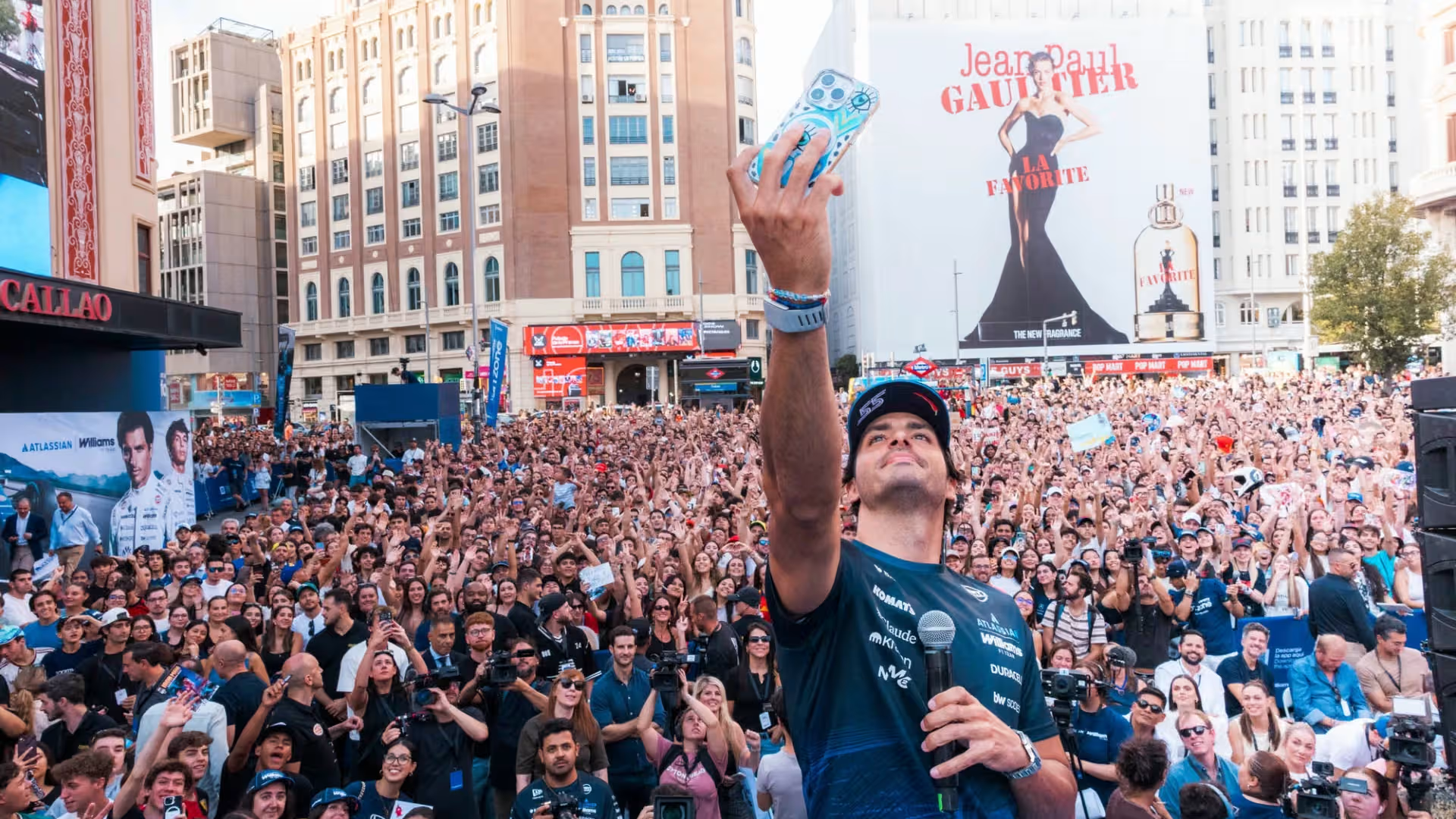
    Long before lights out, Madrid demonstrated it was more than ready for the spectacle, embracing the Grand Prix atmosphere days before a single lap was turned. From the start of the week, fans tracked Sainz’s packed schedule, eager to share in the emotion. That passion was vividly illustrated on Tuesday when Plaza del Callao filled up hours before his arrival.

    For his dedicated fan community, Team Fifty5, the bond runs deeper than a single race weekend.

    “This week, from the moment I landed, the city was already buzzing,” Sainz says. “I went to Callao and there were people there since early morning – different stories, different ages, all gathering together. It was incredible.
    “Team Fifty5 has been with me through the good weekends and the bad ones, and seeing that kind of dedication and support in my own city gave me a boost I don’t take for granted.”

    For Quevedo, Sainz is not merely a competitor here; he is the reason the excitement feels so personal to the people of Madrid. That connection between the city and its driver gives the week its soul.

    Itziar Blazquez echoes that sentiment. “Sharing a passion with different people around the world is cool, but sharing the exact same love for the same driver creates a real bond,” she says.
    Additionally, being part of the Fifty5 community, “feels like getting a step closer to a big global family that backs him no matter what.”

    A Home Race, Literally

    For most drivers, a “home race” implies a supportive grandstand and a familiar setting—Monaco, for instance, is special because many reside there minutes from the track. For Sainz, Madrid means something far more literal.

    “Madrid is my home and I’ve always been very proud of the city and my country,” he says. “I get to spend the weekend with my family and sleep at my parents’ house to then go racing – that doesn’t happen anywhere else on the calendar.
    “And then on top of that, I get to do it in front of a Spanish crowd, in the city that watched me grow up. It’s going to be a very special weekend.”

    Carlos Sainz’s Legacy in Madrid

    Regardless of the result on Sunday, fans in Madrid have already settled on what this weekend—and the journey leading to it—signifies. Having lived her entire life in the capital, Blazquez can attest to what Sainz represents for the city.

    “He’s the heart of motorsport in the capital of Spain, he’s become a role model,” she says. To her, Sainz is someone who “represents Madrid spirit at its best: his relentless hard work, resilience, and class.”
    Her message to him is simple: “You carried Madrid to the top step of the podium, to the world stage, and now you’ve brought Formula 1 back home. So, thanks.”

  • Mercedes Targets Madring Gains as Every Team Reveals Upgrades

    Mercedes Targets Madring Gains as Every Team Reveals Upgrades

    A new circuit like the Madring presents teams with a steep learning curve, from identifying the optimal racing line to managing tyre degradation. Adding another layer of complexity, several constructors have introduced technical upgrades for the Spanish Grand Prix weekend. Here is a comprehensive breakdown of every update brought to the grid.

    Mercedes

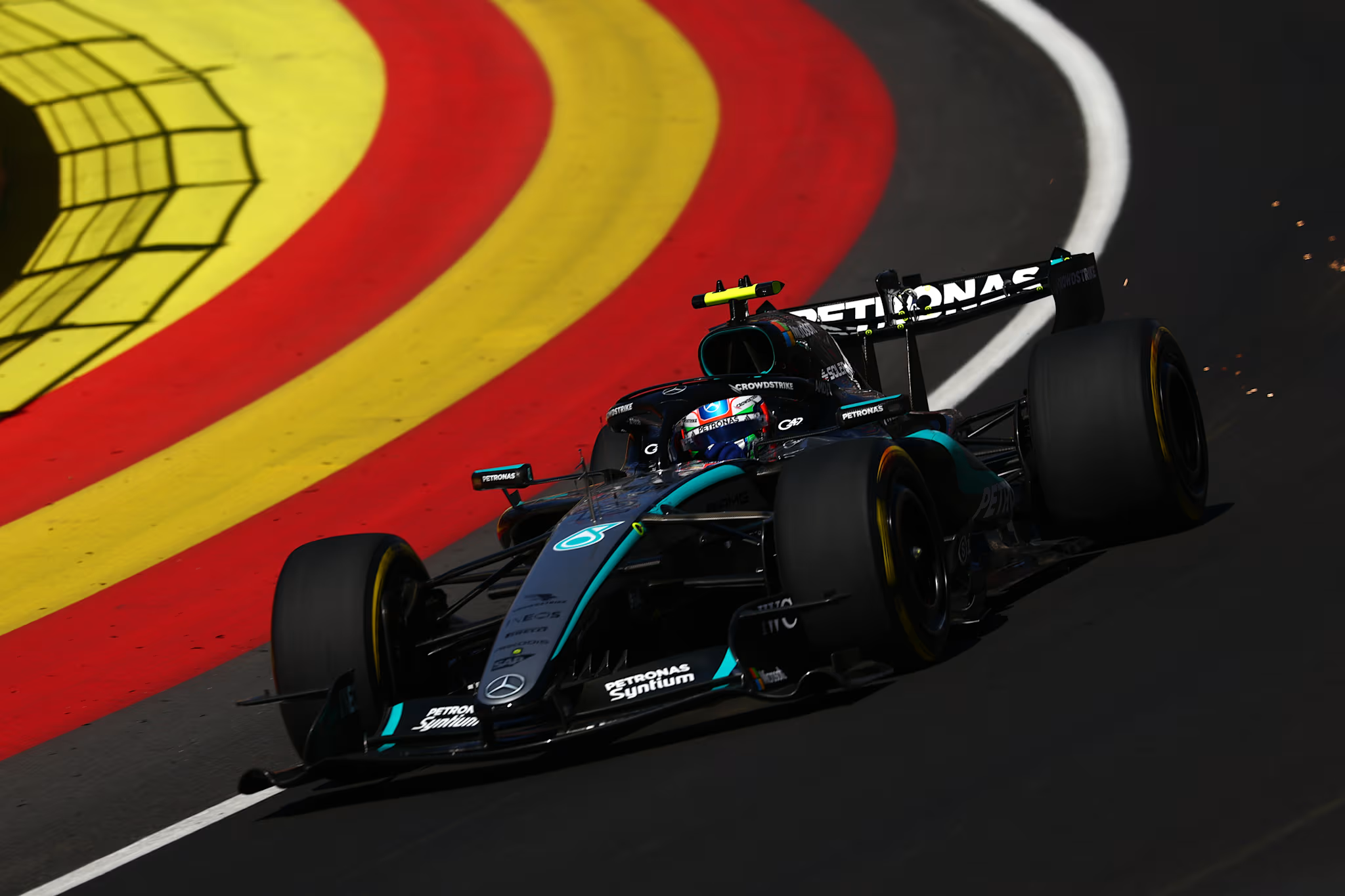
    Mercedes has signaled that more significant upgrades will arrive later in the season. For the Madrid round, the team has focused on circuit-specific aerodynamic adjustments to balance load and drag. The updates include a reduction in the rear wing central winglet span and the addition of a new winglet positioned behind the exhaust. The front lip has also been reprofiled to improve flow attachment across all steering conditions, a change designed to benefit performance beyond this specific weekend.

    Ferrari

    The Scuderia has adopted a conservative approach, submitting only a single minor update. The team has adapted the rear suspension fairing profile with the specific aim of recovering a local load benefit.

    McLaren

    Targeting another substantial points haul, McLaren has introduced additional rear wing furniture. The components are designed to improve flow conditioning onto the rear wing mainplane and flap elements.

    Red Bull

    Building on development work from Monza, Red Bull’s primary focus for the Spanish Grand Prix is reliability. The team has altered the rear wheel bodywork assembly to restore the aerodynamic load levels seen in earlier races. A geometric change has also been made to the floor bib.

    Racing Bulls

    Currently holding the ‘best of the rest’ position in the Constructors’ Championship, Racing Bulls has not submitted any upgrades for the event in Madrid.

    Alpine

    Following a standout weekend in Italy where Pierre Gasly secured pole position, Alpine has optimized the forward floor board. The modification targets improved local pressure distribution and flow management.

    Haas

    After making numerous chassis adjustments and equipping Ollie Bearman with the latest Ferrari power unit at the previous round, Haas has elected not to bring further upgrades to Spain.

    Audi

    Despite a run of four consecutive points finishes ending in Italy, Audi has also decided against introducing updates for the Spanish Grand Prix.

    Williams

    Williams is reserving its major upgrade package for the Azerbaijan Grand Prix. Consequently, Alex Albon and home favourite Carlos Sainz will race the current specification in Madrid. However, the team will utilize Friday’s practice sessions to test components intended for next year’s car.

    Aston Martin

    With the team’s B-spec challenger having debuted only a few rounds ago in Hungary, Aston Martin is prioritizing the maximization of that package alongside the updated Honda power unit. No upgrades have been listed for the Spanish Grand Prix.

    Cadillac

    As the only team yet to score a point, Cadillac has introduced two aerodynamic modifications. The team has reintroduced an updated central trailing edge winglet on the rear wing flap to generate additional rear aerodynamic load and improve stability. Additionally, a vane has been added to the outboard diffuser sidewall, targeting further aerodynamic performance and increased load at the rear of the car.