Tag: Binance

  • XRP $2 Roadmap: Weekly Close Could Trigger 35% Rally

    XRP $2 Roadmap: Weekly Close Could Trigger 35% Rally

    Key Highlights

    • XRP is forming a technically precise inverse head-and-shoulders pattern on the daily chart with a neckline at $1.55, projecting a 35% upside target near $2.00 upon confirmed breakout.
    • On-chain data shows 1.5–1.6 billion XRP moved to Binance over 30 days—a six-month high—yet price remains stable in the right shoulder range, signaling strong absorption by buyers.
    • A potential golden cross is developing as the 50-day EMA approaches the 200-day EMA, while Ripple advances XRP Ledger integration with Stripe and Tempo for AI-driven micropayments.

    Inverse Head-and-Shoulders Pattern Nears Completion on Daily Chart

    XRP is on the verge of confirming a major bullish reversal structure that has been developing throughout the summer. According to analysts, including well-known chart tracker Ali Martinez, the token has carved out a mathematically precise inverse head-and-shoulders formation on the daily timeframe. The pattern’s anatomy is clearly defined: the left shoulder formed during June’s consolidation phase, the head marked the absolute bottom at the August lows around $1.00, and the right shoulder is currently taking shape in a tight plateau between $1.32 and $1.36.

    The $1.55 Neckline Is the Critical Trigger

    The decisive level is the pattern’s neckline at $1.55. A daily candle close above this resistance would technically complete the formation and activate a measured move projection of approximately 35%, targeting the psychological $2.00 threshold. Martinez’s chart annotation, shared via X.com, displays the emerging structure with a price objective of $2.10. Adding confluence to the setup, the 50-day exponential moving average (EMA) has moved within 2% of the 200-day EMA, teasing a medium-term golden cross that would further validate the bullish bias.

    On-Chain Data Reveals Massive Whale Deposits Absorbed Without Panic

    While technical geometry paints an optimistic picture, on-chain metrics from CryptoQuant provide the fundamental underpinning. Over the past 30 days, large investors have transferred a six-month record of 1.5–1.6 billion XRP to Binance. In exchange operations, deposits of this magnitude typically serve as margin collateral, derivatives backing, or fuel for over-the-counter transactions rather than immediate spot selling. The critical observation is that this enormous liquidity influx has failed to trigger price collapse or panic; instead, XRP has held firmly within the right-shoulder boundaries. This resilience suggests buyers are aggressively absorbing supply, potentially creating a structural shortage once whale inflows subside.

    Regulatory Clarity and Utility Expansion Bolster Confidence

    Buyer conviction is further reinforced by a stabilizing regulatory and developmental backdrop. The U.S. Senate’s rejection of the CLARITY Act on September 15 delivered a short-term negative headline, yet the Commodity Futures Trading Commission (CFTC) continues to classify XRP as a digital commodity, largely insulating it from Securities and Exchange Commission (SEC) enforcement ambiguity. Simultaneously, Ripple is advancing the token’s core utility: beta testing of XRP Ledger integration into Stripe and Tempo infrastructure commenced on September 17, carving a dedicated niche for XRP in instant micropayments between autonomous AI agents—a rapidly emerging use case.

    Why This Matters

    The convergence of a textbook technical breakout, unprecedented on-chain absorption capacity, and expanding real-world utility positions XRP at a pivotal inflection point. For market participants, the $1.32–$1.33 right-shoulder support represents the line in the sand; a defense here keeps the $2.00 roadmap intact. A confirmed daily close above the $1.55 neckline would shift the burden of proof to bears and likely accelerate momentum as algorithmic and trend-following strategies engage. Beyond the immediate trade, the Stripe and Tempo integration signals a strategic pivot toward machine-to-machine economies, potentially unlocking a structural demand vector independent of speculative cycles. Traders and investors should monitor the neckline breakout, golden cross confirmation, and whale deposit trends as the primary validation signals for the next leg higher.

    Frequently Asked Questions

    What price level confirms the inverse head-and-shoulders breakout for XRP?

    A daily candle close above the $1.55 neckline resistance confirms the pattern completion and activates the measured move target toward $2.00.

    Why did 1.5–1.6 billion XRP move to Binance recently, and is it bearish?

    Large transfers to exchanges often serve as collateral for derivatives or OTC deals rather than spot selling. The fact that price held firm during this record inflow suggests strong buyer absorption, which is generally interpreted as bullish.

    How does the Stripe and Tempo integration affect XRP’s long-term outlook?

    The beta integration enables XRP Ledger to facilitate instant micropayments between autonomous AI programs, creating a fundamental utility driver in the emerging agent-to-agent economy that could sustain demand beyond speculative trading.


  • Binance Launches 24/7 Forex Perpetual Futures With 100x Leverage

    Binance Launches 24/7 Forex Perpetual Futures With 100x Leverage

    Key Highlights

    • Binance launches 24/7 foreign exchange perpetual futures, expanding its TradFi derivatives suite into global currency markets with USDT settlement.
    • The inaugural USD/BRL (U.S. dollar–Brazilian real) contract offers up to 100x leverage, marking the exchange’s first forex perpetual product.
    • The move bridges cryptocurrency infrastructure with traditional foreign exchange, enabling round-the-clock FX speculation and hedging without legacy market hours constraints.

    Binance Enters Forex Derivatives With USD/BRL Perpetual Futures

    Binance, the world’s largest cryptocurrency exchange by trading volume, has officially launched 24/7 foreign exchange perpetual futures, signaling a strategic expansion of its traditional finance (TradFi) derivatives business into the $7.5 trillion-per-day global currency market. The inaugural offering is a USD/BRL perpetual contract settled in Tether (USDT) with maximum leverage of 100x, allowing traders to speculate on or hedge the U.S. dollar versus the Brazilian real around the clock without the settlement delays and trading-hour restrictions characteristic of conventional FX venues.

    Product Mechanics and Market Structure

    The new perpetual futures contracts mirror the structure of Binance’s existing cryptocurrency perpetuals: they have no expiry date, use a funding-rate mechanism to anchor the contract price to the underlying spot rate, and settle profit and loss in USDT. By denominating margin and settlement in the dominant crypto stablecoin, Binance eliminates the need for fiat on- and off-ramps during the trading process, reducing friction for its global user base while exposing participants to the deep liquidity of the USD/BRL pair. The 100x leverage ceiling matches the maximum available on the platform’s major crypto perpetuals, providing a familiar risk profile for existing derivatives traders.

    Bridging Crypto Infrastructure and Traditional FX

    Foreign exchange has long operated on a fragmented, over-the-counter basis with limited retail access outside banking hours. Binance’s entry introduces a centralized, order-book-based venue that operates continuously, including weekends and holidays when traditional interbank desks are closed. This architecture could attract high-frequency firms, emerging-market corporates seeking after-hours hedging, and retail speculators who currently rely on CFD brokers with wider spreads and counterparty risk. The USD/BRL pair was likely chosen for its high volatility, significant retail interest in Latin America, and the region’s growing crypto adoption, positioning Binance to capture flow from both traditional FX participants and its existing Latin American user base.

    Why This Matters

    The launch represents a convergence milestone between digital-asset infrastructure and traditional financial markets. By applying crypto-native perpetual-futures technology to sovereign currencies, Binance is testing whether the 24/7, USDT-margined model can displace legacy FX prime brokerage for a segment of the market. Success could prompt expansion into other major and emerging-market pairs—EUR/USD, USD/JPY, USD/TRY—potentially reshaping how global participants access currency risk. Regulators will likely scrutinize the product’s leverage levels, investor-protection frameworks, and AML/KYC controls, especially given Brazil’s evolving crypto-asset licensing regime under the central bank’s new virtual-asset service provider rules.

    Frequently Asked Questions

    What is a perpetual futures contract and how does it differ from standard FX forwards?

    A perpetual futures contract has no fixed expiration date; instead, a periodic funding rate keeps its price tethered to the spot market. Unlike conventional FX forwards or futures that settle on specific dates, perpetuals allow traders to hold positions indefinitely as long as margin requirements are met.

    Why is the contract settled in USDT rather than fiat currency?

    USDT settlement enables instantaneous, 24/7 value transfer on blockchain rails without relying on traditional banking hours or correspondent-banking networks. This reduces operational friction and aligns with Binance’s existing derivatives infrastructure.

    Is the 100x leverage available to all users globally?

    Leverage limits are subject to Binance’s internal risk controls and local regulatory restrictions. Users in jurisdictions with leverage caps—such as the EU under ESMA rules or Brazil under CVM guidelines—may face lower maximum leverage or product unavailability.

  • Report: ECB President Personally Blocked Binance’s EU License

    Report: ECB President Personally Blocked Binance’s EU License

    Key Highlights

    • ECB President Christine Lagarde personally lobbied Greek Prime Minister Kyriakos Mitsotakis to block Binance’s MiCA license application, overriding Greece’s own finance minister and independent regulator.
    • Binance’s application had cleared all technical reviews and the mandatory 40-day assessment period without objections before political intervention halted the process in mid-June.
    • Binance has withdrawn its Greek application and is now pursuing a MiCA license through France’s AMF after rejections from Ireland and Latvia, while competitors Coinbase and Kraken have already secured EU authorizations.

    ECB President’s Unprecedented Intervention in Binance Licensing

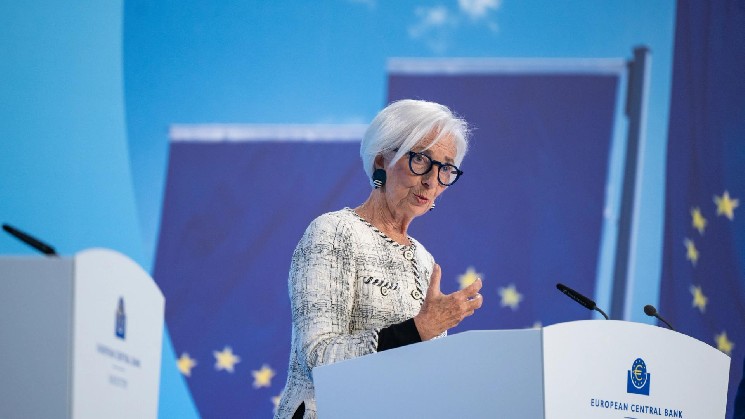
    European Central Bank President Christine Lagarde directly intervened to derail Binance’s bid for a Markets in Crypto-Assets (MiCA) license through Greece, according to a Wall Street Journal report citing people familiar with the discussions. The extraordinary move saw Lagarde personally press Greek Prime Minister Kyriakos Mitsotakis to block the application during a May meeting, despite the Hellenic Capital Market Commission (HCMC) having all but finalized its approval.

    A Regulatory Process Overridden at the Highest Level

    Binance had submitted its application to Greece’s HCMC for a license that, once granted by any single EU member state, would permit operation across the entire 27-nation bloc. By early June, the exchange had successfully navigated the technical review. The mandatory 40-day assessment window closed without objections, the HCMC’s anti-money laundering officer had issued a favorable sign-off, and notifications to other member states were reportedly being prepared. Then, between June 7 and June 15, the trajectory shifted abruptly. An HCMC official subsequently informed Binance that Lagarde opposed the license, and the Journal reported she had signaled this position directly to Mitsotakis, a stance that superseded the views of Greece’s own finance minister. The report suggested the Greek government’s willingness to comply may have been influenced by domestic election timing as much as the merits of Binance’s case.

    Stated Concerns: US Settlement and Digital Euro Competition

    Lagarde’s reported reasoning centered on two pillars: Binance’s 2023 guilty plea in the United States to money laundering and sanctions violations, and a strategic concern that granting the exchange a European gateway would accelerate adoption of dollar-denominated stablecoins at a time when the ECB is advancing its own digital euro project. The intervention has drawn sharp criticism from legal observers. One legal expert described the episode as “political interference” in a licensing decision that legally rests with an independent national regulator, emphasizing that the ECB holds no formal authority over MiCA approvals whatsoever.

    Binance Retreats to France After Multiple EU Rejections

    Reuters first surfaced the risk of a Greek rejection in mid-June, prompting Binance to push back forcefully. The exchange insisted the HCMC’s review had found its application compliant and highlighted a compliance team that has grown to roughly 1,500 people since its US settlement. That resistance proved insufficient. Binance later confirmed it had decided to halt the Greek application process and would seek authorization from other member states. According to contemporaneous reports, regulators in Ireland and Latvia had already declined to engage, citing the exchange’s past penalties and complex corporate structure. With Coinbase having selected Luxembourg as its MiCA hub and Kraken already holding EU approval, Binance is now concentrating its efforts on France, where it holds a smaller registration and is in active discussions with the Autorité des Marchés Financiers (AMF) for a full MiCA license covering all member states.

    Why This Matters

    The episode raises fundamental questions about the independence of national competent authorities under the MiCA framework and the extent to which political leadership—and supranational figures without formal statutory power—can influence licensing outcomes. For the crypto industry, it signals that past enforcement actions, particularly the US Department of Justice settlement, continue to cast a long shadow over European market access even after technical compliance requirements are met. For the ECB, the intervention underscores the tension between fostering a regulated digital asset ecosystem and protecting the monetary sovereignty objectives tied to the digital euro. The coming months will test whether France’s AMF applies a strictly legal standard or whether similar political considerations shape its decision on Binance’s remaining pathway to a pan-European license.

    Frequently Asked Questions

    Did Christine Lagarde have legal authority to block Binance’s MiCA license in Greece?

    No. The ECB has no formal authority over MiCA licensing decisions, which legally belong to independent national competent authorities—in this case, Greece’s Hellenic Capital Market Commission. Lagarde’s intervention was political, not statutory.

    Why did Binance withdraw its Greek application after it had technically passed review?

    After the HCMC had completed its technical assessment and the 40-day objection period expired without issue, an HCMC official informed Binance that Lagarde opposed the license. Facing explicit political opposition at the prime ministerial level, Binance chose to withdraw and pursue authorization elsewhere.

    Where does Binance stand now for a MiCA license in Europe?

    Binance has been rejected or turned away by Greece, Ireland, and Latvia. The exchange is now focusing on France, where it holds a limited registration and is negotiating with the AMF for a full MiCA license that would cover all 27 EU member states.

  • Aptos (APT) Surges 18% as Layer 1 Rotation Accelerates; $0.825 Target in Focus

    Aptos (APT) Surges 18% as Layer 1 Rotation Accelerates; $0.825 Target in Focus

    Key Highlights

    • Aptos ($APT) surged 18.6% to approximately $0.6616 as Layer-1 sector rotation drove speculative demand toward higher-beta altcoins.
    • Binance top trader positioning shows strong bullish bias with a 1.62 long/short ratio (61.79% long vs 8.21% short), reinforcing the breakout attempt above the $0.654 range ceiling.
    • Technical indicators support upside momentum—RSI at 60.94 and MACD bullish crossover—though failure to hold $0.654 could trigger a retracement toward $0.63–$0.60 or the $0.509 range floor.

    Layer-1 Rotation Fuels Aptos Breakout Above Multi-Month Range

    Aptos ($APT) posted an 18.6% price increase during the latest trading session, climbing to roughly $0.6616 as capital rotated into Layer-1 tokens across the board. The advance was not tied to a protocol-specific catalyst but rather reflected a broader shift in market participation toward higher-beta assets within the Layer-1 category. Several peer tokens recorded double-digit gains in tandem, confirming that $APT’s rally emerged from sector-wide momentum rather than isolated fundamental developments. The move lifted the token out of a prolonged consolidation band that had capped prices between $0.509 and $0.654 for months, with the latest session printing a high of $0.711—penetrating liquidity resting above the established range ceiling.

    Top Trader Positioning Heavily Skewed Long on Binance

    Derivatives data from CoinGlass reveals that Binance’s top trader cohort maintained a pronounced long-side bias as $APT approached its range ceiling. Long accounts represented 61.79% of positioning versus just 8.21% short, yielding a long/short ratio of 1.62. The ratio had fluctuated significantly in recent weeks, including a sharp spike around September 11, but the latest reading continues to show a preponderance of bullish bets among the platform’s most active traders. This positioning aligns with the spot-market recovery driven by Layer-1 rotation, though it also raises the stakes: a failure to hold the breakout could prompt leverage reduction among those concentrated long positions, amplifying downside pressure.

    Technical Structure Signals Breakout, But Acceptance Above $0.654 Is Critical

    On the daily timeframe, $APT has repeatedly tested the $0.654 resistance since mid-year, producing candle wicks above the level that subsequently retreated—classic liquidity sweeps rather than sustained breaks. The current advance differs by pushing the daily close above that boundary, with the Relative Strength Index climbing to 60.94 (above its 53.83 average but below overbought territory) and the MACD crossing above its signal line. These readings suggest momentum is strengthening without yet reaching exhaustion. For the breakout to invalidate the prior range-play structure, buyers must convert the former $0.654 ceiling into support. A successful retest would open a path toward the next significant daily resistance at $0.825.

    Liquidity Map Reveals Dual Pathways: Extension or Reversion

    Binance’s liquidation heatmap underscores that $APT’s push to $0.711 already swept through a cluster of overhead liquidity near the prior range high. However, additional liquidation clusters persist in the $0.69–$0.72 zone, meaning a sustained hold above $0.654 could fuel a further liquidity-driven extension. Conversely, rejection at the breakout level would shift risk toward the downside, where notable liquidation liquidity sits between $0.63 and $0.60. A deeper unwind of the recent leveraged longs could ultimately revisit the $0.509 range floor, particularly if bullish positioning capitulates en masse following the rapid rally.

    Why This Matters

    The $APT price action exemplifies how sector rotation dynamics can override token-specific fundamentals in the current market environment. Layer-1 tokens as a class are benefiting from renewed speculative appetite, likely driven by narratives around modular blockchain scaling, upcoming token unlocks, and relative valuation comparisons against Ethereum and Solana. For Aptos specifically, the breakout attempt carries outsized significance because the protocol has struggled to sustain momentum above $0.65 despite repeated attempts. A confirmed break would improve the technical structure and potentially attract trend-following flows, while failure would reinforce the range-bound thesis and likely deepen the consolidation. Traders should monitor whether the current long positioning in derivatives represents informed conviction or crowded leverage vulnerable to a washout.

    Frequently Asked Questions

    What triggered Aptos’ 18.6% price surge?

    The rally was driven by broad-based Layer-1 sector rotation rather than an Aptos-specific catalyst. Multiple Layer-1 tokens posted double-digit gains simultaneously as speculative capital rotated into higher-beta altcoins.

    What are the key price levels to watch for $APT?

    The critical level is $0.654 (former range ceiling, now potential support). Above that, $0.69–$0.72 holds liquidation clusters that could fuel further upside, with $0.825 as the next major resistance. On the downside, $0.63–$0.60 and the $0.509 range floor are key support zones.

    How are top traders positioned on Binance?

    Binance top traders show a strong long bias: 61.79% long vs 8.21% short, yielding a 1.62 long/short ratio. This complements the spot breakout but also creates liquidation risk if the breakout fails and leveraged longs unwind.

  • Binance’s MiCA Application Stalls as ECB President Pushes Digital Euro ‘fit for future’

    Binance’s MiCA Application Stalls as ECB President Pushes Digital Euro ‘fit for future’

    Key Highlights

    • ECB President Christine Lagarde personally intervened to halt Binance’s MiCA license approval in Greece, according to a Wall Street Journal report.
    • The intervention was reportedly motivated by concerns that Binance’s stablecoin operations could undermine the ECB’s Digital Euro project, slated for a 2027 pilot and 2029 launch.
    • Binance withdrew its Greek application in mid-June 2026 and plans to reapply in another jurisdiction, likely France, though the timeline remains uncertain pending ESMA’s assumption of sole regulatory authority in 2027.

    ECB Intervention Halts Binance MiCA License Process in Greece

    Binance’s bid to secure a Markets in Crypto-Assets (MiCA) license within the European Union has hit a significant political roadblock. According to a report by The Wall Street Journal, European Central Bank President Christine Lagarde directly intervened to stop the approval process underway with Greece’s regulator, the Hellenic Capital Market Commission (HCMC). The report alleges that Lagarde ordered Greek authorities to pause Binance’s application, citing a strategic imperative to protect the ECB’s flagship Digital Euro project. The central bank digital currency (CBDC) is currently scheduled for a test pilot beginning in mid-2027, with a full launch targeted for 2029.

    Stablecoin Competition and the Digital Euro Vision

    The WSJ report indicates that Lagarde’s opposition stems from a fear that crypto exchanges like Binance are accelerating the adoption of USD-denominated stablecoins, a dynamic the ECB believes could erode the future relevance and monetary sovereignty of the Digital Euro. The source claims Lagarde explicitly stated she “wants the Digital Euro to be fit for the future” and raised specific concerns regarding the proliferation of dollar-backed stablecoins. This suggests the regulatory friction is less about Binance’s specific compliance posture and more about a broader policy conflict between private sector stablecoin dominance and public sector CBDC rollout.

    Regulatory Timeline and the ESMA Factor

    The political pressure forced Binance to withdraw its initial HCMC application in mid-June 2026, shortly after MiCA’s transitional period concluded on July 1, 2026. While Binance’s 2023 guilty plea in the United States for money laundering and sanctions violations was noted as a contributing factor in the report, the primary driver for the blockade appears to be the ECB’s strategic timeline. Currently, MiCA licensing is managed by national competent authorities with coordination from the European Securities and Markets Authority (ESMA). However, from 2027 onward, ESMA will assume sole direct supervisory authority over crypto-asset service providers across the bloc. The WSJ report suggests there was a concerted push to delay Binance’s approval until this centralized ESMA oversight regime takes full effect.

    Industry Reaction: Concerns Over Regulatory Fairness

    The alleged intervention has drawn sharp criticism from Binance and independent observers. A Binance spokesperson condemned the reported actions, arguing that MiCA approval should not be “A process where applicants can be privately undermined through informal channels.” The exchange maintains it met all key regulatory requirements and has stated its intention to reapply for a license in another European jurisdiction, with France widely speculated as the next target. However, whether a new application can be processed and approved before ESMA assumes sole authority in 2027 remains an open question.

    Market analysts have echoed the exchange’s concerns, questioning whether the EU can apply its landmark crypto framework consistently and fairly if political directives from the central bank can override national regulatory assessments. Separately, Binance founder Changpeng Zhao (CZ) publicly questioned why traditional banks appear apprehensive toward crypto and blockchain technology, framing the episode as a defensive move by incumbent financial infrastructure.

    Why This Matters

    The standoff between the ECB and Binance highlights a fundamental tension at the heart of European digital asset regulation: the competition between private stablecoins and sovereign central bank digital currencies. MiCA was designed to create a harmonized rulebook providing legal certainty for crypto businesses operating in the EU. If the framework’s implementation can be suspended by executive political intervention to favor a pending CBDC, it undermines the credibility of the regulatory regime and creates significant precedent risk for other global firms seeking EU authorization. The transition to ESMA as the sole supervisor in 2027 adds a layer of uncertainty; firms must now calculate whether applying under the current national regime is viable, or if they should wait for the centralized supervisor, potentially facing a de facto moratorium driven by CBDC protectionism.

    Frequently Asked Questions

    Did Binance fail to meet MiCA’s technical requirements for the license?

    According to the Wall Street Journal report, the license hiccup was not because Binance failed to meet key MiCA requirements. The withdrawal was forced by political intervention from the ECB President, who reportedly ordered Greece to stop the approval process to protect the Digital Euro project from stablecoin competition.

    When will ESMA become the sole crypto regulator in the EU?

    ESMA is scheduled to assume sole direct supervisory authority over crypto-asset service providers across the European Union starting in 2027. Until then, licensing and enforcement remain the responsibility of national competent authorities like Greece’s HCMC, with ESMA acting in an oversight and coordination capacity.

    Where will Binance apply next for a MiCA license?

    Binance has stated it intends to reapply for a MiCA license in another European country. Market speculation and the WSJ report suggest France is the most likely jurisdiction for the next application, though the company has not officially confirmed the specific venue or a definitive timeline for submission.

  • ECB President Christine Lagarde Intervened to Block Binance’s EU MiCA License, WSJ Reports

    ECB President Christine Lagarde Intervened to Block Binance’s EU MiCA License, WSJ Reports

    Key Highlights

    • Binance confirms it remains committed to securing a MiCA license in Europe despite withdrawing its Greek application in mid-June after the Hellenic Capital Market Commission (HCMC) declined to approve it.
    • Binance’s Head of Europe, Gillian Lynch, states the exchange met all HCMC requirements and had a “complete application” with nothing material outstanding.
    • The Wall Street Journal reports ESMA privately advised national regulators to reject Binance’s MiCA applications due to past compliance issues, while the ECB clarifies it has no institutional role in authorizing Crypto-Asset Service Providers.

    Binance Reaffirms European MiCA Ambitions After Greek Setback

    Binance has signaled its determination to remain a regulated participant in the European cryptocurrency market despite a significant regulatory rebuff in Greece. A company spokesperson confirmed that the exchange is actively working toward becoming MiCA-authorised and view this as an important step in providing users with a consistent, regulated, and trusted service across the European market. The statement comes weeks after Binance withdrew its application with the Hellenic Capital Market Commission (HCMC) and began winding down local operations after officials decided at the last minute not to approve the exchange’s Markets in Crypto-Assets (MiCA) license request. The company had previously vowed it would not exit the European market entirely.

    Exchange Contends Application Was Complete

    In an interview with CoinDesk in early July, Gillian Lynch, Binance’s Head of Europe, contested the regulatory outcome, asserting that the exchange had satisfied every condition set by the Greek regulator. We were deemed to have a complete application, Lynch said. Nothing was missing, nothing material was outstanding. The assertion raises questions about the specific grounds for the HCMC’s decision to deny authorization, particularly given the exchange’s claim of full procedural compliance. The withdrawal marks a notable stumble in Binance’s broader strategy to secure regulatory footing across the European Union under the new MiCA framework.

    ESMA Guidance and ECB Jurisdiction Clarified

    Adding complexity to the regulatory picture, The Wall Street Journal reported that the European Securities and Markets Authority (ESMA) privately advised national financial regulators to reject Binance’s MiCA applications. The guidance reportedly stems from concerns regarding the exchange’s historical compliance record. Meanwhile, an ECB spokesperson declined to comment on the specific case when contacted by CoinDesk. However, information shared with the outlet clarifies that the European Central Bank holds no institutional role with regards to the authorising of Crypto-Asset Service Providers (CASPs), noting that competence remains strictly with national competent authorities—in this instance, the HCMC.

    Founder’s Legal History Looms Over Licensing Efforts

    The regulatory scrutiny follows the high-profile legal resolution involving Binance founder Changpeng “CZ” Zhao. In 2023, Zhao pleaded guilty in the United States to violating the Bank Secrecy Act (BSA), resulting in a $4.3 billion settlement with U.S. authorities. He subsequently served a four-month prison sentence in California in 2024. In a significant political development, Zhao was pardoned by President Donald Trump in October 2025. This history appears to be a central factor influencing European regulators’ assessment of the exchange’s suitability for a MiCA license.

    Why This Matters

    The standoff in Greece represents a critical test case for how MiCA—the EU’s landmark crypto regulatory regime—will be applied to major global exchanges with checkered compliance histories. While MiCA offers a “passporting” mechanism allowing a license in one member state to serve the entire bloc, the Binance case illustrates that national competent authorities retain significant discretion to block entry based on reputational and historical risk factors. ESMA’s reported intervention suggests a coordinated regulatory posture toward entities with past enforcement actions, potentially setting a precedent for other exchanges seeking EU authorization. For Binance, securing a MiCA license remains essential for maintaining legitimate access to the EU’s 450 million consumers, but the path forward now likely requires a new application in a different jurisdiction or a successful appeal of the Greek decision.

    Frequently Asked Questions

    Why did Binance withdraw its Greek MiCA application?

    Binance withdrew its application in mid-June after the Hellenic Capital Market Commission (HCMC) decided not to approve its MiCA license request. The exchange subsequently began winding down its Greek operations but maintains it intends to pursue authorization elsewhere in Europe.

    Did Binance fail to meet the regulatory requirements in Greece?

    According to Binance’s Head of Europe, Gillian Lynch, the exchange met all of the HCMC’s requirements and was deemed to have a “complete application” with nothing material outstanding. The specific reasons for the HCMC’s denial have not been publicly detailed by the regulator.

    What role did Changpeng Zhao’s legal history play in the decision?

    While not explicitly cited by the HCMC, The Wall Street Journal reported that ESMA advised national regulators to reject Binance’s applications over concerns regarding the exchange’s past compliance issues. Zhao pleaded guilty to violating the U.S. Bank Secrecy Act in 2023, resulting in a $4.3 billion fine and a four-month prison sentence served in 2024, before receiving a presidential pardon in October 2025.

  • Binance Points to On-Chain IPOs as Future of Capital Markets

    Binance Points to On-Chain IPOs as Future of Capital Markets

    Binance Highlights Shift Toward On-Chain IPOs as Capital Markets Evolve

    Binance has sparked industry discussion by addressing the potential transition of initial public offerings (IPOs) to on-chain models, a move that could fundamentally reshape how capital markets operate. The conversation, highlighted in a recent Binance tweet, signals a broader trend toward blockchain adoption in traditional finance and carries significant implications for traders and investors.

    Traditional Market Structures Face Disruption

    The current cryptocurrency landscape reflects mixed sentiment alongside growing interest in innovative financial structures. Binance’s focus on on-chain IPOs underscores a shift where traditional market hours and constraints are becoming less relevant. This evolution not only highlights the changing nature of capital markets but also positions Binance as a key driver of this transformation. Such developments could attract increased institutional interest, emphasizing the need for market participants to stay informed on emerging trends.

    Key Implications of On-Chain IPO Models

    • Binance is leading discussions on transitioning from traditional IPOs to on-chain models
    • The shift signals a potential transformation in capital market structure
    • On-chain IPOs could deliver increased efficiency and transparency
    • Traders should assess how these developments may influence market dynamics
    • Growing institutional interest could accelerate the transition

    Market Context and Institutional Impact

    Against a backdrop of mixed market signals, Binance’s insights into on-chain IPOs could prove pivotal. This development points to a potential loosening of traditional market constraints, enabling more fluid capital movements. As Binance continues to innovate, its influence on market structure will be significant, presenting traders with both new opportunities and challenges. The conversation around on-chain IPOs reflects the increasing integration of blockchain technology into traditional financial practices, potentially reshaping how companies access capital and how investors participate in market opportunities.

    Regulatory Outlook and Trader Guidance

    Market participants are advised to monitor how the shift to on-chain IPOs develops and what regulatory responses may emerge. The potential for increased institutional participation could lead to volatility as new structures are adopted. Tracking Binance’s position and subsequent innovations will be essential for understanding future market trends. As with all market data, information is subject to change and should be interpreted with caution.

  • Crypto Trading Volume Surges as September Tests August Demand Strength

    Crypto Trading Volume Surges as September Tests August Demand Strength

    Crypto Trading Volume Faces Durability Test After August Surge

    Cryptocurrency trading volume returned sharply in August, but September is testing whether that heightened activity can hold without another broad price rally. Spot and perpetual markets expanded as Bitcoin and major tokens gained roughly 25% during the broader rebound tracked by CryptoQuant. The latest pullback now creates a cleaner test of underlying demand, allowing traders to watch whether exchange activity stays elevated without a fresh price surge.

    Macro Events Add Pressure

    Bitcoin trades near one-month lows ahead of two major policy events clustered close together. A Senate procedural vote on the CLARITY Act and the Federal Reserve’s two-day policy meeting both began on September 15. Both events can affect risk appetite and short-term positioning, giving crypto trading volume a new stress test just weeks after August’s comeback.

    August Spot Volume Hits Multi-Month High

    Spot crypto trading volume reached about $75 billion on August 21, which CryptoQuant described as the second-highest daily spot total since February. Binance handled $19.4 billion of that total, while Coinbase recorded $8 billion and Gate processed $5.1 billion.

    CryptoQuant chart showing daily spot trading volume
    Source: CryptoQuant

    The composition differed from several earlier 2026 volume spikes. Those periods often appeared during sell-offs and heavy risk reduction. August activity rose during a broad crypto rally, giving the increase a stronger buying component. That difference now raises a fresh question about persistence.

    Spot Demand Outpaces Derivatives Growth

    CoinMarketCap data also show spot activity growing faster than derivatives during August. Eleven tracked exchanges processed $4.23 trillion across spot and derivatives, up 12.3% from July. Spot volume increased 17.7% month over month, while derivatives rose 11.5%.

    That shift matters because derivatives still dominate total exchange activity, accounting for 86.2% of tracked August volume. Spot represented 13.8%, up from 13.2% in July. A continued rise in spot share would show more activity moving through direct asset purchases and reduce dependence on leveraged turnover as the main source of exchange activity.

    Binance Leads as Participation Broadens

    Binance kept the largest share of exchange activity during August. CoinMarketCap placed its total market share at 43.3% across the tracked venues. CryptoQuant also showed Binance leading the August 21 spot surge.

    However, the rebound extended beyond one platform. CryptoQuant data showed rapid 30-day spot volume growth across Gate, Coinbase, OKX, Binance, and smaller exchanges. Gate recorded the fastest increase, while Coinbase and OKX also posted strong gains.

    Perpetual futures volume reached about $336 billion on August 21, the highest daily level since March. Binance handled $124 billion, while OKX recorded $46 billion and MEXC processed $30 billion. Short covering and liquidations contributed to that futures burst.

    September Pullback Tests August Comeback

    Bitcoin dropped toward $76,000 on September 15 and approached a one-month low. The token touched an intraday low near $75,560 before recovering part of the decline. The move came before the Senate’s CLARITY Act procedural vote, with the Federal Reserve also starting its two-day policy meeting the same day.

    That backdrop gives crypto trading volume a new test. August showed that exchange activity could rise with prices rather than during forced selling. September can show whether that participation survives weaker prices and higher macro uncertainty.

    If spot turnover stays elevated during the pullback, the August rebound would look broader than one event-driven session. If activity fades quickly, the $75 billion spike would stand out as a temporary burst. Exchange volume now offers a useful measure of whether recent demand can keep engaging through volatility across major centralized venues.

    Related: Ripple Lands Multi-Year Louisville Deal to Put XRP Branding on Court

  • Binance Launches Realized Perp Slippage Metric for Traders

    Binance Launches Realized Perp Slippage Metric for Traders

    Binance Launches Realized Perpetual Slippage Metric to Improve Trading Execution Insights

    Binance has introduced a new analytical tool called realized perp slippage, designed to give traders a clearer view of order execution quality on its perpetual futures market. The metric measures the gap between expected slippage — calculated from a pre-execution order book snapshot — and the actual slippage experienced when a market order fills. By quantifying this difference, Binance aims to help users assess execution efficiency and refine their trading strategies in real-time.

    How the Realized Perp Slippage Metric Works

    The system captures the state of the order book immediately before a market order is executed, establishing a baseline for expected slippage. Once the order fills, the actual execution price is compared against that baseline. The resulting realized perp slippage figure reveals whether traders received better or worse fills than anticipated, offering a transparent benchmark for execution performance.

    This approach addresses a long-standing challenge in crypto derivatives trading: the opacity of slippage during volatile or thin-liquidity conditions. With this metric, traders can now audit execution quality post-trade, identify patterns, and adjust order types, timing, or venue selection accordingly.

    By the Numbers: A Snapshot of Current Discrepancy

    At the time of publication, Binance’s dashboard shows an expected slippage level of $0.94 versus an actual fill slippage of $1.63 — a notable divergence that highlights the practical impact of execution variability. Such gaps can erode profitability, especially for high-frequency or large-volume strategies where slippage compounds rapidly.

    The release comes amid mixed momentum across major crypto assets, with some showing bullish structure while others face selling pressure. In this environment, tools that quantify execution risk become increasingly valuable for risk management and strategy optimization.

    Strategic Implications for Traders

    As the market absorbs this new data layer, several behavioral shifts may emerge:

    • Execution monitoring becomes a routine part of post-trade analysis.
    • Traders may favor limit orders or algorithmic execution during periods of high realized slippage.
    • Comparative venue analysis could drive order flow toward exchanges with tighter realized slippage profiles.

    Binance, already recognized for its extensive suite of trading analytics, strengthens its platform’s appeal to institutional and professional traders who demand measurable execution transparency.

    What to Watch Next

    Market participants should track how realized perp slippage trends correlate with volatility regimes, funding rate shifts, and order book depth changes. Persistent deviations between expected and actual slippage may signal structural liquidity issues or latent market stress.

    Over time, this metric could influence product development — such as dynamic fee tiers, improved matching engine logic, or new order types designed to minimize slippage risk.


    Disclaimer: This article is for informational purposes only and does not constitute financial advice. Trading cryptocurrency derivatives involves significant risk; users should conduct independent research and consider their risk tolerance before engaging in any trading activity.

  • Binance Announces September Delistings for Five Margin Pairs

    Binance Announces September Delistings for Five Margin Pairs

    Binance Removes Five Cross Margin Pairs on September 18

    Binance has announced the removal of five cross margin trading pairs effective September 18, giving leveraged traders a narrow window to adjust positions before the exchange automatically settles any remaining exposure. The affected pairs are ENJ/USDC, GENIUS/USDC, CVX/USDC, GUN/USDC, and VANA/USDC. Additionally, the GENIUS/USDC pair will be removed from isolated margin trading.

    Key Deadlines and Automatic Settlement Process

    The first deadline arrives on September 16 at 06:00 UTC, when Binance Margin will halt new borrowing for the affected isolated margin pair. Transfers into the relevant isolated margin accounts are already restricted, though users with outstanding liabilities may still transfer amounts corresponding to those obligations.

    At 06:00 UTC on September 18, Binance will close all open positions, automatically settle them, and cancel pending orders for the affected cross and isolated margin pairs. The removal process may take approximately three hours, during which users will be unable to update positions. Any positions still open after the deadline will be automatically closed, settled, and canceled.

    Margin Adjustment, Not Token Delisting

    For active traders, the distinction between margin-pair removal and token delisting is critical. The underlying tokens — ENJ, GENIUS, CVX, GUN, and VANA — are not being removed from Binance entirely. The exchange confirms these assets remain tradable through other eligible margin pairs and spot markets where available. This action represents a margin-market adjustment rather than a full asset delisting.

    Why Binance Is Adjusting Its Margin Markets

    Binance regularly reshapes its supported trading products in response to changing liquidity, risk controls, and market conditions. Margin markets can be adjusted separately from spot listings, giving the exchange flexibility to manage leveraged products without necessarily ending access to an asset.

    This approach is reflected in a separate decision to delist Pax Dollar (USDP) from all spot trading pairs on September 24 at 03:00 UTC. Binance states its asset reviews consider trading volume and liquidity, development activity, network stability, transparency, regulatory requirements, and tokenomics.

    Recommendations for Traders

    The September 18 margin action is a product-level adjustment rather than a blanket exit from the affected assets. Binance recommends that traders close positions or move assets from Margin Accounts to Spot Accounts before the deadline to avoid being caught during the automatic settlement process.