Tag: Azerbaijan Grand Prix

  • Alex Albon and Carlos Sainz Reveal Plans for F1 Boys’ Trip

    Alex Albon and Carlos Sainz Reveal Plans for F1 Boys’ Trip

    Key Highlights

    • Alex Albon and Carlos Sainz say a small group of Formula 1 drivers plans to remain in Asia for a boys’ trip between the Bahrain and Singapore Grands Prix.
    • Williams introduced a major FW48 upgrade package at the Azerbaijan Grand Prix, with Sainz qualifying ninth and Albon 13th.
    • Sainz will start the Baku race from 14th after receiving a five-place grid penalty for failing to slow under yellow flags.

    Alex Albon and Carlos Sainz reveal F1 drivers’ Asia trip plans

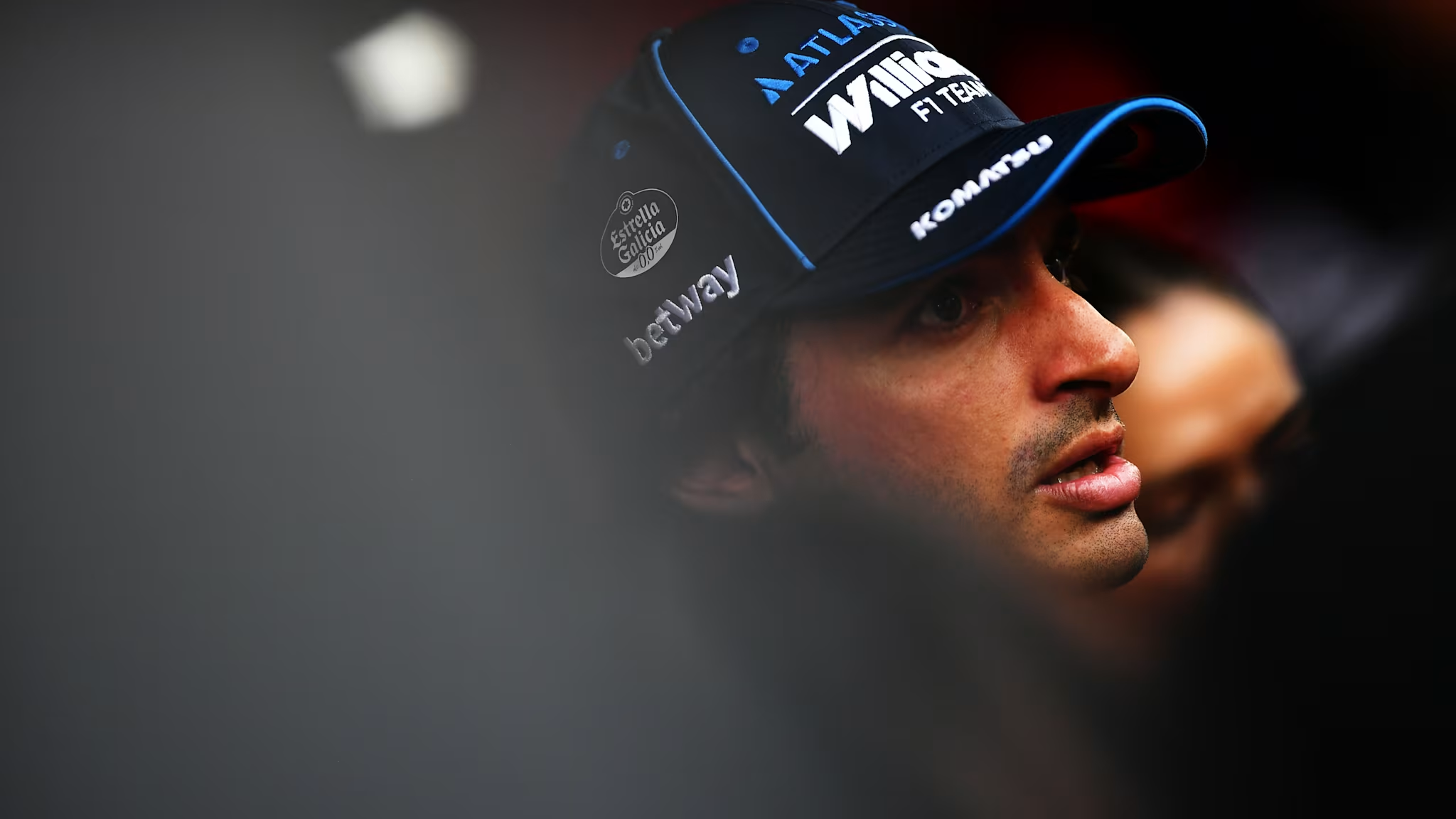
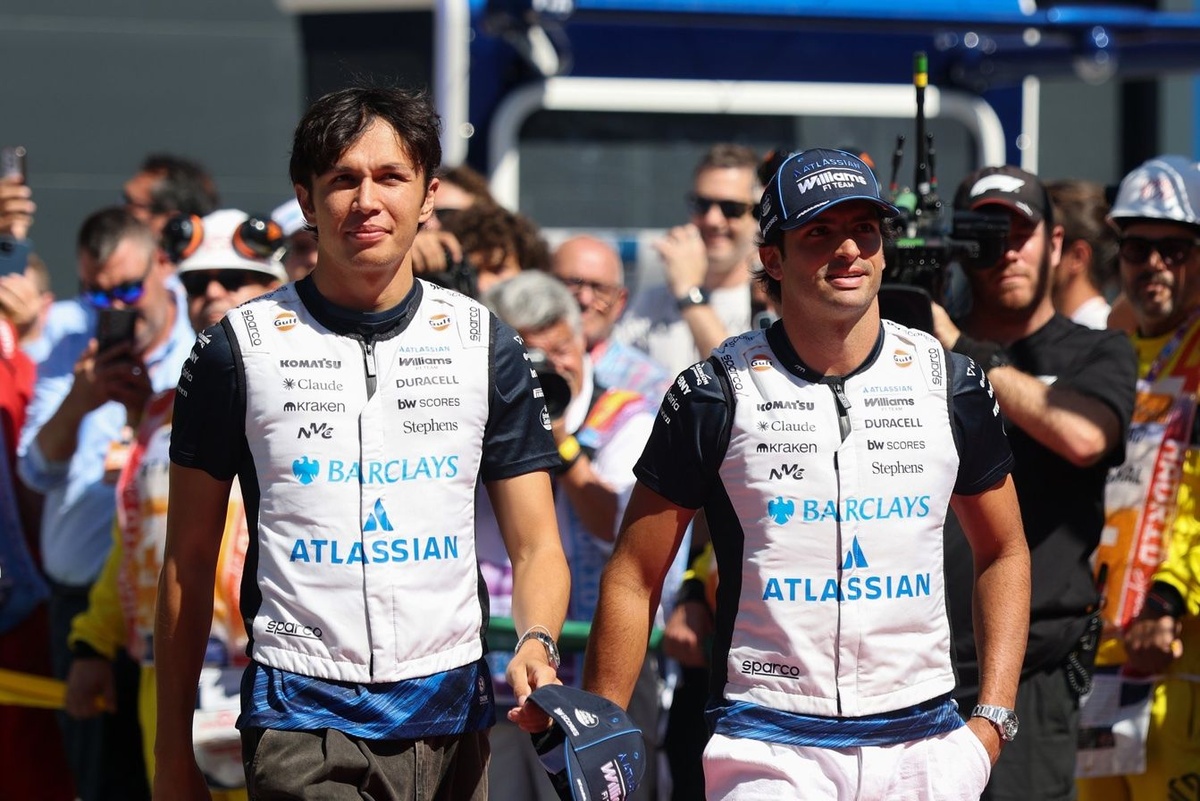
    Williams team-mates Alex Albon and Carlos Sainz have revealed that a small group of Formula 1 drivers will use the gap between the rescheduled Bahrain Grand Prix and the Singapore Grand Prix for a boys’ trip.

    The Bahrain Grand Prix will be held at the Sepang International Circuit in Malaysia because of the conflict in the Middle East. The revised schedule has given drivers the opportunity to remain in Asia between the two races instead of returning to their team bases.

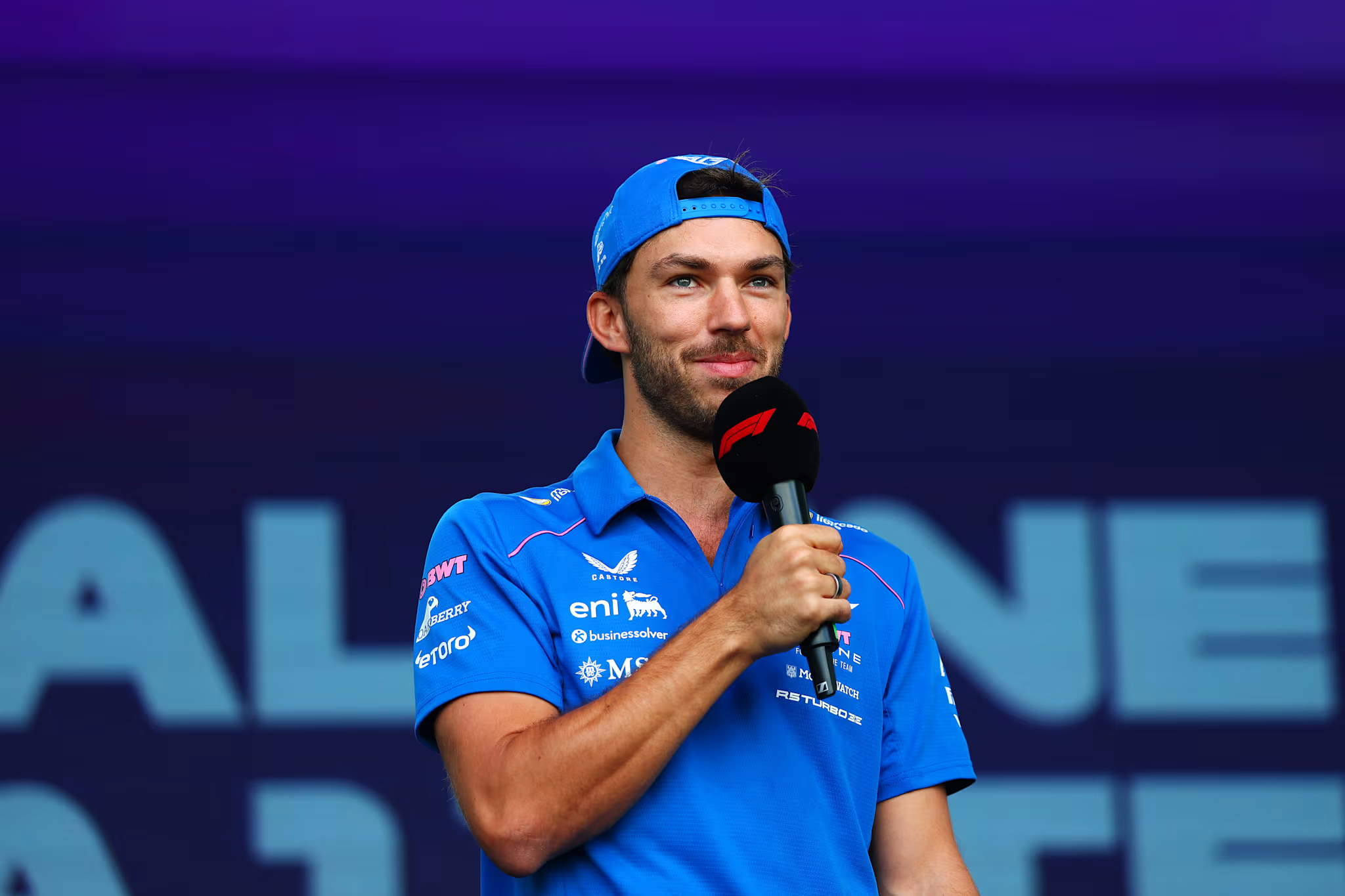
    “We’re going to go on like a boys’ trip, I guess,” Albon said during an interview in the Fan Zone ahead of the Azerbaijan Grand Prix. “I think there are a few drivers where we’re going to hang out.”

    Sainz added: “Yeah, it’s going to be [a boys’ trip]. We just realised no one’s bringing their girlfriend. But it’s not like we’re going to do anything exciting. We’re going to be in a resort in the middle of nowhere.”

    Williams brings major FW48 upgrade to Baku

    The drivers’ travel plans come during an important weekend for Williams, which has introduced a major upgrade package for its FW48 at the Azerbaijan Grand Prix. After arriving at pre-season testing in Bahrain with an overweight car, the Grove-based team has worked on a B-specification car for Baku.

    The upgraded Williams machinery helped Sainz qualify ninth and Albon qualify 13th for the Azerbaijan Grand Prix. However, Sainz will begin the race from 14th after being handed a five-place grid penalty for failing to slow under yellow-flag conditions.

    The Spaniard also received two penalty points, taking his total to four points during the 12-month period. Sainz and Albon currently occupy 16th and 17th in the drivers’ championship, with six and five points respectively.

    Why This Matters

    The revised Formula 1 calendar has created an extended period in Asia between the Bahrain and Singapore races, allowing drivers to avoid returning to their bases between events. For Williams, the Azerbaijan Grand Prix is also an early test of whether its FW48 upgrade can improve the team’s performance after concerns over the car’s weight during pre-season testing.

    The Azerbaijan Grand Prix will take place at the Baku City Circuit at 3pm local time, which is noon UK time. Sainz’s grid penalty means Williams’ qualifying results will not translate directly into its starting positions for the race.

    Frequently Asked Questions

    Which Formula 1 drivers are planning the trip?

    Williams drivers Alex Albon and Carlos Sainz said that a small group of drivers will spend time together in Asia between the Bahrain and Singapore Grands Prix. They did not identify the other drivers involved.

    Why is the Bahrain Grand Prix being held in Malaysia?

    The Bahrain Grand Prix has been rescheduled to the Sepang International Circuit because of the conflict in the Middle East.

    Where will Carlos Sainz and Alex Albon start in Baku?

    Sainz qualified ninth but will start 14th after a five-place grid penalty. Albon qualified 13th and is set to start from that position.

  • Azerbaijan Grand Prix Preview: Russell’s Golden Opportunity Amid Expected Interruptions at Baku City Circuit

    Azerbaijan Grand Prix Preview: Russell’s Golden Opportunity Amid Expected Interruptions at Baku City Circuit

    Key Highlights

    • George Russell targets a third victory of the 2026 season as Mercedes performance potential aligns with Baku’s circuit characteristics
    • Formula 1 marks ten years of competition at the Baku City Circuit, adding historical significance to the Azerbaijan Grand Prix weekend
    • Russell enters the race second in the Drivers’ Championship following a mid-season slump and renewed form since the summer shutdown

    Baku’s Decade Milestone Sets Stage for Critical Championship Weekend

    Formula 1 arrives at the Baku City Circuit this weekend to commemorate a decade of Grand Prix racing on the Caspian Sea coastline. Since its debut in 2016, the Azerbaijan street circuit has established itself as one of the calendar’s most unpredictable venues, combining high-speed straights with a treacherous castle section that has produced dramatic championship moments. The 2026 edition carries heightened stakes as the championship enters its decisive phase, with the circuit’s unique demands offering opportunities for drivers and teams to alter the title trajectory.

    Russell’s Mercedes Resurgence Creates Winning Opportunity

    George Russell approaches Baku with what represents a golden opportunity to secure his first victory in seven rounds. Despite the demonstrated performance potential of the Mercedes W16 throughout the 2026 campaign, the British driver has converted that pace into just two wins to date. Russell endured a challenging mid-season period that stalled his championship challenge before an uptick in form coinciding with the return from the summer shutdown. The Mercedes package has historically suited Baku’s blend of power sensitivity and aerodynamic efficiency, and Russell’s current momentum positions him as a leading contender to capitalize on the circuit’s overtaking opportunities and frequent safety car interventions.

    Championship Implications Intensify at Azerbaijan Grand Prix

    Russell’s position as runner-up in the Drivers’ Championship adds strategic complexity to his Baku weekend. With the title fight entering its critical closing stages, every point carries amplified significance. The Azerbaijan Grand Prix has historically delivered high-attrition races where championship leaders have lost ground, and Russell’s recent form trajectory suggests he possesses the machinery and momentum to exploit any vulnerabilities among his rivals. The convergence of Mercedes’ technical suitability, Russell’s rediscovered rhythm, and Baku’s propensity for race-changing incidents creates a compelling narrative for the sport’s tenth visit to the Azerbaijani capital.

    Why This Matters

    The 2026 Azerbaijan Grand Prix represents a pivotal junction in the championship calendar. As Formula 1 celebrates ten years at Baku, the circuit’s reputation for unpredictability intersects with a title fight that has seen momentum shift repeatedly. Russell’s pursuit of a third victory is not merely a statistical milestone; it would signal Mercedes’ sustained competitiveness and potentially reset the championship dynamics heading into the final flyaway races. For the broader paddock, Baku serves as a litmus test of racecraft under pressure, where strategic acumen and adaptability often outweigh pure pace. The outcome will likely influence development trajectories and driver market perceptions as the season approaches its conclusion.

    Frequently Asked Questions

    How many wins does George Russell have in the 2026 Formula 1 season?

    George Russell has won two races during the 2026 Formula 1 season entering the Azerbaijan Grand Prix weekend.

    What is George Russell’s current position in the 2026 Drivers’ Championship?

    Russell sits second in the 2026 Drivers’ Championship standings ahead of the Baku round.

    Why is the 2026 Azerbaijan Grand Prix significant for Formula 1?

    The 2026 Azerbaijan Grand Prix marks the tenth anniversary of Formula 1 racing at the Baku City Circuit, celebrating a decade since the venue joined the calendar in 2016.

  • Carlos Sainz Handed Five-Place Grid Penalty for Azerbaijan GP After Yellow Flag Breach in Qualifying

    Carlos Sainz Handed Five-Place Grid Penalty for Azerbaijan GP After Yellow Flag Breach in Qualifying

    Key Highlights

    • Carlos Sainz received a five-place grid penalty for the Azerbaijan Grand Prix after stewards ruled he failed to slow for yellow flags in Qualifying at the Baku City Circuit.
    • The Williams driver drops from ninth to 14th on the grid, promoting Franco Colapinto, Ollie Bearman, Liam Lawson, Alex Albon, and Esteban Ocon.
    • Sainz was also handed two penalty points, bringing his 12-month total to four under Formula 1’s penalty regulations.

    Stewards Rule Against Sainz’s ‘Global Lift’ Defense

    Carlos Sainz’s strong qualifying performance for Williams at the Baku City Circuit has been significantly undermined by a post-session stewards’ investigation. The Spaniard had piloted his heavily upgraded FW46 to ninth place in Q3, but was subsequently summoned over a potential breach of yellow flag protocols. After reviewing telemetry, radio communications, and hearing from both Sainz and a Williams team representative, the stewards determined that the driver failed to sufficiently reduce speed in Marshalling Sector 4 while single yellow flags were displayed following Lando Norris’s off-track excursion at Turn 2.

    Decision Document Details Telemetry Evidence

    The stewards’ decision document provides a detailed account of the incident and the reasoning behind the penalty. “Single yellow flags were displayed in Marshalling Sectors 4 and 5, in particular after Turn 2 and on the approach to Turn 3,” the document states, noting that “the yellow indications were clearly visible and SAI had also received a radio warning from the team: ‘Yellow ahead, lift’.” Sainz confirmed at the hearing that he was aware of the yellow flag situation.

    Sainz offered a specific defense regarding his speed management through the flagged zones. “SAI explained that he intended to demonstrate a reduction in speed across the yellow area as a whole. He stated that he did not consider it necessary to reduce speed on the straight and instead intended to demonstrate his response when approaching and exiting Turn 3. He considered this to be a ‘global lift’ covering the consecutive yellow sectors.” He further argued that “the car which had originally caused the yellow was no longer in the run-off area and that he expected the yellow flags to be withdrawn.”

    Stewards Reject Interpretation, Cite Sector-by-Sector Obligation

    The stewards explicitly rejected Sainz’s interpretation of the regulations. “The stewards did not accept this interpretation. Where consecutive marshalling sectors are subject to yellow flag conditions, a driver must demonstrate a significant reaction to reduce speed in each individual yellow marshalling sector. A reduction in a subsequent sector cannot retrospectively satisfy the requirement applicable to the preceding yellow sector.” They further clarified that “the obligation is also not dependent on the driver’s own assessment of whether the original hazard remains present within a particular part of the yellow sector.”

    Telemetry data proved decisive in the ruling. “The telemetry clearly showed that SAI’s reaction to the yellow occurred only in Marshalling Sector 5. There was no meaningful reduction in speed in Marshalling Sector 4, which could realistically be attributed to a response to the yellow. Indeed, SAI recorded his fastest time of the session in Marshalling Sector 4.” Consequently, “the stewards therefore did not accept that the subsequent lift in Marshalling Sector 5 constituted a sufficient ‘global’ response covering both sectors. This is distinguishable from cases where the telemetry demonstrates a significant response to the yellow even though the overall sector time reduction is relatively small.”

    Penalty Applied Under Standard Guidelines

    Summarizing their findings, the stewards concluded: “In the present case, SAI was aware of the yellow, had received an explicit warning from the team, the yellow indications were clearly visible and the telemetry established that he did not demonstrate the required reaction in Marshalling Sector 4. The stewards therefore determine that SAI failed to sufficiently reduce speed under the single yellow flag in Marshalling Sector 4. The standard penalty under the Penalty Guidelines for this infringement during Qualifying is a drop of five grid positions.” The penalty drops Sainz from P9 to P14 for Saturday’s Grand Prix, elevating Franco Colapinto, Ollie Bearman, Liam Lawson, teammate Alex Albon, and Esteban Ocon by one position each.

    Why This Matters

    This ruling reinforces the FIA’s strict enforcement of yellow flag protocols, particularly the requirement for a demonstrable speed reduction in each individual marshalling sector rather than an averaged approach across consecutive zones. The decision highlights the increasing reliance on precise telemetry data to adjudicate compliance, leaving little room for driver interpretation of hazard status. For Williams, the penalty blunts the momentum gained from their significant Baku upgrade package, relegating Sainz to the fifth row while teammate Alex Albon benefits with a promotion to P13. With Sainz now carrying four penalty points on his 12-month license, any further infractions could edge him closer to a race ban threshold of 12 points, adding a layer of disciplinary pressure for the remainder of the season.

    Frequently Asked Questions

    Why was Carlos Sainz penalized in Azerbaijan Qualifying?

    Sainz was penalized for failing to sufficiently reduce speed in Marshalling Sector 4 while single yellow flags were displayed following Lando Norris’s off-track incident at Turn 2. The stewards ruled he did not demonstrate the required reaction in that specific sector, despite lifting in the subsequent Sector 5.

    How does the grid penalty affect the starting order for the Azerbaijan Grand Prix?

    Sainz drops from ninth to 14th on the grid. Franco Colapinto, Ollie Bearman, Liam Lawson, Alex Albon, and Esteban Ocon each gain one position as a result.

    What are the championship implications of the penalty points?

    Sainz now has four penalty points on his FIA Super License for the current 12-month period. Accumulating 12 points within a 12-month window triggers an automatic one-race ban, so this brings him one-third of the way toward that threshold.

  • Pierre Gasly buoyed by Alpine gains after double Q3 appearance in Baku: ‘There was even more in it’

    Pierre Gasly buoyed by Alpine gains after double Q3 appearance in Baku: ‘There was even more in it’

    Key Highlights

    • Pierre Gasly qualified seventh for the Azerbaijan Grand Prix but believes yellow flags on his final runs cost Alpine a potential top-six start and a shot at overtaking Lewis Hamilton.
    • Teammate Franco Colapinto reached Q3 for the third time in 2026 but settled for tenth after a heavy lock-up at Turn 15 ruined his final flying lap.
    • With Racing Bulls rivals Liam Lawson and Arvid Lindblad starting outside the top ten, Alpine has a prime opportunity to cut the nine-point deficit in the ‘best of the rest’ Constructors’ battle.

    Gasly Believes Yellow Flags Masked Alpine’s True Baku Pace

    Pierre Gasly insists Alpine’s qualifying performance at the Baku City Circuit was stronger than the seventh-place grid slot suggests, revealing that yellow flags triggered by rivals running off track compromised his final two attempts in Q3. The Frenchman, fresh off his maiden pole position at Monza earlier this month, felt he had the pace to challenge Lewis Hamilton for sixth place before the session was repeatedly neutralized.

    Speaking after the session, Gasly emphasized the progress made with the A524’s setup around the demanding street layout. Very good work this weekend in terms of car set-up and getting to a place where I can really be comfortable with the balance and commit everywhere. I’m very pleased. He added that the car felt well-balanced enough to attack aggressively, a sentiment backed by his pace in the earlier qualifying segments where he peaked at sixth.

    Missed Opportunity in the ‘Best of the Rest’ Fight

    The context of the result amplifies its significance for the Enstone squad. Alpine currently trails Racing Bulls by nine points in the fight to be the leading midfield team—often termed ‘best of the rest’ behind the top four outfits. With Racing Bulls drivers Liam Lawson and Arvid Lindblad both eliminated outside the top ten on Saturday, the Azerbaijani Grand Prix represents a golden opportunity for Alpine to score heavily and close the gap.

    Gasly acknowledged the frustration of the yellow flags but maintained a constructive outlook on the broader championship picture. Strong Qualifying – honestly, our last two runs were both compromised with people going off, so I think there was even more in it. I think [getting] ahead of Lewis [Hamilton] was possible. He stressed that the team cannot control external factors but remains satisfied with the underlying performance. We don’t control it, we were just unlucky that people kept going off in front of us. Overall, bigger picture, I’m just happy with the car we have. It’s a good baseline that also gives me good confidence for tomorrow and the coming races.

    Colapinto Struggles with Braking Confidence in Q3

    While Gasly celebrated a strong baseline, the session was more challenging for Franco Colapinto. The Argentine rookie progressed to Q3 for the third time this season—a milestone marking Alpine’s third double-Q3 appearance of 2026—but a significant lock-up at Turn 15 on his final run induced heavy vibrations, forcing him to abort the lap and settle for tenth.

    Colapinto was candid about his difficulties with the Baku street circuit’s heavy braking zones. I think generally there’s still a lot to improve. It’s not been an easy session. I lacked a bit of pace, but then Q3 was not very well executed – I had this big lock-up and then I had really big vibrations for the last lap. He acknowledged the team’s developmental trajectory but admitted discomfort in the high-deceleration corners that define the Azerbaijan layout. We’re still doing the steps, we’re improving. I just lacked a bit in that Q3 to have a better result, but I will try to fight tomorrow and go forward. It’s good to have both cars in Q3.

    The rookie elaborated on the specific handling trait hindering his confidence. I’m not very comfortable in the hard braking zones, and here it’s full of those. It doesn’t feel so easy at the minute but we’ll try to work for tomorrow.

    Why This Matters: Constructors’ Battle Intensifies

    The Azerbaijan Grand Prix weekend has evolved into a pivotal round in the midfield championship standings. Alpine’s double Q3 appearance provides a tactical advantage over Racing Bulls, who failed to place either car in the top ten shootout. With both Alpine drivers starting inside the top ten—Gasly seventh and Colapinto tenth—the French manufacturer controls the strategic initiative for Sunday’s race.

    Gasly’s assessment that Ferrari holds a pace advantage is realistic, but the gap to the Scuderia appears manageable, while the deficit to Racing Bulls on the grid offers a tangible shot at maximum points. Historically, Baku’s high attrition rate and frequent Safety Car periods reward track position and strategic flexibility—areas where Alpine currently excels. The team’s ability to extract performance from the A524 on low-downforce street circuits signals a positive development trend heading into the final flyaway races of the season.

    Frequently Asked Questions

    What grid positions do Alpine drivers start from in Baku?

    Pierre Gasly will start seventh and Franco Colapinto tenth for the Azerbaijan Grand Prix, giving Alpine a double top-ten start.

    How does this result affect the Constructors’ Championship battle with Racing Bulls?

    Alpine trails Racing Bulls by nine points. With both Racing Bulls drivers (Lawson and Lindblad) starting outside the top ten, Alpine has a significant opportunity to score more points and close the gap in the fight for sixth place.

    Why was Gasly unable to improve on his final Q3 runs?

    Gasly’s last two flying laps in Q3 were compromised by yellow flags caused by other drivers running off track. He believes the car had the pace to qualify sixth, ahead of Lewis Hamilton, but the session interruptions prevented him from setting a representative time.

  • Max Verstappen Slams Red Bull as ‘Not Good Enough’ After ‘So Much Trouble’ in 2026 Azerbaijan GP Qualifying

    Max Verstappen Slams Red Bull as ‘Not Good Enough’ After ‘So Much Trouble’ in 2026 Azerbaijan GP Qualifying

    Key Highlights

    • Max Verstappen qualified eighth for the Azerbaijan Grand Prix after engine and battery issues cost him over 1.5 seconds to pole position.
    • Verstappen revealed his power unit was down half a second on straights compared to teammate Isack Hadjar from Q1, with an additional battery deployment failure in Q3.
    • Hadjar delivered a career-best qualifying result with fourth place on his return from a three-race absence due to a wrist injury.

    Verstappen’s Championship Challenge Hit by Power Unit Gremlins in Baku

    Max Verstappen’s bid for a fifth consecutive Formula 1 world championship suffered a significant setback on the streets of Baku as a cascade of power unit failures relegated the four-time title holder to eighth on the grid for the Azerbaijan Grand Prix. After dominating Friday’s final practice session — topping the timesheets ahead of the Mercedes duo of George Russell and Kimi Antonelli — Verstappen entered qualifying as the clear favorite for pole position. Instead, he found himself 1.5 seconds adrift of the front row, watching his championship lead come under renewed pressure.

    Engine Deficit and Battery Failure Derail Q3 Campaign

    The problems began immediately. From the opening segment of qualifying, Verstappen’s Honda power unit was delivering significantly less straight-line speed than the identical unit in his teammate’s car. The deficit — approximately half a second per lap on the long Baku straights — left Red Bull engineers baffled and the Dutch driver permanently on the back foot.

    Any hope of recovery evaporated in Q3. On what Verstappen described as his “middle lap, which is normally a good lap,” the energy recovery system failed to deploy fully exiting Turn 16, the final corner before the start-finish straight. “My battery just didn’t charge to 100%, so I had to abort the lap, which means you lose tyre temperature and around here that’s killing,” Verstappen explained. The aborted lap cost precious tyre temperature on a circuit where heat retention is critical. A subsequent yellow flag triggered by Lando Norris running off track further compromised his final attempt.

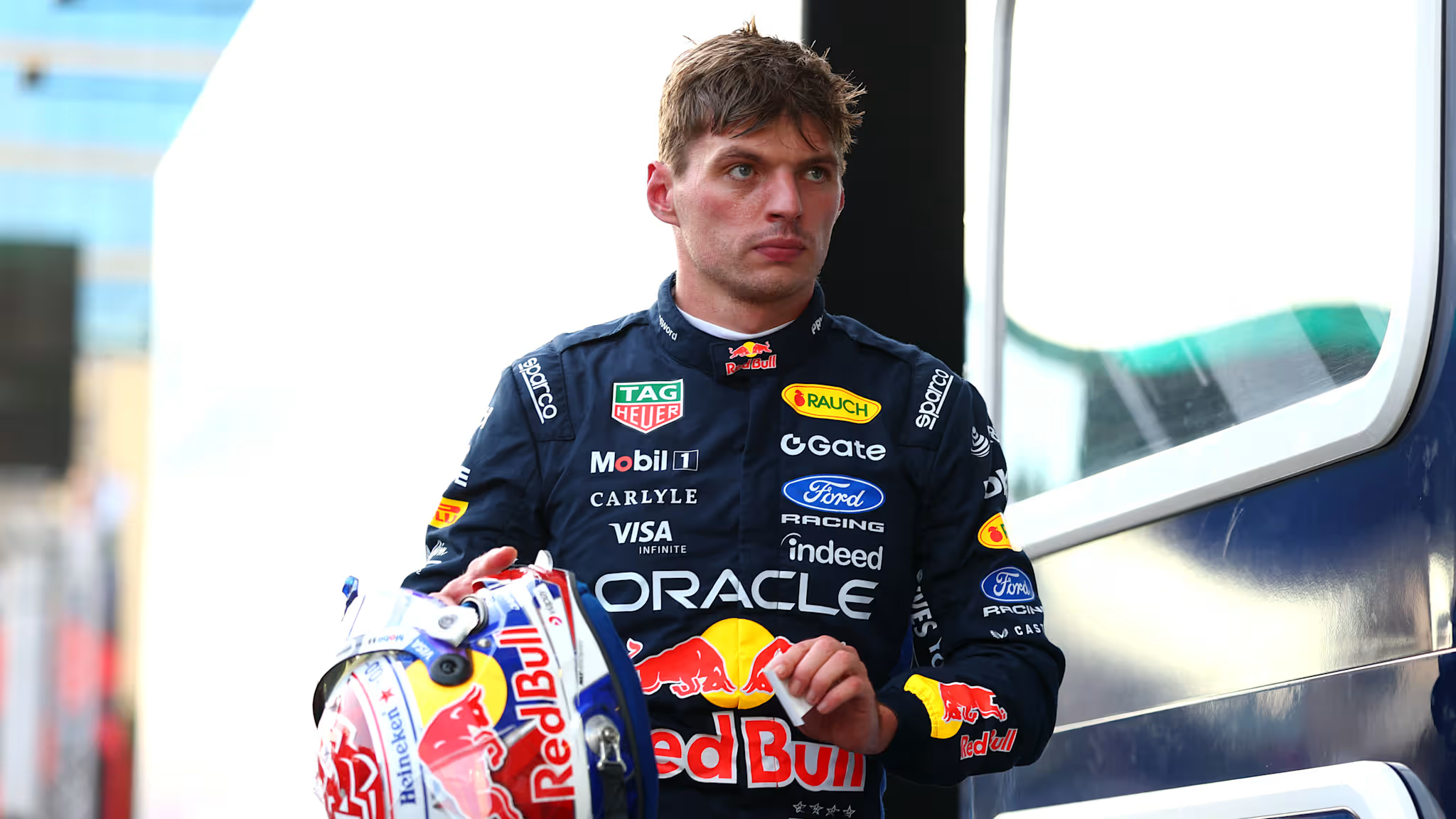
    “The whole Qualifying was not how it should be,” Verstappen said. “Already from Q1, my engine is already half a second down on the straight compared to my team mate and they can’t understand why, so you’re just on the back foot. Then in Q3, on my middle lap, which is normally a good lap, exiting the final corner Turn 16, my battery just didn’t charge to 100%, so I had to abort the lap, which means you lose tyre temperature and around here that’s killing. [I] tried to put as much temperature in it, tried to push on the final lap but of course being down on top speed and I had a yellow flag from Lando [Norris off] in front of me meant that’s where we are. It’s not good enough. The whole weekend we are running really well, the car was feeling well and then we run into so much trouble in Qualifying. It’s not good enough.”

    Verstappen acknowledged that matching Russell’s benchmark — eight tenths clear of the field — was likely unrealistic, but insisted second place was achievable. “When you have that many issues, you also don’t deserve to be there,” he added. “We need to be more robust and we need to be on top of these things.”

    Hadjar Shines on Injury Return as Red Bull’s Bright Spot

    While Verstappen struggled, the second Red Bull garage delivered a remarkable performance. Isack Hadjar, returning to Formula 1 after a three-round absence caused by a wrist injury sustained in a practice shunt at Zandvoort, qualified fourth — his best grid position of the season and only the fourth occasion in 2024 he has outqualified his world champion teammate.

    Hadjar’s measured approach paid dividends on a circuit notorious for punishing mistakes. “I’m actually even surprised to be that close from second,” Hadjar said. “It’s good. Even though I feel like there’s still more to come. I feel like I was building up the whole weekend, I didn’t take many risks [in practice], it’s a risky track, I don’t want to hit the wall with my conditions right now. Honestly, I took it quite easy but I felt like there was still more to unlock, even in Q3 I wish we had more laps. All in all, it’s still good.”

    Why This Matters

    Verstappen’s qualifying disaster arrives at a pivotal moment in the championship. With McLaren’s Lando Norris and Oscar Piastri consistently challenging at the front, and Mercedes showing resurgent form through Russell and Antonelli, Red Bull’s constructor lead has evaporated. The Baku street circuit offers limited overtaking opportunities, meaning Verstappen’s eighth-place start severely compromises his race-day points haul. More concerning for Red Bull is the unexplained power unit discrepancy between the two cars — a reliability concern that could resurface across the remaining flyaway races. Meanwhile, Hadjar’s strong showing validates Red Bull’s decision to retain him despite his rookie errors earlier in the season, providing a data baseline for 2025 driver lineup discussions.

    Frequently Asked Questions

    What caused Verstappen’s poor qualifying performance in Baku?

    A combination of an unexplained engine power deficit — approximately half a second per lap on straights compared to his teammate — and a battery deployment failure in Q3 that forced him to abort a flying lap, followed by a yellow flag on his final attempt.

    How did Isack Hadjar perform on his return from injury?

    Hadjar qualified fourth, his best grid position of the 2024 season, and outqualified Verstappen for only the fourth time this year. He adopted a conservative practice program to manage his recovering wrist before delivering a strong qualifying performance.

    What are the championship implications of Verstappen starting eighth?

    Starting eighth at Baku — a circuit with limited overtaking — significantly reduces Verstappen’s chance of a high points finish, allowing title rivals Lando Norris, Oscar Piastri, and George Russell to potentially close the gap in the drivers’ standings.

  • Why Mercedes’ Huge Baku Practice Advantage May Not Be the Real Picture

    Why Mercedes’ Huge Baku Practice Advantage May Not Be the Real Picture

    Key Highlights

    • George Russell topped both Thursday practice sessions at the Baku City Circuit, with Mercedes holding a 0.827-second advantage over Max Verstappen’s Red Bull.
    • Red Bull technical director Pierre Waché admitted the deficit was larger than expected, particularly on straight-line speed, while Mercedes deputy principal Bradley Lord cautioned against reading too much into the times.
    • Championship leader Kimi Antonelli lost critical track time due to a hydraulic failure requiring an engine change, though Mercedes avoided a grid penalty as the replacement unit was from the existing pool.

    Mercedes Dominates Opening Practice in Baku as Russell Sets Pace

    Mercedes delivered a commanding performance during Thursday’s two practice sessions at the Baku City Circuit, with George Russell leading the timesheets in both FP1 and FP2. The British driver’s benchmark left the first non-Mercedes entry — Max Verstappen’s Red Bull — trailing by 0.827 seconds, a margin that immediately caught the attention of rival teams. The session unfolded without Mercedes’ long-awaited upgrade package for the W17, which is slated for debut in Malaysia, making the outright pace on the existing specification all the more striking for the competition.

    Red Bull Concedes Unexpected Straight-Line Deficit

    The scale of the gap prompted a candid assessment from Red Bull technical director Pierre Waché, who acknowledged the deficit exceeded pre-weekend expectations.

    “Yes, I didn’t expect this big gap, mainly on the straights. Afterwards we have to analyse if it’s coming from a tow [or something else]. But yes, we have work to do to achieve what they have achieved”,

    Waché told Motorsport.com. He added that while Red Bull will introduce its final major upgrade package for the RB22 this weekend, the current picture looks challenging.

    “I hope that it’s closer, but it looks like they are a lot quicker than us. We will see what we can do to make the car quicker, but if this is the real delta, then it will be tough for us.”

    Red Bull junior Isack Hadjar, returning to the cockpit after illness, echoed the sentiment, describing Mercedes as “out of touch” relative to the rest of the field.

    “A bit, [and thinking] why they are so far away. I think that’s very impressive. I think we have a good car, we’ve been in the mix with McLaren and Ferrari, but yeah, Mercedes, they are out of touch.”

    Mercedes Urges Caution Despite Commanding Display

    Despite the dominant showing, Mercedes deputy team principal Bradley Lord — standing in for Toto Wolff this weekend — moved quickly to temper expectations. Lord attributed much of the apparent advantage to program differences, noting Mercedes completed more timed laps on the soft compound during FP2.

    “I don’t think it’s a representative gap, honestly. We ran more timed laps on the soft tyre in FP2. Max only had one go, so did the McLarens.

    “Probably don’t read too much into it, because every timed lap you did, the lap times were improving. We did one more than everyone else, and therefore probably found a bit more in the track and a bit more in the tyre than they were able to.”

    Lord highlighted Russell’s strong track record at Baku, where the driver finished second last year despite illness, as a factor in the team’s confidence.

    “George was pretty sick here last year and still finished P2. So it’s a circuit… I mean, he goes well at every circuit, but this is one where traditionally he’s had some really strong results”,

    Lord said. He also emphasized the value of having both cars performing at the front.

    “And that’s what you’re looking for as a team, that if one car hits trouble, the other one’s right up there and leading the way. He’s done that today and hopefully can continue doing that through the rest of the weekend.”

    Antonelli Loses Track Time to Hydraulic Issue

    The “trouble” Lord referenced befell championship leader Kimi Antonelli, who suffered a hydraulic failure during FP1 that forced an unscheduled engine change. The mechanics completed the swap in roughly 15 minutes, readying the car just as a red flag halted FP2.

    “Obviously it’s put him behind the curve a little bit, so he’s just missing laps and missing time out on track, but equally, it was a mega job from the mechanics”,

    Lord explained.

    “The car came back, I think, 15 minutes after practice, and it was ready to go just as the red flag came out in FP2. So they did an epic job to swap the engine, get the old one out and the new one in.

    “No penalty, because it’s one that’s already in the pool, and yeah, we were ready to go. So we’ve at least salvaged as much of the session as we could.”

    The lost running is particularly costly on a street circuit where track evolution is rapid and confidence-building laps are at a premium.

    Rivals Play Down Thursday Significance

    Ferrari team principal Frederic Vasseur dismissed the relevance of Thursday’s timesheet with characteristic bluntness.

    “I’m getting too old to pay too much attention to Friday!”

    When reminded the session took place on Thursday, Vasseur laughed and added:

    “Friday is useless, imagine the Thursday!”

    Why This Matters

    Mercedes’ unexpected pace in Baku reshapes the narrative around the 2025 championship fight. After a season where McLaren and Ferrari have regularly challenged Red Bull, a Mercedes resurgence — especially without its planned upgrade — introduces a three-way battle at the front that few predicted. For Red Bull, the straight-line deficit highlighted by Waché suggests a fundamental aerodynamic or power-unit installation discrepancy that upgrades may not fully resolve at this circuit. Antonelli’s lost track time could prove decisive in a tight qualifying battle, where street-circuit experience and rhythm are critical. With Mercedes’ upgrade still to come in Malaysia, the competitive hierarchy may shift again before the flyaway races conclude.

    Frequently Asked Questions

    Why was Mercedes so far ahead in Baku practice without its new upgrade package?

    Mercedes’ advantage likely stems from a combination of George Russell’s exceptional suitability to the Baku street circuit, a favorable tire preparation strategy that included more soft-compound timed laps than rivals, and strong baseline performance of the current W17 specification. Deputy team principal Bradley Lord explicitly cautioned that the gap is not fully representative.

    Will Kimi Antonelli face a grid penalty for the engine change?

    No. The replacement power unit was drawn from Mercedes’ existing pool allocation, meaning no penalty applies. The mechanics completed the swap during the FP1/FP2 break, allowing Antonelli to participate in the remainder of FP2, albeit with reduced running.

    What is Red Bull’s plan to close the gap this weekend?

    Red Bull is introducing its final major upgrade package for the RB22 at Baku. Technical director Pierre Waché acknowledged the team has “work to do” to match Mercedes’ straight-line speed and overall pace, but the new parts are expected to address some of the aerodynamic shortcomings exposed on Thursday.
  • Racing Bulls’ Mixed Fortunes: Liam Lawson Returns, Arvid Lindblad Crashes in 2026 Azerbaijan GP Practice

    Racing Bulls’ Mixed Fortunes: Liam Lawson Returns, Arvid Lindblad Crashes in 2026 Azerbaijan GP Practice

    Key Highlights

    • Liam Lawson returns to Racing Bulls after a three-race stint at Red Bull, finishing 12th in FP2 and targeting a top-10 qualifying spot.
    • Rookie Arvid Lindblad crashed heavily in FP2 at the castle section, bringing out red flags and causing significant right-side damage to his car.
    • Team Principal Alan Permane refused to punish Lindblad, calling it “rookie enthusiasm” and emphasizing support over criticism.

    Lawson Returns to Familiar Surroundings as Racing Bulls Reset in Baku

    Racing Bulls experienced a Thursday of contrasting fortunes on the streets of Baku, with Liam Lawson settling back into the squad after his temporary promotion to Red Bull Racing while rookie Arvid Lindblad learned a harsh lesson on the unforgiving Azerbaijan circuit. The New Zealander completed a solid FP1 in seventh place before slipping to 12th in the afternoon session, while the British youngster’s day ended prematurely against the barriers.

    Lindblad’s Rookie Error Brings Out Red Flags

    The second practice session told a dramatically different story for the team’s newest addition. Twenty minutes into FP2, Lindblad clouted the walls through the castle section, bringing out the red flags and causing significant damage to the right-hand side of his machinery. The incident echoed his previous FP2 crash in Madrid, raising questions about his adaptation to street circuits. The British driver radioed his team to apologise, saying he’d just clipped the wall by a millimetre. He also faced a scary moment earlier in the session when the Ferrari of Lewis Hamilton suddenly appeared in front of him in the final sector while he was on a hot lap, forcing him to take avoiding action.

    Permane Offers Support Over Punishment for Young Driver

    Speaking after the session, Team Principal Alan Permane made it clear he would not come down hard on his rookie. “It’s not the time to come down on him like a ton of bricks, it’s the time to support him. It was a millimetre. It’s a bit of a shame. It’s certainly not the right time to crash like that, if that was Q3 and he was absolutely going for it, you can understand it. But it’s a little bit of ‘the car was feeling good’. I think it’s just a little bit of rookie enthusiasm, but nothing more than that.” Permane added that Lindblad was looking quick on that lap and the team are going to take that as a positive going into the rest of the event.

    Welcome Return for Lawson After Red Bull Loan Spell

    Permane also welcomed the fact the squad have Lawson back after a three-race stint covering Isack Hadjar at sister team Red Bull Racing. “Much as we love Yuki [Tsunoda] — and the whole team does, he’s a very popular figure – it’s good to have Liam back in his car, in the team, working very, very well with Arvid, and those two lift each other up through the weekend.” Lawson himself expressed satisfaction at the reunion. “Honestly, it was good. This morning we were quite strong. We definitely didn’t have the same performance in FP2, where everybody else made a decent step, so we have to look at that and try and improve things for tomorrow. But overall, it’s good. It’s nice to be back in my car. It feels like home, but we have some work to do to match those guys.” The New Zealander confirmed the team will be working overnight to improve in the low speed corners to try and get themselves into the top 10 in Qualifying on Friday.

    Why This Matters

    The Azerbaijan Grand Prix represents a critical juncture for Racing Bulls’ driver development strategy. With Lawson’s return from his Red Bull Racing audition, the team gains valuable experience and a benchmark for car performance, while Lindblad’s baptism of fire on a street circuit highlights the steep learning curve facing rookie drivers in Formula 1. The team’s decision to support rather than sanction Lindblad signals a long-term developmental approach, prioritizing confidence-building over immediate results. As the only practice session before Friday qualifying under the sprint format, Thursday’s running carried outsized importance, and the overnight work on low-speed corner performance will determine whether Racing Bulls can translate their FP1 promise into a competitive grid position.

    Frequently Asked Questions

    Why was Liam Lawson driving for Red Bull Racing recently?

    Lawson completed a three-race stint at Red Bull Racing covering for Isack Hadjar before returning to his regular Racing Bulls seat for the Azerbaijan Grand Prix weekend.

    What caused Arvid Lindblad’s crash in FP2?

    Lindblad clipped the wall by a millimetre through the castle section of the Baku street circuit, bringing out red flags and causing significant damage to the right-hand side of his car.

    What are Racing Bulls’ priorities for Friday qualifying?

    The team will work overnight to improve performance in low-speed corners, with Lawson targeting a top-10 qualifying position after the car lost pace relative to competitors in FP2.

  • ‘Feel like it was a good recovery’ – Kimi Antonelli, Mercedes Reflect on Practice Ahead of 2026 Azerbaijan Grand Prix

    ‘Feel like it was a good recovery’ – Kimi Antonelli, Mercedes Reflect on Practice Ahead of 2026 Azerbaijan Grand Prix

    Key Highlights

    • Kimi Antonelli describes his Azerbaijan Grand Prix practice as “a good recovery” despite a hydraulic failure in FP1 and a power unit change that cost him half of FP2.
    • The championship leader, holding an 81-point advantage after his Madrid win, still managed fifth in FP1 and second in FP2, while teammate George Russell topped both sessions.
    • Mercedes Deputy Team Principal Bradley Lord warns that rival updates from McLaren and Red Bull will close the performance gap, predicting a much tighter qualifying and race.

    Antonelli Overcomes Mechanical Setbacks to Stay in Contention

    Kimi Antonelli entered the Baku weekend with a commanding 81-point lead in the drivers’ standings following his victory in Madrid, but Thursday’s running presented an immediate test of resilience. The Mercedes driver suffered a hydraulic issue aboard his W15 approaching the midpoint of Free Practice 1, abruptly ending his participation in the one-hour session. The team was then forced to fit a new power unit due to fire damage, sidelining the Italian for the entire first half of FP2.

    Strong Pace Despite Limited Track Time

    Even with the severely curtailed programme, Antonelli posted competitive times, finishing fifth fastest in FP1 and second quickest in FP2. His teammate, George Russell, demonstrated the car’s underlying potential by topping both sessions, finishing more than half a second clear of Antonelli in the afternoon. Speaking after the day’s running, Antonelli remained upbeat about the team’s efforts to maximize the available laps.

    “We tried to do the max with what we had. Obviously lost quite a few laps in FP1 and then missing half of FP2 is never ideal, especially on a street circuit,” said Antonelli.

    “Overall I feel like it was a good recovery. I feel quite good in the car, obviously a few things to work on but looking forward to tomorrow.”

    Mercedes Braces for Tighter Competition as Rivals Introduce Upgrades

    While the FP2 timesheets painted a rosy picture for the Silver Arrows, Deputy Team Principal Bradley Lord struck a note of caution. He highlighted that major competitors have introduced significant development packages for the Azerbaijan round, which he expects will compress the field once qualifying and the Grand Prix commence.

    “We’ve seen competitors bring pretty big update packages if you look at McLaren, Red Bull as well. They’ll be absolutely in the mix, I don’t think the gaps at the top after FP2 were representative of the true gaps in performance,” he said.

    “I think everything will be much closer once we’re all running the same number of laps on the tyres.”

    “We hope to be in the mix, we should be in the mix on a low-drag circuit like this having performed really strongly at Monza but we’ll have our work cut out to get on pole.”

    Why This Matters

    The Azerbaijan Grand Prix represents a critical junction in the 2024 Formula 1 season. Baku’s unique street circuit layout—combining a low-drag straight with a twisty, castle section—places a premium on both raw power and mechanical grip, making it a strong indicator of each team’s development trajectory. For Antonelli, converting his championship lead into a clean weekend amid reliability gremlins would be a significant psychological blow to his rivals. For Mercedes, the weekend serves as a litmus test for their low-drag aerodynamic philosophy after a dominant showing at Monza. With McLaren and Red Bull deploying substantial upgrade packages, the competitive order established in Friday practice is widely expected to shuffle dramatically once engine modes are turned up and fuel loads are normalized for qualifying.

    Frequently Asked Questions

    What mechanical issues did Kimi Antonelli face during Friday practice in Baku?
    Antonelli suffered a hydraulic failure in FP1 that ended his session early. The team subsequently discovered fire damage requiring a full power unit change, causing him to miss the first half of FP2.
    How did Antonelli perform despite the limited running?
    Despite completing only half of the available practice laps, Antonelli finished fifth in FP1 and second in FP2, demonstrating strong underlying pace on the street circuit.
    Why does Mercedes expect the competition to be closer in qualifying and the race?
    Deputy Team Principal Bradley Lord noted that rivals McLaren and Red Bull have brought significant upgrade packages to Baku. He believes the FP2 gaps are not representative because teams were running different programmes, tyre strategies, and fuel loads, and that the field will compress once everyone runs comparable specifications in qualifying.
  • How to Watch the Azerbaijan Grand Prix for Free: Live Stream F1 This Weekend

    How to Watch the Azerbaijan Grand Prix for Free: Live Stream F1 This Weekend

    Key Highlights

    • Kimi Antonelli leads the 2026 Formula 1 championship after a dramatic Spanish Grand Prix victory, holding a lead of over 100 points on defending champion Lando Norris.
    • The Azerbaijan Grand Prix at the Baku City Circuit runs September 24–26, with U.S. viewers able to stream the entire weekend free via a 7-day Apple TV+ trial through Prime Video Channels.
    • Multiple trial-stacking options exist: new Amazon Prime members get 30 days free, Apple TV+ offers a direct 7-day trial, Apple One bundles a 1-month trial, and eligible hardware purchases unlock 3 months free.

    Antonelli Extends Championship Lead Heading Into Baku

    Italian rookie Kimi Antonelli arrives at the Baku City Circuit as the clear championship leader after securing a dramatic victory at the Spanish Grand Prix. The win extended his advantage over Mercedes teammate George Russell and left defending champion Lando Norris facing a deficit exceeding 100 points—a margin that appears increasingly insurmountable with only a handful of races remaining in the 2026 season. Despite the mathematical mountain, Norris and McLaren enter the weekend with renewed pace following their latest upgrade package, aiming to chip away at Antonelli’s commanding lead on a circuit renowned for unpredictability.

    Azerbaijan Grand Prix Weekend Schedule

    The 15th round of the 2026 Formula 1 calendar kicks off with two practice sessions on Wednesday, September 24. Practice 1 runs from 4:30–5:30 a.m. ET, followed by Practice 2 from 8:00–9:00 a.m. ET. Saturday, September 25, features Practice 3 (4:30–5:30 a.m. ET) and Qualifying (8:00–9:00 a.m. ET), setting the grid for Sunday’s main event. The Azerbaijan Grand Prix lights out at 7:00 a.m. ET on September 26, offering U.S. audiences a prime morning viewing window for one of the season’s most chaotic and entertaining street circuits.

    How to Stream the Azerbaijan GP for Free in the U.S.

    Apple TV holds exclusive U.S. broadcasting rights for Formula 1 in 2026, but cord-cutters can access the full Azerbaijan weekend without a long-term commitment. The most accessible route is a 7-day free trial of Apple TV+ via Prime Video Channels, available to anyone with an Amazon account. The subscription auto-renews at $12.99 per month after the trial, but users can disable automatic renewal immediately after signup and still stream every session—practice, qualifying, and race—at no cost. For viewers without an active Prime membership, Amazon offers a 30-day free trial for new subscribers; stacking that with the Apple TV+ channel trial yields a truly zero-cost viewing window.

    Alternative Free-Trial Pathways

    If the Prime Video Channels route has already been used, several fallback options remain. New standalone Apple TV+ subscribers qualify for a direct 7-day trial through the Apple TV app. The Apple One bundle—packaging Apple TV+, Apple Music, Apple Arcade, Apple Fitness+, Apple News+, and 50GB of iCloud storage—provides a full one-month free trial before reverting to $19.95 per month. The most generous offer ties to hardware: purchasing an eligible iPhone, iPad, Mac, or Apple TV 4K grants new subscribers three months of Apple TV+ at no extra charge, effectively unlocking a significant portion of the remaining F1 calendar for buyers already planning a device upgrade.

    Why This Matters

    The Azerbaijan Grand Prix represents a critical inflection point in the 2026 championship. With Antonelli’s lead now exceeding 100 points, the title fight is effectively a damage-limitation exercise for Norris and McLaren, while Mercedes can focus on securing the Constructors’ Championship. From a broadcasting perspective, the race underscores Apple’s expanding sports-rights portfolio and the growing role of streaming aggregators like Prime Video Channels in reducing friction for casual viewers. The proliferation of stackable free trials also highlights how consumers can navigate the fragmented streaming landscape to access premium live sports without recurring costs—provided they track trial eligibility and cancellation deadlines carefully.

    Frequently Asked Questions

    Can I watch the Azerbaijan GP for free if I’ve already used an Apple TV+ trial?

    Yes. If you’ve exhausted the Prime Video Channels trial, you can still access a 7-day free trial directly through the Apple TV app as a new standalone subscriber, a 1-month trial via the Apple One bundle, or a 3-month trial with the purchase of an eligible Apple device.

    What time does the Azerbaijan Grand Prix race start in U.S. time zones?

    The race begins at 7:00 a.m. ET on Sunday, September 26, which corresponds to 4:00 a.m. PT, 6:00 a.m. CT, and 12:00 p.m. BST for international reference.

    Will the Apple TV+ subscription auto-renew after the free trial?

    Yes, the subscription rolls over to $12.99 per month after the 7-day trial unless you disable automatic renewal in your account settings. You can cancel at any time during the trial period and retain access through the full seven days.

  • Top In‑Race Betting Tips for the Azerbaijan Grand Prix

    Top In‑Race Betting Tips for the Azerbaijan Grand Prix

    Key Highlights

    • Betting activity intensifies once the race starts at the Baku circuit
    • Bettors monitor developments closely during live competition
    • Real-time decision-making is central to in-play wagering strategies

    Live Betting Focus Shifts to Baku Circuit

    The commencement of racing action at Baku triggers heightened attention from the betting community. As the lights go out to signal the start, participants in the wagering markets transition from pre-event analysis to active, real-time engagement. This moment marks a critical inflection point where static predictions give way to dynamic assessment of unfolding conditions on track.

    In-Play Strategy Takes Center Stage

    With the race underway, bettors watch closely to make smart betting decisions in real time. The fast-paced nature of circuit competition demands continuous evaluation of evolving variables — track position changes, incident responses, and shifting competitive dynamics. Success in this environment depends on the ability to process live information quickly and adjust positions accordingly, distinguishing in-play approaches from traditional pre-race wagering.

    Why This Matters

    The focus on Baku highlights the growing prominence of live betting markets in motorsport. As spectators and participants alike follow the action from start to finish, the intersection of real-time sports analytics and wagering technology creates a distinct decision-making environment. Understanding how bettors engage during active competition provides insight into broader trends in sports betting behavior, particularly for high-speed, unpredictable disciplines where conditions change rapidly after the lights go out.

    Frequently Asked Questions

    What triggers increased bettor attention at Baku?
    The start of the race — when the lights go out — shifts focus to live, in-play wagering decisions.
    How do bettors approach decisions during the race?
    They watch closely to make smart betting decisions in real time, responding to unfolding track developments.
    Why is real-time decision-making emphasized?
    Race conditions change rapidly after the start, requiring continuous assessment rather than reliance on pre-event analysis alone.