Tag: 2027 F1 Calendar

  • Formula 1 Urged to Rethink Sprint Points System as 2027 Calendar Expands

    Formula 1 Urged to Rethink Sprint Points System as 2027 Calendar Expands

    Key Highlights

    • F1 presenter Will Buxton calls for a points system overhaul and aerodynamic testing reassessment ahead of the 2027 calendar’s expansion to 10 sprint weekends.
    • Buxton argues current sprint points—capped at eight for the winner and only awarded to the top eight—are insufficient and should be extended deeper into the field.
    • Increased sprint races intensify cost cap pressures, potentially requiring revised wind tunnel and CFD allocations tied to championship standings.

    Buxton Demands Sprint Points Reform as 2027 Calendar Expands

    Formula 1 faces mounting pressure to restructure its sprint race points allocation and revisit aerodynamic testing restrictions as the sport prepares for a significantly expanded sprint calendar in 2027. The call comes from veteran motorsports presenter and journalist Will Buxton, who outlined his concerns during an appearance on the Up To Speed podcast alongside co-host and Sky Sports analyst Naomi Schiff.

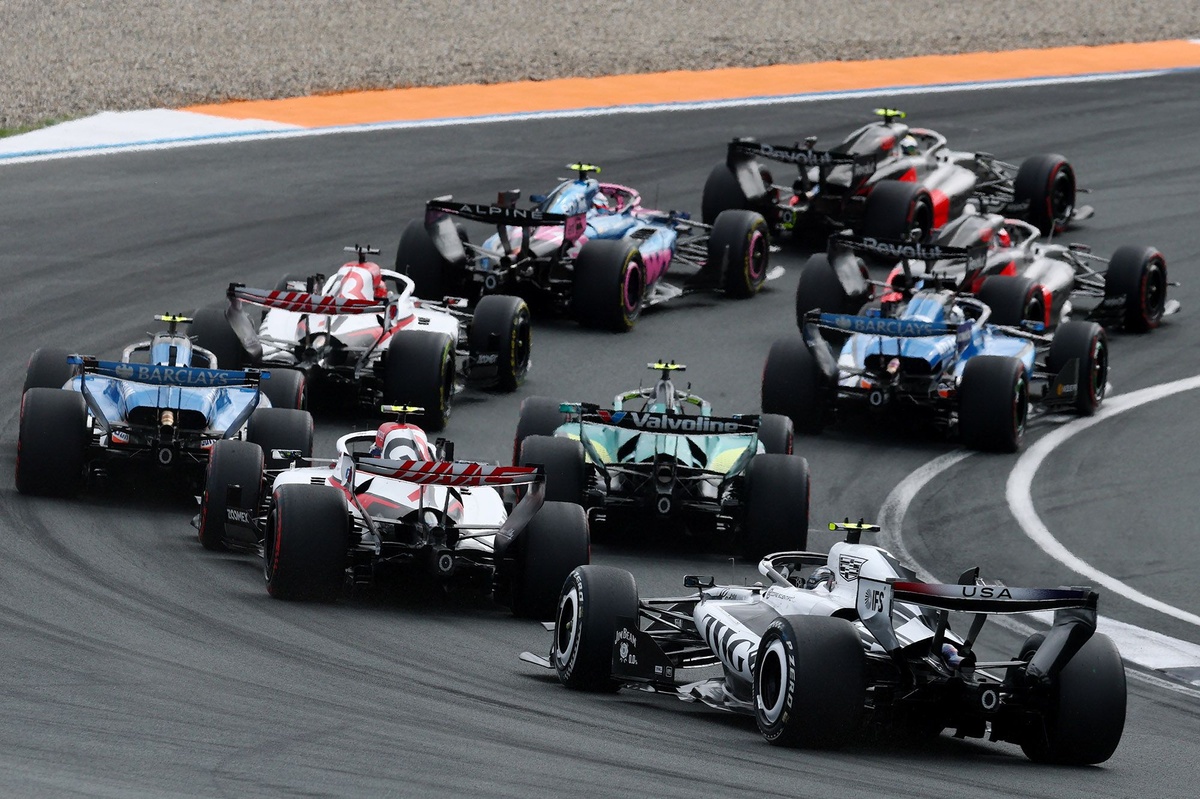
    The 2027 Formula 1 calendar is slated to feature 10 sprint race weekends across Bahrain, Australia, Japan, Canada, Monaco, Great Britain, Italy, Brazil, Qatar, and Abu Dhabi. Under the current framework, sprint races award points only to the top eight finishers on a descending scale from eight points for the winner down to one point for eighth place. Buxton contends this structure no longer reflects the increased weight of Saturday competition.

    Current Points Structure Deemed Inadequate for Expanded Sprint Role

    “You should get more points. It should go down further. They should reallocate the point structure between sprints and the main one,”

    Buxton asserted. He emphasized that the talent pool is already conditioned for multi-race weekends, noting that nearly every driver on the grid progressed through junior categories such as GP2—now Formula 2—which routinely featured two races per event.

    “Don’t forget as well, every single driver in that field other than Fernando [Alonso] came through junior formulas from GP2, which is now Formula 2, with two races in a weekend. So, it’s not like they’re not used to it.”

    Cost Cap and Aerodynamic Testing Limits Complicate Development

    Beyond points allocation, Buxton highlighted the cascading impact of additional sprint events on the sport’s financial regulations. The introduction of more high-intensity weekends forces teams to recalibrate spending under the existing budget cap, potentially shifting resources toward simulation and wind tunnel work.

    “To your point about development, it might then lead, under the budget cap, to teams having to rethink again how they allocate their spending throughout the year.”

    He explained that aerodynamic development—already concentrated in Computational Fluid Dynamics (CFD) and wind tunnel testing—is governed by a sliding scale of allocated hours based on the previous season’s constructors’ championship finish. More sprint races could necessitate a “rejigging” of these limits to preserve development capacity.

    “The vast majority, which is already the case, but even more of a focus on R&D going through CFD and wind tunnel, and obviously you have the limitations on that based on where you finish the previous championship season.”

    “So that might need a bit of rejigging as well in order to allow a little more time to go into CFD and a little bit more time in the wind tunnel because that’s where the development will ultimately be done.”

    Rookie Session Mandate Adds Further Scheduling Complexity

    Co-host Naomi Schiff, a former W Series driver, added another layer to the operational challenge: the mandatory inclusion of rookie drivers in free practice sessions.

    “Don’t forget we’ve got to get six rookie sessions in. Let’s not forget that as well. Each team has to give away six sessions to a rookie.”

    This requirement, combined with an expanded sprint format, compresses the already limited track time available for race preparation and car setup, intensifying the strategic burden on team principals and sporting directors.

    Why This Matters

    The 2027 sprint expansion represents a fundamental shift in Formula 1’s competitive architecture. With nearly one-third of the calendar designated as sprint weekends, the distinction between “support” events and championship-defining races continues to blur. The current points gradient—designed when sprints were experimental—risks undervaluing performances that increasingly influence title outcomes. Simultaneously, the intersection of the cost cap, aerodynamic testing restrictions (ATR), and mandatory rookie running creates a multi-variable optimization problem for teams. Any recalibration of points or testing allowances will require consensus among the FIA, Formula One Management, and the teams, likely becoming a focal point of Sporting Advisory Committee discussions throughout 2025 and 2026.

    Frequently Asked Questions

    How many sprint weekends are scheduled for the 2027 Formula 1 season?
    The 2027 calendar includes 10 sprint race weekends in Bahrain, Australia, Japan, Canada, Monaco, Great Britain, Italy, Brazil, Qatar, and Abu Dhabi.
    What is the current sprint race points distribution?
    Points are awarded to the top eight finishers: eight for first, seven for second, six for third, descending to one point for eighth place.
    How do aerodynamic testing restrictions (ATR) work under the cost cap?
    ATR allocate CFD and wind tunnel hours on a sliding scale based on the previous season’s constructors’ championship position; lower-placed teams receive more development time to promote convergence.
  • Max Verstappen’s blunt reaction to F1 Monaco GP sprint race: “No emotion attached to it”

    Max Verstappen’s blunt reaction to F1 Monaco GP sprint race: “No emotion attached to it”

    Key Highlights

    • Formula 1 has confirmed a 2027 calendar featuring 10 sprint weekends, including the season opener in Bahrain and the finale in Abu Dhabi.
    • The designation of Monaco as a sprint venue caught drivers by surprise, with Sergio Perez learning of the decision via the drivers’ WhatsApp group.
    • Max Verstappen reiterated his opposition to sprint races regardless of venue, while Arvid Lindblad argued Baku would be a far more suitable sprint location.

    Monaco Sprint Selection Shocks Paddock as F1 Unveils 2027 Sprint Calendar

    Formula 1’s recently presented 2027 calendar reveals a logical sequence of grands prix, yet the selection of sprint race venues has sparked considerable debate within the paddock. The sport has not only expanded the number of sprint weekends to 10 — a move widely viewed as commercially inevitable — but has also chosen locations that challenge conventional thinking about the format’s suitability. Notably, both the season-opening Bahrain Grand Prix and the season-closing Abu Dhabi Grand Prix have been designated as sprint weekends, a significant shift in how the championship’s bookend events will be structured.

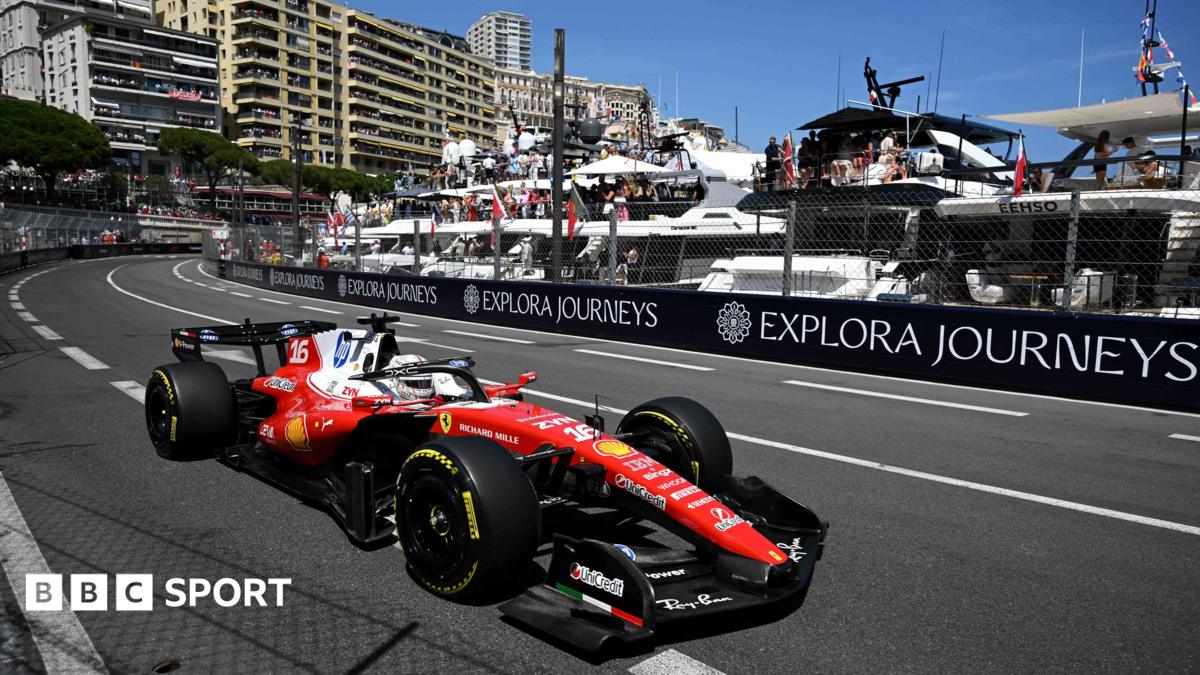
    However, the inclusion of the Monaco Grand Prix as a sprint venue generated the most immediate astonishment. During media day in Baku, Cadillac driver Sergio Perez disclosed that he only became aware of the decision through the flurry of reactions in the Formula 1 drivers’ WhatsApp group. “I found out through our [WhatsApp] group, actually. There were some comments there,” Perez said, smiling. “It was a bit busy in the group! I didn’t pay much attention, other than what happened in the group. And that stays in the group, as you can imagine.” The revelation underscores how unexpected the choice was even for the participants themselves.

    Drivers Debate Risk vs. Reward on Monte Carlo’s Streets

    On the record, driver opinions on a Monaco sprint are divided. Proponents argue the format brings the intensity of qualifying to the principality’s streets twice, theoretically doubling the spectacle. Critics, however, point to the fundamental disruption of the traditional weekend build-up. On a circuit where drivers traditionally leave margin during Friday practice and progressively push closer to the barriers at corners like Tabac and Piscine before the Saturday qualifying crescendo, the sprint format compresses that progression.

    Racing Bulls driver Arvid Lindblad articulated the strategic dilemma: “Maybe you take a bit less risk… If you’re P15, maybe you don’t try as hard, but the top teams, they’d always have to push. I think it would just mean that you can’t build as nicely as you’d want towards qualifying. You just have to get outside your comfort zone a bit earlier in the weekend.” With overtaking virtually impossible in Monaco, a poor sprint qualifying result effectively locks in a non-points finish for both the sprint and the main race, incentivizing caution over aggression for much of the field.

    Verstappen Remains Unmoved: ‘I Have No Emotion Attached to Winning a Sprint Race’

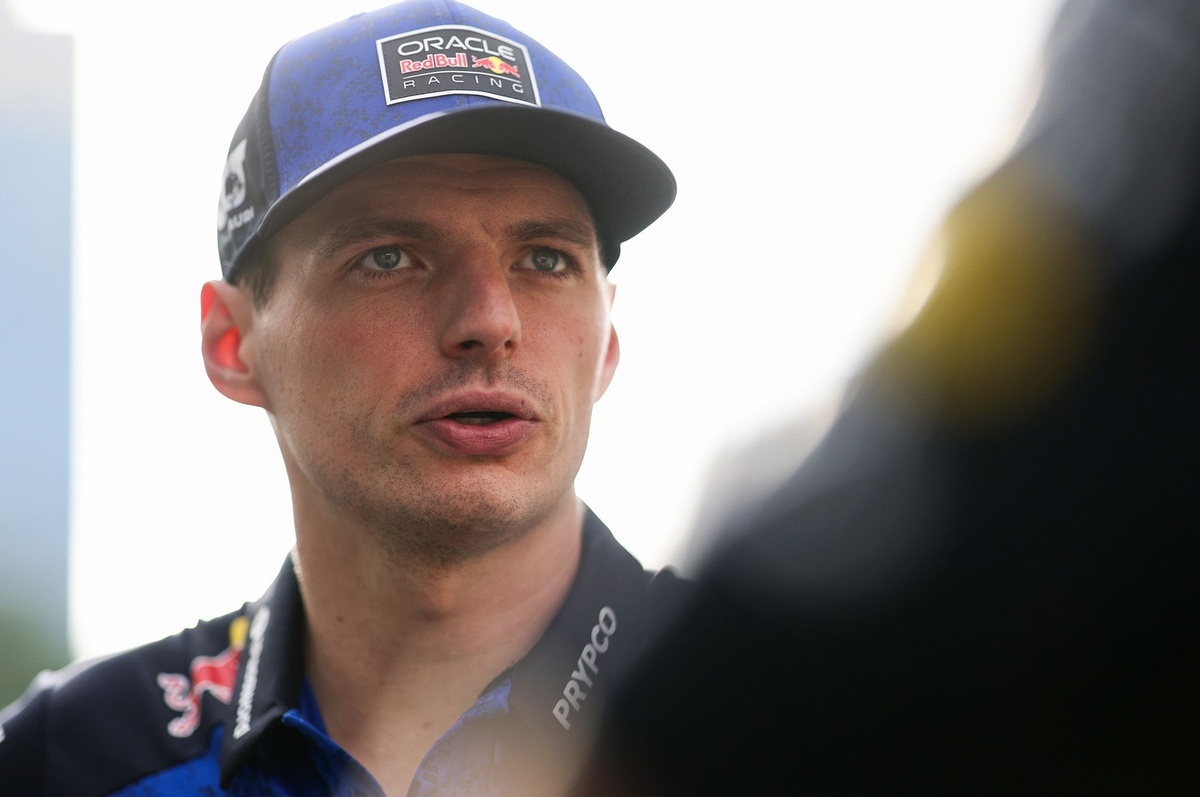
    Four-time world champion Max Verstappen offered the most definitive rejection of the format, irrespective of venue. “Yeah, more sprint races… Personally, I’m not a fan of it, but I understand the reasoning behind it, of course,” Verstappen stated in Baku. “It brings more action throughout the weekend, so yeah, we’ll participate… But, for me, I always think about the grand prix and that’s where my main focus is.”

    The Dutchman views sprint races as a spoiler for Sunday’s main event — a concern amplified in Monaco where two processional races would replace one. “About the sprint in Monaco, yeah, it’s the same scenario as what happens in the main race, right? Like, you are excited for the start and then you can’t pass. That’s quite straightforward.” Asked if the Monaco selection surprised him, Verstappen dismissed the relevance of location entirely: “I don’t know. For me, I honestly don’t care where the sprint races are… I just participate and of course you try to do the best you can. But I have no emotion attached to winning a sprint race or not winning it. From when I was a kid, you look forward to the grand prix. That’s normally on a Sunday or sometimes on a Saturday,” he added, referencing the 2024 Azerbaijan Grand Prix’s Saturday scheduling.

    Lindblad Champions Baku as Ideal Sprint Venue

    While Monaco’s selection perplexes many, Lindblad argued that the Baku City Circuit — absent from the sprint calendar for both 2026 and 2027 — possesses the characteristics the format demands. “This should be a sprint, this would be an amazing sprint race… In the end, it’s a track we can pass and the whole point of a sprint race is the idea of a flat-out race and passing. I think this should be one.” The Racing Bulls driver highlighted Baku’s combination of entertaining qualifying and genuine overtaking opportunities as the antithesis of Monaco’s limitations.

    Why This Matters

    The 2027 sprint calendar reveals Formula 1’s strategic priorities: maximizing commercial inventory through high-profile weekends in Bahrain and Abu Dhabi, and leveraging the unique prestige of Monaco despite its unsuitability for sprint racing’s core premise — overtaking. The drivers’ reactions expose a growing tension between the format’s commercial rationale and its sporting integrity. Verstappen’s emotional detachment and Lindblad’s tactical concerns about risk management in Monaco illustrate how the format alters competitive incentives. With Baku excluded through 2027, F1 appears to prioritize marketable venues over circuits that naturally produce the “flat-out race and passing” Lindblad identifies as the sprint’s purpose. The upcoming seasons will test whether fans accept processional sprints at iconic venues as a worthwhile trade-off for increased weekend content.

    Frequently Asked Questions

    How many sprint weekends are scheduled for the 2027 Formula 1 season?

    Ten sprint weekends are scheduled for the 2027 Formula 1 season, an increase from the current format.

    Which races have been confirmed as sprint weekends for 2027?

    The season opener in Bahrain and the season finale in Abu Dhabi are confirmed as sprint weekends, along with the Monaco Grand Prix. The full list of ten venues was referenced but not exhaustively detailed in the source material.

    Why are drivers critical of a sprint race in Monaco?

    Drivers criticize the Monaco sprint because overtaking is virtually impossible at the circuit, rendering the sprint a procession that duplicates Sunday’s race. The format also disrupts the traditional progressive build-up to qualifying, forcing drivers out of their comfort zone earlier with little reward for risk-taking given the likelihood of a non-points starting position.

  • Win 2027 Grand Prix Tickets to Celebrate 2027 Calendar Launch

    Win 2027 Grand Prix Tickets to Celebrate 2027 Calendar Launch

    Formula 1 Launches 2027 Calendar Giveaway with Race Tickets Prize

    Formula 1 is celebrating the release of the 2027 F1 Calendar by offering fans a chance to win tickets to a 2027 Grand Prix of their choice. The promotion runs through the official F1 Unlocked platform.

    How to Enter the 2027 F1 Ticket Giveaway

    To participate, fans must:

    • Sign up for a free F1 Unlocked account (or sign in if already a member)
    • Vote for the 2027 race they are most looking forward to attending

    One winner will be selected to receive tickets to their chosen 2027 Formula 1 race.

    About F1 Unlocked

    F1 Unlocked is Formula 1’s free membership program that provides fans with exclusive content, priority ticket access, behind-the-scenes features, and special promotions like this calendar launch giveaway.

    The 2027 Formula 1 season calendar was recently announced, setting the schedule for the next championship year. Fans can now review the full race lineup and cast their vote for the event they most want to experience in person.

  • F1 Schedule Clash Avoided: Could Lando Norris or Max Verstappen Race at Le Mans 2027?

    F1 Schedule Clash Avoided: Could Lando Norris or Max Verstappen Race at Le Mans 2027?

    2027 F1 Calendar Opens Door for Le Mans Cameos, but Hurdles Remain for Verstappen and Norris

    The release of the 2027 Formula 1 calendar on Wednesday has created a tantalizing opportunity for active grand prix drivers to tackle the 95th edition of the 24 Hours of Le Mans next June. The 24-round schedule features a convenient one-week gap for the French endurance classic, slated for the weekend of 12–13 June, sandwiched between the Monaco Grand Prix and the Portuguese Grand Prix. This geographic proximity makes the logistics of a crossover attempt relatively straightforward.

    However, avoiding a direct date clash is only the first step. Several significant regulatory and logistical obstacles still stand in the way of Max Verstappen, Lando Norris, or even Fernando Alonso becoming the first active F1 driver since Alonso himself to race at La Sarthe.

    The Mandatory Test Day Conflict

    While the race weekend itself is clear, the mandatory Le Mans test day on 6 June falls directly on the same weekend as the Monaco Grand Prix. Under current sporting regulations, rookies must participate in the test day, completing 10 laps—including five timed laps—around the Circuit de la Sarthe to be eligible for the race.

    Unlike the Nürburgring Langstrecken-Serie (NLS), which adjusted its schedule this year to accommodate Verstappen, the Automobile Club de l’Ouest (ACO) and the FIA are unlikely to alter the World Endurance Championship calendar for an individual Formula 1 driver. Such a change could disrupt full-time sportscar competitors racing in multiple championships.

    Exemption Precedent Exists

    There is a regulatory pathway for Platinum-rated drivers competing in other major championships. The Le Mans supplementary regulations allow a driver to apply to the ACO Sport Committee for an exemption from the test day. If granted, the driver must complete the mandatory laps during Wednesday practice instead.

    Precedent supports this route. In 2021, Robin Frijns skipped the test day due to Formula E commitments. Similarly, Nolan Siegel and Kyffin Simpson missed the 2024 test while contesting the IndyCar round at Road America.

    The “Double Duty” Logistical Gamble

    In theory, a driver could attempt both events on the same weekend: qualify in Monaco on Saturday, travel to Le Mans overnight for an early Sunday test session, then fly from the circuit’s adjacent airport to Nice for the 3 pm Grand Prix start. Kyle Larson attempted a comparable double in 2025, racing the Indianapolis 500 and the Coca-Cola 600 on the same day for Arrow McLaren with Hendrick Motorsports’ approval.

    While this demonstrates McLaren Racing CEO Zak Brown’s openness to crossover ventures, the dynamics differ for his own F1 drivers. With Larson, Brown was loaning a driver from a NASCAR team; Hendrick Motorsports had contractual protection requiring Larson to prioritize the Charlotte race if rain delayed Indy. For Norris or Oscar Piastri, Brown may be unwilling to compromise McLaren’s Monaco chances, especially with a Saturday sprint race further compressing the schedule.

    The Third-Car Dilemma

    Even if scheduling conflicts are resolved, teams must create a seat. Historically, manufacturers have added a third, Le Mans–focused entry—Porsche did so successfully in 2015 with Nico Hülkenberg, Earl Bamber, and Nick Tandy. But that was during the high-spending LMP1 era. In the current Hypercar landscape, additional entries are often deemed more effort than value, and recent extra cars have relied on IMSA Sportscar Championship crews.

    This poses a challenge for McLaren and Ford, both entering Hypercar competition for the first time in 2027. Neither has committed to an IMSA programme, citing capacity concerns. Ford is building its race operation from scratch and has already confirmed six drivers for its two-car effort, leaving no vacancy for Verstappen. McLaren, partnered with United Autosports, has not indicated plans for a third entry, and any additional car requires FIA and ACO approval amid grid-spacing constraints.

    McLaren’s Two-Driver Strategy Creates an Opening

    McLaren may offer the clearest path. As testing progresses, it appears the team will run only two drivers per car in standard six-hour rounds, adding a third for the endurance events at Qatar, Le Mans, and Bahrain—a strategy employed by Aston Martin and Porsche. So far, McLaren has confirmed only Mikkel Jensen and Laurens Vanthoor; Alex Lynn and Malthe Jakobsen are heavily linked to the remaining seats. This structure could allow Norris—or Piastri—to slot into a third seat for the longer races without disrupting the core lineup.

    For Verstappen, if the Hypercar door remains closed, his GT3 squad—currently competing in GT World Challenge Europe with Mercedes support—offers a theoretical GT-class entry at Le Mans.

    Preparation Deficit: Track Time vs. Race Craft

    Norris took a significant step Monday, logging 38 laps in the MCL-HY at Portimão during a pre-planned McLaren Hypercar test. While the test was likely scheduled months in advance, the timing suggests awareness of the 2027 calendar window.

    Yet testing cannot replicate WEC race procedures: full-course yellows, safety car restarts, and navigating LMGT3 and LMP2 traffic. A prior WEC race start would be invaluable. Fortunately, neither the Qatar 1812 km season opener nor the Spa 6 Hours clashes with F1 in 2027. Both serve as ideal proving grounds—Qatar as the second-longest race, Spa as the traditional Le Mans dress rehearsal. The workload, however, remains daunting: adding two WEC rounds and a potential test day to an already grueling F1 slate.

    Alternative Endurance Targets for 2027

    For Verstappen, the 2027 calendar offers less complicated alternatives. Neither the Nürburgring 24 Hours nor the Spa 24 Hours conflict with F1. Verstappen debuted at the Nordschleife this year and, after a late mechanical failure denied a strong result, is keen to return for another victory bid. He has also publicly targeted the Spa 24 Hours.

    “I wish that I could race in Spa as well,” he said in June this year, while taking part in the clashing Austrian GP. “I told them already for next year. It would be ideal if they could schedule it outside of a Formula 1 weekend, so let’s see.”

    Verdict: 2027 Possible, 2028 More Probable

    A 2027 Le Mans debut for Norris or Verstappen is not impossible, but it demands genuine intent from drivers and teams to navigate test-day exemptions, seat availability, and preparation deficits. A 2028 attempt may be more realistic once McLaren and Ford have a full Hypercar season under their belts. Yet with F1 calendar clashes a perennial risk, the unique alignment of 2027 may represent a window too tempting to ignore.

  • Formula 1 2027 Calendar Set for 10 Sprint Races Including Monaco

    Formula 1 2027 Calendar Set for 10 Sprint Races Including Monaco

    Formula 1 has confirmed a significant expansion of its sprint format for the 2027 World Championship, increasing the number of sprint weekends from six to ten. The revised calendar also marks the return of the Portuguese and Turkish Grands Prix, adding further depth to a record-equalling 24-race schedule.

    Sprint Format Expands to Ten Events

    Sprint weekends—which feature a standalone qualifying session on Friday, a 100-kilometre sprint race on Saturday, and the main Grand Prix on Sunday—will debut at five new venues in 2027. Bahrain, Australia, Japan, Monaco, and Abu Dhabi will host sprint events for the first time. They join Canada, Great Britain, Italy, Brazil, and Qatar, which retain their sprint status from previous seasons.

    The format commands a higher hosting fee, but promoters value the commercial upside: competitive track action across all three days drives stronger ticket sales. Silverstone reported that its 2024 sprint weekend delivered the British Grand Prix’s highest-ever attendance, drawing 64,000 more fans across the four days compared with the previous year’s conventional format.

    Monaco Sprint Raises Strategic Questions

    The inclusion of Monaco has drawn particular attention. Overtaking on the historic street circuit is notoriously difficult, meaning the sprint finishing order is likely to be settled after the opening lap unless incidents intervene. However, Formula 1 is promoting the event on the strength of a double qualifying spectacle—traditional qualifying on Friday and sprint qualifying on Saturday—which could produce two distinct grid orders and inject variability into the weekend.

    Calendar Highlights: Portugal and Turkey Return

    The 2027 schedule welcomes back Portimão and Istanbul Park for the first time since they served as pandemic-era placeholder rounds. The season is slated to open in Bahrain on 12–14 March, followed by Saudi Arabia a week later. The British Grand Prix is fixed for 2–4 July, while pre-season testing will take place in Bahrain from 24–27 February.

    Middle East Uncertainty Prompts Contingency Planning

    Both the Bahrain and Saudi Arabian opening rounds remain in doubt while conflict persists in the region. Bahrain is the traditional season opener, yet Australia has hosted the first race for the past two years due to the timing of Ramadan. The 2026 campaign concludes with back-to-back events in Qatar and Abu Dhabi, and Formula 1 is actively developing alternative schedules should the Middle East rounds become unviable by year-end. A summit of involved nations on Sunday issued a statement urging “maximum restraint” in the ongoing hostilities.

    Leadership Reaction

    F1 president and chief executive officer Stefano Domenicali said: “We are thrilled to welcome Portugal and Turkey to the championship and to expand sprint racing to 10 events, giving our fans even more intensity, drama, and the wheel-to-wheel action that make our sport so special.”

    Mohammed Ben Sulayem, president of the FIA, added: “The 2027 FIA F1 World Championship calendar is a strong reflection of the global appeal and continued growth of our sport.” He continued: “With 24 grands prix across five continents, the return of Portugal and Turkey, and the opportunity for an expanded sprint programme, the calendar combines tradition, innovation and fan engagement while maintaining the highest sporting standards.”