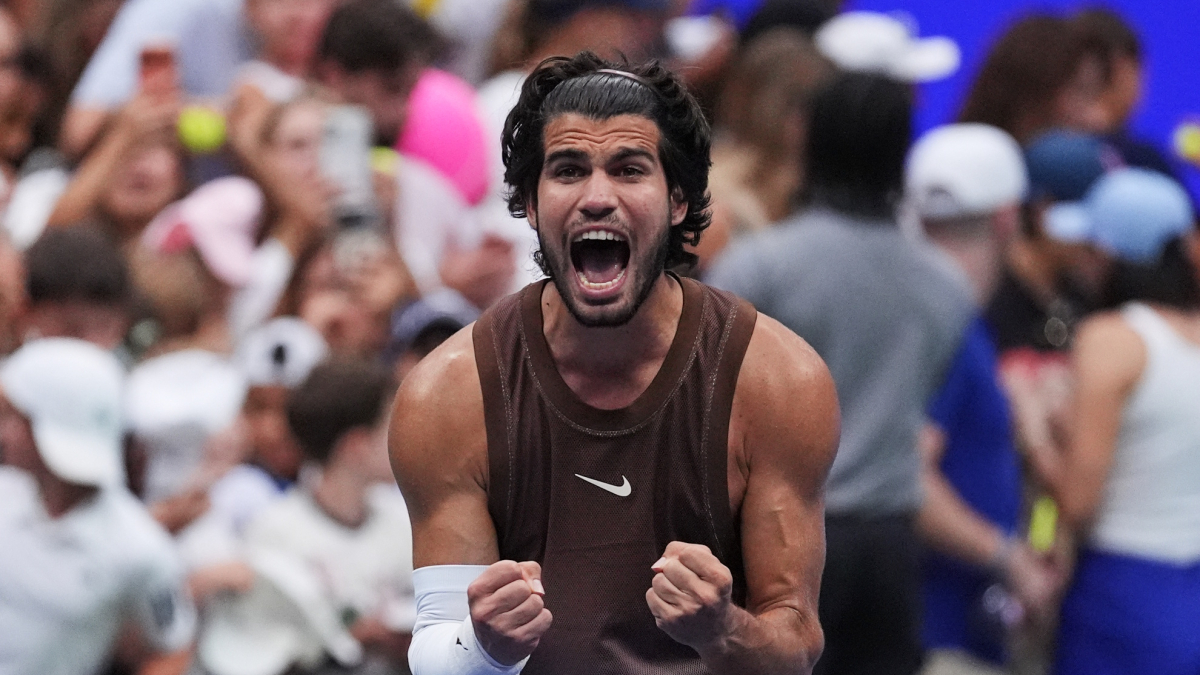
Carlos Alcaraz Returns to US Open Form but Steps Back from Grand Slam Revenue Campaign
Carlos Alcaraz has returned to the US Open looking every bit the title contender, yet his position within one of tennis’ most significant player movements has shifted dramatically. According to The Times, Alcaraz’s long-time representative Albert Molina informed the group behind the Grand Slam revenue campaign shortly before the tournament that the Spaniard would no longer participate.
Revenue Campaign Loses a High-Profile Voice
The campaign, which launched in March 2025, united several of the sport’s biggest names — including Aryna Sabalenka, Jannik Sinner, and Coco Gauff — to push for a greater share of Grand Slam revenue, improved player welfare, and more influence over tour decisions. The collective goal was to increase the athletes’ share of Grand Slam revenue to 22% by 2030.
Alcaraz had previously backed that push. Now, after missing nearly five months with a wrist injury, his strongest public comments center on a different concern: the sheer volume of tennis players are expected to play.
“In the future, I’m going to take some breaks, some long breaks,” Alcaraz said. “Maybe not four months, but one month, two months, missing some tournaments, because it’s impossible to play them all.”
Campaign Continues Without Alcaraz
Frustration over the revenue split became increasingly public during the 2026 season. Sinner framed the dispute as a matter of respect.
“It’s more about respect, you know?” he said. “Because I think we give much more than what we are getting back.”
Players also staged a symbolic reduction in pre-tournament media commitments at the French Open, linking the action to the percentage of Grand Slam revenue they believed they were receiving.
Some concessions have followed. Wimbledon increased its prize fund to £64.2 million, while the US Open raised total player compensation by 20% to $108 million and added a $2 million Player Support Program. The four majors also agreed to establish a Grand Slam Player Council.
Alcaraz’s reported departure does not signal opposition to those goals. However, it removes one of the sport’s most influential players from a campaign that relied heavily on the image of unity among its biggest stars.
Alcaraz’s Comeback Shifts the Narrative
His immediate focus is understandable after a wrist injury forced him to miss both Roland Garros and Wimbledon. Legitimate questions lingered over what level Alcaraz could produce after four and a half months away, but his US Open return has quickly answered many of them.
He reached the quarterfinals after beating Roman Safiullin, Jaime Faria, Wu Yibing, and Tommy Paul. Paul admitted the gap between them felt substantial.
“It felt like he’s playing at a completely different level than me,” Paul said.
Alcaraz himself has sounded increasingly confident.
“So it probably doesn’t matter that I was out for four months and a half,” he said. “Every time that I come here, I play my best.”
That comeback may also have reinforced a lesson from the months he lost. Alcaraz is still competing for the biggest trophies, but he is no longer pretending he can play everything. While Sabalenka, Sinner, and others continue pushing the Grand Slams over revenue, Alcaraz appears ready to fight a different battle — protecting enough of his calendar to protect his body.
Leave a Reply