Category: Sports

Sports news, viral moments, athletes, teams, and major competitions.

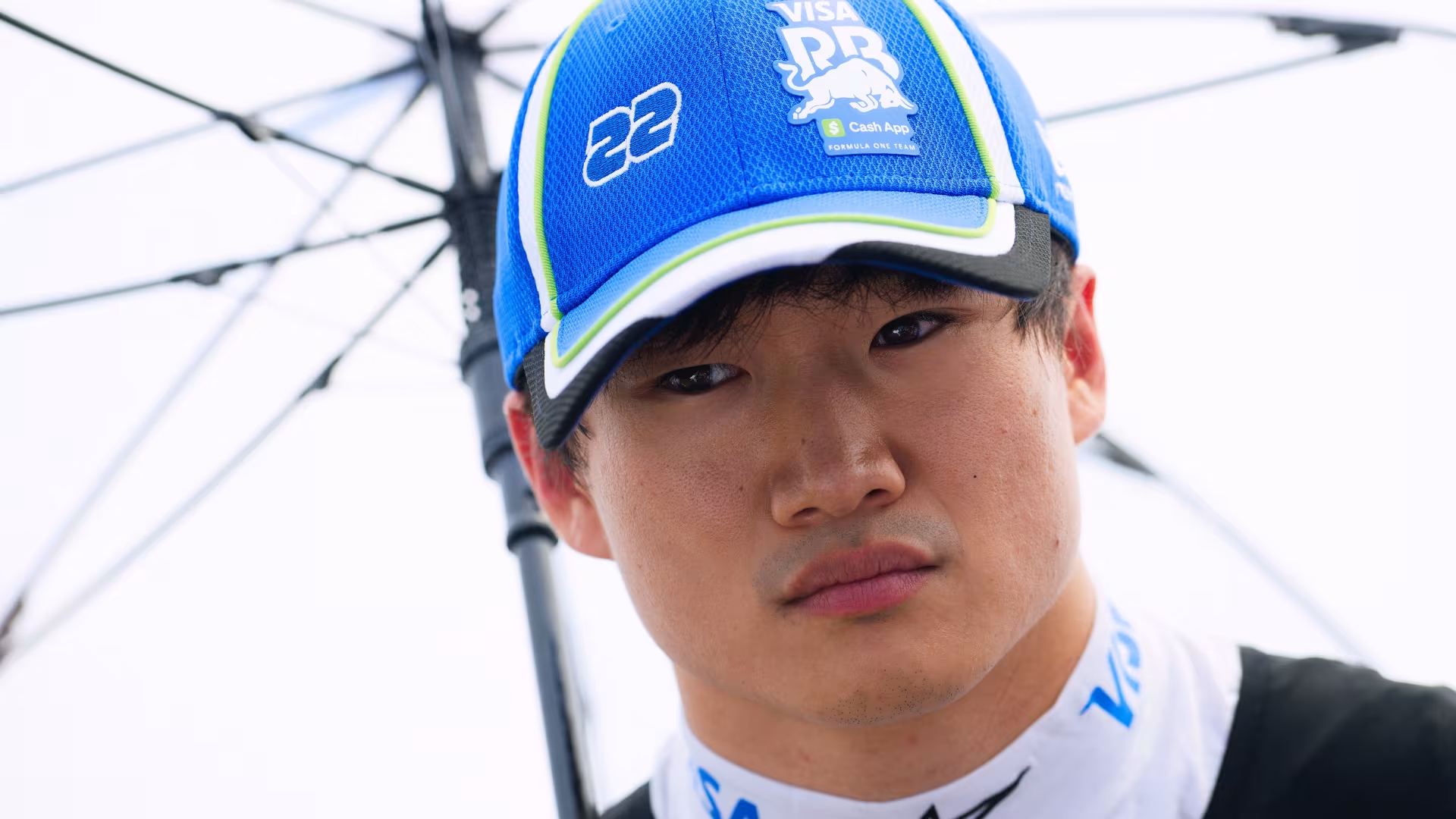
  • Yuki Tsunoda Reveals Biggest 2025 Mistake, How Red Bull Struggles Made Him a Better Driver

    Yuki Tsunoda Reveals Biggest 2025 Mistake, How Red Bull Struggles Made Him a Better Driver

    Tsunoda’s Unexpected Return to Racing Bulls

    Yuki Tsunoda has enjoyed a surprise three-race cameo in 2026, slotting into Racing Bulls in place of Liam Lawson following Isack Hadjar’s injury. While it remains unknown whether Tsunoda will get a fourth outing this season, the Japanese racer has certainly made the most of his unexpected comeback.

    Reflections on a Difficult 2025 Season at Red Bull

    Tsunoda is Red Bull’s reserve driver this season, having lost his race seat at the end of last year. After being promoted to Red Bull from the third round of the 2025 season, Tsunoda struggled to make much of an impact and was resigned to playing a support role in Max Verstappen’s championship bid.

    Speaking on the latest episode of official F1 podcast Beyond the Grid, Tsunoda explained just how tough 2025 was for him, after many years of relative success at Racing Bulls under their various guises, and exactly what he felt was his biggest mistake.

    “One thing about myself I think, if I say [being] completely honest, I have a big enough ego to not change my driving style,” Tsunoda said. “I know what I’m doing in terms of driving. I believe in myself, so I never try to change my driving style to other drivers, even though the driver is competitive and fast.

    “Obviously Max, it’s a different case, he’s a World Champion, he proves a lot of things and I still learn a lot of things from his driving. [It was] probably the first year out of any years since I started that I thought about changing driving style and tried to do something similar to Max.

    “But in my perspective, if I just look at data, I didn’t really see a huge difference in terms of driving. What I think now is the biggest mistake in last year was to try to replicate the set-up what he’s doing.”

    Tsunoda scored just seven times out of the 21 Grands Prix he contested with Red Bull, in a car that Verstappen took to second in the championship. The comparison between the two late in that season was stark, with Verstappen winning five of the final eight races, while Tsunoda in the same period recorded a P6, P7 and P10 finish.

    That resulted in Tsunoda losing his seat, with Hadjar promoted from Racing Bulls to replace him.

    “When I got told, I still remember, I didn’t feel that much of huge disappointment or devastated feeling. Obviously, still disappointed and pretty sad that I’m not driving next year. But not as I expected, I don’t know why.

    “I fought really hard. I fought more than ever in that 2025 year, more than ever. And even if I look back now, I don’t have much regret. I gave everything and the outcome is something I didn’t like, obviously, but honestly, I just gave everything.”

    Lessons Learned and a Strong Comeback

    Tsunoda believes the struggles he went through in 2025 have made him a better driver, and he has impressed for Racing Bulls.

    In a new generation of cars, which are very different from what he drove last year, Tsunoda has done well in the three races he has contested – especially in Zandvoort, where the Sprint format meant he only had one practice session to get used to all the changes.

    “Going back to this Netherlands story, jumping into the car that I’ve never driven, Sprint Qualifying format, team is doing really well, you know, running P5 in Championship, [knowing] that you can’t really mess up for the race, you want to have points,” he added.

    “Somehow, I was like really, [feeling] okay. I didn’t feel anything, that much, of pressure.”

    Tsunoda finished 11th in Zandvoort, one place ahead of his team mate. But he then finished 10th at Monza to pick up a point for the team and help them in their fight against Alpine.

    “The feeling I had, crossing the line, finishing P10, is definitely a bit more special P10 than certainly last three years of my career. Felt like really similar feeling towards first time I scored points in AlphaTauri [in my] first year.

    “I felt very valuable, [more] than usual. I was so happy, team are happy, and the kind of moments that you can celebrate with the team – that we had a good race weekend – is something I didn’t have for a while. It was a very nice moment.”

    Future Aspirations for 2027

    As to Tsunoda’s future, he is still trying to secure a full-time drive for next season. But it is a tough ask, with very few open seats left available.

    “My primary focus is F1. I’m trying to be back. That’s my target and I’m not thinking anything else. For myself, it’s fortunate that I got opportunities so I try and maximise it and hope I can be back in 2027.”

    To listen to this week’s episode of Beyond The Grid, simply hit go on the audio player above or click here to listen via your preferred podcasting platform.

    You can also check out a huge selection of previous episodes – spanning every decade of F1 – in our dedicated Beyond The Grid library.

    You can also watch the podcast on the F1 YouTube channel.
  • Ranked: The 10 Power Unit Manufacturers with the Most F1 Wins in History

    Ranked: The 10 Power Unit Manufacturers with the Most F1 Wins in History

    Top 10 Most Successful Formula 1 Engine Manufacturers of All Time

    Ferrari stands as the most iconic team in Formula 1 history, defined by its scarlet liveries and a roster of legendary drivers. However, Mercedes has now drawn level at the summit of the most successful power unit manufacturers, matching Ferrari’s tally of 251 Grand Prix victories following Kimi Antonelli’s win at the 2026 Spanish Grand Prix.

    From these two motorsport powerhouses to defunct giants like Coventry Climax and BRM, here are the top 10 engine producers with the most Formula 1 wins across 76 years of championship racing.

    1. Ferrari – 251 Wins

    Ferrari has contested every Formula 1 season since the inaugural championship in 1950, amassing vast success over the decades with drivers such as Alberto Ascari, Niki Lauda, and Michael Schumacher. The Scuderia has secured a colossal 251 victories with its own power units. Charles Leclerc celebrated the team’s 250th win at the 2026 British Grand Prix, while the additional victory came courtesy of Sebastian Vettel’s maiden triumph for Toro Rosso in 2008, when the team operated as a Ferrari customer.

    Ferrari’s very first Grand Prix victory belonged to José Froilán González, known as the “Pampas Bull.” He joined the squad for five rounds in 1951, finishing on the podium at every appearance, including a win at Silverstone.

    1. Mercedes – 251 Wins

    Mercedes competed in only two Formula 1 campaigns (1954 and 1955) before a lengthy sabbatical. The manufacturer returned in the mid-1990s as an engine supplier for Sauber and McLaren, later adding Brawn GP and Racing Point to its customer roster. The original stint yielded two Drivers’ Championships for Juan Manuel Fangio, but the modern era of dominance stems from McLaren’s Mika Häkkinen (1998, 1999 World Champion), Brawn GP’s Jenson Button (2009 World Champion), and the full works re-entry in 2010.

    After returning as a constructor with Michael Schumacher and Nico Rosberg, Mercedes required two years to win a race and another two to claim a first title. By then, Lewis Hamilton had joined the team, going on to claim 85 of Mercedes’ total victories. Rosberg, Kimi Antonelli, Valtteri Bottas, and George Russell have also contributed to the record tally.

    3. Ford Cosworth – 176 Wins

    The Cosworth DFV ranks among the most dominant engines in F1 history, delivering 155 wins across outfits including Team Lotus, Brabham, Tyrrell, and Williams. Between the 1960s and 1980s, it was the default choice for any team not building its own power unit. Jim Clark secured its maiden victory at the 1967 Dutch Grand Prix, driving from eighth to first in the Lotus 49. A testament to its supremacy: every single race in the 1969 and 1973 seasons was won by a DFV-powered car.

    The turbo era forced an evolution, with later Ford Cosworth variants adding 21 further wins. These came predominantly via Benetton and McLaren, though Giancarlo Fisichella claimed the final victory for Jordan at the 2003 Brazilian Grand Prix.

    4. Renault – 169 Wins

    Renault pioneered the regular use of turbocharged engines in Formula 1. After two seasons of severe reliability issues—it took 14 races to record a first finish—the breakthrough arrived in 1979. Jean-Pierre Jabouille, who had endured every prior retirement, won the French Grand Prix that year. Alain Prost’s arrival in 1981 unlocked the program’s potential, yielding nine wins before the works team declined and withdrew in 1986.

    Ironically, greater success followed the 1989 ban on turbos when Renault began supplying Williams. Subsequent partnerships with Benetton and Red Bull lifted the total to 169 victories, with Esteban Ocon scoring the final win at the 2021 Hungarian Grand Prix. Renault departed F1 again at the end of the 2025 season, prompting Alpine to switch to Mercedes power for the 2026 regulations.

    5. Honda – 89 Wins

    Honda’s F1 history is fractured across four separate stints, beginning in 1964. Early success came quickly as Richie Ginther won the 1965 Mexican Grand Prix in a Honda-built chassis and engine. The manufacturer returned as a supplier for Spirit, Williams, Lotus, McLaren, and Tyrrell between 1983 and 1992. While factory support varied, Nigel Mansell, Nelson Piquet, Ayrton Senna, and Alain Prost all proved Honda could provide an unbeatable power unit.

    Financial reasons triggered a withdrawal before Honda purchased BAR, which became Brawn GP when Honda exited again amid the 2008 economic crisis. A fruitful partnership with Red Bull began in 2019, with Max Verstappen delivering the first win of the V6 turbo-hybrid era. The tally reached 89 victories, the last coming at the 2021 Abu Dhabi Grand Prix, though this was far from the end of Honda’s involvement in the sport.

    6. Coventry Climax – 40 Wins

    Coventry Climax had manufactured engines since the early 20th century but entered racing in the 1950s. Stirling Moss scored their first win at the 1958 Argentine Grand Prix, though the standard 2-litre unit lacked the power to challenge rivals consistently. A 2.5-litre version arrived in 1959, propelling Jack Brabham to the World Championship. The engine proved versatile across Lotus, Cooper, Brabham, and Lola chassis, securing 40 Grand Prix wins between 1958 and 1965.

    The program bowed out in style when Jim Clark secured his third career Grand Slam at the 1965 German Grand Prix en route to the title. Coventry Climax left motorsport when the 3-litre formula was introduced.

    7. Honda RBPT – 38 Wins

    Max Verstappen’s hard-fought 2021 Drivers’ Championship coincided with Honda’s official departure, but the manufacturer agreed to support Red Bull’s transition to in-house production under the Red Bull Powertrains (RBPT) banner. A new agreement transferred the Honda engine IP to Red Bull through the end of the 2025 season, with Honda providing technical support as required.

    This arrangement yielded one of the most dominant seasons in recent memory, as Red Bull won all but one race in 2023, amassing 860 points. While 2024 and 2025 were less productive, the partnership concluded with 38 victories overall, placing seventh on the all-time list.

    8. TAG Porsche – 25 Wins

    Short-lived but immensely successful, the TAG-funded Porsche engine powered McLaren from 1983 to 1987. Originally slated for a 1984 debut, Niki Lauda insisted on early testing, forcing a modified chassis for the 1983 Dutch Grand Prix. The unit was effective immediately: Alain Prost won the season-opening 1984 Brazilian Grand Prix, though Lauda claimed that year’s title. The duo combined for 25 victories before McLaren switched to Honda in 1988, inspired by the Japanese manufacturer’s strong showings with Williams.

    9. BMW – 20 Wins

    BMW’s early F1 involvement consisted of sporadic private entries, but the 1980s saw a full commitment to challenge Renault’s turbo dominance. After an initial exclusive deal with Brabham faltered—Bernie Ecclestone’s team initially preferred Cosworth—Nelson Piquet delivered BMW’s first win at the 1982 Canadian Grand Prix.

    The 1989 ban on turbos paused BMW’s involvement. The manufacturer later replaced Renault at Williams, delivering a competitive engine for 2000 and a more aggressive evolution that won the 2001 San Marino Grand Prix. By 2003, Williams consistently fought for wins but could not match Ferrari’s dominance, ending the partnership in 2005. BMW’s subsequent purchase of Sauber yielded only one victory—Robert Kubica at the 2008 Canadian Grand Prix—before the team was sold back to Peter Sauber.

    10. BRM – 18 Wins

    British Racing Motors (BRM) endured a shaky start as overly ambitious engines failed to deliver results. Delayed development eventually yielded a first win for Jo Bonnier at the 1959 Dutch Grand Prix. Partner Alfred Owen threatened to cancel the project without improvement, promoting former Rolls-Royce employee Tony Rudd to Chief Development Engineer—a masterstroke. Rudd resolved fundamental issues, culminating in Graham Hill’s 1962 Drivers’ Championship.

    BRM also sold engines to privateers, but performance faded, and the marque exited F1 in 1977 with 18 Grand Prix victories: 17 as a works team and one via Team Lotus.

  • Lewis Hamilton’s Dawn Apollo Studios Signs Major New Deal with Skydance Sports

    Lewis Hamilton’s Dawn Apollo Studios Signs Major New Deal with Skydance Sports

    Key Highlights

    • Seven-time Formula 1 champion Lewis Hamilton has signed a multi-year, first-look production deal with Skydance Sports through his Dawn Apollo Studios company, expanding his footprint in film and television.
    • Dawn Apollo Studios, founded in 2022, will develop and produce scripted, unscripted, and animated content with Hamilton serving as executive producer on all projects.
    • The partnership follows Dawn Apollo’s significant involvement in “F1: The Movie,” which grossed over $634 million globally, and Hamilton has revealed three new film concepts in development, including two animations.

    Hamilton Expands Media Empire with Skydance Sports Partnership

    Seven-time Formula 1 World Champion Lewis Hamilton has formalized a multi-year, first-look production agreement with Skydance Sports, the sports entertainment division of Paramount Skydance, through his Dawn Apollo Studios banner. The deal positions the newly signed Ferrari driver as an executive producer across a slate of scripted, unscripted, and animated projects, marking a significant escalation of his off-track business ventures. Announced amid Hamilton’s debut season with Scuderia Ferrari, the partnership leverages the commercial momentum generated by “F1: The Movie,” the Apple Original Films release that Dawn Apollo helped shepherd to a global box office haul exceeding $634 million.

    Dawn Apollo Studios: From Consultancy to Content Creation

    Hamilton launched Dawn Apollo Studios in 2022 with a mandate to champion diverse storytelling across sport, culture, and entertainment. The company’s most visible credit to date is its deep involvement in “F1: The Movie,” the high-octane drama starring Brad Pitt and Damson Idris directed by Joseph Kosinski. Hamilton served as both executive producer and consultant on the production, embedding himself in the creative process from script development through post-production. The film’s commercial success—crossing the $634 million threshold worldwide—validated Dawn Apollo’s model of athlete-led content creation and provided the leverage for the new Skydance Sports arrangement.

    Strategic Alignment with Skydance Sports Leadership

    The agreement pairs Dawn Apollo with a division led by Jesse Sisgold, President of Skydance Sports, whose portfolio includes documentaries, series, and feature films centered on athletic narratives. Hamilton emphasized the cultural resonance of the collaboration in a statement accompanying the announcement:

    “I’ve always believed stories can help people see the world differently and spark important conversations,” the Ferrari driver explained.

    “That’s what excites me about Dawn Apollo Studios. It gives us the chance to back projects that feel honest, bold and meaningful, and to create space for voices and perspectives that haven’t always had that opportunity.

    “Skydance Sports understands how powerful sport, culture and entertainment can be in moving audiences, and I’m excited to team up with Jesse and the team to bring those stories to life.”

    Slate Expansion: Animations, Documentaries, and Feature Films

    Beyond the structural partnership, Hamilton has offered a glimpse into Dawn Apollo’s active development pipeline. Speaking to media during the 2025 Monaco Grand Prix weekend, he detailed three original concepts currently in various stages of writing, signaling a shift from consulting on external projects to originating intellectual property.

    “I’ve got three concepts that I’m writing,” he told the media at the 2025 Monaco Grand Prix. “I’m going to write them with a writer because I’ve never written a movie before.

    “But I’ve got these concepts and these ideas that I’ve come up with for movies. I think two of them will be animations and one of them is already in a phase of the first part of the script already, so it’s exciting.

    “And then there will be documentaries, there will be maybe a TV series at some stage, but mostly movies. I love the development of movies – that’s what I love the most.”

    This disclosure reveals a deliberate diversification strategy: two animated features, a live-action script nearing completion, and a broader slate encompassing documentaries and potential series. The animation focus suggests an intent to reach younger, global audiences beyond the core motorsport demographic, while the documentary and series formats align with the current streaming-driven demand for behind-the-scenes sports content.

    Why This Matters

    The Hamilton–Skydance Sports deal exemplifies the accelerating convergence of elite athlete branding, media ownership, and studio infrastructure. As traditional endorsement models evolve into equity and production partnerships, Hamilton is following a trajectory blazed by figures like LeBron James (SpringHill Company) and Peyton Manning (Omaha Productions), but with a distinct Formula 1 global platform. For Paramount Skydance, the alliance secures a first-look window on projects from one of the world’s most recognizable athletes at the precise moment his Ferrari move amplifies international visibility. For the industry, it signals that athlete-led studios are no longer vanity imprints but viable content engines capable of delivering theatrical-scale returns, as evidenced by the $634 million gross of “F1: The Movie.” The next 12–18 months will test whether Dawn Apollo can translate that singular success into a sustainable, multi-genre pipeline.

    Frequently Asked Questions

    What is Dawn Apollo Studios and when was it founded?

    Dawn Apollo Studios is Lewis Hamilton’s production company, established in 2022. It focuses on developing and producing scripted, unscripted, and animated content across film, television, and digital platforms, with an emphasis on diverse storytelling in sport and culture.

    How was Dawn Apollo involved in “F1: The Movie”?

    Dawn Apollo Studios was heavily involved in the making of “F1: The Movie,” with Hamilton serving as an executive producer and consultant on the project. The film, starring Brad Pitt and Damson Idris, grossed more than $634 million at the global box office.

    What new projects has Lewis Hamilton revealed are in development?

    At the 2025 Monaco Grand Prix, Hamilton disclosed he is writing three original concepts—two animated features and one live-action project already in early script phase—with plans for documentaries and a potential television series. He is collaborating with professional screenwriters on these projects.

  • Alpine Hires Former Mercedes F1 Tech Chief Mike Elliott as CTO

    Alpine Hires Former Mercedes F1 Tech Chief Mike Elliott as CTO

    Key Highlights

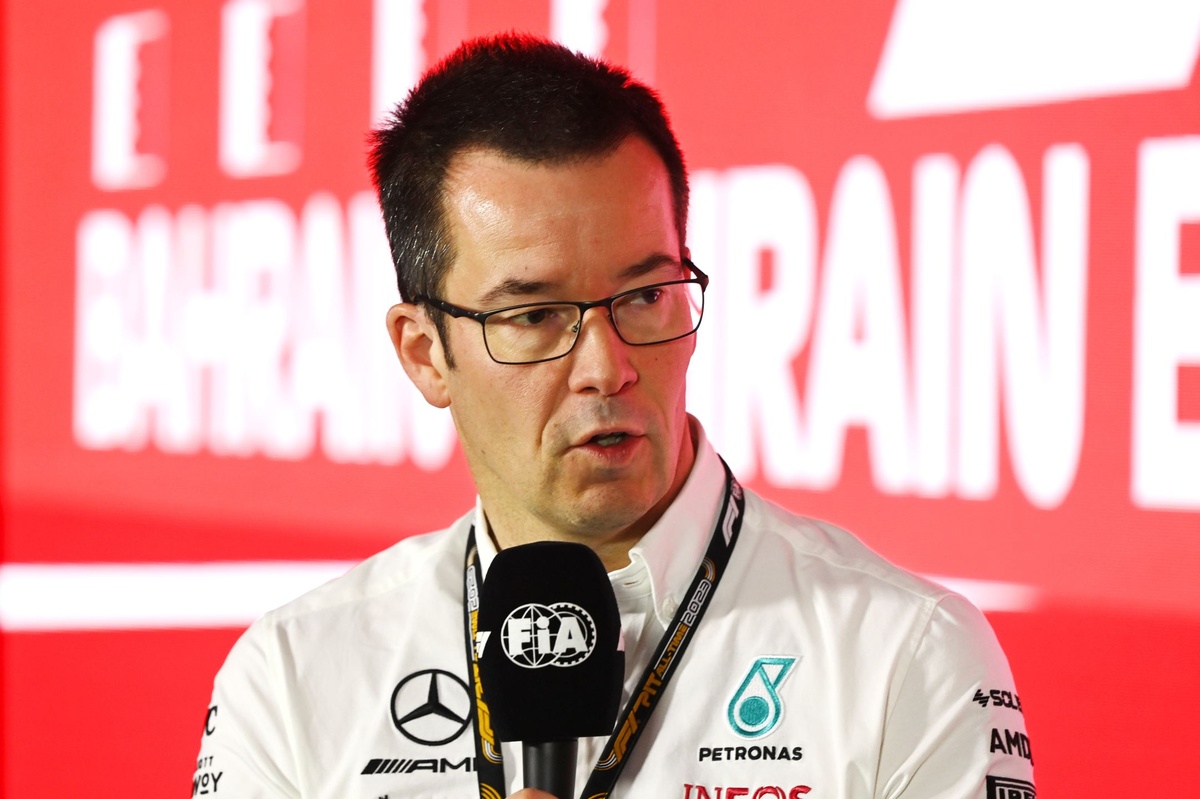
    • Alpine F1 appoints former Mercedes CTO Mike Elliott as Chief Technical Officer in a newly created role at the Enstone factory.
    • Elliott returns to Enstone after previous tenure as principal aerodynamicist during the Renault and Lotus eras, bringing eight Constructors’ and eight Drivers’ championship pedigree.
    • The appointment comes as Alpine fights Racing Bulls for fifth in the 2025 Constructors’ Championship ahead of its 2026 transition to Mercedes power units.

    Alpine Bolsters Technical Leadership with Mike Elliott Appointment

    The BWT Alpine Formula 1 Team has confirmed the appointment of Mike Elliott as Chief Technical Officer, a newly created position designed to oversee the technical and engineering functions at the team’s factory at Enstone. The announcement, made on Thursday, signals a significant reinforcement of the squad’s technical hierarchy as the outfit targets a return to the front of the grid. Elliott, a 52-year-old British engineer, assumes immediate responsibility for the entire technical area, with current Executive Technical Director David Sanchez now reporting directly into him.

    A Proven Championship Pedigree Returns to Enstone

    The hiring represents a notable homecoming for Elliott, who previously served as the team’s principal aerodynamicist during its Renault and Lotus iterations. His career trajectory since departing Enstone has been defined by sustained success at Mercedes. He joined the Brackley-based squad as Head of Aerodynamics, playing a pivotal role in the team’s early dominance of the 2014 hybrid regulations. Elliott subsequently rose through the ranks to serve as Technical Director and ultimately Chief Technical Officer, a tenure that saw him trade positions with James Allison before his departure from Mercedes in 2023.

    Alpine Highlights Championship CV and Strategic Fit

    In its official statement, Alpine emphasized the depth of Elliott’s winning experience. “He has a proven track record in the sport, having contributed to an impressive eight constructors’ and eight drivers’ championships,” the team stated. Alpine further contextualized the strategic rationale behind the hire, noting that “Elliott’s arrival at Enstone strengthens the team’s technical capabilities as the team looks to build on the improved performances on track and close the gap to the top four teams.” This mandate aligns directly with the team’s current trajectory, having sacrificed development on the 2024 car to prioritize the 2025 and 2026 projects.

    Why This Matters

    The appointment of Mike Elliott is a definitive statement of intent from Alpine and its parent company, Renault Group. After a difficult start to the current regulatory cycle, the team has shown signs of recovery in 2025, currently battling Visa Cash App Racing Bulls for fifth place in the Constructors’ Championship. Crucially, 2026 marks a seismic shift for the Enstone operation: it will be the first season Alpine competes as a customer team for Mercedes power units, ending its factory engine program. Elliott’s intimate knowledge of Mercedes’ power unit installation requirements, cooling architectures, and aero-philosophy—gained during his decade-long stint at Brackley—provides a unique bridge between the chassis team and their new engine partner. His elevation above David Sanchez also clarifies a technical reporting structure that has seen frequent reorganization in recent years, placing a single, highly experienced figure at the apex of technical decision-making ahead of the all-new 2026 regulations.

    Frequently Asked Questions

    What is Mike Elliott’s specific mandate at Alpine?

    Elliott has been appointed Chief Technical Officer, a newly created role in which he will “oversee the technical and engineering functions at the team’s factory at Enstone.” He sits atop the technical hierarchy, with Executive Technical Director David Sanchez now reporting to him.

    Why is his Mercedes background significant for Alpine’s 2026 season?

    Alpine will switch to Mercedes customer power units in 2026. Elliott spent over a decade at Mercedes, rising to CTO, giving him unparalleled insight into the power unit’s integration requirements, which is critical for designing the all-new 2026 chassis regulations.

    How has Alpine performed recently to warrant this structural change?

    After a deliberate strategy of sacrificing 2024 development to focus on future regulations, Alpine has made a strong start to the 2025 season, currently fighting Racing Bulls for fifth place in the Constructors’ Championship.

  • Alpine Appoints Mike Elliott as Chief Technical Officer

    Alpine Appoints Mike Elliott as Chief Technical Officer

    Alpine has confirmed the appointment of Mike Elliott as Chief Technical Officer, marking a significant return to Formula 1 for the British engineer following his departure from Mercedes in late 2023.

    Extensive Formula 1 Pedigree

    Elliott brings 23 years of elite-level experience to the Enstone-based operation. His career began at McLaren in 2000 as an aerodynamicist, where he advanced through various technical roles before joining Renault in 2008. He remained with the Enstone outfit through its various iterations until 2012, when he moved to Mercedes.

    At Mercedes, Elliott progressed to Head of Aerodynamics before serving as Technology Director from 2017 to 2021 and Technical Director between 2021 and 2023. He briefly assumed the Chief Technical Officer role in a 2023 leadership swap with James Allison, departing the team six months later.

    Alpine Statement on Appointment

    In a statement confirming his appointment, Alpine stated that Elliott will “oversee the technical and engineering functions at the team’s factory at Enstone” in his new position, adding: “He has a proven track record in the sport, having contributed to an impressive eight Constructors’ and eight Drivers’ Championships.

    “Elliott’s arrival at Enstone strengthens the team’s technical capabilities as the team looks to build on the improved performances on track and close the gap to the top four teams.”

    Strategic Significance for Alpine

    The hiring represents a clear statement of intent from Alpine as they target a return to the front of the grid. Elliott’s championship-winning experience at Mercedes, combined with his prior knowledge of the Enstone facility, positions him to make an immediate impact on the team’s technical direction for the 2025 season and beyond.

  • Bluberi’s Mike Trask: “We’ve grown 52% over the last two years and now have 10 studios.”

    Bluberi’s Mike Trask: “We’ve grown 52% over the last two years and now have 10 studios.”

    Bluberi SVP Mike Trask Details 52% Growth and Nevada Expansion on MaxBet Podcast

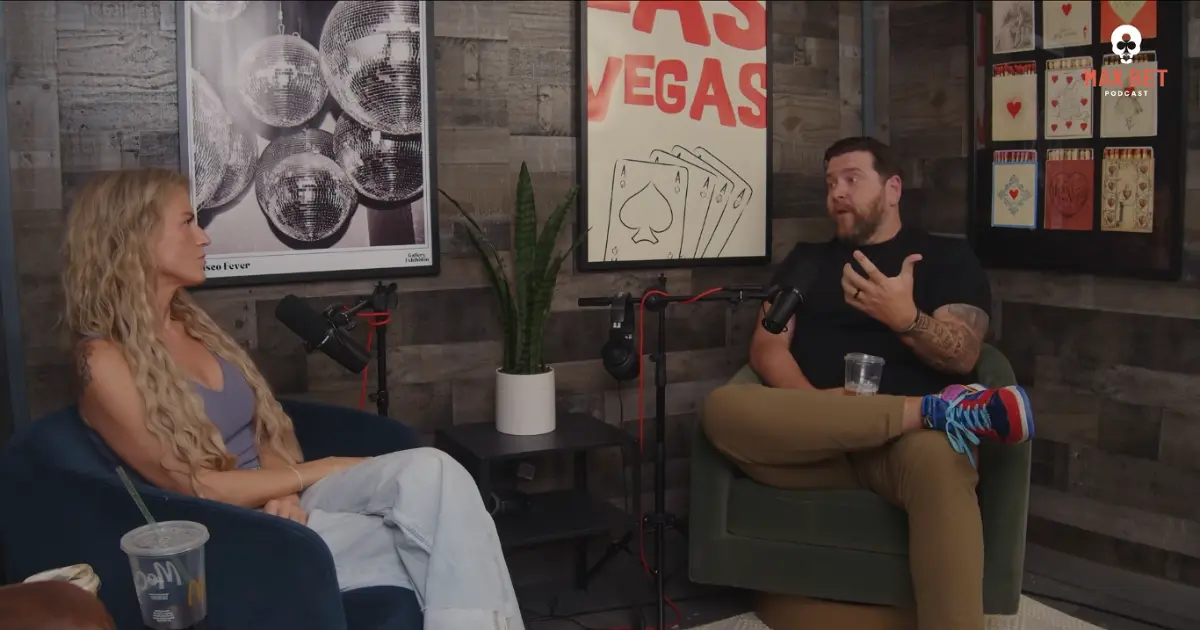
    Bluberi’s Senior Vice President of Sales for North America, Mike Trask, appeared on the MaxBet Podcast to discuss the company’s financial trajectory and strategic studio expansion. During the conversation, Trask highlighted significant growth metrics and recent market entry milestones, particularly in Nevada.

    Two-Year Growth Reaches 52%

    Addressing the company’s performance, Trask referenced internal figures that have been publicly acknowledged:

    “They said we’ve grown 52% over the last two years — that was like a public stat…

    The discussion covered Bluberi’s expanding studio footprint and the operational momentum driving the gaming supplier’s North American strategy. Trask’s insights provide a window into how the company is positioning itself across key regulated markets.

    Nevada Market Entry Milestones

    Beyond revenue growth, the podcast appearance touched on Bluberi’s progress in securing regulatory approvals and deploying product in Nevada — a critical jurisdiction for any gaming technology provider seeking national scale. The conversation underscored the importance of studio infrastructure investments that support both content development and regulatory compliance.

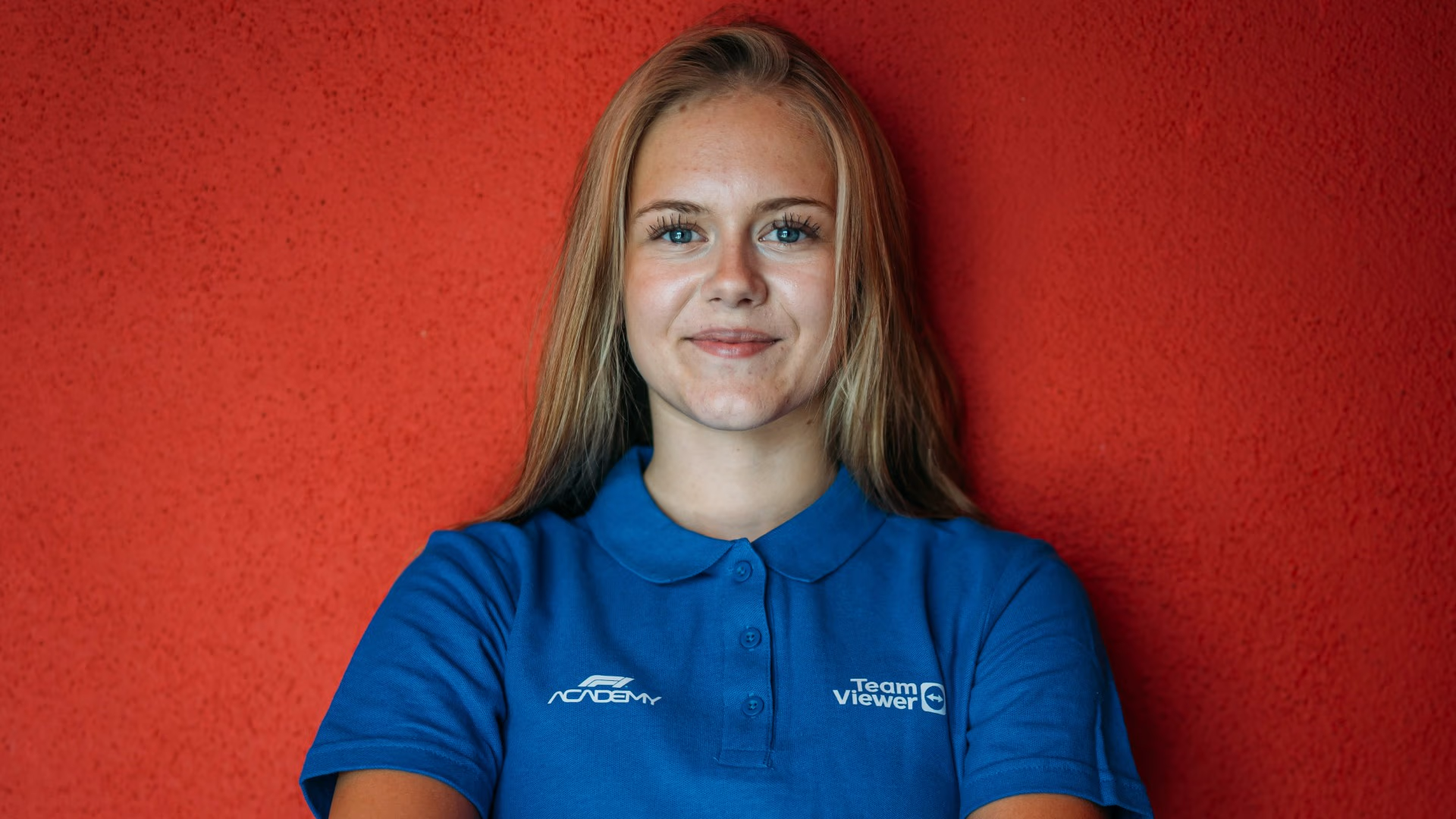
  • Alexia Danielsson Confirmed as TeamViewer Wild Card Driver for F1 Academy Austin Round

    Alexia Danielsson Confirmed as TeamViewer Wild Card Driver for F1 Academy Austin Round

    F1 Academy has confirmed that Swedish driver Alexia Danielsson will make her series debut as the Wild Card entry for Round 5 of the 2026 season at the Circuit of the Americas in Austin. The 17-year-old will represent TeamViewer, the championship’s Official Partner, driving the #45 car operated by Hitech Grand Prix during the United States Grand Prix weekend.

    Danielsson’s Rapid Rise Through Junior Formulas

    Danielsson began her single-seater career in 2022, graduating from Aquilia Formula 1000 to the Nordic 4 Championship two years later. She claimed her maiden victory in Nordic 4 last season before switching to the Porsche Sprint Challenge Scandinavia in 2025, where she won on debut. This year, she delivered a points-scoring rookie campaign in the F4 CEZ Championship.

    Her trajectory accelerated sharply during last week’s F1 Academy Rookie Test at Navarra, where she posted the second-fastest time overall, marking her as a standout performer among the next generation of female talent.

    TeamViewer “Forward Together” Livery Celebrates Women’s Communities

    Danielsson’s Hitech-run entry will carry a special-edition livery designed around TeamViewer’s Forward Together campaign. The initiative highlights how formal and informal communities help women enter and advance in sports and technology roles. The car’s design features 250 inspiring women representing communities focused on:

    • Leadership development
    • Advancing women in technology
    • Empowering the next generation in STEM
    • Strengthening professional networks
    • Driving greater inclusion in motorsport and automotive industries

    Danielsson: “An Experience I Will Never Forget”

    The Swedish teenager expressed her enthusiasm following the official announcement.

    “It has been an absolutely incredible few days,” said Danielsson. “First, to be given this opportunity by McLaren and then to perform so well at the F1 ACADEMY test was more than I had dared hope for.

    “And now it is also official that I will race as a Wild Card in F1 ACADEMY during the United States Grand Prix, which feels absolutely amazing. Racing at COTA in front of such a huge crowd, right in the middle of a Formula 1 weekend, will be an experience I will never forget and something I can build on going forward.”

    Danielsson spoke further about the magnitude of competing during a Formula 1 race weekend.

    “More than anything, I’m just really excited to get the chance to race during a Formula 1 weekend. I’ve only been to an F1 race once before, and that was at Zandvoort in the Netherlands a month ago, when McLaren announced me as one of their drivers for the Rookie Test.

    “My main goal for the weekend is to learn as much as I possibly can. I’m also competing for a place on the grid for the full season next year, so if I get that opportunity, I want to be as prepared as I can be.”

    F1 Academy and TeamViewer Leadership on the Partnership

    Karin Fink, Head of Commercial Operations at F1 Academy, emphasized the series’ community-driven ethos.

    “Motorsports has always had a strong community behind it, and this is no different at F1 ACADEMY. The drivers are supported by so many around them, so it is nice to see some of those communities that inspire change for women, both on and off the track, featured on TeamViewer’s livery. By creating spaces where women not only belong but also have the opportunity to engage and share knowledge, we are able to empower more women to advance, no matter the industry.”

    Faith Wheller, VP of Brand and Sports Partnerships at TeamViewer, highlighted the evolution of the company’s campaign.

    “Building on our campaign last year where we brought visibility to role models, this year we wanted to do something just as important to helping women advance. Forward Together highlights the need for communities and the role they play in our careers.

    “The opportunity to support a young talent like Alexia in her F1 ACADEMY debut while also featuring many women who have supported the next generation in other industries is why this livery is so important. We look forward to being in Austin this October to support Alexia in person.”

    Austin Debut Sets Stage for 2027 Aspirations

    Danielsson’s Wild Card appearance at COTA serves a dual purpose: gaining invaluable experience in the F1 Academy machinery on a world stage and auditioning for a full-time seat in the 2027 season. With the series’ growing alignment with Formula 1 weekends, the Austin round offers maximum exposure for the rising star and the Forward Together message.

  • Yuki Tsunoda Reveals Why He Failed to Master Red Bull’s 2025 F1 Car

    Yuki Tsunoda Reveals Why He Failed to Master Red Bull’s 2025 F1 Car

    Key Highlights

    • Yuki Tsunoda finished 17th in the 2025 drivers’ standings with 30 points, while teammate Max Verstappen won eight grands prix and scored 385 points during their time together.
    • Tsunoda admits attempting to replicate Verstappen’s car set-ups was his “biggest mistake,” as the RB21’s characteristics remained elusive despite his prior experience with Red Bull’s philosophy.
    • Red Bull informed Tsunoda he would not be retained for 2026 at the Qatar Grand Prix; he described the news as a relief after a “so stressful” second half of the season.

    The Unprecedented Gap: Tsunoda’s 2025 Red Bull Ordeal

    It seems almost unfathomable for a title contender’s team-mate to end up 17th in the Formula 1 drivers’ standings, yet that is precisely what happened to Yuki Tsunoda alongside Max Verstappen at Red Bull in 2025. In a way, it was unprecedented; the closest modern parallel was perhaps Felipe Massa lying 16th eight rounds into the 2012 season while Ferrari team-mate Fernando Alonso comfortably led the championship, though the Brazilian managed to turn that situation around. Tsunoda’s case was unique. Having decided to release an underperforming Sergio Perez, Red Bull initially picked Liam Lawson over Tsunoda for a 2025 promotion, believing the New Zealander’s lack of experience would be offset by his allegedly higher potential. Lawson did not get much time to prove himself. After two grands prix in which he was eliminated in Q1 and failed to score any points, he was sent back to Racing Bulls, with Tsunoda finally getting his chance at the main team.

    Pre-Season Optimism Meets RB21 Reality

    At the time, the Japanese driver was quite bullish about his odds of succeeding where so many others had failed. “People often say Red Bull cars tend to have strong front-end grip. I personally love cars that turn aggressively, and in the past, I adapted my driving style to that kind of set-up,” Tsunoda said ahead of his Red Bull debut. “Racing Bulls traditionally had cars that understeered a bit more, which was challenging for me at first, but I got used to it, and it eventually became my norm. Now, the key will be adjusting to Red Bull’s characteristics again, but considering my past experience, I’m not too worried about it.”

    Perhaps he should have been. While Verstappen won eight grands prix—more than anyone, including 2025 champion Lando Norris—Tsunoda failed to take a single podium finish, with his highest result an underwhelming sixth in Baku; he scored 30 points to his team-mate’s 385 over their time together. In 27 qualifying sessions (sprints included), Tsunoda made it to Q3 eight times, was out in Q2 on nine occasions, and was eliminated as early as Q1 on 10 occurrences. He outqualified his team-mate just once and was 0.6s slower on average. So, what was the problem with Red Bull’s RB21 F1 car? To some extent, Tsunoda remains at a loss to explain it. “Normally I’m able to understand the car, what I’m driving, what kind of characteristic,” Tsunoda detailed on the Beyond The Grid podcast, “but it feels like even after Abu Dhabi, I didn’t know what kind of car I was driving. I still don’t understand what was the issue and what things made me very struggle to learn about this car and get used to the car. I thought confidence was there, but some race I just somehow lost the confidence. I still don’t understand the car, to be honest.”

    The Setup Trap: Replicating Verstappen’s Philosophy

    Still, Tsunoda has fascinating insight to provide. He openly admits he refrained from tweaking his driving style, believing that is just what works for him. However, he did end up trying out Verstappen’s set-ups—and that experiment just failed. “One thing about myself: I have big enough ego to not change my driving style,” Tsunoda admitted. “I know what I’m doing in terms of driving and I believe in myself. So, I never try to change my driving style to another driver’s, even though the driver is competitive and fast. Obviously for Max, it’s a different case. He’s a world champion, he proves a lot of things and I still learn a lot of things from his driving. My core driving is the same. And at some time, probably the first year out of any years since I started, I thought about changing driving style and trying to do something similar to Max. But in my perspective, if I just look at data, I didn’t really see a huge difference in terms of driving. What I did most—and what I think now was the biggest mistake last year—was to try to replicate the set-up, what he’s doing; even knowing that sometimes, if I feel the car very oversteer, Max’s [set-up] in theory makes the car worse, more sensitive in the direction change, or makes the car slide more. I tend to choose the set-up, even though I’m already struggling with oversteer. It can happen sometimes the opposite way as well: even though I’m struggling with understeer, his car is more understeer. I try to replicate that.”

    Echoes of Albon: A Familiar Red Bull Struggle

    Tsunoda is not the first driver to unsuccessfully attempt to use Verstappen’s set-up. Alex Albon too struggled alongside the Dutchman, for a year and a half, in 2019-20. Back in 2023, the Anglo-Thai reminisced in the High Performance Podcast: “[Verstappen] has quite a unique driving style, it’s not that easy to get along with. Everyone has a driving style; I would say my driving style is a bit more on the smooth side, but I like a car that has a good front end, so quite sharp, quite direct. Max does too, but his level of sharp and direct is a whole different level—it’s eye-wateringly sharp. To give people kind of maybe an explanation of what that might feel like, if you bump up the sensitivity [on a computer game] completely to the max and you move that mouse and it’s just darting across the screen everywhere, that’s kind of how it feels. It becomes so sharp that it makes you a little bit tense.”

    This metaphor was brought up to Tsunoda, but he was not convinced it was particularly relevant to the RB21. Asked if he could relate, the Japanese racer said: “Yes and no. First, the car is a lot different to when Alex was driving. And I’ve never driven Alex’s car. I tend to force the car how I want to drive. It’s sensitive, but I didn’t feel that sensitive. But at the same time, like I said, it was very up and down. Some tracks I’m driving more sensitive car than him, some tracks he was driving more sensitive. On average, probably he was driving a bit more sensitive car, more like a sharper car than me. What he was definitely better at was, even though the car was sensitive or even numb… In a corner, there’s always one phase or one moment that the car naturally reacts to, or tries to kind of respect its own behaviour. You know what I mean? Like, always in the corner, as soon as I turn in or whatever, that car does its own thing. That can be like a sensitive, sharp rotation or, I don’t know, the front slides or something. He’s able to use that and he can smell that kind of behaviour probably much faster than me. And he was able to maximise that kind of behaviour throughout the corner. It’s not necessarily my driving style that I’m doing, but if I have that kind of moments, sharp turn-in or rotation or the front slide, I tend to force the car how I want to drive. I normally respect how the car wants to drive through the corner, or I’m able to use that kind of natural behavior from the car. But I wasn’t able to use that ability much in the Red Bull.”

    From Suzoka Optimism to Season-Long Ordeal

    As soon as he first drove the RB21 in free practice at Suzuka, Tsunoda’s early optimism gave way to caution; he reported the car was “feeling a bit more tricky” than on the simulator. With hindsight, it was a sign of the ordeal to come. “Even though I said, yeah, I thought I had confidence, probably it was not enough, as much as the VCARB car that I drove for four years,” Tsunoda said. “Red Bull is still a car that was completely different, which I felt as soon as I stepped into that car in Suzuka. There’s some confidence level I was able to build up, but to maximise that whole performance, I think that was probably something I was missing, and trying to find that confidence throughout the year.”

    The End of the Road: Relief Amid Disappointment

    Tsunoda eventually found out in Qatar, at the penultimate round of the season, that he would not be retained as a race driver and would act as a reserve in 2026—no huge surprise given his results, and the campaign had been so draining that the news actually was a relief to him. “I still remember the moments,” he recounted. “Initially, what I got told was from Helmut [Marko, then Red Bull’s motorsport advisor]. In the end, Helmut is the person that brought me into Formula 1, brought me even to the Red Bull junior programme. We were together since when I was 17, 18. I remember he was also pretty disappointed about that. And when I got told, I still remember, I didn’t feel that much of huge disappointment or devastated feeling. Obviously I was still disappointed and pretty sad that I’m not driving next year. But not as I expected because I don’t know why, somehow in a way, I fought really hard. I fought more than ever in that 2025 year. And even if I look back now, I don’t have much regret. I gave everything. In a way, honestly, my heart was just saying, ‘Okay, now I can be relaxed’. Because it was so stressful, the second half of the 2025 season, where I fought hard with a lot of pressure. Like I was never able to kind of breathe out much.”

    Why This Matters

    Tsunoda’s 2025 season serves as a stark case study in the difficulty of adapting to a Red Bull Racing car tailored around Max Verstappen’s singular driving style and set-up preferences. The RB21’s “eye-wateringly sharp” front-end sensitivity—described previously by Alex Albon as akin to maximizing mouse sensitivity in a video game—created a vehicle that rewarded a specific, highly reactive driving approach. Tsunoda’s admission that he “forced the car how I want to drive” rather than respecting its natural rotation highlights a fundamental philosophical clash: the car demanded a driver who could anticipate and utilize its nervous behaviour, while Tsunoda’s instinct was to impose his own rhythm. The experiment of copying Verstappen’s set-ups despite suffering opposite balance issues (oversteer vs. understeer) underscores the trap teammates fall into when chasing the benchmark’s data rather than their own confidence. With Tsunoda moving to a reserve role for 2026 and Liam Lawson returning to Racing Bulls, Red Bull’s driver development pipeline faces scrutiny over its ability to cultivate a viable second seat alongside a generational talent whose car demands remain uniquely extreme.

    Frequently Asked Questions

    Why did Yuki Tsunoda struggle so much relative to Max Verstappen in the 2025 Red Bull RB21?
    Tsunoda could not adapt to the RB21’s specific handling characteristics, describing the car as elusive even after the season ended. He admitted his “biggest mistake” was replicating Verstappen’s set-ups despite those set-ups often worsening the balance issues (oversteer or understeer) he was experiencing, and he acknowledged he “forced the car” rather than utilizing its natural rotation through corners as Verstappen could.
    How did Tsunoda’s 2025 statistics compare to Verstappen’s during their time as teammates?
    Over their stint together, Verstappen won eight grands prix and scored 385 points, while Tsunoda scored 30 points with a best finish of sixth in Baku. In 27 qualifying sessions (including sprints), Tsunoda reached Q3 eight times, exited in Q2 nine times, and was eliminated in Q1 on 10 occasions. He outqualified Verstappen once and trailed by 0.6 seconds on average.
    What was Tsunoda’s reaction to being dropped for the 2026 season?
    Tsunoda revealed the news—delivered by Helmut Marko at the Qatar Grand Prix—brought a sense of relief rather than devastation. He stated he “fought more than ever in that 2025 year” with no regrets, but acknowledged the second half of the season was “so stressful” and that his heart felt “okay, now I can be relaxed” upon learning he would move to a reserve role.
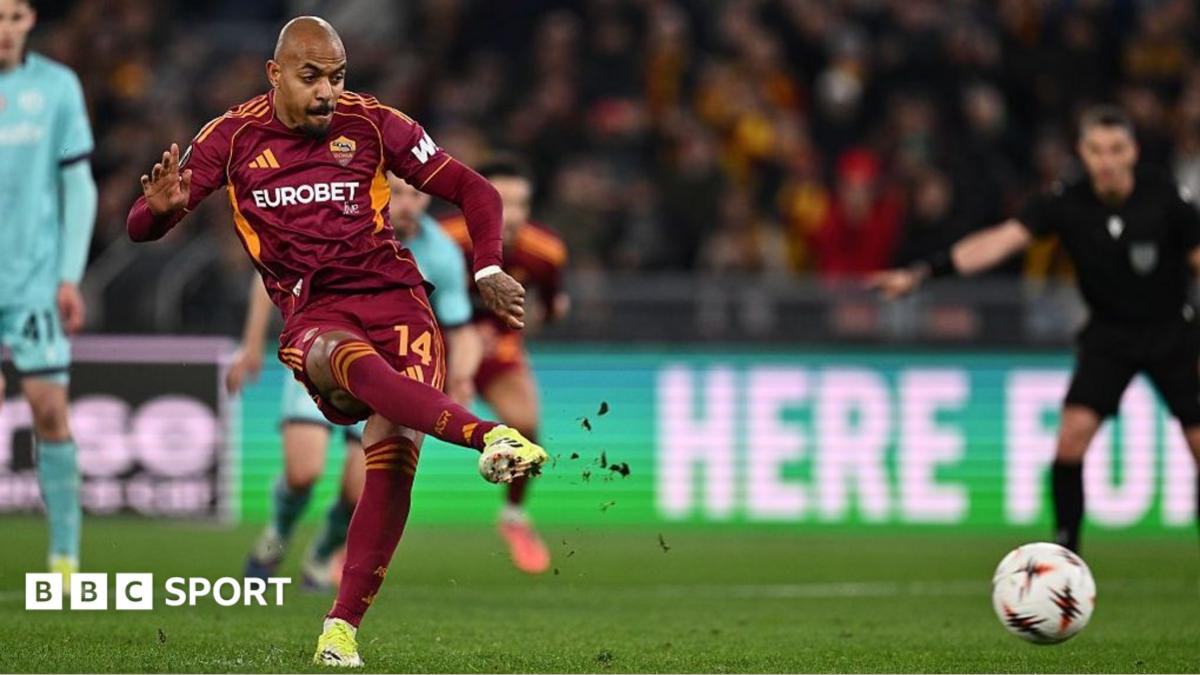
  • How Roma Turned Donyell Malen Into Europe’s Top Scorer

    How Roma Turned Donyell Malen Into Europe’s Top Scorer

    Key Highlights

    • Donyell Malen’s scoring rate has surged from one goal every 149.8 minutes at Aston Villa to one every 96.7 minutes at AS Roma, with 21 goals in 25 matches compared to 10 in 46 Premier League appearances.
    • The Dutch forward has played 99% of his Serie A minutes as a central striker under Gian Piero Gasperini, a sharp contrast to the 52% he spent in that role at Villa.
    • French football journalist Julien Laurens described Malen as “incredible since January” and “at the heart of everything they do with the ball” following Roma’s Champions League draw with Fenerbahce.

    Statistical Transformation in Rome

    The contrast between Donyell Malen’s tenure at Aston Villa and his current form at AS Roma could hardly be starker. Across 46 appearances for the Premier League club, the 27-year-old Dutch international managed 10 goals and two assists, translating to a goal every 149.8 minutes on the pitch. Since his move to the Italian capital, those numbers have undergone a dramatic inversion: 21 goals and three assists in just 25 matches, striking at a rate of one goal every 96.7 minutes. On the surface, the figures suggest two entirely different versions of the same player, but the underlying data points to a structural explanation rather than a sudden spike in individual brilliance alone.

    Tactical Repositioning Under Gasperini

    A change in position appears to be the major factor behind Malen’s resurgence. At Villa, the forward was frequently deployed across the front line, spending only 52% of his league minutes as a central striker. Under manager Gian Piero Gasperini at Roma, that figure has climbed to 99% of his Serie A minutes. The tactical adjustment has made Malen the undisputed focal point of the attack, placing him consistently in the areas where his finishing instincts are most dangerous. The numbers are reinforced by the eye test; his movement, link-up play, and clinical execution now look like those of a player operating in his natural habitat.

    Expert Validation from Julien Laurens

    The statistical and tactical evidence received prominent external validation following Roma’s 1-1 Champions League draw with Fenerbahce last Thursday, a match in which Malen provided the assist for his side’s goal. Speaking on Match of the Day, French football journalist Julien Laurens emphasized the forward’s newfound centrality to Gasperini’s system.

    “He has been incredible since January,”

    Laurens stated, before adding a broader assessment of Malen’s influence on the team’s attacking structure.

    “He has been really efficient, super clinical. Malen is at the heart of everything they do with the ball.”

    Why This Matters

    Malen’s turnaround at Roma serves as a high-profile case study in the importance of tactical fit and positional clarity for elite attackers. His struggles at Aston Villa were not necessarily indicative of a decline in ability, but rather a mismatch between his profile as a penalty-box striker and a system that asked him to drift wide. For Roma, the early return on investment—21 goals in half a season—vindicates Gasperini’s conviction that the Dutchman thrives as a central reference point. As the Giallorossi push for Champions League qualification and progress in European competition, Malen’s form will be pivotal. The situation also underscores a broader market lesson: players deemed surplus to requirements at one elite club can become indispensable elsewhere when deployed in their optimal role.

    Frequently Asked Questions

    How many goals has Donyell Malen scored for AS Roma this season?
    Malen has scored 21 goals in 25 matches across all competitions since joining AS Roma.
    What was Malen’s goal-scoring rate at Aston Villa compared to Roma?
    At Aston Villa, Malen scored one goal every 149.8 minutes. At Roma, his rate has improved to one goal every 96.7 minutes.
    Who is the current manager of AS Roma utilizing Malen as a central striker?
    Gian Piero Gasperini is the manager who has deployed Malen as a central striker for 99% of his Serie A minutes.
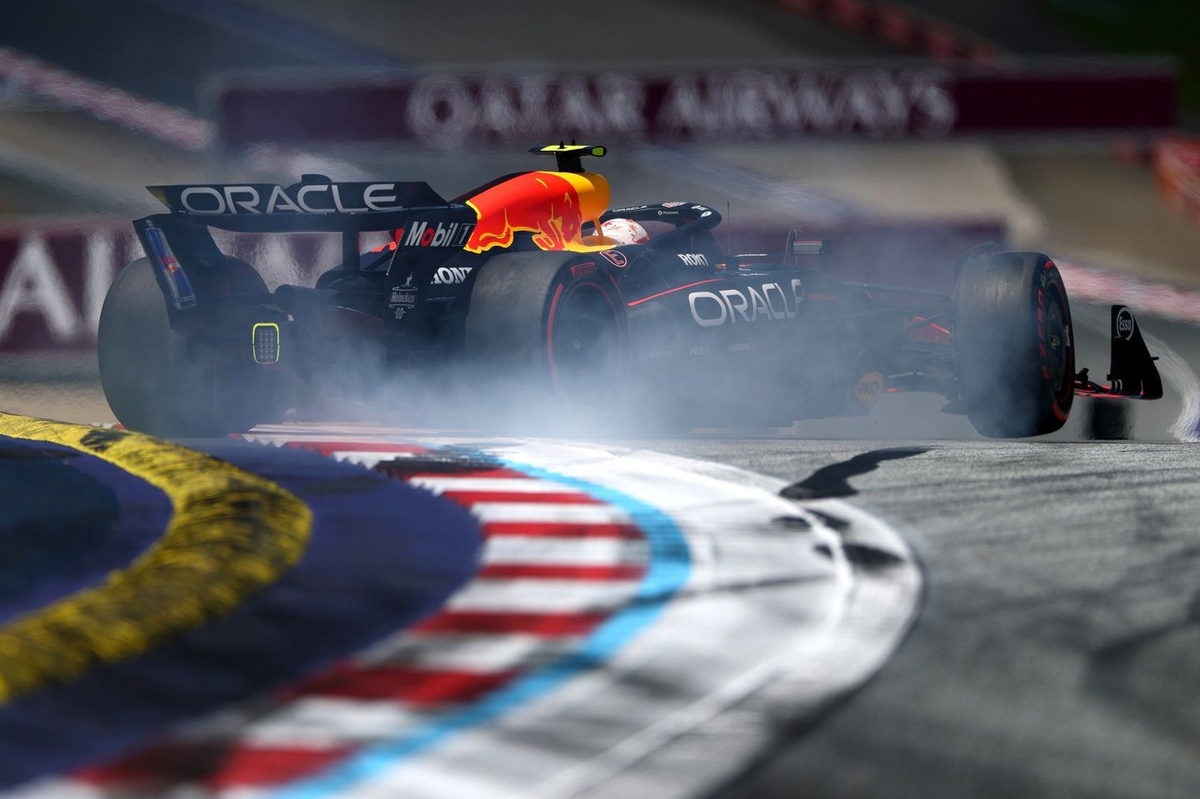
  • Red Bull Still Trying to Fix RB22 Issue

    Red Bull Still Trying to Fix RB22 Issue

    While McLaren, Ferrari, and Mercedes have all unlocked significant performance gains through their recent upgrade packages, Red Bull Racing continues to grapple with a fundamental issue affecting the RB22.

    Verstappen Highlights Aerodynamic Degradation

    The core of the problem relates to feedback from Max Verstappen, who has pointed out that the car suffers from an aerodynamic degradation of performance after a certain number of laps. This characteristic has prevented the team from maximizing its race pace relative to its improving rivals.

    Mekies Admits Complex Fix Required

    Team principal Laurent Mekies confirmed during the Madrid round that resolving this balance issue will not be a straightforward process. However, the technical update submissions Red Bull has lodged with the FIA at both Monza and Madrid offer a clear indication of the specific development directions the team is pursuing to rectify the deficit.