Category: Coins

Digital assets, cryptocurrencies, blockchain, and currency news.

  • Bitcoin Price Could Drop to $70K if $78K Neckline Breaks

    Bitcoin Price Could Drop to $70K if $78K Neckline Breaks

    Bitcoin Holds Near $78,500 as Technical Pressure and Macro Risks Mount

    Bitcoin (BTC) traded near $78,500 on September 9 after retreating from a September 3 peak of $82,283, a decline of roughly 4.6%. The pullback has extended a series of lower highs on the 4-hour chart, with buyers repeatedly defending the $78,000 area but failing to reclaim the psychological $80,000 level.

    4-Hour Technicals Show Fading Momentum

    On the 4-hour timeframe, Bitcoin sat at approximately $78,522, below the middle Bollinger Band at $79,079 and only slightly above the lower band at $78,015. Proximity to the lower band often signals increasing selling pressure, though the nearby support could also trigger a short-term bounce. A recovery above the middle band would be needed to weaken the immediate bearish setup.

    The upper Bollinger Band sits near $80,144, making the $80,000–$80,150 region the first major resistance zone. A daily close above that area would give bulls another chance to challenge recent highs around $81,500 and $82,300.

    The 4-hour Relative Strength Index (RSI) read 43.58, below both the neutral 50 mark and its signal average of 44.71, indicating bearish momentum without reaching oversold territory.

    Macro Headwinds: Oil, Yields, and Fed Policy

    Bitcoin’s decline coincided with a broader risk-off move driven by escalating Middle East tensions. Brent crude climbed to $99.22 per barrel on September 9, while West Texas Intermediate rose to $94.13, reviving fears that higher energy costs could keep inflation elevated.

    Rising inflation expectations affect Federal Reserve interest-rate projections. Higher rates and bond yields boost returns on lower-risk assets, creating competition for non-yielding assets like Bitcoin.

    U.S. Treasury yields added pressure. The benchmark 10-year yield surged above 4.85% after the Treasury announced a $6 billion buyback of older bonds (10- to 20-year maturities). The 30-year yield hit its highest level since 2007. Rising yields tighten financial conditions by increasing borrowing costs and reducing appetite for volatile assets.

    Traders are now focused on incoming inflation data and oil prices ahead of the Federal Reserve’s September 15–16 policy meeting for clues on whether the central bank will maintain a restrictive stance.

    Daily Structure Still Intact, but Head-and-Shoulders Looms

    Daily indicators remain less bearish. Bitcoin continues to trade above the daily Supertrend support at $72,786, meaning the broader recovery structure has not been invalidated despite the recent drop.

    The daily Aroon lines are closely matched at 57.14% and 50%, showing neither buyers nor sellers have established firm control on the higher timeframe.

    Crypto analyst Gerla identified a potential head-and-shoulders pattern, with the left shoulder near late-August highs, the head at the September 3 peak, and the right shoulder possibly forming during the latest rebound.

    “$78K–$79K is the line in the sand. Lose that and $70K could come pretty quick,” Gerla said in a Sept. 9 post on X.

    The pattern remains unconfirmed while Bitcoin holds its neckline. A decisive daily close below $78,000 would strengthen the bearish setup and expose the $76,000–$77,000 zone before the larger downside target near $70,000.

    Liquidation Heatmap Highlights Key Liquidity Zones

    CoinGlass’s three-day liquidation heatmap shows heavy leveraged-position clusters above current levels. The strongest nearby liquidity sits between roughly $79,700 and $80,200, with additional concentrations extending toward $82,000. These levels can act as magnets during high-leverage periods, though they do not guarantee price will reach them. A recovery through $79,100 could trigger short liquidations and fuel a test of the $80,000 cluster.

    Downside liquidity is concentrated near $78,000 and between approximately $77,500 and $77,800. A break below current support could accelerate volatility as leveraged longs are closed. Further liquidity appears around $76,000, aligning with the next technical support area beneath the proposed neckline.

    Key Levels to Watch

    • Immediate range: Lower Bollinger Band (~$78,015) to middle band (~$79,079). Holding $78,000 keeps a relief move toward $79,700–$80,150 in play.
    • Bullish trigger: Sustained break above $80,150 weakens the short-term bearish structure and puts $81,500 and $82,283 back in focus. Clearing the September peak would confirm a renewed uptrend.
    • Bearish confirmation: Daily close below $78,000 shifts focus to $77,500, then the wider $76,000–$77,000 support zone. The head-and-shoulders interpretation gains credibility below the neckline, though the daily Supertrend near $72,786 remains a critical barrier before the $70,000 scenario can develop.
  • Institutional Whale Dumps Altcoin, Triggering 99 Percent Market Value Plunge

    Institutional Whale Dumps Altcoin, Triggering 99 Percent Market Value Plunge

    $LAPTOP, a memecoin associated with Hunter Biden, captured cryptocurrency market attention following a dramatic price collapse and significant on-chain sell-off immediately after its launch. Blockchain data reveals that market maker Wintermute has begun liquidating a portion of the $LAPTOKEN tokens allocated to it, while the token’s fully diluted valuation (FDV) has plummeted by more than 99% from its peak.

    Wintermute Begins Selling $LAPTOP Allocation

    According to on-chain analytics platform Lookonchain, Wintermute received a total of 2.5 million $LAPTOP tokens from the project team. The market maker has reportedly started selling these holdings on-chain, having already disposed of 466,255 $LAPTOP tokens at an average price of $4.47. The total value of these sales is estimated at approximately $2.08 million.

    Fully Diluted Valuation Collapses 99.43% in Two Hours

    The price decline reached extraordinary proportions within hours of the token’s debut. Data indicates that within the first two hours post-launch, $LAPTOP’s FDV crashed from a brief peak exceeding $300 billion to roughly $1.8 billion — a decrease of approximately 99.43%. Trading volume during this same window registered around $9.6 million.

    Airdrop Recipients Generate Substantial Returns

    On-chain analysis also uncovered that two newly created wallets receiving tokens from the $LAPTOP airdrop generated over $647,000 in combined revenue within a short timeframe. These addresses reportedly received a total of 4,276 LAPTOP tokens from Hunter Biden’s airdrop contract for Substack subscribers. One wallet earned approximately $404,000, while the other realized roughly $243,000.

    Further blockchain data revealed an ETH transfer between the two addresses. One wallet transferred USDC obtained from token sales to an address identified in open sources as belonging to Safe architect Florent, sparking speculation about a potential connection. However, this link remains unconfirmed.

    Market Commentary on the Collapse

    Serenity, commenting on the sharp decline in $LAPTOP’s value, stated that the token’s drop of over 99% after launch came as no surprise. Serenity argued that such token issuances do not create a positive overall outcome for individual investors and therefore does not support similar token launches.

    *This is not investment advice.

  • Breaking: Official Statement on Altcoin Triggers Volatility Spike

    Breaking: Official Statement on Altcoin Triggers Volatility Spike

    Pump.fun, the Solana-based platform known for streamlined token creation and memecoin trading, appears to be broadening its scope. On-chain data reveals the emergence of new trading pairs linked to traditional equities, signaling a potential pivot toward tokenized stock exposure.

    Stock-Linked Pairs Surface on Pump.fun

    Blockchain analytics indicate that currency pairs referencing stock prices have begun appearing on the Pump.fun interface. The platform has not yet issued a comprehensive official statement clarifying the nature of these assets. It remains uncertain whether the listings represent directly tokenized shares or synthetic derivatives that track equity price movements on-chain.

    Sector Momentum Builds Around Tokenized Equities

    The development coincides with accelerating interest in tokenized share products across the digital asset industry. Robinhood has rolled out tokenized stock offerings for European users, while xStocks, a venture linked to Kraken, is expanding in the same vertical. Additionally, the London Stock Exchange Group (LSEG) recently announced plans to develop blockchain-based representations of UK shares in partnership with Payward, the parent company of Kraken.

    PUMP Token Reacts with Heightened Volatility

    Following the appearance of the equity-linked pairs and the broader wave of tokenized stock announcements, the native PUMP token experienced a notable increase in trading volatility. Market participants are closely monitoring whether the integration represents a permanent product expansion or a limited test deployment.

  • Steak ‘n Shake Reports Double-Digit Sales Growth After Bitcoin Adoption

    Steak ‘n Shake Reports Double-Digit Sales Growth After Bitcoin Adoption

    Indianapolis-based burger franchise Steak ‘n Shake reports that accepting Bitcoin payments has driven significant business growth, with the company citing double-digit same-store sales increases since adopting the cryptocurrency in May 2025.

    Bitcoin Adoption Correlates with Sales Acceleration

    In a post on X Tuesday, the company highlighted its performance since integrating Bitcoin Lightning Network payments.

    Ever since we started accepting Bitcoin in May 2025, we have achieved double-digit same-store sales growth! And this quarter has been extraordinary, with franchise-partners same-store sales gaining 19%. Come have a Bitcoin burger and Bitcoin shake to celebrate! Thank…

    The firm added: “And this quarter has been extraordinary, with franchise-partners same-store sales gaining 19%.”

    Payment Cost Savings Cited as Key Driver

    Steak ‘n Shake began accepting Bitcoin via the Lightning Network last year and announced in January that it had added $10 million in Bitcoin to its strategic reserve. At the Bitcoin 2026 Conference in April, Chief MAHA Officer Michael Boes detailed how the payment method has become a core driver of the chain’s business performance.

    According to Boes, same-store sales rose 11% quarter over quarter in Q2 2025 and accelerated to 15% in Q3 2025, outpacing major rivals including McDonald’s, Taco Bell, and Domino’s. He characterized this as the highest same-store sales growth of any restaurant in the industry, attributing the performance to Bitcoin Lightning transactions being cheaper and faster than traditional electronic payment methods.

    The cost difference is substantial: when customers pay with Bitcoin instead of a credit card, Steak ‘n Shake saves roughly 50% on processing fees. Traditional credit card processors charge merchants between 2.5% and 3.5% per transaction.

    Bitcoin is real money made with real energy,

    Boes said at the conference.

    Company Rejected Multi-Crypto Approach

    The franchise also considered accepting other cryptocurrencies but abandoned the idea after a poll on X indicated customers believed only Bitcoin was necessary.

  • BitMine Holds 5.93M ETH: What It Means for BMNR Stock

    BitMine Holds 5.93M ETH: What It Means for BMNR Stock

    BitMine Immersion Technologies Amasses 5.93 Million ETH in One Year, Simplifies Staking Structure

    BitMine Immersion Technologies (BMNR) has executed one of the most aggressive Ethereum accumulation strategies in the digital asset sector, growing its treasury holdings from 163,000 ETH to 5,929,198 ETH in just twelve months. The near-vertical trajectory saw the company surpass the one-million-ETH threshold in late 2025 before reaching nearly six million tokens by September 2026.

    Treasury Valuation Reaches $15.7 Billion

    When combined with BitMine’s additional cryptocurrency positions and self-described “moonshot” bets, the total treasury valuation now stands at approximately $15.7 billion, according to data shared on X. The scale of accumulation positions BitMine as the largest known corporate holder of Ethereum.

    Staking Agreement Restructured to Flat 1.5% Fee

    The most consequential operational detail resides in the company’s recent 8-K filing. BitMine has terminated its long-term staking arrangement with Ethereum Tower, a ten-year agreement that included a revenue-sharing component tied to net staking income. In its place, the company has executed a new contract with American Validator, an Ethereum Tower affiliate, that simplifies the fee structure to a flat 1.50% of staking rewards on BitMine’s staked ETH.

    While the percentage appears modest, the fee’s absolute value grows proportionally with the expanding staking principal, making the streamlined arrangement increasingly significant as the treasury scales.

    BMNR Stock Consolidates After Parabolic Run

    Despite the historic ETH accumulation, BMNR share price momentum has decelerated. The stock rallied from approximately $18 in mid-August to a peak near $27.50, pushing the Relative Strength Index (RSI) into overbought territory. Since that high, shares have retreated to $24.48, with the RSI returning to near-neutral levels and the Moving Average Convergence Divergence (MACD) flattening, according to TradingView charts.

    The pullback suggests the market may have already priced in the bulk of BitMine’s Ethereum acquisition strategy and the staking fee restructuring. Trading activity indicates a consolidation phase as investors assess the sustainability of the treasury growth model.

    Key Takeaways

    • BitMine’s ETH holdings surged from 163K to 5.93 million tokens in one year.
    • Total crypto treasury valuation reaches $15.7 billion including auxiliary positions.
    • Staking agreement simplified to a flat 1.5% fee on rewards via American Validator.
    • BMNR stock pulls back to $24.48 after reaching $27.50, with technical indicators normalizing.
  • RedSwanDigital Tokenizes First Manhattan Building on Hedera

    RedSwanDigital Tokenizes First Manhattan Building on Hedera

    RedSwanDigital has successfully tokenized the Hotel on Rivington in Manhattan using the Hedera blockchain, marking a significant milestone for real-world asset tokenization. The announcement, shared via the official Hedera social media channels, underscores the growing convergence of blockchain technology with traditional real estate markets.

    Manhattan Property Becomes First Hedera-Tokenized Building

    The tokenization of the Hotel on Rivington represents the first building in Manhattan to be digitized on the Hedera network. By converting property ownership into digital tokens, the initiative aims to democratize access to real estate investment, historically restricted to high-net-worth individuals and institutional players. This development signals a practical application of distributed ledger technology beyond speculative trading, positioning Hedera as a serious infrastructure layer for traditional finance integration.

    Industry Leaders Emphasize Trust and Asset Integrity

    Gregory L. Bell, CIO at Hashgraph, emphasized trust and asset integrity in tokenization. His comments highlight the critical importance of regulatory compliance, transparent ownership records, and secure custody solutions in bridging physical assets with digital representations. The initiative aligns with Hedera’s broader strategy to expand use cases across sectors including real estate, supply chain, and decentralized finance.

    Hedera’s Technical Foundation for Asset Tokenization

    Hedera operates as a public distributed ledger technology designed for speed, security, and scalability. Its consensus mechanism, based on hashgraph architecture, offers finality in seconds with low, predictable fees — characteristics essential for tokenized assets requiring high throughput and auditability. The network’s governance model, overseen by a council of global enterprises, adds a layer of institutional credibility that appeals to regulated industries.

    Market Context and Trading Activity

    As of the latest data, Hedera’s trading volume specific to this tokenization event remains unreported. However, the announcement arrives amid increasing institutional interest in blockchain-based asset issuance. Analysts suggest that successful deployments like the Hotel on Rivington could catalyze higher transaction volumes and improved liquidity for tokenized securities, provided regulatory frameworks continue to evolve constructively.

    Outlook: Adoption, Regulation, and Liquidity

    Market participants should monitor Hedera’s pipeline of real estate tokenization projects, as further adoption may influence broader digital asset trends. Key variables include regulatory clarity around security tokens, custodial standards, and secondary market infrastructure. While the long-term trajectory appears promising, stakeholders must remain cautious of compliance risks inherent in merging blockchain innovation with established financial systems.

    This article is for informational purposes only and does not constitute financial advice.

  • Bessent Urges Senate to Advance CLARITY Act as Crypto Rules Stall

    Bessent Urges Senate to Advance CLARITY Act as Crypto Rules Stall

    Treasury Secretary Scott Bessent is pressing the Senate to advance the CLARITY Act when lawmakers return from their August recess, renewing pressure on Congress to establish a comprehensive regulatory framework for digital assets. In a post on X, Bessent warned that further delays could weaken U.S. leadership in crypto and limit the government’s ability to prevent digital assets from being misused.

    In July, I called on the Senate to advance the Clarity Act — a bill to establish a comprehensive regulatory framework for digital assets and upgrade our ability to prevent bad actors from exploiting these critical technologies.When the Senate returns from August recess, I…

    — Treasury Secretary Scott Bessent (@SecScottBessent) September 9, 2026

    Senate Faces September Test

    Bessent made the appeal, urging senators to “remain at the negotiating table” and agree to a motion to proceed with the bill. The legislation still faces disagreements over crypto holdings, stablecoin rewards, and measures targeting illicit finance. Senate Majority Leader John Thune filed a cloture motion in August, setting the stage for a possible vote on Sept. 15. The bill needs at least 60 votes to advance, making Democratic support crucial.

    Regulation and National Security

    The CLARITY Act would divide digital-asset oversight between the SEC and CFTC while adding consumer-protection and anti-money-laundering requirements. Bessent has argued that clearer rules could encourage crypto companies and investment to remain in the U.S. Administration officials have also said stronger regulations could support dollar-backed stablecoins and make digital assets harder to use for illicit finance. If lawmakers fail to advance the bill, the U.S. would remain without a broad framework for crypto market oversight.

    Related Coverage

  • Bitcoin Gold Cross Alert: Analyst Warns “Bullish at First, But Then…”

    Bitcoin Gold Cross Alert: Analyst Warns “Bullish at First, But Then…”

    Cryptocurrency analyst Benjamin Cowen has warned investors that Bitcoin historically declines following a “Golden Cross” pattern, a technical formation typically interpreted as a bullish signal.

    Golden Cross Often Precedes Short-Term Pullback

    The Golden Cross occurs when the 50-day moving average crosses above the 200-day moving average. While technicians widely view this crossover as a long-term buy signal, Cowen’s analysis of past cycles shows the pattern frequently coincides with local market tops.

    Analyst: “Bitcoin Generally Seen to Decline After a Gold Crossover”

    According to Cowen, the rallies that precede the Golden Cross push the moving averages higher to create the crossover. However, once the intersection is complete, the market often experiences sell-offs from those local highs. Historical data from the 2019 and 2023 Golden Cross events shows pullbacks ranging between 12% and 15% at the moment of intersection, followed by recovery and new local highs.

    Current Pullback Considered Natural

    Cowen characterizes the ongoing pullback as a natural market structure development. He emphasizes that the critical factor is not the depth of the initial selling wave, but the character of the rebound rally that follows. It remains uncertain whether Bitcoin will establish a new high or form a lower peak after the sell-off concludes.

    Bullish vs. Bearish Scenarios for Q4

    Outlining forward-looking scenarios, Cowen stated that a higher peak during the rebound would strengthen the bullish case. Conversely, if the rebound remains weak and forms a lower peak—similar to the price action observed in 2014 and 2015—the risk of a renewed downturn in the fourth quarter could increase.

    This is not investment advice.

  • Circle Puts USDC on Chelsea Jersey, FCA Does Not Intervene

    Circle Puts USDC on Chelsea Jersey, FCA Does Not Intervene

    Circle’s Chelsea Shirt Deal Exposes a 14-Month Regulatory Gap in UK Stablecoin Oversight

    On August 31, 2026, roughly 40,000 spectators inside Stamford Bridge watched Chelsea players take the pitch wearing shirts emblazoned with “$USDC by CIRCLE.” Millions more viewed the broadcast across 189 countries. The moment marked the first regulated cryptocurrency company to secure a Premier League front-of-shirt sponsorship, arriving just three months after the Financial Conduct Authority warned clubs against signing “dodgy” crypto sponsors.

    Circle is not dodgy. The company trades publicly on the New York Stock Exchange, holds licenses across four continents, and posts quarterly earnings that rival established fintechs. Yet the product advertised on the shirt—$USDC, a dollar-pegged stablecoin with a circulating supply of 73.7 billion dollars—exists in a regulatory gap that UK law will not close until October 2027.

    Why Chelsea Was Available

    Chelsea has entered each of the last four seasons without a principal shirt sponsor, an anomaly for a club of its stature. The vacancy traces to the sanctions imposed on former owner Roman Abramovich, the subsequent 4.25 billion pound sale to a consortium led by Clearlake Capital and Todd Boehly in May 2022, and the departure of long-time partner Three.

    The sponsorship carousel that followed—Infinite Athlete, DAMAC Properties, IFS—featured short terms and modest figures, nothing matching the 40 million pounds per year Yokohama Tyres paid or the equivalent sum from Three. Clearlake owns 61.5 percent of the club; Boehly holds 18.5 percent. Aggressive player spending had pushed the wage bill past 350 million pounds, creating urgent need for shirt revenue.

    A crypto sponsor willing to pay north of 33 million pounds for a single season solved an immediate problem. Circle solved it while possessing the credentials to survive due diligence. Chelsea’s commercial team had searched since mid-2025, approaching traditional sponsors in automotive, airlines, and financial services. Several balked at the price; others hesitated at the reputational volatility surrounding the club’s ownership transition. Circle was not the default option—it was the option that could write the check, pass compliance review, and move fast enough to brand kits before the season opener.

    In a market where top-six Premier League shirt deals routinely exceed 40 million pounds per season, the estimated 33.6 million to 50 million pound range is competitive but not premium. Both sides were slightly desperate in complementary ways.

    What the FCA Actually Said

    In late May 2026, FCA Director of Consumer Investments Lucy Castledine sent a pointed letter to every Premier League club. The language was unusually direct for a regulator that tends toward bureaucratic circumlocution. Clubs, she wrote, “should not let unauthorised financial firms exploit that loyalty.”

    The word “unauthorised” did the heavy lifting. It was a line drawn in sand, not in statute, but clubs heard it. The letter landed on desks already burned by history: FTX’s collapse in November 2022 turned its 135 million dollar Miami Heat naming rights deal into a global cautionary tale. Binance explored Premier League sponsorships but never signed, partly because it lacked FCA authorization. Crypto.com had advanced talks with Manchester City for a reported 100 million pound-plus deal that died after FCA pressure. The regulator did not formally block it—it did not need to. The letter was enough.

    The pattern was clear: without FCA authorization, a crypto firm would not reach a Premier League shirt. Compliance teams flagged crypto proposals. Legal departments added new checklists. The path appeared closed. Then Circle walked through it.

    How Circle Passed the Test

    Circle did not sneak past the regulator. It entered through the front door carrying a stack of licenses substantial enough to stop a bullet. The company received the UK’s first virtual currency license in 2016, two years before most traditional finance professionals could define “stablecoin.” It obtained FCA Electronic Money Institution authorization in 2018 (license number 900480), placing it in the same regulatory category as Revolut and Wise.

    By the time the Chelsea deal was signed, Circle also held a French EMI license, CASP registration under MiCA, a Singapore Major Payment Institution license, a US OCC bank charter granted in July 2026, and more than 46 US state-level licenses. This is a company that has spent the better part of a decade collecting regulatory credentials the way some people collect stamps.

    The FCA’s letter targeted “unauthorised firms.” Circle is authorized. That distinction is the entire reason the deal exists. eToro had already demonstrated the model, sponsoring several UK football clubs without FCA pushback because it holds FCA authorization. The principle is simple: if the regulator knows who you are and has approved your operations, you can put your name on a shirt. Circle applied the same logic at a larger scale.

    The 14-Month Window Nobody Is Talking About

    Here is the part that deserves more attention than it has received. Circle is FCA-authorized as an Electronic Money Institution. That is a fact. $USDC, the product advertised on the Chelsea shirt, is a different matter.

    Circle’s own legal disclosures contain a sentence that should be projected onto the side of the FCA’s headquarters on Endeavour Square: “$USDC is not issued or regulated under the laws of the United Kingdom.”

    Read that again. The company is regulated. The product on the shirt is not.

    This is not a contradiction in the way a lawyer would define one. Circle operates legally in the UK under its EMI license, which covers electronic money services. But $USDC itself—the dollar-pegged stablecoin backed one-to-one by US Treasuries held in the BlackRock-managed Circle Reserve Fund—is issued under US law. The FCA’s current framework lacks a specific regime for regulating stablecoins used as means of payment.

    That regime is coming. The FCA announced in 2025 that a comprehensive crypto asset regulatory framework would take effect in October 2027. When it does, stablecoins used as payment in the UK will fall under direct FCA oversight. But between now and then lies a 14-month window where a regulated company can promote an unregulated product to millions of football fans, and no rule on the books explicitly prevents it.

    Circle is threading a needle. The company’s FCA authorization gives it institutional credibility. The absence of stablecoin-specific regulation gives it commercial freedom. The Chelsea deal sits at the intersection of those two realities, and it is a perfectly legal place to stand. Whether it is the place the FCA intended sponsors to stand is a different question, and one the regulator has not yet answered.

    Consider the practical implications. A fan watching Chelsea on a Saturday afternoon sees “$USDC by CIRCLE” on the shirt. If that fan downloads the Circle app and buys $USDC, that transaction falls outside the FCA’s current crypto promotional rules because $USDC is not classified as a restricted mass market investment in the way a volatile token would be. The Financial Promotions Order, amended in 2023 to cover crypto assets, applies to communications that invite or induce investment activity. Circle would argue that $USDC is a payment instrument, not an investment. The FCA has not publicly disagreed. That ambiguity is the oxygen the deal breathes.

    The October 2027 deadline is not arbitrary. The Treasury and the FCA spent 2025 and early 2026 consulting on a framework that would bring stablecoins used for payment under the same regulatory umbrella as other forms of electronic money. Once that framework is live, $USDC would need specific FCA authorization to be marketed to UK consumers. Circle would almost certainly obtain that authorization, given its existing EMI license. But the point is that today, in September 2026, it does not need to. The 14-month window is not a loophole in the pejorative sense. It is simply the gap between where regulation is and where regulation is going. Circle planted its flag in that gap, and 4.7 billion pairs of eyes will see it before the gap closes.

    The Numbers Behind the Deal

    Circle can afford this bet because the company prints money in a way most crypto firms do not. In the second quarter of 2026, Circle reported 791 million dollars in revenue and 267 million dollars in net income. Those are not speculative projections—those are audited results from a public company trading on the NYSE under ticker CRCL, priced at 31 dollars per share at its April 2024 IPO and trading between 42 and 48 dollars through August 2026.

    The economics of $USDC are elegant in their simplicity. Every $USDC token in circulation represents one US dollar held in reserve, primarily in short-dated US Treasuries. When interest rates sit above four percent, a 33 billion dollar reserve fund generates substantial yield. Circle keeps the yield. $USDC holders get stability and liquidity. The spread between those two things is Circle’s margin, and at current rates, it is enormous.

    Compare that revenue engine to the cost of a Chelsea shirt deal. Even at the high end of estimates, 50 million pounds represents roughly 63 million dollars, or less than one quarter’s net income. For that price, Circle gets its product name on the chest of one of the five most globally recognized football clubs, broadcast into 189 countries, viewed by a cumulative audience the Premier League pegs at 4.7 billion per season. The cost per impression is trivially small.

    This is not a speculative startup burning venture capital on brand awareness. This is a profitable public company making a calculated media buy. The distinction matters because it explains why the deal survived scrutiny that killed its predecessors.

    What the Graveyard Teaches

    The history of crypto sports sponsorships is a field of tombstones, and reading the inscriptions is instructive.

    • FTX paid 135 million dollars over 19 years for Miami Heat arena naming rights. The company collapsed 18 months into the deal. The arena reverted to its previous name. Sam Bankman-Fried went to prison.
    • Crypto.com’s 700 million dollar Staples Center deal survived because Crypto.com survived, but the company laid off hundreds and retreated from multiple markets—a lesson in overpaying for brand awareness during a bull market.
    • In the Premier League specifically, the regulatory environment proved even more hostile than the financial one. Crypto.com’s reported 100 million pound Manchester City deal collapsed under FCA scrutiny. Binance never got close. Clubs that signed smaller deals with lesser-known crypto firms found themselves fielding uncomfortable questions from the FCA’s enforcement team.

    Circle’s deal is different in kind, not just in degree. The company is profitable, publicly traded with quarterly audited financials, holds the specific regulatory authorization the FCA demanded, and survived the crypto winter, FTX fallout, and regulatory crackdown without a single enforcement action. If the graveyard teaches anything, it is that survival requires a business model that does not depend on token prices going up. Circle’s business model depends on interest rates staying positive. That is a meaningfully different bet.

    The Crypto.com UFC deal (reported 175 million dollars) and Coinbase NBA deal persisted because those companies, like Circle, hold regulatory credentials and remained operational through the bear market. The pattern across all surviving crypto sports deals is identical: regulated entity, profitable operations, product that does not depend on speculative mania. Circle fits every criterion. Most of its Premier League predecessors fit none.

    Stablecoins as the Quiet Winner

    The Chelsea deal is a symptom of a larger shift the crypto industry has been slow to acknowledge publicly. Stablecoins won.

    Not Bitcoin. Not Ethereum. Not the thousands of tokens promising to revolutionize supply chains and social media. The product that achieved genuine mass-market utility is the boring one: a digital dollar that holds its peg and moves fast.

    $USDC’s market capitalization hovers between 33 and 35 billion dollars. Its circulating supply reached 73.7 billion dollars by late August 2026. Tether’s USDT remains larger, but $USDC has carved out a distinct niche as the compliance-first alternative preferred by institutional users and regulated platforms. Circle’s decision to obtain an OCC bank charter in July 2026—making it the first crypto-native company to achieve that status—reinforced the positioning.

    The Premier League shirt deal is Circle telling the world that stablecoins have graduated from crypto infrastructure to consumer brand. $USDC is not competing with Bitcoin for speculative attention. It is competing with PayPal, Wise, and Western Union for payment flows. Putting the name on a football shirt is a consumer marketing play, and consumer marketing plays only make sense when you have a consumer product.

    That framing explains why the FCA did not blink. A stablecoin backed by US Treasuries and managed by a publicly traded, FCA-authorized company is categorically different from a volatile token promoted by an offshore exchange. The regulator may not have explicitly blessed the deal, but its silence is a form of communication. The FCA knows Circle. The FCA authorized Circle. The FCA chose not to intervene.

    What Competitors Cannot Replicate

    No other crypto company on Earth could have signed this deal. That is not hyperbole—it is a consequence of a specific combination of factors no competitor possesses simultaneously.

    • Tether is larger but has never held an FCA license and faces persistent questions about reserve attestations.
    • Binance has brand recognition but lacks FCA authorization and withdrew its UK registration application in 2023.
    • Coinbase holds some UK permissions but is primarily a US exchange, not a stablecoin issuer.
    • Crypto.com tried the Premier League route and failed.

    Circle occupies a unique position: the only company simultaneously a publicly traded US corporation, an FCA-authorized EMI, a MiCA-compliant EU operator, an OCC-chartered bank, and the issuer of a top-three stablecoin by market cap. That combination is the product of eight years of regulatory accumulation and cannot be replicated quickly by a competitor deciding to pivot toward compliance.

    The Chelsea deal is a moat made visible. Every match broadcast, every kit photo, every social media post from the club reinforces that Circle got there first. For a company whose product is trust, being first on a Premier League shirt is not just marketing—it is a competitive barrier built from polyester and broadcast rights.

    The timing amplifies the advantage. Any competitor beginning the FCA licensing process today faces a timeline measured in years, not months. The FCA’s EMI application process averages 12 to 18 months, assuming a clean submission with no remediation requests. A crypto firm without existing UK authorization would need to build compliance infrastructure, appoint a UK-based Money Laundering Reporting Officer, set up local safeguarding arrangements for customer funds, and submit to an FCA assessment that has grown more rigorous since the 2022 crypto collapses. By the time a hypothetical competitor clears those hurdles, the October 2027 regulatory framework will be live, and the rules for stablecoin promotion will have changed entirely. Circle did not just beat its competitors to the shirt—it arrived during the only window in which the shirt deal was possible under the current regulatory architecture. That window will not reopen.

    What to Watch

    • FCA public statements before October 2027: Any guidance specifically addressing stablecoin advertising through sports sponsorships would signal whether the regulator views Circle’s approach as a template or a loophole.
    • Circle’s Q3 and Q4 earnings calls: Management commentary on the Chelsea deal’s ROI and whether a multi-year extension is under discussion will reveal if this is a one-season experiment or a long-term brand strategy.
    • Competing crypto firms applying for FCA EMI licenses: A wave of applications would confirm that the market reads the Circle deal as a playbook, not an anomaly.
    • Premier League policy on crypto sponsors for 2027/28: Whether the league adopts formal criteria beyond the FCA’s informal letter will determine how many more crypto shirts appear next season.
    • The FCA’s stablecoin regulatory framework details: Specific rules around stablecoin promotion and advertising, expected in draft form by mid-2027, will define whether Circle’s current approach remains viable or requires modification.

    Key Deal Facts

    What is the Circle Chelsea deal worth?

    The deal is estimated at between 33.6 million and 50 million pounds for one season. Circle becomes Chelsea’s Principal Partner, with “$USDC by CIRCLE” branding on men’s, women’s, and academy shirts for the 2026/27 campaign.

    Why did the FCA warn clubs about crypto sponsors?

    The FCA wrote to Premier League clubs in late May 2026, cautioning that “unauthorised financial firms” were “using sponsorship to target unwitting fans.” Director Lucy Castledine stated that clubs should not let unauthorised firms exploit fan loyalty. The warning followed years of failed crypto deals and the FTX collapse.

    Is Circle authorized by the FCA?

    Yes. Circle holds FCA Electronic Money Institution license number 900480, granted in 2018. It also received the UK’s first virtual currency license in 2016. This authorization is the primary reason the Chelsea deal proceeded where others failed.

    Is $USDC regulated in the UK?

    No. Circle’s own disclosures state that “$USDC is not issued or regulated under the laws of the United Kingdom.” The FCA’s comprehensive crypto asset regime, which would cover stablecoins, does not take effect until October 2027.

    How does Circle make money from $USDC?

    Circle holds $USDC reserves, primarily in short-dated US Treasuries through the BlackRock-managed Circle Reserve Fund. The company earns yield on those reserves while $USDC holders receive stability. In Q2 2026, Circle reported 791 million dollars in revenue and 267 million dollars in net income.

    What happened to other crypto Premier League deals?

    Crypto.com’s reported 100 million pound deal with Manchester City collapsed under FCA pressure. Binance explored Premier League sponsorships but never signed one, partly due to lacking FCA authorization. The FTX collapse in 2022 made crypto sponsorships broadly toxic across all sports.

    When did the Chelsea shirt debut with $USDC branding?

    The kit debuted on August 31, 2026, during Chelsea’s home match against Brighton. It was Xabi Alonso’s first Premier League home game as Chelsea manager.

    Should I buy $USDC or Circle stock based on this deal?

    This is educational analysis, not investment advice.


    Disclaimer: This article was published on September 9, 2026 and is intended for informational purposes only. It does not constitute financial, investment, or legal advice. Cryptocurrency investments carry significant risk. Always conduct your own research before making any financial decisions.


  • Consensys Spins Off MetaMask as Independent Firm, Stays Silent on IPO

    Consensys Spins Off MetaMask as Independent Firm, Stays Silent on IPO

    Ethereum development firm Consensys announced plans to split into two independently operated companies, separating its MetaMask wallet business from the Ethereum protocols and institutional blockchain infrastructure it has built over the past decade.

    New Corporate Structure

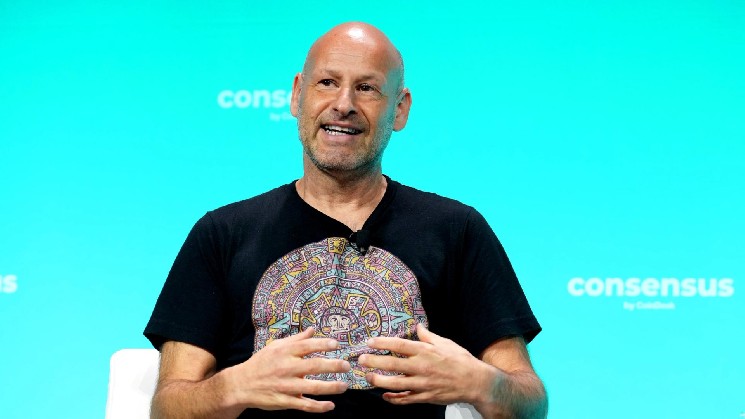
    The existing company, Consensys Software Inc., will rebrand as MetaMask under Ethereum co-founder Joe Lubin as chairman and CEO.

    Its protocols group and institutional infrastructure business, including the Linea blockchain, will move into a newly formed company retaining the Consensys name.

    Leadership Changes

    The separation, expected to be completed by the end of 2026, would see Mike Kriak lead the new Consensys as CEO. That firm would include David Cunningham as president and Lubin as executive chairman.

    The new Consensys entity will focus on developing Ethereum infrastructure and helping financial institutions deploy blockchain systems for tokenized assets, stablecoins, and settlement.

    IPO Plans Delayed

    The restructuring comes after Consensys pushed back a potential U.S. initial public offering (IPO) until this fall at the earliest, citing poor market conditions. The company had reportedly engaged JPMorgan and Goldman Sachs to lead the process.