Gemini, the cryptocurrency exchange founded by the Winklevoss twins, has launched an official Discord channel to strengthen community engagement. The announcement, shared via the platform’s official X (formerly Twitter) account, signals a strategic push to foster direct communication with users amid a shifting crypto market landscape.
Direct Channel for User Interaction
The new Discord server is designed to serve as a centralized hub for real-time discussions, platform updates, and user feedback. By establishing a presence on the popular communication platform, Gemini aims to create a more interactive environment where traders and investors can access timely information, seek support, and participate in community-driven initiatives.
This move reflects a broader industry trend where exchanges and blockchain projects are prioritizing owned community channels over reliance on third-party social media algorithms. Direct access to users allows platforms to disseminate critical updates — such as maintenance windows, new asset listings, or security advisories — without algorithmic filtering.
Context: Mixed Market Signals
The launch comes as the cryptocurrency market exhibits mixed signals, with asset prices fluctuating across major tokens. In this environment, user sentiment and retention have become critical metrics for platforms competing on trust, transparency, and service quality. Enhanced community infrastructure may help Gemini differentiate itself by improving responsiveness and building longer-term user loyalty.
Gemini has historically positioned itself as a regulatory-compliant, security-first exchange with a user-friendly interface. The Discord initiative extends that philosophy into community management, offering a structured space for dialogue that complements existing support and educational resources.
What to Watch
Market observers and Gemini users alike will monitor how actively the exchange leverages the new channel. Key indicators include frequency of official announcements, responsiveness to user inquiries, moderation quality, and whether the community evolves into a source of organic feedback that shapes product development. Increased engagement could also influence trading behavior by accelerating information flow among retail participants.
As the crypto ecosystem matures, platforms that invest in transparent, two-way communication may gain a competitive edge in user retention and brand trust. Gemini’s Discord launch represents a measurable step in that direction.
NEAR Protocol took to social media to assert that any system holding identities is a potential exposure point. The project emphasized that confidentiality should be a baseline expectation, particularly for financial and AI systems. The statement reflects mounting concerns about data privacy across the cryptocurrency sector.
Community Response Signals Growing Privacy Focus
The protocol’s recent post gained significant traction, accumulating 334 likes and 48 retweets. The engagement underscores how data protection has become a central conversation as the broader crypto market navigates mixed signals. Safeguarding sensitive user information in financial infrastructure and artificial intelligence applications is rapidly shifting from a feature to a fundamental user requirement.
Market Context and Protocol Alignment
Current market dynamics present a complex backdrop for this privacy advocacy. While digital asset markets show divergent trends, the call for stronger data protections may shape how blockchain projects architect their protocols to meet evolving expectations. NEAR Protocol, a blockchain platform built for high-performance decentralized applications, has positioned confidentiality as core to its mission of enhancing trust and security in the evolving Web3 landscape.
Industry Implications for Developers and Traders
Market participants are monitoring how NEAR’s stance on confidentiality translates into platform enhancements and user adoption. As privacy concerns intensify, protocols that prioritize data protection may gain competitive advantage through increased trust. This dynamic could catalyze a broader industry reassessment of data handling standards across the blockchain ecosystem.
This article does not constitute financial advice.
Swiss Bitcoin Pay Takes Servers Offline Following Data Breach
Swiss Bitcoin Pay, a non-custodial bitcoin payment processor based in Neuchâtel, Switzerland, announced Monday that it had temporarily shut down its servers after detecting a data breach. The company stated that user funds remain secure, though customer email addresses, bitcoin addresses, IBANs, transaction histories, and hashed passwords are believed to have been compromised.
Breach Details and Company Response
According to a statement posted on X (formerly Twitter), the company confirmed that a malicious actor likely gained access to its internal systems. The full statement reads:
“A malicious user has likely gained access to Swiss Bitcoin Pay’s internal systems. As a precaution, we are temporarily shutting down our servers while we investigate and secure our infrastructure.At this stage, we believe they may have accessed customer email addresses, Bitcoin…”
In a follow-up announcement, Swiss Bitcoin Pay reiterated the situation and sought to reassure users:
“A malicious user has likely gained access to Swiss Bitcoin Pay’s internal systems …As a precaution, we are temporarily shutting down our servers while we investigate and secure our infrastructure.” Swiss Bitcoin Pay said on Monday.
“User funds are safe, and any amounts owed to users will be fully returned.”
The company did not immediately respond to Bitcoin Magazine’s request for additional comment. Swiss Bitcoin Pay enables businesses to accept bitcoin payments using both on-chain transactions and the Lightning Network.
Part of a Broader Trend in 2026
The incident adds to a growing list of data breaches affecting bitcoin and fintech firms this year. Last week, Revolut confirmed it had provided customer passports, driver’s licenses, verification selfies, and transaction histories to an unauthorized party that sent fraudulent requests from a legitimate government agency’s email domain.
Also last week, hardware wallet manufacturer Trezor warned customers that a data breach at a third-party marketing platform used for newsletter distribution had exposed user data, leading to targeted phishing attacks.
Earlier in 2026, criminals obtained customer information through Ledger’s payment processor, Global-e, to conduct phishing campaigns. In August, crypto wallet provider SafePal disclosed a breach involving unauthorized access to approximately 39,798 customers’ order information, including names, addresses, and purchase data.
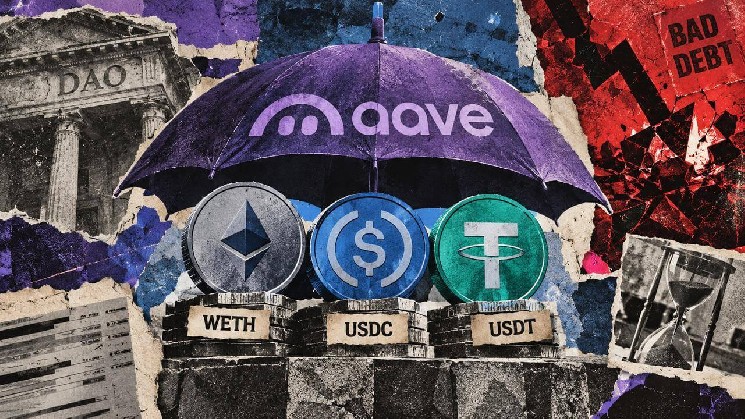
Aave V4 lenders supplying wrapped Ether (WETH), USDC, or USDT to the protocol’s Core liquidity Hub on Ethereum would gain a bad-debt backstop under a September 11 proposal from governance delegate TokenLogic. The “Umbrella” framework designates the Aave DAO as the first line of defense against losses, followed by volunteer underwriters, with initial coverage restricted to those three lending markets.
Proposed Underwriting Targets and Scope
The proposed underwriting targets are set at 800 ETH for Core WETH, 400,000 USDC for Core USDC, and 400,000 USDT for Core USDT. TokenLogic sized these amounts to cover six to eight weeks of expected loan growth. The figures represent targets for a proposed configuration, not capital already committed to protecting lenders.
For suppliers, the coverage boundary is the specific reserve, or asset pool, receiving their deposit. Coverage for Core USDC would not extend to USDC supplied to another Hub, even though the token is identical. Capital allocated to one Hub asset cannot clear another reserve’s deficit.
How Losses Would Be Absorbed
Bad debt arises when liquidation exhausts a borrower’s collateral but leaves debt unpaid. Under the proposed framework, the Aave DAO would absorb an initial layer through “deficit offsets” of 33 ETH for Core WETH, 15,000 USDC for Core USDC, and 15,000 USDT for Core USDT.
Umbrella underwriters could then lose their committed capital to cover deficits beyond that layer. Their funds would continue earning supply yield until used, with coverage implemented by burning supplied Hub shares. Additional rewards compensate participants for accepting that loss risk.
Coverage Eligibility Extends to Spoke-Borrowed Assets
Eligibility for that coverage would include all borrowing from each protected reserve. That includes loans originated through Spokes, the components where debt is created, whose collateral sits in other Hubs. Those credit lines still expose the Core reserve supplying the borrowed asset.
Underwriter Exit Terms Include Cooldown and Withdrawal Window
Underwriters would face a structured exit process. Each proposed market specifies a 20-day cooldown followed by a two-day withdrawal window. Aave’s withdrawal guidance states that participants who miss the window must activate another cooldown and wait a further 20 days.
Starting that exit process does not remove risk exposure. Aave’s Umbrella documentation notes that staked assets remain exposed to slashing during cooldown while continuing to earn rewards. The extra yield therefore comes with both potential capital loss and restricted access to funds.
Initial Plan Excludes USDG, frxUSD, and Other Hubs
TokenLogic does not recommend initial general-purpose coverage for USDG or frxUSD. The delegate cites uncertainty over incentive-sensitive lending activity and the ability to attract underwriters who transfer risk away from existing suppliers. For frxUSD, it highlights a concentrated, issuer-linked supplier base.
The assessment also leaves other Hubs’ reserves outside the initial plan, for varying reasons including limited incremental protection and narrow supplier bases. These exclusions do not mean the loans lack collateral or that losses are imminent.
Monitoring and Reassessment Timeline
TokenLogic proposes monitoring conditions after activation and reassessing the framework after three months, with excluded markets reconsidered as lending activity matures and supplier bases diversify.
Bitcoin Recovers 3% to $79,143 as Trump Signals Iran Diplomacy, but Geopolitical Risks Persist
Bitcoin ($BTC) climbed approximately 3% to $79,143 on Monday after briefly touching $79,325, buoyed by comments from U.S. President Donald Trump suggesting Iran wants to reach a deal with Washington. The recovery comes despite conflicting statements from Tehran and ongoing military tensions that continue to pressure energy markets.
Trump Comments Spark Risk-On Sentiment
Bitcoin’s rebound accelerated after President Trump posted on Truth Social that Tehran was eager for an agreement.
“The failing Nation of Iran wants to make a deal, quickly and badly,”
Trump wrote. He added that he would decide whether the United States engages with Tehran, though he said Washington was open to the idea. The remarks introduced the possibility of renewed talks after months of military exchanges and repeated failures to secure a lasting agreement.
During the recovery, Bitcoin first moved above $78,000 and reached $78,940 before extending gains. A daily Binance chart on TradingView showed BTC opening at $76,842, dipping to $76,388, and later peaking at $79,325. The asset traded near $79,143 at the time of capture, representing a 3% daily gain.
U.S. equities mirrored the cryptocurrency’s move. Approximately $570 billion returned to stocks within three hours after the session had earlier erased more than $600 billion. Technology shares had faced additional pressure after executives from artificial intelligence companies called for slower development to address safety risks, adding another layer of uncertainty for a sector that has driven much of the recent U.S. equity rally.
However, Iranian state media rejected Trump’s claim that Tehran was seeking a quick agreement, leaving the market without confirmation from both governments. LiveSquawk separately cited Iran’s ILNA news agency as saying the United States had sought a “phased” agreement, based on information attributed to a Pakistani source. The report did not establish that Washington and Tehran had accepted final terms.
Oil Above $100 Keeps U.S.-Iran Risk Active
The diplomatic dispute unfolds as attacks involving Iran-aligned forces continue to pressure oil production and shipping routes.
According to Reuters, Yemen’s Iran-aligned Houthis launched missiles and drones at a military airbase in Khamis Mushait, Saudi Arabia. The group said it targeted aircraft hangars, radar equipment, runways, and ammunition storage sites in response to Saudi strikes in Yemen.
In a separate attack, which Riyadh blamed on Iran-backed fighters in Iraq, Saudi Arabia’s east-west pipeline was taken offline. The route allows oil exports to bypass the Strait of Hormuz, making it critical while traffic through the strait remains restricted.
Traders told Reuters that an extended pipeline closure could affect as much as 4% of global oil supply. Brent crude rose more than 4% after the weekend before paring gains following Trump’s comments. It later traded near $106 per barrel, while U.S. crude remained above $100.
For American consumers, Reuters reported that the average retail diesel price had reached a record above $6.23 per gallon. Sustained energy costs could feed inflation and complicate the Federal Reserve’s interest-rate decisions, creating a direct link between the conflict and the conditions facing U.S. Bitcoin investors.
As crypto.news previously reported, Bitfinex analysts identified energy costs and real Treasury yields as restraints on Bitcoin. The analysts said an oil shock could keep inflation expectations elevated, while tighter monetary policy would reduce liquidity without resolving the loss of energy supply.
Oman had planned to host Iranian and Gulf officials for discussions over the future operation of the Strait of Hormuz. Foreign Minister Sayyid Badr Albusaidi postponed the meeting “in the interests of consensus,” without announcing a replacement date. Iran said Saudi Arabia had requested the delay. Tehran also published a list of 77 vessels it said had breached its operating rules in the strait, warning that future violations could lead to fines, detention, or confiscation.
Bitcoin Faces Technical Resistance Near $80,000
Technical readings show Bitcoin has returned above the center of its daily Bollinger Bands but has not cleared the upper boundary.
Bollinger Band midpoint: ~$78,521
Upper band: ~$81,035
Lower band: ~$76,008
BTC’s move above the midpoint gives buyers control of the immediate range, although the upper band and recent highs create resistance between $80,000 and $81,035.
A one-week CoinGlass liquidation heatmap shows the largest nearby concentration of leveraged positions just below $80,000. The brightest band appears around $79,900 to $80,000, making the area a possible target if buyers extend the advance.
Bitcoin liquidation heatmap | Source: CoinGlass
Several smaller liquidation pools sit between roughly $80,200 and $80,700. A clean move through that region would bring the Bollinger Band ceiling near $81,035 into focus, followed by the larger $82,000 area identified in recent Bitfinex analysis.
Momentum Signals Remain Mixed
Momentum remains less certain. The daily MACD line stood near 1,579, below its signal line around 2,211, while the histogram had fallen to approximately minus 631. Both MACD lines remained above zero, but the bearish crossover and red histogram bars showed that momentum had weakened after Bitcoin’s sharp August rally.
Price action has also remained uneven since BTC first moved above $80,000. Buyers have defended pullbacks toward the mid-$76,000 area, yet several attempts to hold above $81,000 have failed. The current move has returned Bitcoin to the upper half of that range without confirming a breakout.
Key Support Levels to Watch
On the downside, the Bollinger midpoint near $78,521 forms the first technical support. Losing it would expose the $77,500 to $78,000 region, where the heatmap shows a series of smaller leveraged clusters.
The largest lower liquidity concentration sits around $76,000, close to the daily lower Bollinger Band. A sustained break below that zone could expose another pool near $75,000 to $75,400.
Fed Policy Adds Another Test for U.S. Investors
The Iran conflict is not the only event capable of disrupting Bitcoin’s recovery. The Federal Reserve meets on Sept. 15 and 16, with its policy statement, updated economic projections, and Chair Kevin Warsh’s press conference due on Wednesday.
Markets had priced an 87% probability of a quarter-point increase before the meeting. Such a decision would move the federal funds target range from 3.50%–3.75% to 3.75%–4.00%.
Bitfinex analysts said the Fed’s projections could matter more for Bitcoin than the rate announcement itself because they will show whether officials expect one increase or a longer series of moves. Higher Treasury yields can raise the return available from government securities, increasing competition for capital held in non-yielding assets such as Bitcoin.
U.S.-listed spot Bitcoin exchange-traded funds provide another measure of demand from American investors. The products attracted $986.7 million during the week ending Sept. 4, after taking in $924.5 million the previous week. Three consecutive positive weeks brought the combined inflow to about $3.8 billion.
Fed policy, oil prices, and developments around the Strait of Hormuz will now overlap with the liquidation levels visible on the Bitcoin chart. The Federal Reserve is scheduled to release its decision on Wednesday afternoon, followed by Warsh’s press conference and the central bank’s updated economic projections.
Ethereum’s Layer-1 network achieved fresh usage milestones in the second quarter of 2026, even as the count of monthly active users contracted sharply. According to Token Terminal data, the blockchain processed 203.9 million transactions during the quarter, representing a 68.4% increase year-over-year. Average throughput also hit a record high of 25.9 transactions per second.
Transaction Volume Surges Despite User Decline
Despite the surge in on-chain activity, monthly active users fell 30% quarter-over-quarter to 9.2 million. This divergence indicates that the remaining user base generated significantly more transactions per capita. Network fees climbed 31.6% to $52.5 million, while ETH burn revenue more than doubled to $17.1 million, underscoring the intensified economic activity on the base layer.
Tokenization Bolsters Ethereum’s Dominance
Ethereum’s position as the primary settlement layer for tokenized assets strengthened further. The market for tokenized assets on Ethereum averaged $203.1 billion during Q2. Stablecoins continued to dominate this segment, accounting for $176.8 billion, while tokenized funds reached $20.8 billion. Notably, tokenized U.S. Treasury funds hit a record average of $7.5 billion.
The network retained the largest share of both stablecoins and tokenized funds among leading blockchain ecosystems. Total value locked (TVL) across Ethereum’s ecosystem averaged $287.2 billion, though this figure declined 9.2% compared to the previous quarter.
Staking Growth Signals Network Confidence
Participation in network security reached a new high, with Ethereum’s staking ratio climbing to a record 32%. The number of addresses holding ETH also expanded, rising 6.6% to 312.1 million. These metrics suggest a deepening commitment from token holders to secure the proof-of-stake consensus mechanism.
ETH Price Reaction and Outlook
At the time of reporting, ETH trades around $2,538, marking a 1.18% gain over the preceding 24 hours. The combination of stronger network usage, rising staking participation, and expanding tokenization activity could provide fundamental support for Ethereum’s long-term market position.
Robinhood plans to allow holders of its Stock Tokens to redeem them for actual shares and exercise voting rights on those shares, according to the company’s crypto chief. Johann Kerbrat, senior vice president and general manager of international and crypto at Robinhood, outlined the roadmap in a post on X Monday morning.
Roadmap Announced on Social Media
Kerbrat posted at 11:17 a.m. ET, addressing the most requested features directly: “What about in-kind redemption and voting rights? Not yet, but they’re coming,” he wrote. “Step one is to scale adoption of Stock Tokens. We’re actively working on redemptions for shares 1:1 with voting for eligible Stock Token holders on the roadmap.”
CEO Vlad Tenev amplified the message, reposting the thread at 1:12 p.m. ET with the line: “In-kind redemption and voting are coming for Robinhood Stock Tokens.” The two posts had attracted 244,000 and 294,700 views respectively by mid-afternoon. The company has not issued a formal press release on the planned changes.
Current Structure: Cash-Settled Debt Securities
Delivering either feature requires rewriting the offering documents that govern the product. Robinhood Stock Tokens are not shares; they are tokenized debt securities issued from Jersey under a prospectus that settles every redemption in cash. The shares backing the tokens can be lent to a borrower who retains the voting rights.
The base prospectus, dated June 25 and approved by the Financial Market Authority Liechtenstein, answers the redemption question explicitly. Under the heading “Can I physically receive the Underlying at redemption?” it states: “No. Investors are not entitled to receive physical delivery of the relevant Underlying. At redemption, the Investors will be entitled to receive the Redemption Amount, payable in the Specified Currency as cash.”
The same document reinforces the point in its terms and conditions: “Physical delivery of the Underlying and/or Collateral is excluded and Investors’ interests will be settled in the Specified Currency as cash in the event of a redemption or termination.”
Robinhood’s consumer-facing Stock Tokens page notes that holders “can also redeem them directly with the Issuer, where there is no authorized participant,” subject to know-your-customer and anti-money-laundering checks. That redemption pays cash. The issuer’s product page sets the redemption fee at zero for the first 90 days after issuance and 0.05% thereafter.
The insolvency disclosure on the same page describes the same cash-settlement mechanism. If the issuer fails, “an independent security agent will sell the underlying shares, and arrange for the cash proceeds to be paid to token holders.”
No Shareholder Rights Under Current Terms
On voting, the prospectus is equally explicit: “The Investors in a Product are not entitled to any rights or claims to the relevant Underlying aside from those described in the Terms and Conditions. In particular, the Investors do not have shareholder rights in respect of the relevant Underlying. Accordingly, Investors do not have voting rights, participation or attendance rights, pre-emption rights in offers for subscription of securities relating to the relevant Underlying, any right to share in the profits of an issuer of such Underlying.”
That language became central to a public dispute this month when AMC Entertainment CEO Adam Aron criticized the AMC stock token. Chief Legal Officer Dan Gallagher responded by telling Aron to “send your lawyers and we’ll educate them,” sparking a broader sector debate over which tokenized stock model prevails. Competitors have taken different approaches: Ondo Global Markets has added proxy voting through Broadridge outside the U.S., while Dinari’s dShares can be burned for redemption at market value.
Shares Are Lent Out, Complicating Vote Pass-Through
The final terms for individual tokens add a second structural obstacle to passing votes through to token holders. The Apple series, Series 14, states that “the Underlying may be lent out to the Prime Borrower, who is permitted to further lend the Underlying to End Borrowers and is obliged to provide an equivalent amount of Collateral to the Issuer.”
During a loan, the prospectus specifies that “the borrower retains all incidents of ownership of the Lent Underlyings,” and “the Issuer waives voting rights and any rights to consent or take action with respect to the Lent Underlyings during the loan term.”
The final terms also qualify the backing claim. Kerbrat wrote that “all Robinhood Stock Tokens are backed 1:1 with real shares in secure custody.” However, the Apple final terms clarify that where shares have been lent, “the Products in respect of such Series will not, to a greater extent, be backed or secured by the relevant Underlying themselves. Instead, the Prime Borrower is required to provide equivalent cash or other Eligible Financial Instruments as Collateral, in an amount equal to at least 100% of the market value of the Lent Underlyings.”
The prospectus says the issuer “will provide information regarding the amount of Lent Underlyings on a regular basis on the Issuer Website.” The issuer site includes sections for corporate actions, price deviations, an FAQ, product details, service providers, restricted jurisdictions, and disclosures. None currently publishes a lending figure.
Custody and Service Providers Disclosed
The custody partner left unnamed on Robinhood’s marketing page is identified in the service provider list: Alpaca Securities LLC of New York, which acts as both custodian and broker. Bitstamp Global Ltd, a British Virgin Islands entity in the group Robinhood finished acquiring on June 2, 2025, serves as the authorized participant. Security Agent Services AG of Zug is the security and verification agent, and JPMorgan Chase Bank’s London branch holds the paying account.
Say by Robinhood Cited as Voting Mechanism
Kerbrat pointed to an existing Robinhood asset as the potential mechanism for enabling voting. “We run a shareholder engagement platform, Say by Robinhood, which allows shareholders to participate in actions like voting,” he wrote. Robinhood acquired Say Technologies in August 2021. The platform’s page for companies offers to “reach shareholders with proxy materials, prospectuses, shareholder meeting information, company updates, livestream Q&A, and other regulated communications.”
Stock Token holders hold a claim on the issuer rather than the share itself. They are identified to Robinhood only if they complete the issuer’s KYC checks, and the tokens are not sold to residents of the United States, Canada, the United Kingdom, or Switzerland.
Volume Figures and Market Context
Kerbrat opened his thread with two key metrics: “Stock Tokens TVL reaching over $170M and nearly $50B in DEX volume on the Robinhood Chain.”
According to CoinGecko, the Robinhood Chain stocks ecosystem holds $168.47 million across its tokens, with $212.08 million in 24-hour volume. The largest tokens by value are tokenized SPY at $24.6 million, NVDA at $22.4 million, and SpaceX at $11.2 million.
The $50 billion figure is chain-wide. DefiLlama data shows Robinhood Chain processed $12.25 billion of decentralized exchange volume over seven days and $32.74 billion over 30 days, with total value locked at $916.6 million. Uniswap handles approximately 84% of that volume. The Defiant reported in July that the chain had surpassed Solana in tokenized stock volume, driven by memecoin pairs, and noted this month that tokenized equities traded $1.01 billion over a weekend with U.S. exchanges closed.
Robinhood lists more than 190 Stock Tokens. HOOD shares traded at $113.85 at 2:35 p.m. ET, up 1.1% on the day, per CNBC.
Onchain figures via DefiLlama and CoinGecko as of 18:30 UTC on Sept. 14. Legal terms via the RHJ base prospectus dated June 25, 2026 and the final terms for Series 14 (ISIN JE00BX9H9M76).
Delphi Digital Warns Bitcoin Rally May Lack New Capital Inflows
Amid a wave of selling pressure across the crypto market, Delphi Digital has raised concerns regarding the current Bitcoin rally. Analyst Jose suggests that the recent influx of funds may primarily consist of sidelined investors rather than new money entering the market. This commentary prompts traders to reconsider the sustainability of the rally and its implications for future momentum.
Market Context: Mixed Signals Across Major Assets
The crypto market currently presents a mixed landscape, with many major assets showing varying momentum. Delphi Digital’s analysis indicates that the latest Bitcoin rally may not signify a genuine influx of new capital. Instead, it appears that investors who had previously exited the market are returning to buy back in. This raises questions about the overall health of the rally and whether it can sustain itself without fresh investment inflows.
Trading Volume and Sentiment Indicators
As of now, market data indicates that Bitcoin’s price remains stable, yet the lack of significant trading volume suggests a cautious sentiment among investors. The broader crypto market is exhibiting signs of indecision, with many traders watching developments closely. The Fear & Greed Index reflects a moderate level of caution, indicating that market participants are weighing potential risks against opportunities presented by the rally.
About Delphi Digital’s Analysis
Delphi Digital is known for its analytical insights into the cryptocurrency market, focusing on trends and investor behavior. Their scrutiny of the current Bitcoin rally reflects concerns about market sustainability, making their commentary relevant for traders and investors alike.
Key Levels to Watch in Coming Days
Traders should keep a close eye on Bitcoin’s price movements in the coming days, particularly looking for signs of new money entering the market. A failure to attract fresh investment could lead to a pullback, challenging the current rally. Additionally, monitoring the Fear & Greed Index will provide insights into market sentiment and potential price direction as traders weigh their options.
This article is for informational purposes only and should not be considered financial advice.
Whale Accumulation Signals Strong Demand for Zcash
Zcash ($ZEC) whale accumulation outlook strengthened significantly, with a $13.65 million position complementing aggressive spot-market buying throughout the latest price recovery. According to Onchain Lens, one whale accumulated roughly 12.87K $ZEC from four major exchanges over the past week.
Notably, the purchases originated from Binance, OKX, Kraken, and Gate, reflecting accumulation across several liquidity platforms. The whale later transferred the 12.86K $ZEC into a fresh wallet, completing the broader accumulation sequence. This activity removed a sizable position off the exchanges where the whale initially acquired it. The accumulation arrived as $ZEC attempted to stabilize after its latest price pullback.
Spot Market Buying Supports Accumulation
Whale accumulation did not stand alone; broader spot-market activity reinforced the demand picture. The Spot Taker CVD remained taker-buy dominant, providing another demand element alongside the whale accumulation. This metric typically tracks whether aggressive market buyers or sellers control executed spot volume over a measured period.
Buyer dominance implied that market participants increasingly crossed the spread to acquire $ZEC rather than awaiting lower prices. Crucially, such activity broadened the demand picture beyond one whale’s purchases across centralized exchanges. The whale accumulation reflected large-holder conviction, while Spot Taker CVD highlighted aggressive buying across the spot market. Combined, both developments implied that bulls actively absorbed available $ZEC during recent price volatility.
Source: CryptoQuant
Mining Economics Drive Network Participation
Stronger network economics provided another support component to Zcash’s improving fundamental backdrop. Specifically, Zcash mining economics improved substantially as higher profitability attracted considerably greater network participation throughout 2026.
According to Grayscale, Zcash miner rewards were estimated near $2 million daily, compared with roughly $35 million for Bitcoin miners. Despite the huge disparity, Zcash delivered nearly twice Bitcoin’s mining rewards per rig. Additionally, the $ZEC protocol generated around four times Bitcoin’s rewards per megawatt-hour, improving its relative energy economics. This profitability helped explain why Zcash mining activity increased by more than 250% throughout 2026. The mining-power chart showed particularly rapid expansion during the latest phase of the year, complementing demand-side developments.
Source: X
Elliott Wave Analysis: Wave 5 Confirmation Needed
On the 24-hour chart at press time, Zcash’s price structure had completed four stages of a developing Elliott impulse wave sequence, with Wave (5) awaiting confirmation.
Wave (1) advanced towards the $850 region after breaking out of its consolidation range.
Wave (2) retraced towards the $813.95 support zone.
Wave (3) drove sharply higher, with the $ZEC price reaching the $1,295–$1,298 resistance region. This third-wave impulse remained the strongest leg, satisfying a key condition for the developing motive structure.
Wave (4) pulled $ZEC towards the $1,054.72 zone without overlapping the Wave (1) peak, protecting the bullish sequence.
At press time, Zcash price had reversed to $1,138.89, as RSI cooled to 62.37 from recent overbought conditions. The five-wave cycle still needs Wave (5) confirmation. A sustained advance above the $1,295–$1,298 supply zone would strengthen that confirmation and open a path to a $1,500 possible target. Alternatively, losing the $1,054.72 support would challenge the current wave count and raise the risk of a truncated Elliott impulse wave.
Source: TradingView
Summary
Whale accumulation and taker buying strengthened $ZEC’s demand during its latest recovery. Zcash’s developing Elliott impulse wave now awaits Wave 5 to confirm the bullish cycle structure.
CoinGecko Trending Crypto Rankings Highlight Surge in Smaller Tokens Over Bitcoin
On September 14, 2026, CoinGecko’s Top Trending Cryptocurrencies ranking reveals a notable shift in market attention toward smaller, more volatile tokens rather than established large-cap assets like Bitcoin ($BTC). The data shows dramatic weekly movements across several trending cryptocurrencies, raising questions about whether these spikes reflect genuine momentum or speculative liquidity cycles.
Lisk ($LSK) Leads With 764.7% Weekly Surge Driven by Short Squeeze
Lisk ($LSK) dominates the trending list after gaining 16.0% in the past 24 hours and approximately 764.7% over seven days. According to derivatives data, this explosive move was primarily fueled by a violent short squeeze on September 13, which triggered $35–41 million in total liquidations—the largest of any token that day. The vast majority, $33–36 million, came from short positions being forcibly closed.
The liquidated shorts forced buying into a self-reinforcing rally on relatively thin liquidity, amplifying the price action. This mechanism illustrates how leveraged positions can create outsized percentage moves in lower-cap assets.
Lighter ($LIT) Gains Traction in Perpetual DEX Sector
$LIT, the native token of a high-performance decentralized perpetual futures exchange built as an application-specific zk-rollup on Ethereum, is also ranking high in trending searches. At press time, $LIT was trading around 4.56, up about 9% in the last 24 hours and approximately 4.4% over the last seven days, accompanied by strong trading volume.
Lighter’s momentum stems from its positioning in the competitive perpetual DEX sector, broader interest in DeFi trading infrastructure, rising platform volume, and ecosystem integrations. The weekly performance and search attention have positioned $LIT among the more viewed mid-cap tokens as traders rotate toward active trading-related assets.
Other Notable Movers in Trending Rankings
Current top names in CoinGecko’s trending list include:
$STONK — down 25.9%
$LIT — up 9.7%
Pudgy Penguins (PENGU) — down 1.8%
$PONS — down 4.4%
Bittensor (TAO) — down 1.1%
Bitway (BTW) — up 35.2%
$LSK — up 16.0%
Pons ($PONS) Enters Post-Parabolic Cooling Phase
Pons, the native token of the leading non-custodial token launchpad on Robinhood Chain, has seen a classic post-parabolic cooling phase following an extraordinary run. Currently trading at approximately $0.53–$0.54, it holds a market capitalization of around $380–$385 million with a circulating supply of about 712 million tokens following massive token burns.
In the last 24 hours, $PONS has shown mixed short-term movements, while the 7-day chart remains bullish at roughly +29–30%. The 30-day gain exceeds 1200%, underscoring the magnitude of the earlier rally. Nevertheless, the token sits approximately 44–45% below its peak price of around $0.97 set on September 5, 2026.
This transition from pure momentum to a more measured—yet still volatile—phase signals that the most intense speculative wave has cooled.
What CoinGecko’s Trending Crypto Ranking Actually Measures
CoinGecko’s “Top Trending Cryptocurrencies” ranking is a real-time attention metric, not a performance or quality ranking. The list is based on the number of searches made by CoinGecko users in the past 3 hours, reflecting immediate spikes in interest and attention.
It does not measure:
Trading volume
Liquidity
Price performance
Market capitalization
Fundamentals
Tokenomics
On-chain metrics
Trending status typically serves as an early indicator of interest and can be driven by social-media activity, a big price swing, a news story, a short squeeze, or meme speculation.
Are Traders Rotating Toward Smaller, Riskier Tokens?
CoinGecko’s current trend data shows a strong focus on mid- to low-cap, more volatile tokens rather than the largest and most established digital assets. Many of these tokens are far smaller than Bitcoin or Ethereum in terms of market capitalization but exhibit sharp percentage moves. This pattern reflects a common market phase in which speculative capital rotates into lower-liquidity, narrative-driven tokens.
Key Due Diligence Checks Before Buying a Trending Crypto Coin
Before buying a trending crypto coin, investors should evaluate:
Liquidity and trading volume — Can you enter and exit positions without excessive slippage?
Tokenomics and supply dynamics — Inflation schedule, unlocks, burns, and distribution.