Category: Coins

Digital assets, cryptocurrencies, blockchain, and currency news.

  • Bitcoin Holds Firm as Ethereum Attracts Inflows: Crypto Positioning Analysis

    Bitcoin Holds Firm as Ethereum Attracts Inflows: Crypto Positioning Analysis

    Bitcoin briefly dipped to $76,700 following the release of fresh inflation data before recovering toward the $78,000 level. According to QCP Capital, this “contained” reaction signals that markets have largely priced in the prospect of a 25-basis-point rate hike.

    Technical Setup Remains Constructive

    The firm explained that $BTC‘s technical setup remains constructive at current levels, although conviction is still dependent on the broader market response to this week’s events.

    Two Very Different Bets: Bitcoin vs. Ethereum Flows

    Bitcoin is trading above a major support zone between $75,000 and $76,000, while resistance sits at $80,000 to $82,000. Ethereum, however, is showing a significantly different flow picture.

    Spot Bitcoin ETFs See Outflows Slow

    Spot $BTC ETFs recorded $462.7 million in net outflows during the holiday-shortened week. Notably, Friday’s withdrawal slowed sharply to $13.2 million compared with $282.7 million on Thursday, suggesting selling pressure may be exhausting.

    Ethereum ETFs Attract Strong Inflows

    Ethereum ETFs, meanwhile, recorded nearly $197 million in net inflows for the week. Friday’s $216.4 million influx helped drive the weekly total higher despite earlier outflows. QCP Capital said that the divergence indicated differentiated positioning between the two crypto assets. Ethereum is facing resistance at $2,500 to $2,550, while support sits at $2,400 to $2,425, with a secondary support zone located at $2,300 to $2,350.

    Low Volatility Points to Hedged Positioning

    Bitcoin volatility also remains relatively low. QCP Capital stated that the volatility curve is still upward sloping while the 25-delta risk reversal is around negative 3 volatility points. Puts are therefore moderately more expensive than calls, even as positioning remains well below stressed levels. The firm added that traders are staying hedged rather than taking a strong directional position.

    Bitcoin’s Resilience Against Tech Rout

    Several factors could influence risk appetite for crypto assets. Oil prices have moved higher following a drone attack that temporarily shut Saudi Arabia’s East-West pipeline. A prolonged disruption could add pressure to risk assets through higher energy costs and tighter financial conditions.

    At the same time, artificial intelligence-linked equities have come under pressure following public discussions about slowing AI development over safety concerns. QCP Capital said that Bitcoin’s relative resilience compared with the sharper declines across technology and semiconductor stocks is a constructive sign for its “uncorrelated positioning.” However, a deeper unwind in crowded technology trades could still spill into crypto through weaker overall risk appetite and tighter liquidity.

    Regulatory Catalyst: CLARITY Act Senate Vote

    Crypto markets also have a separate regulatory catalyst in Washington. Tuesday’s expected Senate procedural vote on the updated CLARITY Act could clarify the respective roles of the SEC and CFTC. This is expected to strengthen the medium-term case for institutional adoption by reducing regulatory uncertainty, though procedural progress would not guarantee final passage.

    More on the crypto market’s state and the upcoming key events can be found in our video below.

  • New XRPL Upgrade Could Shift XRP Ownership from Retail Wallets to Banks

    New XRPL Upgrade Could Shift XRP Ownership from Retail Wallets to Banks

    Proposed XRPL Sponsor Amendment Could Shift $XRP Costs From Consumers to Institutions

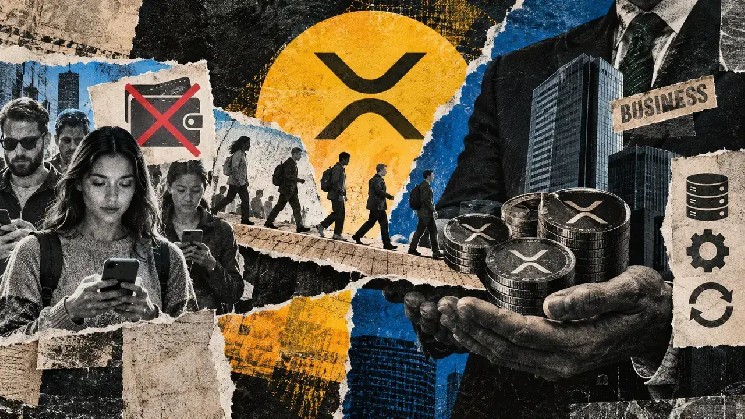
    A proposed upgrade to the XRP Ledger (XRPL) would allow banks and fintech companies to absorb $XRP transaction fees and account reserves on behalf of their customers, potentially removing a significant friction point for mainstream adoption. Known as the Sponsor amendment and based on the XLS-68 Sponsored Fees and Reserves proposal, the change would let a sponsoring entity pay network costs while the end user retains full control of their account and private keys.

    Removing the $XRP Acquisition Barrier for End Users

    Currently, interacting with the XRPL requires every account to hold a base reserve of 1 $XRP plus additional reserves for trust lines and other ledger objects. Transaction fees, paid in $XRP, are also burned upon settlement. For financial institutions deploying tokenized assets, payments, or other applications, requiring every customer to acquire and manage $XRP beforehand creates onboarding friction.

    Jazzi Cooper, Ripple’s head of product, said the feature is designed so a sponsor such as a bank, issuer or platform can cover those costs on behalf of users. That could allow consumer-facing applications and institutional platforms to keep the underlying $XRP mechanics largely out of the customer experience.

    Capital Requirements Shift to the Sponsor’s Balance Sheet

    The trade-off moves the capital requirement to the sponsor. Account reserves must still be funded in $XRP, and transaction fees continue to be paid in the token and destroyed when transactions settle. Businesses effectively become the $XRP holders supporting customers who own none.

    Under current network parameters, XRPL requires a base reserve of 1 $XRP per account and 0.2 $XRP per standard owner-reserve unit, though validators can adjust these parameters. Under sponsorship, the $XRP allocated to a user’s reserve remains in the sponsor’s account while the ledger records which party is responsible for the obligation.

    A business sponsoring 1,000 otherwise empty customer accounts would therefore carry roughly 1,000 $XRP of additional base-reserve requirements alongside its own reserve. If those customers funded their accounts themselves, the same 1,000 $XRP requirement would be distributed among them. This distinction becomes significant if banks, payment companies, or tokenization platforms deploy XRPL products to millions of users. A firm serving 1 million users could theoretically carry about 1 million $XRP of base-account reserve obligations before accounting for trust lines, token-related objects, optional sponsorship relationships, and transaction fees.

    Optional Sponsorship Entries Add Complexity

    Optional Sponsorship ledger entries allow businesses to establish prefunded sponsorship relationships rather than signing every subsidized transaction individually, but each entry also consumes reserve capacity. This arrangement means wider XRPL adoption would not necessarily create an equivalent number of new retail $XRP holders. A bank could onboard a large customer base while purchasing and managing $XRP centrally, effectively concentrating the network’s reserve requirements among a smaller group of institutional sponsors.

    That structure could make $XRP easier to integrate into products where banks prefer customers to see only the asset or service they use, such as tokenized deposits, bonds, or money-market instruments. Ctrl Alt, which has worked on the sponsorship proposal alongside Ripple and XRPL developers, has described the model as a way for institutions to manage $XRP requirements internally while customers interact with tokenized assets without acquiring $XRP themselves.

    Sponsorship Creates Balance-Sheet and Capital-Management Challenges

    The same design introduces a capital-management problem for sponsors. An $XRP reserve remains committed while the sponsored account or ledger object still depends on it. A company cannot necessarily assume the $XRP becomes available immediately when a customer stops actively using its service.

    Under the proposed SponsorshipTransfer mechanism, a sponsorship can be ended or reassigned, but account sponsorship carries conditions. A beneficiary taking over its own reserve needs enough $XRP to satisfy the requirement. This creates a complication for the very users the feature is intended to support: a customer who never acquired $XRP may be unable to take over the reserve when a bank wants to stop sponsoring the account.

    The sponsor could transfer enough $XRP to the customer to cover the shortfall, but doing so creates a separate cost. The customer could also arrange for another sponsor to assume the obligation, with the incoming sponsor’s consent. Account deletion offers another exit when applicable. Once relevant blockers are cleared, a sponsored account can be deleted and the reserve obligation released, with remaining account $XRP directed as specified under the proposed rules.

    Object sponsorship adds further uncertainty. A code change merged into XRPL’s development branch in August adds reserve checks when certain sponsorships end, but that behavior is gated behind the separate fixCleanup3_4_0 amendment. Its eventual mainnet status will determine how freely some reserve commitments can be unwound.

    Those mechanics mean banks considering sponsorship would need to model more than the initial cost of acquiring $XRP. They would also need to estimate customer churn, average reserve requirements, transaction-fee consumption, and how much $XRP could remain committed to inactive but still-open accounts.

    Market Demand Depends on Deployment, Not Just Formula

    The proposal could create a new institutional use for $XRP without establishing how much fresh buying would follow. An existing $XRP holder could allocate tokens already on its balance sheet to sponsored customers without purchasing additional supply. New market demand would depend on the gap between that inventory and the reserve and fee commitments the institution chooses to assume.

    That makes eventual deployment data more important than the headline reserve formula. The number of sponsored accounts, sponsor balances, transaction volumes, and reserve units tied to tokenized assets would reveal whether businesses are accumulating $XRP to support the service or primarily recycling existing holdings.

    Validator Approval Remains the First Hurdle

    The proposal remains some distance from activation. As of press time, XRPScan data showed only six validators supporting the amendment, short of the 29-validator threshold, with no activation date scheduled.

    If the Sponsor amendment gains sufficient support and clears the required activation period, banks and platforms would then have to decide whether removing $XRP from their customer experience is worth carrying the token themselves. For companies planning large-scale tokenized-asset products, that calculation could ultimately turn $XRP from something every customer has to manage into an infrastructure cost concentrated on the institution’s own balance sheet.

  • Bitcoin Reserve Bill Heads to House Committee for Historic Vote

    Bitcoin Reserve Bill Heads to House Committee for Historic Vote

    House Financial Services Committee Set to Vote on Bitcoin Reserve Bill ARMA

    The House Financial Services Committee is scheduled to hold a pivotal markup session on Wednesday, September 16 at 10:00 a.m. ET to vote on the American Reserve Modernization Act (ARMA) of 2026, designated as H.R. 8957. The bipartisan legislation, introduced in late May by Republican Representative Nick Begich and Democratic co-sponsor Representative Jared Golden, proposes establishing a strategic national Bitcoin reserve alongside a broader digital asset stockpile.

    Key Provisions of the ARMA Legislation

    The bill outlines several core mandates designed to govern the acquisition, storage, and potential use of digital assets by the federal government:

    20-Year Lockup Period for Bitcoin

    A central feature of the legislation is a mandatory 20-year holding period for any Bitcoin acquired for the national reserve. During this timeframe, the government would be prohibited from trading or selling the asset. The sole exception allows for liquidation only if the proceeds are used exclusively to retire outstanding federal debt.

    Redirecting Seized Bitcoin to the Reserve

    The Act mandates that all Bitcoin obtained through criminal seizures or penalties must be transferred directly to the national Bitcoin reserve. This provision effectively ends the current practice of auctioning off forfeited digital assets.

    Creation of a Digital Asset Stockpile

    Reflecting the legislation’s renamed scope, ARMA establishes a “Digital Asset Stockpile” for holding altcoins classified as assets. The government would be authorized to sell or trade these alternative digital assets for Bitcoin, or liquidate them to pay down the national debt.

    Strict Budget Neutrality and Acquisition Strategy

    The proposal enforces budget neutrality, stipulating zero net cost for acquiring Bitcoin. It explicitly bans purchases funded by debt issuance, new taxes, or deficit spending. Instead, the Department of the Treasury and the Department of Commerce are tasked with developing a plan to accumulate 1 million BTC over a five-year period using surplus dollars or a portion of net earnings from Federal Reserve banks.

    Decentralized Storage and Audit Requirements

    To ensure security and transparency, the bill requires a decentralized network of secure physical storage facilities distributed across the country. Third-party contractors would conduct quarterly audits of the reserves.

    Legislative Path Forward

    If the bill clears the committee markup, it will advance to the full House of Representatives for a floor vote. Subsequent passage would send the legislation to the Senate for consideration, followed by the President’s desk for signature into law.

  • US House Schedules Strategic Bitcoin Reserve Bill Markup Vote for Sept. 16

    US House Schedules Strategic Bitcoin Reserve Bill Markup Vote for Sept. 16

    House Financial Services Committee Advances Strategic Bitcoin Reserve Legislation

    The U.S. House Financial Services Committee is preparing to mark up legislation that would establish a strategic bitcoin reserve, signaling growing congressional interest in digital asset policy. The committee’s latest memorandum confirms that H.R. 8957, the American Reserve Modernization Act of 2026, will be among nine bills considered during a markup session scheduled for September 16.

    Legislative Details and Committee Action

    The American Reserve Modernization Act of 2026 represents a significant step toward formalizing bitcoin holdings at the federal level. By including this measure in its upcoming markup agenda, the House Financial Services Committee indicates a willingness to debate and potentially advance the proposal through the legislative process. Markup sessions allow committee members to amend, debate, and vote on legislation before it proceeds to the full House for consideration.

    Broader Digital Asset Policy Context

    This development occurs amid increasing congressional attention to cryptocurrency regulation and the strategic role of digital assets in national financial infrastructure. The inclusion of the Strategic Bitcoin Reserve bill alongside eight other measures suggests the committee is addressing a range of financial services priorities in a single session.

    Next Steps in the Legislative Process

    If the bill passes committee markup, it would move to the House floor for further debate and a potential vote. Subsequent approval would require Senate passage and presidential signature to become law. The September 16 markup represents a critical early test of congressional support for a federally managed bitcoin reserve.

  • XRP Price Poised for 40% Surge on CLARITY Act Vote, But Major Catch Remains

    XRP Price Poised for 40% Surge on CLARITY Act Vote, But Major Catch Remains

    Senate Prepares for CLARITY Act Vote as XRP Eyes Breakout

    The United States Senate is scheduled to vote on the CLARITY Act, a development coinciding with technical signals suggesting XRP is positioning for a potential price breakout.

    Analyst CasiTrades Weighs in on XRP Outlook

    Crypto analyst CasiTrades indicates there is potential for more significant price action for XRP. However, the analyst cautioned that Ripple’s XRP may encounter massive resistance should the rally advance to key price levels.

  • DOJ Seeks Forfeiture of $61M in Iranian Oil Proceeds Laundered Through Binance

    DOJ Seeks Forfeiture of $61M in Iranian Oil Proceeds Laundered Through Binance

    DOJ Targets $61 Million in Crypto Tied to Iranian Oil Sales

    The U.S. Department of Justice has filed a civil forfeiture complaint seeking to seize approximately $61 million in cryptocurrency proceeds. The funds are allegedly linked to the sale of Iranian oil and were laundered through the crypto exchange Binance, according to the complaint.

    Alleged Sanctions Evasion Scheme

    The legal action alleges that the cryptocurrency represents proceeds from Iranian oil sales conducted in violation of U.S. sanctions. Prosecutors claim the funds were moved through Binance to obscure their origin and facilitate access to the international financial system.

    Part of Broader Treasury Enforcement

    The forfeiture complaint follows the U.S. Treasury Department’s launch of “Operation Economic Outcast,” an enforcement initiative targeting Iranian oil sanctions evasion. The operation aims to disrupt networks that facilitate the sale of Iranian petroleum and petrochemical products through deceptive shipping practices and financial intermediaries.

    Binance’s Regulatory Scrutiny

    Binance, the world’s largest cryptocurrency exchange by trading volume, has faced increasing regulatory pressure globally. The exchange has previously settled with U.S. authorities over anti-money laundering and sanctions violations, agreeing to pay substantial fines and implement enhanced compliance measures.

    The civil forfeiture process allows the government to seize assets suspected of being connected to illegal activity without necessarily charging individuals with a crime. Claimants have the opportunity to contest the seizure in court.

  • SEC’s Atkins Backs Clarity Act, Vows to Advance Crypto Rules Without It

    SEC’s Atkins Backs Clarity Act, Vows to Advance Crypto Rules Without It

    SEC Commissioner Hester Peirce outlined a three-part regulatory framework for digital assets during recent remarks, emphasizing the need for clarity as markets evolve. The proposals target capital formation, transfer agent modernization, and crypto custody rules for investment advisers.

    Digital Asset Clarity Act Would Reduce Regulatory Guesswork

    The first pillar centers on advancing the Digital Asset Clarity Act. If adopted, the framework would give entrepreneurs greater certainty to raise capital in the U.S. using digital assets rather than having to “guess what the law is as they go.” The legislation aims to define when a digital asset qualifies as a security, providing a clearer path for compliant fundraising.

    Transfer Agent Rules Overdue for Blockchain Integration

    The second initiative calls for an overhaul of transfer agent rules to include blockchains for digital ownership ledgers. Peirce noted the rules have not been seriously updated in roughly four decades and were built for paper stock certificates. Transfer agents are already adapting to a market that increasingly incorporates tokenized assets, making regulatory modernization essential.

    Crypto Custody Proposal for Advisers and Regulated Funds

    Additionally, Peirce said she has asked SEC staff to develop a proposal clarifying crypto custody for investment advisers and regulated funds. That proposal would seek to allow advisers, under certain conditions, to custody crypto themselves and to use state trust companies as custodians. Self-custody may be necessary because qualified third-party custodians do not yet exist for some assets, while state trust companies already provide a pathway that “works in practice.”

    Unified Regulatory Architecture

    Peirce described the three initiatives together as “three pillars of a single, rational, and comprehensive regulatory architecture.” She emphasized the urgency of action, stating, “The SEC should not be the last institution to notice that the world actually has changed.”

    The push for the Clarity Act vote comes as the bill faces an uphill battle, with several key disputes still unresolved ahead of Tuesday’s procedural vote.

  • U.S. Department of Justice Issues Statement on Binance and Iran

    U.S. Department of Justice Issues Statement on Binance and Iran

    DOJ Seeks Seizure of $61 Million in Crypto Linked to Iranian Oil Sanctions Evasion

    The U.S. Department of Justice has filed a civil forfeiture lawsuit targeting approximately $61 million in cryptocurrency allegedly connected to the Iranian government and the Islamic Revolutionary Guard Corps (IRGC). The complaint, filed in the Southern District of New York, claims the digital assets represent proceeds from the illicit sale of sanctioned Iranian crude oil laundered through the cryptocurrency exchange Binance.

    Alleged Laundering Network Involves China-Based Firms

    According to the U.S. Attorney’s Office for the Southern District of New York, two China-based companies — Blessed Trust and Hexa Whale — used trading accounts on the UAE-based exchange Binance to facilitate the laundering operation. Authorities allege these firms helped convert proceeds from black market Iranian oil sales into cryptocurrency, moving funds through complex transaction networks designed to conceal their origin.

    The complaint details how Blessed Trust presented itself to financial and crypto service providers as an asset management and digital asset custody company. In reality, prosecutors say it transferred funds derived from Iranian crude oil and petroleum product sales. The firm allegedly offered services converting fiat currency into cryptocurrencies utilizing U.S.-based crypto issuers.

    Hexa Whale reportedly operated under the guise of a commodities brokerage but conducted similar transactions with Blessed Trust and affiliated parties. Both companies reportedly served clients in the Chinese oil and petroleum sector.

    $1.5 Billion in Illicit Oil Revenues Tracked

    Investigators identified a cluster of interconnected cryptocurrency addresses dubbed “Entity A” that allegedly received and distributed over $1.5 billion in funds from sanctioned Iranian oil sales. Transfers from these addresses reportedly went to money-handling companies linked to the IRGC, other crypto addresses, and an Iran-based cryptocurrency exchange.

    Prosecutors allege Blessed Trust and Hexa Whale used sophisticated crypto transfer networks and address clustering to obscure the nature, source, and true ownership of transactions. The scheme allegedly facilitated tens of millions of dollars in transfers through the U.S. financial system.

    Officials Emphasize Sanctions Enforcement and Crypto Tracing

    Assistant U.S. Attorney Sean S. Buckley stated that the Iranian government uses its sanctioned oil sales to finance its military and operations in the region, and that the investigation alleges that cryptocurrency actors in China and other countries played a role in laundering more than $1.5 billion in illicit oil revenues.

    FBI New York Field Office Deputy Director James C. Barnacle Jr. stated that the operation demonstrated the ability to track cryptocurrency networks used to circumvent sanctions, and that cutting off funds from black market oil sales aimed to reduce the financing capacity of the Iranian military and related entities.

    The IRGC has been designated as a foreign terrorist organization by the United States. The forfeiture action seeks to disrupt financial pipelines supporting Iranian state activities and proxy operations across the Middle East.

    This article is for informational purposes only and does not constitute investment advice.

  • Gemini Launches New Discord Channel for Community Engagement

    Gemini Launches New Discord Channel for Community Engagement

    Gemini, the cryptocurrency exchange founded by the Winklevoss twins, has launched an official Discord channel to strengthen community engagement. The announcement, shared via the platform’s official X (formerly Twitter) account, signals a strategic push to foster direct communication with users amid a shifting crypto market landscape.

    Direct Channel for User Interaction

    The new Discord server is designed to serve as a centralized hub for real-time discussions, platform updates, and user feedback. By establishing a presence on the popular communication platform, Gemini aims to create a more interactive environment where traders and investors can access timely information, seek support, and participate in community-driven initiatives.

    This move reflects a broader industry trend where exchanges and blockchain projects are prioritizing owned community channels over reliance on third-party social media algorithms. Direct access to users allows platforms to disseminate critical updates — such as maintenance windows, new asset listings, or security advisories — without algorithmic filtering.

    Context: Mixed Market Signals

    The launch comes as the cryptocurrency market exhibits mixed signals, with asset prices fluctuating across major tokens. In this environment, user sentiment and retention have become critical metrics for platforms competing on trust, transparency, and service quality. Enhanced community infrastructure may help Gemini differentiate itself by improving responsiveness and building longer-term user loyalty.

    Gemini has historically positioned itself as a regulatory-compliant, security-first exchange with a user-friendly interface. The Discord initiative extends that philosophy into community management, offering a structured space for dialogue that complements existing support and educational resources.

    What to Watch

    Market observers and Gemini users alike will monitor how actively the exchange leverages the new channel. Key indicators include frequency of official announcements, responsiveness to user inquiries, moderation quality, and whether the community evolves into a source of organic feedback that shapes product development. Increased engagement could also influence trading behavior by accelerating information flow among retail participants.

    As the crypto ecosystem matures, platforms that invest in transparent, two-way communication may gain a competitive edge in user retention and brand trust. Gemini’s Discord launch represents a measurable step in that direction.

  • NEAR Protocol Highlights Need for Data Privacy

    NEAR Protocol Highlights Need for Data Privacy

    NEAR Protocol took to social media to assert that any system holding identities is a potential exposure point. The project emphasized that confidentiality should be a baseline expectation, particularly for financial and AI systems. The statement reflects mounting concerns about data privacy across the cryptocurrency sector.

    Community Response Signals Growing Privacy Focus

    The protocol’s recent post gained significant traction, accumulating 334 likes and 48 retweets. The engagement underscores how data protection has become a central conversation as the broader crypto market navigates mixed signals. Safeguarding sensitive user information in financial infrastructure and artificial intelligence applications is rapidly shifting from a feature to a fundamental user requirement.

    Market Context and Protocol Alignment

    Current market dynamics present a complex backdrop for this privacy advocacy. While digital asset markets show divergent trends, the call for stronger data protections may shape how blockchain projects architect their protocols to meet evolving expectations. NEAR Protocol, a blockchain platform built for high-performance decentralized applications, has positioned confidentiality as core to its mission of enhancing trust and security in the evolving Web3 landscape.

    Industry Implications for Developers and Traders

    Market participants are monitoring how NEAR’s stance on confidentiality translates into platform enhancements and user adoption. As privacy concerns intensify, protocols that prioritize data protection may gain competitive advantage through increased trust. This dynamic could catalyze a broader industry reassessment of data handling standards across the blockchain ecosystem.

    This article does not constitute financial advice.