Category: Coins

Digital assets, cryptocurrencies, blockchain, and currency news.

  • Raydium (RAY) Rallies 12% as Earnings Hit Yearly High – RAY’s Next Move Depends on THIS

    Raydium (RAY) Rallies 12% as Earnings Hit Yearly High – RAY’s Next Move Depends on THIS

    Key Highlights

    • Raydium ($RAY) surged 12% as protocol earnings reached a yearly high of approximately $3.87 million in September, bringing total earnings to $23.26 million.
    • LaunchLab infrastructure drove 25% of the $2.64 million allocated to $RAY buybacks, with Stonk.fun emerging as a major launch platform.
    • Despite spot net selling of $311,530 in 24 hours, rising volume above $68 million and a Taker Buy/Sell Ratio of 1.15 signal sustained bullish momentum.

    Raydium Rally Fueled by Record Protocol Earnings and LaunchLab Growth

    Raydium’s native token $RAY has executed one of the strongest market moves in recent sessions, climbing 12% according to CoinMarketCap data. The price appreciation correlates directly with a surge in protocol fundamentals, specifically earnings derived from incentive-based gross profit. DeFiLlama figures reveal that Raydium generated roughly $3.87 million in September earnings alone, marking the highest monthly total in a year and pushing cumulative protocol earnings to $23.26 million.

    LaunchLab Infrastructure and Buyback Mechanics Drive Value Accrual

    A primary catalyst for the earnings spike is the expansion of LaunchLab, Raydium’s token launch infrastructure, where Stonk.fun has established itself as a leading platform. The buyback mechanism, which repurchases $RAY from open markets, has deployed approximately $2.64 million in capital to date. LaunchLab’s operations contributed 25% of this buyback funding, creating a direct feedback loop between launchpad activity, protocol revenue, and token demand. Analysts note that when protocol performance reaches this threshold, it reinforces positive market sentiment and supports near-term price stability.

    Spot Market Profit-Taking Creates Near-Term Pressure

    Despite the bullish fundamental backdrop, on-chain data from CoinGlass indicates active profit-taking by market participants. The Spot Netflow metric recorded a net outflow of $311,530 over the past 24 hours, with selling pressure persisting across two consecutive sessions. However, a broader three-week perspective reveals a significant shift: weekly netflows have contracted from $2.4 million to approximately $552,000, with each successive week showing declining sell volume. This deceleration typically suggests seller exhaustion and a growing investor preference for holding rather than distributing positions.

    Surging Volume and Taker Aggression Confirm Momentum

    Volume analysis reinforces the constructive price action. Combined spot and perpetual market volume exceeded $68 million, according to CoinGlass, with rising volume accompanying rising prices—a classic confirmation of trend strength. The perpetual market specifically exhibited robust bullish participation. The Taker Buy/Sell Ratio climbed to 1.15, decisively above the 1.0 threshold that signals dominant aggressive buying. Historically, this ratio sustaining above parity supports continued price appreciation, provided spot netflows do not deteriorate sharply.

    Why This Matters

    Raydium’s current trajectory illustrates the growing convergence between decentralized exchange economics and launchpad-driven tokenomics. As Solana’s largest automated market maker, Raydium’s ability to convert launchpad activity—via LaunchLab and partners like Stonk.fun—into direct token buybacks represents a maturing value-accrual model for DEX-native assets. The divergence between weakening spot selling pressure and strengthening derivatives demand suggests a potential regime shift from speculative distribution to institutional or strategic accumulation. Market participants should monitor whether the Taker Buy/Sell Ratio holds above 1.0 and whether weekly spot netflows stabilize near current lows, as these will dictate whether the 12% gain consolidates into a higher base or reverses on exhausted momentum.

    Frequently Asked Questions

    What is driving Raydium’s ($RAY) recent 12% price increase?

    The rally is primarily driven by record protocol earnings of $3.87 million in September—the highest in a year—fueled by LaunchLab launchpad activity and a $2.64 million buyback program where LaunchLab contributes 25% of capital. Rising derivatives volume and a Taker Buy/Sell Ratio of 1.15 further confirm bullish momentum.

    Is the current selling pressure on $RAY a bearish signal?

    While CoinGlass data shows $311,530 in net spot selling over 24 hours, the three-week trend reveals sharply declining sell volumes (from $2.4M to ~$552K weekly), indicating seller exhaustion. Concurrently, rising volume and aggressive taker buying suggest the selling is being absorbed by stronger hands.

    What metrics should traders watch to gauge $RAY’s next move?

    Key levels include the Taker Buy/Sell Ratio sustaining above 1.0, weekly Spot Netflow stabilizing near $552K, and combined market volume maintaining above $68M. A break in any of these—especially a ratio drop below 1.0 or netflow spike—could signal momentum fatigue.

  • XRP Ledger Hub Mysteriously Gains Stability, Ripple CTO Emeritus Notes

    XRP Ledger Hub Mysteriously Gains Stability, Ripple CTO Emeritus Notes

    Key Highlights

    • Ripple CTO David Schwartz reports his XRP Ledger hub server has climbed back above 500 connected peers after a mysterious stability improvement over the past two weeks.
    • The hub recorded 501 active peers at the latest reading, nearing a two-week high of 509, with significantly fewer peer disconnects observed since early September.
    • Schwartz confirmed he has no explanation for the sudden reliability gain, prompting community speculation ranging from network optimizations to playful theories about a “Stablegeist.”

    Ripple CTO David Schwartz Reports Unexplained Stability Surge in Personal XRP Ledger Hub

    Ripple Chief Technology Officer David Schwartz has disclosed a notable and unexplained improvement in the performance of his personal XRP Ledger (XRPL) infrastructure. In a post on X (formerly Twitter) dated September 17, Schwartz revealed that his hub server has “mysteriously gotten more stable and reliable with fewer peer disconnects” over the preceding two-week period, allowing it to sustain a peer count exceeding 500 for the first time in recent memory.

    Hub Performance Metrics Show Marked Improvement

    The improvement is visible in operational data covering September 3 through September 17. According to a chart shared by Schwartz, the hub registered 501 active peers at the time of his posting, sitting just below a two-week peak of 509 connected peers. For a hub operator, maintaining a high peer count with low churn is a key indicator of network health. A server that frequently loses peers must expend resources re-establishing connections to exchange ledger data, transactions, and consensus messages. The reduction in disconnects suggests Schwartz’s node is experiencing longer-lived, more predictable peer-to-peer sessions, resulting in a more efficient networking environment.

    Cause Remains Unknown Despite Community Speculation

    Despite the positive metrics, Schwartz was explicit that he has not identified a root cause. “Over the past two weeks my hub has mysteriously gotten more stable and reliable with fewer peer disconnects. I’m not sure of the cause, but I’ll take it. I’m back over 500 peers!” he wrote. The admission prompted immediate discussion among his followers. One user inquired whether he had a working theory for the sudden change, while another speculated about the potential deployment of an AI model on the hub infrastructure. Other responses were more lighthearted; one commenter jokingly attributed the stability to a “Stablegeist,” while another asked which XRP community “Riddler” was currently on duty. As of the latest update, Schwartz has not offered a technical hypothesis.

    Why This Matters

    The stability of hub servers is a foundational component of the XRP Ledger’s peer-to-peer topology. Hubs act as high-capacity relay points that facilitate rapid propagation of transactions and consensus data across the network. When a prominent hub—particularly one operated by the network’s lead architect—experiences unexplained volatility or stability, it can signal underlying changes in network topology, peer behavior, or unreleased software optimizations. While Schwartz’s observation is specific to his own infrastructure and not a network-wide event, the lack of a clear cause underscores the opaque nature of decentralized network dynamics. Developers and node operators will likely monitor whether similar stability patterns emerge across other high-degree nodes in the coming weeks, which could indicate a broader protocol-level shift or an environmental factor affecting connectivity.

    Frequently Asked Questions

    What is an XRP Ledger hub server?

    An XRP Ledger hub server is a high-capacity node that maintains persistent connections with a large number of other servers (peers) on the network. These hubs are critical for efficiently relaying ledger data, transactions, and consensus messages across the decentralized topology, ensuring low-latency propagation and network resilience.

    Why is David Schwartz’s hub performance significant?

    As Ripple’s CTO and one of the original architects of the XRP Ledger, Schwartz’s personal infrastructure serves as a bellwether for network health. Changes in his hub’s peer count and stability can reflect broader network conditions, software behavior, or connectivity trends that may affect other node operators.

    Has Ripple or the XRPL Foundation commented on the cause?

    No. David Schwartz explicitly stated he does not know the cause of the improvement, and no official statement has been issued by Ripple or the XRPL Foundation regarding network-wide changes that could explain the stability increase observed on his specific hub between September 3 and September 17.

  • Curve Finance to Discuss Stablecoin Market Structures

    Curve Finance to Discuss Stablecoin Market Structures

    Key Highlights

    • Curve Finance has publicly flagged critical liquidity and market structure challenges facing stablecoins, signaling growing industry concern over DeFi infrastructure stability.
    • The protocol will lead discussions on these issues at the upcoming Stable Summit in London, providing a high-profile forum for collaborative problem-solving.
    • Community engagement around the announcement—evidenced by 106 likes and 11 retweets—underscores the urgency stakeholders place on resolving stablecoin efficiency bottlenecks.

    Curve Finance Sounds Alarm on Stablecoin Liquidity Gaps

    Curve Finance, the decentralized exchange (DEX) that serves as a cornerstone of stablecoin trading and liquidity provision in DeFi, has drawn attention to structural weaknesses undermining stablecoin markets. In a recent social media post, the protocol emphasized that liquidity fragmentation and inadequate market architecture are impairing the effectiveness of stablecoins across trading, lending, and broader financial applications. The statement comes at a time when the cryptocurrency market is sending mixed momentum signals, amplifying the need for robust, deep liquidity pools that can absorb volatility without excessive slippage or de-pegging risk.

    Stable Summit in London to Host Critical Dialogue

    The protocol announced that these challenges will take center stage at the upcoming @stable_summit in London, where Curve Finance is slated to participate in discussions aimed at diagnosing root causes and co-developing solutions. The summit represents a rare convergence of developers, liquidity providers, and protocol architects focused exclusively on the stablecoin layer—a segment that now underpins billions in daily DeFi volume. By framing the conversation around monetary algorithms and market microstructure, the event seeks to move beyond symptom management toward systemic upgrades in how stablecoin liquidity is sourced, routed, and incentivized.

    Why This Matters: The Stakes for DeFi’s Foundation

    Stablecoins have evolved from simple fiat-pegged tokens into the primary settlement and collateral layer for decentralized finance. Yet their utility depends entirely on the assumption that liquidity is abundant, fungible, and resilient under stress. Curve Finance’s intervention highlights a growing consensus that current market structures—reliant on fragmented pools, incentivized mercenary capital, and opaque pricing mechanisms—may no longer scale with demand. Failures in this layer cascade rapidly: lending protocols face bad debt, traders suffer execution costs, and confidence in algorithmic or hybrid pegs erodes. The London summit could catalyze standardization of liquidity routing, cross-protocol composability frameworks, or novel incentive designs that align long-term capital with protocol health.

    Frequently Asked Questions

    What specific liquidity issues did Curve Finance identify?

    Curve Finance pointed to structural deficiencies in stablecoin market architecture and liquidity depth that hinder efficient trading and stable peg maintenance across DeFi protocols.

    When and where is the Stable Summit taking place?

    The Stable Summit is scheduled to take place in London, though the exact date was not specified in the announcement. Curve Finance will participate in discussions there.

    How might the summit outcomes affect stablecoin users and traders?

    Collaborative solutions emerging from the summit could improve liquidity routing, reduce slippage, enhance peg stability, and introduce more sustainable incentive models—directly benefiting anyone transacting or providing liquidity in stablecoin markets.

  • Optimism Approves Superchain Upgrade Paving Way for Interoperability Launch

    Optimism Approves Superchain Upgrade Paving Way for Interoperability Launch

    Key Highlights

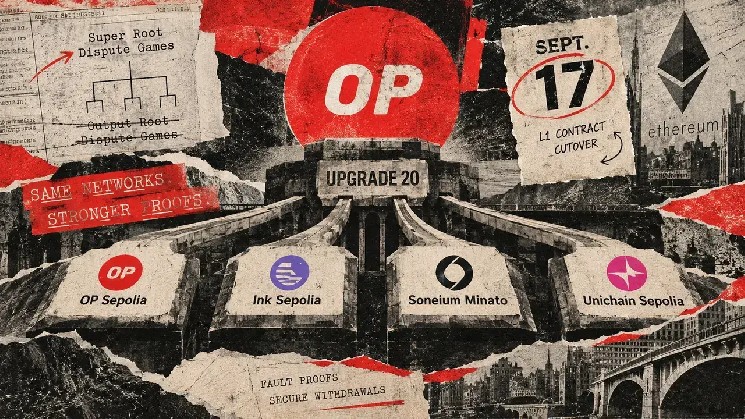
    • Optimism governance approved Upgrade 20 on Sept. 16, initiating a transition from Output Root Dispute Games to Super Root Dispute Games across OP Sepolia, Ink Sepolia, Soneium Minato, and Unichain Sepolia testnets.
    • The upgrade introduces timestamp-based dispute proofs—replacing L2 block numbers—to establish the common time reference required for future Superchain cross-chain interoperability.
    • Mainnet execution is targeted for Sept. 24 contingent on a healthy seven-day testnet soak; ordinary users need no action, but node operators and withdrawal integrators must update infrastructure before the cutover.

    Optimism Advances Superchain Architecture With Upgrade 20 Fault-Proof Overhaul

    Optimism’s governance cycle concluded voting on September 16, greenlighting Upgrade 20 and setting in motion a foundational shift in how the OP Stack validates state before withdrawals are finalized to Ethereum. The approval places four major testnets—OP Sepolia, Ink Sepolia, Soneium Minato, and Unichain Sepolia—on track for a coordinated contract upgrade on September 17, with OP Mainnet and other participating chains slated for September 24 provided the new dispute system completes a clean seven-day soak period.

    From Output Roots to Super Roots: A Structural Pivot

    The core of Upgrade 20 replaces the existing Output Root Dispute Game architecture with Super Root Dispute Games. Under the legacy model, a challenger anchors a claim to a specific L2 block number. Super Root games instead use a timestamp as the common reference point, creating the temporal alignment that a future multi-chain dispute system will require. Optimism has characterized the upgrade as a prerequisite for Superchain interoperability because Super Roots can eventually represent multiple chains at the same timestamp.

    Critically, Upgrade 20 does not yet activate cross-chain interoperability. Each chain’s dispute infrastructure remains separate, and each new game still contains the Output Root of a single chain. By migrating the dispute-system architecture now, Optimism aims to avoid modifying that security layer again when cross-chain interoperability moves to production.

    Bundled Contract Improvements and Operational Safeguards

    The release also packages changes to Optimism’s contracts manager and SystemConfig, including safeguards around upgrade sequencing and cleanup of legacy configuration functions. These additions address issues identified during Upgrade 19, reinforcing the reliability of the upgrade pipeline itself.

    Infrastructure Migration: What Operators and Developers Must Do

    The transition imposes concrete requirements on chain operators and integration developers. Permissioned chains will move to dispute game type 5, while permissionless fault-proof deployments will use game type 9. Before the L1 contract cutover, operators must ensure op-challenger and op-dispute-mon support Super Roots, while op-proposer must switch to the new RPC and game type when upgraded contracts are executed. Existing Output Root configurations must remain available long enough for in-flight games to conclude.

    Bridge and withdrawal integrations that inspect dispute games directly can no longer assume a game’s root claim is a single-chain Output Root. Applications must recognize the new game types and retrieve the appropriate chain-specific root from the Super Root structure. Developers using viem/op-stack for withdrawal proving need version 2.51.0 or later and must pass the initiating transaction’s L2 timestamp through the proving flow.

    For end users, the migration is seamless: previously submitted withdrawal proofs remain valid, and the OptimismPortal contract continues to accept both dispute-game formats. OP nodes that simply follow the chain do not require a new activation configuration, as the transition does not entail an L2 hardfork.

    Why This Matters: Laying the Groundwork for a Multi-Chain Future

    Upgrade 20 represents a deliberate architectural decoupling: Optimism is modernizing the dispute layer today to prevent a second disruptive migration when Superchain interoperability launches. The shift to timestamp-based proofs is the linchpin—without a shared time reference, coordinating disputes across multiple OP Stack chains would be impractical. By executing this change now, while each chain’s dispute game remains single-chain, the collective reduces the surface area of risk for the eventual multi-chain activation.

    The seven-day testnet soak serves as a critical stress test for the new game types, challenger tooling, and proposer workflows. A clean run would validate that the Super Root architecture can sustain mainnet-grade security and liveness, clearing the path for the September 24 mainnet cutover. The broader ecosystem—including rollup operators, bridge providers, and wallet integrators—will be watching the testnet period closely, as any regression in fault-proof liveness or withdrawal finality could delay the mainnet deployment and, by extension, the timeline for Superchain interoperability.

    Frequently Asked Questions

    Do ordinary users or token holders need to take any action for Upgrade 20?
    No. Previously submitted withdrawal proofs remain valid, and the OptimismPortal continues to accept both the legacy Output Root and new Super Root dispute-game formats. No user-side steps are required.
    What is the difference between game type 5 and game type 9 in the new system?
    Permissioned chains (those with allowlisted challengers) move to game type 5, while permissionless fault-proof deployments use game type 9. Both operate under the Super Root timestamp-based architecture.
    When will Superchain cross-chain interoperability actually go live?
    Interoperability remains a later step. Upgrade 20 only prepares the dispute infrastructure; each chain’s game still contains a single chain’s Output Root. The timeline for activating cross-chain dispute games has not been announced and will depend on the stability of this migration and subsequent governance decisions.
  • QuantusNetwork Launches $QTC on NEAR Protocol

    QuantusNetwork Launches $QTC on NEAR Protocol

    Key Highlights

    • QuantusNetwork has launched $QTC, a post-quantum secure asset, on the NEAR Protocol, marking a significant advancement in quantum-resistant blockchain infrastructure.
    • The $QTC token introduces cross-chain functionality with built-in confidentiality features from inception, addressing emerging threats from quantum computing to traditional cryptographic standards.
    • NEAR Protocol’s scalability and developer-friendly architecture were cited as key factors in its selection as the launch platform for this security-focused asset.

    QuantusNetwork Deploys Quantum-Secure Asset on NEAR Protocol

    QuantusNetwork has officially launched $QTC, a post-quantum asset designed to withstand cryptographic threats posed by advancing quantum computing capabilities, on the NEAR Protocol blockchain. The announcement, disseminated via an official tweet from NEAR Protocol, positions the deployment as a milestone in the evolution of blockchain security architecture. By introducing a quantum-secure, cross-chain asset with confidentiality guarantees from day one, QuantusNetwork aims to preempt vulnerabilities that could compromise existing cryptographic standards as quantum computing technology matures.

    Strategic Platform Selection Underscores Security Focus

    The choice of NEAR Protocol as the launch venue reflects a deliberate alignment with a network recognized for its high throughput, low transaction costs, and developer-centric tooling. NEAR’s sharded proof-of-stake consensus mechanism provides the scalability required for complex cryptographic operations inherent in post-quantum cryptography, while its growing ecosystem of decentralized applications offers immediate utility pathways for $QTC integration. The protocol’s public endorsement of the launch signals institutional-grade confidence in both the asset’s technical design and QuantusNetwork’s security methodology.

    Market Context: Security as a Differentiator Amid Volatility

    The launch arrives during a period of mixed momentum across the broader cryptocurrency market, where divergent price action has underscored the importance of fundamental differentiators. As quantum computing research accelerates globally—with nation-states and major technology firms achieving periodic breakthroughs—the theoretical timeline for cryptographically relevant quantum attacks has compressed. QuantusNetwork’s proactive deployment of $QTC responds directly to this shifting threat model, targeting institutional allocators and security-conscious developers who view quantum resistance as a prerequisite for long-term asset viability rather than a speculative feature.

    Social Signal and Ecosystem Implications

    Early social media engagement surrounding the announcement indicates heightened awareness of post-quantum preparedness within the crypto community. The discourse extends beyond $QTC’s immediate utility, framing the launch as a potential catalyst for broader adoption of quantum-resistant standards across Layer 1 and Layer 2 networks. Observers note that successful integration and sustained demand for $QTC within the NEAR ecosystem could establish a template for security-first asset design, influencing roadmap priorities for projects currently reliant on elliptic curve cryptography vulnerable to Shor’s algorithm.

    Why This Matters

    The deployment of $QTC represents more than a single asset launch; it signals a maturation in how blockchain infrastructure addresses existential cryptographic risks. While quantum computers capable of breaking RSA or ECC encryption remain years from practical realization, the “harvest now, decrypt later” threat model—where adversaries store encrypted traffic for future decryption—creates urgency for forward-secure systems. NEAR Protocol’s role as the launch platform reinforces its positioning as a hub for cryptographic innovation, potentially attracting additional security-focused projects. For market participants, $QTC’s performance will serve as an early indicator of institutional appetite for quantum-native assets and may accelerate standardization efforts across the industry.

    Frequently Asked Questions

    What makes $QTC different from other tokens on NEAR Protocol?

    $QTC is designed as a post-quantum secure asset employing cryptographic primitives resistant to attacks by quantum computers, with cross-chain functionality and confidentiality features implemented from launch—distinguishing it from assets relying on classical elliptic curve cryptography.

    Why was NEAR Protocol chosen for this launch?

    NEAR Protocol’s sharded architecture provides the scalability needed for computationally intensive post-quantum operations, while its developer-friendly environment and established ecosystem facilitate rapid integration and adoption of advanced cryptographic assets.

    How does this launch affect the broader blockchain security landscape?

    The introduction of a production-ready quantum-secure asset on a major Layer 1 network sets a precedent for proactive cryptographic migration, potentially accelerating industry-wide adoption of post-quantum standards before quantum threats become practical.

  • Eric Balchunas Highlights Bitcoin’s Growing Appeal

    Eric Balchunas Highlights Bitcoin’s Growing Appeal

    Key Highlights

    • Bloomberg ETF analyst Eric Balchunas identifies a generational shift driving Bitcoin ETF interest, with younger investors favoring cryptocurrency over traditional assets like gold.
    • Despite current low trading volume across the broader crypto market, Bitcoin ETF discussions signal growing institutional confidence and potential reshaping of investment strategies.
    • Market participants are monitoring potential new Bitcoin ETF approvals, regulatory sentiment shifts, and resistance levels as institutional fund entry could test Bitcoin’s price dynamics.

    Generational Shift Fuels Bitcoin ETF Momentum Over Gold

    The cryptocurrency investment landscape is witnessing a notable transformation as Bitcoin exchange-traded funds capture heightened attention from market participants. Bloomberg ETF analyst Eric Balchunas has spotlighted a decisive generational shift, observing that younger, tech-savvy investors are increasingly gravitating toward Bitcoin as a preferred store of value over traditional safe-haven assets such as gold. This demographic trend carries significant implications for future market dynamics, suggesting that as this cohort accumulates wealth, institutional engagement with digital assets could accelerate substantially.

    Mixed Market Conditions Contrast With ETF Enthusiasm

    While the buzz surrounding Bitcoin ETFs continues to build, the broader cryptocurrency market remains in a mixed state characterized by notably low trading volume. This subdued activity reflects potential hesitation among investors even as confidence in Bitcoin-focused financial products grows. Traders and analysts are closely tracking how this divergence between product enthusiasm and spot market liquidity might influence future ETF approval timelines and the overall regulatory landscape. The increasing visibility of Bitcoin among large institutional investors further underscores the asset’s progression toward mainstream financial acceptance.

    Institutional Entry Poised to Test Market Structure

    The evolving regulatory environment represents a critical variable for the sector’s trajectory. As traditional banks and investment funds seek exposure to the younger demographic driving crypto adoption, regulators may adapt frameworks to accommodate these novel financial products. Market observers note that the entry of institutional funds could test existing resistance levels in Bitcoin’s price, while ongoing investor education around ETF structures may further catalyze demand. The interplay between approval pipelines, liquidity conditions, and regulatory sentiment will likely define the next phase of cryptocurrency integration into traditional portfolios.

    Why This Matters

    The convergence of demographic preferences, product innovation, and institutional adoption marks a pivotal inflection point for cryptocurrency’s role in global finance. Eric Balchunas’ analysis highlights that the shift away from gold among younger investors is not merely speculative but reflects fundamental changes in how value preservation is perceived across generations. For market participants, the current low-volume environment coupled with high ETF interest creates a unique setup where structural changes—such as new fund approvals or regulatory clarity—could trigger outsized market movements. Understanding this dynamic is essential for navigating the evolving intersection of traditional finance and digital assets.

    Frequently Asked Questions

    Who is Eric Balchunas and why is his analysis significant?

    Eric Balchunas is a senior ETF analyst at Bloomberg Intelligence specializing in the exchange-traded fund industry. His commentary on Bitcoin ETFs and generational investment trends carries weight due to Bloomberg’s authoritative position in financial data and his track record analyzing fund flows and market structure developments.

    What does the current low trading volume indicate about the crypto market?

    Low trading volume suggests investor hesitation or a wait-and-see approach despite growing enthusiasm for Bitcoin ETF products. This divergence between product interest and spot market activity often precedes significant directional moves once catalysts such as regulatory decisions or institutional allocations materialize.

    How might new Bitcoin ETF approvals affect market liquidity and price?

    Additional ETF approvals could expand institutional access, potentially increasing demand and testing Bitcoin’s price resistance levels. However, the actual impact on liquidity will depend on the size of fund inflows, the regulatory conditions attached to approvals, and whether new products attract fresh capital or merely redistribute existing crypto exposure.

  • CoreWeave Shares Drop 32% Since Joining the Nasdaq 100

    CoreWeave Shares Drop 32% Since Joining the Nasdaq 100

    Key Highlights

    • CoreWeave shares have fallen approximately one-third since joining the Nasdaq 100 on June 22, 2026, despite the company reporting doubled second-quarter revenue and a $104 billion revenue backlog.
    • Company insiders — including CEO Michael Intrator, co-founder Brannin McBee, and other C-suite executives — have sold more than $600 million in stock since the index inclusion forced passive buying by retirement funds worldwide.
    • Depreciation and interest costs consumed over 75% of every revenue dollar in Q2, while capital expenditure guidance of $35–39 billion dwarfs revenue guidance of $12.4–13.2 billion, resulting in deeply negative free cash flow.

    Index Inclusion Triggers Passive Buying as Insiders Exit

    When the Nasdaq 100 announced its rebalance on June 11, 2026 — effective June 22 — CoreWeave appeared to satisfy every technical and fundamental criterion for membership. The AI infrastructure provider boasted contracted revenue backlog exceeding $104 billion, fresh commitments accumulating since July, and a customer roster that includes Meta, OpenAI, and other leading AI labs. The stock opened at roughly $119 on the effective date, well below its all-time high of $187 reached on June 20, 2025, but the index committee’s de facto endorsement compelled hundreds of Nasdaq 100-linked funds around the world to buy shares on behalf of retirement savers.

    Since that forced passive inflow began, the share price has declined to trade near $80, erasing roughly one-third of the company’s market value in a matter of months. During the same window, securities filings show that the executives and board members closest to the business have been steady sellers. Chief Executive Officer Michael Intrator has liquidated more than $320 million of stock. Co-founder Brannin McBee has sold approximately $220 million. General Counsel and Corporate Secretary Kristen McVeety has sold over $22 million. The company’s Chief Security Officer, Chief Financial Officer, Chief Operating Officer, and Chief Accounting Officer have collectively disposed of a combined $36 million.

    Depreciation and Debt Service Consume the Bulk of Revenue

    The divergence between headline growth and underlying economics centers on the rapid obsolescence of Nvidia GPUs that form the core of CoreWeave’s leased data-center infrastructure. In the second quarter alone, depreciation and amortization of AI equipment exceeded $1.3 billion — a staggering 54% of revenue. Interest expense on a debt pile that has swollen from $7.9 billion at the end of 2024 to more than $35.6 billion today reached $640 million, up from $267 million a year earlier. Together, those two accounting lines consumed more than three-quarters of every dollar the company generated.

    Cash flow dynamics are even more stark. Full-year capital expenditure guidance sits at $35–39 billion, roughly three times the midpoint of revenue guidance of $12.4–13.2 billion. Second-quarter free cash flow came in at negative $5.7 billion. The buildout has been financed almost entirely with borrowed money, and total indebtedness now exceeds $35.6 billion. Demand for GPU compute capacity is not the issue; the challenge is converting that demand into profit faster than the underlying chips depreciate and lenders collect interest.

    Why This Matters

    CoreWeave’s trajectory illustrates a structural tension at the heart of the current AI infrastructure boom: the asset-heavy, debt-fueled model required to amass GPU clusters at scale clashes with the breakneck pace of semiconductor innovation. As Nvidia and its competitors release successive generations of accelerators, the economic useful life of deployed hardware compresses, driving depreciation charges that can overwhelm operating margins even when utilization and contract backlog are strong. For index investors, the episode underscores that inclusion in a major benchmark — often perceived as a quality seal — does not immunize a stock from fundamental deterioration, especially when passive inflows coincide with concentrated insider selling. Market participants will watch whether CoreWeave can restructure its capital intensity, extend hardware refresh cycles, or shift toward higher-margin managed services before debt service and depreciation permanently impair equity value.

    Frequently Asked Questions

    How much have CoreWeave insiders sold since the Nasdaq 100 inclusion?
    Combined sales by CEO Michael Intrator, co-founder Brannin McBee, General Counsel Kristen McVeety, and other named executive officers exceed $600 million since June 22, 2026.
    What is driving the gap between CoreWeave’s revenue growth and its stock decline?
    Depreciation on GPU infrastructure ($1.3 billion in Q2, or 54% of revenue) and rising interest expense ($640 million in Q2) consume over 75% of revenue, while capital expenditure guidance of $35–39 billion far outpaces revenue guidance of $12.4–13.2 billion, producing deeply negative free cash flow.
    What is CoreWeave’s current debt level?
    Total indebtedness has grown from $7.9 billion at the end of 2024 to more than $35.6 billion as of the latest reporting period.
  • Altcoin Founder Claims “We’ll Benefit the Most from This SEC Move” as Price Surges

    Altcoin Founder Claims “We’ll Benefit the Most from This SEC Move” as Price Surges

    Key Highlights

    • The SEC granted a temporary, conditional exemption for “Tokenized Securities Platforms” enabling on-chain trading of tokenized U.S. stocks under specific transparency, record-keeping, and security requirements.
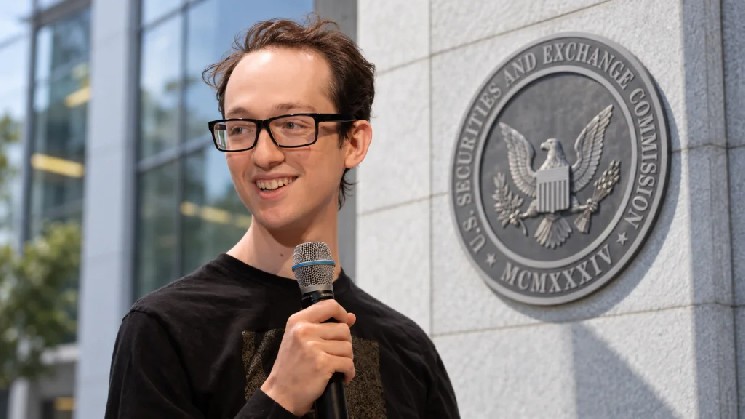
    • Uniswap founder Hayden Adams emphasized SEC Commissioner Hester Peirce’s assessment that “truly decentralized systems operated by autonomous software” do not create the intermediary risks that securities regulation targets.
    • Adams stated the exemption creates a regulatory pathway for licensed pools on Uniswap v4 and announced plans to submit a formal comment letter to the SEC with suggestions for regulatory improvements.

    SEC Announces Innovation Exemption for Tokenized Securities Platforms

    On September 17, the U.S. Securities and Exchange Commission unveiled what it termed an “Innovation Exemption” — a temporary and conditional framework allowing platforms designated as “Tokenized Securities Platforms” to facilitate on-chain trading of tokenized U.S. equities. The exemption mandates that participating platforms satisfy specific requirements around transparency, record-keeping, trading volume thresholds, and technological security. SEC Chairman Paul Atkins framed the regulation as enabling tokenized stocks to be traded on-chain within permissioned environments, marking a notable step in the agency’s engagement with blockchain-based financial infrastructure.

    Commissioner Peirce’s Dissent Highlights Decentralized Systems

    While the official exemption drew attention, Uniswap founder Hayden Adams directed focus toward the assessment offered by SEC Commissioner Hester Peirce. Adams characterized Peirce’s view as the most significant development of the day for automated market makers (AMMs). Peirce’s assessment articulated that “truly decentralized systems operated by autonomous software” do not expose the underlying intermediary risks that securities regulation is designed to address. Adams argued this framing could be interpreted to mean that normal, permissionless use of the Uniswap protocol does not require an additional exemption, a distinction with profound implications for decentralized finance protocols operating without centralized intermediaries.

    Implications for Uniswap v4 and Licensed Pools

    Adams specifically highlighted the exemption’s relevance to licensed pools on Uniswap v4, the protocol’s latest iteration featuring a modular “hooks” architecture. He stated that this structure could create a pathway for compliant trading in the United States for assets and users subject to regulatory requirements. By enabling permissioned pools that adhere to the SEC’s newly outlined framework, Uniswap v4 may serve as a bridge between permissionless DeFi infrastructure and regulated traditional finance participants seeking on-chain execution with compliance guarantees.

    Uniswap to Submit Regulatory Recommendations

    Beyond analyzing the immediate ruling, Adams signaled proactive engagement with the regulatory process. He announced that the Uniswap team would submit a formal letter of opinion to the SEC containing suggestions for regulatory improvements. Adams framed the development as creating significant opportunities for the adoption of AMM technologies in traditional financial markets, suggesting that the intersection of decentralized exchange mechanics and regulatory clarity could accelerate institutional on-chain activity.

    Why This Matters

    The SEC’s Innovation Exemption represents one of the clearest regulatory signals to date that tokenized traditional assets have a defined, albeit conditional, path to on-chain trading. Commissioner Peirce’s concurrent articulation of a principle distinguishing “truly decentralized systems operated by autonomous software” from intermediated platforms provides a potential analytical framework for future enforcement and rulemaking. For Uniswap, the convergence of this exemption with the v4 architecture’s licensed pool capability positions the protocol as a potential primary venue where regulated and permissionless liquidity can coexist. Market participants should monitor the SEC’s formal rulemaking docket, Uniswap’s forthcoming comment letter, and the deployment of licensed hooks on v4 as leading indicators of how DeFi infrastructure integrates with U.S. securities law.

    Frequently Asked Questions

    What assets are eligible for trading under the SEC’s Innovation Exemption?
    The exemption applies to tokenized U.S. stocks traded on platforms that qualify as “Tokenized Securities Platforms” and meet the SEC’s specified transparency, record-keeping, volume, and security requirements.
    Does the exemption apply to Uniswap’s permissionless pools?
    According to Hayden Adams, Commissioner Peirce’s assessment suggests that “truly decentralized systems operated by autonomous software” do not create the intermediary risks targeted by securities regulation, which Adams argues could mean normal permissionless Uniswap use does not require this exemption.
    What are licensed pools on Uniswap v4?
    Licensed pools are a feature of Uniswap v4’s hooks architecture that allow pool creators to implement custom logic, including compliance controls such as KYC/AML checks and jurisdictional restrictions, enabling permissioned trading environments atop the permissionless protocol.
  • Best Crypto Presales 2026: Build Your Own Shortlist, Avoid Paid Rankings

    Best Crypto Presales 2026: Build Your Own Shortlist, Avoid Paid Rankings

    Key Highlights

    • Crypto presale rankings for 2026 should serve as research starting points, not definitive investment guides, due to potential paid placements and promotional bias.
    • MemeToro’s Stage 7 presale demonstrates evidence-based evaluation with 1,373 lines of public Solidity code, multiple security badges (Coinsult, BlockSAFU, SOLIDProof), and over $135,000 raised toward a ~$156,312 target at $0.00430 per $MT.
    • Investors should build personal shortlists using standardized criteria: contract transparency, independent audits, token utility, development progress, and realistic milestones rather than relying on sponsored rankings.

    Why Presale Rankings Require Independent Verification

    The best crypto presale list 2026 should function as a discovery tool rather than a final investment directive. Paid placements, coordinated social campaigns, and substantial advertising budgets can inflate a project’s visibility without validating its underlying technology or token structure. A disciplined research process begins with primary sources: the project’s official website, technical documentation, smart contract repositories, token allocation schedules, security assessments, roadmap milestones, and development history. The critical follow-up question is whether the project delivers tangible utility after the presale concludes.

    Evaluating MemeToro’s Technical Transparency and Security Posture

    MemeToro provides a concrete case study for evidence-based screening. The project’s latest update discloses 1,373 lines of published Solidity code and displays security badges from Coinsult, BlockSAFU, and SOLIDProof. However, investors must verify which specific contracts underwent review. MemeToro’s newly published FairLaunchEscrow draft contract remains unaudited and undeployed, a distinction that materially affects risk assessment. Tokenomics demand equal scrutiny: total supply, allocation percentages, vesting schedules, staking mechanisms, liquidity provisions, and presale terms collectively determine whether the token serves a functional purpose or exists primarily for speculation.

    Assessing Utility and Ecosystem Viability Beyond the Presale

    MemeToro positions itself as an AI-powered memecoin launchpad encompassing trading, prediction markets, news aggregation, staking, and launchpad access. Its AI agent is designed to scan market trends and generate launch proposals, while deterministic validation enforces rules on allocation totals, funding consistency, and evidentiary standards. This architecture raises a practical utility question: can users derive ongoing value from the platform post-presale? The project operates in a growing niche of AI-assisted token discovery and structured launch validation, yet technology alone is insufficient—user adoption, liquidity depth, and execution track record ultimately determine viability.

    Building a Standardized Framework for Presale Due Diligence

    Rather than replicating a paid best crypto presale list 2026, investors can construct a simple scoring system across six dimensions: transparency, security, utility, tokenomics, development evidence, and community activity. Applying consistent standards to MemeToro and its peers enables meaningful comparison. MemeToro’s current Stage 7 data shows more than $135,000 raised toward approximately $156,312 with $MT priced at $0.00430. A practical shortlist should prioritize verified contract repositories, independent security reviews, clear token allocation with defined utility, public development milestones, and realistic project timelines. The best crypto presale list 2026 organizes research; it does not replace it.

    Why This Matters

    The proliferation of crypto presale platforms in 2026 has amplified the signal-to-noise problem for retail investors. Sponsored rankings and influencer promotions often obscure fundamental risks, while genuine innovation in areas like AI-driven launch validation and deterministic contract enforcement deserves rigorous evaluation. MemeToro’s approach—publishing code, engaging multiple auditors, and articulating a post-presale ecosystem—reflects an emerging standard for accountability. However, the unaudited status of its FairLaunchEscrow contract underscores a persistent gap between marketing claims and deployed reality. As regulatory scrutiny intensifies and market participants demand greater transparency, evidence-based due diligence will separate sustainable projects from speculative vehicles. Investors who systematize their research now will be better positioned to navigate the next market cycle.

    Frequently Asked Questions

    Does MemeToro have public code available for review?

    Yes. MemeToro has published 1,373 lines of Solidity code as part of its latest development update. Public code improves transparency, but the project’s newer fair-launch contract still requires further deployment work and independent security review.

    Should investors trust paid presale rankings?

    Investors should not rely on paid rankings alone. Sponsored placements can help people discover projects, but independent research is still needed to check tokenomics, code, audits, liquidity, development progress, and project risks.

    What should I check first when building a presale shortlist?

    Start with official project sources, token allocation, public contracts, audits, development evidence, liquidity plans, and product utility. Then compare those factors using the same standards across every project.

    More Information on MemeToro ($MT) Presale

  • Chinese Mining Company Founder Reveals Why He Repurchased All Sold Bitcoin

    Chinese Mining Company Founder Reveals Why He Repurchased All Sold Bitcoin

    Key Highlights

    • BTC.TOP founder Jiang Zhuoer has repurchased all Bitcoin positions he sold at $77,226, marking a swift strategic reversal.
    • The prominent Chinese miner cites persistent strong buying pressure and now projects Bitcoin will climb to the $80,000–$84,000 range.
    • The turnaround follows legislative headwinds for the U.S. CLARITY Act and a reassessment of macroeconomic risk factors.

    BTC.TOP Founder Reverses Course Amid Market Strength

    Jiang Zhuoer, the well-known Chinese cryptocurrency miner and founder of mining pool BTC.TOP, announced that he has fully repurchased the Bitcoin holdings he liquidated just days earlier. In a recent statement, Jiang explained that buying pressure in the spot market remains robust, leading him to adopt a renewed bullish outlook. He now anticipates that Bitcoin will surpass the $80,000 threshold and advance toward $84,000 in the near term.

    Previous Bearish Stance Driven by Macro Concerns

    The reversal is notable for its speed. Only recently, Jiang disclosed that he had sold 100% of his Bitcoin position at $77,226. At that time, he pointed to U.S. inflation data and the prospect of a Federal Reserve interest rate hike as primary catalysts for a potential market downturn. Jiang explicitly stated he was prepared for further declines and signaled a willingness to open short positions if conditions warranted.

    CLARITY Act Hurdles and Renewed Bullish Conviction

    Jiang’s latest commentary links the initial sell-off to obstacles encountered by the CLARITY Act, a piece of U.S. legislation aimed at providing regulatory clarity for digital assets. With those legislative headwinds persisting, Jiang appears to have concluded that structural demand for Bitcoin outweighs the macroeconomic risks he previously emphasized. His assessment that buyers remain dominant in the current market structure underpins the new price target of $80,000 to $84,000.

    Why This Matters

    Jiang Zhuoer is a closely watched figure in the crypto mining and trading community, and his public position changes often serve as a sentiment barometer for Chinese-market participants. His rapid flip from a full exit back to a long stance underscores the volatility of market narratives driven by U.S. policy developments—specifically the progress of the CLARITY Act—and shifting expectations around Federal Reserve monetary policy. For traders and institutional observers, the episode highlights how quickly on-chain and derivative positioning can realign when perceived regulatory risk intersects with visible spot-market demand.

    Frequently Asked Questions

    At what price did Jiang Zhuoer originally sell his Bitcoin?
    Jiang sold 100% of his Bitcoin position at $77,226.
    What is Jiang Zhuoer’s new price target for Bitcoin?
    He expects Bitcoin to rise to the $80,000–$84,000 range.
    What prompted Jiang’s initial decision to sell?
    He cited U.S. inflation data, the possibility of a Federal Reserve rate hike, and obstacles facing the CLARITY Act as reasons for his bearish stance.

    This is not investment advice.