Category: Coins

Digital assets, cryptocurrencies, blockchain, and currency news.

  • Deutsche Bank Launches Bitcoin Custody Service as BTC Trades at $75,500

    Deutsche Bank Launches Bitcoin Custody Service as BTC Trades at $75,500

    Key Highlights

    • Deutsche Bank will launch institutional crypto custody for Bitcoin, Ether, and select stablecoins in Europe before year-end under the EU’s MiCA regime, pending a BaFin licence expected in October.
    • The bank will manage private keys in-house using hardware-based protection, multi-person approvals, and segregated warm and cold storage, targeting corporates, asset managers, hedge funds, and sovereign institutions.
    • Germany’s largest lender enters a competitive European custody landscape already served by Standard Chartered, BBVA, DZ Bank, and Landesbank Baden-Württemberg, but brings globally systemically important bank (G-SIB) scale and existing client relationships.

    Deutsche Bank Commits to Regulated Crypto Custody Under MiCA

    Germany’s largest bank confirmed Wednesday it will begin safeguarding bitcoin and ether for institutional clients in Europe before the end of 2025, marking the most significant entry yet by a globally systemically important bank into regulated digital-asset custody. The announcement, made a day after the U.S. Senate failed to advance the Clarity Act, underscores a divergent regulatory path: while U.S. market-structure legislation stalls, Deutsche Bank is moving forward under the European Union’s Markets in Crypto-Assets (MiCA) framework.

    Gerald Podobnik, co-head of Deutsche Bank’s corporate bank, framed the move as complementary rather than disruptive. “digital assets are not a replacement for the traditional financial system but an important complement to it,” Podobnik said in a statement. “We see them as new rails that can coexist with existing market infrastructures while benefiting from the trust, security and safeguards that regulated financial institutions provide.” He added, “Our aim is to offer clients a secure and regulated gateway to this evolving market.” A bank spokesperson told Cointelegraph the firm expects to receive its MiCA custody licence from Germany’s BaFin in October. Bitcoin traded at $75,547 Wednesday afternoon, little changed over 24 hours, according to CoinGecko.

    Asset Scope and Technical Architecture

    At launch, the service will cover “a selected range of digital assets, including Bitcoin and Ether, as well as selected stable coins or e-money tokens, including USDC and EURC, EURAU,” the bank said. Circle issues USDC and EURC. EURAU is the euro-denominated stablecoin of AllUnity, a joint venture between Galaxy, Flow Traders, and DWS—the asset manager majority-owned by Deutsche Bank—which received a BaFin e-money licence in July 2025. “Tokenized financial instruments are also included in the roadmap,” the release added.

    The first clients will be corporates, asset managers, hedge funds, custodians, brokers, and sovereign institutions served by the corporate and investment banks. Critically, Deutsche Bank will manage the wallets and private keys itself, with keys secured behind hardware-based protection, multi-person approvals, and separate warm and cold storage. For Ido Sofer, founder and chief executive of key-management firm Sodot, that in-house approach signals strategic intent. “When you hear a bank is launching their own custody solution and they’re hiring blockchain engineers and so on, that means that they’re saying, okay, I want to go all in. I want to have those in-house capabilities and I want this as a business line,” Sofer said on the On The Margin podcast in April. “It really shifted from this is an experiment to this is a growth vector in the business line.”

    Three-Year Build and Competitive Landscape

    Deutsche Bank applied to BaFin for a digital-asset custody licence in June 2023 and named Swiss technology provider Taurus as its partner that September. In July 2025, Bloomberg reported the bank was targeting a 2026 launch and had engaged Bitpanda’s technology unit alongside Taurus. Wednesday’s release names neither firm, stating only that the service “will use selected external technology and infrastructure providers for defined technical components.”

    The bank arrives late to its immediate neighbourhood. Landesbank Baden-Württemberg announced institutional custody with Bitpanda in 2024; DZ Bank’s meinKrypto platform received MiCA authorisation in December 2025; and Standard Chartered and BBVA already operate regulated custody in Europe, as CoinDesk noted. What Deutsche Bank brings is scale: it is one of the banks the Financial Stability Board classifies as globally systemically important, and its clients have been asking who should hold the keys since a wave of exchange hacks last summer.

    Why This Matters

    Deutsche Bank’s entry signals a maturation of institutional crypto infrastructure in Europe. By operating under MiCA—the world’s first comprehensive crypto-asset regulatory regime—the bank offers a regulated alternative to offshore or unlicensed custodians, addressing a primary barrier for pension funds, insurers, and sovereign wealth funds. The decision to retain private keys in-house, rather than outsourcing to a specialist like Fireblocks or Copper, reflects a business logic older than blockchain: a custodian that controls the keys controls the client relationship and the cross-sell opportunities that follow. As Sofer noted, “It’s gonna be hard for you to leave.”

    However, the release carries a blunt risk disclosure: “Digital assets involve material risks, including price volatility, fraud, cyber incidents and failures of market participants,” it says. “Crypto-assets are not covered by a deposit-guarantee scheme comparable to the protection applicable to eligible bank deposits.” That trade-off—regulated custodial controls without deposit insurance—is the core proposition. Michael Tanguma, co-founder and chief executive of bitcoin custody firm Onramp, argues the market has already accepted it. “Nobody would tell an individual to take all their gold out of the bank and park it underneath their mattress,” Tanguma said in an August interview. “It’s a misnomer and fallacy to say that self custody is the only way.”

    Podobnik left the door open on scope: “The service will be further developed in line with client demand, regulatory requirements and the bank’s risk appetite,” he said. The release adds that timing, geography, and the asset list “may change as a result of regulatory requirements, internal approvals, market developments or client demand.” Sofer’s read is that such hedging is standard boilerplate once a G-SIB commits. “When a bank does something, this is for like five, 10 years, right?” he said. “They don’t say, well, let’s do this for a couple of quarters and re-evaluate.”

    Frequently Asked Questions

    Which digital assets will Deutsche Bank custody at launch?

    The bank will hold Bitcoin, Ether, and select stablecoins or e-money tokens including USDC, EURC, and EURAU. Tokenized financial instruments are on the roadmap for future inclusion.

    How does Deutsche Bank’s custody model differ from specialist crypto custodians?

    Deutsche Bank will manage wallets and private keys entirely in-house using hardware-based protection, multi-person approvals, and segregated warm and cold storage, rather than relying on third-party key-management providers. The bank argues this integrates the trust and safeguards of a regulated G-SIB with new digital-asset rails.

    Are crypto assets held by Deutsche Bank covered by deposit insurance?

    No. The bank explicitly warns that crypto-assets are not covered by any deposit-guarantee scheme comparable to the protection applicable to eligible bank deposits. Clients assume material risks including price volatility, fraud, cyber incidents, and counterparty failures.
  • S&P Global Quietly Prepares for Round-the-Clock Markets, From Kaiko to OpenZeppelin

    S&P Global Quietly Prepares for Round-the-Clock Markets, From Kaiko to OpenZeppelin

    Key Highlights

    • S&P Global agreed to acquire smart contract security firm OpenZeppelin, expanding its digital asset business into the technology layer underpinning tokenized finance.
    • OpenZeppelin will operate as a separate business unit under CEO Demian Brener, reporting to S&P Global Ratings President Yann Le Pallec; financial terms were not disclosed.
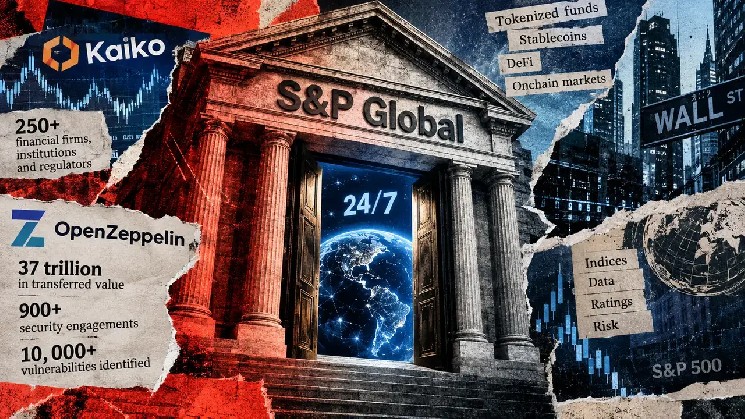
    • The acquisition gives S&P direct exposure to the security infrastructure behind more than $37 trillion in transferred value, over 900 security engagements, and 10,000+ identified vulnerabilities.

    S&P Global Acquires OpenZeppelin to Secure Tokenized Finance Infrastructure

    Financial data and ratings giant S&P Global announced on September 17 an agreement to acquire OpenZeppelin, a leading smart contract security firm whose open-source libraries and audit services underpin a vast swath of the blockchain ecosystem. The move marks a significant deepening of S&P’s push into digital assets, adding a technical risk layer to its traditional financial risk toolkit as institutional capital increasingly migrates to blockchain networks.

    Under the terms of the agreement, OpenZeppelin will continue operating under its own name as a distinct business unit. Chief Executive Demian Brener will remain in charge and report to S&P Global Ratings President Yann Le Pallec. Financial details of the transaction were not disclosed, and the deal remains subject to customary closing conditions.

    Strategic Rationale: Addressing the On-Chain Technology-Risk Layer

    The acquisition targets a specific gap in institutional risk management. As financial products—from stablecoins and tokenized funds to decentralized finance applications—move onto blockchains, institutions face a new category of risk: the software that issues, transfers, and manages those assets. S&P stated that OpenZeppelin will expand capabilities in what it described as the “on-chain technology-risk layer,” including security assessments and benchmarks for digital assets.

    This adds a technical dimension to S&P’s existing financial-risk business. Tokenized funds and stablecoins remain exposed to traditional risks around issuers, collateral, and liquidity, but their operation also depends on smart contracts, permissions, and blockchain infrastructure that introduce technical vulnerabilities. Le Pallec articulated the strategy directly:

    “Our digital assets strategy centers on bringing trusted data, benchmarks and transparent risk assessment to markets as they move onchain.”

    OpenZeppelin’s Model Preserved: Open Source and Developer Trust

    OpenZeppelin has built its reputation on two pillars: its widely used Contracts library, a standard across blockchain applications, and its security teams that review smart contracts and systems before deployment. The company emphasized that its libraries will remain free, open source, and publicly maintained after the acquisition, including future versions. Its audit, engineering, and security work will also continue under the existing team.

    This preservation of the developer model is critical to OpenZeppelin’s adoption. Brener noted that the combination could help OpenZeppelin reach more financial institutions as banks, asset managers, and issuers increase their use of blockchain infrastructure. For S&P, the acquisition provides access to OpenZeppelin’s technical expertise and developer relationships, while OpenZeppelin gains S&P’s institutional relationships, research resources, and distribution channels. S&P said the acquisition is not expected to materially affect its financial results, emphasizing near-term expansion of capabilities rather than a large new revenue stream.

    Why This Matters: Building Infrastructure for 24/7 Markets

    The OpenZeppelin deal is the latest in a series of strategic moves by S&P Global to build infrastructure for markets that increasingly operate around the clock. Three days prior, S&P led a strategic investment in crypto-data provider Kaiko, extending its Series B funding to $110 million alongside participants including DRW, Susquehanna, Royal Bank of Canada, Nasdaq, and BNP Paribas. Kaiko supplies market data and infrastructure to over 250 financial firms, institutions, and regulators, connecting to more than 150 exchanges.

    S&P and Kaiko have already collaborated to bring traditional benchmarks on-chain. In March, they embedded the iBoxx US Treasuries Index into blockchain infrastructure, and earlier this month they combined their digital-asset benchmark businesses into the S&P Kaiko Digital Asset Indices. S&P Dow Jones Indices also helped develop the S&P Digital Markets 50 Index, which Dinari subsequently tokenized using Chainlink for verifiable on-chain pricing.

    Beyond benchmarks, S&P has developed stablecoin stability assessments, issued a credit rating for DeFi protocol Sky, and licensed the S&P 500 for tokenized products. The OpenZeppelin acquisition adds the smart-contract security piece to a stack that now includes: Kaiko for crypto-native pricing and market data, S&P for benchmarks and financial-risk analysis, and OpenZeppelin for smart-contract expertise governing how assets move between investors and applications.

    As trading expands outside traditional exchange hours, always-on markets require continuous prices, collateral valuations, benchmarks, and risk controls. Tokenized assets add software and smart contract risks alongside conventional financial ones. For S&P, this creates an opportunity to extend services it already sells to banks and asset managers into a market where the infrastructure itself is becoming part of the risk assessment. If more securities and funds migrate onto blockchains, institutions may increasingly need a single provider to understand both the asset they hold and the technology that determines how it moves.

    Frequently Asked Questions

    What does OpenZeppelin do, and why is it significant?

    OpenZeppelin is a smart contract security firm whose open-source Contracts library is a widely used standard across blockchain applications. The company has completed over 900 security engagements, identified more than 10,000 vulnerabilities before production, and its infrastructure has supported over $37 trillion in transferred value. It provides both the code libraries developers build on and the audit services that verify contract safety before deployment.

    Will OpenZeppelin’s open-source libraries remain free after the acquisition?

    Yes. OpenZeppelin explicitly stated that its libraries will remain free, open source, and publicly maintained after the acquisition, including future versions. Its audit, engineering, and security work will also continue under the existing team, preserving the developer model that drove its adoption.

    How does this fit into S&P Global’s broader digital asset strategy?

    The acquisition is part of a coordinated buildout that includes a strategic investment in crypto-data provider Kaiko, the launch of on-chain benchmarks like the iBoxx US Treasuries Index and S&P Kaiko Digital Asset Indices, stablecoin stability assessments, a credit rating for DeFi protocol Sky, and licensing the S&P 500 for tokenized products. Together, these pieces give S&P capabilities across market data, benchmarks, financial risk analysis, and now smart-contract technical risk for 24/7 blockchain markets.

  • Moscow Exchange Adds 5 Crypto Perpetuals: Can 72K Qualified Investors Deepen Liquidity?

    Moscow Exchange Adds 5 Crypto Perpetuals: Can 72K Qualified Investors Deepen Liquidity?

    Key Highlights

    • Moscow Exchange (MOEX) launches perpetual futures on Bitcoin, Ethereum, Solana, Ripple, and Tron indices for qualified investors on September 22.
    • The exchange’s existing crypto derivatives market has attracted over 72,000 qualified investors and recorded volumes exceeding 600 billion Rubles since its summer 2023 debut.
    • Retail investors remain excluded from crypto derivatives despite Russia permitting retail spot crypto trading, concentrating liquidity among professional accounts.

    MOEX Broadens Regulated Crypto Derivatives Suite with Perpetual Futures

    Moscow Exchange (MOEX) is significantly expanding its regulated cryptocurrency derivatives offering, responding to growing demand for institutional-grade digital-asset exposure within Russia. Beginning September 22, qualified investors will gain access to perpetual futures contracts linked to indices tracking Bitcoin (BTC), Ethereum (ETH), Solana (SOL), Ripple (XRP), and Tron (TRX). The move adds a new structural layer to a marketplace that has already onboarded more than 72,000 qualified investors since its initial crypto futures launch in summer 2023, generating cumulative trading volumes surpassing 600 billion Rubles.

    Perpetual Structure Removes Daily Rollover Friction

    The newly announced perpetual contracts are designed to renew automatically on a daily basis, eliminating the requirement for traders to close positions at the end of each trading session. This structural feature makes the instruments substantially more suitable for continuous hedging and speculative strategies compared to traditional fixed-expiry futures, which demand repetitive position rollovers. By reducing operational friction, MOEX aims to capture trading activity that might otherwise migrate to offshore venues offering similar perpetual products.

    Professional-Only Access Shapes Liquidity Profile

    A critical constraint on market development is the professional-only access framework. Retail investors are barred from trading these derivatives, concentrating liquidity exclusively among qualified accounts. This restriction persists even as Russia has separately opened spot cryptocurrency trading to retail participants while maintaining a ban on crypto payments. The qualified-investor requirement creates a dual dynamic: it ensures a baseline of institutional-scale participation but simultaneously caps the potential depth of the order book by excluding the broader retail cohort.

    Broker participation emerges as a pivotal variable. As intermediaries responsible for onboarding qualified accounts, brokers function as the primary growth lever for expanding the trader base without altering the regulatory perimeter. Should broker engagement accelerate, MOEX could see materially higher derivative volumes while the retail restriction remains in force.

    Why This Matters

    The September 22 launch serves as a real-time test of whether Russia’s professional crypto derivatives market can achieve self-sustaining depth. Bitcoin and Ethereum contracts are expected to capture the lion’s share of early volume given their established demand profile; meaningful participation in Solana, XRP, and Tron perpetuals would signal genuine market broadening beyond the two largest assets. Market observers will monitor open interest trajectories alongside sustained volume—rising open interest with consistent turnover would indicate deepening positioning, while a post-launch activity fade would suggest the expansion adds product breadth without materially improving market liquidity. The outcome will inform whether MOEX can establish itself as a durable onshore venue for institutional crypto risk management or remains a niche segment dependent on a limited pool of qualified capital.

    Frequently Asked Questions

    Who can trade the new MOEX perpetual crypto futures?

    Only qualified investors as defined under Russian securities regulations may trade the new perpetual futures. Retail investors are explicitly excluded from these derivative products, even though Russia permits retail participation in spot cryptocurrency trading.

    What cryptocurrencies are covered by the new perpetual contracts?

    The launch includes perpetual futures linked to indices for Bitcoin (BTC), Ethereum (ETH), Solana (SOL), Ripple (XRP), and Tron (TRX).

    How do perpetual futures differ from the existing MOEX crypto futures?

    Perpetual futures renew automatically each day and do not require traders to close or roll over positions at expiry, unlike traditional fixed-maturity futures. This structure supports continuous hedging and speculation without daily operational interruption.

  • XRPL’s New Lending Tool Could Lock Up XRP From Minutes to Decades

    XRPL’s New Lending Tool Could Lock Up XRP From Minutes to Decades

    Key Highlights

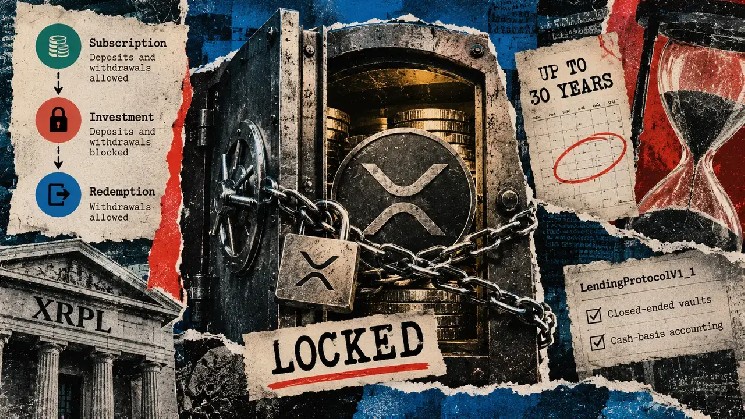
    • The XRP Ledger Foundation released xrpld 3.4.0 on September 16 with LendingProtocolV1_1, introducing closed-ended vaults with fixed subscription, investment, and redemption periods and cash-basis interest accounting.
    • Deposited assets in closed-ended vaults are locked during the investment phase, which can range from 60 seconds to just under 30 years, while interest is recognized only when borrowers actually pay it.
    • Both the base LendingProtocol and SingleAssetVault amendments remain below the 28-of-35 validator threshold required for activation, meaning the features are not yet live on the mainnet.

    XRP Ledger 3.4.0 Introduces Structured Lending With Fixed-Term Vaults

    The XRP Ledger Foundation shipped xrpld version 3.4.0 on September 16, embedding the LendingProtocolV1_1 code path that defines a new generation of closed-ended lending vaults. The release adds two structural changes: a fixed calendar that locks depositor capital for a predetermined term, and a shift to cash-basis accounting that records interest income only when borrowers make payments. Together, these changes aim to make the risk-return profile of on-ledger lending more transparent for participants.

    Unlike open-ended pools that allow continuous deposits and withdrawals, the new closed-ended vaults move through three distinct phases. At creation, the vault sets a SubscriptionDate and a RedemptionDate that remain immutable. During the subscription window, depositors may add assets and redeem shares freely. Once the investment phase begins, the protocol blocks new deposits and withdrawals, committing the vault’s capital to loan funding. Only when the redemption date arrives can depositors withdraw their share of the proceeds. The investment period must be at least 60 seconds and strictly less than 30 years, providing a wide but bounded range for term design.

    Cash-Basis Accounting Separates Expected From Realized Returns

    The accounting overhaul addresses a longstanding ambiguity in how vault income is reported. Under the prior whole-life model, scheduled interest could be booked at loan origination, before the borrower delivered any cash. A missed payment would then force the system to unwind income that had already appeared in the vault’s net asset value. The LendingProtocolV1_1 implementation stamps newly created vaults with a cash-basis accounting version, recognizing interest strictly as borrowers pay it. Vaults created under the earlier rules permanently retain legacy whole-life accounting, ensuring backward compatibility without forced migration.

    For depositors, the practical effect is a cleaner separation between a claim on a borrower and realized vault income. Scheduled payments remain off-balance-sheet receivables until cash arrives, making the reported asset value less dependent on money that has not yet been received. The change also alters how much debt a broker appears to carry against protocol limits, because future interest no longer enters the total at origination. This may create additional headroom for new loans under the protocol’s measurements, though actual utilization still depends on real borrowers and funding.

    Amendment Governance Remains the Critical Gate

    Despite the code being present in the 3.4.0 release, the features are not yet accessible on the live network. A dashboard snapshot fetched on September 17 showed the base LendingProtocol amendment at 13 of 35 trusted-validator votes and SingleAssetVault at 16 of 35, both below the displayed activation threshold of 28. The LendingProtocolV1_1 amendment itself did not appear in the responding node’s feature feed, nor was an activation countdown visible. Network governance therefore remains the first measurable hurdle: the amendments must become visible, attract sufficient validator support, and complete the two-week activation window before any vault can be created.

    Single-asset vaults can denominate their principal in XRP, an issued trust-line token, or a Multi-Purpose Token. This flexibility means that lasting XRP demand from the lending system depends entirely on later choices by application developers, borrowers, and depositors. Moving already-owned XRP into a vault produces a visible locked balance without requiring a market purchase, and applications could build lending pools around issued assets while leaving XRP outside the principal flow entirely.

    Why This Matters

    The introduction of closed-ended vaults and cash-basis accounting represents a maturation of the XRP Ledger’s native lending architecture. By enforcing a visible commitment period and recognizing income only upon receipt, the protocol reduces the opacity that can obscure credit risk in decentralized lending markets. However, the economic significance for XRP holders hinges on adoption metrics that have yet to materialize: the number of XRP-denominated vaults created, the volume of XRP deposited, loan origination activity, repayment performance, and whether depositors renew after the first redemption cycle. Until those on-chain indicators emerge, the system’s capacity to generate sustained demand for XRP—beyond a temporary liquidity sink—remains an open question. The next concrete milestones are the amendment activation process and the subsequent launch of application-level lending products that choose XRP as their principal asset.

    Frequently Asked Questions

    When will the new lending features be available on the XRP Ledger mainnet?
    The features require the LendingProtocol and SingleAssetVault amendments to reach a 28-of-35 validator supermajority and complete a two-week activation period. As of September 17, voting stood at 13 and 16 respectively, with LendingProtocolV1_1 not yet visible in the feature feed.
    Can depositors withdraw their assets early from a closed-ended vault?
    No. Once the investment phase begins at the SubscriptionDate, the protocol blocks all deposits and withdrawals until the RedemptionDate. The lock is enforced at the protocol level for the full term, which can range from 60 seconds to just under 30 years.
    Does this update create new demand for XRP?
    Not automatically. The vault design supports XRP, issued trust-line tokens, and Multi-Purpose Tokens as principal assets. Sustained XRP demand would require applications to select XRP for their vaults, borrowers to seek XRP-denominated credit, and depositors to repeatedly fund and renew positions after observing repayment performance.
  • FCA Targets Three London Sites in Renewed P2P Cryptocurrency Trading Crackdown

    FCA Targets Three London Sites in Renewed P2P Cryptocurrency Trading Crackdown

    Key Highlights

    • The Financial Conduct Authority (FCA), HM Revenue & Customs (HMRC), and the Metropolitan Police conducted a joint enforcement action against three peer-to-peer (P2P) cryptocurrency trading locations in London, issuing cease-and-desist letters.
    • No P2P crypto trading businesses are currently registered with the FCA in the UK, meaning any operator conducting P2P trading by way of business is doing so illegally and outside anti-money laundering safeguards.
    • The operation marks an escalation in the UK’s regulatory stance, following the FCA’s action six months ago against HTX (formerly Huobi), where major app stores were asked to restrict access for UK consumers.

    FCA Leads Coordinated Raids on Unregistered London Crypto Venues

    The Financial Conduct Authority has significantly escalated its enforcement posture toward cryptocurrency businesses operating outside the regulatory perimeter. In a coordinated operation with HM Revenue & Customs and the Metropolitan Police Service, the FCA targeted three physical peer-to-peer crypto trading locations in London, handing operators formal cease-and-desist letters. The action signals a decisive shift from warnings to active disruption of unregistered venues that facilitate direct crypto transactions between individuals on a commercial basis.

    Under the UK’s Money Laundering, Terrorist Financing and Transfer of Funds (Information on the Payer) Regulations 2017, any entity conducting P2P crypto trading by way of business must register with the FCA. Personal, non-commercial transactions between individuals do not require registration. However, the regulator confirmed that as of the enforcement date, there are zero registered P2P crypto businesses operating in the United Kingdom. This regulatory vacuum means every commercial P2P venue currently operating is doing so without the mandatory oversight designed to detect and prevent money laundering.

    Regulators Warn of Unrelenting Scrutiny for Non-Compliant Operators

    The FCA’s executive director of enforcement and market oversight, Steve Smart, issued a direct warning to the sector:

    Anyone running an unregistered peer-to-peer crypto business should assume we are looking at them.

    The Metropolitan Police underscored the law enforcement rationale behind the crackdown. Sathish Alalasundaram of the Metropolitan Police Service stated:

    As criminals continue to adapt their methods, the Met Police continues to evolve and adapt our investigative capabilities…

    The joint operation reflects growing concern that unregistered P2P venues serve as critical infrastructure for illicit finance, enabling the conversion of criminal proceeds into cryptocurrency without the transaction monitoring, customer due diligence, and suspicious activity reporting obligations that registered firms must follow.

    Escalation Follows HTX App Store Restrictions

    The London raids represent the next phase in a hardening regulatory trajectory that began approximately six months ago. In that earlier action, the FCA moved against HTX (formerly known as Huobi), resulting in major mobile app stores being asked to restrict access for UK consumers. That case established a precedent for using distribution channels—app stores—as enforcement levers against non-compliant crypto firms. The current operation extends that logic to physical trading venues, demonstrating a multi-vector approach that targets both digital and brick-and-mortar touchpoints.

    The message from regulators is consistent: the era of regulatory forbearance for crypto businesses operating without registration has ended. The focus has evolved from offshore exchanges to domestic P2P operators, but the core requirement remains unchanged—any firm conducting cryptoasset activity by way of business in the UK must be registered and supervised.

    Why This Matters

    The UK’s approach to crypto regulation has historically been characterized by a registration regime rather than a licensing framework, placing the onus on firms to demonstrate compliance with anti-money laundering (AML) standards before operating. The absence of any registered P2P operators highlights a systemic compliance gap: either the business model is incompatible with current AML requirements, or operators have chosen to remain outside the regulatory perimeter. The FCA’s willingness to deploy law enforcement partnerships and physical enforcement actions suggests a strategic pivot toward disruption as a deterrent. For the industry, the implications are clear—regulatory tolerance for “wait-and-see” approaches has evaporated. For consumers, the action removes venues that offered no statutory protections, no access to the Financial Ombudsman Service, and no Financial Services Compensation Scheme coverage. The next steps will likely include further site actions, potential criminal referrals for persistent offenders, and continued pressure on ancillary service providers—such as payment processors and landlords—to avoid facilitating unregistered activity.

    Frequently Asked Questions

    What is peer-to-peer crypto trading and when does it require FCA registration?

    Peer-to-peer crypto trading involves individuals buying and selling cryptocurrency directly with each other, often facilitated by a platform or physical venue. In the UK, registration with the FCA is mandatory only when P2P trading is conducted “by way of business”—meaning on a commercial, habitual, or professional basis. Personal, non-commercial transactions between individuals do not require registration.

    Are there any legally operating P2P crypto businesses in the UK currently?

    No. The FCA has confirmed that as of the enforcement action, there are zero registered P2P crypto businesses operating in the United Kingdom. Any commercial P2P venue currently operating is doing so without the required registration and outside the regulatory safeguards designed to prevent money laundering.

    What happens to businesses that ignore the cease-and-desist letters?

    While the source does not specify next steps for non-compliance, the involvement of the Metropolitan Police and HMRC indicates that continued operation could lead to criminal investigation, asset seizure, prosecution under the Money Laundering Regulations, and potential court orders to shut down premises. The FCA has signaled that enforcement will be persistent and multi-agency.

  • NEAR Surges 21% on Launch of Historic Confidential Perps Powered by Hyperliquid

    NEAR Surges 21% on Launch of Historic Confidential Perps Powered by Hyperliquid

    Key Highlights

    • Near Protocol launches the industry’s first “Confidential by Default” perpetuals trading, masking all position details including asset types, sizes, entry times, and trading direction.
    • The feature runs on Near’s multi-chain Confidential Intents pipeline, which recently surpassed $70 million in total value locked (TVL), with Hyperliquid serving as the chief execution and liquidity layer.
    • NEAR token surges 21.36% to $3.21 while HYPE gains 10.82% to $86.72 following the announcement and Kraken parent Payward’s plans to bring Hyperliquid to the US market.

    Near Protocol Pioneers Confidential Perpetuals Trading on Blockchain

    Near Protocol has unveiled what it describes as the decentralized finance industry’s first “Confidential by Default” perpetuals trading environment, a development that directly addresses a fundamental tension in blockchain architecture: the conflict between radical transparency and competitive trading execution. The new feature, accessible via near.com, completely obscures all perpetual position data—including asset types, position sizes, entry timestamps, and directional bias—from public view.

    While transparency remains a foundational principle of blockchain technology, Near’s development team argues that complete visibility creates structural disadvantages for significant market participants. The protocol identifies three specific vulnerabilities inherent in fully transparent order books: front-running by on-chain bots that detect pending orders and execute ahead of them, strategy copying that allows competitors to mirror profitable approaches, and forced liquidations where malicious actors target public liquidation prices to push traders out of positions.

    Technical Architecture and Strategic Partnerships

    The confidential perpetuals infrastructure operates on Near’s multi-chain Confidential Intents pipeline, which recently achieved a $70 million total value locked milestone. The system combines high-speed execution with selective disclosure capabilities designed to satisfy regulatory compliance requirements. Integration with Circle’s USDC stablecoin enables inter-agentic payments, while Hyperliquid functions as the primary execution and liquidity layer, providing access to over 50 perpetual markets with leverage up to 40x.

    This architecture effectively merges the privacy characteristics traditionally associated with centralized exchanges—where order books and position data remain opaque—with blockchain’s core value propositions of speed, decentralization, and non-custodial asset control.

    Why This Matters: The Evolving Privacy Landscape in DeFi

    Near’s launch reflects accelerating industry demand for private transaction capabilities that maintain regulatory compliance. The competitive landscape now includes Ethereum-based confidential DeFi yield vaults, optional privacy wrappers from platforms such as Zama and Fhenix, and Cardano’s Midnight chain which offers what its developers term “rational privacy.” Each approach represents a different philosophical and technical solution to the privacy-transparency spectrum.

    However, Near’s confidential perpetuals trading remains restricted in the United States and Canada due to regulatory considerations, highlighting the ongoing tension between privacy-preserving financial infrastructure and jurisdictional compliance requirements. The geographic limitation underscores that technical innovation in this space continues to outpace regulatory clarity.

    Market Response and Price Action

    Following the announcement, NEAR token appreciated 21.36% intraday to trade at $3.21, according to CoinMarketCap data. The move coincides with broader sector rotation toward artificial intelligence-linked crypto assets. Technical analysis suggests that if NEAR maintains support above $3.00, the token could retest the $3.33 incentive threshold, while a break below $2.80 might trigger a decline toward the $2.57 Fibonacci support level.

    Simultaneously, HYPE token—native to the Hyperliquid ecosystem—gained 10.82% to reach $86.72 after Kraken’s parent company Payward announced plans to introduce Hyperliquid to the United States market, potentially expanding the protocol’s regulatory footprint and user base.

    Frequently Asked Questions

    What makes Near’s perpetuals trading “Confidential by Default”?

    All perpetual position data—including asset types, position sizes, entry times, and trading direction—is automatically masked from public view without requiring users to opt into privacy features.

    Which partners power the execution and liquidity for Near’s confidential perpetuals?

    Hyperliquid serves as the chief execution and liquidity layer, providing access to over 50 perpetual markets with up to 40x leverage, while USDC integration enables stablecoin settlements.

    Is Near’s confidential perpetuals trading available to users in the United States?

    No, the service remains restricted in the US and Canada due to regulatory reasons, despite the underlying technical infrastructure being operational globally.

  • Industry Doubts Democrats’ Effort to Restart Stalled CLARITY Act Talks: ‘It’s all talk!’

    Industry Doubts Democrats’ Effort to Restart Stalled CLARITY Act Talks: ‘It’s all talk!’

    Key Highlights

    • Moderate Senate Democrats led by Kirsten Gillibrand and Ruben Gallego pledged renewed bipartisan talks on the CLARITY Act after a 49-50 procedural vote failure.
    • Prediction markets assign less than a 30% probability of passage within two years, while JPMorgan analysts see a narrow but existing legislative window.
    • SEC Chair Paul Atkins and CFTC leaders committed to fast-tracking rulemaking to provide regulatory certainty regardless of legislative outcome.

    Moderate Democrats Vow Renewed Push After CLARITY Act Stalls

    A coalition of moderate Senate Democrats, spearheaded by Senators Kirsten Gillibrand and Ruben Gallego, signaled determination to revive the stalled CLARITY Act following a procedural defeat that underscored deep partisan fractures over digital asset regulation. The legislation, which has been under negotiation for approximately two years, failed to advance on a 49-50 vote after Democrats uniformly blocked the procedural step required to proceed. Notably, seven moderate Democrats who were anticipated to support the measure withheld their votes, citing insufficient ethics provisions as the primary objection.

    This week was a setback, but not the end of that important work. We remain committed to working in a bipartisan fashion to get this legislation passed.

    According to reporting by Eleanor Terrett, the commitment to new talks follows intensive behind-the-scenes efforts to reignite negotiations and potentially fast-track the crypto legislation before the current congressional session concludes. However, the path forward remains highly uncertain, with prediction market platform Kalshi assigning less than a 30% probability of enactment over the next two years.

    Industry Skepticism and Analyst Perspectives

    The Democrats’ recommitment has been met with pronounced skepticism from segments of the crypto industry and pro-crypto analysts. Nate Geraci, a prominent industry observer, characterized the renewed bipartisan rhetoric as “all talk” devoid of substantive action, drawing a sharp contrast with the regulatory posture of the previous administration.

    All talk at this point…There was no ‘working in a bipartisan fashion’ on crypto during the Biden admin. It was purely anti-crypto & regulation by enforcement. So it’s all talk. Actions speak louder than words.

    Despite the legislative impasse, JPMorgan analysts maintain that the bill is not definitively dead, identifying a narrow window for potential passage. This assessment reflects the complex legislative calculus where bipartisan cooperation remains theoretically possible but politically fraught, particularly given the ethics provisions that drove Democratic opposition.

    Regulatory Agencies Pivot to Rulemaking

    In a significant development for market participants, both the Securities and Exchange Commission and the Commodity Futures Trading Commission have pledged to accelerate rulemaking initiatives to establish clear regulatory frameworks for the digital asset sector. This administrative pivot aims to provide a degree of certainty that the legislative process has thus far failed to deliver.

    I have been unequivocal: with or without legislation, we will act decisively within the SEC’s statutory authority to deliver certainty for American investors.

    SEC Chair Paul Atkins’ declaration underscores the agency’s intent to utilize existing statutory authority to address regulatory gaps. The CFTC has echoed this commitment to expedited rulemaking. However, industry participants face a critical unresolved question: whether the next administration will uphold, modify, or reverse these forthcoming regulatory frameworks, introducing a new layer of policy uncertainty.

    Why This Matters

    The CLARITY Act’s stall represents more than a single legislative failure; it encapsulates the broader struggle to define a coherent federal framework for digital assets in the United States. With Congress deadlocked, the locus of regulatory action has shifted decisively to the SEC and CFTC, placing immense importance on the rulemaking agendas of Chair Atkins and his CFTC counterparts. For market participants, the immediate practical impact is a reliance on administrative rulemaking rather than statutory clarity—a dynamic that introduces durability risks should political winds shift after the next election cycle. The narrow legislative window identified by JPMorgan suggests that the lame-duck period or early next session may represent the last best chance for a comprehensive statutory solution before regulatory policy becomes entirely dependent on executive branch interpretation.

    Frequently Asked Questions

    Why did the CLARITY Act fail to advance in the Senate?

    The bill failed on a 49-50 procedural vote after all Democrats, including seven moderate senators expected to support it, voted against advancing the legislation. They cited insufficient ethics provisions as the reason for their opposition.

    What is the likelihood of the CLARITY Act passing in the near future?

    Prediction market Kalshi assigns less than a 30% probability of passage within the next two years. JPMorgan analysts believe the bill is not dead but face a narrow window for enactment.

    How will the SEC and CFTC respond to the legislative stall?

    Both agencies have committed to fast-tracking rulemaking to provide regulatory certainty. SEC Chair Paul Atkins stated the SEC will act decisively within its statutory authority “with or without legislation” to deliver clarity for investors.

  • CFTC Exempts Crypto and Prediction Markets Software Providers from Broker Classification

    CFTC Exempts Crypto and Prediction Markets Software Providers from Broker Classification

    Key Highlights

    • The CFTC issued a no-action letter exempting eligible crypto and prediction market software providers from broker registration requirements, provided they maintain zero trade discretion, never hold user assets, and avoid volume-based commissions.
    • The relief builds on a March precedent granting Phantom Technologies no-action relief, allowing Phantom Wallet to partner with Kalshi as a non-custodial passive interface without registering as an introducing broker.
    • The move comes alongside the SEC’s new “Innovation Exemption” for on-chain tokenized stock trading and UK FCA guidance on crypto authorization, signaling multi-jurisdictional regulatory momentum despite the Clarity Act’s Senate defeat.

    CFTC Grants Broad No-Action Relief for Non-Custodial Software Providers

    The U.S. Commodity Futures Trading Commission (CFTC) has issued a sweeping no-action letter that exempts eligible cryptocurrency and prediction market software developers from the requirement to register as brokers. The announcement, made today, establishes a formal regulatory safe harbor for developers who operate as passive, non-custodial interfaces connecting users to regulated trading platforms. A “no-action” position represents an official regulator statement that it will not pursue enforcement actions against an entity for a specific activity, providing critical legal certainty in a sector long plagued by ambiguity.

    Strict Conditions Define the Safe Harbor

    The relief is conditional and narrowly tailored to preserve user sovereignty and prevent conflicts of interest. To qualify, a developer must maintain zero discretion over trades, ensuring the user retains absolute control over every transaction. The developer must never assume custody of users’ assets at any point. Critically, the developer is banned from taking volume-based dynamic commissions, meaning they cannot take a “cut” of the trading volume passing through their software. These guardrails are designed to distinguish passive technology providers from active intermediaries who manage risk or hold funds.

    Phantom Technologies Precedent Paves the Way

    The CFTC’s decision codifies a precedent set in March when the agency granted its first no-action position to a passive software provider, Phantom Technologies. That relief allowed Phantom Wallet to integrate with Kalshi, a regulated prediction market platform, operating strictly as a non-custodial, passive interface without registering as an introducing broker. Phantom CEO Brandon Millman welcomed today’s broader policy on X, stating: “In March, Phantom became the first passive software provider to receive no-action relief from the CFTC. We’re grateful to the CFTC for working with us to chart a new path for non-custodial software providers to connect people with regulated markets, all while the provider never…”

    Industry Adoption and Parallel Regulatory Moves

    Major prediction market operators including Crypto.com and ProphetX have reportedly adopted similar non-custodial partnership models to expand their reach while remaining within the new legal provisions. The CFTC’s action arrives amid a flurry of regulatory developments. Earlier this week, the Clarity Act failed to secure a majority on the Senate floor, yet agencies continue to fill the void. Today, the U.S. Securities and Exchange Commission (SEC) unveiled its “Innovation Exemption” rule, permitting the on-chain trading of certain tokenized stocks. Simultaneously, the UK Financial Conduct Authority (FCA) published guidance clarifying which crypto activities require formal authorization, reflecting a coordinated international effort to define the regulatory perimeter.

    Why This Matters

    The CFTC’s no-action letter represents a significant inflection point for decentralized finance (DeFi) infrastructure and prediction markets in the United States. By explicitly legitimizing non-custodial front-end software, the regulator has removed a major legal overhang that discouraged developers from building interfaces for regulated markets. This bridges the gap between user-friendly, self-custodial wallets and compliant, exchange-based liquidity. The parallel moves by the SEC and UK FCA suggest a maturing global regulatory approach that favors activity-based, risk-proportionate rules over blanket prohibitions. For users, the immediate benefit is access to regulated prediction markets and tokenized assets through familiar, non-custodial wallets without surrendering control of private keys. For the industry, it establishes a viable compliance pathway that could unlock a wave of institutional-grade product development on public blockchains.

    Frequently Asked Questions

    What specific activities does the CFTC no-action letter cover?

    The letter covers software developers who partner with regulated platforms to provide non-custodial interfaces for crypto and prediction market trading. The developer must have zero trade discretion, never hold user assets, and cannot charge volume-based commissions or take a “cut” of trading volume.

    How does this differ from the Phantom Technologies relief granted in March?

    The March relief was a company-specific no-action letter for Phantom Technologies to operate with Kalshi. Today’s announcement establishes a general, reusable framework that any eligible developer meeting the stated conditions can rely upon, rather than requiring individual applications.

    Does this mean all crypto wallet providers are now exempt from registration?

    No. The exemption applies only to developers meeting all three strict conditions: zero trade discretion, non-custodial architecture, and no volume-based fees. Wallets that custody assets, execute trades on behalf of users, or charge percentage-based fees on volume do not qualify and remain subject to existing registration requirements.

  • MemeToro AI Agent Explained: Capabilities and Limits in Memecoin Launches

    MemeToro AI Agent Explained: Capabilities and Limits in Memecoin Launches

    Key Highlights

    • MemeToro’s presale architecture separates AI-driven research from immutable smart contract enforcement, preventing any single entity from altering token allocations or fund flows after launch.
    • The platform’s validator layer automatically rejects proposals with uncollected sources, invalid allocation totals, insider allocations, or conflicting funding terms before they reach the blockchain.
    • $MT token utility spans funding access, staking yield, memecoin trading, and prediction markets, contingent on the platform achieving live status and sustained user adoption.

    AI Agents as Researchers, Not Rulers

    MemeToro has structured its AI crypto presale model around a strict division of labor: artificial intelligence handles research and proposal drafting, while hard-coded smart contracts enforce financial rules without exception. The platform’s AI agent scans trend data, news feeds, and social signals to produce a launch manifest that explains a proposed token’s rationale, evidence base, and initial terms including supply, price, contribution cap, and fixed-rate funding conditions. This output gives prospective participants a transparent window to inspect a launch before committing capital. However, the system explicitly acknowledges that the AI offers no guarantee of post-launch attention or value retention, and its recommendations remain vulnerable to poor data quality, manipulated social content, and prompt-injection attacks.

    Smart Contracts as Immutable Guardrails

    Where the AI proposes, the validator checks, and the smart contracts enforce. MemeToro’s validator is designed to reject any proposal that includes uncollected source links, invalid allocation totals, non-zero insider allocations, or conflicting funding terms. The fair-launch escrow draft operates without an owner, admin role, or upgrade path, meaning that once deployed, the contract cannot be altered by the AI agent, the founding team, or any external actor. An agent cannot override a locked allocation or disabled admin function if the contract is correctly written and deployed, though the project emphasizes that the contract code itself must still undergo independent testing and review. Early contract code has been published, but the full presale process remains under active development.

    Off-Chain Risks Demand On-Chain Verification

    The project identifies the primary attack surface as off-chain: malicious links, false data, prompt injection, and coordinated social manipulation can all distort an AI agent’s recommendation before any transaction reaches the blockchain. MemeToro’s countermeasure is to require every proposal to cite collected sources and pass deterministic, rule-based checks before validation. This approach aims to close the gap between automated research and trustless execution. The $MT token is intended to serve as the ecosystem’s settlement asset, supporting funding access, staking rewards, memecoin trading, and prediction markets, though its long-term utility depends entirely on the platform launching successfully and attracting ongoing user activity.

    Buying $MT Follows a Fixed, Repeatable Process

    Participation in the presale follows a standardized flow regardless of payment method: users locate the buy button on the official website, which launches the presale smart contract; confirm their wallet is pointed to BNB Chain; select a supported cryptocurrency or card payment; and authorize the transaction to receive $MT in their balance. The token is positioned not as a one-time presale asset but as a persistent utility instrument across the MemeToro ecosystem. Official channels for updates include the website at memetoro.com, X at @memetoro_mt, Telegram at t.me/memetoro_mt, and a YouTube overview at youtube.com/watch?v=gY0jgWy_DtA.

    Why This Matters

    The MemeToro model addresses a structural tension in AI-assisted token launches: the speed and scale of automated research versus the irreversibility of on-chain financial commitments. By confining AI to a propose-only role and embedding enforcement in ownerless, non-upgradeable contracts, the platform attempts to eliminate the “admin key” risk that has plagued numerous crypto projects. The validator’s deterministic checks—rejecting insider allocations and unverified sources—introduce a layer of programmatic due diligence that is rare in memecoin launches. However, the system’s security ultimately rests on the quality of off-chain data inputs and the rigor of independent contract audits, neither of which are complete. For participants, the takeaway is clear: the architecture limits centralized control, but does not eliminate the need for personal verification of source data and contract code before committing funds.

    Frequently Asked Questions

    Can the MemeToro AI agent change token allocations or move funds after a presale starts?
    No. The AI agent is restricted to researching trends and drafting proposals. Once a presale is deployed, the ownerless smart contract enforces fixed terms without admin override capability, preventing any entity—including the AI—from altering allocations or accessing contributor funds.
    What checks does the validator perform before a proposal reaches the blockchain?
    The validator rejects proposals that lack collected source links, contain invalid allocation totals, include any insider allocation above zero, or present conflicting funding terms. Only proposals passing all deterministic checks proceed to contract deployment.
    What utilities does the $MT token provide beyond presale access?
    $MT is designed as the ecosystem’s settlement asset, enabling staking for yield, access to upcoming trading products, participation in memecoin trading and prediction markets, and ongoing platform governance once the full suite of services goes live.
  • How Binance Lists Crypto Presales: The Exchange Listing Process Explained

    How Binance Lists Crypto Presales: The Exchange Listing Process Explained

    Key Highlights

    • MemeToro’s Stage 7 $MT presale has raised over $135,000, but the token is not listed on Binance and no official listing announcement has been made.
    • The displayed $0.05186 launch-price target represents a ~12x multiple of the Stage 7 price ($0.00430) and is a numerical comparison only—not a guaranteed market price or confirmation of a centralized exchange listing.
    • MemeToro’s roadmap prioritizes a decentralized exchange (DEX) launch on BNB Chain via PancakeSwap; token deployment, liquidity provision, factory contracts, testnet validation, and independent review remain pending.

    Presale Mechanics vs. Exchange Listings: Understanding the Gap

    During a crypto presale, a project sells tokens under its own round terms—often at a fixed-stage price—without an open order book where buyers and sellers determine a real-time market price. MemeToro’s current Stage 7 sale follows this model: the project has raised more than $135,000 for its $MT token, yet the asset remains unavailable on Binance or any other centralized exchange (CEX). The project’s published launch-price target of $0.05186 is a mathematical benchmark derived from the presale structure, not a commitment from any trading venue. Investors should treat this figure as a reference point, not a forecast of secondary-market performance.

    MemeToro’s Current Status: Presale Progress and Technical Roadmap

    MemeToro states that its public-sale allocation carries no vesting and is intended to be claimable at launch. However, buyers must wait for official claim instructions and a verified $MT contract address before any tokens can be accessed. The project’s public fair-launch escrow draft outlines a planned plug-in point for token creation and liquidity execution, designed to lock round settings, prohibit insider allocations, and restrict funds to refunds or designated liquidity. Critical infrastructure steps—token deployment, liquidity provisioning, factory contract setup, BNB Chain testnet validation, and independent code review—remain on the roadmap and have not yet been executed.

    Binance Listing Requirements: Why No Presale Token Is Guaranteed Access

    Binance does not list every presale token. Listing decisions involve legal, technical, security, liquidity, community, and market-suitability factors controlled entirely by the exchange. A project typically needs a working token contract, sufficient distribution, reliable market infrastructure, and a product narrative that withstands exchange review. Requirements can change at Binance’s discretion, so no third-party analysis can treat a potential listing as certain without a formal announcement from Binance itself. MemeToro has not issued any such confirmation in the information provided. As the source material advises: do not buy a token because someone claims a Binance listing is “coming soon.” Treat unofficial listing images, anonymous messages, and social-media rumors as unverified.

    DEX Launch Pathway: PancakeSwap and BNB Chain Infrastructure

    Many BNB Chain tokens begin trading on a decentralized exchange such as PancakeSwap, allowing holders to swap through a liquidity pool rather than waiting for a CEX order book. MemeToro’s architecture anticipates this route. A DEX launch can establish an initial market price, but it does not guarantee deep liquidity, low slippage, or stable trading conditions. The open-market price may move significantly above or below any presale target depending on circulating supply, buyer and seller behavior, and the platform’s ability to deliver its planned utility—including access, funding, staking, rewards, memecoin trading, and prediction markets.

    Why This Matters

    The distinction between a presale, a token generation event (TGE), and an exchange listing is fundamental to investor protection in crypto markets. A TGE merely makes tokens claimable under the project’s rules; it does not trigger exchange trading. Binance and other major CEXes conduct independent due diligence that can take months and may never result in a listing. Meanwhile, DEX launches on chains like BNB Chain provide immediate liquidity access but expose holders to higher volatility and smart-contract risk. MemeToro’s transparent disclosure—no confirmed Binance listing, incomplete technical execution, and a price target framed as a numerical comparison—serves as a case study in how projects should communicate presale risk. Readers should verify contract addresses, claim procedures, and exchange announcements exclusively through official channels before committing capital.

    Frequently Asked Questions

    Is $MT currently listed on Binance?

    No. No confirmed Binance listing has been announced. $MT is currently available only through MemeToro’s direct presale process.

    Does a token generation event (TGE) guarantee an exchange listing?

    No. A TGE and an exchange listing are separate events. A TGE makes tokens claimable per the project’s rules; a CEX listing requires the exchange’s independent approval based on its own criteria.

    Can a DEX market price differ from a presale price target?

    Yes. The open-market price on a DEX like PancakeSwap can move above or below any published target based on liquidity depth, demand, circulating supply, and broader market conditions.