Category: Coins

Digital assets, cryptocurrencies, blockchain, and currency news.

  • Monero jumps 20% after Zcash rally – privacy coins are back

    Monero jumps 20% after Zcash rally – privacy coins are back


    • Monero rose 20%, reflecting a profit rotation after the recent Zcash bull run and the unwinding of short selling – it could be an uptrend.
    • The possible launch coincides with a technical breakthrough and the expectation of the upcoming Monero FCMP network upgrade later this year.

    According to new data from CoinMarket, the privacy coin sector is exploding. Monero is one of the privacy coins experiencing growth, with the token rising by 20% in the last week. At press time, XMR is trading at $422.64, down from $352 on November 3rd. It is one of Monero’s strongest weekly performances this year.

    This surge in privacy-focused digital assets has also pushed XMR past the key resistance level of $420. On a related note, Zcash also saw an explosive 200% rise earlier this month.

    ZEC profit-taking fuels rally in other privacy coins

    Zcash rose 33% to a new high of nearly $735 on Friday, triggering $51 million in short selling and ranking third in crypto liquidations behind Bitcoin and Ethereum. Now, the token is still in an uptrend, with analysts eyeing targets of $700 and $750.

    As of press time, ZEC is trading at $640.58 after posting a significant 148.83% increase over the last month and has a market cap of $10.43 billion.

    After Zcash’s dramatic rise, traders began diverting their profits into other privacy coins. As proof of this, Monero has emerged as the main beneficiary of this rotation. According to data from Santiment, “Privacy Coins” became a trending topic on social media on November 6, signaling a surge in speculative interest in this niche segment.

    Reach XMR futures Record high

    The success story of XMR does not end there. Open interest in XMR futures on major exchanges including Binance and Bybit has reached a record high. This influx of leveraged trading triggered a cascade of short liquidations. Data from Coinglass has shown that over $12 million worth of short positions were liquidated last week.

    The resulting short squeeze pushed the price of Monero sharply higher and forced bearish traders to buy back their positions.

    Analysts have taken into account that capital rotation is a common investor trend. The trend of shifting assets into related assets, such as in this case privacy-focused tokens, in search of the next rally is not new and is typical of altcoin rallies.

    Seven-year outbreak coincides with network upgrade

    From a technical perspective, Monero’s impressive price action has broken a seven-year resistance structure. According to a renowned analyst, the XMR/USD pair has completed a “cup-and-handle” pattern that dates back to 2018. This has increased its long-term breakout area above the psychological $400 level.

    The well-known crypto analyst described described the setup as a “multi-year breakout” and suggested that Monero could target at least $1,000 in the coming months if the momentum continues.

    In addition to the price charts, fundamental improvements also support the bullish sentiment. Monero developers are preparing to implement Full-Chain Membership Proofs (FCMP) in 2025, a major network upgrade intended to improve both privacy and the speed of transactions.

    This innovation aims to make Monero transactions even harder to track while improving the overall efficiency of the network, a move that could strengthen its reputation as a leading privacy coin in the crypto ecosystem.

  • Cardano Foundation has very interesting plans for 2026

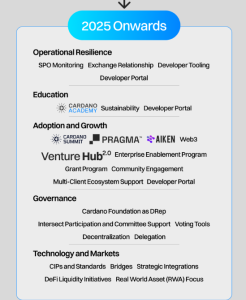
    Cardano Foundation has very interesting plans for 2026


    • Die Cardano-Stiftung presented innovative plans for 2026 with a focus on Web3, DeFi, RWA and decentralized governance.
    • It’s about extensive Liquidity obligations, new cooperation partners and expanded global Educational initiatives.

    Die Cardano-Foundation publish the current one Stand their global roadmap 2026which reveals significant progress since it was announced last month. You want your PStrengthen presence in the areas of DeFi, Web3, RWA and education and training while improving the decentralization of governance.

    The foundation confirmed that the integration plans for the Web3 collaborations are now fully aligned until 2026 and a clear strategy for the engagement of companies and developers has been set. New technical staff are already being hired to support scalable new applications and expand Cardano’s global reach.

    In the education space, Cardano’s partnership with Binance through the Cardano Academy has already attracted over 32,000 learners.

    New training content with online courses, video sessions and other materials are introducedin order to improve the necessary knowledge and thus make the practical applications of Cardano more efficient.

    Big liquidity boost for Cardano’s DeFi growth

    One of the highlights is that an eight-digit ADA liquidity pledge will be provided to support stablecoin projects. At the same time, the selection of providers for the Cardano DeFi programs is now complete and the contracts for the performance metrics are in effect.

    In addition, the company works with community-run liquidity programs, such as the stablecoin DeFi Liquidity Budget. It aims to accelerate the growth of tokenization of real-world assets (RWA).

    As part of a collaboration with MembersCap, the foundation has announced the launch of $10 million worth of tokenized RWA on the Cardano platform. The technical teams are working on important proposals such as CIP-0113 and CIP-0143.

    Increased global presence through new initiatives in 2026

    The decentralized governance system in the Cardano space is also changing. After successful delegation of 140 million ADA to seven builder DReps, beats die Stiftung now ahead, 220 million ADA to eleven representatives to delegatewhich fall into the category of Adoption and Operations DReps.

    To make this possible, the foundation wants to move from the current delegation scheme for stake pool operators to investing in ecosystem acceleration initiatives. In addition, over the next three years they want to seek support from developers, startups and institutions through programs such as the Cardano Venture Hub.

    Through Stock up of the marketing budget by 12% for 2026 Cardano will continue to demonstrate its blockchain capabilities by participating in important global events such as TOKEN2049 and the Africa Tech Summit. that serves the long-term strategy the foundationto allow Cardano to move further into the ranks of the leading global blockchain platforms.

  • Kazakhstan is building billion-dollar crypto national reserve

    Kazakhstan is building billion-dollar crypto national reserve


    • Kazakhstan is planning a substantial cryptocurrency state reserve using confiscated digital wallets and repatriated crypto holdings.
    • They want to mix digital assets with traditional investments, but there should be no direct exposure to cryptocurrencies.

    Kazakhstan will set up a national crypto asset fund worth between $500 million and $1 billion hang upwhich will consist of confiscated and repatriated digital assets. The plan, confirmed by National Bank of Kazakhstan (NBK), highlights growing interest in a nationally regulated crypto economy.

    The reserve will contain different investment products, including exchange-traded crypto ETFs and stocks of companies active in the digital assets sector. The NBK clarified that the regulator will be “very cautious about direct exposure to cryptocurrencies.” The aim is to combine traditional investments with digital holdings to stabilize the portfolio.

    Funding for the initiative will come from multiple sources. Seized cryptocurrencies from criminal cases and funds earmarked for alternative investments will play an important role. NBK boss Timur Suleimenov said in an interview in London:

    “I think by the end of the year, January next year, we’ll have it up and running. Everyone will be ready to go.”

    Kazakhstan confiscates millions of crypto tokens from criminals

    Over the past two years, Kazakh authorities have stepped up their crackdown on illegal crypto activities. During this time, the Interior Ministry processed more than 1,000 criminal cases related to cryptocurrencies. During the investigation, a large amount of digital coins were found that were acquired using illegal methods. The government will now contribute these coins to the national fund.

    This year, law enforcement seized $10 million worth of cryptocurrencies linked to a major pyramid scheme and froze $9.7 million worth of Tether linked to a dark web laundering network. Another $17 million was seized from approximately 130 unlicensed exchanges across the country. These recovered funds will now serve as the financial foundation for the state’s new cryptocurrency strategy.

    President Kassym-Jomart Tokayev announced the creation of the national reserve in early September arranged. He said publicly:

    “A sovereign digital asset fund should be created that will accumulate a strategic cryptocurrency reserve from the most promising assets of the new digital financial system.”

    Kazakhstan welcomes engagement from global investors

    At the 2025 Kazakh Capital Markets Day in London, Suleimanov gave a detailed economic update. The event, hosted by the Kazakhstan Stock Exchange (KASE) and the Agency for Financial Market Regulation and Development, underscored the country’s ambition to strengthen macroeconomic stability while attracting global investors.

    The NBK boss pointed to the bank’s ongoing structural reforms and its focus on financial discipline. He also discussed the digital tenge project (the digital currency of the Central Bank of Kazakhstan) as well as other fintech programs aimed at modernizing the financial sector.

    Berik Sholpankulov, the deputy governor of the NBK, later confirmed that part of the money for the reserve could come from the National Fund. This sovereign wealth fund manages gold, foreign currency holdings, and other assets that could soon be converted into cryptocurrency assets.

    Kazakhstan began experimenting with state-controlled crypto assets back in September when the Alem Crypto Fund was launched under the supervision of the Ministry of Artificial Intelligence and Digital Development. The program, backed by Binance’s local branch, made its first investment by purchasing BNB tokens.

    The relevant authorities assume that the upcoming national crypto reserve will expand the current system. The aim is to manage more assets and put confiscated funds to regular financial use. All of these efforts signal a growing intention to position Kazakhstan as an influential digital financial center in Eurasia.

  • New token “BALZ” since Friday on the DEX PancakeSwap

    New token “BALZ” since Friday on the DEX PancakeSwap


    • “BALZ”, a community token on the BNB Chain, has been on the market since Friday November 7th.
    • The start of sales began on the pancake swap, one decentralized crypto exchange hosted on the Binance Smart Chain.

    With over 40,000 followers on

    New kind of meme economy

    BALZ’s rise was unconventional. The project introduced a community-led migration initiative called the Rug Pull Recovery Protocolto attract holders from the Solana and Base ecosystem who wanted to re-engage.

    Instead of spending millions on influencer campaigns, the team opted for a cross-chain integration model that already before the startto over 10,000 verified wallet migrationshas led .

    The introduction of Fair-As-F*

    At the heart of BALZ presales is a mechanism called Fair-As-F* Launch (FAF), which took place on October 31st at 11:59pm PDT ended . FAF is designed to neutralize the usual benefits of early access and trading automation by giving every participant an equal entry price during a fixed time window.

    Within a few days, the FAF round exceeded the $2 million milestone and positioned BALZ among the successful community-backed token launches of the year on the BNB network.

    The launch of BALZ coincides with one of the most dynamic phases in the history of the BNB Chain. After the market reset on October 10thwhich saw $19 billion in liquidations as Bitcoin fell from $126,000 to $105,000, market data now suggests renewed accumulation.

    • Active BNB address: 3.62 million daily (October 2025)
    • Total Value Locked: increase a 217% to $17.1 billion
    • ROI of Memecoin traders: 70% return via BNB DeFi

    With the CZ returning to public activity and breaking a new all-time high of $1,311 on BNB Capital inflows are trending towards Binance’s Smart Chain again.

    Powerful community

    The BALZ system is not just designed for speculation. The roadmap sees the development of a no-code token launchpad and one High speed trading interfacewhich aims to support both creators and small traders.

    With a Doxxed-Teamestablished community channels and a clear product roadmap, BALZ stands out from the fleeting memecoins that often disappear after the initial hype.

    Market context

    With its size and community-based structure, BALZ positions itself among the larger meme assets emerging on the BNB Chain. Similar market segments have historically seen increased engagement during previous meme token cycles.

    Details

    • Network: Binance Smart Chain (BNB)
    • Introduction platform: PancakeSwap
    • Start window: Friday, November 7th, between 2:30 PM and 5:30 PM CET
    • Community Links:
    • X: @BALZ
    • Telegram: t.me/BALZ_Official
    • Pre-sale info: faf.balz.fun

    COURTSHIP

    BALZ is a next-generation memecoin and community-driven protocol launching on the BNB Chain. Built on fairness, speed and inclusion, BALZ aims to… safest trading platform and a no-code launchpad a crypto to develop.

    Contact

    Josh Gier
    [email protected]

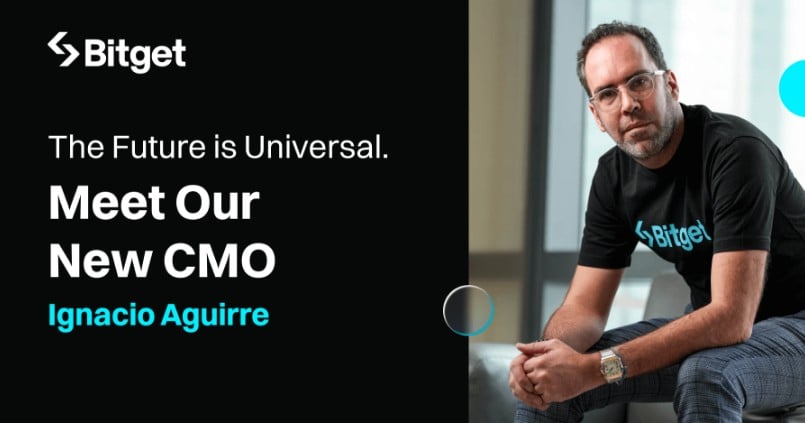
  • Bitget strengthens its leadership team with Ignacio Aguirre Franco as its new CMO

    Bitget strengthens its leadership team with Ignacio Aguirre Franco as its new CMO


    • Bitget Ernennt Ignacio Aguirre Franco zum Chief Marketing Officer (CMO).
    • The aim is to strengthen global leadership in brand communication and user loyalty.

    Extensive experience in tech and fintech

    Ignacio has over fifteen years of experience in technology, fintech and blockchain, combining engineering and marketing in his career. Prior to joining Bitget, he held senior positions at Adobe, SAP, Scorechain, and Xapo Bank, where he helped scale global products, strengthen market positioning, and drive user growth.

    Ignacio describes himself as a passionate builder, combining the analytical mind of an engineer with the narrative talent of a marketer. He succeeds in translating complex technologies into clear, convincing messages that resonate across cultures.

    Its mission: Accelerate the vision of the Universal Exchange (UEX).

    At Bitget, Ignacio’s mission is to advance the vision of the Universal Exchange (UEX) by uniting CeFi, DeFi and TradFi in an easily accessible ecosystem for users of all experience levels. He will lead the brand’s global marketing initiatives with a focus on increasing user engagement, improving product storytelling and driving mass adoption of Bitget’s key innovative products, including Onchain, GetAgent and Stock Futures. Its approach focuses on simplifying complex and technical products and introducing creative impulses, while at the same time positioning Bitget as a financial and cultural platform for the next generation of users.

    The core of any technology that excels lies in its accessibility and the expanded opportunities it opens up for change and disruption. The financial world has been a fragmented structure for far too long. My mission at Bitget is to break these outdated barriers”said Ignacio Aguirre Franco, CMO of Bitget. “I will ensure that the story of UEX – the future model of finance – reaches billions of people worldwide, making secure access to crypto and RWA a reality for all,” he added.

    Ignacio’s arrival follows Bitget’s recent transition into a new era of universal exchange, aimed at deepening Bitget’s global influence and strengthening its reputation for innovation, security and trust. With a goal of reaching 150 million users by 2026 and a growing number of cross-market trading solutions, Bitget is consistently pursuing its long-term vision of an inclusive financial world.

  • JPMorgan’s iShares Bitcoin Trust grows 64 percent to $343 million

    JPMorgan’s iShares Bitcoin Trust grows 64 percent to $343 million


    • JPMorgan’s TVL in Bitcoin ETFs increased 64% and currently stands at over $343 million.
    • Bitcoin is apparently recovering and banks see no reason not to become active again.

    JPMorgan Chase has announced its holdings in the iShares Bitcoin Trust ETF Fintel data increased by 64.26% to $343 million. The bank purchased 2,067,134 additional shares of IBIT, the world’s largest Bitcoin ETF by assets. Their total holdings now stand at 5,284,190 shares, up from 3,217,056 shares, valued at $302 million, representing significant growth in their investment.

    IBIT itself manages over $80 billion in net assets and has recorded cumulative net inflows of over $64.5 billion. JPMorgan is increasing its stake, showing that the bank is betting more on Bitcoin ETFs as an asset class. This move comes after the bank announced in June that it would accept Bitcoin ETFs as collateral.

    The latest purchase comes amid a recovery in the Bitcoin ETF spot market in the US. Inflows are back after a six-day run of outflows that saw more than $2 billion flow out of ETFs between October 29 and November 5. On November 6, Bitcoin spot ETFs recorded net inflows of $240 million, with IBIT alone receiving more than $112 million, driving the inflows.

    Bitcoin ETF TVL grows to $343 million

    The bank’s growing participation reflects increasing institutional confidence in Bitcoin ETFs. The recent purchases show that the company is actively expanding its crypto exposure and making IBIT an important part of its portfolio. As of September 30, 2025, the bank increased its holdings to $343 million, even in a volatile market.

    This move follows Bitcoin’s price fluctuations since late October. Bitcoin fell from over $116,000 on October 28th to around $98,900 on November 5th. The losses came after the crypto market’s drop on October 10, which showed a period of downward pressure on Bitcoin and related exchange-traded funds that had already triggered some previous sell-offs.

    Despite the recent volatility, analysts and institutional players remain cautiously optimistic. JPMorgan expects Bitcoin could reach $170,000 in six to 12 months. The company is buying heavily in IBIT and has a clear strategy to strengthen its asset positions and benefit from the market recovery and growing investor demand.

    Bitcoin signals recovery rally

    On-chain data from CryptoQuant highlights trends in losses realized by traders. Crypto analyst Ali Martinez notes that Bitcoin typically recovers when realized losses fall below -12%. Current data shows that the margin is around -11%, suggesting that selling pressure is easing and heralding a possible recovery phase supported by investor confidence in Bitcoin price performance.

    Ali’s chart shows the real price of Bitcoin along with profit and loss trends over time. Historically, declines close to -12% have corresponded to market lows, followed by recovery periods. As of November 7, 2025, the real price of Bitcoin is around $114,351 while the market price is around $101,551, indicating minor losses and renewed buying interest.

    Institutional investors, including JPMorgan, are expected to closely monitor these signals. IBIT inflows, previous recovery trends and recent technical signs can guide their strategies and allocation decisions. Steady performance and gradual inflows can increase confidence in Bitcoin ETFs.

  • Stellar’s development activity increased 70% in 3Q25

    Stellar’s development activity increased 70% in 3Q25


    • Stellar increased the number of full-time developers by over a third in 3Q25 and processed over a billion transactions.
    • Visa, PayPal and MoneyGram had used Stellar’s blockchain network much more than before, thereby causing the sharp increase.

    Stellar has entered a new phase of expansion, reporting a 70% increase in developer activity compared to the previous quarter and significant real-world adoption.

    Die Stellar Development Foundation sharedthat the network in the third quarter of 2025 saw a 37% increase in full-time developers, almost eight times as many, as the Growth rate the industry as a whole.

    This shows the growing appeal of Stellar for both developers and institutions focused on blockchain financial applications.

    The Stellar network processed more than 1 billion operations in the third quarter, an increase of 70% compared to the previous quarter. It maintained an uptime of 99.99% and an average ledger close of just 5.76 seconds.

    Transaction costs remained among the lowest in the market at $0.00055 per transaction. Data from Chainspect assigned Stellar fourth place worldwide in terms of usageindicating strong user engagement and scalability.

    The Stellar developer ecosystem has become one of the most prominent in the world of blockchain technology. The number of full-time developers has grown by 37% annually, while the number of hackathons and community has increased by 70% quarterly.

    The number of daily smart contract calls reached an all-time high of 1 million, a massive increase of 700% compared to the last quarter.

    There has also been tremendous growth in the ambassador network, in particular in Latin America and the Asia-Pacific region, which has contributed to the local reach of the Stellar community to enlarge.

    The developer interest Stellar is high, mainly due to the efficient development environment, fast execution and low transaction fees that ensure successful execution of transactions make possible.

    Institutional and corporate partners also align with Stellar’s ​​vision. Visa has integrated Stellar into its stablecoin settlement system, and PayPal has launched its stablecoin, PYUSD, on the Stellar network.

    It enables its 400 million users and 35 million merchants around the world access to the network. MoneyGram’s NextGen Wallet also launched in Colombia via the USDC network Stellarin operation .

    Stellar is strengthening its role in the tokenized assets market

    Stellar has its importance in the world of tokenized assets and the decentralized financemaintained. The total value of real assets on the Stellar network reached $562 million, an increase of 14%.

    The value of cross-border payments settled using real-world assets grew 27% to $5.4 billion, where leading institutions expanded their involvement in the Stellar networkincluding Franklin Templeton, WisdomTree and Ondo Finance.

    The other area that saw growth was the DeFi industry. The total value closed on Stellar increased 71% to $144 million, a 3.6x increase compared to the previous year.

    Links with other networks, including LayerZero, NEAR Intents or Centrifuge, brought the Stellar blockchain into contact with over 95 blockchain ecosystems.

  • Ripple President: “Expansion yes – IPO no”

    Ripple President: “Expansion yes – IPO no”


    • It’s almost a ritual: For years, Ripple has more or less firmly rejected speculation about an IPO every six to eight weeks and points to other growth engines.
    • This time it is the new financial strength after a capital increase of 500 million dollars that has increased the company’s valuation to around 40 billion dollars. The RLUSD stablecoin now has a share of over a billion dollars.

    Ripple has once again ruled out any plans for an IPO. Ripple President Monica Long, confirmed this at the Swell conference in New York:

    “We have no IPO timeline, no plan, no timeline.

    The statement came at a time when several major players in the cryptocurrency sector, including Circle Internet Group, Bullish, Gemini and Figure Technology, have already entered public markets after a year of strong crypto valuations. Kraken is also preparing for a stock market listing, adding to the ongoing momentum in the sector.

    Ripple wants to continue to strengthen its financial position in other ways. On Wednesday, the company confirmed a $500 million capital raise, now valuing the company at $40 billion.

    The investment was supported by Fortress Investment Group and Citadel Securities. Other investors include Pantera Capital, Galaxy Digital, Brevan Howard and Marshall Wace.

    Ripple’s growth is fueled by RLUSD success

    Monica Long explained that Ripple’s strong capital base allows the company to finance operations without turning to the public:

    “We are fortunate that we are very well capitalized and can fund all of our organic growth, inorganic growth, strategic partnerships and whatever we want to do.”

    Ripple has seen an impressive increase in activity in 2024. Although the company has yet to release revenue figures, Long confirmed that its customer base has doubled compared to the previous quarter.

    This rapid expansion has come with a surge in stablecoin payments and a clearer regulatory environment, which Long says has “really opened up the market,” both domestically and internationally.

    State policy and institutional market entry strengthen Ripple

    Recent changes in US regulations have played a large role in this progress. The Trump administration introduced the first federal framework for stablecoins, providing clarity to companies developing products in this space.

    The GENIUS Act, passed earlier this year, promoted the adoption of stablecoins across financial systems. This political shift has attracted many established Wall Street institutions into the digital asset markets. Ripple is among the beneficiaries, using its position to expand through partnerships in the cross-border and retail payments sectors.

    Its RLUSD stablecoin has gained traction, particularly through collaborations with major financial players. As part of a pilot initiative involving Mastercard, WebBank and Gemini, RLUSD is currently being tested for processing credit card payments.

    Following this program, RLUSD’s market capitalization exceeded $1 billion, increasing the confidence of investors and institutional clients.

    Ripple recently expanded its business services by acquiring Palisade, a digital asset custody provider. This move enables Ripple to offer secure and scalable crypto services through an integrated platform.

  • JPMorgan: Bitcoin’s 20% drop makes it competitive again against gold

    JPMorgan: Bitcoin’s 20% drop makes it competitive again against gold


    • According to JPMorgan, Bitcoin is undervalued compared to gold on a volatility-adjusted basis following October’s 20% decline.
    • Analyst Nikolaos Panigirtzoglou believes that the recent deleveraging phase is coming to an end and Bitcoin is heading towards $170,000.

    The crypto market collapsed last month against all predictions. As it turned out, the traditionally invoked “Uptober” happened this year. On the contrary: the Bitcoin price lost 20 percent in October. This decline has unexpectedly made Bitcoin a bargain compared to gold.

    Bitcoin undervalued compared to gold

    Nikolaos Panigirtzoglou, global market strategist at JPMorgan, sparked a momentous debate. He argued that volatility-adjusted Bitcoin is currently trading at a discount to gold.

    The gold bar and the crypto block are at the forefront of investors looking for protection against inflation and geopolitical uncertainties. Gold is in first place with its success story of over 5,000 years. But Bitcoin is already in second place after less than 20 years of success.

    Bitcoin is the digital representative of safe investments, also referred to as “digital gold”; and this because of its definitely non-removable limit of 21 million tokens and decentralization as an additional advantage.

    According to Panigirtzoglou, the recent decline von Bitcoin a 20% von 126,000 to under $100,000 triggered by a double strike.
    First, there was a large wave of liquidations in highly leveraged perpetual futures.
    Second, a massive spread $128 million exploit on the Balancer DeFi platform fear in the market. In short, too much leverage led to a major security hole.

    However, the dark cloud has a small, shiny edge, according to JPMorgan. The bank, which has $3.7 trillion in assets under management, noted that the ratio between open interest in Bitcoin futures and market capitalization – a measure of leverage – has now normalized to its average level since January 2024.

    Panigirtzoglou also pointed out that it minor Posts of Bitcoin spot ETFs. Like CNF reported,US Bitcoin ETFs lost almost $800 million net in the week ending in early November. BlackRock’s IBIT, considered the best-performing ETF, had outflows of nearly $150 million as of Oct. 31.

    On the other hand, gold’s increasing volatility after crossing $4,000 has narrowed the risk gap between the two assets. The volatility ratio between Bitcoin and gold recently fell below 2.0, meaning Bitcoin now requires just 1.8 times as much risk capital as gold – a rare convergence that strengthens the case for Bitcoin’s relative undervaluation.

    Panigirtzoglou’s analysis shows that Bitcoin could be undervalued by as much as $68,000 compared to gold on a volatility-adjusted basis. With a market cap of around $2.1 trillion, Bitcoin would need to rise by about two-thirds, or around $170,000, to catch up with the $6.2 trillion in private investments currently in gold through ETFs and physical holdings. His conclusion:

    “After being $36,000 overvalued compared to gold at the end of last year, Bitcoin is now undervalued by $68,000.”

    When writing this article it was Bitcoin price at 101,889.73, and gold was for Traded at $3,981.38 per ounce.

    However, according to JPMorgan analysis, the recent slump could make Bitcoin one of the most attractive assets to end the year.

  • Bitget stock futures exceed $1 billion in cumulative trading volume

    Bitget stock futures exceed $1 billion in cumulative trading volume


    • Bitget has recorded over $1 billion in trading volume in US stock futures, doubling its momentum in just two weeks.
    • This milestone reflects the growing demand for tokenized exposure to traditional financial assets.

    The rise coincides with a historic rally in U.S. stocks, fueled by advances in artificial intelligence and a robust third-quarter earnings season. Traders on Bitget have shown particular interest in AI and technology leaders, with Tesla (TSLA), Strategy (MSTR) and Apple (APPL) being the three most traded assets with cumulative volume of $380 million, $262 million and $87 million.

    Expanding the range of tokenized shares

    Launched in September, Bitget’s USDT-margined perpetual futures give traders access to derivatives on 25 leading US stocks, including Apple, Amazon, Meta and NVIDIA, with leverage up to 25x and competitive fees of a maximum of 0.06%. The listings provide access to some of the world’s most influential technology, financial, consumer and industrial companies – all in a crypto-native trading environment.

    Building on this success, Bitget has expanded its equity product range with new perpetual futures on the NFLXUSDT, FUTUUSDT, JDUSDT, RDDTUSDT and QQQUSDT equity indices, further strengthening its portfolio of Real World Asset (RWA) products for global traders.

    The Universal Exchange: Bitget’s vision for multi-asset trading

    “Passing $1 billion in such a short period of time shows how quickly traders are adopting stock futures as part of a unified digital trading experience,” said Gracy Chen, CEO of Bitget. “This is a sign that the boundary between traditional markets and digital assets is disappearing, and our Universal Exchange model is where this convergence is happening first.”

    The launch of stock futures complements Bitget’s broader UEX framework, which integrates centralized, decentralized and tokenized markets within a single platform. This approach allows users to express stock views, hedge positions and implement strategies within a capital-efficient, 24/7 derivatives infrastructure that ensures fully crypto-native execution and transparency.

    As tokenization and 24/7 trading models gain traction worldwide, Bitget’s rapid development underscores its leadership in shaping the future of multi-asset trading. One where stocks, digital assets and on-chain instruments coexist seamlessly.