Category: Coins

Digital assets, cryptocurrencies, blockchain, and currency news.

  • Ethereum Fusaka upgrade coming tomorrow – with PeerDAS optimization and scaling

    Ethereum Fusaka upgrade coming tomorrow – with PeerDAS optimization and scaling


    • Ethereum’s Fusaka upgrade will be implemented tomorrow, improving UI, scaling, and security.
    • PeerDAS also increases data throughput by eight times and reduces L2 costs and confirmation times.

    Ethereum is nearing the start of large-scale network scaling, which begins tomorrow with the rollout of the Fusaka upgrade. It brings an increase in gas limits, faster data paths, new user features and protocol protections as the network prepares for heavy L2 traffic and long-term scaling.

    PeerDAS and Blob scaling increase network capacity

    PeerDAS increases Fusaka’s capacity by reducing node storage to 1/8 per blob, enabling up to eight times throughput and reducing L2 costs for faster, more cost-effective transactions. Ethereum will increase blob size through BPO forks on December 9th and January 7th.

    Migration has the potential to reduce pressure on node hardware while supporting the growth of L2 systems. The mechanics of blob fees will also be limited under EIP-7918, allowing fees to respond flexibly to data congestion and avoiding fee distortions during periods of high activity.

    Fusaka explicitly prescribes the requirements for different levels. L2 and Rollup teams also need to test PeerDAS on devnets, adjust protocol pricing, and prepare for BPO upgrades.

    App and DeFi projects must benchmark the new CLZ opcode, track RLP size changes, and comply with the new 2²⁴ gas cap per transaction.

    Wallets receive secp256r1 mobile-native passkeys. The infra protocol will increase to a gas cap of 60 million, requiring expiry history reviews and more stringent block testing.

    The execution layer also includes stricter MODEXP rules, higher MODEXP costs, a maximum RLP size limit and a deterministic proposer lookahead function, which improve propagation, validation and security.

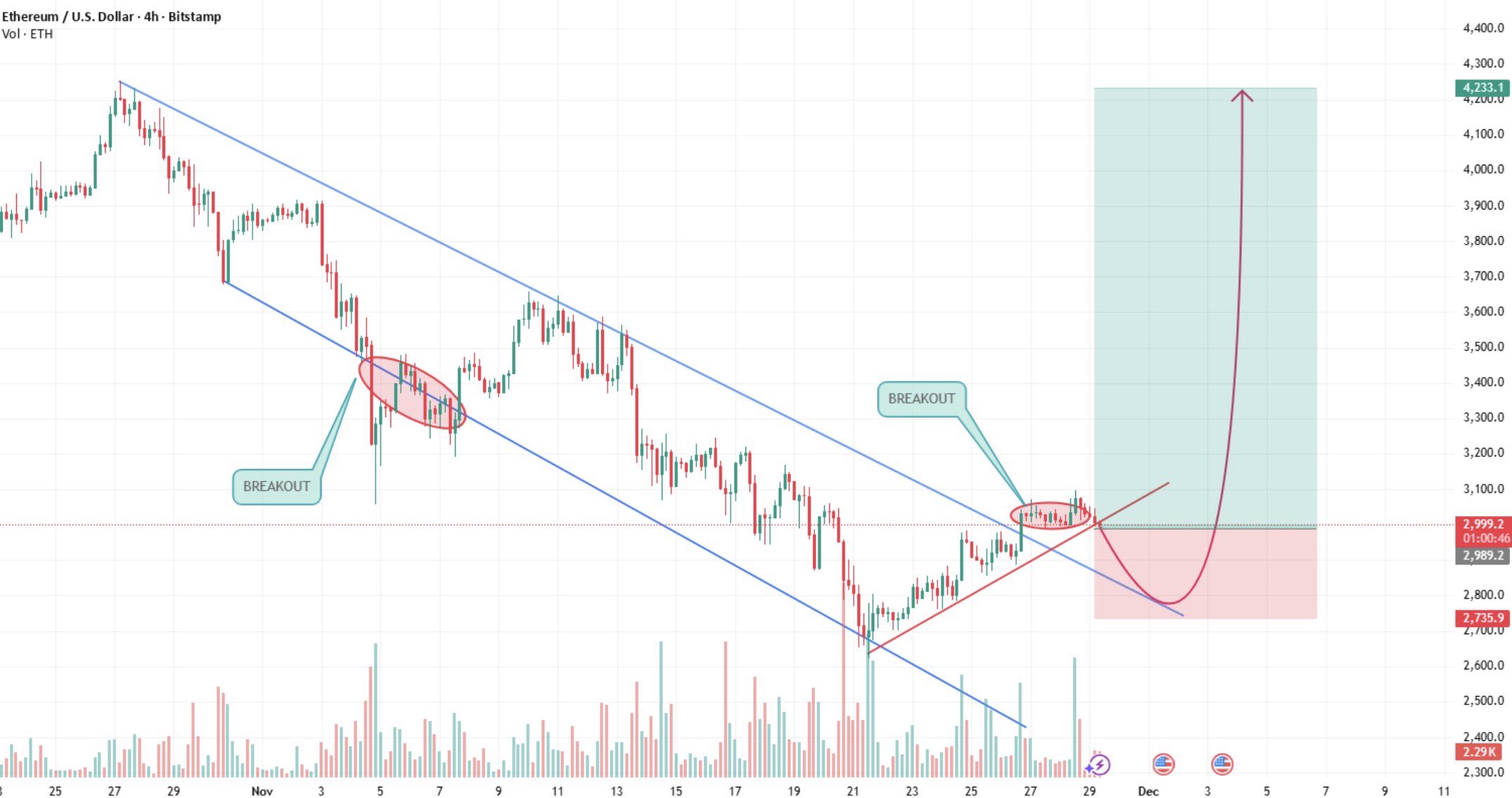
    Ethereum is poised for a 100% increase after the Fusaka upgrade

    Ethereum is currently trading at $2,811.43 and has formed a consolidation structure similar to that of 2017 and 2020. CryptoELlTES statedthat ETH has once again reached a structural zone where previous cycles formed important reversals.

    CryptoSkull saidEthereum could return more than 100% after the Fusaka upgrade and predicted a bullish phase of ETH outperformance in this cycle. The debate revolves around high L2 activity, more expanded block space and a cleaner scaling roadmap to attract new capital.

    Based on CryptoSkull’s analysis, the 1Q26 expansion could coincide with a new period of cycle maturation as ETH seeks new ATHs, with infrastructure upgrades being the primary driver.
    Image

    German banks use Ethereum for enterprise-grade applications

    Germany has emerged as a leading hub for institutional Ethereum applications. In July, AllUnity, a joint venture of DWS, launched the fully collateralized Euro stablecoin EURAU on Ethereum.

    The project is an example of how German banks are leveraging scalability, security and the growing Ethereum system to introduce regulated services for businesses.
  • VeChain Hayabusa Upgrade: New VET model and new VTHO staking rules.

    VeChain Hayabusa Upgrade: New VET model and new VTHO staking rules.


    • VeChain today implemented the Hayabusa upgrade with active delegation staking and new reward flow for VET and VTHO customers.
    • There is a new reward structure, new staking mechanism and new economic rules for the native assets VET and VTHO.

    The upgrade also introduces a Delegated Proof of Stake system where VET holders are no longer just passive observers. They can delegate their tokens to a selected validator. This then receives the right to produce blocks and receives rewards based on the amount of VET tokens delegated to him.

    Under the new model, only users who participate in staking or delegation will receive VTHO rewards. This replaces the previous method where all holders received VTHO based on a fixed issuance rate, regardless of their activity. VeChain confirmed that 30% of the total reward allocation will now go to validators supporting the VeChainThor network.

    VeChain Stargate 2.0 allows real-time tracking

    VeChain’s Hayabusa model has also been included in the European Union’s MiCA legal framework. VeChain’s corresponding documentation outlines the validation rules, token issuance practices and holder rights. This information is intended to simplify regulatory checks in all 27 EU member states.

    Shortly before the launch of Hayabusa, VeChain released Stargate 2.0 to the market. The updated platform provides real-time network status and a complete list of validators. Users can view validator performance across 7-, 14-, and 30-day reward cycles. The new interface also captures the meta-data including total NFTs minted, VET stake amount, and total VTHO rewards distributed.

    Stargate launched back on July 1st and began allocating 5.48 billion VTHO to make participation attractive. Stargate acts as a bridge between the evolving VeChain economy and a simplified interface for wide user access.

    Meanwhile, the price of the VET token increased by 1.58% to $0.01234, while daily volume increased by 13.86%.

  • Stellar gets Unified Golang SDK as a new development environment

    Stellar gets Unified Golang SDK as a new development environment


    • The Stellar Foundation has introduced the Golang SDK as a unified development environment, replacing the older Go toolkit.
    • Go development is now done with the high-quality SDK, which is already used for JavaScript, Python and Java.

    In mid-2019, the Stellar Foundation announced the release des Go-SDK for the Stellar network, making it the third official SDK alongside JavaScript and Java. Now the Foundation has released a new, dedicated Golang Software Development Kit (SDK) that makes it easier for developers to use the Go language on the Stellar network.

    Previously, developers working with Go faced three problems:

    1. All functions were bundled into a single tool, which made selecting a specific program command very confusing.
    2. Developers could often only guess which parts were intended for their projects, and they struggled to understand the dependencies.
    3. There was no centralized documentation, and key tools like the RPC client were in a completely out-of-the-way location, disrupting workflow.

    The Go SDK

    The new Go SDK addresses these issues and provides a simpler, consistent, and easy-to-use toolkit. In particular, the main repository only contains the essential, frequently needed tools. the new structure follows the model of the SDKs for JavaScript and Python.

    Finally, developers now get clear entry points, easy-to-read documentation, and easy access to Horizon and RPC services, all in one place.

    Stellar joins Europe’s unified digital ledger

    Last week an X-post knownthat Stellar has officially joined the European Ledger, Europe’s emerging unified digital financial infrastructure. Stellar is joined by Algorand and XRP. Fintech expert Cipollone wrote:

    “The European Ledger aims to revolutionize finance by bringing together tokenized central bank money, commercial bank money and other digital assets on a single, programmable platform.”

    This shared infrastructure could redefine the way Europe manages and implements digital assets. XLM is currently at 0,2328 $ traded after falling 5.93% over the past week.

  • XRP purchases by whales are skyrocketing

    XRP purchases by whales are skyrocketing


    • New XRP wallets were filled with over 77 million tokens in just one day.
    • Apparently whales are switching gears on a large scale.

    There have been numerous new XRP wallets recently as there is a lot of whale buying while the market remains in a state of limbo. XRP is trading around $2 after falling 7.8% in the last 24 hours.

    New wallets with 77 million tokens

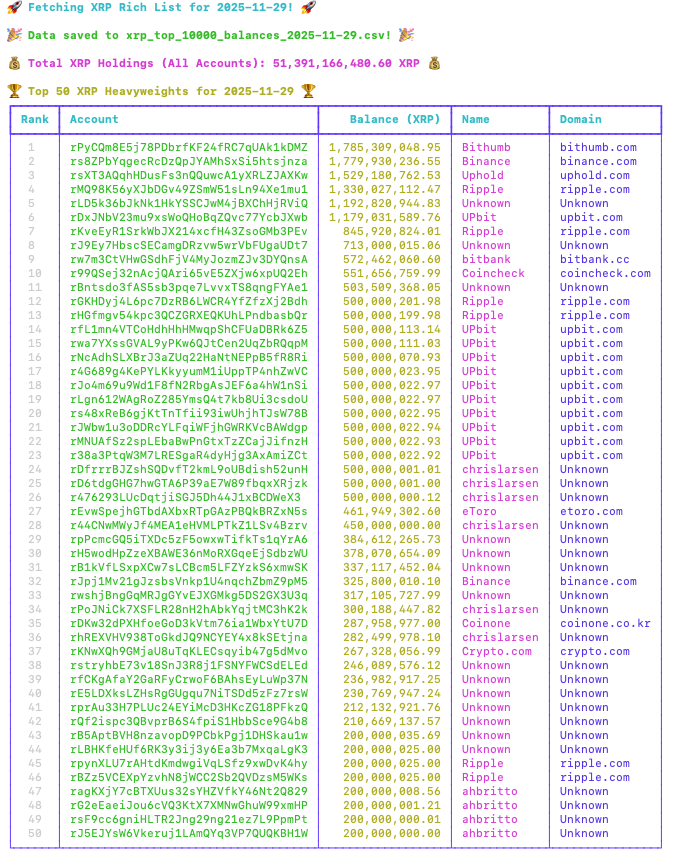
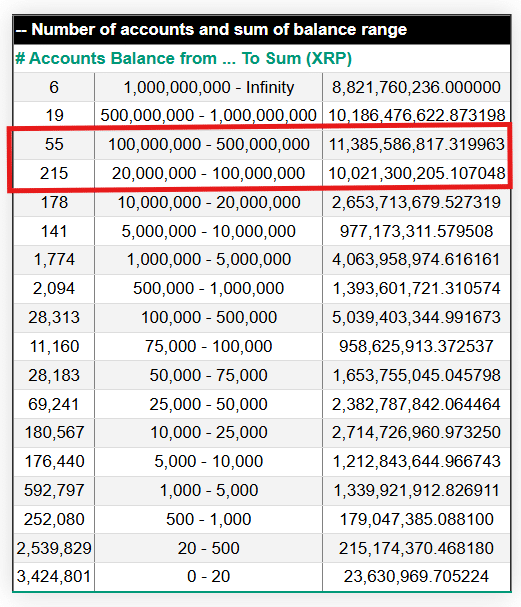
    There are now more than 10,000 wallets in the top 10,000 51.39 billion XRPwhich together account for just over 85% of the total amount of XRP in circulation. 78 new wallets bagged 77.324 million XRP in a single session.

    Took a wallet 35 million tokens on another bought 3.63 million andnd another six wallets filled up with respectively 1,99 Millions.

    Image
    What:

    A wider pool of 44 new wallets addedrespectively over 300 million tokens addedand 246 old wallets increased the number of their combined holdings by 17.91 million tokens.

    However, these inflows are offset by significant outflows. A wallet connected to Bithumb shifted 2.819 million XRP as part of stock market reallocations, so the inventory now stands at 1.785 million.

    Everything points to one coordinated repositioning. Equal amounts of wallets with inflows and outflows make an organized shift throughout XRP whale list probably.

    Wallets with 20 to 500 million XRP have increased their holdings since August and An estimated $7.81 billion worth of tokens were purchased.

    XRP Rich List

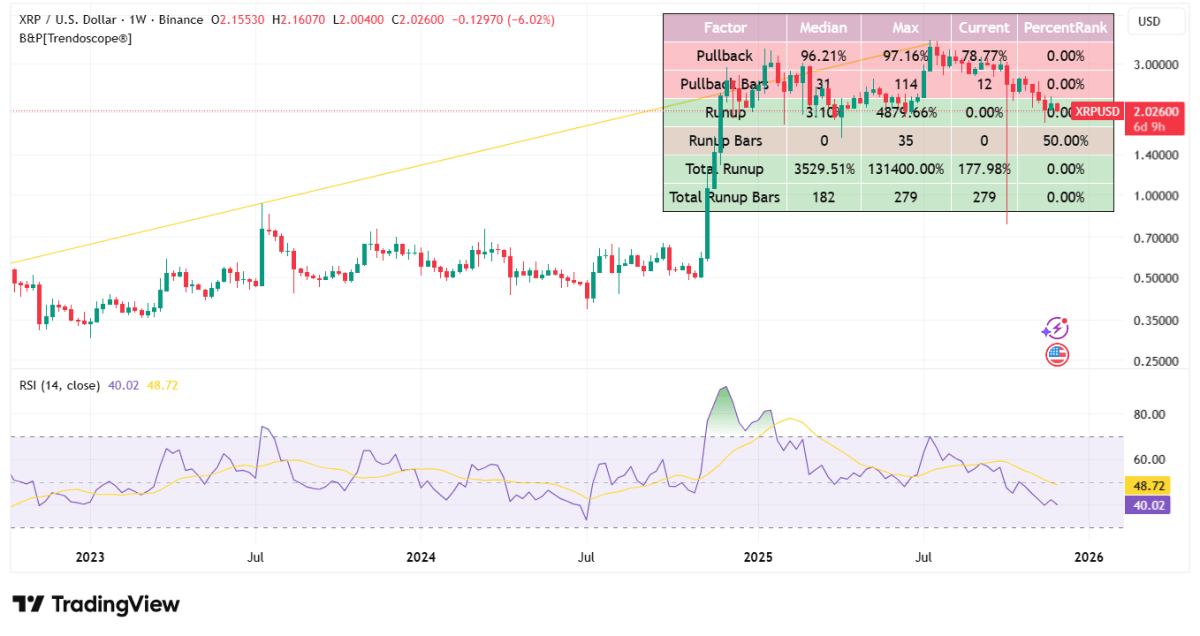
    The market structure is weak. On the weekly chart, the token is falling below a medium-term consolidation band that was present throughout 2024 and early 2025, with a long-term trendline above the price still preventing a recovery.

    Quelle: Tradingview

    Analyst Ali Martinez sees it Weekly chart a TD Sequential buy sign and some conditions that typically before a recovery appear.

    The RSI is currently at 40.11 and so im oversold area. A break below 40 could deepen the correction, while a price recovery above two dollars is the first step for one imminent trend reversal before 2026 could be.

  • Sony Bank is releasing a dollar stablecoin in 2026 for gamers and anime fans

    Sony Bank is releasing a dollar stablecoin in 2026 for gamers and anime fans


    • Sony Bank is planning a dollar-based stablecoin next year and wants to cooperate with Bastion on the infrastructure.
    • The stablecoin will be used for digital payments in games, anime and subscriptions, with unrivaled fees.

    Sea According to Nikkei, Sony Bank plans to launch a dollar-pegged stablecoin in the US in 2026. The bank wants to open a branch specifically for this purpose, which will manage the stablecoin business and integrate it into its international operational business.

    Sony Bank had already applied for its US banking license in October to operate its stablecoin project. The bank is working with the US stablecoin issuer Bastion and wants to use its existing infrastructure. This promises to give you an easy start and quick access to proven technology.

    The stablecoin is intended to allow customers in the US to pay for video games, anime, subscriptions and other content from the Sony empire. The stablecoin could replace or complement credit card payments and minimize transaction fees.

    Sony: New US market strategy with stablecoins

    Sony’s U.S. sales reportedly contributed more than 30% of Sony’s foreign sales last fiscal year. By linking this project to the dollar stablecoin market, which has a total capitalization of over $291 billion, Sony aims to optimize payment options for its large US customer base.

    Back in January of this year, Sony launched an Ethereum L2 as an independent company called “Block Solutions Labs Soneium”. Sony will then build a blockchain for content creators, fans and communities, which will serve as the basis for the new stablecoin. The move highlights Sony’s focus on the use of digital currencies in its entertainment division.

    The development of stablecoins is also being pushed forward in Japan. Authorities recently approved JPYC as the first yen-backed stablecoin and are backing a project with three major Japanese banks. These measures demonstrate growing national support for digital currencies and aim to expand payment options in Japan and abroad.

    Meanwhile, on the other side of the world, Deutsche Börse Group and AllUnity have entered into a partnership to integrate the euro-backed stablecoin EURAU into Deutsche Börse’s infrastructure. They will initially offer the EURAU in Germany via Clearstream using secure institutional custody. The step creates the conditions for the broader use of Euro stablecoins and reflects the global trend towards stablecoins.

  • Europol supports German and Swiss police in coup against crypto criminals


    • With the support of Europol, German and Swiss police authorities managed to dismantle an international crypto money laundering ring last week.
    • The focus of the operation was the shutdown of “Cryptomixer”, an illegal Bitcoin mixer. 25 million euros in Bitcoin were confiscated.

    In Switzerland, three servers and the domain “cryptomixer.io” were confiscated, as well as over 12 terabytes of data and Bitcoin worth more than 25 million euros. After shutting down the illegal service, law enforcement placed a seizure banner on the site.

    Concealing the origin of criminally obtained assets

    “Cryptomixer” was a hybrid crypto mixer that was accessible on both the Clear Web and the Dark Web. He concealed the origins of the loot from ransomware hacks and other forms of crypto-crime. Crypto mixers or “crypto tumblers” prevent the traceability of tokens in a blockchain. Such illegal services are the first choice for cybercriminals looking to launder illegal proceeds from a variety of criminal activities such as drug trafficking, arms trafficking, ransomware attacks and credit card fraud. Since its founding in 2016, the service has mixed Bitcoin worth over 1.3 billion euros, thereby concealing their origin.

    The funds deposited by the cyber criminals were pooled for a long, random period of time before being redistributed to the target addresses at random times. Many cryptocurrencies maintain a public ledger and record all transactions in it so that they can be traced. Mixing services like Cryptomixer are intended to prevent this tracing and thus obscure the origin of the cryptocurrency.

    Mixing services or crypto tumblers offer criminals anonymity and are often used before the laundered assets are sent to crypto exchanges. From there they are exchanged for other cryptocurrencies via ATMs or bank accounts or monetized as FIAT currency.

    Support against cybercrime from Europol

    Europol facilitated the exchange of information between European police authorities within the framework of the Joint Cybercrime Taskforce (J-CAT), based at Europol headquarters in The Hague. A priority of Europol is to act as a broker of law enforcement knowledge and to provide a hub through which Member States can communicate with each other and benefit from the knowledge of other Member States and Europol.

  • Fanpla AG opens office in Zug: Global development of a blockchain entertainment platform

    Fanpla AG opens office in Zug: Global development of a blockchain entertainment platform


    Zug, Switzerland, November 27, 2025, Chainwire

    Fanpla AGa Switzerland-based subsidiary of Fanpla Inc. (Japan), today announced the opening of its new office in Zug. Zug is known worldwide as Crypto Valley. This step is an important milestone on the path to building a sustainable and borderless entertainment economy based on blockchain technology. The new entity will act as the strategic headquarters for Fanpla’s European operations and play a key role in the further growth of the global FPL ecosystem.

    Background and purpose

    The founding of Fanpla AG is an important initiative to realize a global, decentralized entertainment economy. Using expertise in fan engagement and blockchain technology developed in Japan, Fanpla AG will collaborate with the European crypto ecosystem based in Zug, Switzerland – one of the world’s most trusted and advanced regulatory regions. Through this collaboration, Fanpla AG wants to build a new token-based business model that combines transparency, reliability and innovation and gives artists and fans the opportunity to create value together and share it across borders.

    Strategic hub in the global blockchain ecosystem

    Establishing a presence in the Swiss Crypto Valley is a central part of Fanpla’s global strategy. The region is internationally known for its clear regulatory framework, high concentration of blockchain expertise and robust financial ecosystem. Fanpla AG wants to use this environment to build a transparent and compliant governance structure that supports its international token ecosystem.

    European headquarters for global expansion

    Fanpla AG will act as a central hub for Fanpla’s global activities and drive expansion in Europe and beyond.

    In Japan, Fanpla Inc., in collaboration with Fanplus Inc., has a community with over 4 million paid fan members and created a digital platform that connects artists and fans. Based on this experience and expertise, Fanpla AG will develop new fan engagement models and digital ecosystems tailored to the European market.

    With its in-depth knowledge of the fan business and blockchain technology, Fanpla AG will continue to improve the entertainment experience for a wide audience and promote a truly global fan economy.

    Main objectives of the European headquarters

    Building a global platform: Localizing the platform for European artists and fans to bring Japanese content and creativity to a global audience while providing a framework for international artists to collaborate with the Japanese market.

    Expanding the FPL ecosystem: Developing new partnerships, listings and use cases to expand the usability of FPL across Europe and create a safe and transparent environment for artists and fans to use token-based services. By leveraging Switzerland’s advanced financial and legal infrastructure, Fanpla AG will further strengthen its secure and compliant token economy activities.

    Driving innovation: Establishing a local R&D team in Switzerland to lead research, development and market studies, ensuring that the Fanpla ecosystem remains at the forefront of the rapidly evolving entertainment and Web3 industries.

    Towards a global entertainment and financial ecosystem

    The founding of Fanpla AG is an important milestone for the integration of entertainment and finance through blockchain innovations. By positioning itself in the internationally recognized financial center of Switzerland, Fanpla AG will strengthen the governance and operational infrastructure of the FPL ecosystem, creating an environment in which transparency, trust and shared values ​​between artists and fans can truly thrive. Looking forward, Fanpla AG will continue to advance initiatives in finance, technology and entertainment, support the sustainable development of its token ecosystem and expand opportunities for global participation.

    About FPL (Fanpla)

    FPL is a digital asset issued on the Polygon blockchain. Following its successful IEO on Coincheck in November 2025, FPL is now available on the Fanpla Market, enabling the purchase of digital assets, the purchase of tickets and access to exclusive fan experiences. As a utility token that connects artists and fans, FPL enables many activities including purchasing NFTs, access to limited content, and fan voting at various events.

    Users can find further information at:

    About Fanpla AG

    Company name: Fanpla AG

    Headquarters: Zug, Switzerland

    CEO: Masayoshi James Goto

    Founded: 2025

    Business Activity: Development and operation of blockchain-based entertainment services, applications and digital content platforms that integrate Web3 and fan engagement technologies.

    Website: http://fanpla.ch

    Contact

    Communications Department
    Fanpla AG
    [email protected]

  • The crypto industry in week 49 from December 1st to 7th, 2025


    Market movements and expectations

    • Bitcoin
      After the sharp price losses in November from $120,000 to $82,000, Bitcoin stabilized again above $90,000 at the end of the month. In the week from 1st to 7th A further 7 to 10 percent price growth is expected in December, and optimists already see the end of the year with a BTC price well above $100,000.
    • Altcoins
      The stabilization of Bitcoin will pull the altcoins along with it. Some analysts even see a possible altcoin bull market because many investors are looking for new investment objects.
    • Economic factors: Expected falling interest rates in December and central bank liquidity measures may create a more favorable environment for risk assets like crypto.

    Conferences and other events

    • Binance Blockchain Week 2025
      Binance Blockchain Week 2025, one of the largest global events of the year, will take place in Dubai on December 3rd and 4th, focusing on regulation, infrastructure and Web3 innovation. The conference is considered a key networking event for investors, developers and companies and is considered a barometer for the mood in the crypto markets.

    Politics and Regulation

    • Regulation in the European Union
      At the beginning of December, the planned tightening of the EU crypto rules caused discussions. Topics include licensing requirements for service providers, stricter KYC and anti-money laundering requirements and the pros and cons of decentralization.

    • Global regulation
      There is a patchwork around the world: some countries are tightening their rules, others are opening up more to the crypto industry. However, the trend worldwide is clearly towards stricter requirements. The year 2025 showed this.

    Technical developments

    • Bitcoin-Mining
      An adjustment to the mining difficulty is planned for December 11th. But as early as the first week of December, miners were discussing the impact of the adjustment on profitability and hashrate.
    • Ethereum and Web3
      After Devconnect 2025 in Argentina, the focus will be on new L2 applications and DeFi projects, which will be evaluated from the perspective of regulatory clarity.

    Opportunities and risks

    • Opportunities: Falling interest rates and increasing liquidity would increase demand for crypto. Conferences like Binance Blockchain Week offer new partnerships and innovations.
    • Risks: Stricter rules in the European Economic Area could make Europe less attractive for crypto projects. And as usual, Bitcoin’s high volatility remains a factor of uncertainty.

    Conclusion:

    • The 49th week of 2025 will most likely bring a market recovery to the crypto industry; There will be new regulatory directions and the industry is looking forward to the results of the upcoming Binance Blockchain Week 2025 in Dubai. Anyone planning investments at the end of the year should keep an eye on both the economic signals and political developments.
  • Great Britain tightens crypto reporting requirements from 2026

    Great Britain tightens crypto reporting requirements from 2026


    • UK-based crypto service providers will be required to report all domestically initiated crypto transactions to tax authorities from 2026.
    • The measure makes it easier Access of the authorities on standardized cryptoasset data to combat tax evasion.

    From 2026, all UK-registered crypto asset service providers (RCASPs) will be required to provide tax-related information to UK-based users under the Cryptoasset Reporting Framework (CARF) to report.

    Previously, UK RCASPs were only required to report transactions from non-UK customers. The additional reporting aligns domestic requirements with international CARF standards and confirms that HMRC yearly formalizedreceives structured data about all taxpayersregardless of whether they use domestic or foreign crypto exchanges.

    The CARF framework was after consultations with the international communitythe OECD formulated and should with that Common Reporting Standard CRS comparable be, that applies to traditional financial accounts.

    It will enable tax authorities to comprehensive data for cryptocurrencies to raiseto combat tax evasion.

    The first international transactions linked to CARF are planned for 2027, so early domestic reporting is a preparatory stepStep is.

    Complete recording

    The measure became through secondary legislation formalizedwhich was introduced on 25 June 2025 with effect from Royal Assent to Finance Bill 2025-26.

    Die Reporting Cryptoasset Service Providers (Due Diligence and Reporting Requirements) Regulations 2025 will soon Changes experiencewho the Transactions from UK based customers and controlling persons reflect . The powers of the Ministry of Finance to enforce these regulations became within the framework of this lawcreated.

    In practice there will be little impact on companies. Around 50 UK RCASPs will need to change their systems to accommodate more Details about their users to capture . Most platforms already are for CARF compliance preparedso the additional IT or administration costs be negligible should.

    The proposal has no impact on the tax liability of individual taxpayers and is intended for simplification purposes only of reporting by HMRC. Demographically speaking arestill rather younger adults, men and ethnic The groupowned crypto assets . The reporting requirements apply to corporate RCASPs, meaning individual taxpayers are not directly affected.

    Germany is also tightening crypto regulations

    Meanwhile, crypto regulations are also being tightened in Germany, with MiCAR from BaFin via the national KMAG framework implemented become. Until the end 2025 must die Crypto asset providers valid Licenses show or cease their activity.

    New regulations make it more difficult unqualified services, and it will stricter AML, KYC, investor protection and reporting regulations enforced.

  • The Ethereum Fusaka upgrade: Less fees – more data throughput

    The Ethereum Fusaka upgrade: Less fees – more data throughput


    • Ethereum’s Fusaka upgrade brings customers faster, more secure, and more cost-effective applications while keeping decentralization intact.
    • Among other things, PeerDAS and improvements to cryptography increase data throughput.

    Ethereum’s upcoming Fusaka upgrade comes on December 3rd. Fusaka focuses on improving data throughput, reducing costs and optimizing obili usage.

    Fusaka introduces data scaling capabilities for near real-time processing. With these changes, Ethereum-based applications are expected to run just as smoothly and quickly as “normal” apps. Mobile wallets are also becoming easier to use and more secure as passkey support is based on the hardware built into the smartphone.

    For L2 networks, Fusaka brings PeerDAS (EIP-7594), which enables data validation through sampling. This change increases data throughput by up to eight times. This means lower blob fees for rollups and more scope to scale operations without burdening the base layer.

    It is expected that the lower operating costs will be passed on to customers through fee reductions.

    New rules for supernode bandwidth

    Fusaka is also improving support for application and DeFi developers. Pre-confirmations reduce transaction confirmation times from minutes to milliseconds.

    A new cap per transaction will be introduced, which is 2²⁴. This number was chosen because it is smaller than the full block gas limit, but still large enough to support the use of extensive calculations. Developers using transactions above this threshold must verify compatibility.

    The network gas limit is increased from 45 million to 60 million, enabling higher transaction throughput.

    New bandwidth requirements apply to supernodes that hold 4,096 ETH or more as part of the Fusaka upgrade. They are necessary because of the higher data throughput, but can be managed with modern infrastructure.

    Companies that integrate Ethereum into their systems will gain new compatibility with the company’s existing security standards. Native support for the widely used secp256r1 curve improves alignment with standard enterprise cryptographic systems.

    Meanwhile, Ethereum’s native token ETH is trading at $3,002.71 after falling 2.5% in the last few days, while turnover fell to $15.54 billion, down 11.13 and lower market participation.