Category: Coins

Digital assets, cryptocurrencies, blockchain, and currency news.

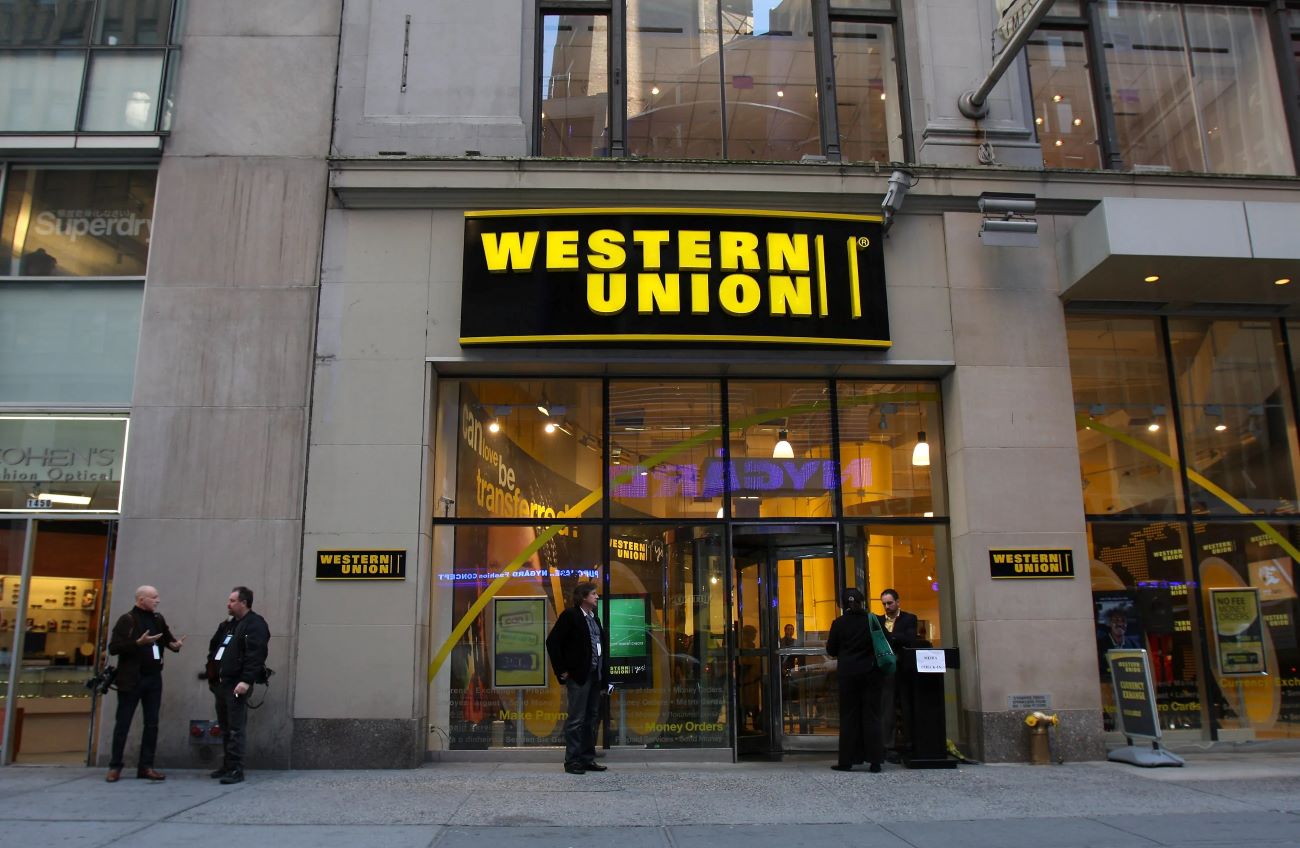
  • Western Union launches “Stable Card” – first step into digital finance?

    Western Union launches “Stable Card” – first step into digital finance?


    • Western Union is developing a prepaid card that is backed by stablecoins to ensure the value of card balances is maintained.
    • The project complements the launch of the USDPT in the first half of 26, with access secured by cooperating exchanges.

    At the annual UBS Global Technology and AI Conference in early December 2025, Western Union Executive Vice President and Chief Financial Officer Matthew Cagwin made new announcements Insights in the company’s digital strategy.

    In a discussion moderated by Timothy Chiodo of UBS Investment Bank’s Research Division, Cagwin outlined Western Union’s vision for a full-service digital platform and described the key pillars supporting this transformation.

    Die Stablecard

    One of the most notable components of this strategy is what Cagwin calls a “stablecard.” He explained that the product works similarly to a traditional payment card, but is specifically designed to provide financial stability to customers in hyperinflationary countries. Cagwin said:

    “Imagine a card like this, but with a much more stable utility in a country with high inflation. I have a large workforce in Argentina. Can you imagine living in a country where inflation was 250 to 300 percent last year?”

    Cagwin also highlighted that the company’s foray into digital assets could shorten settlement times, reduce reliance on correspondent banks and streamline global liquidity management.

    Another pillar is Western Union’s plan to issue its own digital coin, which the company wants to distribute across its network of over 200 countries. This would put Western Union directly into the growing digital currency ecosystem and offer its customers more ways to send, hold and convert value.

    Cagwin also noted Western Union’s progress in Europe and its global expansion strategy. In August, the company announced its agreement takeover from International Money Express, Inc. (Intermex) in an all-cash transaction priced at $16.00 per IMXI share.

    The acquisition is expected to expand reach to Intermex’s six million customers and strengthen the company’s presence in key migration corridors. The transaction is expected to close in mid-2026, subject to regulatory approval.

    In October, Western Union announced plans to launch its own stablecoin USDPT, built on the Solana blockchain and issued through the government-regulated Anchorage Digital Bank. The company expects the token to be available in the first half of 2026.

    Along with USDPT, Western Union also unveiled its “Digital Asset Network,” a system that enables customers, agents and partners to send, receive, hold, issue and convert stablecoins while connecting these assets directly to the company’s existing fiat money infrastructure.

  • Recent volatility spikes reignite Bitcoin fundamental debate

    Recent volatility spikes reignite Bitcoin fundamental debate


    • The Bitcoin price fluctuations of the last few weeks once again call into question the narrative that Bitcoin is digital gold.
    • Inconsistent ETF flows and market reactions show that Bitcoin has to prove its status as a safe investment from time to time.

    Bitcoin’s status as digital gold is questioned by ETF specialist Nate Geraci. He said the asset has not yet proven that it can safely hold its value. He explained further that Bitcoin behaves more like a risky, unstable investment than a safe option, which worries many investors.

    Geraci emphasized that Bitcoin’s performance during market declines is crucial. He pointed to the “tariff tantrum” in April, when Bitcoin rose while stocks fell, which briefly supported the digital gold thesis. Later, as tech stocks recovered, Bitcoin fell more than the market, undermining investor confidence.

    Geraci said Bitcoin has more than doubled since the start of 2024 but is still over 25% below its all-time high. He explained that weakness in the stock market caused the crash and high leverage in cryptocurrencies exacerbated the losses, showing BTC’s volatility.

    Is Bitcoin a “safe haven”?

    Bitcoin’s age is not a factor in its credibility. According to Geraci, at 15 years old, Bitcoin is a teenager compared to gold, still learning financial discipline and money management.

    Market sentiment is mixed. BTC spot ETFs have had billions of dollars in outflows recently. According to Geraci, many investors remain uncertain about how to approach Bitcoin and whether it can become a profitable long-term investment.

    Some institutions believe that wider adoption and inflows into BTC ETFs will strengthen Nitcoin as a currency. JPMorgan predicted that Bitcoin could overtake gold as the leading store of value next year.

    Despite this optimistic outlook, Geraci warns that BTC still needs to demonstrate its long-term reliability before it can earn the title of “digital gold.”

    Binance founder and ex-CEO Changpeng Zhao cited the advantages of Bitcoin over gold. Geraci mentioned that the price of BTC could behave like gold in the future. However, he also pointed out that the current high volatility is a problem.

    The current debate highlights Bitcoin’s mixed record. Strong upswings show the potential, while downswings show the vulnerabilities. Before Bitcoin can become a trustworthy store of value, a longer history across more market cycles than exists to date is required.

    Currently, BTC is trading at $89,876, down by 1,24 % in the last 24 hours. The market capitalization is $1.79 trillion, with a 24-hour turnover of $53.94 billion. The current amount of Bitcoin in circulation is 19.95 million BTC – out of a maximum possible 21 million BTC.

  • Pi Network receives AI upgrades for KYC process optimization and mainnet migration

    Pi Network receives AI upgrades for KYC process optimization and mainnet migration


    • Pi Network streamlines the KYC process, with new AI layers that reduce the validation queue by 50%.
    • Validator workload is reduced through process optimization and migration to the mainnet.

    Pi Network has a new AI reinforcement layer in its KYC process implementedto shorten the verification queue and support the ongoing push toward mainnet readiness. It enables the same technology used in Pi Fast Track KYC, making the core migration path faster and more scalable.

    Pi Expands Fast Track KYC for Mainnet Migration

    Pi Fast Track KYC was inaccessible to migration for new users and non-pioneers of wallet access as this option did not exist. After months of testing, it has finally been upgraded to standard KYC and is ready for migration.

    The upgrade addresses regional validator bottlenecks, speeds up pending verifications, and reduces the data displayed to validators, thereby improving data protection.

    The network believes that as AI increasingly takes over routine work, millions of pending cases will be processed more smoothly.

    This eliminates bottlenecks without compromising accuracy and preserves the role of reviewers by limiting automation to simple inputs.

    The saved human capacity could later be used for system services such as feedback loops as well as AI training and other work in Pi apps.

    The first validator rewards are due in 1st quarter 26 come

    Work on the first validator rewards is underway. The process includes matching task phases, quality differences, and fair reward calculations that match mainnet level accuracy.

    Upgrading the system also requires planning the rewards that will be paid out to millions of validators in the next and future eras. Deployment is tentatively scheduled for the end of the first quarter of 2026. Pi also released updated migration statistics. In total, 17.5 million pioneers have completed KYC and 15.7 million have already migrated to the mainnet.

    About three million pioneers who have preliminarily completed KYC can still unblock themselves by conducting due diligence checks. In order to have a fully verified user, the Mainnet migration checklist must be completed.

    AI gigafactory in Germany

    The timing fits with broader European efforts to expand AI infrastructure. Deutsche Telekom and the Schwarz Group are planning to build one of the world’s largest KI-Gigafabriken in Germany, which is supposed to provide immense computing power.

  • Whales hoarded 47,584 BTC following the Bitcoin turmoil

    Whales hoarded 47,584 BTC following the Bitcoin turmoil


    • Large investors bought over 47,600 Bitcoin in December and there was also a real dip buying frenzy in retail.
    • Bitcoin is below $90,000 and uncertainty remains as traders do not rule out a fall to the support zone between $82,000 and $85,000.

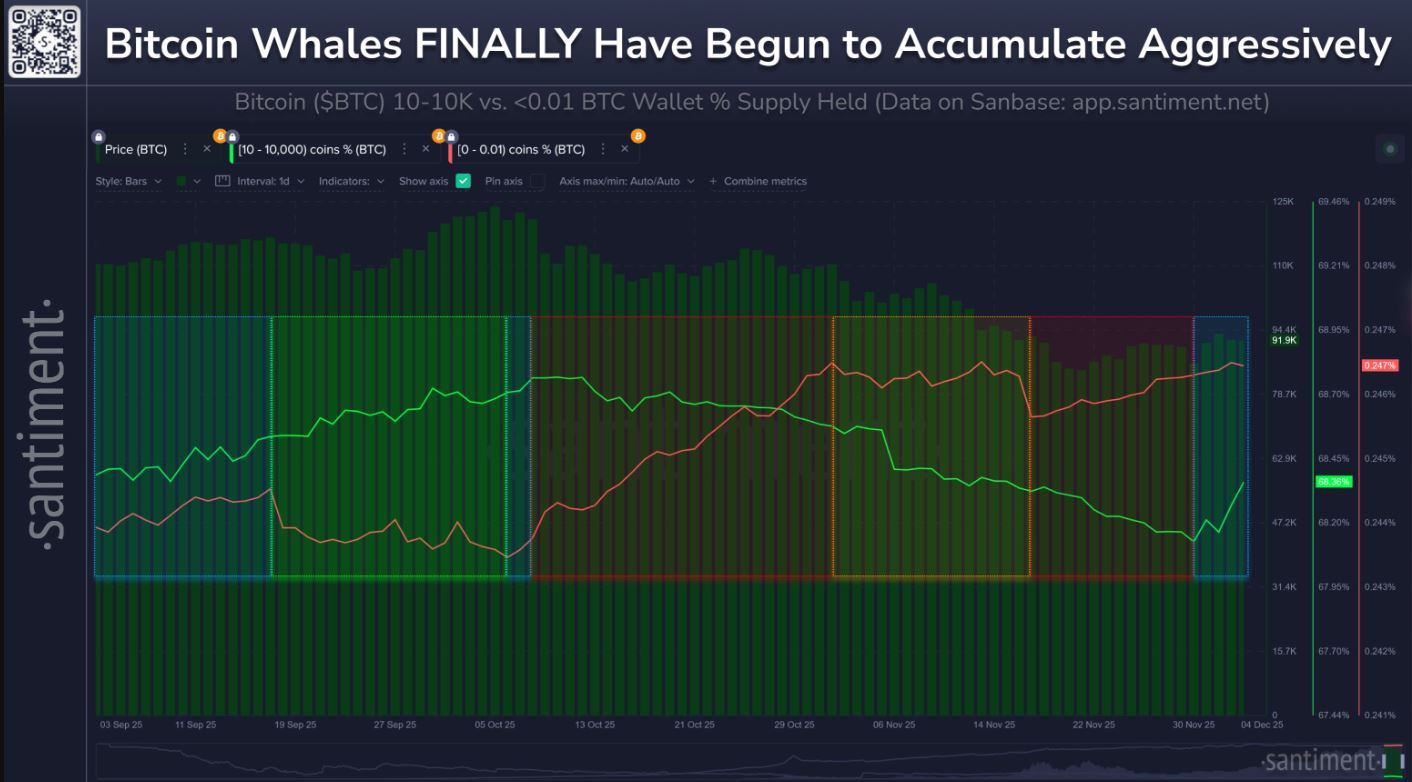
    Data from Santiment showthat major Bitcoin investors changed their behavior in December. Whales bought 47,584 BTC in the first few days of the month alone. This was preceded by a sustained selling period from October 12th to November 30th, during which they sold 113,070 BTC.

    But the new accumulation has brought Bitcoin back into what Santiment calls the “blue zone,” where retail and large investors buy at the same time. The last time there was similar behavior, Bitcoin rose sharply in September and early October. The same pattern could form again if retail investors sell now instead of holding.

    Bitcoin Whales Accumulate 47,584 BTC in December After Massive Two-Month Selloff
    Quelle: @santimentfeed on X

    The price has reacted to the changed purchasing behavior. BTC had the earlier this week 92.000 $ exceeded before coming on 89.635 $ fell behind, resulting in a decline of 3,09 % in the last 24 hours.

    Will Bitcoin remain in the support zone?

    The Bitcoin price is currently under pressure and is below 90.000 $. It is in a broad pullback phase. The key area to watch is between 82.000 $ and 85.000 $where significant buying previously occurred, and a close above this area could stabilize the market.

    On the technical side, Bitcoin continues to trade within a bearish pattern while volatility is low. The Bollinger Bands have narrowed again, a constellation that was last seen at the beginning of November before the sharp slide from the 110.000 $ zone could be seen.

    Should the course be in the range between 82.000 $ and 85.000 $ fall and hold there, the current pullback could take a break. On the other hand, a rebound could occur 92.000 $ bis 95.000 $ indicate that selling pressure is easing.

    The Santiment analysts emphasize:

    “The only thing holding back prices is the fact that retail bought the dips and also accumulated. If small wallets start dumping their coins as whales buy them, we will almost certainly see a surge like we saw in September and early October.”

  • EU Commission plans to “outsource” crypto supervision for the purpose of uniform enforcement of the MiCA rules

    EU Commission plans to “outsource” crypto supervision for the purpose of uniform enforcement of the MiCA rules


    • The European Commission wants to delegate practical crypto supervision to the European Securities and Markets Authority ESMA.
    • The initiative comes from France, Austria and Italy, which want a stronger role for ESMA because the banks will introduce euro stablecoins in 2026.

    The European Commission intends to transfer oversight of the crypto industry to the European Securities and Markets Authority (ESMA), which is intended to guarantee uniform application of MiCA regulations across the EU. The measure is intended to eliminate the differences in the practical implementation of the MiCA regulation in the 27 member states.

    The EU Commission considers this to be necessary because states have so far applied the MiCA regulations differently, which endangers the unity of the crypto framework and can lead to unwanted location advantages and disadvantages. The Commission emphasized on Thursday that ESMA’s supervision will improve regulatory consistency and ensure that all EU crypto companies report to a single, supranational authority.

    The Commission pointed out that coordinated supervision is necessary to avoid fragmentation and improve the efficiency of markets in EU countries:

    “EU financial markets remain highly fragmented, small and uncompetitive, leaving potential economies of scale and efficiency gains untapped.”

    EU establishes central crypto supervision

    France, Austria and Italy urged the EU Commission in September to give ESMA a stronger role in enforcing MiCA. However, the European Parliament and the European Council must approve this shift in authority, and its content depends on negotiations between EU member states.

    ESMA plays a similar role to the Securities and Exchange Commission (SEC) in the US, but in the past it has coordinated rather than supervised markets. If ESMA were given direct supervisory powers, it would transform into an EU securities regulator and standardize the enforcement of MiCA regulations across member states.

    The project would unify oversight of the crypto industry and other financial services into a single authority. The MiCA regulation contains clear guidelines, the consistent implementation of which would create a more stable, predictable environment for crypto companies than the real existing environment.

  • BRICS group initiates gold-backed currency system and attacks the dollar’s global trade monopoly

    BRICS group initiates gold-backed currency system and attacks the dollar’s global trade monopoly


    • The BRICS group created the UNIT system to overcome the limitations of central bank-based national currency structures.
    • The current financial system is being questioned because of its vulnerability to inflation and sanctions imposed on BRICS members for political reasons.

    The BRICS group, now consisting of Brazil, Russia, India, China, South Africa, Iran, Saudi Arabia, the VAR, Egypt, Ethiopia and Indonesia, has introduced the gold-backed UNIT payment system to settle international trade between member countries.

    However, UNIT is not intended to be a traditional fiat currency. Its value is said to arise from a combination of physically stored gold and a currency basket made up of the national currencies of the BRICS countries. It should end the dependence on the US dollar as the world currency, but should have at least the same stability.

    The system stipulates that in order to mint UNIT coins, the equivalent value must be deposited in gold and the currencies of the BRICS members. The coverage currently consists of around 40% gold and 60% BRICS currencies, with the share of each currency limited to prevent any single currency from gaining too much weight.

    As part of this gold strategy, Brazil increased its reserves by around 16 tons of gold in September. Among the other BRICS members, three countries remain the largest gold owners: Russia with around 2,336 tonnes, China with around 2,298 tonnes and India with around 880 tonnes.

    The UNIT network relies on blockchain technology to ensure transparency and enable settlement, clearing and payments outside of the traditional global financial system.

    Why UNIT?

    The push for UNIT is part of BRICS efforts to reduce dependence on the dollar. Gold is a traditional safe haven: it is immune to currency risk, inflation or geopolitical instability, unlike fiat currencies or dollar-based reserves.

    Unlike dollar reserves or assets that are tied to Western financial systems and can be frozen, gold is physically stored “in the basement” and its price is difficult to control from outside. By accumulating gold, the BRICS countries are strengthening their ability to weaken the hegemony of the dollar.

    Tariffs are another point of concern. On April 2, President Donald Trump unveiled a sweeping new tariff initiative. While a general 10% tariff was imposed on all U.S. imports, even higher tariffs were imposed on countries considered to disrupt the dollar system. As CNF reported, the White House warned BRICS that any move toward an alternative currency could result in 100% tariffs or exclusion from the US market.

  • IOTA expands into the US market thanks to BitGo custody partnership

    IOTA expands into the US market thanks to BitGo custody partnership


    • BitGo is now using the IOTA mainnet, expanding its portfolio to over 1,550 supported assets.
    • IOTA is now optimally positioned to expand its presence in the USA, one of the world’s largest crypto markets.

    BitGo now uses IOTA’s distributed ledger technology. This allows US-based institutions regulated, secure access to IOTA assets. This created a path for exchanges, institutions and other regulated entities to now hold, manage and trade IOTA under BitGo’s security and compliance framework.

    BitGo was founded in 2013 and is regulated by the South Dakota Division of Banking. the custodian offers institutional cold storage for digital assets with insurance coverage of up to $250 million. The platform already supports over 1,550 tokens and serves more than 4,900 institutional customers.

    Since BitGo provides the backend infrastructure for many exchanges, support for IOTA makes it easier for these platforms to list the token and offer it to their customers. This should promote both the liquidity and market penetration of IOTA in the USA.

    IOTA explained:

    “Exchanges working with BitGo can now offer IOTA to their customers in a secure manner, while market makers gain additional operational flexibility. Through BitGo’s Over-the-Counter Desk, institutions also have access to voice and chat-based trading, allowing them to efficiently execute acquisition strategies. This OTC service, already used in crypto trading, including for Ethereum, provides an additional regulated route for institutional customers to gain access to IOTA.”

    Beyond custody, BitGo also offers wallets and services for transaction processing, trading and lending. This creates flexible options for institutional investors who can now fully rely on IOTA within an absolutely legally secure framework.

    Developments in the IOTA network

    The project has also completed its integration with LayerZero and Stargate. IOTA now has access to around 550 digital assets and connectivity with more than 150 blockchains, including Ethereum and Solana.

    As CNF reported, IOTA is also improving its digital ID system with tamper-proof ID cards from Turing Space, which has partnered with the World Health Organization to issue digital certificates to volunteers in over 150 countries.

    IOTA’s Trade Worldwide Information Network TWIN and the Trades and Logistics Information Pipeline TLIP are scheduled to launch in the first quarter of 2026. TWIN has piloted TLIP in Kenya in collaboration with the Kenya Tax Authority, demonstrating potential to reduce trading costs by up to 80%.

    This is made possible by exchanging digitized documents in real time – a transparent system that participants trust – as opposed to paper-based document exchange.

  • Ripple is building a one-stop shop for digital assets

    Ripple is building a one-stop shop for digital assets


    • Ripple is now starting to build an end-to-end infrastructure for various digital assets.
    • The company aims to have a real-time, global financial infrastructure by 2026.

    In 2026, Ripple’s goal is to consolidate custody, liquidity, treasury, payments and settlement into a single integrated framework.

    The company invested nearly $4 billion in system expansion, positioning itself as a full-service provider for institutions working with both traditional and on-chain systems.

    Ripple combines the digital asset infrastructure with financial tools for companies by integrating some of the acquired platforms directly into Ripple payments or operating them as standalone services on shared channels.

    The Unified Stack provides businesses with real-time liquidity control, faster global money movements, and a single system for both digital and traditional payments.

    GTreasury bringt Ripple in den Corporate Finance Sector

    The $1 billion acquisition of GTreasury has placed Ripple squarely in the multi-trillion dollar corporate finance sector. GTreasury’s 40 years of experience in corporate liquidity management makes the company an important anchor for Ripple’s unified approach.

    Connected to Ripple Prime and Ripple Payments’ 24/7 global, cross-border infrastructure, the platform enables treasury teams to unlock dormant capital, move money around the world and between digital and traditional accounts through a single “control tower”.

    Further Rail, purchased for $200 million, expands Ripple payments to include virtual accounts, automated back-office tools and intelligent payout routines.

    This eliminates the need to manage their stablecoins, facilitating fiat-to-stablecoin flows and global deposits and withdrawals through a single system, turning Ripple Payments from a just-in-time to a full-fledged stablecoin settlement infrastructure.

    Palisade and Ripple Prime complete the core infrastructure

    Palisade offers rapid digital asset custody facilitated by multi-party computation, zero-trust security, and instant wallet creation.

    The technology enables high-frequency use cases such as subscription billing and collection flows in enterprises and scales Ripple Custody for banks, fintech and crypto companies.

    Ripple Prime completes the institutional liquidity layer with prime brokerage, clearing and financing for leading digital assets on all major exchanges.

    Ripple Prime’s reach has tripled since its purchase, showing that more institutions are looking for regulated execution services.

    Ripple and XRP on German mainstream TV

    Ripple’s expanded infrastructure comes at a time when institutional attention is increasing. German financial television reported in September 2025 above Ripple and XRP, focusing on XRP’s function as a bridge currency for global value transfers and its accessibility through certificates and futures. The reporting showed the increasing interest in Germany in blockchain financing.

  • Solana will launch its SKR token for the smartphone “Seeker” in January 2026

    Solana will launch its SKR token for the smartphone “Seeker” in January 2026


    • Solana Mobile confirmed that the SKR will launch in January 2026 in an immutable token supply of ten billion.
    • Meanwhile, the Digital Euro is getting closer for the EU. Regulatory approval is expected to take place in 2026 and a corresponding pilot project can begin in 2027.

    In one X-Post Solana Mobile announced that the highly anticipated SKR token will launch in January 2026.

    The Seeker Phone was introduced in August. It is Solana Mobile’s next-generation mobile phone and expands on the first-generation Saga device with improved hardware and more onchain features.

    According to Solana Mobile, the SKR will serve as the backbone of connecting gadgets, onchain identities and incentives.

    Additionally, the SKR token will play an important role in the management and daily user activities within the Seeker system.

    The Solana phone comes with a seed vault, native dApp store, and built-in identity tools so customers don’t need to transfer assets to other devices to access Web3 features. SKR is the central hub that manages rewards, community activities and participation models.

    SKR will have an immutable token supply of ten billion tokens. Of this, 30% is earmarked for airdrops, 25% for growth promotion and collaborations and 10% for liquidity and start-up support. Another 10% will be allocated to a community fund, while 15% will be earmarked for Solana Mobile itself and 10% for Solana Labs.

    ECB is considering Solana as a basis for digital €

    Since 2020, the European Central Bank has been considering the possibility of introducing a digital euro. As CNF reported, a public blockchain such as Solana could be used as a basis. The European Parliament is expected to adopt the necessary regulations in 2026. After that, a digital euro could enter a pilot phase in 2027, paving the way for an EU-wide public launch in 2029.

  • IOTA: Africa will get comprehensive TWIN infrastructure in 2026

    IOTA: Africa will get comprehensive TWIN infrastructure in 2026


    • IOTAs Trade Worldwide Information Network TWIN is an infrastructure for the digitization of world trade that is designed for large amounts of data.
    • TWIN was first introduced in Africa because they worked with paper documents, which was extremely time-consuming.

    IOTA will launch in 2026 TWIN Technology on the main network, a project scheduled to be completed in Q1 2026. It is expected that after TWIN activation the current transaction speed of 20 to 30 TPS will be a few hundred TPS.

    Trade activities in the African Continental Free Trade Area AfCFTA have very high growth potential. It handles over 20 million container shipments annually, and the ADAPT/TWIN system is designed to handle the lion’s share of this volume. IOTA would thus support continuous economic activity on this scale for the first time.

    IOTA as the future engine of digital world trade

    TWIN acts as the technical basis for WLIP. WLIP, in turn, stands for World Logistics Information Pipelinean initiative in collaboration with the World Economic Forum Davos to promote cross-border trade through the IOTA Distributed Ledger Technology To digitize DLT, speed up customs clearances and reduce fraud, as tested in pilot projects in Kenya and the UK.

    TWIN is an open source layer that supports systems such as WLIP and other trading networks. Once onchain documentation begins, a second development phase will enable processes such as factoring and tokenized waybills.

    The shift to financial levels multiplies the benefits of the network. These include more liquidity, higher DeFi exposure and greater integration of trading assets. This should be accompanied by a further increase in the TPS rate. Africa is viewed as a “model customer” for other regions.

    IOTA is working with the Tony Blair Institute and the World Economic Forum to expand TWIN and ADAPT into a globally relevant digital trading infrastructure.

    IOTA is currently at 0,1036 $ traded, representing a slight decline of 0,39% in the last 24 hours means. Sales fell more sharply and amounted to around 16,41 Mio $.