Category: Coins

Digital assets, cryptocurrencies, blockchain, and currency news.

  • Deutsche Börse and Bitpanda combine their crypto trading infrastructure

    Deutsche Börse and Bitpanda combine their crypto trading infrastructure


    • The Deutsche Börse in Frankfurt and the Vienna crypto exchange Bitpanda intend to enter into a far-reaching cooperation that is likely to reorganize institutional access to digital assets in the EU.
    • Specifically, this concerns the connection of Bitpanda’s digital infrastructure with the trading platform 3DX, which is operated by the Deutsche Börse subsidiary 360T.

    The new partnership is the first of its kind in the European Union’s new, unified MiCA legal framework. The cooperation envisages Bitpanda connecting its infrastructure for trading and custody of digital assets directly to 3DX.

    3DX is one of the first MiCA-compliant providers for institutional crypto trading. In the future, commercial banks should be able to access regulated crypto liquidity via their existing 360T interfaces without having to set up their own wallet or trading infrastructures.

    This creates an offer that is regulated and technically securely scalable, two aspects that are new to the crypto market, the lack of which has previously prevented many banks from entering the crypto market.

    EU als Digital‑Asset‑Hub

    For years, Deutsche Börse has pursued a clear digital strategy that includes tokenization, digital securities and regulated trading venues.

    Bitpanda has developed from a retail broker into an infrastructure provider that has become interesting for institutional partners.

    The cooperation is therefore seen as a signal that Europe will not only keep up with global competition, but will also set its own standards.

    Bitpanda co-CEO Lukas Enzersdorfer-Konrad emphasized that the collaboration will show what role Europe can play in the global crypto system in the future.

    Outlook and further projects

    Both companies are already examining further joint projects, for example in the areas of connectivity, trading workflow and infrastructure development.

    New digital asset products could also follow as soon as MiCA is fully implemented.
    Bitpanda wants to go public in Frankfurt
    Image created with ChatGPT-AI (DALL E)

    For Bitpanda, the cooperation comes at a strategically good time: the company wants to do so this year on the stock exchange in Frankfurt. The collaboration with Deutsche Börse supports this project and illustrates Bitpanda’s ambition to become a leading European infrastructure provider for digital assets.
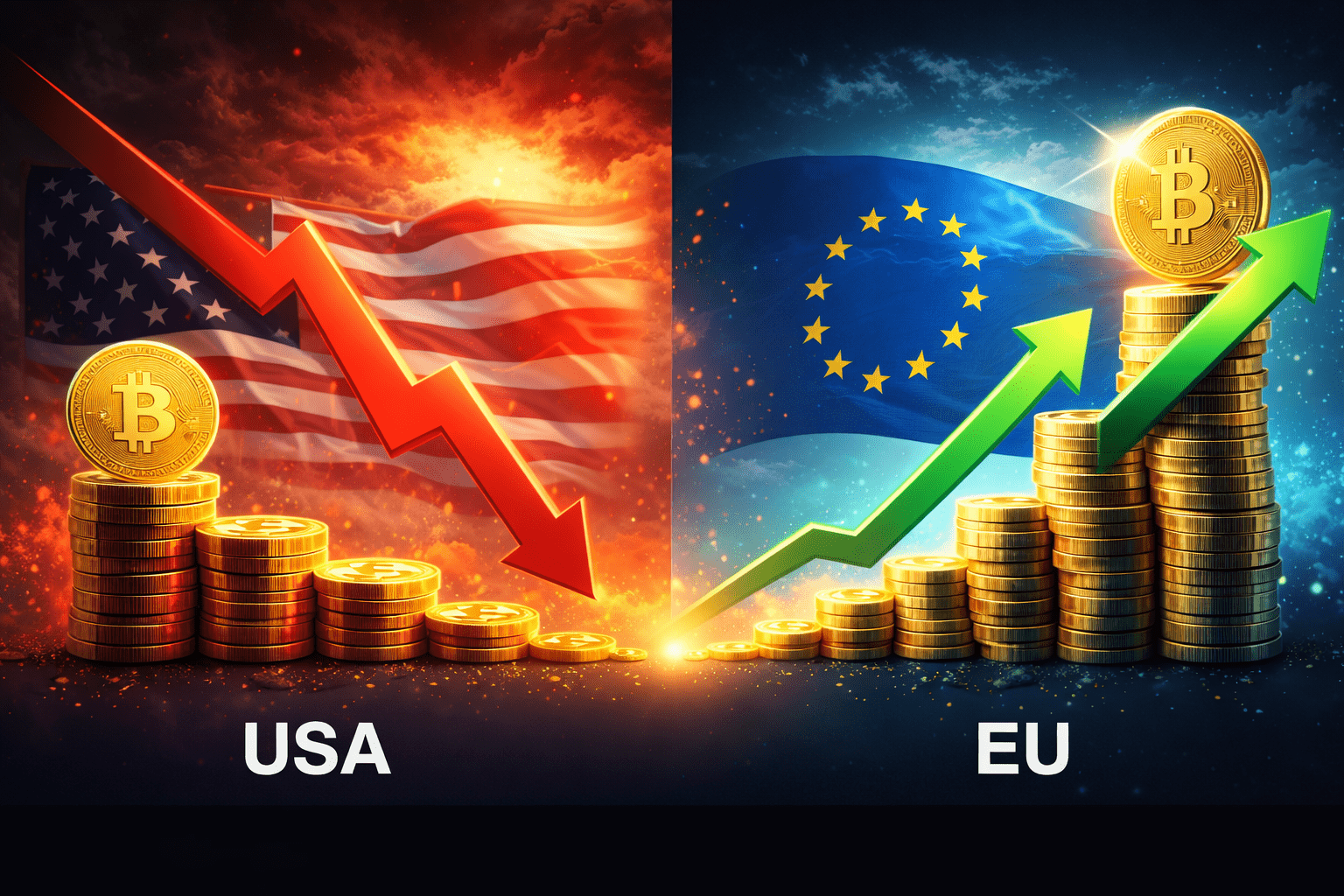
  • Europe’s crypto ETPs are seeing their strongest inflows in years

    Europe’s crypto ETPs are seeing their strongest inflows in years


    • While US crypto ETPs are shrinking rapidly, their European counterparts in Switzerland and Germany are attracting institutional capital like moths to a flame.
    • This could lead to a general market shift, not only because of the success of MiCAR, but also because of the completely unpredictable US government.

    The EU clearly benefits from its legal certainty through clear regulation thanks to MiCAR. While the US continues to struggle with uncertainties surrounding staking, custody and product approvals, Europe offers a consistent framework for issuers and investors.

    This legal certainty acts like a magnet for institutional investors, who increasingly prefer physically secured products. Switzerland in particular benefits from its reputation as a stable financial center with a high level of transparency and strict custody standards.

    Germany, on the other hand, scores with the high liquidity on Xetra and the growing interest of German banks in crypto ETPs.

    Innovative products provide new impetus

    Another reason for the strong inflows into the EU lies in the product innovation of European providers. Companies like 21Shares and Valor were early bets on themes like staking ETPs, which integrate returns directly into net asset value.

    These products offer institutional investors access to returns that are almost unattainable in the United States.

    In particular, demand for Solana and multi-asset ETPs is increasing, while Ethereum products have come under pressure due to debates over staking regulation. The combination of innovation and clear – apparently accepted – regulation gives Europe a clear competitive advantage.

    Capital is moving to Europe

    The most recent weeks show a clear movement of capital: While US ETPs are recording outflows, European products are reporting double-digit millions of net inflows. This is not a reaction to short-term market conditions, but rather an expression of a strategic shift.

    Investors are looking for markets with lower political risks, more stable conditions and broader product diversity. Europe currently meets these criteria better than any other major economic region.

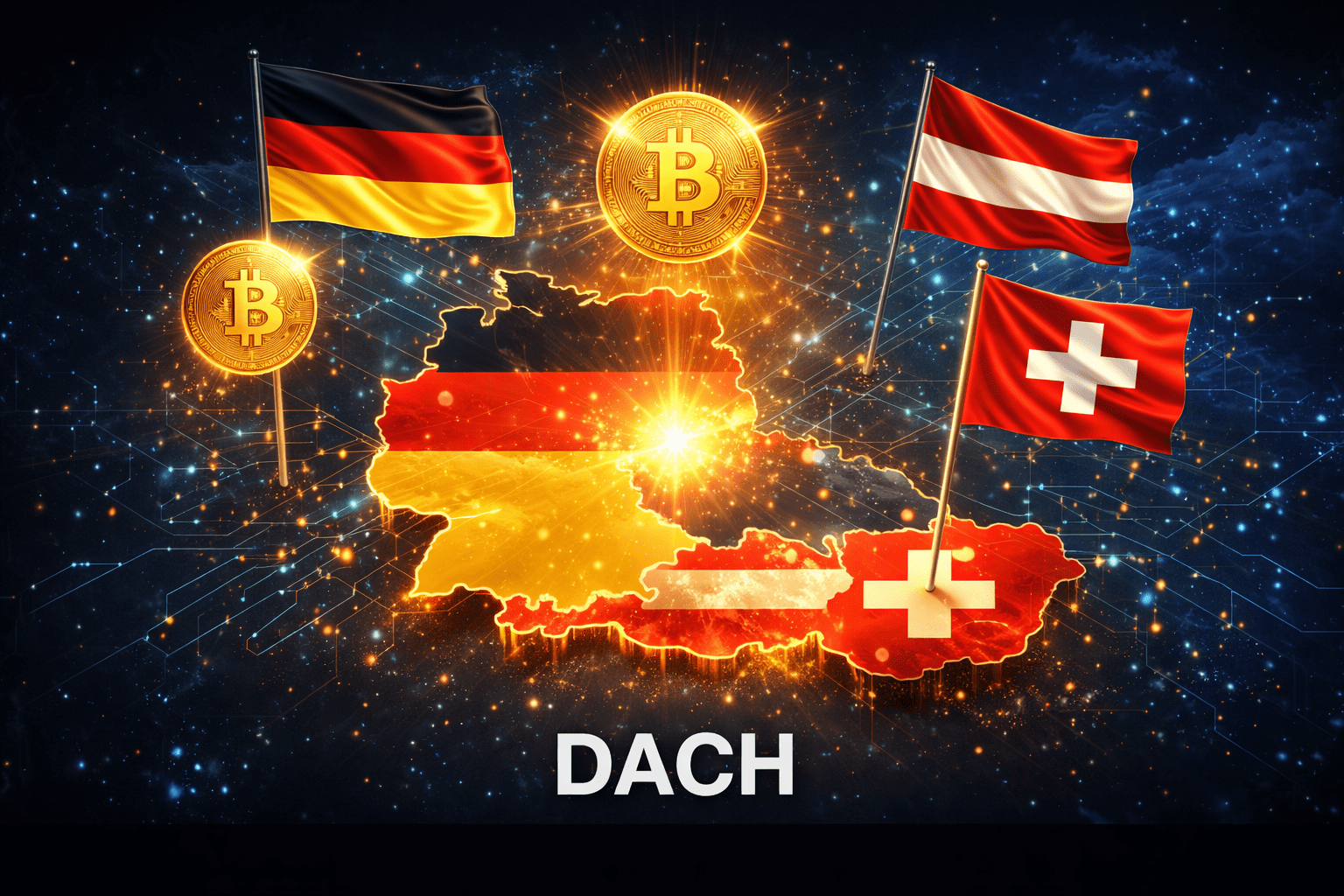
    DACH region as a new institutional hotspot

    Strengthened roof region
    Image created with ChatGPT-AI (DALL E)

    For the DACH region, this development means a strengthening of its role in the global crypto system:

    • Switzerland is establishing itself as a leading location for physically secured products.
    • Germany is the trading center with the highest turnover.
    • Austria is a MiCAR hub with a growing number of providers.

    The strong capital inflows show: Europe – and especially the DACH region – is increasingly becoming the preferred destination institutional investors, not just in the crypto segment.

  • ING Bank offers Bitcoin and staking-ready Solana ETPs for retail customers

    ING Bank offers Bitcoin and staking-ready Solana ETPs for retail customers


    • ING Germany has expanded its securities offering to include several crypto ETPs. It is the first major German bank to integrate Bitcoin and Solana products into a fully regulated brokerage system.
    • The decision for this offer follows the growing customer interest in digital assets and the trend to make cryptocurrencies tradable via classic depository structures.

    Die THE LAB was founded in 1965 as Bank für Sparanlagen und Vermögensbildung AG (BSV) in Frankfurt am Main. As things stand, ING Deutschland, as it is called today, is the first major German bank to fully include Bitcoin, Ethereum and Solana ETNs in a regulated securities depository.

    Other major German banks offer crypto products, but not in this form – tradable directly in a normal depot, physically secured, MiCA-compliant and without external wallets.

    For the bank, this step means a wide opening into a market that was long considered too risky for serious banking transactions. Now ING relies on established issuers such as 21Shares, VanEck and Bitwise to provide its customers with secure, regulated access.

    Physically deposited Bitcoin ETPs

    At the center of the new product range are physically deposited Bitcoin ETPs. These are exchange-traded securities in which each individual share is backed by real, actually held Bitcoin.

    This is particularly attractive for German investors, as profits from cryptocurrencies can be realized tax-free after a holding period of twelve months – an advantage that also applies to ETPs, provided they actually physically deposit the coins.

    ING emphasizes that safekeeping takes place via the issuers’ cold storage, which significantly increases the level of security. Trading takes place as usual via the ING depot, without wallets, private keys and external exchanges.

    Solana-ETPs from Staking-Komponente

    Particularly innovative is the introduction of Solana ETPs, which incorporate staking income directly into the product value. These ETPs use models like JitoSOL, which combine staking rewards and MEV returns.

    For investors this means: It is passive income, uncomplicated, without delegation to validators and without lock-up risks. The fact that a major bank like ING decides to offer such products shows how much the market has developed.

    Staking ETPs are considered a new generation of digital investment products as they transfer yield mechanisms from the blockchain world into classic, regulated financial instruments.

    The bench with the lion
    ING Press photo

    Signal for the future

    With the introduction of these ETPs, ING is sending a clear signal: cryptocurrencies are no longer a niche market, but an integral part of modern asset management.

    The bank creates access that appeals to both security-oriented investors and technology-savvy users. At the same time, it strengthens its position in competition with neobrokers and crypto exchanges.

    The mix of regulated trading, physical deposit and staking returns marks a milestone for the German market – and is likely to prompt other consumer banks to consider similar offerings.

  • UAE tokenize $280M in diamonds on XRP Ledger

    UAE tokenize $280M in diamonds on XRP Ledger


    • Billiton Diamond and Ctrl Alt tokenize over $280 million in diamonds on the XRP Ledger.
    • A diamond platform with on-chain certificate data and a secondary market option is planned.

    In the UAE, Billiton Diamond and Ctrl Alt have tokenized more than AED 1 billion (around $280 million) worth of diamonds on the XRP Ledger. The project relies on Ripple’s technology and aims to build a new trading and data system for the diamond market in Dubai.

    According to the official press release, holdings from the polished inventory will be tokenized “end-to-end” by Billiton’s approved partners. The tokens were minted on the XRP Ledger, which was chosen due to “fast settlement, low fees and scalable architecture,” according to the press release. The tokenized assets are secured via Ripple’s “enterprise-grade” custody technology.

    Reece Merrick, Managing Director Middle East & Africa bei Ripple, wrote via X:

    “The potential of tokenization stands or falls on enterprise-grade trust and security. As Billiton Diamond and Ctrl Alt bring $280 million worth of diamond holdings to the XRPL, our custody technology provides the tight security necessary to manage these assets at scale.”

    What is crucial, Merrick continued, “is that high-priced physical assets can be moved on-chain with absolute security – thereby setting a new precedent for commodity trading in the digital age.”

    XRP Ledger brings diamonds on-chain

    Remarkably, this is said to be just the beginning. The goal of the partnership is to build a tokenized diamond platform that anchors real-time inventory management and certification data on the XRP Ledger.

    Users should be able to verify the origin, grading and ownership history of a stone before a transaction. In addition, the project aims to create the basis for future listings of tokenized diamonds on primary and emerging secondary markets.

    The focus is also on better auditability and more efficient processes across the entire life cycle. Jamal Akhtar, Joint Owner of Billiton Diamond, stated:

    “This partnership transforms polished diamonds from a traditionally illiquid asset class into a transparent, investable digital asset – supporting manufacturers, brands and investors alike. Tokenization brings unprecedented levels of transparency, unlocks the potential for new liquidity, shortens working capital cycles for manufacturers and retailers and opens the door for seamless global participation in Dubai’s growing luxury ecosystem.”

    Future functions, including the planned platform, must first be released for regulatory purposes. The press release emphasizes that new operations are subject to approval from the Virtual Assets Regulatory Authority (VARA) before launch.

    Robert Farquhar, CEO MENA at Ctrl Alt, said:

    “Billiton needed robust, institutional infrastructure to manage the complexity and scale of its polished diamond offering. Our proven tokenization expertise and technology provide a clear, secure and compliant path for diamond ownership to be represented on-chain – from asset origination to digital market participation.”

    A key role in bringing about the partnership was the Dubai Multi Commodities Center (DMCC), the largest and fastest growing free trade zone in the United Arab Emirates. DMCC CEO Ahmed Bin Sulayem stated:

    “This initiative underscores DMCC’s role as a bridge between commodities, capital and next-generation digital markets. Through the infrastructure and partnerships we have developed, we are creating a framework for industry leaders to apply digital innovation to the physical diamond trade – and advance the broader tokenization of high-value commodities in a secure, scalable and trustworthy manner.”

  • Tether presents open source complete package for Bitcoin mining

    Tether presents open source complete package for Bitcoin mining


    • Tether has introduced an open source Bitcoin mining operating system that centrally manages all relevant mining processes. It includes hardware control, device management, power optimization and location monitoring.
    • The open source model is intended to reduce the dependence on proprietary applications and increase the transparency of mining. This means that elements of decentralization have now also arrived in the mining sector.

    The mining OS has a modular structure and can be used by both home miners and industrial mining farms. The software records hashrate, temperature, energy consumption and load of the rig in real time and controls the connected devices.

    Tether CEO Paolo Ardoino emphasizes that the platform was deliberately designed to function without central dependencies. Operators should retain full control over their infrastructure, whether they manage a single device or thousands of ASICs.

    Standardized development environment

    The mining OS comes with a mining SDKwhich offers developers a standardized development environment as a basis for their own tools and dashboards. The package includes APIs, UI components and integration modules designed to accelerate the development of new applications.

    Tether relies on community development: The SDK is intended to grow together with external developers and, in the long term, become an open standard for mining software. The aim is to bundle innovations and reduce market fragmentation.

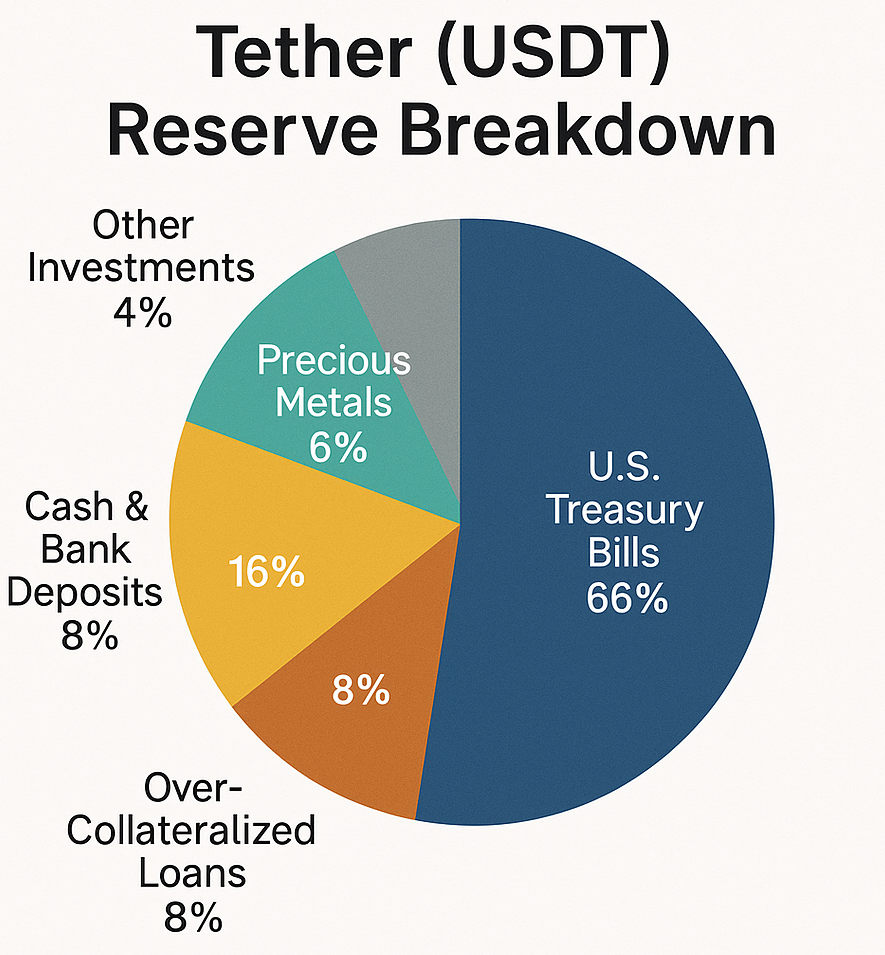
    Tether reserves overview
    Image created with ChatGPT-AI (DALL E)

    Impulses for small, energy self-sufficient miners

    Industry observers see the open source strategy as particularly beneficial for smaller operators who previously had to rely on expensive, closed management solutions. Miners with their own energy supply – for example from solar, wind or hydropower – particularly benefit from this, as the system allows flexible adjustments.

    The OS can be adapted to individual requirements using plugins and modular extensions, without license costs or vendor lock-in. With this step, Tether not only strengthens its role in the mining sector, but also sends a signal for more openness and competition in a market that is increasingly industrial.

  • Galaxy Digital warns: Bitcoin could slide to $58,000

    Galaxy Digital warns: Bitcoin could slide to $58,000


    • Galaxy sees an increased risk of a further Bitcoin price decline in the next few weeks/months following the sell-off and weak on-chain signals.
    • According to Galaxy, target zones are $70,000 as well as the realized price at around $56,000 and the 200-week line at $58,000.

    A new analysis from Galaxy Digital sees Bitcoin vulnerable to further losses after the weekend’s sharp sell-off. According to the renowned American financial services firm, BTC price could fall towards the 200-week moving average. This is currently close to $58,000.

    Alex Thorn, Head of Firmwide Research bei Galaxy, justified the scenario with on-chain data, weak reactions on key brands, macroeconomic uncertainty and a lack of short-term catalysts.

    Bitcoin is slipping into the bear market

    Thorn refers to the crash of the last few days. Between Thursday, January 29th and Monday, February 2nd, Bitcoin fell by more than 16%; On Saturday alone the decline was 10%. The price slide triggered “one of the largest liquidation events in history”: over $2 billion in longs were liquidated via futures trading venues.

    On Coinbase, BTC/USD fell as low as $75,644 on Saturday. This meant that the price temporarily slipped up to 10% below the average cost base of US spot ETFs of around $84,000. Thorn also gives another reason why the current price is critical: Strategy’s average cost basis (MSTR) is $76,037.

    At the time of the report, Bitcoin was trading around 38% below its October 6, 2025 all-time high of $126,296. According to Thorn, this puts BTC at a level that investors last saw in early 2024, and the crash does not bode well historically:

    “With the exception of 2017, Bitcoin has never experienced a 40% decline from its all-time high that was not extended to 50% or more within three months,” he writes. “A 50% decline from the all-time high would put Bitcoin in the area of ​​around $63,000 today.”

    Looking at the on-chain data, Galaxy sees a structure that signals few “natural” demand zones in the short term. Thorn describes “a significant gap in on-chain ownership between $82,000 and $70,000.” According to Thorn, this increases the likelihood of Bitcoin falling lower to test demand in this area.

    At the same time, according to Galaxy, 46% of the Bitcoin supply is now “underwater”, i.e. moved at prices that are above current levels. In addition, the January closing price confirmed four red monthly candles in a row – “for the first time since 2018”.

    Galaxy is paying particular attention to US spot Bitcoin ETF holders. By the end of January, they had collected a cumulative net inflow of $54 billion. According to Galaxy, it peaked at $62.2 billion in early October 2025 and has declined 12.4% since then.

    Striking: The past two weeks were the second and third worst weeks in ETF history – with combined outflows of $2.8 billion. Thorn still sees the fact that many ETF holders remained “incredibly resilient” despite a price decline of almost 40% from the high as a stabilizing factor for the medium-term market.

    At the same time, Galaxy sees little bullish news on the horizon that could tip market sentiment again in the short term. Bitcoin has massively underperformed gold and silver since October 10, 2025, although macro and geopolitical uncertainty as well as concerns about national debt have directed capital into “commodities and commodity money”.

    As a result, Thorn outlines a rather bearish outlook for the next few weeks. The Galaxy analyst sees good long-term entry opportunities below $60,000:

    “The downward trend is much more firmly established – the upward momentum in January stopped below 100,000; then there was a clean break of 80,000 and a new, lower low at the weekend. When Bitcoin moves towards the 200-week average [ca. $58,000] oder Realized Price [ca. $56,000] “As in the past, these zones should represent strong entry areas for long-term investors.”

  • Crypto market: Mood is changing worldwide – Germany remains stable

    Crypto market: Mood is changing worldwide – Germany remains stable


    • The mood in the crypto market has deteriorated significantly in the last few weeks. There are significant capital outflows from digital investment products worldwide. Germany is proving to be one of the few markets with moderate inflows.
    • The discrepancy between the massive sales in the USA and the comparatively robust demand in parts of Europe illustrates how differently institutional investors are currently reacting to the economic environment.

    The United States accounts for the majority of global outflows. Investors there are withdrawing capital from Bitcoin and Ethereum products on a large scale. In individual weeks, outflows totaled more than a billion dollars, pushing the global balance sheet deep into the red.

    Experts attribute the development to the US Federal Reserve’s tighter monetary policy, increased risk aversion and profit-taking following the strong inflows at the turn of the year. Many US investors have built up their positions at higher prices and are now sensitive to price declines and liquidity shortages.

    Europe shows strength – selective purchases in Germany

    In Europe the situation is more differentiated. While some markets are also recording outflows, Switzerland and Germany continues to have low but stable inflows. German investors repeatedly took advantage of the recent price declines for selective additional purchases, which ultimately led to net inflows.

    In some weeks these were between four and 20 million US dollars – not spectacular sums, but a clear contrast to the massive sales in the USA. For example, while the US lost around $1.7 billion in a single week, Germany saw moderate inflows in the same week.

    German crypto market stable
    Image created with ChatGPT-AI (DALL E)

    This suggests that German institutional investors act less short-term and focus more on medium to long-term allocations.

    Investor confidence in general struck

    Despite stable European demand, overall global investor confidence remains weak. The outflows from Bitcoin products, which are traditionally considered a barometer of sentiment, show this. There can therefore be no talk of a trend reversal.

    But the stable inflows in Germany show that the market is not homogeneous. Rather, a picture emerges in which regional differences are becoming more important – and Germany presents itself as one of the few markets in which investors do not view setbacks as a defeat, but as an opportunity.

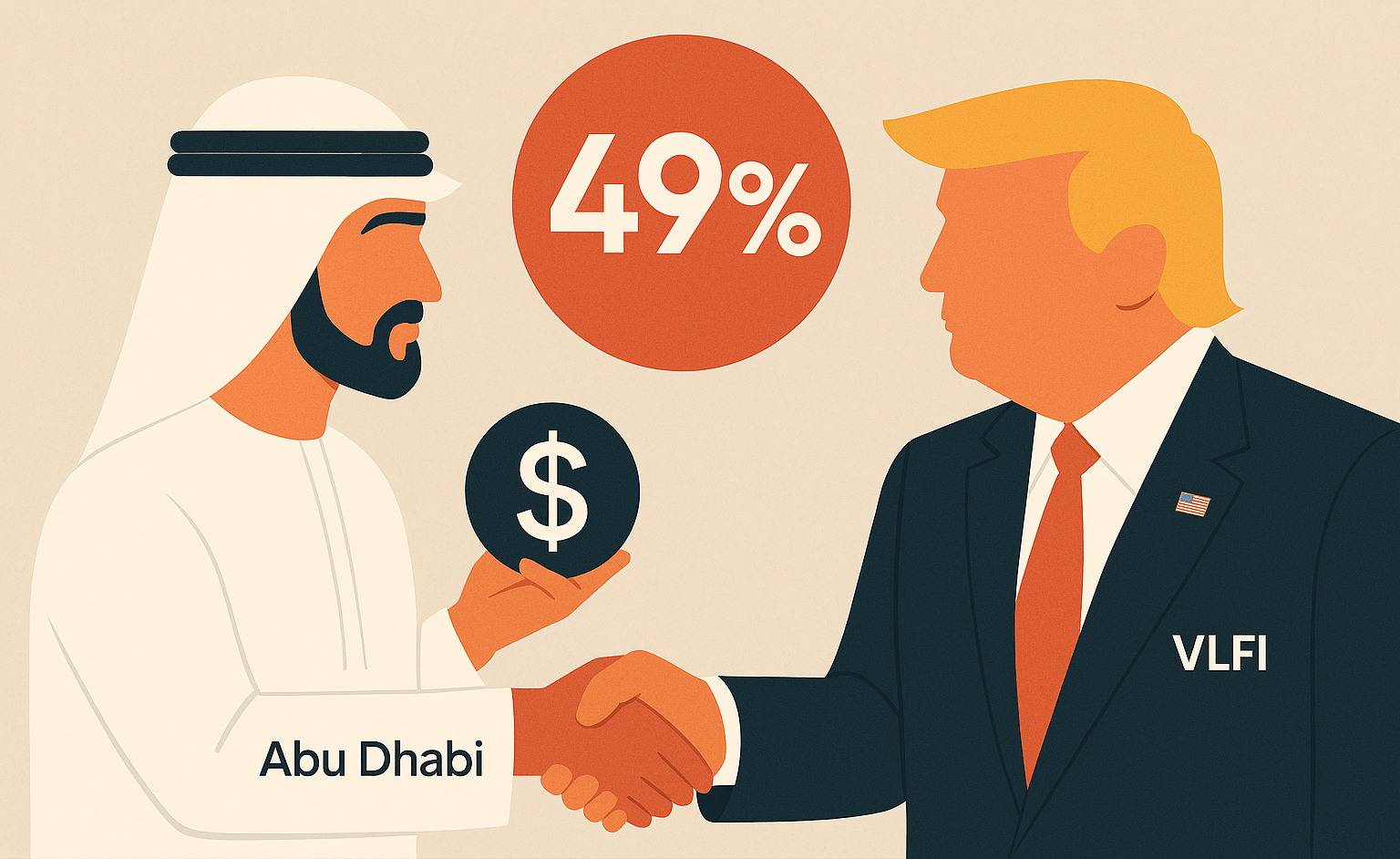
  • Abu Dhabi bought 49% of Trump company WLFI – $500 million for political favors

    Abu Dhabi bought 49% of Trump company WLFI – $500 million for political favors


    • The fact that a company from Abu Dhabi has taken over almost half of Donald Trump’s crypto company World Liberty Financial is currently causing political unrest in the USA – even if people there are now used to a lot.
    • The buyer is Sheikh Tahnoon bin Zayed Al Nahyan, one of the most powerful puppet masters in the Emirates. He is national security advisor to the UAE, controls several sovereign wealth funds and is head of the AI ​​group G42, which invests in AI on a large scale worldwide.

    The “deal” took place in January 2025, a few days before Trump’s inauguration. A total of $500 million flowed into WLFI through the company “Aryam Investment 1,” including $250 million immediately after the contract was signed. According to media reports, a significant portion of this sum went directly to companies belonging to the Trump family and to companies owned by real estate entrepreneur Steve Witkoff, who – what a coincidence – was also working as the US envoy to the Middle East.

    Political decision in the shadow of the deal

    The timing is particularly sensitive: the contract was signed a few days before Trump took office.

    Shortly thereafter, Tahnoon visited the White House. Four months later, the US government approved delivery of 500,000 State-of-the-Art Nvidia-Chips per year to the Emirates. 20 percent of this, 100,000 pieces per year, goes to Tahnoon’s own company G42. The contract runs until 2027 and has an extension option until 2030.

    Abu Dhabi Skyline
    Image created with ChatGPT-AI (DALL E)

    It is a decision that the Biden administration had previously rejected, and for good reason. The critics see this as a direct mixing of private business interests with state technology policy, which is traditionally considered particularly sensitive in the USA – but in the Middle East is often a prerequisite for a business deal.

    Crypto project with political explosiveness

    WLFI is an ambitious project that aims to combine cryptocurrencies, tokenization and wealth creation. The wealth creation thing has worked out well so far, at least for the Trump family. She still holds the majority stake in the company and therefore benefits directly from its economic success.

    The fact that millions of pieces of critical hardware technology are now being delivered free to a state whose general US-friendliness is doubted by many raises questions about influence, transparency and control of the final use. Legal experts and Congress are now debating whether the deal creates a new form of political vulnerability.

    One thing is certain: The Intertwinement of crypto, geopolitical interests and personal profit motive makes this case one of the most controversial financial transactions in recent US politics.

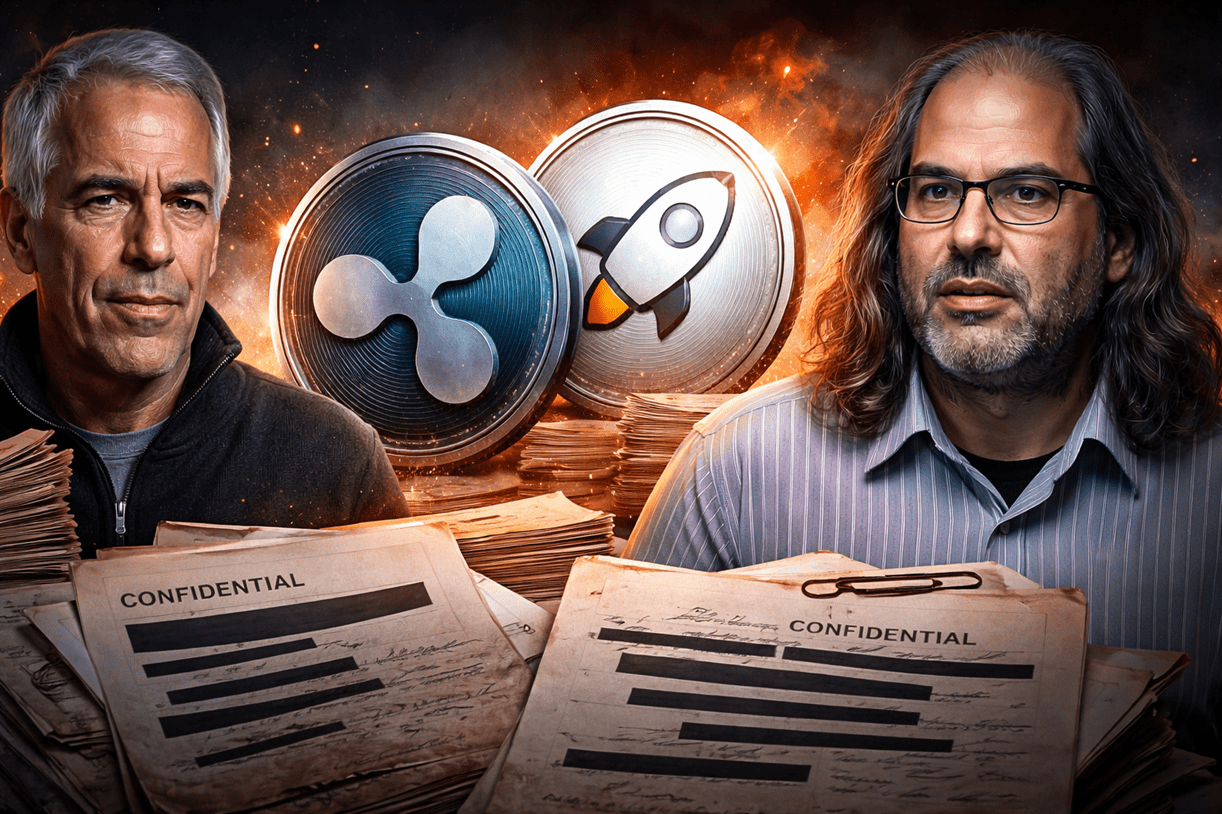
  • Ex-Ripple CTO Schwartz rejects Epstein conspiracy surrounding XRP/XLM

    Ex-Ripple CTO Schwartz rejects Epstein conspiracy surrounding XRP/XLM


    • In the US DoJ files, Ripple/XRP and Stellar (XLM) appear in an email from 2014, which has sparked speculation in the XRP community.
    • Ex-Ripple CTO David Schwartz has rejected the conspiracy theories and stated that he is not aware of any reliable evidence of connections, meetings or agreements.

    The investigative files in the Jeffrey Epstein case published by the US Department of Justice on January 30, 2026 contain passing mentions of Ripple/XRP and Ripple (XRP) in an email exchange from 2014. These mentions have caused a great stir and all sorts of speculation and interpretations in the XRP community on X.

    Ex-Ripple CTO denies conspiracy theories

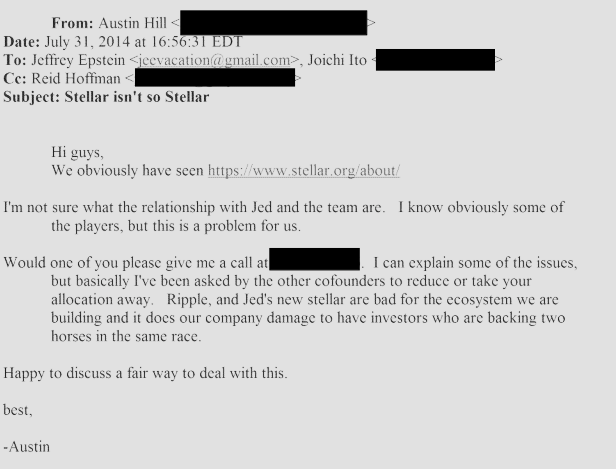
    Specifically, the files contain an email dated July 31, 2014, in which Blockstream co-founder Austin Hill discussed the rivalry between Ripple and Stellar and warned against supporting both at the same time. The files suggest that Epstein had no involvement in the financing or development of these projects.

    And that’s exactly what Ripple’s former CTO David Schwartz said via X on January 31, 2026 confirmed. The trigger was a post that claimed that there must be collusion or NDAs, that Epstein and his team (along with Adam Back’s Bitcoin project Blockstream) could have conspired against Ripple.

    Ripple XRP Stellar XLM Conspiracy Epstein
    Quelle: X @JoelKatz

    Schwartz responded clearly: “I know of no connections between Jeffrey Epstein and Ripple, XRP or Stellar. I am also not aware of any evidence that anyone at Ripple or Stellar has met Epstein or anyone close to him.”

    He added: “There are some indirect points of contact between Epstein and people who are involved with Bitcoin in different ways – but that would probably be the case with most very rich people.”

    When a user asked about the origin and relevance of the document, Schwartz classified the content more narrowly. According to his account, it is “an email from Austin Hill to Jeffrey Epstein,” in which Hill explained why, in his view, support for Ripple or Stellar makes someone an opponent.

    What is important is not so much “Epstein” as the recipient, but the logic behind it: it is “quite likely” that Hill and others have expressed “similar views to many other people”.

    When asked what was meant by “two horses in the same race,” Schwartz said: Hill meant that he thought Ripple and Stellar were bad for the ecosystem and that “anyone who supports XRP or XLM is an opponent/enemy.”

    At the same time, Schwartz also wrote that he expects even more revelations: “I hate to be a conspiracy theorist, but I wouldn’t be at all surprised if this is just the tip of a huge iceberg.” At the same time, he criticized the camp mentality, which, in his view, continues to have an impact today: “The sad thing is: we are really all in the same boat and this attitude is damaging to everyone in this area.”

    Epstein’s overtures to Bitcoin

    The release of the nearly three million U.S. Department of Justice documents revealed Epstein’s extensive, if peripheral, involvement in the early cryptocurrency sector. The documents confirm that Epstein was among the early backers of Bitcoin infrastructure, most notably through an investment in Blockstream in 2014 that grew from $50,000 to $500,000 through an MIT Media Lab fund.

    Epstein claimed in a 2016 email to have had contact with the “founders of Bitcoin,” although there is no evidence of this (or whether he only meant developers from that time). In 2011, the Epstein team sought to establish contact with Gavin Andresen, an early Bitcoin developer who took over management of Bitcoin source code maintenance from creator Satoshi Nakamoto in 2010. Andresen likes to dismiss the contact with “No, sorry, I’m busy”.

    Correspondence also shows that he had conversations and “philosophical debates” with PayPal and Palantir co-founder Peter Thiel about Bitcoin, although his personal views on Bitcoin deteriorated until 2017, when he dismissed it as “not worth buying.”

  • TRON founder Justin Sun under pressure: new allegations of market manipulation

    TRON founder Justin Sun under pressure: new allegations of market manipulation


    • There are new allegations of market manipulation against TRON founder Justin Sun. The trigger is the influencer Zeng Ying, who is said to have been Sun’s partner in the early TRON years.
    • Now she wants to hand over incriminating material to the US Securities and Exchange Commission (SEC). Your statements could cause significant damage to Sun, as there is already a similar lawsuit against him that could be expanded.

    Zeng Ying describes in detail how Sun is said to have opened several Binance accounts using employee identities in 2017 and 2018 in order to specifically influence the TRX price. According to their account, coordinated waves of purchases were triggered to artificially inflate the price and market capitalization before large quantities of tokens were sold to retail investors.

    She speaks of “huge illegal profits” and claims to have internal chats, documents and statements from former employees. The SEC has already made contact and wants to cooperate fully. It is currently unclear whether and to what extent the authority will use the new information, but the level of detail of the allegations is causing a considerable stir.

    The 2023 SEC lawsuit

    The allegations aren’t all that new. Back in March 2023, the SEC filed a comprehensive civil lawsuit against Sun, the Tron Foundation and related companies.

    Zeng Ying accuses her ex-partner Sun of carrying out over 600,000 wash trades between April 2018 and February 2019 in order to simulate higher than real sales.

    If that were true, it would be a case for the public prosecutor’s office, unless, as in the USA, the statute of limitations expired after five years.

    Unfair advertising with paid celebritiesImage created with ChatGPT-AI (DALL E)

    In addition, TRX and BTT should be sold without registration Celebrities secretly paid for advertising have been. The SEC estimated the allegedly illegal profits at around $31 million.

    The content of Zeng Ying’s statements corresponds to these allegations and – if they are true – provides inside information for the first time about processes, methods and people involved.

    Consequences for TRON and Sun

    The timing of the accusations is extremely bad for TRON. TRON is one of the most important networks for stablecoin transfers, and Sun practically controls the company. He also owns BitTorrent (Rainberry), as well as the exchanges Poloniex and HTX.

    Its influence on USDD, HTX and other projects is therefore significant. But each new legal rumor damages investor and market confidence in the companies with which Sun is associated. In the short term, this could result in strong volatility swings for TRX and BTT.

    Now Sun’s future depends on whether the SEC finds the new statements credible and whether they result in further legal action.

    If the statements are proven, Sun’s position in his own companies would become untenable – and the entire, then ex-TRON syndicate would have to reorganize itself.