Category: Coins

Digital assets, cryptocurrencies, blockchain, and currency news.

  • BitGo to Acquire NYDIG Trading Arm for $42.5 Million in Cash and Stock Plus $15 Million Earnout

    BitGo to Acquire NYDIG Trading Arm for $42.5 Million in Cash and Stock Plus $15 Million Earnout

    “This cycle is driven by institutional capital rather than purely retail demand, as was the case in previous crypto cycles,” Melville said. “As a result, incumbent crypto players must adapt to the demands of the new investor type, whether by servicing institutional clientele, tokenizing TradFi assets, encouraging the adoption of stablecoins for payment rails, or real-world asset derivatives trading onchain.”

    BitGo became first crypto firm to IPO in 2026

    BitGo BTGO was the first crypto firm to go public in 2026. Its shares debuted at $18, helping the company raise about $212.8 million and giving it a valuation of just over $2 billion.

    Amid the current downturn in the cryptocurrency market, BitGo shares are trading at around $7.

    NYDIG focuses on institutional bitcoin services

    NYDIG, or New York Digital Investment Group, operates across bitcoin custody, trading, financing and corporate treasury services. The company also runs high-density power facilities supporting Bitcoin mining and artificial intelligence.

    “Our team built NYDIG’s institutional trading business into something exceptional: proven execution expertise with derivatives and financing capabilities,” said Tejas Shah, CEO of NYDIG. “That business is complementary to BitGo’s digital asset infrastructure, and we look forward to a seamless transition for our clients and our colleagues, some of the most talented people in this market. The discipline and intensity that built our trading franchise also drives our HPC data center development business, where we see one of the most significant opportunities ahead.”

  • Fed Chair Kevin Warsh Speaks at Jackson Hole: Highlights and Bitcoin’s Initial Reaction

    Fed Chair Kevin Warsh Speaks at Jackson Hole: Highlights and Bitcoin’s Initial Reaction

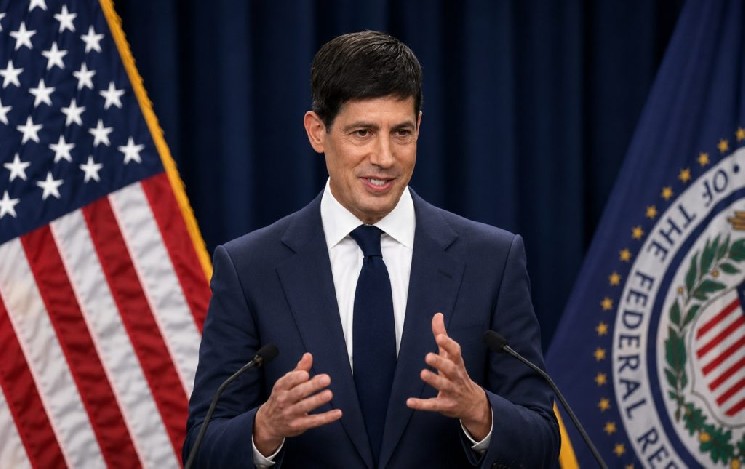
    Federal Reserve Chairman Kevin Warsh has begun his highly anticipated address at the Jackson Hole symposium in Jackson Hole, Wyoming.

    In his first speech as Fed chairman, Warsh highlighted inflation as a key concern and adopted a hawkish tone, saying price stability should remain the Federal Reserve’s priority. He noted that although summer inflation data had improved, underlying trends had not changed significantly.

    Key points from Warsh’s Jackson Hole speech

    “I’m struggling to define the financial conditions as restrictive.”

    We need to make sure that the downward trend in inflation is moving towards the target, otherwise we’ll have work to do.

    This summer’s inflation figures are better than expected, but don’t tell me that the underlying trends have changed significantly.

    Consumer spending is healthy, and labor markets are stable.

    The Fed needs to ensure that inflation remains stable.

    The economy remains resilient: consumer spending is healthy, labor markets are stable, and business investment is growing rapidly.

    Warsh also said that at the July meeting, there was a good majority that advocated waiting before changing interest rates.

    Bitcoin falls during Warsh’s speech

    Before Warsh’s address, Bitcoin was trading at around $79,000. After the speech began, its price fell to the $78,000 level. The price movement of Bitcoin during Warsh’s speech was as follows:

    This is not investment advice.

  • Warsh at Jackson Hole: ‘We have work to do’ on inflation

    Warsh at Jackson Hole: ‘We have work to do’ on inflation

    Federal Reserve Chairman Kevin Warsh said the central bank’s “predominant focus” should remain on inflation, striking a hawkish tone in closely watched remarks at the Kansas City Fed’s annual Jackson Hole symposium.

    “The responsibility for 65 months of sustained, elevated inflation sits squarely with the central bank,” said Warsh, delivering his keynote address at the Kansas City’s Fed Jackson Hole symposium.

    “We must be confident that underlying inflation is moving to our objective, clearly and at sufficient speed. Otherwise, we have work to do. That’s our job . . . our mandate . . . and our charge to keep.”

    Markets react to Warsh’s hawkish remarks

    Bitcoin fell to $78,700 following the comments. U.S. stocks were modestly lower, while bond yields moved slightly higher as investors assessed the Federal Reserve chairman’s inflation-focused message.

    Warsh’s speech had been highly anticipated because the Kansas City Fed’s annual Jackson Hole symposium has often served as a venue for U.S. central bank chiefs to prepare markets for major policy changes.

  • Grayscale Says Bitcoin Is Undergoing a Significant Change: “Approaching Gold!” What It Means for BTC

    Grayscale Says Bitcoin Is Undergoing a Significant Change: “Approaching Gold!” What It Means for BTC

    Bitcoin has climbed above $80,000 in recent days, prompting some analysts to suggest that the cryptocurrency may be entering the early stages of a bull market. The latest assessment comes from Grayscale Research Head Zach Pandl, who highlighted a significant change in Bitcoin’s relationship with traditional assets.

    Discussing Bitcoin’s correlation with gold, Pandl noted that its 90-day correlation with gold had increased from near zero at the beginning of the year to more than 50%. At the same time, Bitcoin’s correlation with the Nasdaq 100 had declined from above 60% to approximately 33%.

    According to Pandl, the shift suggests that investors are beginning to view Bitcoin not only as a high-risk technology asset, but also as an asset defined by scarcity, monetary independence and store-of-value characteristics.

    US Fiscal Concerns Put Scarce Assets Back in Focus

    Pandl said one of the main factors strengthening the relationship between Bitcoin and gold is the outlook for US government finances.

    The US federal debt has surpassed $40 trillion, while persistent budget deficits and rising yields on long-term Treasury bonds are renewing concerns about the dollar’s long-term purchasing power. Against this backdrop, “depreciation trading,” which involves shifting toward scarce assets to hedge against currency devaluation, is gaining renewed attention.

    Pandl argued that Bitcoin stands out in this environment because it is a scarce asset that can be valued alongside gold. Its appeal is supported by the absence of a central issuer, transparent supply rules and a maximum supply capped at 21 million coins.

    The Grayscale executive concluded that current macroeconomic conditions could create a more favorable market environment for Bitcoin and other scarce digital assets.

    This is not investment advice.

  • Ethena Looks Beyond Crypto to Tap Yield From Booming Equity Perpetuals

    Ethena Looks Beyond Crypto to Tap Yield From Booming Equity Perpetuals

    Ethena is expanding its funding trade into equity perpetuals as the protocol seeks new sources of returns after the supply of $USDe fell below $5 billion from a peak of nearly $15 billion.

    The move follows Thursday’s major $ENA token overhaul, when the Ethena Foundation announced changes to $ENA’s token economics. The overhaul eliminates monthly venture capital unlocks and puts to a vote whether revenue from Ethena’s businesses should be used for token buybacks.

    Ethena adapts its funding strategy to equity markets

    The strategy is essentially the same trade Ethena has run since $USDe’s launch: hold exposure to an asset, short its perpetual contract and collect the funding paid by leveraged long traders. The assets involved have included bitcoin $BTC$79,389.75, ether ETH$2,496.79 and solana (SOL).

    However, the trade became far less lucrative in crypto this year as prices plunged and market activity cooled. Ethena said bitcoin $BTC$79,389.75 funding averaged 11% in 2024 and 4.9% in 2025 before falling to just 2.2% this year through Aug. 11.

    Equity perpetuals have shown the opposite trend. According to Ethena, funding was positive on 94% of days on Hyperliquid and 97% of days on Binance once those markets reached meaningful scale. The median equity funding rate was 13.9%, compared with 3.9% for bitcoin.

    “One other interesting characteristic which makes this more attractive versus crypto is the natural positive skew of funding distribution,” co-founder Guy Young said in an X post.

  • SBI Buys 20% Stake in Indonesia’s Ajaib for $270 Million to Expand Yen Stablecoin Across Southeast Asia

    SBI Buys 20% Stake in Indonesia’s Ajaib for $270 Million to Expand Yen Stablecoin Across Southeast Asia

    SBI Holdings Plans $270 Million Investment in Indonesian Brokerage Ajaib

    SBI Holdings, a major Japanese financial services company, plans to acquire a $270 million stake in Ajaib Group, one of Indonesia’s leading online brokerages, before the end of this month.

    The investment is part of SBI’s strategy to expand its yen-denominated stablecoin, JPYSC, across Southeast Asia while developing blockchain-based infrastructure for cross-border settlements.

    SBI Targets Indonesia’s Retail Investment Market

    The deal would give SBI a foothold in Indonesia’s consumer retail market, which is valued at an estimated $375 billion by IMARC Group. Indonesia is also one of ASEAN’s largest retail-investing markets, with more than 20 million retail investors, according to The Straits Times.

    Ajaib provides online brokerage services, foreign-exchange margin trading, cryptocurrency services and asset management in Indonesia.

    “In this era of tokenization, the importance of global infrastructure for digital assets is greater than ever,” stated Yoshitaka Kitao, chairman and president of SBI.

    The planned investment follows SBI’s acquisition of Coinhako Group, a Singapore-based cryptocurrency exchange, for approximately $100 million in July. SBI also separately invested in DigiFT, a Singaporean digital securities trading platform, with the two companies establishing a joint venture.

  • BlackRock Secures Over $3.1 Billion in Cryptocurrency Inflows in 8 Days

    BlackRock Secures Over $3.1 Billion in Cryptocurrency Inflows in 8 Days

    Bitcoin (BTC) and Ethereum (ETH) have spearheaded a broad cryptocurrency market recovery over the past two weeks, prompting a massive accumulation spree by BlackRock Inc. (NYSE: BLK). The asset management giant acquired more than $3.1 billion in crypto assets across eight consecutive trading sessions, according to on-chain data analyzed by Finbold on August 28.

    BlackRock’s Bitcoin and Ethereum ETFs Lead $3.16 Billion Buying Spree

    Data from Arkham Intelligence reveals that BlackRock’s iShares Bitcoin Trust (IBIT) purchased a total of 22,722 BTC, valued at approximately $2.2 billion, during the eight-day window. Simultaneously, the iShares Ethereum Trust ETF (ETHA) accumulated 385,633 ETH, worth roughly $961 million. Combined, the purchases total approximately $3.161 billion. Both funds received the assets from Coinbase Prime, the institutional prime brokerage platform operated by Coinbase Global Inc. (NASDAQ: COIN).

    IBIT and ETHA on-chain transactions. Source: Arkham Intelligence.

    Record Inflows Swell IBIT Holdings to $62.3 Billion

    The buying pressure aligns with historic cash inflows into BlackRock’s Bitcoin vehicle. Metrics from SoSoValue show IBIT recorded nine consecutive days of net inflows totaling $2.302 billion between August 17 and August 27. Consequently, IBIT’s total Bitcoin holdings surged to $62.29 billion at the time of reporting.

    IBIT daily cash flow. Source: SoSoValue.

    Ethereum Products See Sustained Momentum

    BlackRock’s Ethereum exposure is also expanding rapidly. The iShares Staked Ethereum Trust ETF (ETHB) has attracted $130.54 million in net inflows over the past two months, lifting its total net assets to $872 million. Since inception, ETHB has experienced only a single month of outflows—$10.06 million in June.

    ETHB daily cash flow. Source: SoSoValue.

    Meanwhile, the flagship iShares Ethereum Trust (ETHA) posted nine straight days of inflows amounting to a net $1.02 billion. This streak pushed ETHA’s net assets to approximately $8.63 billion.

    ETHA daily cash flow. Source: SoSoValue.

    Total Crypto Portfolio Nears $72 Billion

    Cumulatively, BlackRock’s cryptocurrency portfolio across its exchange-traded products reached nearly $71.79 billion as of Friday, underscoring the firm’s dominant position in the institutional digital asset landscape.

    Featured image via Shutterstock.
  • SEC Sues 38 Entities Over Fake Adviser Filings

    SEC Sues 38 Entities Over Fake Adviser Filings

    SEC Charges 38 Entities with Filing False Forms ADV to Pose as Legitimate Investment Advisers

    The U.S. Securities and Exchange Commission filed 38 separate civil complaints on August 27 in the U.S. District Court for the District of Colorado, alleging that the defendants submitted fraudulent Forms ADV between 2025 and 2026 to present themselves as legitimate exempt reporting advisers (ERAs). The enforcement action targets entities the SEC says likely operated overseas and used official public filings to gain credibility with U.S. retail investors.

    Allegations of Systematic Filing Fraud

    The complaints identify repeated patterns across the fraudulent submissions. Defendants listed Colorado business addresses where they had no physical presence, supplied disconnected telephone numbers, or provided numbers belonging to unrelated businesses. Many filings contained identical or nearly identical information.

    According to one complaint, purported funds commonly reported either $78.96 million or $48.96 million in assets, 89 or 33 investors, and minimum investments of either $50,000 or $5,000. The entities also listed matching ownership structures attributing 10% ownership to the adviser or related parties, 90% to foreign investors, and 50% to funds of funds—categories that could overlap.

    Several filings claimed that private-fund financial statements had been reviewed by one of two independent accounting firms. SEC investigators could not find either auditor in federal or state accountancy registries.

    Exploiting the Exempt Reporting Adviser Process

    An exempt reporting adviser is not an SEC-registered investment adviser. ERAs generally advise only venture capital funds or private funds with less than $150 million under management in the United States. They must submit limited information through Form ADV, but the SEC does not approve their experience, qualifications, or business claims before publishing those filings.

    The complaints allege the defendants exploited this process because submissions became publicly searchable without prior approval. Some related websites displayed certificates falsely stating that the entities had received SEC RIA permission, according to the regulator’s alert. The certificates used genuine filing and registration numbers to appear authentic.

    Defendant Names Suggest Crypto and Tech Focus

    Several defendants adopted names referring to crypto, exchanges, emerging technology, or financial education. They include CryptoOrbit, Pinnacle Crypto Exchange, Web3 University, Axivon Exchange, and Future Finance Academy. However, the SEC did not characterize every defendant as a cryptocurrency business.

    Foreign IP Addresses and Unresponsive Defendants

    The SEC said IP addresses used to access its filing system were traced to foreign jurisdictions in several cases. The agency did not identify every country or allege that all 38 entities operated outside the U.S.

    Commission attorneys requested records supporting the firms’ reported assets, investors, employees, auditors, and fund operations. The defendants allegedly failed to provide the requested material.

    In the case against Abrdn Canada Limited, SEC staff mailed a records demand to its stated Denver address in April. The correspondence was returned as undeliverable. Calls reached a disconnected number, while a later email received no response. The complaint also alleges the entity claimed to operate as a commodity pool operator or trading adviser without a corresponding CFTC or National Futures Association registration.

    Legal Claims and Requested Remedies

    The SEC charged the defendants under Sections 204(a) and 207 of the Investment Advisers Act, provisions governing adviser records and false statements made in required filings. The agency seeks permanent injunctions, civil penalties, and orders preventing the entities from submitting future Forms ADV as exempt reporting advisers. The amount of any penalty would be determined by the court.

    The SEC directed FINRA to remove the 38 filings from the Investment Adviser Public Disclosure database. The FBI assisted through Operation Level Up, an initiative that identifies and contacts potential victims of investment fraud.

    Investor Guidance and International Context

    The regulator advised investors not to treat a Form ADV appearance as proof of SEC registration. Users should verify a firm’s status independently and avoid transferring money, cryptocurrency, or personal information when an ERA approaches individual investors directly.

    Comparable impersonation tactics have also appeared outside the United States. In related coverage, fraudsters used regulator names and counterfeit documents to target crypto users during Europe’s MiCA transition.

    The allegations have not been proven in court. The SEC did not report how much investors transferred to the entities, identify confirmed victims, or disclose total losses.
  • Solana Breaks $100: Why the Real Rally Is Just Beginning

    Solana Breaks $100: Why the Real Rally Is Just Beginning

    Solana has decisively broken above the $100 psychological barrier, extending its strongest monthly advance in years as institutional access, exchange-traded fund activity, and evolving tokenomics converge around $SOL. The breakout follows months of resistance below the key level, putting the $110–$120 region firmly back on traders’ radar. With Charles Schwab preparing to expand Solana access and the network moving toward a tighter issuance framework, the latest rally is developing into more than a technical rebound.

    Schwab’s $SOL Expansion Broadens Institutional Access

    The move coincides with Charles Schwab’s decision to add Solana, Avalanche, and Chainlink to Schwab Crypto in the coming months. The brokerage began rolling out direct Bitcoin and Ethereum trading in May, and the planned $SOL addition expands its digital-asset offering to three of the largest cryptocurrencies outside BTC and ETH. Schwab oversees more than $12 trillion in client assets and serves about 39 million active brokerage accounts.

    The significance lies in the distribution channel: Solana is moving closer to investors who already operate within a traditional brokerage environment rather than requiring them to use a crypto-native exchange. ETF activity is providing a separate indication of institutional demand. U.S. Solana-linked products have recorded sustained inflows, while Bitwise’s BSOL staking ETF posted a record $126 million in daily trading volume on August 27, taking seven-day turnover to about $500 million.

    🔥BULLISH: Solana is EXPLODING, surging 13% today and about 50% in August for its strongest month since 2024.The rally comes as Solana votes on cutting issuance and burning more $SOL, potentially triggering a supply squeeze.Notably, Nasdaq-listed DeFi Development Corp. bought… https://t.co/fRjAD9l3CP pic.twitter.com/b4EggMjEMl
    — Coin Bureau (@coinbureau) August 27, 2026

    Solana’s Supply Curve Becomes Part of the Investment Case

    Demand-side developments are being matched by a potentially important change to $SOL’s future supply. Solana validators have been voting on SGP-0002 and SGP-0003, proposals that would accelerate disinflation and increase the amount of transaction-related fees permanently removed from circulation.

    SGP-0002 would increase the annual disinflation rate from 15% to 30%, bringing Solana toward its 1.5% terminal inflation rate considerably faster and reducing projected issuance by about 18.9 million $SOL over six years. SGP-0003 would introduce a resource-based fee that is burned, with estimates suggesting daily $SOL burns could rise from roughly 600–800 to around 7,500–9,000 $SOL under current activity levels.

    $SOL Price Analysis: Can Buyers Defend $100?

    Solana’s chart structure has improved substantially after $SOL cleared the $100 psychological barrier. The token had previously broken above the $78–$79 resistance zone and subsequently established a higher base around $92–$97 before making the latest move through $100. That sequence matters because it shows buyers defending higher levels rather than relying on a single vertical move.

    Immediate resistance now sits around $105–$110. A sustained daily close above this area would strengthen the breakout and expose the $115–$120 region, with the broader $125–$130 supply zone becoming relevant if momentum continues. At the same time, $SOL’s rapid rally has pushed momentum indicators into elevated territory. The daily RSI is around the overbought zone, while the recent run of positive sessions leaves the market vulnerable to profit-taking. A pullback toward $100–$105 would not necessarily damage the bullish setup if buyers defend the former resistance as support. A sustained move back below $100, however, would weaken the breakout and bring the mid-$90s back into focus.

    Final Outlook

    $SOL’s move above $100 has changed the immediate technical structure, but the more important development is the convergence of institutional access, ETF demand, and a potential reduction in future supply growth. Schwab’s planned listing expands the potential buyer base, while the governance proposals could make the token’s issuance profile more conservative if implemented.

    The $100–$105 zone is the key support level and $110–$120 is the next upside test. Holding the breakout would keep the broader recovery intact, while a failure to defend $100 would suggest that the market needs to consolidate after the recent acceleration. Solana has cleared the level that held back the recovery for months; the next phase will depend on whether $100 becomes a durable floor rather than another temporary breakout.

  • ‘Make tokens great again!’: ENA Hits Yearly High After Ethena Implements 4 Changes

    ‘Make tokens great again!’: ENA Hits Yearly High After Ethena Implements 4 Changes

    Ethena Foundation Announces Major Ecosystem Updates: Buyback Proposal, End to VC Overhang, and IP Realignment

    The Ethena Foundation has unveiled four significant ecosystem updates that analysts describe as extremely bullish and long overdue. The announcement addresses persistent concerns around token unlocks, intellectual property rights, and revenue distribution for the $ENA token and the $USDe yield-generating stablecoin.

    Foundation Acquires Locked Seed Investor Tokens; Monthly VC Overhang Eliminated

    First, the Foundation confirmed it has purchased all locked tokens from major seed investors who sold $ENA over the past nine months. Additionally, the monthly venture capital (VC) overhang has ended, removing a major bearish factor that previously weighed on the token. Team tokens will remain locked according to the original schedule.

    In a coordinated move, the Ethena Foundation and lead investors agreed to eliminate future overhang associated with monthly VC investor unlocks by releasing unvested tokens. Throughout 2024, Ethena raised over $180 million by selling 315 million $ENA tokens, a process that created persistent VC overhang until this latest resolution.

    IP Rights Assigned to Foundation; Avoiding Governance Conflict

    Third, $ENA will now be fully aligned with the ecosystem. Brand and intellectual property (IP) rights have been assigned to the Foundation and will be governed by token holders. Crucially, there will be no payouts to private investors in Ethena Labs, the entity responsible for building ecosystem products.

    This decision directly contrasts with the historic Aave governance dispute, which was triggered by a battle over IP ownership and revenue. Ethena has taken the opposite route to avoid a similar divisive conflict.

    Fee Switch and $ENA Buyback Proposal Tied to Revenue Milestones

    Finally, the project announced a fee switch and an $ENA buyback proposal funded by generated revenue. Currently, Ethena’s $USDe stablecoin has a market supply of $4.5 billion and generated $1.8 million in revenue in 2026.

    Under the proposal, if the $USDe supply crosses $7.5 billion and annualized revenue reaches $450 million, 5% ($22 million) of proceeds will be allocated to $ENA buybacks. The buyback program is designed to scale further if ecosystem growth accelerates.

    Community Support Is Unanimous

    The proposals have received overwhelming community backing. The on-chain vote, which concludes on September 2, currently shows 100% voting in favor with zero “abstain” or “against” votes recorded as of press time, marking unanimous support.

    This sentiment is echoed across social media. Reacting to the update, Ethena founder Guy Young stated:

    Long overdue. Make tokens great again.

    Sam Ruskin, Investment Associate at crypto VC Reciprocal Ventures, projected a significant re-rating for the token:

    Rerate $ENA much higher. Ethena’s business model has shifted quite a lot in the last year. Bullish on Ethena winning the collateral layer.

    Business Model Diversification and Market Reaction

    Ethena primarily offers white-label stablecoins and $USDe savings products. Over the past year, the protocol diversified its collateral beyond crypto assets into traditional liquid loans to mitigate low yields during bear markets. Expansion efforts for $USDe distribution have also scaled, with Coinbase announced as the latest distribution partner.

    On Thursday, $ENA’s price rallied 15% following the announcements. The rally extended a further 12% to a yearly high of $0.189 before a slight pullback at press time. Market participants are now watching how evolving revenue dynamics will drive buybacks and token price appreciation moving forward.