Category: Coins

Digital assets, cryptocurrencies, blockchain, and currency news.

  • Bitmine Chairman Tom Lee Reveals New Bitcoin and Ethereum Price Predictions

    Bitmine Chairman Tom Lee Reveals New Bitcoin and Ethereum Price Predictions

    Bitmine Chairman Tom Lee says Ethereum is undervalued relative to Bitcoin and could climb to $6,000 if Bitcoin breaks above $150,000. He believes Ethereum has substantial upside potential in the months ahead.

    Regulation and institutional demand could support Ethereum

    Lee identified several factors that could drive Ethereum’s value higher through the remainder of the year. The most significant is the potential passage of the CLARITY Act, a comprehensive US regulatory framework for the cryptocurrency market.

    According to Lee, clearer regulations could encourage institutional investors to enter the crypto market. The return of pent-up capital to digital assets could also provide additional support for cryptocurrency prices.

    Other potential catalysts include increased capital inflows from Asia and “compensatory purchases” of crypto assets by global institutions seeking to improve their quarterly performance.

    Ethereum could regain ground against Bitcoin

    Lee said the $ETH/BTC ratio, which measures Ethereum’s performance against Bitcoin, could retest its previous level of 0.08. Even in a more cautious scenario, he believes a recovery to 0.04 would give Ethereum significant upside potential.

    Although Lee acknowledges that Bitcoin retains long-term growth potential, he expects asset tokenization and AI-powered finance to be among the key forces shaping the cryptocurrency market over the next five years.

    Lee’s outlook supports the possibility that the performance gap between Bitcoin and Ethereum could narrow. Market participants are expected to closely monitor how institutional capital flows affect Ethereum in the coming period.

    If Bitcoin reaches $150,000, Ethereum’s move to $6,000 would represent a significant gain from current price levels. However, that scenario depends on Bitcoin surpassing the $150,000 threshold and Ethereum attracting the anticipated capital inflows.

    This is not investment advice.

  • Luke Dashjr Exits Ocean Mining Pool After Dispute Over Bitcoin’s Future

    Luke Dashjr Exits Ocean Mining Pool After Dispute Over Bitcoin’s Future

    Longtime Bitcoin developer Luke Dashjr has resigned as chairman, chief technology officer and director of Ocean mining pool, ending his involvement with the company after its parent, Mummolin, repurchased his entire equity stake.

    The separation was agreed by both sides and reflects differing views on the future of Bitcoin mining and recent protocol developments. Mummolin and Dashjr did not disclose the value of the equity buyback.

    Luke Dashjr to launch Convoy mining venture

    Dashjr, who co-founded Ocean, plans to launch a new Bitcoin mining venture called Convoy. Ocean said it will continue operating its transparent, non-custodial mining pool, which pays rewards directly to participating miners.

    The split comes weeks after Dashjr began a sabbatical from Ocean following the failure of BIP-110, a controversial proposal that sought to temporarily restrict the storage of non-financial data on the Bitcoin network.

    Bitcoin mining market faces pressure

    Dashjr’s departure comes as the Bitcoin mining industry remains concentrated and under financial pressure. Publicly traded mining companies have been reducing their Bitcoin hashrate while leasing sites and power capacity to artificial intelligence and high-performance computing operations.

    Despite those shifts, Foundry USA, AntPool and F2Pool continue to produce well over half of recent Bitcoin blocks.

  • Binance Announces End of Network Support for Altcoin: Here’s Why

    Binance Announces End of Network Support for Altcoin: Here’s Why

    Binance Ends BounceBit Mainnet Support After Chain Shutdown

    Cryptocurrency exchange Binance will end mainnet support for BounceBit (BB) after the BounceBit Chain was permanently shut down following a hacking attack. Binance will continue supporting BB deposits and withdrawals through the $BNB Smart Chain (BEP20) network.

    BB Mainnet Deposits and Withdrawals Suspended

    According to Binance, BB deposits and withdrawals on the BounceBit mainnet were suspended on August 20, 2026, at 05:00. Deposits and withdrawals through the $BNB Smart Chain are scheduled to reopen on September 1, 2026, at 10:00, allowing users to transfer their existing assets to the new network.

    BounceBit Token Migration to BEP20

    As part of the token transformation, BounceBit (BB) will migrate from its mainnet to the $BNB Smart Chain at a 1:1 ratio. This means users’ BB holdings will not change as a result of the migration. Future transactions will use the new BB token’s smart contract, which follows the BEP20 standard.

    Binance said deposits and withdrawals on the BounceBit mainnet will no longer be supported. However, BB spot, margin and futures trading services, along with Binance Earn services, will not be affected during the contract transition.

    The exchange will manage the technical procedures required for the conversion, meaning users will not need to manually complete the token migration.

    BounceBit Chain Shutdown Follows Security Incident

    Binance’s statement did not provide full details about the hack that led to the shutdown of the BounceBit Chain. The permanent termination of the project’s mainnet represents a major change for the BounceBit ecosystem following the security incident.

    Moving BB support to the BEP20 network is intended to keep the token available through $BNB Smart Chain infrastructure. Users should select the correct network when making deposits or withdrawals after services reopen on September 1, 2026. The BounceBit mainnet will no longer be supported.

    The transition moves the BounceBit ecosystem to a new technical infrastructure while preserving existing BB trading services on Binance, an important consideration for investors.

    This is not investment advice.

  • Michael Saylor, Strategy Founder, Signals Company May Buy Bitcoin (BTC) Again

    Michael Saylor, Strategy Founder, Signals Company May Buy Bitcoin (BTC) Again

    Michael Saylor, founder of Strategy and a prominent institutional Bitcoin investor, has hinted that the company could be preparing to buy Bitcoin again. Saylor sparked speculation after posting the phrase “We’re ₿ack” on social media.

    The use of the Bitcoin symbol was widely interpreted as a potential signal that Strategy may be preparing a new $BTC purchase. However, Saylor did not explicitly confirm that the company would acquire more Bitcoin, and he provided no details about the possible purchase amount.

    Strategy’s Bitcoin buying strategy

    Strategy is one of the companies most closely associated with using Bitcoin as a core institutional treasury asset. Through its recurring $BTC purchases, the firm has become one of the largest corporate Bitcoin holders in the cryptocurrency market.

    Because of the scale and regularity of Strategy’s acquisitions, Saylor’s Bitcoin-related posts often generate expectations of another purchase. The company’s buying activity is closely monitored by crypto investors, who view large-scale acquisitions as a potential indicator of institutional demand for Bitcoin.

    News of a new purchase could also affect market sentiment. Saylor’s latest post quickly became a topic of discussion among cryptocurrency investors because the phrase “We’re ₿ack” was linked to similar messages associated with previous Strategy Bitcoin purchase announcements.

    No official Bitcoin purchase announcement yet

    Strategy has not yet made an official announcement confirming a new Bitcoin acquisition. If the company proceeds with another purchase, investors will be watching the transaction size and the method used to finance it.

    Strategy’s continued Bitcoin accumulation could further increase the amount of $BTC on its balance sheet. At the same time, fluctuations in the Bitcoin price continue to have a significant effect on the company’s financial performance.

    Market participants are now awaiting an official statement from Strategy following Saylor’s post. The key question is whether the company will announce a new Bitcoin purchase in the coming days.

    This is not investment advice.

    Source: cryptonews.net

  • September Fed Rate Hike Fears Look Overblown as Probability Stands at Just 58%, Not 90%

    September Fed Rate Hike Fears Look Overblown as Probability Stands at Just 58%, Not 90%

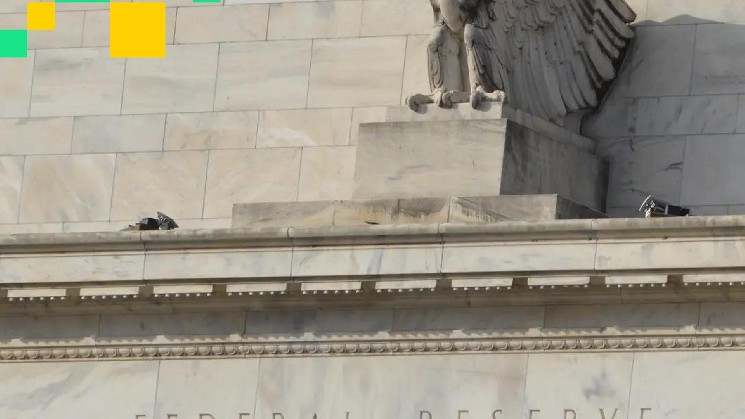
    Inflation concerns are weighing more heavily on Federal Reserve policy expectations than labor-market trends, according to Warsh, who said inflation is unlikely to return to the central bank’s target without intervention.

    Warsh pointed to the Federal Reserve’s preferred inflation gauge, the Personal Consumption Expenditures (PCE) index, which stood at 3.7%. He described the reading as “are more concerning” relative to the Fed’s 2% inflation target.

    Broad-based price increases raise Fed concerns

    Over the past year, more than half of the goods and services tracked by the government recorded price increases of 3% or more. That compares with roughly one-third experiencing similar increases during the two decades before the pandemic.

    The comments were quickly interpreted as hawkish, or supportive of higher interest rates, fueling expectations on social media that the Fed could deliver a 25-basis-point rate hike in September. The benchmark borrowing rate currently stands in a range of 3.5% to 3.75%.

    Bitcoin fell 3% to below $77,000 on Friday, marking its first significant pullback after a sharp rally from approximately $63,000 to more than $80,000 earlier this month. Gold also declined, while the U.S. Dollar Index and Treasury yields both increased.

    Analysts question rate-hike fears

    Bianco is not alone in downplaying concerns about a potential rate increase. Firms including ABN AMRO Investment Solutions and Brandywine Global Investment Management have expressed similar skepticism.

    Robin Brooks, a senior fellow at the Brookings Institution and former chief economist at the IIF, said a possible rate hike would be intended to calm volatility in the Treasury market rather than represent outright monetary-policy tightening.

    Such a move could reinforce confidence in the Fed’s commitment to controlling inflation, potentially reducing the additional premium investors demand to hold long-term bonds and limiting further increases in Treasury yields.

  • Zcash Private Transactions Could Drop from Three-Second Waits to Under 200 Milliseconds

    Zcash Private Transactions Could Drop from Three-Second Waits to Under 200 Milliseconds

    Shielded wallets using Zakura Common and full nodes such as Zakura can benefit from Zcash’s new cryptography stack, according to Zcash cofounder Sean Bowe.

    “Shielded wallets that use Zakura Common, and full nodes like Zakura itself, all benefit,” Zcash cofounder Sean Bowe said in an X post.

    Zcash scaling targets wallets and transaction processing

    The changes do not require an upgrade to the Zcash network. Wallet developers can adopt the open-source libraries on the network as it exists today. Zakura has already migrated to the new stack in version 1.3.0, while Vizor Wallet is among the first wallets to implement it.

    Zcash’s scaling challenge involves more than the speed at which its blockchain produces blocks. When Zakura launched in July, its developers set a long-term goal of supporting more than 50,000 private transactions per second, roughly matching the scale of major card networks. They also said existing wallet software was limited to about one transaction per second.

    CoinDesk reported at the time that the plan addressed multiple bottlenecks, including the speed at which nodes verify transactions and the amount of data wallets must download.

    The new cryptography stack targets another bottleneck: the time a user’s device needs to construct a private payment.

    Zakura said wallets should also synchronize faster with the new libraries. Full nodes are expected to benefit from faster transaction verification and fewer orphaned blocks. The team said its software can already support the 25-second block times proposed for Zcash’s next major upgrade, NU7.

  • Russia’s Crypto Trading Could Reach $46 Billion in First Year

    Russia’s Crypto Trading Could Reach $46 Billion in First Year

    Russia’s regulated cryptocurrency market could handle between 3.5 trillion and 4 trillion rubles in trading volume during its first year, according to an Aug. 29 forecast from SberCIB Investment Research.

    The upper end of the estimate equals approximately $46.43 billion at the exchange rate used by TASS. Sberbank Deputy Chairman Anatoly Popov said annual trading volume could reach about 7.5 trillion rubles, or $87.06 billion, by 2029.

    The projection is a forecast, not a guaranteed minimum. Contrary to some secondary reports, TASS said first-year volume was “not expected to exceed” 4 trillion rubles. The 3.5 trillion-to-4 trillion-ruble range should therefore be treated as SberCIB’s estimate rather than a confirmed trading target.

    Russia’s crypto market forecast assumes limited migration

    Popov said Russian cryptocurrency transactions currently total roughly 50 billion rubles per day. Based on Russian Finance Ministry data he cited, that would equal approximately 18 trillion rubles over a full year.

    SberCIB expects about 20% of this activity to shift to regulated exchanges during the first year. The bank forecasts organized trading of between 4.75 trillion and 5.25 trillion rubles by 2028, followed by approximately 7.5 trillion rubles in 2029.

    The estimates depend on investor demand, exchange registrations and the final implementing rules. Sberbank has not presented the figures as official forecasts from Russia’s Finance Ministry or the Bank of Russia.

    Popov expects a substantial share of cryptocurrency activity to remain with exchange services operating outside organized markets. As a result, the forecast covers only a minority of Russia’s broader crypto transaction volume.

    Retail investors face testing and annual purchase limits

    Russia’s regulated cryptocurrency framework is scheduled to take effect on Sept. 1, 2026. The Bank of Russia said qualified and non-qualified investors will be able to conduct crypto transactions through approved intermediaries.

    Non-qualified investors must pass a knowledge test before purchasing eligible cryptocurrencies. They will be limited to purchases of no more than 300,000 rubles, approximately $3,800, each year through every intermediary.

    Qualified investors must also complete testing. However, the central bank said they could access any cryptocurrency without the same monetary ceiling. The exact products available will depend on intermediary services and supporting regulations.

    The framework covers brokers, asset managers, exchanges and digital depositories. Cryptocurrency remains prohibited as a payment method for ordinary goods and services inside Russia.

    Bitcoin, Ether and $USDT lead the proposed asset list

    The Bank of Russia has proposed Bitcoin, Ether and Tether’s $USDT for organized trading. The regulator selected the assets using criteria related to market capitalization, trading volume and overseas price history.

    The consultation did not mean that every intermediary would immediately offer all three assets. The central bank’s proposed BTC, ETH and $USDT list remained subject to final regulatory action after the consultation period closed on Aug. 24.

    Other cryptocurrencies could remain unavailable to ordinary investors through regulated venues unless they meet the central bank’s standards. Qualified investors are expected to receive broader access after completing the required testing.

    The restricted retail list could leave some demand outside the licensed system, a possibility reflected in SberCIB’s conservative adoption assumptions.

    Licensing deadlines will shape the market’s first year

    Existing crypto exchange providers can continue operating during a transition period but must complete registration by July 1, 2027. This delay means the regulated market will not operate at full capacity immediately after the law takes effect.

    The central bank has also proposed rules covering exchanges, digital depositories, client accounts and asset records. The Bank of Russia will maintain official registers for approved market participants.

    Sberbank separately plans to launch cryptocurrency trading, custody and digital-depository infrastructure by Dec. 1, 2026. According to earlier reporting, the bank has not finalized customer eligibility, supported assets, fees or withdrawal terms.

    The first measurable results will depend on how many intermediaries enter the regulated system and how much activity moves away from unregistered services. No verified market movement in Bitcoin, Ether or $USDT was directly attributed to SberCIB’s forecast.

  • Trump-Themed GOLD Rug Pull Shows How Viral Pumps Trap Traders

    Trump-Themed GOLD Rug Pull Shows How Viral Pumps Trap Traders

    Trump Digital Gold Memecoin Collapses After Viral X Promotion

    Trump Digital Gold (GOLD), a Solana-based memecoin, rapidly collapsed after a burst of attention on social media, leaving traders who bought near the peak with little opportunity to exit. The token briefly reached a market capitalization of $66 million after the account realtrumpcoins1 promoted its contract address on X.

    The account markets Trump-branded collectible coins and describes itself as an official Trump Organization partner. However, the post was later deleted, raising questions about whether the account had been compromised. Shortly afterward, GOLD’s market capitalization plunged from approximately $55 million to $1 million in just 30 seconds.

    82.45% of GOLD Supply Left Buyers Exposed

    The token’s ownership structure revealed the main risk. Addresses linked to the alleged scam group accumulated 824.54 million GOLD, equivalent to 82.454% of the total supply.

    The addresses acquired the tokens through pre-allocation and purchases made after launch. They later sold their entire position for approximately 9,784.6 $SOL, worth about $1.01 million.

    Blockchain analytics firm Lookonchain also identified 15 newly created wallets that spent only $18,657 to purchase 224.5 million GOLD. The wallets later sold those holdings for roughly 3,178 $SOL, or about $330,000, producing an estimated profit of $312,000.

    That level of concentration meant later buyers were trading against holders capable of selling a substantial share of the available supply. One trader who bought near the peak reportedly lost approximately $62,100 within seven minutes. The rapid loss illustrated how little time remained to react once the promotional catalyst disappeared and selling intensified.

    GOLD’s $55 Million Market Cap Hid Its Liquidity Risk

    The collapse also demonstrated why a memecoin’s market capitalization can exaggerate its practical strength. Market capitalization reflects the latest token price multiplied by the total supply; it does not measure the amount of liquidity available for holders seeking to sell.

    As a result, GOLD could show a valuation above $50 million without having enough buying depth to absorb concentrated selling. Once large holders exited their positions, the quoted valuation vanished almost immediately.

    The episode reflected a risk previously highlighted by the U.S. Commodity Futures Trading Commission. The CFTC has warned that social-media promotion can draw traders into thinly traded tokens before organizers sell into the resulting demand.

    For traders, the Trump Digital Gold collapse shows why viral attention should not replace basic market checks. Holder concentration, liquidity depth, newly funded wallets, insider activity, and supply control are all important factors to assess before entering a fast-moving token.

    Ultimately, the GOLD collapse was not only linked to a deleted promotional post. It showed how quickly social-media momentum can turn into an exit-liquidity trap when insiders control most of the supply and market depth remains weak.

    Related: Specter Flags CodexField as a Potential $85M Rug Pull

    Source: cryptonews.net

  • Cronos Halts Blockchain After $75 Million Exploit Hits Lending App Tectonic

    Cronos Halts Blockchain After $75 Million Exploit Hits Lending App Tectonic

    Cronos halted its entire blockchain on Sunday after an attacker exploited Tectonic, its largest lending platform, in an incident estimated to have drained roughly $75 million.

    How the Tectonic attack unfolded

    Cronos was launched by Crypto.com in 2021 and remains closely linked to the exchange, which uses the blockchain to provide lower-cost transactions for its products. CRO is the token Crypto.com promotes as the centre of its ecosystem. The network also hosts a small group of lending and trading applications, led by Tectonic.

    Tectonic allows users to deposit cryptocurrency and borrow other assets against it, similar to using a house as collateral for a loan.

    One of the tokens accepted as collateral was TONIC, Tectonic’s native token. TONIC had approximately $1.34 million in liquidity and around $11,000 in daily trading volume. Tectonic’s documentation warns that assets with low liquidity can be especially vulnerable to price manipulation.

    Blockchain data indicates that this weakness may have enabled the attack. The attacker drove TONIC’s price up by roughly 100 times in about 20 minutes, deposited the suddenly more valuable tokens into Tectonic and borrowed real assets against them.

    Source: cryptonews.net

  • Bitcoin Falls Below $77K as US-Iran Strikes Resume: Who Else Could Be Behind the Drop?

    Bitcoin Falls Below $77K as US-Iran Strikes Resume: Who Else Could Be Behind the Drop?

    Bitcoin fell sharply at the start of the new business week after briefly rising above $79,000 on Sunday evening. The cryptocurrency dropped below $77,000 within roughly an hour as renewed geopolitical tensions weighed on global financial markets.

    The sell-off followed fresh fighting between the United States and Iran after nearly a month of relative calm, during which the US reportedly focused on increasing economic pressure. US forces struck two Iranian launchers on Larak Island on Sunday, while Iran retaliated with attacks on military targets in Jordan.

    US President Trump’s AI video depicting Iran’s key oil region, Kharg Island, as being “blown to smithereens” also did little to ease tensions.

    Oil Prices Rise as Asian Markets Fall

    Brent crude rose nearly 3% to above $90 per barrel, reviving concerns about another energy-driven inflation shock. The increase comes shortly after Fed Chair Kevin Warsh delivered a hawkish speech at Jackson Hole on Friday, making higher oil prices particularly concerning for the inflation outlook.

    Asian stock markets moved lower after news of the attacks emerged. Japan’s Nikkei fell by about 2%, while South Korea’s Kospi and Chinese equities also declined. US and European stock futures followed the broader risk-off trend, and the Japanese yen weakened beyond 160 against the US dollar.

    Bitcoin lost more than $2,000, falling below $77,000. Additional selling pressure came from Wintermute after on-chain data showed that the entity had transferred 5,100 $BTC, worth nearly $400 million, to Binance over the previous two days. The transfer may indicate an intention to sell.

    Although the transaction does not confirm that Wintermute sold its holdings, similar activity by the market maker last week preceded another decline in $BTC and altcoins.

    You may also like:

    • From Record Short Squeezes to Massive ETF Inflows: Everything Driving Bitcoin Right Now
    • US Secures 65 Billion Barrels of Venezuelan Oil: Could This Be Bullish for Bitcoin?
    • Bitcoin Suddenly Dumped by $3K as Liquidations Hit $200M Hourly: Is the Fed to Blame?

    Ethereum performed even worse, dropping from above $2,500 to below $2,400 within an hour. Lookonchain reported that a whale or institution had deposited nearly 41,000 $ETH, worth more than $100 million, onto exchanges. Such transfers are typically made ahead of a potential sale.

    Crypto Liquidations Surge

    The sharp market decline resulted in more than $400 million in liquidated positions over a 24-hour period, with most of the losses occurring earlier in the morning. According to CoinGlass, $ETH long positions accounted for nearly $100 million of the liquidations, while $BTC longs represented $62.60 million.

    The largest individual liquidation involved Ethereum, with a trader losing $6.12 million on Aster. More than 100,000 overleveraged traders were liquidated during the past day.

    Liquidation Data on CoinGlass