Author: Jordan Hayes

  • Bluberi’s Mike Trask: “We’ve grown 52% over the last two years and now have 10 studios.”

    Bluberi’s Mike Trask: “We’ve grown 52% over the last two years and now have 10 studios.”

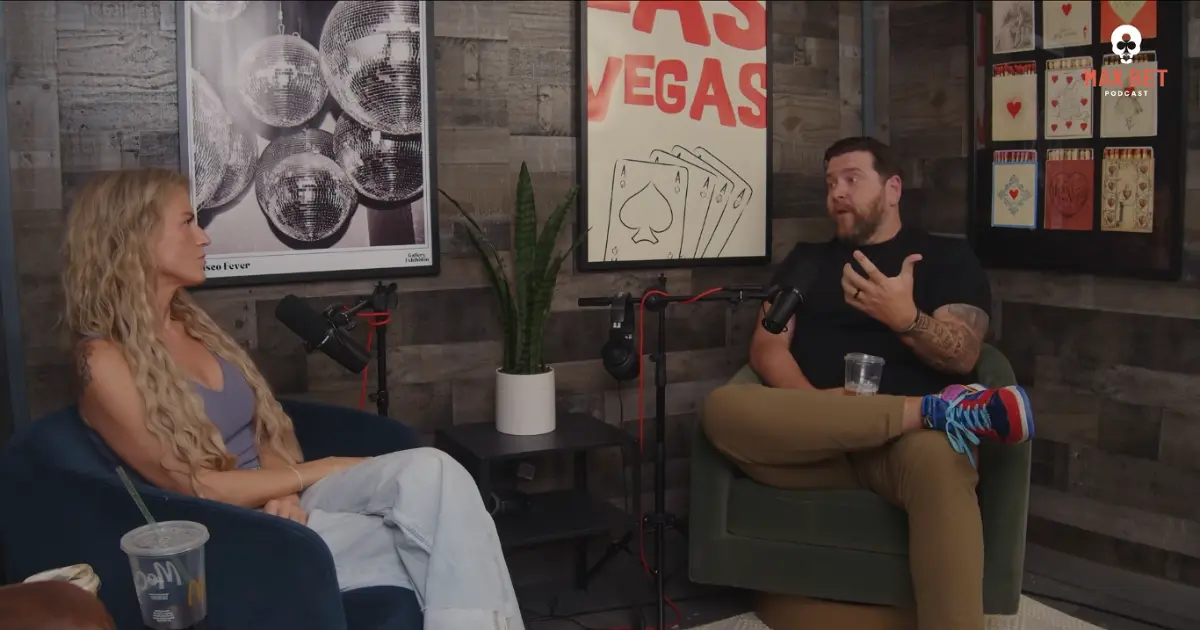
    Bluberi SVP Mike Trask Details 52% Growth and Nevada Expansion on MaxBet Podcast

    Bluberi’s Senior Vice President of Sales for North America, Mike Trask, appeared on the MaxBet Podcast to discuss the company’s financial trajectory and strategic studio expansion. During the conversation, Trask highlighted significant growth metrics and recent market entry milestones, particularly in Nevada.

    Two-Year Growth Reaches 52%

    Addressing the company’s performance, Trask referenced internal figures that have been publicly acknowledged:

    “They said we’ve grown 52% over the last two years — that was like a public stat…

    The discussion covered Bluberi’s expanding studio footprint and the operational momentum driving the gaming supplier’s North American strategy. Trask’s insights provide a window into how the company is positioning itself across key regulated markets.

    Nevada Market Entry Milestones

    Beyond revenue growth, the podcast appearance touched on Bluberi’s progress in securing regulatory approvals and deploying product in Nevada — a critical jurisdiction for any gaming technology provider seeking national scale. The conversation underscored the importance of studio infrastructure investments that support both content development and regulatory compliance.

  • Alexia Danielsson Confirmed as TeamViewer Wild Card Driver for F1 Academy Austin Round

    Alexia Danielsson Confirmed as TeamViewer Wild Card Driver for F1 Academy Austin Round

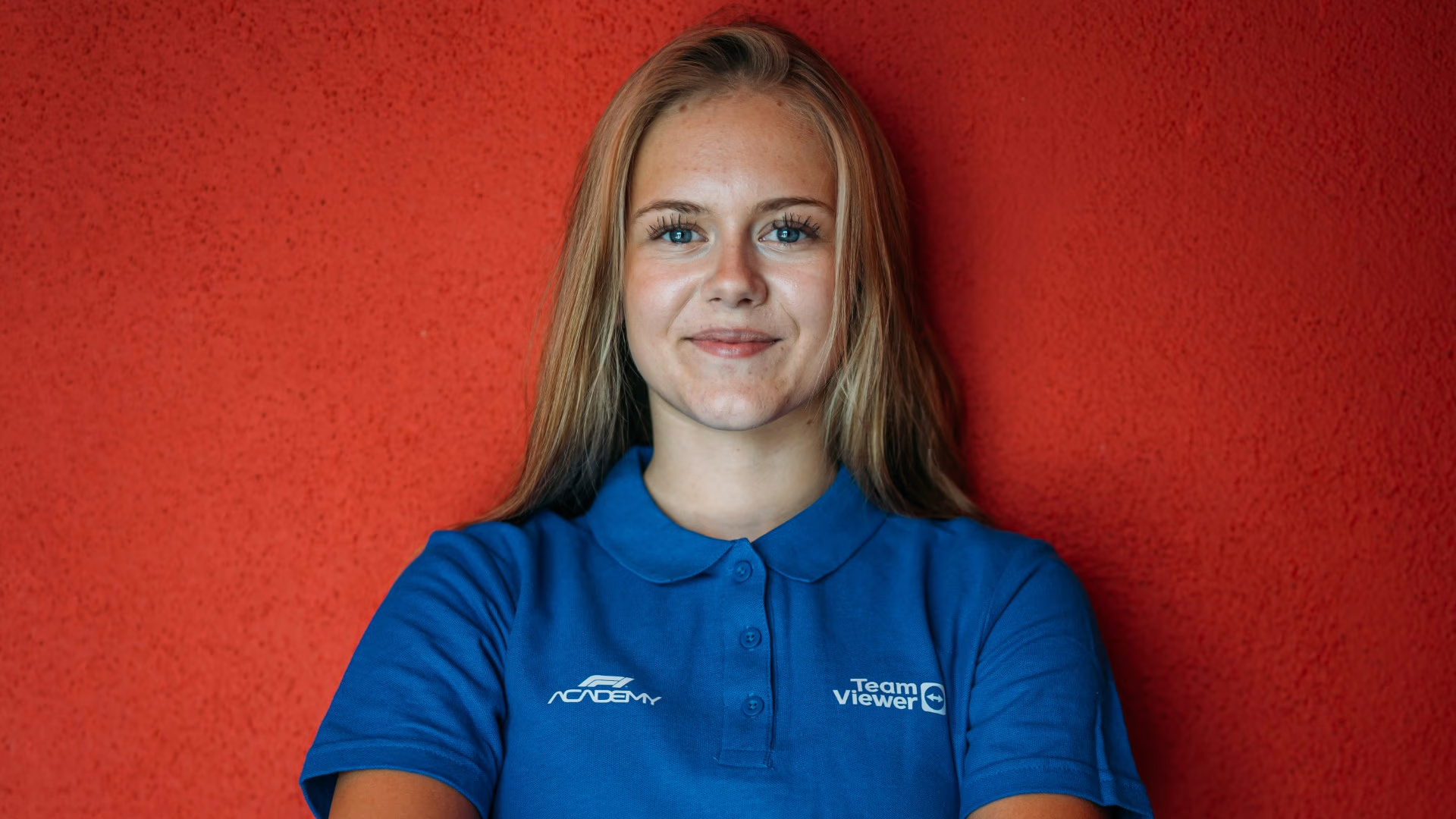
    F1 Academy has confirmed that Swedish driver Alexia Danielsson will make her series debut as the Wild Card entry for Round 5 of the 2026 season at the Circuit of the Americas in Austin. The 17-year-old will represent TeamViewer, the championship’s Official Partner, driving the #45 car operated by Hitech Grand Prix during the United States Grand Prix weekend.

    Danielsson’s Rapid Rise Through Junior Formulas

    Danielsson began her single-seater career in 2022, graduating from Aquilia Formula 1000 to the Nordic 4 Championship two years later. She claimed her maiden victory in Nordic 4 last season before switching to the Porsche Sprint Challenge Scandinavia in 2025, where she won on debut. This year, she delivered a points-scoring rookie campaign in the F4 CEZ Championship.

    Her trajectory accelerated sharply during last week’s F1 Academy Rookie Test at Navarra, where she posted the second-fastest time overall, marking her as a standout performer among the next generation of female talent.

    TeamViewer “Forward Together” Livery Celebrates Women’s Communities

    Danielsson’s Hitech-run entry will carry a special-edition livery designed around TeamViewer’s Forward Together campaign. The initiative highlights how formal and informal communities help women enter and advance in sports and technology roles. The car’s design features 250 inspiring women representing communities focused on:

    • Leadership development
    • Advancing women in technology
    • Empowering the next generation in STEM
    • Strengthening professional networks
    • Driving greater inclusion in motorsport and automotive industries

    Danielsson: “An Experience I Will Never Forget”

    The Swedish teenager expressed her enthusiasm following the official announcement.

    “It has been an absolutely incredible few days,” said Danielsson. “First, to be given this opportunity by McLaren and then to perform so well at the F1 ACADEMY test was more than I had dared hope for.

    “And now it is also official that I will race as a Wild Card in F1 ACADEMY during the United States Grand Prix, which feels absolutely amazing. Racing at COTA in front of such a huge crowd, right in the middle of a Formula 1 weekend, will be an experience I will never forget and something I can build on going forward.”

    Danielsson spoke further about the magnitude of competing during a Formula 1 race weekend.

    “More than anything, I’m just really excited to get the chance to race during a Formula 1 weekend. I’ve only been to an F1 race once before, and that was at Zandvoort in the Netherlands a month ago, when McLaren announced me as one of their drivers for the Rookie Test.

    “My main goal for the weekend is to learn as much as I possibly can. I’m also competing for a place on the grid for the full season next year, so if I get that opportunity, I want to be as prepared as I can be.”

    F1 Academy and TeamViewer Leadership on the Partnership

    Karin Fink, Head of Commercial Operations at F1 Academy, emphasized the series’ community-driven ethos.

    “Motorsports has always had a strong community behind it, and this is no different at F1 ACADEMY. The drivers are supported by so many around them, so it is nice to see some of those communities that inspire change for women, both on and off the track, featured on TeamViewer’s livery. By creating spaces where women not only belong but also have the opportunity to engage and share knowledge, we are able to empower more women to advance, no matter the industry.”

    Faith Wheller, VP of Brand and Sports Partnerships at TeamViewer, highlighted the evolution of the company’s campaign.

    “Building on our campaign last year where we brought visibility to role models, this year we wanted to do something just as important to helping women advance. Forward Together highlights the need for communities and the role they play in our careers.

    “The opportunity to support a young talent like Alexia in her F1 ACADEMY debut while also featuring many women who have supported the next generation in other industries is why this livery is so important. We look forward to being in Austin this October to support Alexia in person.”

    Austin Debut Sets Stage for 2027 Aspirations

    Danielsson’s Wild Card appearance at COTA serves a dual purpose: gaining invaluable experience in the F1 Academy machinery on a world stage and auditioning for a full-time seat in the 2027 season. With the series’ growing alignment with Formula 1 weekends, the Austin round offers maximum exposure for the rising star and the Forward Together message.

  • Yuki Tsunoda Reveals Why He Failed to Master Red Bull’s 2025 F1 Car

    Yuki Tsunoda Reveals Why He Failed to Master Red Bull’s 2025 F1 Car

    Key Highlights

    • Yuki Tsunoda finished 17th in the 2025 drivers’ standings with 30 points, while teammate Max Verstappen won eight grands prix and scored 385 points during their time together.
    • Tsunoda admits attempting to replicate Verstappen’s car set-ups was his “biggest mistake,” as the RB21’s characteristics remained elusive despite his prior experience with Red Bull’s philosophy.
    • Red Bull informed Tsunoda he would not be retained for 2026 at the Qatar Grand Prix; he described the news as a relief after a “so stressful” second half of the season.

    The Unprecedented Gap: Tsunoda’s 2025 Red Bull Ordeal

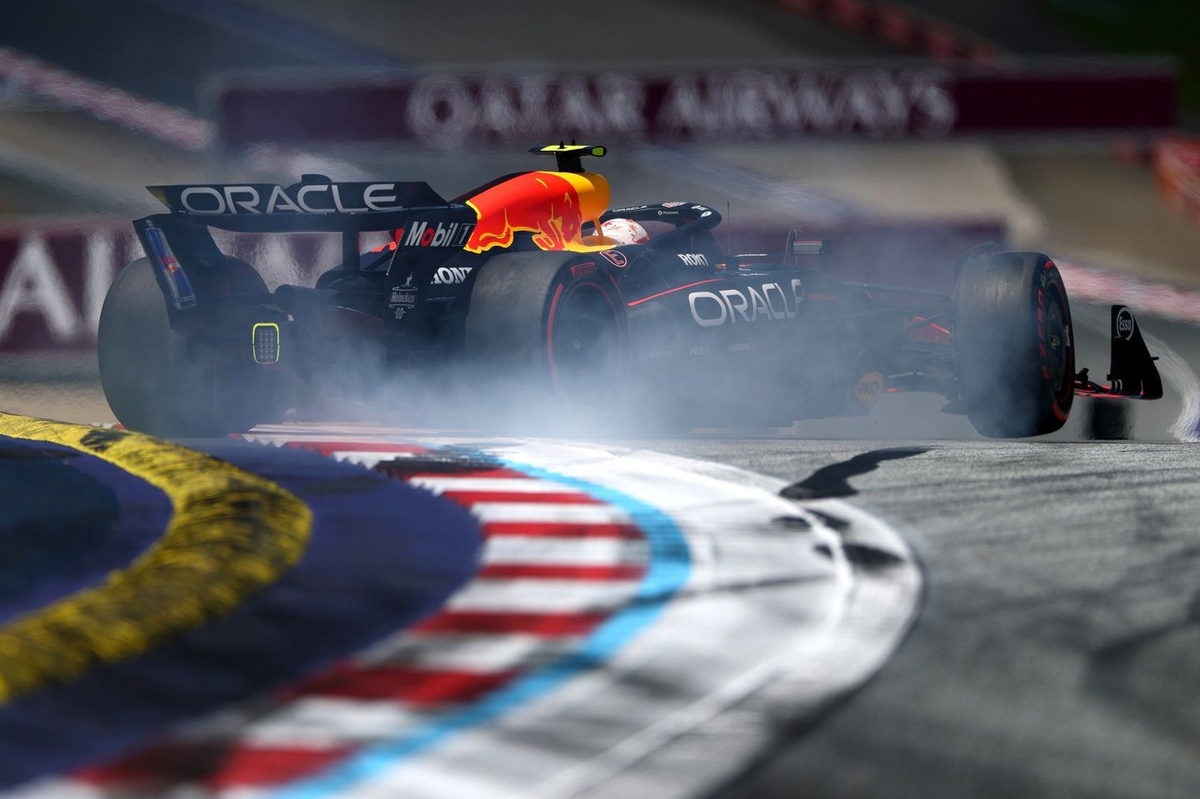
    It seems almost unfathomable for a title contender’s team-mate to end up 17th in the Formula 1 drivers’ standings, yet that is precisely what happened to Yuki Tsunoda alongside Max Verstappen at Red Bull in 2025. In a way, it was unprecedented; the closest modern parallel was perhaps Felipe Massa lying 16th eight rounds into the 2012 season while Ferrari team-mate Fernando Alonso comfortably led the championship, though the Brazilian managed to turn that situation around. Tsunoda’s case was unique. Having decided to release an underperforming Sergio Perez, Red Bull initially picked Liam Lawson over Tsunoda for a 2025 promotion, believing the New Zealander’s lack of experience would be offset by his allegedly higher potential. Lawson did not get much time to prove himself. After two grands prix in which he was eliminated in Q1 and failed to score any points, he was sent back to Racing Bulls, with Tsunoda finally getting his chance at the main team.

    Pre-Season Optimism Meets RB21 Reality

    At the time, the Japanese driver was quite bullish about his odds of succeeding where so many others had failed. “People often say Red Bull cars tend to have strong front-end grip. I personally love cars that turn aggressively, and in the past, I adapted my driving style to that kind of set-up,” Tsunoda said ahead of his Red Bull debut. “Racing Bulls traditionally had cars that understeered a bit more, which was challenging for me at first, but I got used to it, and it eventually became my norm. Now, the key will be adjusting to Red Bull’s characteristics again, but considering my past experience, I’m not too worried about it.”

    Perhaps he should have been. While Verstappen won eight grands prix—more than anyone, including 2025 champion Lando Norris—Tsunoda failed to take a single podium finish, with his highest result an underwhelming sixth in Baku; he scored 30 points to his team-mate’s 385 over their time together. In 27 qualifying sessions (sprints included), Tsunoda made it to Q3 eight times, was out in Q2 on nine occasions, and was eliminated as early as Q1 on 10 occurrences. He outqualified his team-mate just once and was 0.6s slower on average. So, what was the problem with Red Bull’s RB21 F1 car? To some extent, Tsunoda remains at a loss to explain it. “Normally I’m able to understand the car, what I’m driving, what kind of characteristic,” Tsunoda detailed on the Beyond The Grid podcast, “but it feels like even after Abu Dhabi, I didn’t know what kind of car I was driving. I still don’t understand what was the issue and what things made me very struggle to learn about this car and get used to the car. I thought confidence was there, but some race I just somehow lost the confidence. I still don’t understand the car, to be honest.”

    The Setup Trap: Replicating Verstappen’s Philosophy

    Still, Tsunoda has fascinating insight to provide. He openly admits he refrained from tweaking his driving style, believing that is just what works for him. However, he did end up trying out Verstappen’s set-ups—and that experiment just failed. “One thing about myself: I have big enough ego to not change my driving style,” Tsunoda admitted. “I know what I’m doing in terms of driving and I believe in myself. So, I never try to change my driving style to another driver’s, even though the driver is competitive and fast. Obviously for Max, it’s a different case. He’s a world champion, he proves a lot of things and I still learn a lot of things from his driving. My core driving is the same. And at some time, probably the first year out of any years since I started, I thought about changing driving style and trying to do something similar to Max. But in my perspective, if I just look at data, I didn’t really see a huge difference in terms of driving. What I did most—and what I think now was the biggest mistake last year—was to try to replicate the set-up, what he’s doing; even knowing that sometimes, if I feel the car very oversteer, Max’s [set-up] in theory makes the car worse, more sensitive in the direction change, or makes the car slide more. I tend to choose the set-up, even though I’m already struggling with oversteer. It can happen sometimes the opposite way as well: even though I’m struggling with understeer, his car is more understeer. I try to replicate that.”

    Echoes of Albon: A Familiar Red Bull Struggle

    Tsunoda is not the first driver to unsuccessfully attempt to use Verstappen’s set-up. Alex Albon too struggled alongside the Dutchman, for a year and a half, in 2019-20. Back in 2023, the Anglo-Thai reminisced in the High Performance Podcast: “[Verstappen] has quite a unique driving style, it’s not that easy to get along with. Everyone has a driving style; I would say my driving style is a bit more on the smooth side, but I like a car that has a good front end, so quite sharp, quite direct. Max does too, but his level of sharp and direct is a whole different level—it’s eye-wateringly sharp. To give people kind of maybe an explanation of what that might feel like, if you bump up the sensitivity [on a computer game] completely to the max and you move that mouse and it’s just darting across the screen everywhere, that’s kind of how it feels. It becomes so sharp that it makes you a little bit tense.”

    This metaphor was brought up to Tsunoda, but he was not convinced it was particularly relevant to the RB21. Asked if he could relate, the Japanese racer said: “Yes and no. First, the car is a lot different to when Alex was driving. And I’ve never driven Alex’s car. I tend to force the car how I want to drive. It’s sensitive, but I didn’t feel that sensitive. But at the same time, like I said, it was very up and down. Some tracks I’m driving more sensitive car than him, some tracks he was driving more sensitive. On average, probably he was driving a bit more sensitive car, more like a sharper car than me. What he was definitely better at was, even though the car was sensitive or even numb… In a corner, there’s always one phase or one moment that the car naturally reacts to, or tries to kind of respect its own behaviour. You know what I mean? Like, always in the corner, as soon as I turn in or whatever, that car does its own thing. That can be like a sensitive, sharp rotation or, I don’t know, the front slides or something. He’s able to use that and he can smell that kind of behaviour probably much faster than me. And he was able to maximise that kind of behaviour throughout the corner. It’s not necessarily my driving style that I’m doing, but if I have that kind of moments, sharp turn-in or rotation or the front slide, I tend to force the car how I want to drive. I normally respect how the car wants to drive through the corner, or I’m able to use that kind of natural behavior from the car. But I wasn’t able to use that ability much in the Red Bull.”

    From Suzoka Optimism to Season-Long Ordeal

    As soon as he first drove the RB21 in free practice at Suzuka, Tsunoda’s early optimism gave way to caution; he reported the car was “feeling a bit more tricky” than on the simulator. With hindsight, it was a sign of the ordeal to come. “Even though I said, yeah, I thought I had confidence, probably it was not enough, as much as the VCARB car that I drove for four years,” Tsunoda said. “Red Bull is still a car that was completely different, which I felt as soon as I stepped into that car in Suzuka. There’s some confidence level I was able to build up, but to maximise that whole performance, I think that was probably something I was missing, and trying to find that confidence throughout the year.”

    The End of the Road: Relief Amid Disappointment

    Tsunoda eventually found out in Qatar, at the penultimate round of the season, that he would not be retained as a race driver and would act as a reserve in 2026—no huge surprise given his results, and the campaign had been so draining that the news actually was a relief to him. “I still remember the moments,” he recounted. “Initially, what I got told was from Helmut [Marko, then Red Bull’s motorsport advisor]. In the end, Helmut is the person that brought me into Formula 1, brought me even to the Red Bull junior programme. We were together since when I was 17, 18. I remember he was also pretty disappointed about that. And when I got told, I still remember, I didn’t feel that much of huge disappointment or devastated feeling. Obviously I was still disappointed and pretty sad that I’m not driving next year. But not as I expected because I don’t know why, somehow in a way, I fought really hard. I fought more than ever in that 2025 year. And even if I look back now, I don’t have much regret. I gave everything. In a way, honestly, my heart was just saying, ‘Okay, now I can be relaxed’. Because it was so stressful, the second half of the 2025 season, where I fought hard with a lot of pressure. Like I was never able to kind of breathe out much.”

    Why This Matters

    Tsunoda’s 2025 season serves as a stark case study in the difficulty of adapting to a Red Bull Racing car tailored around Max Verstappen’s singular driving style and set-up preferences. The RB21’s “eye-wateringly sharp” front-end sensitivity—described previously by Alex Albon as akin to maximizing mouse sensitivity in a video game—created a vehicle that rewarded a specific, highly reactive driving approach. Tsunoda’s admission that he “forced the car how I want to drive” rather than respecting its natural rotation highlights a fundamental philosophical clash: the car demanded a driver who could anticipate and utilize its nervous behaviour, while Tsunoda’s instinct was to impose his own rhythm. The experiment of copying Verstappen’s set-ups despite suffering opposite balance issues (oversteer vs. understeer) underscores the trap teammates fall into when chasing the benchmark’s data rather than their own confidence. With Tsunoda moving to a reserve role for 2026 and Liam Lawson returning to Racing Bulls, Red Bull’s driver development pipeline faces scrutiny over its ability to cultivate a viable second seat alongside a generational talent whose car demands remain uniquely extreme.

    Frequently Asked Questions

    Why did Yuki Tsunoda struggle so much relative to Max Verstappen in the 2025 Red Bull RB21?
    Tsunoda could not adapt to the RB21’s specific handling characteristics, describing the car as elusive even after the season ended. He admitted his “biggest mistake” was replicating Verstappen’s set-ups despite those set-ups often worsening the balance issues (oversteer or understeer) he was experiencing, and he acknowledged he “forced the car” rather than utilizing its natural rotation through corners as Verstappen could.
    How did Tsunoda’s 2025 statistics compare to Verstappen’s during their time as teammates?
    Over their stint together, Verstappen won eight grands prix and scored 385 points, while Tsunoda scored 30 points with a best finish of sixth in Baku. In 27 qualifying sessions (including sprints), Tsunoda reached Q3 eight times, exited in Q2 nine times, and was eliminated in Q1 on 10 occasions. He outqualified Verstappen once and trailed by 0.6 seconds on average.
    What was Tsunoda’s reaction to being dropped for the 2026 season?
    Tsunoda revealed the news—delivered by Helmut Marko at the Qatar Grand Prix—brought a sense of relief rather than devastation. He stated he “fought more than ever in that 2025 year” with no regrets, but acknowledged the second half of the season was “so stressful” and that his heart felt “okay, now I can be relaxed” upon learning he would move to a reserve role.
  • How Roma Turned Donyell Malen Into Europe’s Top Scorer

    How Roma Turned Donyell Malen Into Europe’s Top Scorer

    Key Highlights

    • Donyell Malen’s scoring rate has surged from one goal every 149.8 minutes at Aston Villa to one every 96.7 minutes at AS Roma, with 21 goals in 25 matches compared to 10 in 46 Premier League appearances.
    • The Dutch forward has played 99% of his Serie A minutes as a central striker under Gian Piero Gasperini, a sharp contrast to the 52% he spent in that role at Villa.
    • French football journalist Julien Laurens described Malen as “incredible since January” and “at the heart of everything they do with the ball” following Roma’s Champions League draw with Fenerbahce.

    Statistical Transformation in Rome

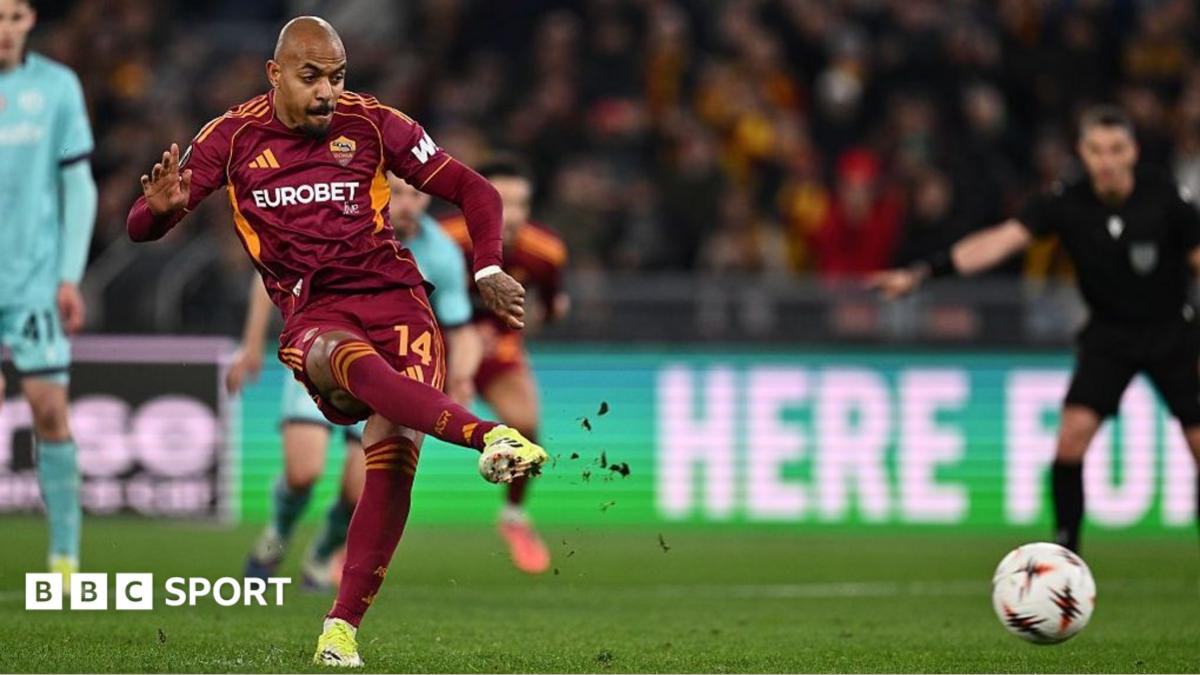
    The contrast between Donyell Malen’s tenure at Aston Villa and his current form at AS Roma could hardly be starker. Across 46 appearances for the Premier League club, the 27-year-old Dutch international managed 10 goals and two assists, translating to a goal every 149.8 minutes on the pitch. Since his move to the Italian capital, those numbers have undergone a dramatic inversion: 21 goals and three assists in just 25 matches, striking at a rate of one goal every 96.7 minutes. On the surface, the figures suggest two entirely different versions of the same player, but the underlying data points to a structural explanation rather than a sudden spike in individual brilliance alone.

    Tactical Repositioning Under Gasperini

    A change in position appears to be the major factor behind Malen’s resurgence. At Villa, the forward was frequently deployed across the front line, spending only 52% of his league minutes as a central striker. Under manager Gian Piero Gasperini at Roma, that figure has climbed to 99% of his Serie A minutes. The tactical adjustment has made Malen the undisputed focal point of the attack, placing him consistently in the areas where his finishing instincts are most dangerous. The numbers are reinforced by the eye test; his movement, link-up play, and clinical execution now look like those of a player operating in his natural habitat.

    Expert Validation from Julien Laurens

    The statistical and tactical evidence received prominent external validation following Roma’s 1-1 Champions League draw with Fenerbahce last Thursday, a match in which Malen provided the assist for his side’s goal. Speaking on Match of the Day, French football journalist Julien Laurens emphasized the forward’s newfound centrality to Gasperini’s system.

    “He has been incredible since January,”

    Laurens stated, before adding a broader assessment of Malen’s influence on the team’s attacking structure.

    “He has been really efficient, super clinical. Malen is at the heart of everything they do with the ball.”

    Why This Matters

    Malen’s turnaround at Roma serves as a high-profile case study in the importance of tactical fit and positional clarity for elite attackers. His struggles at Aston Villa were not necessarily indicative of a decline in ability, but rather a mismatch between his profile as a penalty-box striker and a system that asked him to drift wide. For Roma, the early return on investment—21 goals in half a season—vindicates Gasperini’s conviction that the Dutchman thrives as a central reference point. As the Giallorossi push for Champions League qualification and progress in European competition, Malen’s form will be pivotal. The situation also underscores a broader market lesson: players deemed surplus to requirements at one elite club can become indispensable elsewhere when deployed in their optimal role.

    Frequently Asked Questions

    How many goals has Donyell Malen scored for AS Roma this season?
    Malen has scored 21 goals in 25 matches across all competitions since joining AS Roma.
    What was Malen’s goal-scoring rate at Aston Villa compared to Roma?
    At Aston Villa, Malen scored one goal every 149.8 minutes. At Roma, his rate has improved to one goal every 96.7 minutes.
    Who is the current manager of AS Roma utilizing Malen as a central striker?
    Gian Piero Gasperini is the manager who has deployed Malen as a central striker for 99% of his Serie A minutes.
  • Red Bull Still Trying to Fix RB22 Issue

    Red Bull Still Trying to Fix RB22 Issue

    While McLaren, Ferrari, and Mercedes have all unlocked significant performance gains through their recent upgrade packages, Red Bull Racing continues to grapple with a fundamental issue affecting the RB22.

    Verstappen Highlights Aerodynamic Degradation

    The core of the problem relates to feedback from Max Verstappen, who has pointed out that the car suffers from an aerodynamic degradation of performance after a certain number of laps. This characteristic has prevented the team from maximizing its race pace relative to its improving rivals.

    Mekies Admits Complex Fix Required

    Team principal Laurent Mekies confirmed during the Madrid round that resolving this balance issue will not be a straightforward process. However, the technical update submissions Red Bull has lodged with the FIA at both Monza and Madrid offer a clear indication of the specific development directions the team is pursuing to rectify the deficit.

  • How Max Verstappen Won the ‘Biggest Race’ of His Motorsport Career

    How Max Verstappen Won the ‘Biggest Race’ of His Motorsport Career

    Max Verstappen Dominates Red Bull’s ‘Max vs 100’ Karting Spectacular at Silverstone

    Just days after securing a podium finish at the Spanish Grand Prix, four-time Formula 1 World Champion Max Verstappen swapped his RB20 for a go-kart to tackle Red Bull’s ambitious Max vs 100 challenge at Silverstone.

    The Challenge: Overtake 100 Rivals from the Back of the Grid

    Held on Wednesday evening, the event tasked Verstappen with overtaking and eliminating 100 competitors—comprising Red Bull athletes, content creators, and other guests—from the very back of the grid within 30 laps or 75 minutes. Red Bull, renowned for high-concept stunts across sports, billed it as the world’s biggest go-kart race. The action was broadcast live on Disney+, amplified across social media, and produced with the gravity of a headline Grand Prix.

    Following two practice days overseen by Racing Bulls driver Arvid Lindblad, the serious business began when Verstappen arrived to sample the 2.5 km layout blending Silverstone’s karting venue with sections of the F1 circuit. While Verstappen’s outright pace was never in doubt, the logistical puzzle of carving through a 101-kart field from last to first remained an open question.

    “It’s a long way! A very long way!”

    Verstappen smiled during a pre-race interview as he walked the length of the grid, the scale of the challenge visibly dawning on him moments before the 18:00 start.

    Verstappen’s P101 to P1 Charge

    From the moment the lights went out, Verstappen shuffled forward aggressively, ducking and diving past a gaggle of rivals into Turn 1. He narrowly avoided the first-corner bottleneck and strategically used the grass to bypass spinners. His rapid progress continued through Sectors 1 and 2 until a Full Course Yellow neutralized the race to clear further incidents.

    Initial estimates suggested he might have passed 20 to 50 karts, but the timing screens revealed a staggering reality: Verstappen had rocketed to 37th position, a gain of 64 places on the opening tour.

    “Not a bad first lap, then!”

    Verstappen chimed over the radio upon hearing the news.

    Once racing resumed, the Dutchman’s ascent was relentless: 25th by Lap 4, 10th by Lap 6, and fifth by Lap 7. The field dwindled until only three karts remained ahead—those of F1 journalist Jacky Martens, YouTuber Zac Alsop, and Red Bull Ford Powertrains technician Lewis Osler. Despite light-hearted radio banter among the leaders about forming a roadblock, Verstappen dispatched them all within 35 minutes and 14 laps.

    “That was simply lovely,”

    Verstappen chuckled after eliminating the final kart, adding:

    “it’s my first win of the year, so I’ll take this one!”

    Post-Race Reflections: ‘A Hundred Is a Lot!’

    Speaking to select media including F1.com, Verstappen reflected on the unique experience:

    “I grew up racing a lot in karts, then because of your formula career you don’t really get a lot of time racing them anymore, so it’s always nice to go back and have a go at it.

    “I got three or four laps on the track, and that was basically my practice. Before that, it’s always very hard to know what to expect, so it’s also better then not to overthink the situation, and just feel it once you sit in the kart. But I think the most that I’ve been on a track with is like 40 karts, maybe, so a hundred is a lot!”

    Verstappen’s fastest lap of 2m 20.673s was 2.6 seconds clear of Martens’ best (2m 23.327s). He explained the strategic calculus behind the victory:

    “I knew my lap times when I did the prep laps, and I knew the Qualifying lap times of the others, so I knew that it was possible [to win], but it also really depended on my first two laps,”

    said Verstappen.

    “They went better than expected, so that of course helped a lot.

    “Before the race, I said, ‘Let’s be bold and say that I will pass 40 people in Lap 1’, and then they told me [what it was] at the end. It was a good effort. Some people got really excited on the new [extended] part of the track, and there was a bit of a road blockage going on, but I managed to swerve around it, and it worked out well.

    “When the lights go out, you kind of just see where the gaps are, and then you also kind of need to trust a few people around you, that they don’t do anything crazy. To be honest, they didn’t. They were very excited with each other, but they were actually quite nice to me! They weren’t crashing into me or whatever.”

    “He Sees Something We Don’t See” – Race Director Analysis

    Track Designer and Race Director David Terrien was among those left impressed by Verstappen’s spatial awareness and decision-making in heavy traffic.

    “Going through the traffic of such a big field, no one has done it,”

    Terrien commented.

    “There’s never been a karting race with so many karts. So, even Max was questioning himself just before the start, how he could go through the traffic.

    “When you look at the replay, he picked the right spots. Every time there was a gap, he went for it. He was on the right side of the track when there was a crash going on the other side. I think that’s what makes the difference with Max – his starts, and his reaction time. He showed his skills in all aspects.

    “I was talking to Max’s race engineer and we were looking at the replay of the start. He sees something we don’t see. He sees a gap that’s going to open, and it’s not open yet. So, I think that’s a race vision. That’s something he has that most of the drivers don’t have.”

    Another ‘Crazy, Fun’ Red Bull Memory

    For Verstappen, the event joins a growing catalogue of unconventional Red Bull challenges—such as driving an F1 car down a mountain and racing caravans with Daniel Ricciardo—that blend competition with entertainment.

    “Sometimes I get reminded of what I actually did in the past, and I’m like, ‘Oh my God, did I really do that?’”

    Verstappen said.

    “It’s definitely one of the best ones out there. I mean, how many times do you have the opportunity to create something like this? Racing against a hundred other people from other disciplines or sports.

    “I think it’s great that with Red Bull, they always come up with some crazy, fun things, and it suits me as well. I think also the way that it was organised today… I know it requires a lot of effort to be able to do something like this, and it’s a lot of fun to be a part of that.”

    Could ‘Max vs 200’ Be Next?

    Asked if the concept could become a tradition, Verstappen grinned:

    “That’s what I said! I was like, ‘Maybe 200’, and then we’ll see again,”

    he responded, before signing off from the press conference to savor what will undoubtedly rank among his most memorable victories.

  • Desire Doue unfazed by bench role in PSG’s last two matches, reports say

    Desire Doue unfazed by bench role in PSG’s last two matches, reports say

    PSG Winger Désiré Doué Unfazed by Recent Bench Role, Remains Key to Luis Enrique’s Plans

    Paris Saint-Germain attacker Désiré Doué is reportedly untroubled by his recent omission from the starting lineup, according to a report from Le Parisien. The French international has started the last two matches on the bench, but the situation is not viewed as a demotion within the camp.

    Strategic Rotation and Tactical Flexibility

    Manager Luis Enrique is currently utilizing the depth of his squad to experiment with different tactical combinations. The Spanish coach is focused on developing on-field cohesion across multiple player profiles while simultaneously managing the physical workload of his stars across a congested fixture schedule.

    Doué Retains ‘Integral’ Status at Parc des Princes

    Despite the temporary shift to a substitute role, the report emphasizes that Doué remains an integral part of the project at the Parc des Princes. The 19-year-old winger, who joined from Stade Rennais in the summer transfer window, continues to be highly rated by the coaching staff for his versatility, technical ability, and pressing intensity.

    With competitions including Ligue 1, the Coupe de France, and the UEFA Champions League on the horizon, rotational minutes are expected to be distributed evenly among the attacking options, ensuring Doué will see significant game time in the coming weeks.

  • Barcelona Lead Race to Sign Man Utd Wonderkid JJ Gabriel, Reports Say

    Barcelona Lead Race to Sign Man Utd Wonderkid JJ Gabriel, Reports Say

    Barcelona Lead Race to Sign Manchester United Academy Star JJ Gabriel

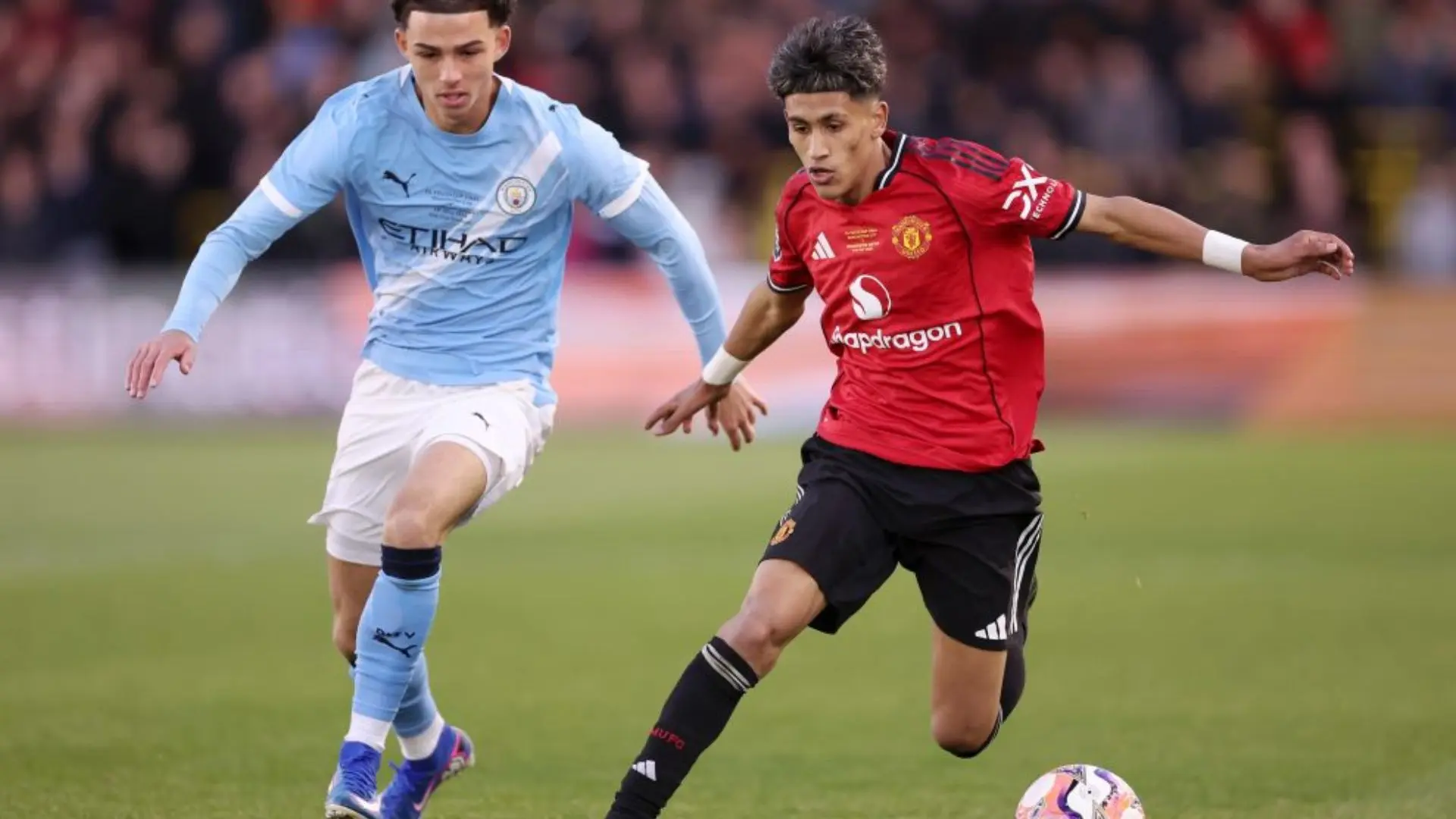
    Barcelona have emerged as the frontrunners to secure the signature of Manchester United’s highly-rated academy prospect JJ Gabriel, according to reports from Telegraph Sport. The 15-year-old has reportedly decided to depart Old Trafford in search of a new challenge, placing Europe’s elite clubs on high alert.

    Young Talent Attracts Top European Interest

    The Red Devils face the prospect of losing one of their most promising youth players before he has had the opportunity to break into the senior setup. Gabriel’s decision to leave has triggered significant interest from across the continent, with the Catalan giants currently positioned as the favourites to land the teenager.

    Barcelona’s Youth Development Appeal

    Barcelona’s renowned La Masia academy and their recent history of integrating young talents into the first team — exemplified by the likes of Lamine Yamal, Pau Cubarsí, and Gavi — are understood to be key factors in their pursuit. The club’s willingness to provide a clear pathway to senior football could prove decisive in the race for Gabriel’s signature.

    Manchester United’s Academy Retention Challenge

    The potential departure underscores the ongoing challenge Manchester United face in retaining their top academy graduates amid intense competition from European rivals. While the club has invested heavily in youth development, the allure of immediate first-team opportunities abroad continues to test their ability to keep the best prospects in Manchester.

    Next Steps in the Transfer Saga

    Formal negotiations are expected to accelerate in the coming weeks as Barcelona look to finalize terms for the youth international. Compensation packages, given Gabriel’s age and contractual situation, will be a central focus of discussions between the two clubs. Other suitors are monitoring developments closely, ready to act should the Catalan club’s approach falter.

  • Tony Pulis: Handling Defeat Crucial for Lampard’s Coventry Tenure

    Tony Pulis: Handling Defeat Crucial for Lampard’s Coventry Tenure

    Key Highlights

    • Former Premier League manager Tony Pulis analyzes Frank Lampard’s early struggles at Coventry City following a heavy defeat to Brighton.
    • Pulis draws parallels to his own 2008 Stoke City promotion season, emphasizing the critical importance of a manager’s reaction to adversity.
    • The column stresses that defensive solidity and clean sheets historically earn more points than goals scored, urging Coventry to address both ends of the pitch.

    Pulis Warns Lampard: Managerial Character Defined by Response to Heavy Defeats

    Former Stoke City and Premier League manager Tony Pulis has delivered a pointed assessment of Frank Lampard’s start at Coventry City, arguing that the Sky Blues’ heavy loss to Brighton will test the Chelsea legend’s leadership credentials far more than any victory could. Writing in his regular column, Pulis asserts that the psychological impact of a comprehensive defeat “resonates with you” regardless of the opposition, and insists that the defining moments of any managerial tenure come in the immediate aftermath of such setbacks.

    The Monday Morning Test: Leadership Over Emotion

    Pulis, who guided Stoke to the top flight in 2008, draws a direct line between his own early struggles with the Potters and Lampard’s current predicament at the CBS Arena. He argues that a manager cannot afford to project vulnerability when arriving at the training ground after a thrashing. “Walking into the training ground in a dark mood and with your head around your backside just does not work, irrespective of what you are feeling inside,” Pulis writes. Instead, he contends the leader must “puff your chest out and find a way of getting everyone back on track and working even harder with a set focus on the next game,” framing emotional compartmentalization as a non-negotiable professional skill.

    Lessons from the 2008 Promotion Blueprint

    The Welshman revisits his own playbook from Stoke’s maiden Premier League campaign, revealing that a poor start forced him to “roll my sleeves up and get on with what I’d got in my squad” while simultaneously planning ahead. Crucially, Pulis highlights proactive January recruitment as the turning point: securing winger Matty Etherington from Tottenham Hotspur to provide width and delivery, and signing striker James Beattie from Sheffield United despite the Blades’ Championship status, prioritizing Beattie’s proven top-flight goalscoring record over divisional snobbery. “Both lads played a significant role in keeping us up,” he notes, validating the strategy of targeting specific positional needs with proven quality.

    Coventry’s Twin Challenges: Goals and Clean Sheets

    Turning his analytical lens to Coventry’s current goalless run, Pulis challenges the conventional obsession with a single prolific centre-forward or number ten. He argues the goalscoring burden must be distributed across the team, but pivots quickly to what he considers the more decisive metric: defensive reliability. “On average, clean sheets earn you more points than scoring a goal,” Pulis states, revealing this was a constant refrain to his own players. He insists that “nailing down the importance of both ends of the pitch is the narrative, whatever kind of run of results you are on, because games are won and lost there.”

    Why This Matters

    Frank Lampard’s appointment at Coventry represented a high-profile gamble by the club’s hierarchy, banking on his playing pedigree and Chelsea managerial experience to elevate a squad that narrowly missed the play-offs last season. A heavy early defeat to Premier League opposition in the Carabao Cup, compounded by a goalless start to the Championship campaign, creates immediate pressure. Pulis’s intervention carries weight precisely because he navigated an almost identical trajectory: a newly promoted manager at a club with limited resources, facing early skepticism, who survived by combining psychological resilience with shrewd, needs-based recruitment in the winter window. For Coventry’s ownership and sporting director, the column serves as both a warning against panic and a blueprint for the January window—identify specific deficiencies (creativity from wide areas, clinical finishing) and recruit proven performers regardless of current division. For Lampard, it is a public reminder that his tenure will be judged not on the defeat itself, but on the culture he imposes in its wake.

    Frequently Asked Questions

    Who is Tony Pulis and why is his opinion relevant to Coventry City?

    Tony Pulis is a veteran manager with over 1,000 games in English football, best known for establishing Stoke City as a Premier League mainstay after leading them to promotion in 2008. His experience of surviving a difficult top-flight debut season with limited resources makes his analysis directly applicable to Frank Lampard’s current situation at Coventry.

    What specific transfer strategy does Pulis recommend for Coventry in January?

    Pulis advocates targeting players who fill clear positional voids with proven track records at the required level, citing his own signings of Matty Etherington (Premier League creativity from wide areas) and James Beattie (top-flight goalscoring pedigree despite playing in the Championship at the time) as the template.

    Does Pulis believe Coventry’s lack of goals is their primary problem?

    No. While acknowledging the goalless start, Pulis explicitly argues that defensive solidity and clean sheets are statistically more valuable for accumulating points over a season, urging the club to address “both ends of the pitch” with equal urgency.

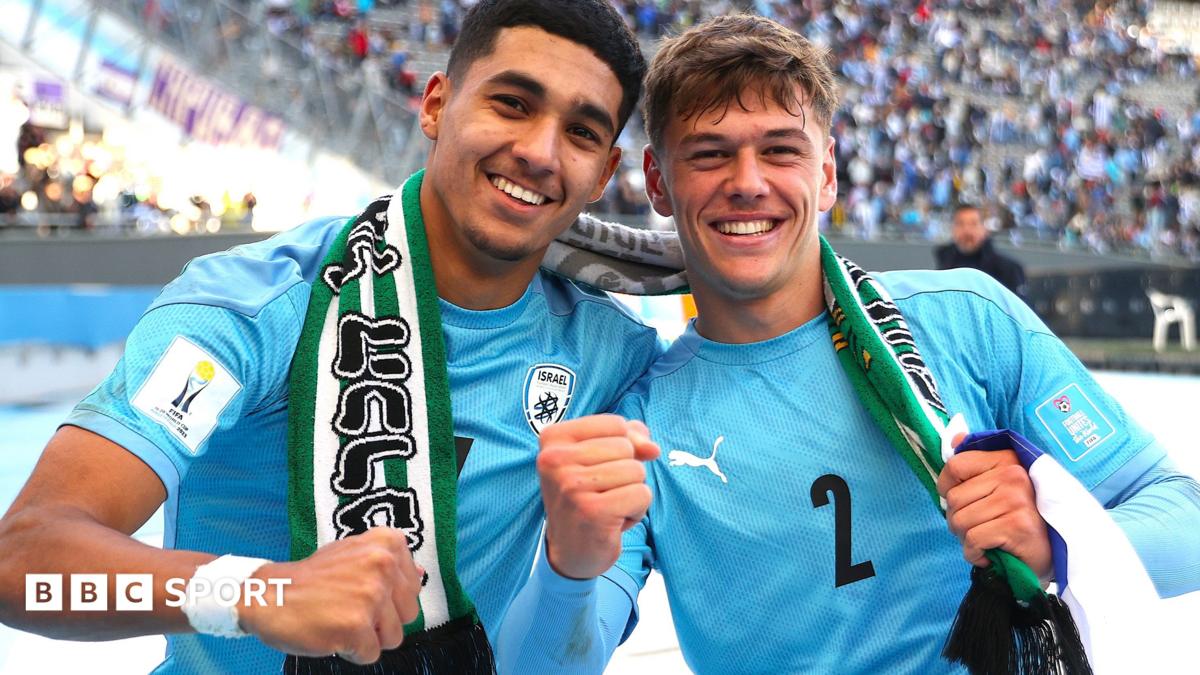
  • Israel’s Under-20 Footballers Represent a Golden Generation of Hope and Talent

    Israel’s Under-20 Footballers Represent a Golden Generation of Hope and Talent

    Racism in Israeli football intensified after October 7

    Racism has long been a feature of Israeli club football, with Beitar Jerusalem supporters among the most notorious examples. In 2013, ultras burned down their own club offices in protest at the signing of two Chechen Muslims. The most extreme Beitar Jerusalem fans have also taunted Israeli Arabs with chants of may your village burn while declaring themselves forever pure.

    Matan Segal directed Kick It Out Israel, an anti-discrimination initiative with similar aims but no connection to the English organisation of the same name, for almost four years before stepping down a few months ago. During his time with the organisation, Segal said racism against Arab players became more virulent and widespread.

    He identified several factors behind the change. The Covid-19 lockdown period radicalised some fans online, while the election of Israel’s far-right government at the end of 2022 legitimised views toward Palestinians that had previously been considered extreme. The war that followed the October 7 attacks was another major factor.

    “Before 7 October, people generally respected the Arab players,” Segal said.

    “Even though they had difficulties with them not singing the Israeli anthem, they respected them and they could talk about it. “After 7 October though, we saw an increase in racist remarks.”

    “It was happening at small clubs where we hadn’t seen it before. There were terrible songs – ‘Let’s kill all Arabs’, ‘There are no schools in Gaza because there are no children left’.

    Israel-Gaza war turns football into an emotional focal point

    Football has become a focal point for emotions generated by the conflict. Clubs that are normally bitter rivals came together to remember those killed by Hamas, while scarves formed part of commemorations at the site of the Nova music festival, where hundreds of people were killed.

    Hapoel Jerusalem’s club badge now features a silhouette of Hersh Goldberg-Polin, who was abducted and killed in captivity. His parents have campaigned for peace through their grief.

    At the same time, Israeli Defence Force (IDF) soldiers have posed with club flags and banners while operating in Gaza, dedicating their actions to the clubs and ultras back home. That heightened atmosphere has placed young footballers under constant scrutiny and pressure. Many are closely connected to the conflict through Israel’s national service programme and the steady flow of online commentary and images.

    Israeli footballers face abuse and personal pressure

    Omer Gloukh’s lifelong friend Afik Tery was killed by a Hamas explosive while serving in the IDF. After Tery’s death, Gloukh posted a poignant series of pictures showing the pair arm-in-arm over the years, from childhood birthday parties to a wedding, with the final image showing Tery’s funeral. Some online replies included taunts from pro-Palestinians.

    For Israel players with Palestinian heritage, the stakes are especially high. Dia Saba, a 33-year-old playmaker who performs a similar role to Gloukh, has scored three goals in 13 appearances for Israel. He is unlikely to add to that tally.

    Saba was one of Maccabi Haifa’s most prominent players when, at the start of the conflict, his wife Narmin posted a message on Instagram.

    “There are children in Gaza, too,” she wrote.

    Saba apologised for the outrage caused, but could not save his career in Israel. He left Maccabi Haifa in 2025 and now plays for Turkish club Amedspor.

    “My dream was to play for Maccabi Haifa, the club that I support, the team that I grew up with,” Saba said at the time.

    “I wanted to continue. But sometimes there are reasons that are stronger than us that don’t allow it.”

    Why This Matters

    The experiences described by Matan Segal and Dia Saba show how the Israel-Gaza war has intensified existing divisions within Israeli football. Abuse that Segal said was once concentrated among notorious groups has reached smaller clubs, while players are being judged through the lens of national identity, military service, family background and social-media activity. Football remains a shared public space, but the conflict has made that space increasingly politicised and emotionally charged.

    Frequently Asked Questions

    What is Kick It Out Israel?

    Kick It Out Israel is an anti-discrimination initiative that pursued aims similar to those of the English organisation Kick It Out, but the two organisations have no link.

    Why did racism against Arab players increase?

    Matan Segal cited online radicalisation during Covid lockdowns, the election of Israel’s far-right government at the end of 2022 and the war following the October 7 attacks as contributing factors.

    Why did Dia Saba leave Maccabi Haifa?

    Saba left Maccabi Haifa in 2025 after his wife, Narmin, posted There are children in Gaza, too on Instagram at the start of the conflict. Saba apologised for the backlash but was unable to continue his career at the club.