Author: Evan Mercer

  • RedSwanDigital Tokenizes First Manhattan Building on Hedera

    RedSwanDigital Tokenizes First Manhattan Building on Hedera

    RedSwanDigital has successfully tokenized the Hotel on Rivington in Manhattan using the Hedera blockchain, marking a significant milestone for real-world asset tokenization. The announcement, shared via the official Hedera social media channels, underscores the growing convergence of blockchain technology with traditional real estate markets.

    Manhattan Property Becomes First Hedera-Tokenized Building

    The tokenization of the Hotel on Rivington represents the first building in Manhattan to be digitized on the Hedera network. By converting property ownership into digital tokens, the initiative aims to democratize access to real estate investment, historically restricted to high-net-worth individuals and institutional players. This development signals a practical application of distributed ledger technology beyond speculative trading, positioning Hedera as a serious infrastructure layer for traditional finance integration.

    Industry Leaders Emphasize Trust and Asset Integrity

    Gregory L. Bell, CIO at Hashgraph, emphasized trust and asset integrity in tokenization. His comments highlight the critical importance of regulatory compliance, transparent ownership records, and secure custody solutions in bridging physical assets with digital representations. The initiative aligns with Hedera’s broader strategy to expand use cases across sectors including real estate, supply chain, and decentralized finance.

    Hedera’s Technical Foundation for Asset Tokenization

    Hedera operates as a public distributed ledger technology designed for speed, security, and scalability. Its consensus mechanism, based on hashgraph architecture, offers finality in seconds with low, predictable fees — characteristics essential for tokenized assets requiring high throughput and auditability. The network’s governance model, overseen by a council of global enterprises, adds a layer of institutional credibility that appeals to regulated industries.

    Market Context and Trading Activity

    As of the latest data, Hedera’s trading volume specific to this tokenization event remains unreported. However, the announcement arrives amid increasing institutional interest in blockchain-based asset issuance. Analysts suggest that successful deployments like the Hotel on Rivington could catalyze higher transaction volumes and improved liquidity for tokenized securities, provided regulatory frameworks continue to evolve constructively.

    Outlook: Adoption, Regulation, and Liquidity

    Market participants should monitor Hedera’s pipeline of real estate tokenization projects, as further adoption may influence broader digital asset trends. Key variables include regulatory clarity around security tokens, custodial standards, and secondary market infrastructure. While the long-term trajectory appears promising, stakeholders must remain cautious of compliance risks inherent in merging blockchain innovation with established financial systems.

    This article is for informational purposes only and does not constitute financial advice.

  • Bessent Urges Senate to Advance CLARITY Act as Crypto Rules Stall

    Bessent Urges Senate to Advance CLARITY Act as Crypto Rules Stall

    Treasury Secretary Scott Bessent is pressing the Senate to advance the CLARITY Act when lawmakers return from their August recess, renewing pressure on Congress to establish a comprehensive regulatory framework for digital assets. In a post on X, Bessent warned that further delays could weaken U.S. leadership in crypto and limit the government’s ability to prevent digital assets from being misused.

    In July, I called on the Senate to advance the Clarity Act — a bill to establish a comprehensive regulatory framework for digital assets and upgrade our ability to prevent bad actors from exploiting these critical technologies.When the Senate returns from August recess, I…

    — Treasury Secretary Scott Bessent (@SecScottBessent) September 9, 2026

    Senate Faces September Test

    Bessent made the appeal, urging senators to “remain at the negotiating table” and agree to a motion to proceed with the bill. The legislation still faces disagreements over crypto holdings, stablecoin rewards, and measures targeting illicit finance. Senate Majority Leader John Thune filed a cloture motion in August, setting the stage for a possible vote on Sept. 15. The bill needs at least 60 votes to advance, making Democratic support crucial.

    Regulation and National Security

    The CLARITY Act would divide digital-asset oversight between the SEC and CFTC while adding consumer-protection and anti-money-laundering requirements. Bessent has argued that clearer rules could encourage crypto companies and investment to remain in the U.S. Administration officials have also said stronger regulations could support dollar-backed stablecoins and make digital assets harder to use for illicit finance. If lawmakers fail to advance the bill, the U.S. would remain without a broad framework for crypto market oversight.

    Related Coverage

  • Bitcoin Gold Cross Alert: Analyst Warns “Bullish at First, But Then…”

    Bitcoin Gold Cross Alert: Analyst Warns “Bullish at First, But Then…”

    Cryptocurrency analyst Benjamin Cowen has warned investors that Bitcoin historically declines following a “Golden Cross” pattern, a technical formation typically interpreted as a bullish signal.

    Golden Cross Often Precedes Short-Term Pullback

    The Golden Cross occurs when the 50-day moving average crosses above the 200-day moving average. While technicians widely view this crossover as a long-term buy signal, Cowen’s analysis of past cycles shows the pattern frequently coincides with local market tops.

    Analyst: “Bitcoin Generally Seen to Decline After a Gold Crossover”

    According to Cowen, the rallies that precede the Golden Cross push the moving averages higher to create the crossover. However, once the intersection is complete, the market often experiences sell-offs from those local highs. Historical data from the 2019 and 2023 Golden Cross events shows pullbacks ranging between 12% and 15% at the moment of intersection, followed by recovery and new local highs.

    Current Pullback Considered Natural

    Cowen characterizes the ongoing pullback as a natural market structure development. He emphasizes that the critical factor is not the depth of the initial selling wave, but the character of the rebound rally that follows. It remains uncertain whether Bitcoin will establish a new high or form a lower peak after the sell-off concludes.

    Bullish vs. Bearish Scenarios for Q4

    Outlining forward-looking scenarios, Cowen stated that a higher peak during the rebound would strengthen the bullish case. Conversely, if the rebound remains weak and forms a lower peak—similar to the price action observed in 2014 and 2015—the risk of a renewed downturn in the fourth quarter could increase.

    This is not investment advice.

  • Circle Puts USDC on Chelsea Jersey, FCA Does Not Intervene

    Circle Puts USDC on Chelsea Jersey, FCA Does Not Intervene

    Circle’s Chelsea Shirt Deal Exposes a 14-Month Regulatory Gap in UK Stablecoin Oversight

    On August 31, 2026, roughly 40,000 spectators inside Stamford Bridge watched Chelsea players take the pitch wearing shirts emblazoned with “$USDC by CIRCLE.” Millions more viewed the broadcast across 189 countries. The moment marked the first regulated cryptocurrency company to secure a Premier League front-of-shirt sponsorship, arriving just three months after the Financial Conduct Authority warned clubs against signing “dodgy” crypto sponsors.

    Circle is not dodgy. The company trades publicly on the New York Stock Exchange, holds licenses across four continents, and posts quarterly earnings that rival established fintechs. Yet the product advertised on the shirt—$USDC, a dollar-pegged stablecoin with a circulating supply of 73.7 billion dollars—exists in a regulatory gap that UK law will not close until October 2027.

    Why Chelsea Was Available

    Chelsea has entered each of the last four seasons without a principal shirt sponsor, an anomaly for a club of its stature. The vacancy traces to the sanctions imposed on former owner Roman Abramovich, the subsequent 4.25 billion pound sale to a consortium led by Clearlake Capital and Todd Boehly in May 2022, and the departure of long-time partner Three.

    The sponsorship carousel that followed—Infinite Athlete, DAMAC Properties, IFS—featured short terms and modest figures, nothing matching the 40 million pounds per year Yokohama Tyres paid or the equivalent sum from Three. Clearlake owns 61.5 percent of the club; Boehly holds 18.5 percent. Aggressive player spending had pushed the wage bill past 350 million pounds, creating urgent need for shirt revenue.

    A crypto sponsor willing to pay north of 33 million pounds for a single season solved an immediate problem. Circle solved it while possessing the credentials to survive due diligence. Chelsea’s commercial team had searched since mid-2025, approaching traditional sponsors in automotive, airlines, and financial services. Several balked at the price; others hesitated at the reputational volatility surrounding the club’s ownership transition. Circle was not the default option—it was the option that could write the check, pass compliance review, and move fast enough to brand kits before the season opener.

    In a market where top-six Premier League shirt deals routinely exceed 40 million pounds per season, the estimated 33.6 million to 50 million pound range is competitive but not premium. Both sides were slightly desperate in complementary ways.

    What the FCA Actually Said

    In late May 2026, FCA Director of Consumer Investments Lucy Castledine sent a pointed letter to every Premier League club. The language was unusually direct for a regulator that tends toward bureaucratic circumlocution. Clubs, she wrote, “should not let unauthorised financial firms exploit that loyalty.”

    The word “unauthorised” did the heavy lifting. It was a line drawn in sand, not in statute, but clubs heard it. The letter landed on desks already burned by history: FTX’s collapse in November 2022 turned its 135 million dollar Miami Heat naming rights deal into a global cautionary tale. Binance explored Premier League sponsorships but never signed, partly because it lacked FCA authorization. Crypto.com had advanced talks with Manchester City for a reported 100 million pound-plus deal that died after FCA pressure. The regulator did not formally block it—it did not need to. The letter was enough.

    The pattern was clear: without FCA authorization, a crypto firm would not reach a Premier League shirt. Compliance teams flagged crypto proposals. Legal departments added new checklists. The path appeared closed. Then Circle walked through it.

    How Circle Passed the Test

    Circle did not sneak past the regulator. It entered through the front door carrying a stack of licenses substantial enough to stop a bullet. The company received the UK’s first virtual currency license in 2016, two years before most traditional finance professionals could define “stablecoin.” It obtained FCA Electronic Money Institution authorization in 2018 (license number 900480), placing it in the same regulatory category as Revolut and Wise.

    By the time the Chelsea deal was signed, Circle also held a French EMI license, CASP registration under MiCA, a Singapore Major Payment Institution license, a US OCC bank charter granted in July 2026, and more than 46 US state-level licenses. This is a company that has spent the better part of a decade collecting regulatory credentials the way some people collect stamps.

    The FCA’s letter targeted “unauthorised firms.” Circle is authorized. That distinction is the entire reason the deal exists. eToro had already demonstrated the model, sponsoring several UK football clubs without FCA pushback because it holds FCA authorization. The principle is simple: if the regulator knows who you are and has approved your operations, you can put your name on a shirt. Circle applied the same logic at a larger scale.

    The 14-Month Window Nobody Is Talking About

    Here is the part that deserves more attention than it has received. Circle is FCA-authorized as an Electronic Money Institution. That is a fact. $USDC, the product advertised on the Chelsea shirt, is a different matter.

    Circle’s own legal disclosures contain a sentence that should be projected onto the side of the FCA’s headquarters on Endeavour Square: “$USDC is not issued or regulated under the laws of the United Kingdom.”

    Read that again. The company is regulated. The product on the shirt is not.

    This is not a contradiction in the way a lawyer would define one. Circle operates legally in the UK under its EMI license, which covers electronic money services. But $USDC itself—the dollar-pegged stablecoin backed one-to-one by US Treasuries held in the BlackRock-managed Circle Reserve Fund—is issued under US law. The FCA’s current framework lacks a specific regime for regulating stablecoins used as means of payment.

    That regime is coming. The FCA announced in 2025 that a comprehensive crypto asset regulatory framework would take effect in October 2027. When it does, stablecoins used as payment in the UK will fall under direct FCA oversight. But between now and then lies a 14-month window where a regulated company can promote an unregulated product to millions of football fans, and no rule on the books explicitly prevents it.

    Circle is threading a needle. The company’s FCA authorization gives it institutional credibility. The absence of stablecoin-specific regulation gives it commercial freedom. The Chelsea deal sits at the intersection of those two realities, and it is a perfectly legal place to stand. Whether it is the place the FCA intended sponsors to stand is a different question, and one the regulator has not yet answered.

    Consider the practical implications. A fan watching Chelsea on a Saturday afternoon sees “$USDC by CIRCLE” on the shirt. If that fan downloads the Circle app and buys $USDC, that transaction falls outside the FCA’s current crypto promotional rules because $USDC is not classified as a restricted mass market investment in the way a volatile token would be. The Financial Promotions Order, amended in 2023 to cover crypto assets, applies to communications that invite or induce investment activity. Circle would argue that $USDC is a payment instrument, not an investment. The FCA has not publicly disagreed. That ambiguity is the oxygen the deal breathes.

    The October 2027 deadline is not arbitrary. The Treasury and the FCA spent 2025 and early 2026 consulting on a framework that would bring stablecoins used for payment under the same regulatory umbrella as other forms of electronic money. Once that framework is live, $USDC would need specific FCA authorization to be marketed to UK consumers. Circle would almost certainly obtain that authorization, given its existing EMI license. But the point is that today, in September 2026, it does not need to. The 14-month window is not a loophole in the pejorative sense. It is simply the gap between where regulation is and where regulation is going. Circle planted its flag in that gap, and 4.7 billion pairs of eyes will see it before the gap closes.

    The Numbers Behind the Deal

    Circle can afford this bet because the company prints money in a way most crypto firms do not. In the second quarter of 2026, Circle reported 791 million dollars in revenue and 267 million dollars in net income. Those are not speculative projections—those are audited results from a public company trading on the NYSE under ticker CRCL, priced at 31 dollars per share at its April 2024 IPO and trading between 42 and 48 dollars through August 2026.

    The economics of $USDC are elegant in their simplicity. Every $USDC token in circulation represents one US dollar held in reserve, primarily in short-dated US Treasuries. When interest rates sit above four percent, a 33 billion dollar reserve fund generates substantial yield. Circle keeps the yield. $USDC holders get stability and liquidity. The spread between those two things is Circle’s margin, and at current rates, it is enormous.

    Compare that revenue engine to the cost of a Chelsea shirt deal. Even at the high end of estimates, 50 million pounds represents roughly 63 million dollars, or less than one quarter’s net income. For that price, Circle gets its product name on the chest of one of the five most globally recognized football clubs, broadcast into 189 countries, viewed by a cumulative audience the Premier League pegs at 4.7 billion per season. The cost per impression is trivially small.

    This is not a speculative startup burning venture capital on brand awareness. This is a profitable public company making a calculated media buy. The distinction matters because it explains why the deal survived scrutiny that killed its predecessors.

    What the Graveyard Teaches

    The history of crypto sports sponsorships is a field of tombstones, and reading the inscriptions is instructive.

    • FTX paid 135 million dollars over 19 years for Miami Heat arena naming rights. The company collapsed 18 months into the deal. The arena reverted to its previous name. Sam Bankman-Fried went to prison.
    • Crypto.com’s 700 million dollar Staples Center deal survived because Crypto.com survived, but the company laid off hundreds and retreated from multiple markets—a lesson in overpaying for brand awareness during a bull market.
    • In the Premier League specifically, the regulatory environment proved even more hostile than the financial one. Crypto.com’s reported 100 million pound Manchester City deal collapsed under FCA scrutiny. Binance never got close. Clubs that signed smaller deals with lesser-known crypto firms found themselves fielding uncomfortable questions from the FCA’s enforcement team.

    Circle’s deal is different in kind, not just in degree. The company is profitable, publicly traded with quarterly audited financials, holds the specific regulatory authorization the FCA demanded, and survived the crypto winter, FTX fallout, and regulatory crackdown without a single enforcement action. If the graveyard teaches anything, it is that survival requires a business model that does not depend on token prices going up. Circle’s business model depends on interest rates staying positive. That is a meaningfully different bet.

    The Crypto.com UFC deal (reported 175 million dollars) and Coinbase NBA deal persisted because those companies, like Circle, hold regulatory credentials and remained operational through the bear market. The pattern across all surviving crypto sports deals is identical: regulated entity, profitable operations, product that does not depend on speculative mania. Circle fits every criterion. Most of its Premier League predecessors fit none.

    Stablecoins as the Quiet Winner

    The Chelsea deal is a symptom of a larger shift the crypto industry has been slow to acknowledge publicly. Stablecoins won.

    Not Bitcoin. Not Ethereum. Not the thousands of tokens promising to revolutionize supply chains and social media. The product that achieved genuine mass-market utility is the boring one: a digital dollar that holds its peg and moves fast.

    $USDC’s market capitalization hovers between 33 and 35 billion dollars. Its circulating supply reached 73.7 billion dollars by late August 2026. Tether’s USDT remains larger, but $USDC has carved out a distinct niche as the compliance-first alternative preferred by institutional users and regulated platforms. Circle’s decision to obtain an OCC bank charter in July 2026—making it the first crypto-native company to achieve that status—reinforced the positioning.

    The Premier League shirt deal is Circle telling the world that stablecoins have graduated from crypto infrastructure to consumer brand. $USDC is not competing with Bitcoin for speculative attention. It is competing with PayPal, Wise, and Western Union for payment flows. Putting the name on a football shirt is a consumer marketing play, and consumer marketing plays only make sense when you have a consumer product.

    That framing explains why the FCA did not blink. A stablecoin backed by US Treasuries and managed by a publicly traded, FCA-authorized company is categorically different from a volatile token promoted by an offshore exchange. The regulator may not have explicitly blessed the deal, but its silence is a form of communication. The FCA knows Circle. The FCA authorized Circle. The FCA chose not to intervene.

    What Competitors Cannot Replicate

    No other crypto company on Earth could have signed this deal. That is not hyperbole—it is a consequence of a specific combination of factors no competitor possesses simultaneously.

    • Tether is larger but has never held an FCA license and faces persistent questions about reserve attestations.
    • Binance has brand recognition but lacks FCA authorization and withdrew its UK registration application in 2023.
    • Coinbase holds some UK permissions but is primarily a US exchange, not a stablecoin issuer.
    • Crypto.com tried the Premier League route and failed.

    Circle occupies a unique position: the only company simultaneously a publicly traded US corporation, an FCA-authorized EMI, a MiCA-compliant EU operator, an OCC-chartered bank, and the issuer of a top-three stablecoin by market cap. That combination is the product of eight years of regulatory accumulation and cannot be replicated quickly by a competitor deciding to pivot toward compliance.

    The Chelsea deal is a moat made visible. Every match broadcast, every kit photo, every social media post from the club reinforces that Circle got there first. For a company whose product is trust, being first on a Premier League shirt is not just marketing—it is a competitive barrier built from polyester and broadcast rights.

    The timing amplifies the advantage. Any competitor beginning the FCA licensing process today faces a timeline measured in years, not months. The FCA’s EMI application process averages 12 to 18 months, assuming a clean submission with no remediation requests. A crypto firm without existing UK authorization would need to build compliance infrastructure, appoint a UK-based Money Laundering Reporting Officer, set up local safeguarding arrangements for customer funds, and submit to an FCA assessment that has grown more rigorous since the 2022 crypto collapses. By the time a hypothetical competitor clears those hurdles, the October 2027 regulatory framework will be live, and the rules for stablecoin promotion will have changed entirely. Circle did not just beat its competitors to the shirt—it arrived during the only window in which the shirt deal was possible under the current regulatory architecture. That window will not reopen.

    What to Watch

    • FCA public statements before October 2027: Any guidance specifically addressing stablecoin advertising through sports sponsorships would signal whether the regulator views Circle’s approach as a template or a loophole.
    • Circle’s Q3 and Q4 earnings calls: Management commentary on the Chelsea deal’s ROI and whether a multi-year extension is under discussion will reveal if this is a one-season experiment or a long-term brand strategy.
    • Competing crypto firms applying for FCA EMI licenses: A wave of applications would confirm that the market reads the Circle deal as a playbook, not an anomaly.
    • Premier League policy on crypto sponsors for 2027/28: Whether the league adopts formal criteria beyond the FCA’s informal letter will determine how many more crypto shirts appear next season.
    • The FCA’s stablecoin regulatory framework details: Specific rules around stablecoin promotion and advertising, expected in draft form by mid-2027, will define whether Circle’s current approach remains viable or requires modification.

    Key Deal Facts

    What is the Circle Chelsea deal worth?

    The deal is estimated at between 33.6 million and 50 million pounds for one season. Circle becomes Chelsea’s Principal Partner, with “$USDC by CIRCLE” branding on men’s, women’s, and academy shirts for the 2026/27 campaign.

    Why did the FCA warn clubs about crypto sponsors?

    The FCA wrote to Premier League clubs in late May 2026, cautioning that “unauthorised financial firms” were “using sponsorship to target unwitting fans.” Director Lucy Castledine stated that clubs should not let unauthorised firms exploit fan loyalty. The warning followed years of failed crypto deals and the FTX collapse.

    Is Circle authorized by the FCA?

    Yes. Circle holds FCA Electronic Money Institution license number 900480, granted in 2018. It also received the UK’s first virtual currency license in 2016. This authorization is the primary reason the Chelsea deal proceeded where others failed.

    Is $USDC regulated in the UK?

    No. Circle’s own disclosures state that “$USDC is not issued or regulated under the laws of the United Kingdom.” The FCA’s comprehensive crypto asset regime, which would cover stablecoins, does not take effect until October 2027.

    How does Circle make money from $USDC?

    Circle holds $USDC reserves, primarily in short-dated US Treasuries through the BlackRock-managed Circle Reserve Fund. The company earns yield on those reserves while $USDC holders receive stability. In Q2 2026, Circle reported 791 million dollars in revenue and 267 million dollars in net income.

    What happened to other crypto Premier League deals?

    Crypto.com’s reported 100 million pound deal with Manchester City collapsed under FCA pressure. Binance explored Premier League sponsorships but never signed one, partly due to lacking FCA authorization. The FTX collapse in 2022 made crypto sponsorships broadly toxic across all sports.

    When did the Chelsea shirt debut with $USDC branding?

    The kit debuted on August 31, 2026, during Chelsea’s home match against Brighton. It was Xabi Alonso’s first Premier League home game as Chelsea manager.

    Should I buy $USDC or Circle stock based on this deal?

    This is educational analysis, not investment advice.


    Disclaimer: This article was published on September 9, 2026 and is intended for informational purposes only. It does not constitute financial, investment, or legal advice. Cryptocurrency investments carry significant risk. Always conduct your own research before making any financial decisions.


  • Consensys Spins Off MetaMask as Independent Firm, Stays Silent on IPO

    Consensys Spins Off MetaMask as Independent Firm, Stays Silent on IPO

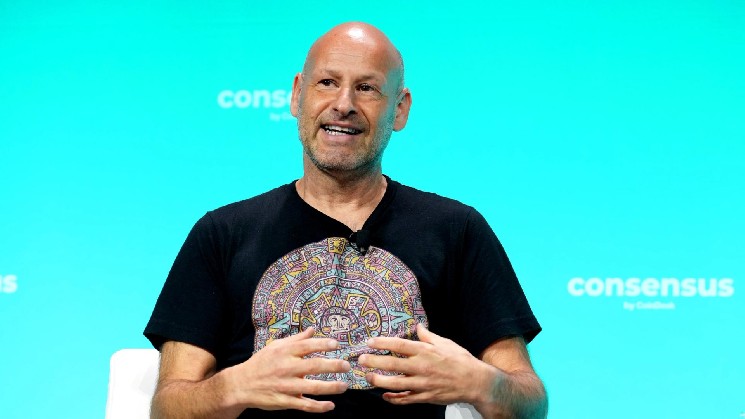
    Ethereum development firm Consensys announced plans to split into two independently operated companies, separating its MetaMask wallet business from the Ethereum protocols and institutional blockchain infrastructure it has built over the past decade.

    New Corporate Structure

    The existing company, Consensys Software Inc., will rebrand as MetaMask under Ethereum co-founder Joe Lubin as chairman and CEO.

    Its protocols group and institutional infrastructure business, including the Linea blockchain, will move into a newly formed company retaining the Consensys name.

    Leadership Changes

    The separation, expected to be completed by the end of 2026, would see Mike Kriak lead the new Consensys as CEO. That firm would include David Cunningham as president and Lubin as executive chairman.

    The new Consensys entity will focus on developing Ethereum infrastructure and helping financial institutions deploy blockchain systems for tokenized assets, stablecoins, and settlement.

    IPO Plans Delayed

    The restructuring comes after Consensys pushed back a potential U.S. initial public offering (IPO) until this fall at the earliest, citing poor market conditions. The company had reportedly engaged JPMorgan and Goldman Sachs to lead the process.

  • Crypto Long & Short: Inside the 300-to-1 On-Chain Gap Between the Dollar and Euro

    Crypto Long & Short: Inside the 300-to-1 On-Chain Gap Between the Dollar and Euro

    Euro Stablecoin Market Sees Rapid Growth Despite Small Base

    Euro-denominated stablecoin activity remains modest in absolute terms but is expanding quickly, according to recent market analysis. Assets under management (AUM) in euro vaults across decentralized finance (DeFi) have surged from approximately €12 million one year ago to €135 million today. Despite this growth, euro vaults represent only 2.4% of total vault AUM in the sector.

    Analysts suggest that euro-denominated real-world asset (RWA) yield products will serve as a primary catalyst for accelerating the adoption of EUR stablecoins.

    Path Dependency and Infrastructure Gaps Hinder Euro Issuance

    The analysis identifies two core reasons why onchain euro issuance lags behind its offchain counterpart: historical path dependency and a lack of dedicated euro-denominated DeFi infrastructure.

    The Legacy of Dollar-Denominated Trading Pairs

    Path dependency stems from the origins of stablecoins themselves. These assets were initially created to settle cryptocurrency trading, where trading pairs were historically priced in U.S. dollars. Because the base trading pair was USD, the first stablecoins launched were dollar-denominated to match the assets they were designed to settle.

    Absence of Euro-Native Yield Loops

    The missing infrastructure component centers on the “looping” mechanisms that propelled dollar-denominated DeFi. In the dollar ecosystem, vault infrastructure enabled a cycle where yield-bearing assets were issued onchain, accepted as collateral by lending protocols, and used to borrow dollar debt—which was then deployed to purchase more yield-bearing assets.

    This self-reinforcing loop created deep liquidity for major onchain lending markets. Euro-denominated leverage markets failed to gain similar traction because the necessary components of this loop—euro yield-bearing assets, compatible lending markets, and euro debt issuance—did not exist.

    Dollar-Centric DeFi Fails to Serve European Participants

    The current dollar-dominated DeFi landscape is structurally insufficient for a significant cohort of users who operate and report in euros. This group includes European asset managers, corporate treasuries, and retail DeFi users who think in euro terms.

    These participants represent substantial latent demand for onchain financial products. To date, they have been largely excluded from full participation in the onchain economy due to the burdensome foreign exchange (FX) risk and hedging costs incurred when interacting exclusively with dollar-denominated protocols.

  • Corn Launches Exclusive Members Club for Digital Asset Holders Following Bitcoin Layer-2 Pivot

    Corn Launches Exclusive Members Club for Digital Asset Holders Following Bitcoin Layer-2 Pivot

    Corn Shuts Bitcoin Layer-2, Launches Private Members Club for Digital Asset Holders

    Corn has launched a private members club for digital asset holders after retiring its Bitcoin layer-2 network, a move backed by a third investment from Polychain Capital that brings the company’s total funding to $19 million.

    Bitcoin Layer-2 Closure Precedes New Direction

    The launch follows Corn’s decision to retire the Bitcoin layer-2 network on which the company was originally built. Although the network held around $1 billion in deposits at its peak, founder Chris Spadafora said much of the capital had arrived to collect incentives rather than use the network over time.

    “We built serious infrastructure and it worked. At peak the network held around a billion dollars in deposits. What it taught me is the difference between usage and demand,” Spadafora said.

    According to the founder, much of the capital moved elsewhere once the incentives returned to normal. Watching the deposits leave changed how the team assessed product demand and eventually led it to reconsider Corn’s business model.

    The network ceased operations on June 30, 2026, Spadafora said. Corn notified its community in advance and provided an extended withdrawal period before the shutdown. Step-by-step guides explained how users could bridge assets out of the network, close protocol positions, and claim locked tokens. Withdrawals remained available through Corn’s self-service bridge until the sequencer went offline.

    Spadafora said the experience also showed the team that Bitcoin had settled into a role as an asset people saved, while stablecoins had become a tool for transfers, spending and settlement.

    “Private banks don’t recognize self-custody. Concierge services don’t take stablecoins. So instead of shipping more rails, we built what sits above them: a private members club purpose-built for digital asset holders.”

    Polychain’s Third Investment Brings Total Funding to $19 Million

    Polychain Capital has invested in Corn for a third time, bringing the company’s total funding to $19 million. Corn declined to break out the amount supplied through the latest investment.

    Before securing the new backing, Corn told Polychain that the thesis behind its original funding had not found product-market fit, Spadafora said. The company then presented its findings on how crypto holders store and use their money, along with a plan for a membership club tied to a stablecoin card.

    “Their latest investment shows their conviction not only in our new direction, but in our team as a whole. Funds don’t make a third investment out of politeness,” Spadafora said.

    According to the founder, the money will support the concierge operation, card rollout, and member experience. He described the spending plan as focused on “depth, not reach,” with personal service forming the main product.

    Polychain co-chief investment officer Luke Pearson said:

    “We’re deepening our support for Corn because we believe their approach stands out from the rest. They’ve taken the private-client service and concierge relationship only found at the top tier of traditional finance products, and are building and reimagining it for people whose money lives in stablecoins and whose lives operate around the world.”

    Stablecoin Card Offers Variable Limits Based on Holdings

    Corn’s new model replaces blockchain infrastructure with a service business built on existing payment and stablecoin systems. Every member receives one assigned concierge who keeps track of their preferences, portfolio, and priorities, according to the company.

    The company has positioned the club as an alternative to crypto cards that compete mainly through fees, rewards, and interest rates. Instead, Corn is pairing stablecoin spending with invitation-only services and direct support from a named concierge.

    Applications can be submitted through Corn’s website, but the company will review each request before granting membership. A prospective member’s holdings form part of the assessment, although Corn has no published asset threshold or fixed approval formula.

    Approved members receive a Visa card with variable spending limits based on the digital assets they hold. Corn said the assets are not pledged as collateral because spending settles against the member’s stablecoin balance.

    Members can deposit $USDC and $USDT from major blockchain networks, according to Spadafora. Regardless of the deposit network or supported stablecoin, balances settle in $USDC on Base.

    Corn said members place their stablecoins in an embedded wallet controlled by the user rather than a pooled company account. The available balance determines the card’s spending threshold, while the funds remain in the wallet until a purchase occurs.

    “Corn never holds the balance and there’s no pooled account anywhere in the system,” Spadafora said. “Spend settles against the member’s own balance, which stays in their wallet until the moment of spend.”

    A card transaction is authorized through Visa in real time against a limit linked to the deposited balance. Settlement then draws from the member’s stablecoins through the infrastructure operating behind the card.

    Rain, a regulated card platform, issues and processes Corn’s cards, Spadafora said. Members must complete full know-your-customer checks through a regulated identity provider before using the product.

    According to the founder, identity documents do not touch Corn’s servers. Withdrawals from the card path require authorization from the member and a co-signature from the card platform, meaning neither party can move funds alone.

    The card will be available to members in more than 50 countries, including the United States. Corn plans additional market-by-market rollouts through the fall.

    Growing Demand for Stablecoin-Linked Cards

    Demand for stablecoin-linked cards has risen alongside their availability. As crypto.news reported in August, tracked crypto card spending reached $759 million in July, up from $306 million a year earlier.

    Cardholders completed nearly 9 million purchases during the month, with an average value of about $86, according to Paymentscan data cited by a16z crypto. $USDC accounted for 58% of the tracked volume, while $USDT handled another 26%.

    Optimism processed about 29% of the tracked blockchain settlement, followed by Solana and Base at 19% each. Corn’s use of Base for $USDC settlement places the card on one of the three largest networks in Paymentscan’s July dataset.

    A separate August report on stablecoin card forecasts cited a Paymentscan headline total of about $1.04 billion for July. Variations in reporting methods can produce different totals, particularly when datasets combine transactions observed onchain with figures supplied by card providers.

    Membership Includes Concierge and Quarterly Experience Programs

    Alongside the card, Corn’s membership includes private dinners and events in cities where members live or travel. Requests go through the member’s assigned concierge rather than a general support channel.

    The company is also introducing two quarterly programs. Impossible Moments will present private openings, limited seats, and other experiences that are not ordinarily available for public booking, with each listing offered at a stated price.

    Under Corn Curated, a guest tastemaker will select restaurants, hotels, and travel experiences for the following three months. Members can arrange items from the list through their concierge, while each curator will introduce the person responsible for the next quarter.

    The first program experiences will roll out this quarter, according to Corn. Future offerings will cover sporting events, travel, private dining and cultural experiences arranged through the company’s network.

    Regulatory Framework Supports Stablecoin Infrastructure

    For US users, Corn enters a market where stablecoin infrastructure now operates under a federal framework created by the GENIUS Act. An earlier report on the Open USD initiative noted that the law established national rules for payment stablecoin issuers after President Donald Trump signed it in 2025.

    Visa said at its June 2026 Payments Forum that its stablecoin settlement run rate had reached about $7 billion as of March. More than 160 stablecoin-linked card programs were live or under development at the time, according to figures included in the same report.

  • XRP ETF Leads as Sole Spot Crypto Product With Inflows, Outpacing Solana, Hyperliquid, Bitcoin ETFs

    XRP ETF Leads as Sole Spot Crypto Product With Inflows, Outpacing Solana, Hyperliquid, Bitcoin ETFs

    XRP Leads Daily Spot ETF Inflows as Bitcoin, Ethereum, Solana See Outflows

    Among major cryptocurrency assets, XRP posted the strongest daily exchange-traded fund (ETF) flow result on September 8, emerging as the only significant spot crypto ETF category to attract fresh investment. Bitcoin, Ethereum, Solana, and Hyperliquid products all recorded net withdrawals during the same session.

    XRP ETFs Draw $1.55M in Net Inflows

    According to the latest spot ETF data from Sosovalue, XRP products registered net inflows of approximately $1.55 million on September 8. While modest in absolute terms, the figure stands out against a backdrop of outflows across rival assets.

    • Bitcoin ETFs snapped a three-day inflow streak with net outflows of $46.65 million.
    • Ethereum spot products saw $24.29 million in withdrawals.
    • Hyperliquid ETFs experienced $12.96 million in outflows.
    • Solana reported a smaller outflow of $667,720.

    As a result, XRP was the sole asset among these five to post positive daily flows.

    Cumulative XRP ETF Metrics Remain Strong

    The broader picture for XRP funds remains constructive. Five U.S. spot XRP ETFs now hold combined net assets of roughly $1.51 billion, with cumulative net inflows of about $1.69 billion. In just the past 30 days, XRP products have attracted approximately $173 million in new capital.

    Price Action: XRP Holds Above Key Moving Average

    The flow divergence becomes especially notable when viewed against underlying price action. Following a significant August breakout, XRP is trading between $1.39 and $1.40, holding above its long-term moving average at $1.35. Buyers have so far prevented a full retracement toward pre-breakout levels, even as the initial rally has cooled.

    Other major assets are also consolidating despite negative ETF flows:

    • Bitcoin is steadying around $79,000 after a sharp recovery.
    • Hyperliquid (HYPE) remains near recent highs of $86.
    • Solana (SOL) is holding near $104 following a surge toward $110.

    Single Session Not Enough to Confirm Trend Shift

    However, one positive session does not confirm a durable rotation of institutional capital toward XRP. Bitcoin’s total ETF inflows remain vastly higher at approximately $55.59 billion.

    If XRP inflows persist while BTC, SOL, and HYPE products struggle to attract capital, the current divergence could signal relatively stronger institutional demand for XRP. For now, XRP has won the daily ETF flow comparison, but confirming a meaningful trend will require several more consecutive positive sessions.

  • Bybit Integrates Chat into AI Stack, Signaling Broader Crypto-AI Shift

    Bybit Integrates Chat into AI Stack, Signaling Broader Crypto-AI Shift

    Crypto exchanges and retail brokers have largely converged on Model Context Protocol (MCP) integrations within their AI roadmaps, but some platforms are now advancing beyond that baseline. Bybit, the second-largest crypto exchange by trading volume, has unveiled Bybit AI, a conversational co-pilot designed for everyday trading and account management support.

    Bybit AI Launches as Conversational Layer Over MCP Infrastructure

    The firm launched an MCP server in April, connecting its platform to AI agents such as ChatGPT and Claude. The new Bybit AI front end sits on top of that infrastructure, aiming to simplify how users interact with the exchange’s suite of financial services.

    “Bybit AI is an important part of our roadmap for the New Financial Platform,” said Ben Zhou, Co-founder and CEO of Bybit. “We want to make it easier for users to access the financial services they need in one place.”

    For now, the co-pilot appears restricted to certain products and services, though Zhou indicated the product will expand to provide a wider range of access.

    “The idea is simple: you tell Bybit AI what you want to do, and it helps you find the right products and services to get it done, like having a team of financial experts right in your pocket,” he said.

    AI Co-Pilots Operate Within Strict Boundaries

    The crypto exchange emphasized that the co-pilot will not replace human agents but will work alongside professionals. Much like other MCP-based implementations, Bybit’s AI co-pilot will not have direct access to a client’s main account.

    Strict security measures to prevent prompt misunderstandings and unintended trades play a key role in these limitations. Additionally, the lack of clear, jurisdiction-specific regulatory rules has pushed brokers and exchanges to move cautiously, enforcing tight boundaries around what AI can execute.

    Industry Trend Toward Chat-Style Interfaces on MCP Rails

    Nonetheless, layering chat-style interfaces and co-pilot tools on top of MCP infrastructure might represent the next phase in the AI-native features race for brokers and exchanges. The fact that MetaQuotes, the leading third-party platform for retail brokerage, launched an integrated AI helper alongside its MCP connection points to this broader industry direction.