Author: Maya Brooks

  • Server: 15-Person Party Left $50 Tip on $700 Bill After Arriving 15 Minutes Before Closing: ‘For Those Who Don’t Tip, Don’t Go Out’

    Server: 15-Person Party Left $50 Tip on $700 Bill After Arriving 15 Minutes Before Closing: ‘For Those Who Don’t Tip, Don’t Go Out’

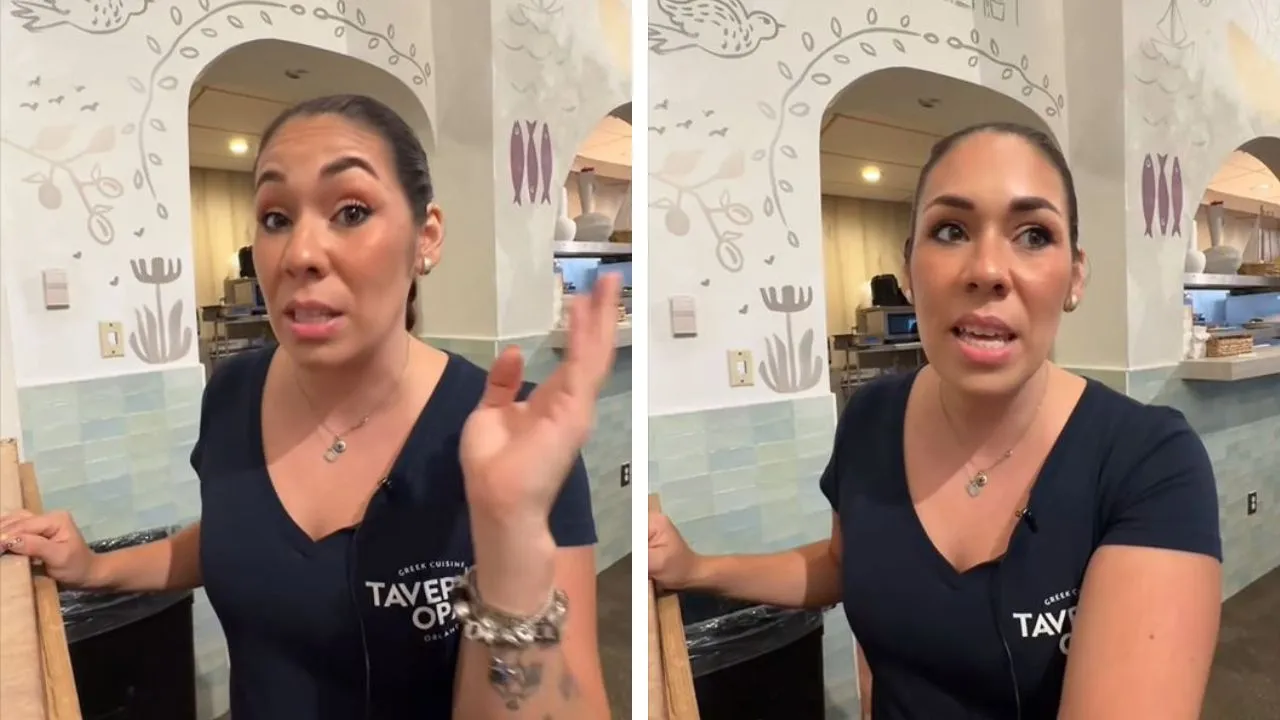
    A TikTok video posted by the @tavernaopaorl account has sparked a heated debate over tipping etiquette after a server at Taverna Opa Orlando described a 15-person party that arrived minutes before closing and left a $50 tip on a roughly $700 bill.

    Server Details Late-Night Encounter

    According to the employee, the group arrived around 9:45 p.m., approximately 15 minutes before the restaurant’s closing time. Despite the late hour, staff chose to seat and serve the large party. The diners ordered their entire meal at once, accumulating a bill of approximately $700.

    The server explained that three staff members were required to manage the table due to its size. She also outlined the restaurant’s tip-out policy, which requires servers to share a portion of their sales with support staff such as runners and bartenders, regardless of the gratuity actually received from the table.

    “If you sit on a table and it’s $700, I’m paying for you to sit down, because I’m paying runners, I’m paying the bar, etcetera, etcetera,” she said.

    The employee alleged that the diners initially indicated they did not intend to leave any tip. “I didn’t want to tip anything, like, nothing,” she said, “mind you, that we tip out on this table.”

    After further discussion, the group agreed to leave $50. “They were very rude about it, actually,” she said. The server stated that similar incidents occur regularly, particularly with parties seated near closing time. She concluded the video with a direct message to viewers: “For those who don’t tip, don’t go out.”

    Commenters Clash Over Tipping Culture

    The video drew thousands of comments, revealing a sharp divide over tipping norms and restaurant labor practices.

    One commenter challenged the server’s perspective, writing, “Tipping is optional.. I think you forgot that.”

    Another placed the blame on business owners, stating, “This should be ILLEGAL – the restaurant owners are the real thieves.”

    The employee also referenced the customers’ country of origin during the video, saying they were ‘not in your country’ and suggesting that tipping customs differ internationally.

    A separate commenter questioned the server’s claim that the restaurant lost money on the table. They wrote, “I can’t understand her saying they lost money, they paid their bill and it’s not mandatory.”

    Details Unverified

    The Daily Dot was unable to independently verify the total bill amount, the final tip left, or the identities of the customers described in the video. The details above reflect the account shared by the @tavernaopaorl account on TikTok.

  • Mom’s Summer Rules Require Kids to Trade Reading Minutes for Screen Time — TikTok Divided on Whether It’s Too Much

    Mom’s Summer Rules Require Kids to Trade Reading Minutes for Screen Time — TikTok Divided on Whether It’s Too Much

    TikTok creator @queencitytrends has ignited a heated debate after sharing her family’s structured summer rules for her children. The video, which has amassed over 13 million views, outlines a system where screen time is earned through reading, daily math practice is mandatory, and outdoor activity is required.

    Trading Reading Minutes for Screen Time

    The influencer explained that while summer is a break from school, it does not have to be a break from productivity. She and her husband designed the rules to keep their children engaged and prevent boredom. The first rule directly links literacy to leisure: every minute spent reading earns a minute of screen time.

    According to the creator, the incentive worked immediately. Her daughter reportedly read for four hours straight, while her son read for two hours. Since the start of summer, both children have finished three books each.

    Daily Math Practice and Outdoor Requirements

    The second indoor rule focuses on mathematics. The children spend roughly 20 minutes each day working through a math packet to maintain their skills. The creator suggested parents purchase similar workbooks on Amazon if their schools do not provide them.

    Outdoor time is also non-negotiable. For about two hours daily, the kids must play sports, participate in games, or exercise. The mother cited research from Harvard’s Center on the Developing Child regarding how air quality affects children’s development and health as part of her reasoning.

    Finally, the schedule encourages the children to cultivate individual interests. Her son is dedicating time to tennis, while her daughter is focusing on golf.

    Creator Defends Approach Amid Viral Backlash

    The influencer closed her video by addressing the volume of rules, stating:

    “(It) feels like a lot of rules, but they’re not coming over to us to tell us how bored they are.”

    TikTok Community Sharply Divided

    The comment section reflects a polarizing reception. Critics argued the structure turns enjoyable activities into chores. One commenter wrote:

    “Why is everyone acting like reading is punishment? It’s a story you’re reading; it’s supposed to be enjoyable.”

    Supporters, however, praised the framework as valuable long-term parenting. One user commented:

    “This is the type of stuff you really appreciate as an adult.”

    Another defended the creator against criticism:

    “The fact that people hate on you for making your kids read is INSANE to me.”

    A fourth commenter reframed the “strict” label entirely:

    “You’re not strict, you’re teaching, enforcing, and rewarding discipline.”

    The Daily Dot could not independently verify the details shared in the TikToker’s account. The details above reflect the events as described by @queencitytrends on TikTok.

  • Walmart Worker on Lunch Break Confronted by Demanding Customer; TikTok Reacts

    Walmart Worker on Lunch Break Confronted by Demanding Customer; TikTok Reacts

    Walmart Employee’s Lunch Break Interrupted by Demanding Customer Sparks TikTok Debate

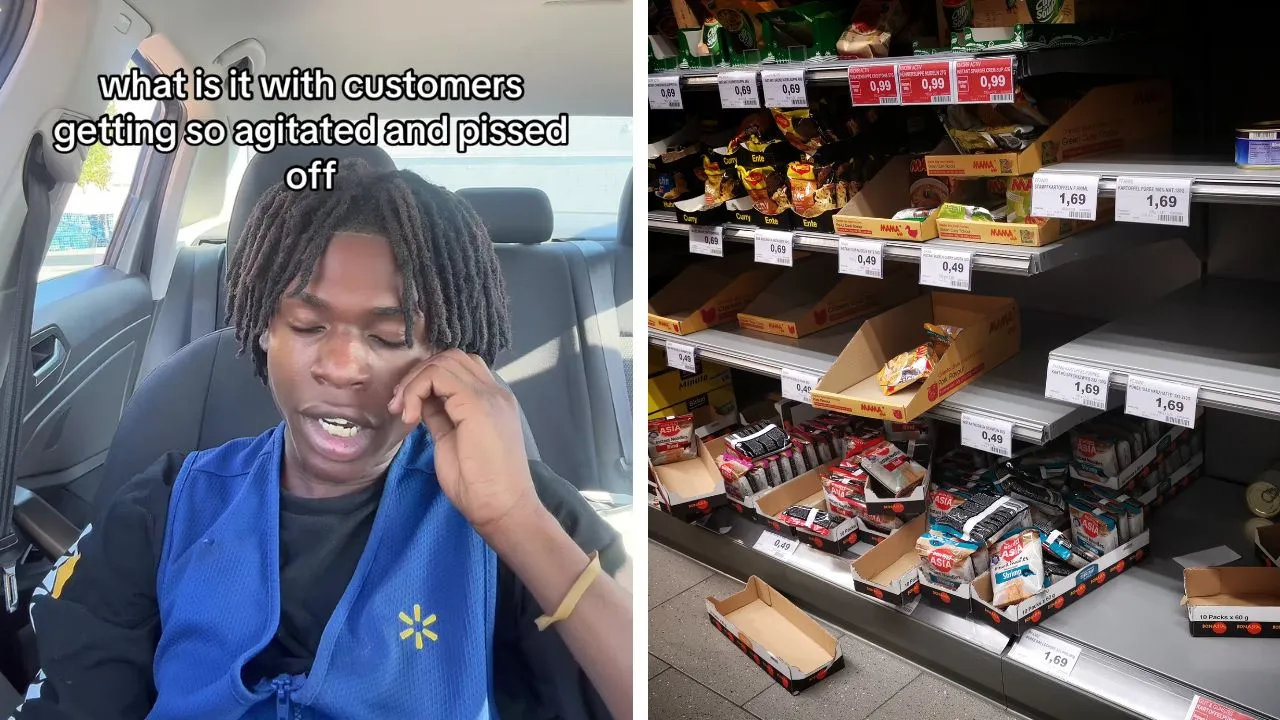
    A Walmart employee known as @skylouieeeee on TikTok recently shared a story that has resonated with retail workers and customers alike. Four days ago, the creator posted a video from his car while wearing his Walmart vest, describing an encounter that occurred when he attempted to take his lunch break. As of publication, the video had garnered approximately 39,000 likes.

    Off-Duty Worker Pressured to Assist Customer

    According to the TikToker, he had removed his vest before heading to lunch specifically to avoid being approached by customers while off the clock. Despite this precaution, a customer in the bicycle section stopped him and asked for help unlocking a bike. The employee explained that he was on his lunch break and did not have the necessary keys, but offered to fetch another worker who could assist.

    The customer, however, insisted he had already been waiting and pressed the employee to help regardless, even if it took about 20 minutes. The Walmart worker reiterated that he was off duty and would find a colleague. Fortunately, another employee soon arrived with keys and unlocked the bicycle.

    Interaction Escalates Beyond Initial Request

    The encounter did not end there. After the bike was unlocked, the customer asked the TikToker for assistance with additional items. Once again, the employee stated he was on his lunch break and could not continue helping.

    The creator captioned the video: “I don’t why he still needed me when someone was RIGHT THERE HELPING HIM #fyp #walmart #storytime #retail #retailworker”

    TikTok Community Overwhelmingly Supports Employee

    Commenters on the video, including both retail workers and customers, largely agreed that the employee had gone above and beyond by locating another staff member to help. “You are already giving that man too many words if you’re off the clock,” one commenter noted, adding that workers should simply state they are off the clock and continue walking.

    Several users shared similar experiences. One reported being approached by customers despite not wearing a uniform, while another said customers still asked for help even when they were visibly leaving work. Multiple commenters emphasized that a lunch break often constitutes a significant portion of a worker’s limited personal time during a shift.

    Break Time vs. Customer Expectations

    One commenter highlighted that spending 20 minutes assisting a customer could consume most of a standard 30-minute meal break. Another offered perspective on the customer’s viewpoint, suggesting that shoppers may simply be reacting to inconvenience and that employees inevitably encounter people needing help while on break. However, the consensus remained clear: an employee who has clocked out is entitled to use that time as they intend.

  • ‘This Is Not a Pink Barbie Toy Register’: Ex-Retail Worker’s Video on Customers Who Won’t Swipe Their Own Cards Goes Viral

    ‘This Is Not a Pink Barbie Toy Register’: Ex-Retail Worker’s Video on Customers Who Won’t Swipe Their Own Cards Goes Viral

    A former retail employee has sparked a massive wave of agreement online after posting a viral TikTok video criticizing customers who seem unable to use modern card readers. The clip has resonated with thousands of viewers, many of whom shared their own customer service horror stories in the comments section.

    In a TikTok video posted on May 29, 2026, user @deszthebratt expressed her mounting exasperation with shoppers who still expect cashiers to handle their transactions manually. She recalled her intense frustration during her time in retail when customers would repeatedly hand over their payment cards instead of using the self-service card machines placed directly in front of them.

    The Evolution of Checkout Technology

    Comparing the checkout experience of 1998 to that of 2026, the creator pointed out that today’s shoppers have clear, visible card machines with step-by-step instructions displayed on the screen. Despite these technological advancements and obvious prompts, she noted that many customers still refuse to take initiative and attempt to hand her their card to complete the transaction.

    She expressed utter bewilderment at shoppers who expect employees to do the work for them, stating, “This is not a toy register, boo. This is not a pink Barbie toy register.”

    Using animated body language and an exasperated tone, she demonstrated how difficult it can be to maintain patience when dealing with these situations daily. She recalled wanting to yell, “Swipe the card!” as she wondered why shoppers hesitate to complete their own checkouts.

    Furthermore, @deszthebratt highlighted the awkward interactions that occur when she gently informs customers that they need to insert or swipe the card themselves. According to her, many shoppers react with confusion, fumbling over their words and struggling to figure out how to proceed with the payment terminal.

    Retail Workers Unite in the Comments

    The relatable rant quickly went viral, racking up over 100,000 views on TikTok shortly after publication. It also sparked a lively discussion among current and former retail employees who recognized the exact same patterns in their own workplaces.

    Many commenters chimed in to validate her experiences, noting that the introduction of tap-to-pay has only added to the confusion. One user highlighted the impatience of some shoppers, writing, “When they tap…and they don’t give the card reader time to read the card! Like…give it a chance to read the card.”

    Another commenter pointed out another common retail pet peeve: “THIS! And when they put the money ON THE COUNTER.”

    Other users shared stories of customers waiting around for the cashier to remove their card for them after a transaction is complete, or struggling to perform basic tasks like entering an ATM PIN into the keypad.

    While the events described in the viral TikTok reflect the personal account shared by @deszthebratt, the overwhelming response in her comments section suggests that checkout line friction remains a near-universal struggle for retail workers everywhere.

  • ‘I Just Wanna Sleep’: Woman Calls Police After Asking Neighbors to Turn Down Party Three Times

    ‘I Just Wanna Sleep’: Woman Calls Police After Asking Neighbors to Turn Down Party Three Times

    A TikTok user has sparked a viral conversation online after sharing her experience dealing with a disruptive late-night party in her apartment building. In a video titled “I called the cops on my neighbors,” the creator, Kelly, explained how she exhausted multiple friendly options before finally contacting law enforcement.

    Kelly, who lives on the third floor of an apartment complex near a large university, noted that she is accustomed to a certain level of noise due to the area’s student population. However, the gathering, which began around 10 p.m., quickly escalated to a level that was impossible to ignore. She estimated that between 30 and 40 guests were packed into the apartment, with more arriving as the night went on. The disturbance included loud shouting and synchronized jumping so intense that Kelly could feel her apartment floor shaking.

    The Impact on Building Residents and Pets

    The disruption extended beyond human residents. According to Kelly, dogs in the building’s hallway barked constantly, while her own cats grew visibly distressed and repeatedly scratched at her glass patio door.

    Hoping to resolve the situation amicably without involving authorities, Kelly initially visited the apartment twice to ask the hosts to lower the volume. During these initial interactions, the partygoers apologized and promised to quiet down, but the noise quickly resumed.

    Giving Fair Warning Before Contacting the Police

    By approximately 12:45 a.m., with no improvement in the noise level, Kelly visited the apartment a third time. She warned the residents that she would call the police if the party did not quiet down within 30 minutes. When the noise persisted 45 minutes later, she returned one last time to inform them that the police were on their way.

    While filming outside the apartment, Kelly documented her attempts to get the partygoers to lower their volume. During this time, another neighbor emerged, sharing that her own dog had been distressed for hours and she had been unable to sleep. Reflecting on her decision, Kelly emphasized that she did not want to ruin anyone’s night, stating: “I’m not trying to be a buzzkill, but I just wanna sleep.”

    TikTok Users Weigh In on the Apartment Dispute

    The video quickly garnered significant attention on TikTok, prompting a debate over how to handle noisy neighbors. Many commenters praised Kelly for her restraint and direct communication, with one viewer describing her as “way too nice” for giving the neighbors multiple chances.

    Other users expressed frustration with the partygoers’ lack of consideration for those around them. “People are so [expletive] inconsiderate,” one user commented.

    While most viewers supported Kelly’s actions, some questioned whether calling the police was the best first resort. A few commenters suggested that contacting building management or using a non-emergency noise complaint line might have been a safer and more effective alternative to involving active duty police officers.

  • ‘I Always Do It in the Customer’s Favor’: McDonald’s Manager Waives 2-Cent Tax on Hash Brown and Donates $10 Tip She Can’t Keep

    ‘I Always Do It in the Customer’s Favor’: McDonald’s Manager Waives 2-Cent Tax on Hash Brown and Donates $10 Tip She Can’t Keep

    A McDonald’s manager has captured the hearts of millions on TikTok after a wholesome customer service interaction went viral. The moment, which was documented by an influencer known for sharing uplifting encounters, highlights a small act of kindness that sparked both admiration and a larger online debate about fast-food pricing.

    In the video posted by user @blessastranger, the creator initially asked the manager about the restaurant’s under-a-dollar menu. She explained that the budget-friendly menu no longer existed and had likely been phased out before she began working at the location. However, she pointed him toward an alternative menu featuring items under $3, listing options such as the sausage muffin, sausage biscuit, burrito, hash brown, and a medium coffee. The creator decided to order a single hash brown.

    A Small Act of Kindness Leads to a $10 Tip

    With tax, the total for the breakfast item came to $2.02, while the pre-tax price was $1.96. When it came time to pay, the manager refused to collect the remaining two cents, accepting only the flat $2 bill. Explaining her reasoning, she said:

    “We’re not doing the penny thing… I always do it in the customer’s favor, so.”

    Touched by her generous attitude, the customer offered her a $10 tip. While McDonald’s company policy generally prohibits employees from accepting tips, the manager chose to accept the money on the condition that she would donate it instead.

    The creator acknowledged her kind demeanor and asked her about her biggest dream in life, prompting an emotional response from the manager. She shared:

    “(I want) to be able to live comfortably and not be stressed out about money and taking care of my kids…”

    She further explained that she is currently living with her in-laws to save on rent expenses while working hard to build up savings and achieve her dream.

    TikTok Reacts to Manager’s Demeanor and Fast-Food Prices

    Since its release on June 29, 2026, the TikTok video has accumulated over 690,000 views. Many users praised the manager’s professionalism, particularly her decision to donate the tip rather than break corporate rules. Viewers filled the comments section with positive feedback, with remarks such as “She’s a great manager!” and “She is way more chill…”

    However, the video also ignited a lively discussion regarding the rising cost of everyday fast-food items, with many expressing surprise at the price of the breakfast side. One commenter wrote, “$2 for a hash brown is mad, what a world.” Others compared modern prices to those of the past, claiming they used to buy two hash browns for the price of one today.

    The company’s tipping policy also drew scrutiny from viewers. One user pointed out the discrepancy in service-industry practices, asking, “Isn’t it crazy everywhere you go in America you can tip, but McDonald’s doesn’t allow their workers to take tips.”

    The events in the video reflect the account shared by @blessastranger on TikTok. The identity of the manager and the exact store location have not been publicly confirmed. McDonald’s did not immediately respond to requests for comment regarding the viral video or their policy on employee tipping.

  • Walmart Employee Asked to Train Replacement After Being Passed Over for Promotion Sparks Wave of Similar Stories

    Walmart Employee Asked to Train Replacement After Being Passed Over for Promotion Sparks Wave of Similar Stories

    A viral TikTok video has sparked a widespread conversation about workplace favoritism and retail management practices after a former Walmart employee shared his experience of being passed over for a promotion—and then being asked to train the person hired over him.

    The creator, who goes by Rusty (@rustybonfire) on TikTok, explained that he spent over five years working at the retail giant. Around two years into his tenure, he transitioned to the deli department. When the department manager decided to move on, Rusty stepped up to train for the role. According to Rusty, upper management assured him that the department manager position would be his once it officially opened up.

    Passed Over for Promotion

    However, when the vacancy arose, the store held interviews for several internal candidates instead of immediately promoting him. Management ultimately chose another Walmart employee who transitioned over from the bakery, despite her having no prior deli experience.

    Rusty stated that managers defended the decision by explaining that the woman had applied for multiple internal listings, and they wanted to give her an opportunity. The situation became increasingly frustrating when Rusty was instructed to train her for the very management position he had worked toward.

    @rustybonfire I worked for @Walmart for 5 years and I would like my time refunded. #walmart #departmentmanager #jobs #badexperience #no ♬ original sound – Rusty

    Reflecting on the experience, Rusty recalled, “I train her [and] everything,” but the dynamic quickly deteriorated. He explained that the newly appointed manager began lecturing him on how to perform his duties and accused him of not obeying her.

    The Aftermath of Workplace Conflict

    The conflict eventually required intervention from an assistant manager. Although Rusty was reassured that he was not being fired and returned to his duties in the deli, the experience pushed him to leave the company. Looking back, he described leaving Walmart after more than five years as “one of the happiest days” of his life, adding that he would not recommend working for the retailer.

    TikTok Users React to Retail Management Struggles

    Rusty’s video struck a chord with viewers, racking up thousands of likes and prompting a wave of solidarity in the comments section. Many current and former retail workers shared similar experiences of being forced to train people promoted above them.

    One commenter, who spent a decade working at Walmart, shared that they had applied for a team lead role, passed the required assessment, and completed the interview, only to watch the position go to a maintenance worker with zero front-end experience. Another viewer noted they experienced the exact same pattern twice before finally resigning from the company.

    While many users criticized the corporate culture, some argued that the issue stems from individual store management rather than Walmart as a whole. A few commenters pointed out the positive aspects of working for the company, highlighting benefits such as educational financial assistance and employee store discounts. Another viewer noted that their spouse loved working as a team leader at one Walmart location, but had a completely different, negative experience after transferring to another store.

  • Why More People Are Turning to Online Therapy: The New Normal

    Why More People Are Turning to Online Therapy: The New Normal

    Therapy used to come with a familiar picture: a quiet office, a waiting room, and a weekly appointment that required getting across town. Today, that picture looks very different.

    The Shift From In-Person to Digital Care

    The traditional model of mental health care—scheduling weeks in advance, commuting to a private practice, and sitting face-to-face with a clinician—has undergone a radical transformation. Accelerated by necessity and sustained by convenience, digital therapy platforms, telehealth services, and app-based counseling have moved from the margins to the mainstream.

    Accessibility Drives Adoption

    For many patients, the barriers to traditional therapy were logistical as much as psychological. Rural residents, shift workers, caregivers, and people with mobility challenges often found weekly in-person visits unsustainable. Virtual sessions eliminate travel time, reduce scheduling friction, and expand the pool of available providers beyond a patient’s immediate zip code.

    Clinical Efficacy and Patient Preference

    Research increasingly supports the efficacy of video-based cognitive behavioral therapy and other evidence-based modalities delivered remotely. Meta-analyses have found comparable outcomes for depression, anxiety, and PTSD between telehealth and in-person formats. Patient satisfaction scores remain high, with many citing the comfort of speaking from home as a therapeutic advantage in itself.

    Hybrid Models Emerge as the New Standard

    Rather than a full replacement, the industry is settling into hybrid frameworks. Clinicians now offer a blend of office visits, video calls, asynchronous messaging, and digital tools for mood tracking or skill-building between sessions. This flexibility allows care to adapt to the patient’s life—not the other way around.

    Regulatory and Reimbursement Landscape

    Permanent policy changes at the federal and state levels have cemented telehealth’s place in the reimbursement structure. Medicare, Medicaid, and major private insurers continue to cover virtual behavioral health visits, often at parity with in-person rates. Licensure compacts are expanding, enabling therapists to treat patients across state lines more freely.

    Challenges Remain

    Despite progress, gaps persist. Digital literacy, broadband access, and privacy concerns still exclude vulnerable populations. Crisis management, complex trauma work, and certain diagnostic assessments may still require physical presence. The field continues to refine best practices for safety, engagement, and therapeutic alliance in virtual spaces.

    The quiet office hasn’t disappeared—but it’s no longer the only room where healing happens.

  • Asian Blockbusters Make Free U.S. Streaming Debut

    Asian Blockbusters Make Free U.S. Streaming Debut

    If your watchlist is starting to feel like the same five franchises in different fonts, some of Asia’s biggest movies are about to give you plenty of new options.

    A Wave of Fresh Cinematic Voices

    Streaming platforms and theatrical distributors are preparing a slate of major Asian titles that promise to break the cycle of franchise fatigue. From high-concept sci-fi and historical epics to intimate character studies and genre-bending thrillers, the upcoming lineup reflects the creative momentum building across film industries in South Korea, Japan, India, China, and Southeast Asia.

    Beyond the Algorithm

    For viewers tired of algorithmic recommendations that loop back to familiar intellectual property, this influx offers a chance to discover stories shaped by distinct cultural perspectives, production traditions, and storytelling sensibilities. The films span commercial blockbusters and festival award-winners, many of which have already generated buzz at international markets such as Cannes, Busan, and Tokyo.

    What to Expect

    While specific release dates and platform announcements are still rolling out, industry insiders point to a particularly strong calendar through the next two quarters. The slate includes directorial comebacks, breakout debuts, and sequels that earn their continuation rather than simply extending a brand. For audiences ready to refresh their queues, the message is clear: the next great watch may not come from the usual studios — and that is exactly the point.

  • AI Wrapper Boom Misses Real Problem, Says Jeffrey Zang

    AI Wrapper Boom Misses Real Problem, Says Jeffrey Zang

    Proletic Founder Predicts Restrained AI Will Win Next Product Wave

    The founder of Proletic contends that success in the next generation of artificial intelligence products will belong to teams prioritizing restraint and genuine utility over flashy capabilities. According to the argument, the market will reward software that users genuinely want to continue using rather than tools that merely demonstrate technical prowess.

    Shifting Focus From Capability to Utility

    This perspective suggests a maturing AI landscape where the novelty of large language models and generative features gives way to product discipline. Teams that resist the urge to over-engineer or stuff products with every possible AI feature may gain a competitive edge by delivering focused, reliable experiences that solve specific problems well.

    Retention as the New Metric

    The emphasis on software “people actually want to keep using” highlights retention and habitual use as critical differentiators. In a crowded market of AI-powered tools, products that integrate seamlessly into workflows and provide consistent value without friction are positioned to outlast those relying on initial hype or demonstrations of raw model power.

    Proletic’s stance reflects a broader industry conversation about sustainable AI product strategy, where restraint in design and clarity of purpose become strategic advantages.