Author: admin

  • With EMI license from Luxembourg: Ripple positions itself as a regulated payment provider in the EU

    With EMI license from Luxembourg: Ripple positions itself as a regulated payment provider in the EU


    • With a provisional EMI license from Luxembourg, Ripple is entering regulated European payment transactions as a possible issuer.
    • This allows Ripple itself to issue electronic money and offer payment services throughout the EEA.

    This opens up a market for the company that is traditionally dominated by FinTech heavyweights such as PayPal. Luxembourg serves as a bridgehead for Ripple: a location known for regulatory stability, international orientation and efficient EU passporting.

    Regulated player with ambitions

    The EMI license strengthens Ripple’s credibility in an environment that increasingly relies on clear regulatory frameworks. With MiCAR, a regulation comes into force in the EU that strictly monitors crypto and payment service providers and at the same time opens up new opportunities for them.

    Ripple is using this moment to distinguish itself as a fully-fledged payment provider that combines blockchain technology with traditional financial services.

    This means more security for customers, as EMI institutions are subject to strict regulations, must keep customer funds separate and meet comprehensive compliance standards.

    At the same time, the license creates the basis for new products – from e-money wallets to EU-compliant stablecoins, which Ripple has already publicly announced.

    More competition

    Ripple’s move is a wake-up call for European competitors. While many crypto companies are still working on making their business models MiCA-compliant, Ripple is expanding its regulatory foundation and thus gaining a head start.

    The combination of global infrastructure, blockchain-based real-time payments and now regulated electronic money services makes Ripple a serious challenger to established payment service providers. Banks and FinTechs must prepare for the fact that Ripple will not only act as a technology partner in the future, but also as a direct competitor.

    Luxembourg’s decision also sends a signal to the entire EU market: Blockchain-based payment companies are not only tolerated, but are actively integrated into the regulated financial sector.

    Ripple is establishing itself in Europe

    The provisional EMI license is more than a bureaucratic step. This gives Ripple the opportunity to implement its vision of a global, fast and cost-efficient payment network in Europe under clear regulatory conditions.
    Ripple Teams Up with Chipper Cash to Enhance Crypto Remittances in Africa

    For the EU, Ripple’s entry means strengthening competition and opening up to innovative payment models that go beyond traditional banking infrastructures.

    The coming months will show how quickly Ripple receives final approval and which products come to market first. However, one thing is already clear: the company’s role in Europe is growing.

  • Breakthrough in Europe: Ripple receives EMI pre-approval in Luxembourg

    Breakthrough in Europe: Ripple receives EMI pre-approval in Luxembourg


    • Ripple receives preliminary EMI approval in Luxembourg.
    • The news comes just days after the UK EMI license and FCA registration.

    Ripple has announced its next big success in Europe. The company announced today via that it has received preliminary approval for an Electronic Money Institution (EMI) license from the Luxembourg financial regulator Commission de Surveillance du Secteur Financier (CSSF).

    The news comes just days after the Financial Conduct Authority (FCA) also freshly granted its EMI license and crypto asset registration in the UK on Friday, according to Ripple.

    Ripple peilt EU-Expansion an

    Cassie Craddock, vice president and managing director for UK and Europe at Ripple, described the development as a “massive week” for the company in Europe. In one Post On

    “Immediately following our EMI license and crypto asset registration with the UK FCA, which came on Friday, we have now also received pre-approval for an EMI license from the Luxembourg CSSF,” Craddock wrote, adding:

    “Luxembourg’s challenging and progressive regulatory environment makes the country a premier location for financial innovation and our pre-authorization there will enable us to scale our pioneering digital assets infrastructure for clients across the European Union.”

    Craddock explicitly referred to a planned institutional rollout in Europe: “Regulatory clarity is the key to institutional adoption and Ripple is leading the way here.

    The official Ripple account on X also described the preliminary approval via X as a milestone for the expansion of its products. In an accompanying post, the company spoke of a “decisive step” in scaling Ripple Payments in the EU.

    “We have secured our preliminary approval for an Electronic Money Institution license from the Luxembourg CSSF. This is a crucial step towards scaling Ripple Payments in the EU and providing the region with institutional-grade digital asset infrastructure.”

    To put things into perspective, Ripple referred to key figures on global reach and usage: The company cites “more than 75 licenses and registrations worldwide”, “over 95 billion US dollars processed volumes” and a reach of “90% of daily FX markets”.

    At the same time, Ripple referred to the EU’s leading role in the digital sector:

    “As the EU leads the way in creating a regulatory framework for digital assets, we are helping institutions move from pilot projects to commercial scale, bridging the gap between traditional finance and the digital future to unlock trillions in idle capital.”

    In a video message, Craddock specified what the step should mean from the perspective of users. “European customers can now take advantage of real-time settlement, global on- and off-ramps, and last-mile payouts, all controlled end-to-end via Ripple’s market-leading digital asset technology.”

  • Bitcoin comes to savings banks and Raiffeisen banks

    Bitcoin comes to savings banks and Raiffeisen banks


    • At the end of December, DZ BANK received MiCAR approval from BaFin to start crypto services with the specially developed wallet “meinKrypto”.
    • The offer for the cooperative of savings banks and Raiffeisen banks is now based on this, which in turn makes it available to their private customers.

    The Volks- und Raiffeisenbanken, for their part, must apply to BaFin for a MiCAR license for “meinKrypto”. Once they have received this and implemented the offer, their customers can invest in crypto assets completely digitally. The “meinKrypto” wallet will be integrated into the VR banking app.

    The EU regulation “Markets in Crypto-Assets Regulation”, or MiCAR for short, forms the uniform legal framework for crypto assets and services in the EU. Financial institutions and other market participants must apply for specific MiCAR approvals for different business ventures.

    Regardless of DZ Bank’s offering, the Volksbanken and Raiffeisenbanken are free to make their own offers for investments in cryptocurrencies and their derivatives to their customers.

    However, all offers must be inquired about personally by interested customers, as the Volks- und Raiffeisenbanken will not actively advertise them. We remember: BlackRock and JPMorgan initially only sold their crypto products “under the counter” upon request.

    The association offer

    But at the beginning of the crypto offering from the Association of Volks- und Raiffeisenbanken there are four renowned crypto financial products to choose from: Bitcoin (BTC), Ethereum (ETH), Litecoin (LTC) and Cardano (ADA).

    However, the decision to offer assets is made individually by each individual cooperative bank. According to a survey conducted by their association in September 2025, initially no more than a third of the institutes actually want to make the offer available to interested customers.

    The “meinKrypto-Wallet” was developed by Atruvia, the IT service provider of the cooperative financial network and DZ BANK. The digital custody branch of Boerse Stuttgart takes care of the custody of the crypto assets, while transactions are executed via EUWAX.

    “EUWAX” is the abbreviation of the European Securities Exchange Stuttgart, the stock exchange in Germany that specializes in trading warrants, certificates and other structured financial products.

    EUWAX is particularly interesting for private investors and institutional investors who rely on derivatives. It trades with warrants and certificates as well as with leverage products – and in the future also with the above-mentioned crypto currencies and their derivatives.

  • Scarlett Johansson knocked off high spot as highest-grossing field workplace actor of all time


    Scarlett Johansson is not the highest-grossing field workplace actor of all time as her crown has been taken by another person.

    She was beforehand probably the most profitable actor in Hollywood historical past with movies that includes her getting bums in cinema seats as soon as they’ve paid an extortionate quantity for a drink and snack.

    Nonetheless, nothing lasts perpetually and she or he’s been dethroned by one other massive title who additionally additionally demonstrated a knack for showing within the varieties of films individuals present up of their droves for.

    According to The Numbers, Johansson nonetheless occupies the second spot having appeared in films with a mixed worldwide field workplace whole of $16,435,483,784 from 56 initiatives, her participation within the Marvel Cinematic Universe being accountable for the most important hitters on the checklist.

    Different high-grossing movies in her profession embrace her current look in Jurassic World Rebirth, the film Sing and its sequel alongside together with her voice work within the reside motion remake of The Jungle E-book the place she performed the snake Kaa.

    ScarJo has been bumped down into second place, however with a field workplace haul of billions she most likely will not thoughts (Tiffany Rose/Getty Photos for Newport Seaside Movie Pageant)

    Nonetheless, she’s been supplanted by Avatar star Zoe Saldaña who has additionally managed to rake in that candy MCU cash for her function because the alien warrior Gamora each within the Avengers movies and the Guardians of the Galaxy films.

    Saldaña’s participation within the new Star Trek films, her half within the first Pirates of the Caribbean movie and naturally the field workplace juggernaut that’s the Avatar movies means she’s simply surpassed Johansson by way of worldwide field workplace haul.

    She’s received a grand whole of $16,859,193,100 throughout 48 initiatives, which means she’s now the most important field workplace star in cinema.

    Insofar as this issues to both actor there actually aren’t any losers right here in terms of silver and gold, each ladies have clearly loved a profitable appearing profession and been in movies that pulled within the punters.

    As you may anticipate there are many different MCU stars who observe behind them within the high 10.

    The brand new field workplace queen is Zoe Saldaña, and with extra Avatar films on the way in which she’s anticipated to go on to additional success (Weiss Eubanks/NBCUniversal by way of Getty Photos)

    Samuel L. Jackson and Robert Downey Jr. take the third and fourth spots and with their anticipated participation in Avengers: Doomsday (you’d hope Downey Jr. reveals up contemplating he is taking part in the villain) they might quickly rise even greater, whereas Chris Pratt rounds out the highest 5.

    It takes a film star of the magnitude of Tom Cruise in sixth place to have somebody who wasn’t an MCU star, whereas Vin Diesel rides the Quick and Livid franchise into eighth place as he is in an enviable place sandwiched between Chris Hemsworth and Chris Evans.

    These lists additionally present how field workplace audiences and ticket costs have inflated in recent times as Harry Potter main man Daniel Radcliffe is down in place 24.

    He isn’t more likely to thoughts contemplating he is been having fun with large success in his profession and appears to be choosing films which can be enjoyable to do.

  • Brooklyn Beckham’s spouse Nicola Peltz ‘likes’ damning feedback amid household feud


    Brooklyn Beckham’s spouse Nicola Peltz seems to have ‘favored’ quite a lot of feedback concerning the ongoing feud with David and Victoria.

    Followers of the movie star household began to take discover when the Beckhams’ eldest son, 26, didn’t attend his dad’s fiftieth birthday celebrations.

    It result in David and Victoria being absent from Brooklyn’s vow renewal ceremony in August.

    After Brooklyn blocked his mum, dad and brothers from social media, it seems he has now requested his household to solely contact him ‘by way of attorneys’.

    It’s because it is being claimed that his ‘requests to cease’ referring to him on social media had been ignored.

    A supply told the Mirror that the efforts to fix fences publicly have been ‘resulting in points with’ Brooklyn’s psychological well being.

    “He felt his mother and father continued to disregard his needs and saved mentioning him on-line as a substitute of reaching out privately,” a supply told The Solar.

    Brooklyn blocked his mum and pa final month (Instagram/@nicolaannepeltzbeckham)

    This comes after youngest son Cruz Beckham, 20, tried to ‘clear up’ who unfollowed who final month, writing on social media: “NOT TRUE,” alongside a screenshot of an article implying that David and Victoria had been the primary to behave.

    Over on TikTok, Brooklyn’s spouse of three years, Nicola, is claimed to have ‘favored’ quite a lot of feedback alluding to the household feud.

    “I am glad Brooklyn was capable of be part of such a pleasant household,” one remark she reportedly favored learn.

    Brooklyn is claimed to be spending extra time along with his spouse’s household (Swan Gallet/WWD by way of Getty Pictures)

    One other one she apparently favored was: “I am sorry however nobody is aware of what goes on behind closed doorways… there’s clearly a cause why Brooklyn would not converse along with his mother and father… no baby would ever select to chop off their mother and father with out good cause.”

    “Lovely couple, I’m so glad her household helps her, and stands by them, such a younger couple that does not deserve that a lot scrutiny. Hold pushing Brooklyn, you’ve gotten those who rooting for you,” a 3rd penned.

    Nicola has been noticed ‘liking’ sure feedback on TikTok (TikTok/@nicolaannepeltzbeckham)

    As another person wrote: “Why cannot individuals simply allow them to each get on with their life.

    “They’re a younger couple attempting to get pleasure from one another. You probably have nothing type to say then say nothing in any respect.”

    Nicola, who bought married to Brooklyn after two years of relationship, reportedly precipitated a little bit of stir in 2022 when she did not put on a costume designed by her mother-in-law.

    “No household is ideal. No household,” she told the Sunday Occasions in October 2022, claiming that Victoria messaged Nicola’s mum to say that her studio wouldn’t be capable of make the costume in time.

    This meant that they needed to ‘give you one thing else’.

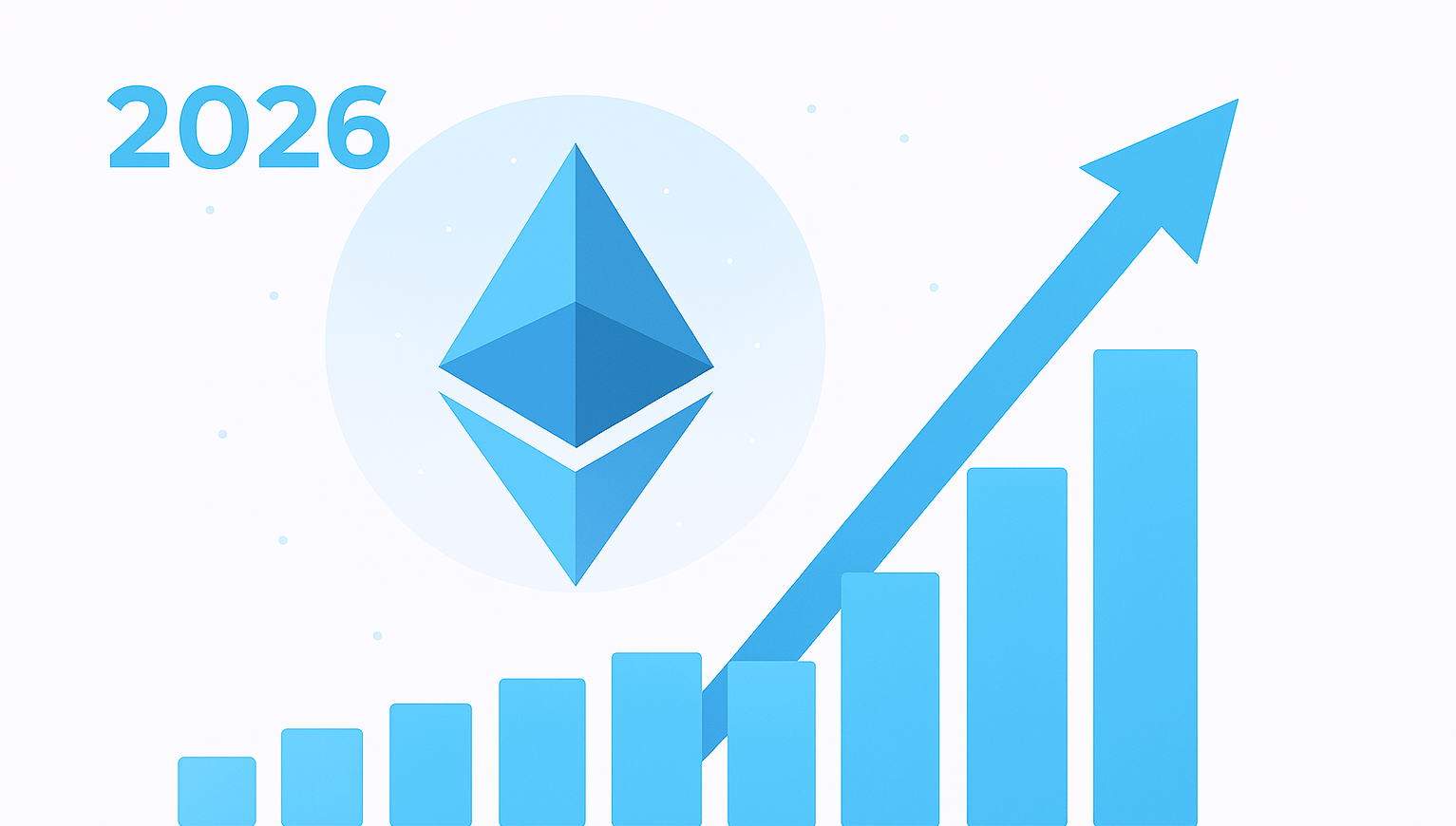
  • Standard Chartered sees Ethereum at $7,500 in 2026

    Standard Chartered sees Ethereum at $7,500 in 2026


    • The major British bank Standard Chartered sees Ethereum as a dominant force again in 2026.
    • It is assumed that the ETH rate will be at $7,500 at the end of the year.

    According to a recent report from British Standard Chartered Bank, Geoffrey Kendrick, head of digital asset research, expects Ethereum to outperform other major cryptocurrencies despite the current weak market phase. Kendrick expects Ether to rise to around $7,500 by the end of 2026.

    Why Ethereum is getting strong again

    The bank points to several structural factors that favor Ethereum in the long term. This includes leading roles in the key growth sectors of stablecoins, DeFi and RWA tokenization.

    They are considered the foundation of the next development phase of the crypto market. At the same time, Standard Chartered highlights the increasing network activity.

    There are more transactions, more smart contract usage, and a growing developer base. This dynamic is expected to give Ethereum a relative advantage over Bitcoin, whose performance will be muted in the coming years, according to Standard Chartered.

    Technology and regulation as drivers

    Another reason for the optimistic assessment is the technological development of the Ethereum network.

    Following the introduction of Proof-of-Stake and the increasing adoption of Layer 2 chains, the bank expects a significant improvement in scalability and efficiency.

    Standard Chartered also expects a tailwind from regulation: While Bitcoin is primarily viewed as a digital asset, Ethereum is seen as a project with universal tools that can be easily integrated into institutional structures.

    Standard Chartered is convinced that the combination of technological maturity and regulatory compliance will make the new year a turning point for Ethereum – the bank is already talking about 2026 as the “Year of Ethereum”.

    Long term perspective

    Standard Chartered is also extremely optimistic about the future situation beyond 2026. The bank predicts a possible increase to $30,000 by 2029 and $40,000 by 2030.

    This should become possible with continued growth in customer usage, increasing institutional demand and advancing tokenization in traditional financial markets.

  • EU economists demand: Digital Euro now!

    EU economists demand: Digital Euro now!


    • The call for the digital euro is getting louder. Now it also comes from academia, in an open letter signed by 70 economists from universities across the EU.
    • They are calling on the EU to finally push ahead with the introduction of the digital euro. Their argument: Europe risks being left behind in the global financial architecture if it continues to hesitate.

    The European Central Bank is already working on the conceptual and technical development of the digital euro. But at the political level there is a lack of initiative and speed.

    For the crypto industry, the appeal of the 70 recognized experts is a clear signal that the framework conditions for digital assets in Europe must quickly and fundamentally change.

    The digital euro as a financial policy project

    In the open letter published by Sustainable Finance Lab at Utrecht University The scientists emphasize that the digital euro is much more than just a means of payment.

    Rather, it is intended to strengthen Europe’s digital sovereignty, reduce dependence on US tech companies and provide an answer to China’s technological lead.

    China has already developed a functioning CBDC system with the Digital Yuan and has been testing it for some time, but without announcing this to the rest of the world via social media at every possible opportunity.

    The Digital Euro is also intended to serve as a counterweight to the private sector stablecoins that now dominate the majority of global crypto trading. The economists who signed the open letter see this as a threat to the European Central Bank’s monetary sovereignty.

    A state-guaranteed, digital central bank money could create stability here and at the same time enable innovations – such as programmable payments, automated billing and innovative business models in the Web3 environment.

    Why the EU must act now

    For the crypto industry, the Digital Euro is perhaps the greatest opportunity of its existence. The Digital Euro would massively increase the acceptance of digital payments and thus generally bring blockchain applications into the mainstream.

    On the other hand, an official European digital money would increase competition for stablecoin providers and force banks such as FinTechs to reorient themselves strategically. However, the project remains politically controversial.

    Data protection concerns, lobbyist pressure from banks and fear of loss of control are slowing down the process. However, the appeal of the 70 economists shows that the time for waiting must finally be over.

    The European Union is facing a turning point that will shape not only the future of the financial world, but the future of the entire European economy.

  • Google and IBM rely on Hedera Hashgraph as the next generation cloud infrastructure

    Google and IBM rely on Hedera Hashgraph as the next generation cloud infrastructure


    • Google and IBM will incorporate Hedera Hashgraph into their cloud strategies. Both companies need to make their cloud systems highly scalable and secure.
    • Due to special technology, the Hedera blockchain is the alternative for cloud data centers that need high transaction speeds at low costs.

    For global players processing operations involving millions of records every day, network efficiency is critical. Most blockchain networks experience “bottle necks” when there is a high volume of data. Hedera is designed as an infrastructure for heavy workloads, perfect for global cloud providers that want to offer their enterprise customers robust distributed ledger technology (DLT).

    Governance as a trust-building measure

    Another reason Google and IBM chose Hedera is its governance structure. Hedera is not run by anonymous miners, but by a global council of established companies, universities and technology providers.

    This form of institutional participation creates a level of predictability and compliance that classic blockchains rarely offer. This is a decisive advantage for companies that are currently subject to increasingly strict regulatory requirements.

    Hedera can be integrated as a network into the compliance frameworks of Google and IBM, while at the same time there is enough innovation potential to test new business models and make them market-ready. Participation in Hedera Governance also allows them to actively shape technological development.

    2026 sets the course for enterprise blockchains

    The enterprise blockchain market is at a crucial stage. Many projects from recent years are now reaching the scaling phase, and the companies in question now need robust networks that can host a high-demand production environment in a fail-safe manner.

    Hedera meets this high requirement: It is fast enough for real-time applications, secure enough for sensitive data and cost-effective enough for widespread implementation.

    Google and IBM know that the competition for the leading enterprise systems is determined by the quality of the underlying distributed ledger technology.

    Both global players rely on Hedera at an early stage and not only secure a technological advantage, but also influence on a network that has the potential to become the standard for future global infrastructure.

  • Europol busts international crypto money laundering ring in Albania

    Europol busts international crypto money laundering ring in Albania


    • An inconspicuous discovery in 2021 during a drug raid in Spain has now led to one of Europol’s biggest successes against money laundering crime.
    • In a house that had been linked to cocaine trafficking, a number of five-euro bills were found, among other things, littered with handwritten notes

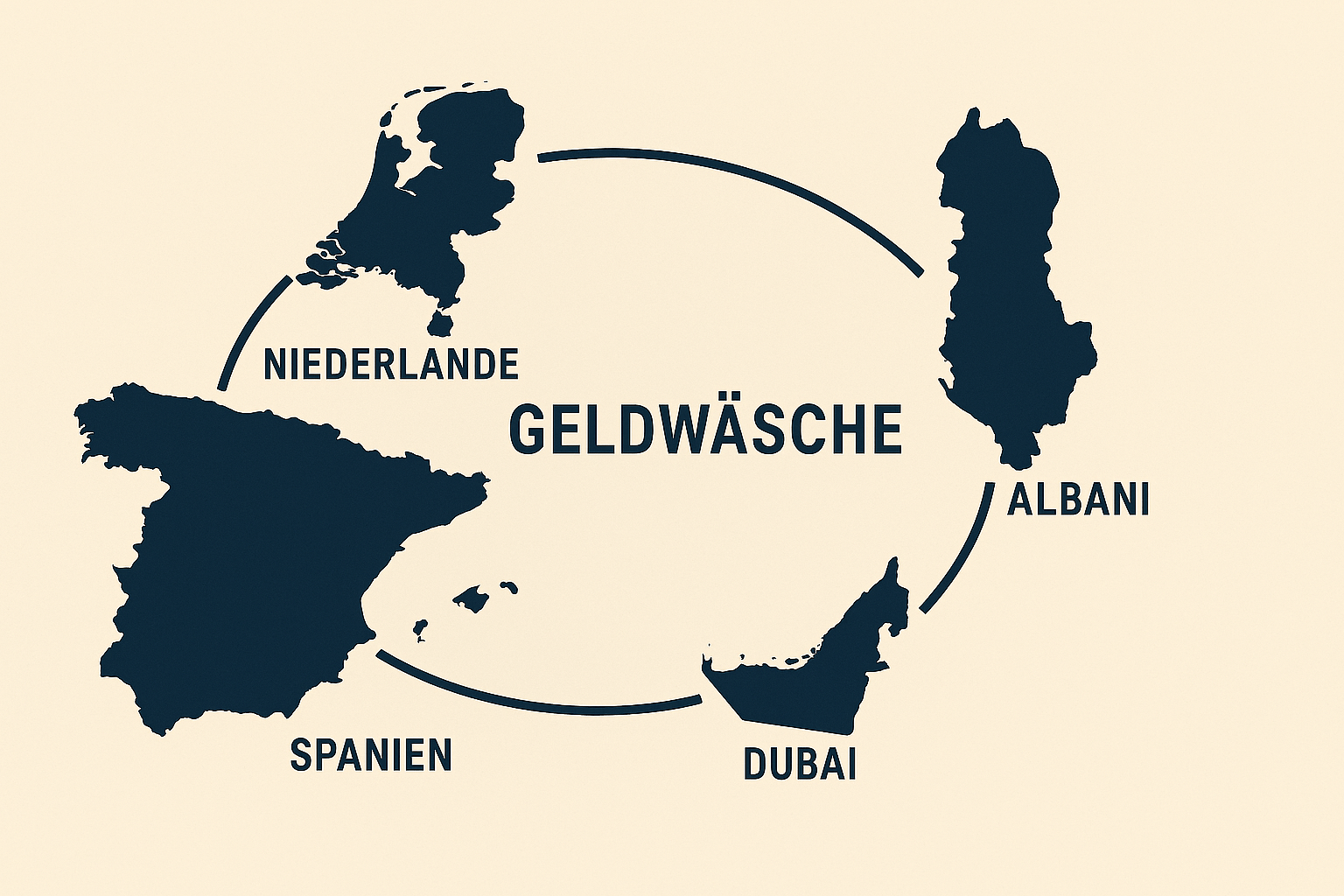
    What initially seemed like a strange triviality turned out to be a goldmine of information about a crypto-money laundering network that stretched from Spain to the Netherlands to Dubai to Albania.

    The notes on the banknotes contained the names, abbreviations, amounts, wallet information and codes of the criminal organization’s money couriers.

    Once the information was put into context, they literally held the keys to an international crypto-money laundering system centered in the Albanian capital, Tirana. It had moved more than 35 million euros and concealed their origin.

    The notes on the banknotes contained names, abbreviations, amounts and internal codes that allowed investigators to make a shadow banking system transparent. When the Spanish authorities called in Europol, the case quickly expanded. The leads led to the Albanian Çopja group, a criminal organization that, according to case files, systematically converted drug money into cryptocurrencies.

    The Albanian anti-corruption agency SPAK got involved and, using wallet data, TRON transfers and e-exchange protocols, reconstructed how the money flowed from Spain via Tirana into Bitcoin, Ethereum and, above all, USDT on a TRC20 basis.

    The investigation showed that the group used both Binance and the US cryptocurrency exchange “Cragen”, supplemented by local exchange offices in Tirana. A Milanese company also appeared as a facade that is said to have purchased cryptocurrency worth around $40 million between October 2024 and July 2025.

    The blockchain traces showed transactions of six and seven-figure sums of money, which were subsequently “reinvested” in real estate, restaurants and other legal businesses in Albania.

    Crypto forensics leads to success

    What was particularly challenging for the investigators was that there were hardly any written documents other than financial records. Neither bank statements, receipts nor contracts were available. Instead, authorities had to work exclusively with onchain data.

    The Albanian lawyer Dritan Jahaj emphasized that ownership of a wallet is the decisive legal lever: Without a clear assignment of an address to a person, it is hardly possible to convict the accused.

    At the same time, it became clear how far crypto forensics has now progressed. Analyst Dorian Kane explained that even disguised wallet cascades can increasingly be de-anonymized as soon as a single error in the physical environment establishes the connection – in this case, the five euro bills, which the perpetrators believe were negligently described.

    In total, more than 35 million euros were confiscated, including 25 million in Spain and 10 million in Albania. For Europol, the case is an exemplary example of how cash discoveries, blockchain analysis and international cooperation work together to break down complex crypto money laundering structures.

    For the EU law enforcement authorities, the case also marks major forensic progress: for the first time, a multinational criminal network was almost completely exposed using digital traces.

    However, this was only possible because of the initially inconspicuous banknotes, which, in addition to their original inscription, had the notes in question that did not belong there.

  • VeChain: VeBetter exceeds 43 million verified sustainability actions

    VeChain: VeBetter exceeds 43 million verified sustainability actions


    • VeChain reports “43 million verified actions” on-chain.
    • VeBetter now includes over 50 apps and more than 5 million users.

    The VeChain Foundation reports a new milestone for its VeBetter ecosystem: According to a Post on X As of January 12, 2026, “43 million verified actions” have now been recorded on-chain.

    In its communication, VeChain emphasizes: Many major challenges fail not because of a lack of goals, but because of a lack of verifiability. “The world’s biggest challenges have a common problem: we cannot prove that we are solving them,” writes the VeChain Foundation and further explains:

    “Climate pledges without verification. Supply chains that claim sustainability without evidence. Programs that measure good intentions instead of real results. The gap between what organizations say and what they can prove has never been bigger – or more expensive.”

    The VeChain blockchain aims to close this gap by making data permanent and verifiable. VeChain describes the approach like this:

    “Blockchain changes that equation. It creates permanent, tamper-proof records that anyone can verify. Every transaction, every claim, every action becomes cryptographically secured evidence, rather than a promise to be simply believed.”

    VeChain shows how blockchain makes sustainability measurable

    VeBetter is described by VeChain as a “collective action hub” in which sustainable decisions are represented as verified results. The ecosystem includes over 50 applications, while more than 5 million people have already converted everyday actions into on-chain records “that cannot be challenged or forgotten.”

    In just over a year, according to the VeChain Foundation, users have, among other things, saved over 350,000 kilograms of plastic, which VeChain estimates at 15 million bottles that do not end up in the ocean. The project also cites 8 million kilowatt hours of energy saved, equivalent to 740 households for a year, and 90 million liters of water saved, equivalent to 36 Olympic swimming pools.

    VeChain emphasizes that the use is deliberately designed so that the Web3 complexity disappears into the background. For example, users can open “Mugshot” to track reusable cups or “Cleanify” to log community cleanups.

    Verification, on-chain storage and rewards are instant. As an example, VeChain cites a partnership with the UFC, whose BYB app brings the model into an environment “where millions already gather.”

    The VeChain Foundation also emphasizes that the focus is not only on retail applications. For the enterprise sector, the post emphasizes that VeBetter apps run on VeChainThor, an “enterprise-grade” blockchain that VeChain says has had “100% uptime” since its launch in 2017.

    VeChain cites record for building infrastructure around Europe’s Digital Product Passport as references. As CNF recently reported, Schweizer Rekord AG processes “hundreds of thousands of DPP events per month” on VeChainThor. With the EU Ecodesign Regulation for Sustainable Products (ESPR) coming into effect this year, as well as other regulations such as the EUDR and CBAM, lifecycle traceability and market access will become mandatory in the 27 EU member states.

    In addition, VeChain refers to Walmart China, which uses blockchain to track “from origin to shelf,” as well as Lululemon, where products are to be given “blockchain-based digital identities” to reflect authenticity, material origin and after-sales options via a history that cannot be falsified.