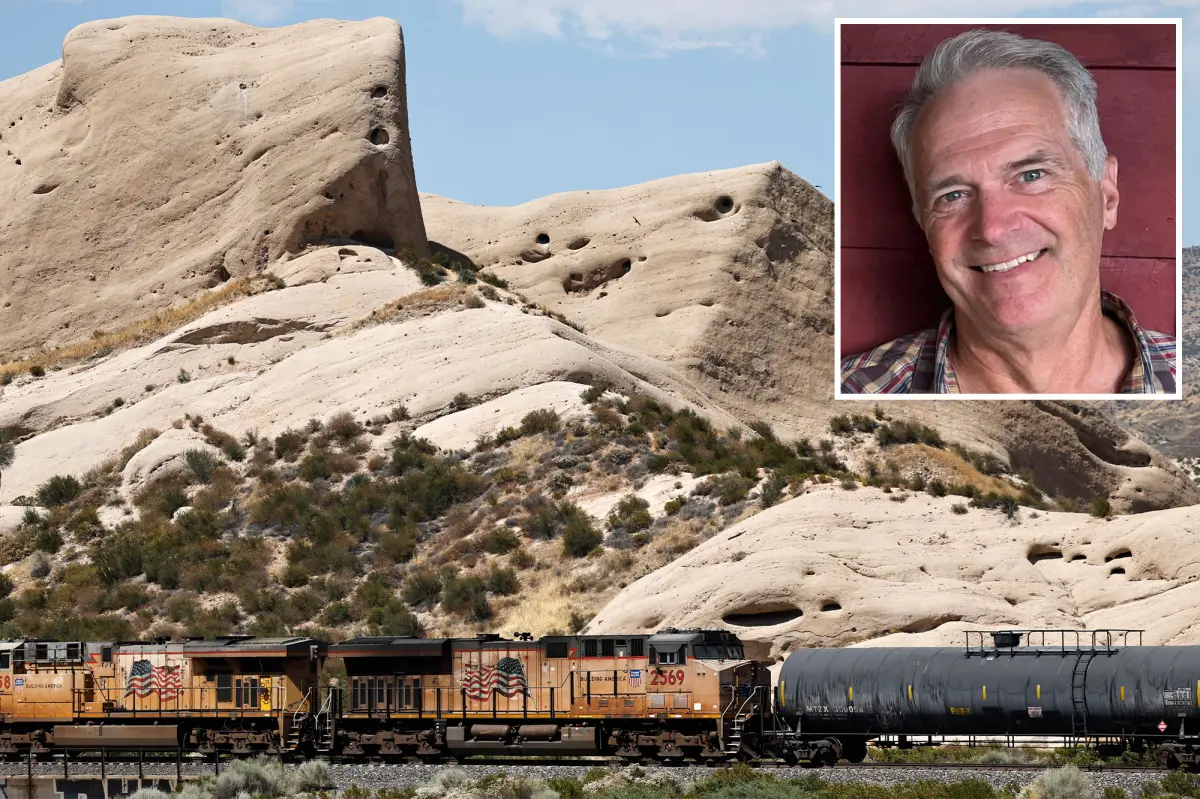
Cajon Pass, a heavily traveled corridor north of Los Angeles, sits at the intersection of the San Andreas and San Jacinto fault systems, where scientists say tectonic stress has reached its highest level in 1,000 years.
The route cuts through the San Bernardino and San Gabriel Mountains and serves as a critical link between Southern California and the rest of the region. Researchers warn that the area could play a decisive role in the next major earthquake along the faults.
Cajon Pass could determine how far an earthquake spreads
Scientists have described Cajon Pass as a potential “earthquake gate.” The junction could either stop a large rupture from spreading between the two fault systems or allow it to pass through both, potentially producing a much more powerful earthquake, according to National Geographic.
“We all know the San Andreas fault is loaded. It’s ready to go. For years the scientific community has been saying so,” Ken Hudnut, who helped the U.S. Geological Survey develop seismic resiliency initiatives for California, told National Geographic.
“Cajon Pass keeps me up at night,” he added.
Researchers found that during earlier periods when stress rose simultaneously along both faults, Cajon Pass allowed ruptures to spread through the two systems.
The findings do not predict when the next major earthquake will occur, but they indicate that a future rupture at the junction could reach about magnitude 7.5.
“We are primed to have another one in our generation,” study lead author Liliane Burkhard, a geophysicist at the University of Bern, told the magazine.
Southern California infrastructure faces major earthquake risk
The threat is especially serious because Cajon Pass contains infrastructure essential to Southern California’s transportation, communications and energy networks.
About 160,000 vehicles travel through the corridor each day. Rail lines, highways, power infrastructure, fiber optic cables, aqueducts and high-pressure natural gas pipelines also cross the pass.
“We all know the San Andreas fault is loaded. It’s ready to go. For years the scientific community has been saying so,” said Ken Hudnut.
A major rupture along the southern San Andreas Fault could therefore cause damage far beyond buildings located near the fault line.
Previous earthquake modeling has projected that a magnitude 7.8 earthquake could kill more than 1,800 people, injure 50,000 and cause approximately $200 billion in damage.
The 2008 ShakeOut Scenario also projected severe consequences at Cajon Pass, including destroyed rail lines, damaged highways, severed fiber optic connections and ruptured gas infrastructure.
Earthquake-triggered landslides could topple transmission towers and bury other critical lines. An estimated 75,000 cubic meters of debris could also block roads through the pass.
“This earthquake’s inevitable. We just don’t know exactly when,” former USGS seismologist Lucy Jones told National Geographic, warning that “any sort of lifeline crossing the fault will be cut off.”
Officials and utilities prepare for a possible rupture
California officials have acknowledged Cajon Pass’s vulnerability, saying that losing access through the corridor could severely disrupt transportation, supply chains, communications and power systems.
The California Governor’s Office of Emergency Services said a task force has been established to coordinate government and private-sector efforts to restore critical infrastructure after a disaster.
Utilities have also taken steps to strengthen their systems. Southern California Edison said it invested roughly $300 million in seismic hardening between 2016 and 2025. SoCalGas said it has installed automated and fault-isolation valves around transmission pipelines in Cajon Pass.
Scientists still cannot determine when Southern California’s next major earthquake will strike, but Jones said the location of the greatest danger is clear.
“We know exactly where this will happen,” she said. “That’s the thing that’s frustrating.”
Leave a Reply