Tag: Zach Cregger

  • Resident Evil Franchise Turns Video Game Frustration Into Its Best Running Joke

    Resident Evil Franchise Turns Video Game Frustration Into Its Best Running Joke

    Key Highlights

    • Zach Cregger’s Resident Evil movie adapts core gameplay mechanics—like indestructible padlocks and key hunting—rather than replicating specific game plots.
    • Director Zach Cregger confirms the padlocks represent the “DNA of the games,” turning player frustration with arbitrary progression gates into a running joke for protagonist Bryan (Austin Abrams).
    • The film mirrors survival horror resource management, weapon progression, and shifting camera perspectives to recreate the rhythm of playing a Resident Evil title.

    When a Padlock Becomes a Punchline: Resident Evil Turns Game Logic Into Cinema

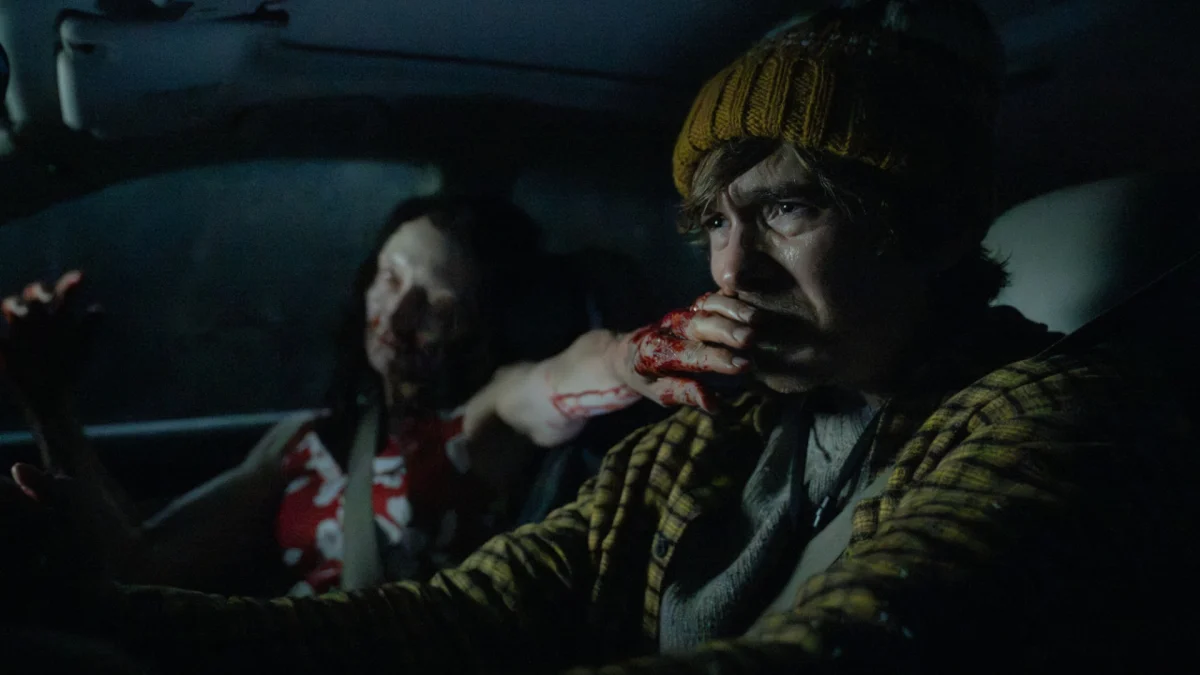
    Early in Zach Cregger’s Resident Evil, medical courier Bryan (Austin Abrams) faces a farm gate secured by a massive Diamond-emblazoned padlock. Armed with a rifle, he does what any action hero would: shoots the lock. The bullets do nothing. He then rams the gate with a stolen truck. The gate wins. The key, it turns out, was under the sun visor the entire time. The scene sets up one of the film’s sharpest running gags—Bryan’s escalating exasperation with the franchise’s signature obstacle. “What is with all the fuckin’ padlocks, man?” he eventually snaps, voicing the question every Resident Evil player has asked since 1996.

    Adapting Mechanics, Not Just Monsters

    Cregger has been explicit that his goal was not to recreate the plot of any specific Capcom title but to replicate the experience of playing one. That means limited ammunition, healing items, increasingly powerful weapons, and the omnipresent locked doors that gate progress until the player finds the designated key or keycard. In an interview with Steve Goldman of Rolling Stone, Cregger dismissed the idea that these elements are mere Easter eggs. “Some of them I wouldn’t even think of as Easter eggs,” he said. He specifically pointed to “padlocks and the search for keys and keycards” as something that’s “really baked into playing the games,” alongside healing items, ammunition, and weapon progression. “All of that is like the DNA of the games that is in the movie,” he said.

    That distinction is critical. A green herb in the background is a nod; a protagonist who wastes bullets and a truck on a lock that refuses to break is an adaptation of a progression system. In the games, a locked door is not a physical barrier—it is an instruction: explore elsewhere first. Resident Evil 2 codified this with its Spade, Diamond, Club, and Heart keys scattered throughout the Raccoon City Police Department. The lock tells the player where not to go; the missing key gives them a reason to go everywhere else.

    A Character Who Doesn’t Know the Rules

    The comedy works because Bryan is not Leon S. Kennedy. Cregger described him to Rolling Stone as “more suited to sitting on the couch playing Resident Evil than surviving an actual Resident Evil experience.” When Bryan encounters a locked gate, he reacts like a person in the real world: he shoots it, then drives a truck into it. Neither works, because that is not how Resident Evil works. The padlock is not a padlock; it is gameplay.

    Cregger acknowledged to Dread Central that the games’ more elaborate puzzles would stall a film moving at a breakneck pace. Instead, the padlocks became a shorthand. Bryan “does come up against padlocks throughout the movie, and he’s got to try and navigate those,” Cregger said. “So I’m kind of like tipping my hat to those sorts of things.” The same attention to gameplay rhythms appears elsewhere. During a Reddit AMA before release, Cregger wrote, “I love the resource management aspect of the games, and it was really important to me to bring that to the movie.” Cinematographer Dariusz Wolski’s shifting camera perspectives further echo the series’ visual language.

    Why This Matters

    Video game adaptations often chase surface-level iconography—monsters, weapons, locations, camera angles—while missing the ludic friction that defines the source material. Resident Evil players have spent nearly three decades accepting a silent contract: a wooden door can withstand a rocket launcher because the game says “not yet.” A 2025 Reddit thread captured the absurdity: one player recalled a door blocked by a broken knob while carrying a shotgun and grenade launcher. Another joked about firing endless rockets at a wooden door before accepting, “Damn, guess I need to go around.” A year earlier, a fan put it succinctly: “Half of Resident Evil would be skipped if everyone did a Barry and just shot the locks off the door.” Cregger has turned that shared frustration into a structural joke. By making the implicit agreement between player and developer explicit, the film captures the particular feeling of playing Resident Evil—wasting a precious bullet, finding a magnum at the perfect moment, hitting yet another locked door—and proves that the series’ “DNA” lives in its mechanics as much as its monsters.

    Frequently Asked Questions

    Is Zach Cregger’s Resident Evil a direct adaptation of a specific game?

    No. Cregger has stated the film does not recreate the plot of any particular Capcom title. Instead, it aims to replicate the experience of playing a Resident Evil game—resource management, key hunting, weapon progression, and locked-door progression gates.

    Why are padlocks such a recurring element in the movie?

    Cregger told Rolling Stone that “padlocks and the search for keys and keycards” are “really baked into playing the games” and represent the “DNA of the games that is in the movie.” They serve as a shorthand for the progression system that defines the franchise’s level design.

    How does the film handle resource management and combat?

    Cregger emphasized making ammunition matter, with Bryan gradually acquiring more powerful weapons. He described the resource management aspect as “really important to me to bring that to the movie,” mirroring the scarcity and tension of the games.

  • Resident Evil Post-Credit Scene Explained: What to Know Before Watching

    Resident Evil Post-Credit Scene Explained: What to Know Before Watching

    Key Highlights

    • The 2026 Resident Evil reboot, directed by Zach Cregger and co-written by Shay Hatten, centers on an ordinary medical courier named Bryan (Austin Abrams) rather than franchise veterans like Leon S. Kennedy or Jill Valentine.
    • The film is a standalone entry with no narrative ties to the seven previous live-action movies starring Milla Jovovich, requiring no prior knowledge of the games or films.
    • Resident Evil contains extreme graphic body horror, child and infant deaths, animal death, and strobing light sequences; it carries an R rating and has no post-credit scene.

    A Ground-Up Reboot Focused on Survival, Not Soldiering

    The latest cinematic adaptation of Capcom’s Resident Evil franchise arrives in theaters on September 18, 2026, marking a sharp departure from the action-heavy tone of the Paul W.S. Anderson-directed series that spanned seven films between 2002 and 2016. Helmed by Zach Cregger — known for the horror breakout Barbarian and the upcoming Weapons — and co-written by Shay Hatten (John Wick: Chapter 4, Army of the Dead, Ballerina), this iteration strips away the gunslinging protagonists that defined previous entries. Instead, the narrative follows Bryan, a medical courier portrayed by Austin Abrams, whose routine delivery to Raccoon City General Hospital spirals into a desperate fight for survival over the course of a single catastrophic night.

    Standalone Storytelling With Selective Nods to the Games

    Producers have structured the 2026 Resident Evil as a clean-slate entry point. Despite sharing source material with the Milla Jovovich-led saga — which began with 2002’s Resident Evil — the new film shares no continuity, characters, or plot threads with its predecessors. Familiarity with the video game series is similarly unnecessary; the screenplay conveys all essential context internally. While certain cinematographic choices echo the games’ visual language, these function as atmospheric texture rather than prerequisite lore. The result is a film designed to operate independently, rewarding viewers who approach it without expectations tied to decades of franchise mythology.

    Uncompromising Horror Intensity and Content Warnings

    The Motion Picture Association has assigned the film an R rating for “strong bloody violence and gore,” a classification that undersells the visceral extremity on display. The feature blends traditional zombie hordes with Lovecraftian abominations and sustained body horror sequences. Notably, the film depicts the graphic deaths of a dog, children, and an infant — content that firmly places it outside family viewing parameters. Additionally, two sequences feature strobing light effects: an early scene involving an overturned police car with flashing emergency lights, and a more intense, prolonged strobe sequence set in the upper floors of a high-rise building. Viewers with photosensitivity should exercise caution during these segments.

    No Post-Credit Scene, No Franchise Teasing

    In a break from contemporary blockbuster convention, Resident Evil concludes without a mid- or post-credit scene. Despite the reboot’s obvious franchise potential and the deep well of Capcom lore available for adaptation — including fan-favorite characters such as Leon S. Kennedy, Jill Valentine, and Chris Redfield — the filmmakers elected to close the narrative definitively. Credits roll without stingers, Easter eggs, or sequel hooks, signaling a self-contained creative vision rather than a launchpad for a cinematic universe.

    Why This Matters

    The 2026 Resident Evil represents a pivotal test for video game adaptations at a moment when the subgenre has achieved unprecedented critical and commercial legitimacy. Following the successes of HBO’s The Last of Us, Universal’s Five Nights at Freddy’s, and the Sonic the Hedgehog series, studios are increasingly entrusting genre filmmakers with distinct authorial voices — like Cregger and Hatten — to reinterpret interactive properties for passive audiences. By rejecting the “chosen one” action template that defined the Anderson/Jovovich era in favor of a grounded, everyman survival thriller, this reboot aligns more closely with the tension-driven horror of Capcom’s original 1996 game than any prior live-action effort. Its standalone structure also reflects a growing industry recognition that accessibility trumps continuity density for general audiences. Whether the film’s unflinching brutality and absence of franchise scaffolding translate to box office traction will influence how studios approach legacy IP reboots in the latter half of the decade.

    Frequently Asked Questions

    Is the 2026 Resident Evil connected to the Milla Jovovich movies?

    No. The 2026 reboot shares no continuity, characters, or storyline with the seven live-action Resident Evil films released between 2002 and 2016. It is a completely independent adaptation of Capcom’s game franchise.

    Does the film have a post-credit scene setting up a sequel?

    No. Resident Evil (2026) has no mid-credit or post-credit scenes. The story concludes when the credits begin to roll.

    Is this movie appropriate for teenagers who play the games?

    The film is rated R for strong bloody violence, gore, and language. It contains graphic depictions of child death, infant death, and animal death, alongside intense body horror and strobing light sequences. It is not recommended for viewers under 17 without adult supervision, and even then, caregiver discretion is strongly advised given the extreme content.