Tag: Xi Jinping

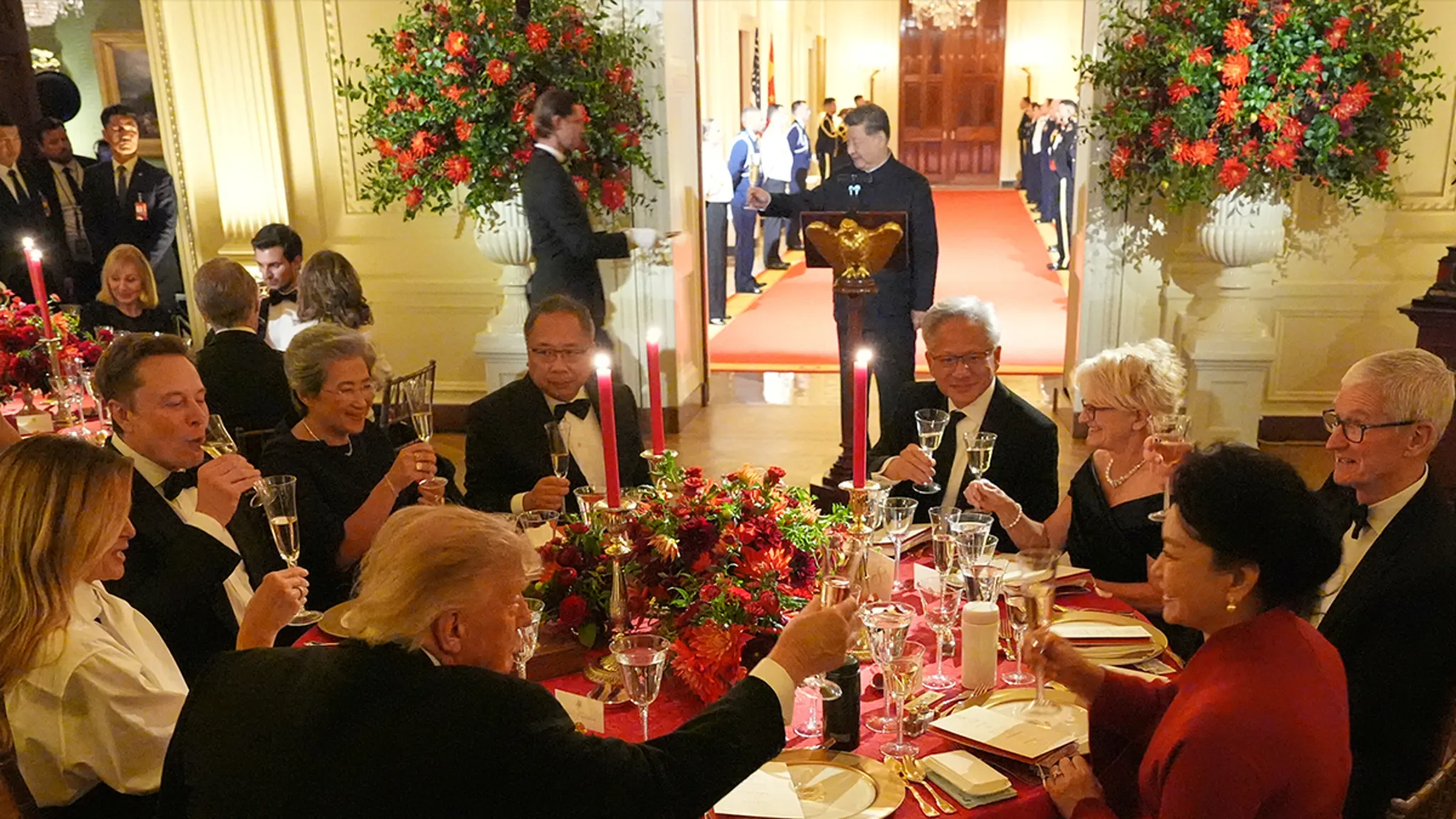
  • Trump’s State Dinner Table Seats Billionaires Worth a Combined $1.13 Trillion

    Trump’s State Dinner Table Seats Billionaires Worth a Combined $1.13 Trillion

    Key Highlights

    • Billionaires with a combined net worth of nearly $1.13 trillion were seated at President Donald Trump’s table during a state dinner for Chinese President Xi Jinping.
    • The collective wealth of the guests at the table was reported to be roughly equivalent to the entire Gross Domestic Product (GDP) of Poland.
    • The seating arrangement placed ultra-high-net-worth individuals in direct proximity to the leaders of the world’s two largest economies.

    Trump State Dinner Seating Draws Attention to Concentration of Wealth

    The guest list for President Donald Trump’s table at the state dinner hosted for Chinese President Xi Jinping has highlighted the extraordinary concentration of wealth among the President’s inner circle. According to reports, the billionaires seated at the presidential table possessed a combined net worth approaching $1.13 trillion. This staggering figure places the collective financial power of those immediate guests on par with the total economic output of a major European nation, specifically matching the Gross Domestic Product of Poland.

    Historic Context of the US-China State Dinner

    The state dinner itself represented a high-stakes diplomatic engagement between the United States and China, the world’s two largest economies. Such events are traditionally used to solidify bilateral relations, negotiate trade frameworks, and project soft power. The decision to seat a cohort of billionaires—rather than solely cabinet secretaries, lawmakers, or traditional diplomats—at the President’s immediate table signaled a distinct approach to governance and diplomacy, prioritizing private sector leadership and personal financial success within the framework of official statecraft.

    Economic Scale of the Guest List

    The comparison of the attendees’ combined net worth to Poland’s GDP serves as a stark illustration of global wealth disparity. Poland, a significant European economy with a population of nearly 38 million, generates approximately $1.13 trillion in annual economic activity. The fact that a single dinner table could command an equivalent amount of static capital underscores the outsized influence wielded by a minuscule number of individuals in the modern global economy. This concentration of capital at the highest levels of political interaction raises questions regarding policy access, regulatory capture, and the intersection of private wealth with public diplomacy.

    Why This Matters

    The seating arrangement at the Trump-Xi state dinner offers a tangible data point in the ongoing debate regarding the role of oligarchic wealth in democratic governance. When the combined assets of a President’s dinner companions rival the GDP of a sovereign nation, it reframes the conversation around campaign finance, lobbying influence, and the composition of advisory circles. For international observers, particularly in Beijing, the presence of such immense private capital at the presidential table may have signaled a blurring of lines between state policy and corporate interest, potentially influencing perceptions of US negotiating positions on trade, technology transfer, and market access. This moment remains a reference point for analyses of plutocratic trends in 21st-century American politics.

    Frequently Asked Questions

    Who were the billionaires seated at President Trump’s table?

    The provided source text identifies the guests only as “billionaires whose combined net worth is nearly $1.13 trillion” and does not list their specific names.

    How does the combined net worth compare to Poland’s GDP?

    The source explicitly states the combined net worth of the guests—nearly $1.13 trillion—is “roughly the same amount as Poland’s entire GDP.”

    Was this a standard diplomatic seating arrangement?

    Standard state dinner protocol typically seats the visiting head of state next to the host head of state, with cabinet members, congressional leadership, and diplomats filling the immediate tables. Seating a group of private billionaires at the President’s personal table represents a significant departure from that tradition.
  • Jimmy Kimmel Roasts Trump’s Meeting With Xi Jinping

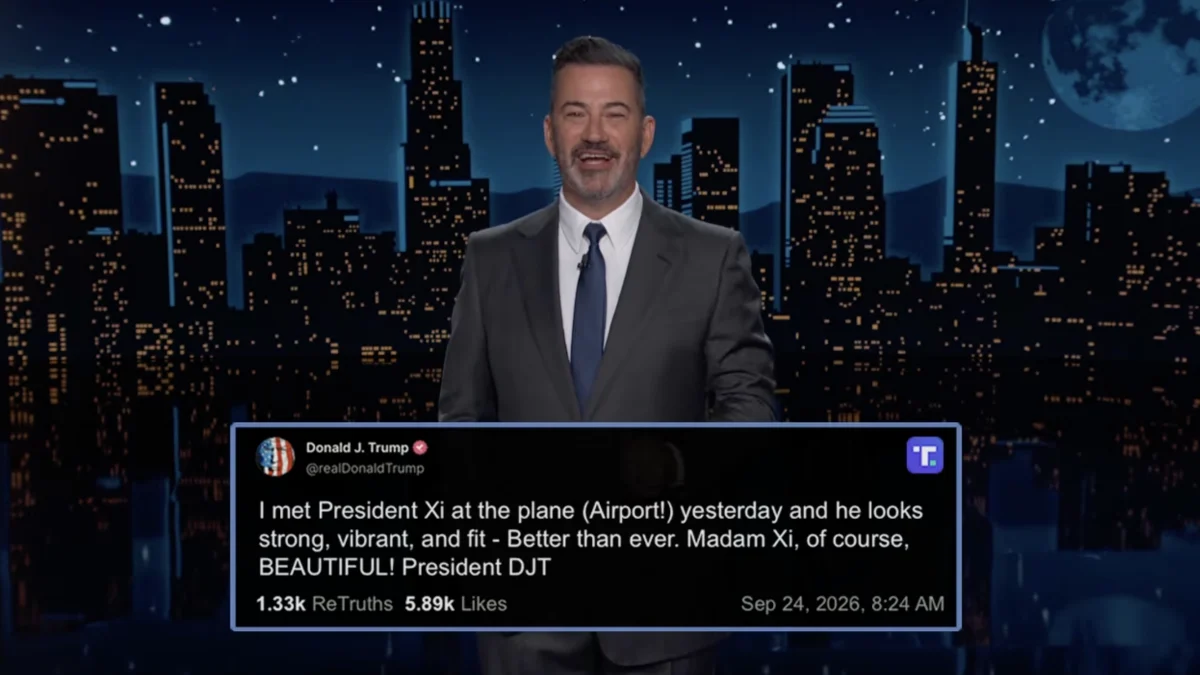
    Jimmy Kimmel Roasts Trump’s Meeting With Xi Jinping

    Key Highlights

    • Jimmy Kimmel compared Donald Trump’s hosting of Xi Jinping to a child showing off toys to a friend, mocking the president’s tendency to brag about White House renovations.
    • The late-night host highlighted Trump showcasing gold-painted walls, a half-built ballroom, and a new helipad during the Chinese leader’s visit.
    • Kimmel contrasted Trump’s focus on property features with pressing economic concerns like high gas prices, concluding “there really is nothing that guy will not brag about.”

    Kimmel Roasts Trump’s ‘Show-and-Tell’ Diplomacy With Xi Jinping

    Late-night television continued its tradition of satirizing presidential diplomacy when Jimmy Kimmel opened his Monday monologue with a scathing analogy comparing Donald Trump‘s recent White House meeting with Chinese President Xi Jinping to a nine-year-old’s playdate. The Jimmy Kimmel Live! host framed the high-stakes geopolitical encounter as a domestic display of one-upmanship, suggesting the U.S. president treated the Chinese leader less like a counterpart and more like a guest invited to admire home improvements.

    President’s Tour Focuses on Gold Walls, Ballroom, and Helipad

    According to Kimmel’s comedic reconstruction, the president’s itinerary for Xi centered on aesthetic upgrades rather than policy substance. “He dragged President Xi around the house showing him all the insane gold paint he put on the walls, he showed him his half-built ballroom, and he’s also very proud of his new helipad,” Kimmel told his studio audience. The host supported the bit by airing a clip of Trump speaking to reporters about the helipad, which the comedian presented as evidence of the president’s priorities. “There really is nothing that guy will not brag about,” Kimmel concluded, before delivering a punchline juxtaposing the helipad boast with consumer pain at the pump: “Guys, I know gas is $6 a gallon — look at how beautiful my helipad is.”

    Late-Night Tradition Targets Presidential Pageantry

    The segment fits a long-standing pattern in which late-night hosts use summits and state visits as fodder for character-driven comedy. Kimmel’s “playdate” metaphor reduces complex U.S.-China relations to a relatable suburban scenario, leveraging the universal experience of a child desperately displaying possessions to a new friend. By focusing on the physical attributes of the White House — gold paint, an unfinished ballroom, a helipad — the monologue shifts attention from diplomatic outcomes to the president’s personal brand of self-promotion, a recurring theme in Kimmel’s coverage of the Trump administration.

    Why This Matters

    While framed as entertainment, late-night monologues shape public perception of political figures and events, particularly among younger demographics who consume news through comedy clips on social platforms. Kimmel’s specific focus on the helipad and gold décor reinforces a narrative that the president prioritizes personal vanity projects and optics over substantive governance. The $6-per-gallon gas reference, whether hyperbolic or reflective of specific regional pricing at the time, taps into kitchen-table economic anxiety. As the 2024 election cycle intensifies, such segments contribute to the broader media environment that frames candidate attributes and presidential performance for millions of viewers who may not follow traditional political coverage.

    Frequently Asked Questions

    What specific White House features did Jimmy Kimmel say Trump showed off to Xi Jinping?
    Kimmel stated Trump showed Xi “insane gold paint he put on the walls,” a “half-built ballroom,” and a “new helipad.”
    What was the central analogy Jimmy Kimmel used to describe the Trump-Xi meeting?
    Kimmel compared the meeting to his nine-year-old son having a friend over for the first time and showing off “his Legos, his video games, his bunk beds, everything.”
    Did Kimmel reference any economic issues in his monologue?
    Yes, Kimmel concluded by saying, “Guys, I know gas is $6 a gallon — look at how beautiful my helipad is,” contrasting the helipad boast with high fuel costs.
  • President Trump Flinches During Military Flyover Beside Xi Jinping, Sparking Viral Meme

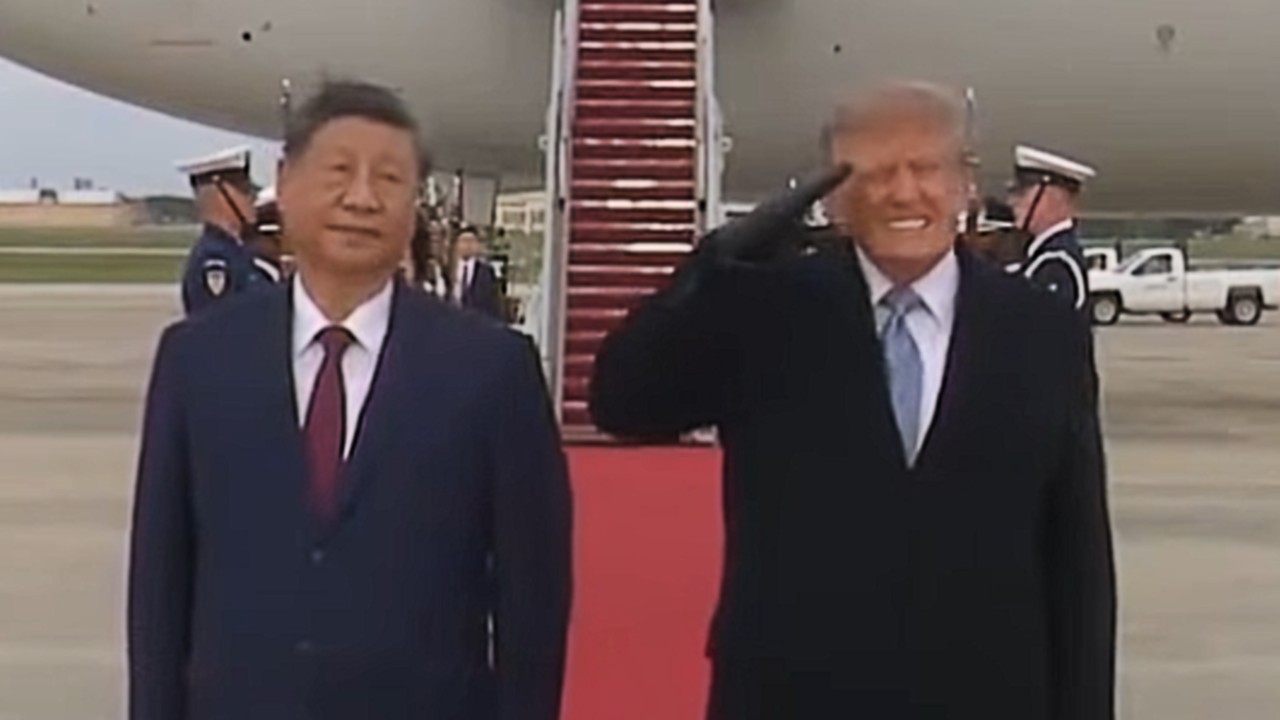
    President Trump Flinches During Military Flyover Beside Xi Jinping, Sparking Viral Meme

    Key Highlights

    • A viral video captured former U.S. President Donald Trump visibly flinching during a loud military jet flyover while standing next to Chinese President Xi Jinping at a Maryland summit on September 23, 2026.
    • The contrast between Trump’s reaction and Xi Jinping’s composed demeanor sparked widespread internet memes and social media commentary comparing the two leaders’ responses.
    • The moment became a cultural touchpoint for political satire, illustrating how spontaneous, unscripted moments at high-profile diplomatic events can instantly fuel global digital discourse.

    Viral Moment at Maryland Summit Captures Global Attention

    A routine military flyover during a bilateral summit in Maryland on September 23, 2026, produced an unscripted moment that quickly transcended diplomatic protocol to become a defining internet meme. As jets roared overhead, video footage showed former President Donald Trump instinctively flinching and ducking slightly at the sudden noise, while Chinese President Xi Jinping remained visibly still and composed beside him. The split-second divergence in body language was captured by press pool cameras and disseminated across social media platforms within minutes, setting off a wave of remixes, caption contests, and comparative analysis.

    Anatomy of a Meme: From Footage to Cultural Commentary

    The clip’s virality stemmed less from the event itself—a standard ceremonial arrival or departure honor—and more from the perceived symbolism projected onto the leaders’ involuntary reactions. Editors on platforms such as X, TikTok, and Reddit isolated the two-second sequence, looping it alongside audio exaggerations, split-screen comparisons, and satirical captions framing the moment as a metaphor for contrasting leadership styles, geopolitical resolve, or simple physiological reflex. Know Your Meme documented the phenomenon under the entry “Trump Flinches Beside Xi Jinping,” cataloging hundreds of derivative works that ranged from lighthearted humor to pointed political caricature. The meme’s velocity underscored how modern digital ecosystems repurpose raw news footage into participatory cultural artifacts almost instantaneously.

    Diplomatic Stagecraft Meets Unfiltered Reality

    The summit itself was part of ongoing high-stakes engagement between Washington and Beijing, addressing trade, security, and climate cooperation. Such events are meticulously choreographed to project unity, strength, and controlled optics. The flyover, intended as a display of American military capability and ceremonial honor, instead introduced an uncontrolled variable: the human startle reflex. Trump’s reaction, while a normal physiological response to sudden loud noise, was weaponized by critics and meme creators alike as evidence of weakness or lack of composure. Conversely, Xi’s stillness was framed by some observers as calculated poise, though experts noted it could equally reflect anticipation, protocol adherence, or simply a different sensory threshold. The incident highlighted the fragility of staged diplomacy in an era where every micro-expression is recorded, amplified, and reinterpreted by a global audience.

    Why This Matters

    The “Trump Flinches” episode exemplifies a broader shift in political communication: unscripted, incidental moments now carry outsized weight in shaping public perception, often eclipsing the substantive policy outcomes of the summits where they occur. For strategists and leaders, it reinforces that no public appearance—no matter how routine—is immune from becoming viral content. For media literacy advocates, it serves as a case study in how context collapse on social platforms strips nuance from complex diplomatic interactions, reducing hours of negotiation to a single, looping gesture. As U.S.-China relations continue to define the geopolitical landscape, the ability of fleeting visual moments to drive narrative—sometimes detached from factual substance—remains a critical dynamic for policymakers, journalists, and the public to navigate.

    Frequently Asked Questions

    When and where did the viral video originate?

    The video was recorded on September 23, 2026, during a summit in Maryland, United States, where former President Donald Trump and Chinese President Xi Jinping were standing together for a military jet flyover.

    Why did the clip become a meme?

    The stark visual contrast between Trump’s visible flinch and Xi Jinping’s motionless composure was widely shared and remixed online, with users interpreting the moment as symbolic of differing leadership personas, fueling satire and political commentary across social media.

    Was the flyover an unusual event for a diplomatic summit?

    Military flyovers are a standard ceremonial honor for visiting heads of state at major U.S. summits, intended as a display of pageantry and military capability rather than a surprise or threat.

  • President Trump Flinches During Military Flyover With Xi Jinping, Sparking Viral Memes

    President Trump Flinches During Military Flyover With Xi Jinping, Sparking Viral Memes

    Key Highlights

    • A video captured U.S. President Donald Trump flinching during a military jet flyover while standing beside Chinese President Xi Jinping at a summit in Maryland on September 23, 2026.
    • The footage showed Xi Jinping remaining visibly composed during the loud aircraft passage, creating a sharp visual contrast that spread rapidly across social media platforms.
    • The moment spawned widespread internet memes and reactions comparing the two leaders’ physical responses to the sudden noise.

    Viral Summit Moment Captures Divergent Reactions

    A brief video clip recorded during a bilateral summit in Maryland on September 23, 2026, became the subject of intense online attention after it captured a split-second difference in how two world leaders reacted to a military flyover. The footage shows U.S. President Donald Trump and Chinese President Xi Jinping standing side by side on an outdoor platform when a formation of jets roared overhead. As the aircraft passed, producing a sudden, thunderous cacophony, Trump visibly flinched—his shoulders rising and head turning sharply toward the sound—while Xi Jinping stood motionless, his posture and expression unchanged.

    Social Media Amplifies Visual Contrast

    The clip circulated widely on platforms including X, TikTok, and Instagram within hours of the event. Users edited the footage into side-by-side comparisons, slow-motion replays, and captioned memes that highlighted the momentary divergence in body language. The imagery was framed variously as a metaphor for leadership styles, geopolitical posturing, or simply an involuntary human startle reflex. The volume of engagement propelled related hashtags into trending positions in multiple countries, extending the reach far beyond typical political commentary circles.

    Meme Culture Interprets Diplomatic Optics

    Internet culture quickly appropriated the seconds-long exchange, generating thousands of derivative works. Some creators paired the footage with dramatic music or sound effects; others inserted cartoonish annotations exaggerating the flinch. Commentary ranged from lighthearted jokes about noise sensitivity to partisan narratives assigning strategic meaning to the uncontrolled physical response. The phenomenon illustrated how modern diplomatic encounters are instantly mined for symbolic content, with micro-expressions and reflexive movements subjected to mass interpretation detached from their original context.

    Why This Matters

    The viral spread of the flyover moment underscores the degree to which leader optics are now dissected in real time by a global digital audience. Summit staging, once managed primarily through official press releases and curated photography, is increasingly subject to uncontrolled citizen recording and algorithmic amplification. A reflexive flinch—likely a routine acoustic startle response—becomes a durable visual artifact that can shape public perception of composure, resilience, or frailty. For communication strategists, the episode reinforces that every outdoor appearance carries the risk of unscripted moments being weaponized as political shorthand, regardless of the substantive outcomes of the diplomatic meetings themselves.

    Frequently Asked Questions

    When and where did the flyover incident occur?

    The video was recorded on September 23, 2026, during a summit meeting in Maryland, United States, where President Donald Trump and President Xi Jinping were standing together outdoors as military jets flew overhead.

    What exactly happened in the viral video?

    The footage shows President Trump flinching visibly—raising his shoulders and turning his head—when the jets passed loudly overhead, while President Xi Jinping remained still and did not display a similar startle reaction.

    Why did the clip become a widespread meme?

    The stark visual contrast between the two leaders’ instantaneous physical responses was rapidly edited, captioned, and shared across social media, where users interpreted the moment as symbolic of broader leadership narratives or simply as compelling short-form content.