Key Highlights
- The Clarity Act failed to advance in the U.S. Senate on Tuesday, securing only 49 of the 60 votes required for cloture.
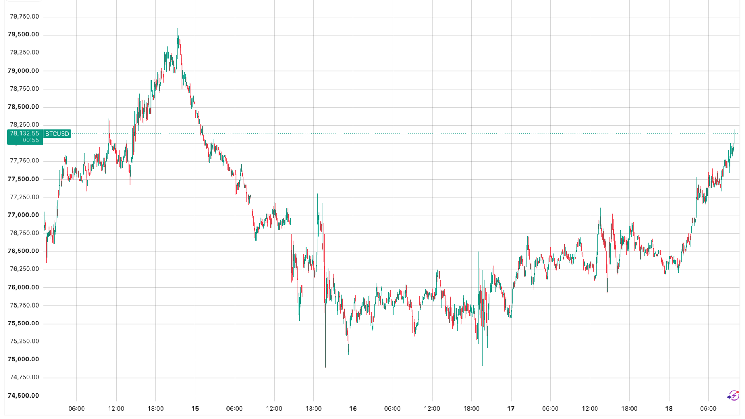
- Bitcoin dipped briefly below $74,887 but stabilized rapidly, signaling traders had largely priced in the legislative risk.
- Analyst Mitchell Askew of Blockware Intelligence interprets the muted price reaction as evidence of seller exhaustion, a potential indicator of a market bottoming process.
Senate Rejects Clarity Act as Bitcoin Shrugs Off Legislative Setback
The Clarity Act, a closely watched piece of digital asset legislation, failed to overcome a procedural hurdle in the U.S. Senate on Tuesday. The measure attracted just 49 supporters, falling 11 votes short of the 60-vote supermajority needed to advance. Despite the legislative defeat, the cryptocurrency market’s reaction was notably subdued. Bitcoin briefly slipped below the $74,887 level during the session but recovered quickly, stabilizing in a manner that suggested market participants had already discounted the probability of failure.
Analyst Cites Seller Exhaustion as Bullish Signal
Mitchell Askew, head of Blockware Intelligence at Blockware, characterized the price action as a significant technical development. In an email commentary, Askew stated: “What stands out to me is that Bitcoin has hardly budged at all in response to two objectively bad pieces of news. A 25-basis-point hike and the CLARITY Act failing to pass are both headlines that, in a different market environment, would have sent price meaningfully lower. Instead, we got basically nothing.”
Askew explained that the absence of a sustained sell-off on adverse headlines points to a depletion of motivated sellers. “Anybody who was going to sell bitcoin based on events like these has already sold. They no longer have coins to sell. That is an incredibly positive sign for the medium to long term, and it is exactly what you tend to see in the later stages of a bottoming process,” she noted. The analysis frames the legislative loss as a non-event for price discovery, reinforcing a narrative of structural support accumulating at current levels.
Energy Markets Compound Macro Pressure
Adding to the complex macroeconomic backdrop, energy markets exerted additional pressure early in the week. West Texas Intermediate (WTI) crude futures climbed above $106 per barrel on Tuesday, marking a five-month high. The surge was driven by persistent geopolitical tensions in the Middle East, which continue to inject volatility into global risk assets. While Bitcoin demonstrated resilience against the specific legislative catalyst, the broader inflationary impulse from rising energy costs remains a variable for monetary policy expectations.
Why This Matters
The failure of the Clarity Act represents a continuation of legislative gridlock surrounding digital asset regulation in the United States. However, the market’s indifferent reaction may be more consequential than the vote itself. The concept of “seller fatigue” described by Blockware Intelligence suggests that the marginal supply of Bitcoin available for sale on negative news shocks is diminishing. Historically, such dynamics have preceded periods of price consolidation and eventual upward re-rating. Meanwhile, the simultaneous spike in crude oil prices underscores that crypto assets are not trading in isolation; they remain sensitive to the same liquidity and inflation crosscurrents driving traditional markets. The next focal point for traders will be whether the Federal Reserve’s response to energy-driven inflation reintroduces correlation between risk assets and rate expectations.
Frequently Asked Questions
What was the vote count for the Clarity Act in the Senate?
The Clarity Act received 49 votes in favor, failing to reach the 60-vote threshold required to invoke cloture and advance the legislation.
Why did Bitcoin’s price not crash after the bill failed?
According to Blockware Intelligence analyst Mitchell Askew, the muted reaction indicates seller exhaustion. Market participants looking to exit on regulatory or macro headlines have likely already done so, leaving a holder base less reactive to negative catalysts.
How do rising oil prices affect the cryptocurrency outlook?
Higher energy costs contribute to inflationary pressures, potentially influencing Federal Reserve policy. While Bitcoin showed resilience to the specific legislative news, sustained oil price strength could tighten financial conditions broadly, creating headwinds for risk assets including crypto.