Tag: White House

  • Jimmy Kimmel Sums Up Trump TV in One Brutal Sentence

    Jimmy Kimmel Sums Up Trump TV in One Brutal Sentence

    Key Highlights

    • The White House launched a 24/7 “Trump TV” YouTube stream days after revoking press credentials for CNN, Politico, and MSNBC correspondents.
    • Jimmy Kimmel mocked the venture on his Wednesday monologue, noting viewership plummeted from a peak of roughly 8,500 on Monday night to under 500 by Wednesday morning.
    • Kimmel debuted a parody slate of fictional Trump-branded programming, including “The All-White Lotus” and “America’s Most Dangerous Windmills.”

    White House Debuts Proprietary Streaming Channel Amid Press Access Crackdown

    The Trump administration has rolled out a round-the-clock YouTube feed branded as “Trump TV,” a move that arrives less than a week after the White House stripped press passes from journalists representing CNN, Politico, and MSNBC. The stream, which features a loop of presidential remarks, campaign-style rallies, and supportive commentary, is positioned by the administration as a direct line to supporters bypassing traditional media gatekeepers. Critics, however, view the launch as an escalation in the ongoing confrontation between the executive branch and the institutional press corps.

    Kimmel Delivers Scathing Prime-Time Assessment

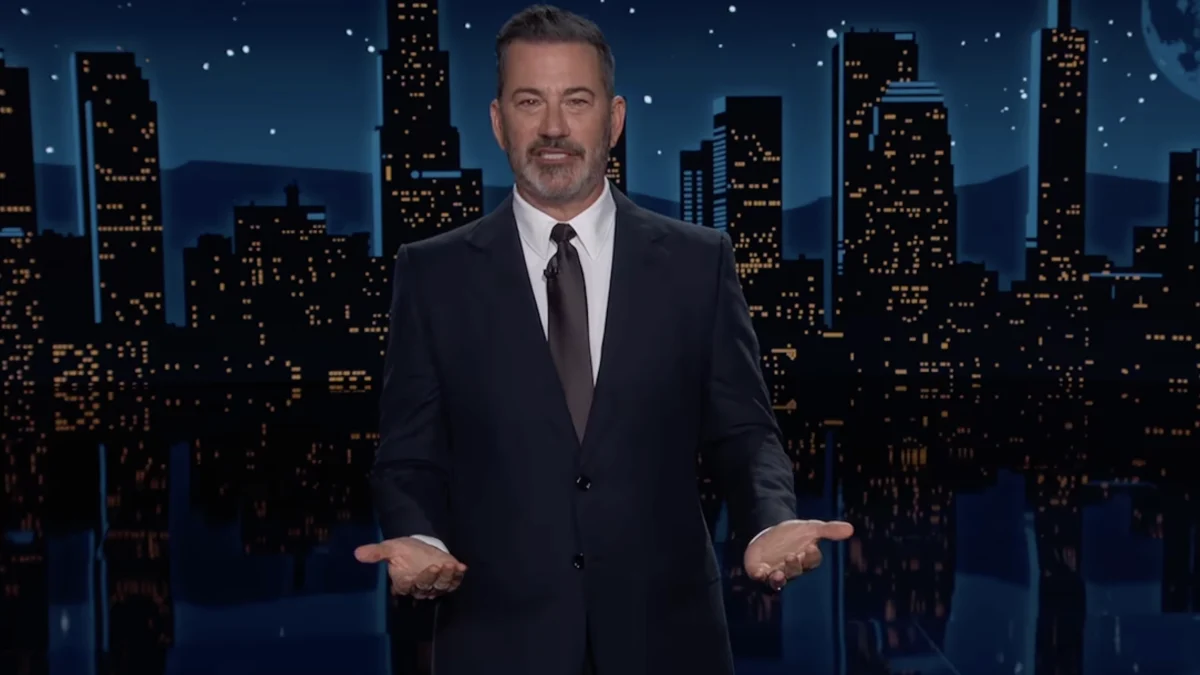
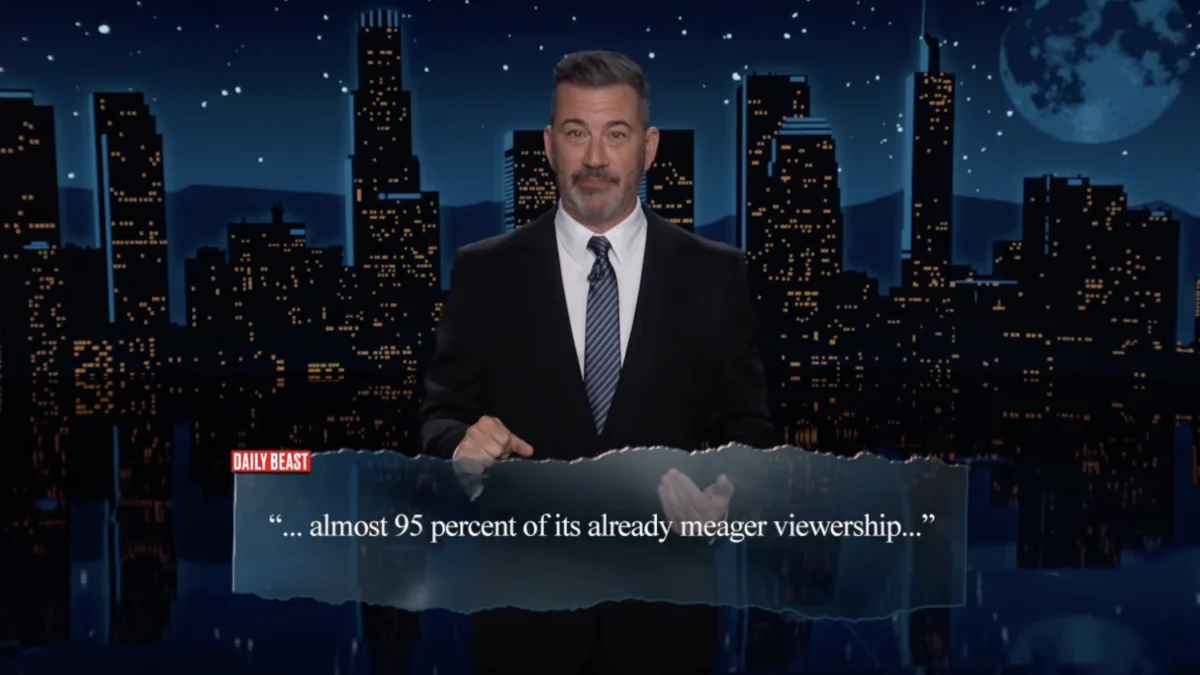
    On Wednesday’s edition of Jimmy Kimmel Live!, the host devoted a segment to the nascent channel, delivering a withering verdict on its early performance metrics. Kimmel told his studio audience, “So far it’s going about as well as everything else with Donald Trump’s name on it. It peaked with an audience of about 8,500 people on Monday night. By this morning they were down to fewer than 500 viewers. The only channel doing worse is the Strait of Hormuz.” The quip drew sustained laughter and underscored the late-night host’s longstanding satirical focus on the former president’s media ventures.

    Parody Lineup Imagines Expanded Trump Programming Universe

    Beyond the ratings analysis, Kimmel unveiled a faux promotional reel envisioning a full prime-time slate for the network. The satirical schedule featured titles such as The All-White Lotus—a play on the HBO anthology series—and America’s Most Dangerous Windmills, referencing Trump’s frequent rhetorical fixation on wind turbines. The bit framed the channel as a natural extension of Trump’s entertainment background, blending policy grievances with reality-television tropes.

    Why This Matters

    The launch of “Trump TV” signals a strategic shift toward owned-and-operated digital distribution, allowing the White House to control messaging without editorial interference. Coupled with the selective revocation of press credentials, the move raises questions about press freedom, government transparency, and the evolving relationship between political power and legacy media. For late-night comedy, the channel provides fresh material while highlighting the administration’s media strategy as a cultural flashpoint. Analysts will watch whether viewership stabilizes, grows, or continues its sharp decline, and whether other political figures adopt similar direct-to-consumer streaming models.

    Frequently Asked Questions

    What is “Trump TV” and when did it launch?
    “Trump TV” is a 24/7 YouTube livestream launched by the Trump administration days after revoking White House press credentials for CNN, Politico, and MSNBC journalists. It broadcasts presidential remarks, rallies, and supportive commentary.
    How many people are actually watching the stream?
    According to Jimmy Kimmel’s Wednesday monologue, the stream peaked at roughly 8,500 concurrent viewers on Monday night and had fallen to fewer than 500 by Wednesday morning.
    Why did the White House revoke credentials for those specific outlets?
    The source text does not specify the administration’s stated rationale for revoking credentials from CNN, Politico, and MSNBC, only that the action preceded the “Trump TV” launch.
  • White House Jokes About Travis Kelce’s Ponzi Scheme Case

    White House Jokes About Travis Kelce’s Ponzi Scheme Case

    Key Highlights

    • The White House responded to news of Travis Kelce’s involvement in a $35 million Ponzi scheme with a humorous social media post.
    • Officials jokingly offered the Kansas City Chiefs tight end a position following reports he was defrauded by the scheme’s accused operator.
    • The interaction highlights the intersection of sports celebrity, financial fraud, and government communication on social platforms.

    White House Engages Kelce Fraud News With Humor

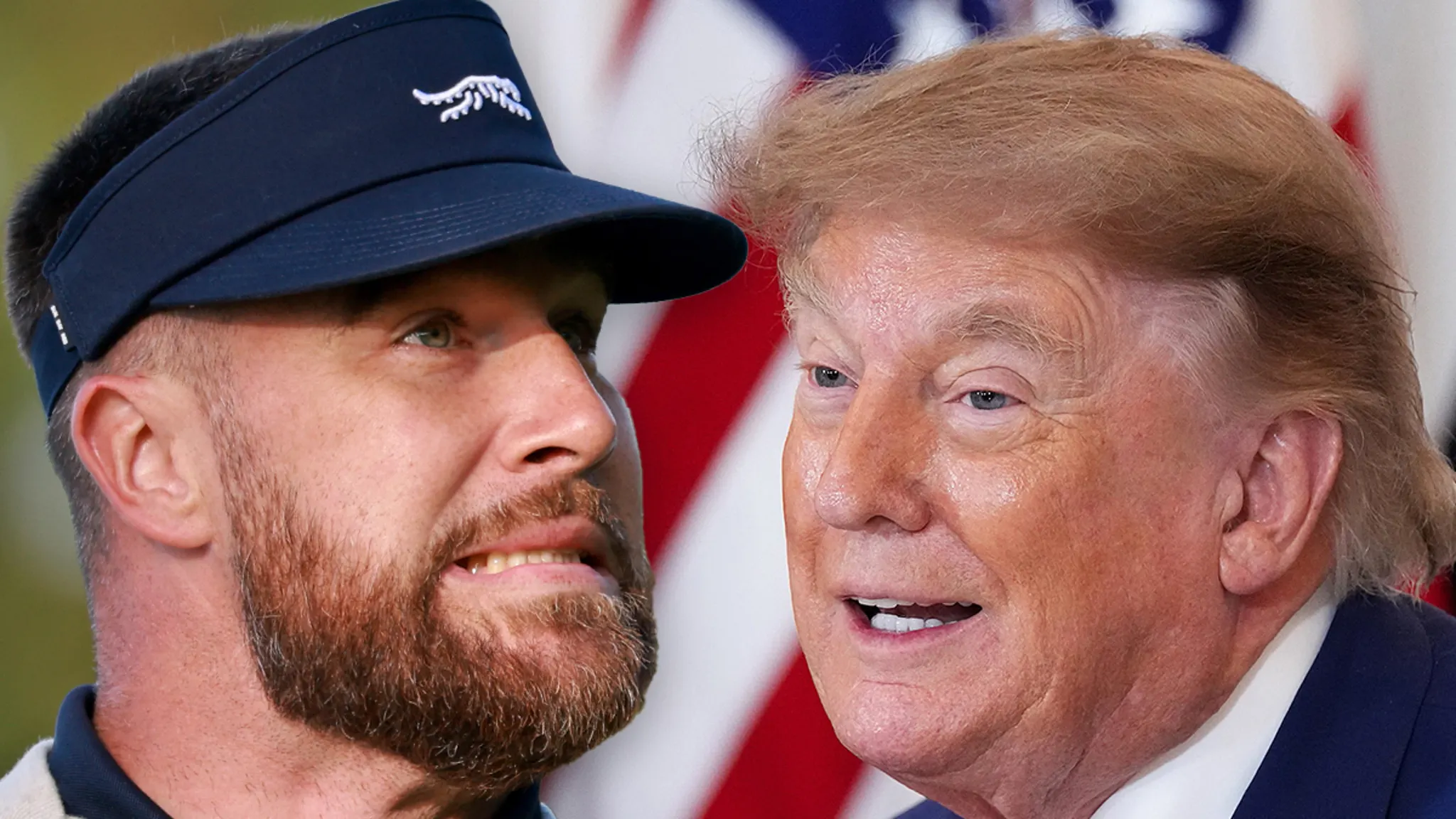
    The White House appeared to lean into internet culture this week, issuing a lighthearted response to revelations that Kansas City Chiefs star Travis Kelce had fallen victim to a massive Ponzi scheme. According to reports, the official White House account on X, formerly Twitter, shared a post referencing the news that Kelce had been “hoodwinked” by the fraudster accused of orchestrating a $35 million scheme. Rather than issuing a standard consumer warning, the administration opted for levity, jokingly extending a job offer to the three-time Super Bowl champion.

    Social Media Strategy Blends Pop Culture and Governance

    The move underscores a broader shift in how government entities communicate on social media, where meme-ready responses to celebrity news often generate higher engagement than formal statements. By reacting to Kelce’s predicament—a high-profile athlete reportedly ensnared in a significant financial fraud—the White House inserted itself into a trending sports and business narrative. The post did not detail the specifics of the alleged scheme or the identity of the accused operator, focusing instead on the cultural moment surrounding the tight end’s off-field headlines.

    Kelce’s Off-Field Challenges Draw National Attention

    Travis Kelce, widely regarded as one of the greatest tight ends in NFL history, has seen his public profile surge beyond football due to his relationship with Taylor Swift and numerous endorsement deals. The revelation that he was targeted in a multi-million dollar Ponzi scheme adds a layer of financial vulnerability to his public persona. While the White House’s jest offered a moment of levity, the underlying allegations point to a serious enforcement action against an individual accused of stealing tens of millions of dollars from investors, including high-net-worth individuals like Kelce.

    Why This Matters

    This episode illustrates how quickly financial crimes involving celebrities become fodder for political social media teams. It also serves as a reminder that even sophisticated, high-earning individuals are susceptible to complex investment fraud. The Securities and Exchange Commission and federal prosecutors typically pursue Ponzi scheme operators aggressively, and the involvement of a household name like Kelce may accelerate public awareness of the case’s developments. For the White House, the interaction represents a low-stakes opportunity to appear culturally fluent, though it does not substitute for regulatory action against financial fraud.

    Frequently Asked Questions

    Was Travis Kelce directly named in the White House post?
    Yes, the White House shared an X post specifically referencing the news that Kelce had been “hoodwinked” by the accused fraudster.
    What is the alleged value of the Ponzi scheme?
    The fraudster is accused of stealing $35 million, according to the source material.
    Did the White House offer Kelce a real job?
    No, the job offer was described as a joke made in the context of a humorous social media response.
  • Clarity Act Stalled; CFTC Submits Cryptocurrency Draft to White House

    Clarity Act Stalled; CFTC Submits Cryptocurrency Draft to White House

    Key Highlights

    • The Clarity Act, a leading legislative effort to establish a comprehensive U.S. cryptocurrency market framework, failed a procedural Senate vote this week.
    • The CFTC submitted a new regulatory proposal to the White House Office of Management and Budget on September 17, now under interagency review by OIRA.
    • CFTC Chair Michael Selig directed staff to “develop ways to formalize the digital asset market structure using the agency’s existing legal authority, independently of congressional legislation,” signaling a potential administrative path forward.

    Senate Setback for Clarity Act Prompts CFTC Administrative Action

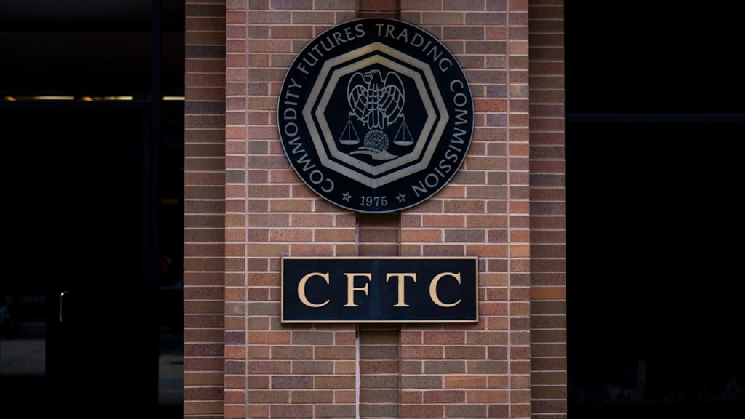
    The legislative path toward a unified federal framework for digital assets encountered a significant obstacle this week when the Clarity Act failed to secure the necessary votes to advance in the U.S. Senate. The bill, widely regarded as one of the most consequential attempts to codify comprehensive rules for cryptocurrency markets, stalled on a procedural vote, leaving a regulatory vacuum that the Commodity Futures Trading Commission (CFTC) appears prepared to address through administrative rulemaking.

    CFTC Proposal Enters White House Interagency Review

    According to the Office of Information and Regulatory Affairs (OIRA) within the White House Office of Management and Budget, the CFTC formally submitted a new proposal on September 17. The submission is currently undergoing interagency review, a standard step before a proposed rule can be published for public comment in the Federal Register. While the full scope and specific provisions of the regulation have not been disclosed, a Bloomberg report analyzing the draft title indicates the commission intends to establish a comprehensive regulatory framework governing cryptocurrency transactions and the operational structure of digital asset markets.

    Chair Selig Signals Intent to Leverage Existing Authority

    The agency’s move aligns with recent public statements from CFTC Chairman Michael Selig, who said he had instructed staff to “develop ways to formalize the digital asset market structure using the agency’s existing legal authority, independently of congressional legislation.” This approach suggests the commission is prepared to assert jurisdiction over digital asset markets—particularly those involving commodities and derivatives—without waiting for new statutory mandates from Congress.

    Industry Observers Note Accelerated Timeline

    The speed of the CFTC’s submission drew immediate attention from policy analysts. Hyperliquid Policy Center CEO Jake Chervinsky posted on X, “The CFTC is moving fast. It appears to have sent a proposed rule for interagency review.” His observation underscores a growing perception that federal regulators may pursue parallel administrative tracks to address digital asset oversight while legislative efforts remain gridlocked.

    Why This Matters

    The dual developments—legislative stall and regulatory acceleration—highlight a pivotal moment for U.S. crypto policy. With the Clarity Act’s future uncertain, the CFTC’s proposal represents the most concrete federal initiative to date to define market structure rules for digital assets under existing commodities law. If finalized, the rule could establish registration, reporting, and operational standards for trading platforms, custodians, and market participants, shaping compliance obligations across the industry. However, the scope of the CFTC’s authority over spot digital asset markets remains legally contested, and any rulemaking will likely face scrutiny from both industry stakeholders and congressional committees. The OIRA review period typically spans 90 days but can be extended, meaning the earliest public glimpse of the proposed text may arrive in late 2024 or early 2025.

    Frequently Asked Questions

    What is the Clarity Act and why did it fail?
    The Clarity Act is a Senate bill designed to create a comprehensive legal framework for cryptocurrency markets in the United States. It failed a procedural vote this week, meaning it did not receive the necessary support to advance to debate or a final vote on the Senate floor.
    What does the CFTC’s new proposal aim to do?
    Based on the draft title reviewed by Bloomberg, the CFTC’s proposal seeks to create a comprehensive regulatory framework for cryptocurrency transactions and the functioning of digital asset markets, using the agency’s existing authority under the Commodity Exchange Act.
    When will the public see the details of the CFTC proposal?
    The proposal is currently under review by the Office of Information and Regulatory Affairs (OIRA). Interagency review typically takes up to 90 days, after which the CFTC would publish a Notice of Proposed Rulemaking in the Federal Register for public comment.
  • Jimmy Kimmel Airs Brutal Montage of Trump Sleeping at Events

    Jimmy Kimmel Airs Brutal Montage of Trump Sleeping at Events

    Key Highlights

    • Jimmy Kimmel aired a montage of Donald Trump appearing to fall asleep at multiple public events, including a recent 9/11 remembrance ceremony at the Pentagon.
    • Kimmel noted the White House issued a statement denying Trump was asleep during the Pentagon event, quoting Kimmel: “He was sleeping so much on camera the White House had to put out a statement that said he wasn’t asleep.”
    • The segment highlighted the contrast between Trump’s frequent “Sleepy Joe” attacks on Joe Biden and his own on-camera drowsiness, with Kimmel saying: “It’s so perfect, the guy who spent four years screaming ‘Sleepy Joe, sleepy Joe,’ constantly falling asleep on camera.”

    Kimmel Compiles Trump ‘Napping’ Montage Following Pentagon 9/11 Event

    Late-night host Jimmy Kimmel dedicated a segment to documenting what he described as a pattern of former President Donald Trump appearing to doze off during official appearances. The bit was prompted by Trump’s visible fatigue during a September 11 remembrance ceremony at the Pentagon, where cameras caught the former president with his eyes closed for extended periods.

    According to Kimmel, the moment was so noticeable that it drew an official response. “He was sleeping so much on camera the White House had to put out a statement that said he wasn’t asleep,” says Kimmel, recounting the administration’s reaction to the Pentagon footage. The host used the incident as a springboard to showcase a supercut of similar moments spanning multiple events.

    Contrast With ‘Sleepy Joe’ Rhetoric Draws Sharp Irony

    The montage underscored a pointed political irony. Throughout the 2020 campaign and his presidency, Trump repeatedly branded his opponent and successor Joe Biden as “Sleepy Joe,” suggesting the Democrat lacked the stamina for the office. Kimmel highlighted the dissonance between that messaging and the visual record of Trump’s own public appearances.

    “It’s so perfect, the guy who spent four years screaming ‘Sleepy Joe, sleepy Joe,’ constantly falling asleep on camera,” Kimmel says, delivering the punchline that framed the entire segment. The compilation included footage from various speeches, meetings, and ceremonies where Trump appeared to struggle to keep his eyes open.

    Why This Matters

    The segment reflects the ongoing role of late-night comedy in shaping political narratives through visual evidence and satire. By juxtaposing Trump’s own rhetoric with unedited footage, Kimmel leverages a classic comedic technique—irony—to challenge a central branding strategy of the Trump era. The White House’s decision to issue a formal denial about the Pentagon moment indicates the political sensitivity of the former president’s public image regarding vitality and attentiveness. As the 2024 election cycle intensifies, such contrasts between past messaging and current optics will likely remain fodder for both late-night hosts and political opponents.

    Frequently Asked Questions

    What event triggered Jimmy Kimmel’s montage of Trump appearing to fall asleep?

    The immediate catalyst was the 9/11 remembrance ceremony at the Pentagon, where cameras captured Trump with his eyes closed for a prolonged period. Kimmel noted the White House subsequently released a statement insisting the former president was not asleep.

    Did the White House officially respond to the Pentagon footage?

    Yes. According to Kimmel, “He was sleeping so much on camera the White House had to put out a statement that said he wasn’t asleep.”

    What is the ‘Sleepy Joe’ reference in Kimmel’s segment?

    During the 2020 campaign and his presidency, Donald Trump frequently nicknamed Joe Biden “Sleepy Joe” to question his mental and physical fitness. Kimmel’s segment highlighted the irony of that attack given the montage of Trump himself appearing to nod off at public events, quoting Kimmel: “It’s so perfect, the guy who spent four years screaming ‘Sleepy Joe, sleepy Joe,’ constantly falling asleep on camera.”

  • White House Condemns Aaron Rupar Over Attacks on Trump Staffers

    White House Condemns Aaron Rupar Over Attacks on Trump Staffers

    White House Defends Press Wrangler After Journalist’s Criticism Sparks Online Clash

    A confrontation between a left-leaning journalist and the White House rapid response team has escalated into a public dispute over the treatment of a young female staffer. The incident began when Aaron Rupar, a self-described leftist commentator who monitors President Donald Trump’s activities online, posted a clip from C-SPAN on his X account Sunday afternoon.

    Clip Shows Staffer Directing Press Corps

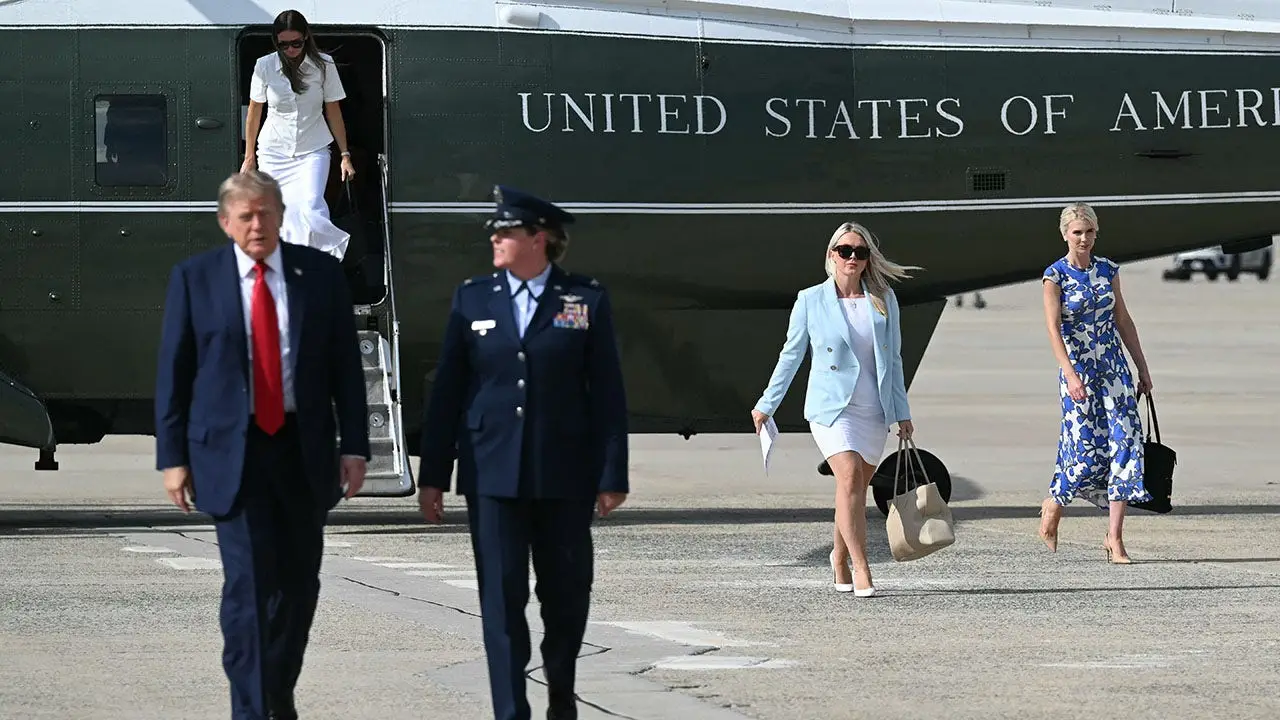
    The footage captured President Trump greeting family members near Air Force One in Ireland before boarding. In the video, White House press wrangler Ellie Acra is seen sternly directing media members to leave the area beneath the aircraft wing, using the standard phrase: “Thank you, press.“

    Press wranglers serve a logistical function in both Republican and Democratic administrations, responsible for moving the media to and from designated coverage areas to keep the president on schedule.

    Rupar’s Commentary Draws White House Rebuke

    Rupar framed the routine interaction negatively, writing: “another [sic] blonde Trump flunkie starts literally shoving photographers away from Trump.” His commentary quickly went viral, prompting a forceful response from the official White House rapid response X account.

    The account posted: “This is a press wrangler doing her job — and doing it well. Aaron, meanwhile, is gutter trash (in his 40s) who spends his days hiding behind his keyboard and making disturbing comments about women doing their jobs. Truly a sick freak!“

    Journalist Claims Harassment Following Official Response

    Following the White House rebuttal, Rupar alleged the official account was inciting harassment. He stated: “For the second straight day, the White House’s taxpayer-funded incitement account is attacking me and oddly mentioning I’m in my 40s (which I know makes me way too old for the president) When they do this it results in a flood of harassing and threatening messages, which of course is the point.”

    Pattern of Targeting White House Aide Natalie Harp

    The Sunday exchange followed a similar incident on Saturday, when Rupar posted a photo of White House aide Natalie Harp in Ireland with the comment: “Look who made the trip to Ireland!” accompanied by the hashtag #TravelWithNatalie, which he has used to track her movements alongside the president for weeks.

    Rupar and other online commentators have insinuated without evidence that Harp and Trump are engaged in an inappropriate relationship. The White House responded to the Saturday post: “President Trump does, in fact, travel with staff. Aaron, on the other hand, is a sick, deluded freak (in his 40s) who sits behind a keyboard and posts creepy things like this.”

    Senator Amplifies Unsubstantiated Claims

    The speculation surrounding Harp gained political traction last month when Sen. Jon Ossoff, D-Ga., referenced the aide during a campaign speech. Ossoff remarked: “He doesn’t want to do the job… He wants to build his ballroom and travel with Natalie on their apparently defenseless flying palace gifted by the emir of Qatar.“

    Ossoff’s Republican opponent, Rep. Mike Collins, characterized the comment as “sexist” and “misogynist.” The senator has since faced questions about invoking the staffer’s name during a campaign rally.

    Fox News Digital reached out to Rupar and the White House for further comment.

  • Clarity Act Faces Setback: Key Details on Stalled US Cryptocurrency Legislation

    Clarity Act Faces Setback: Key Details on Stalled US Cryptocurrency Legislation

    CLARITY Act Faces Critical Senate Vote Hurdle as Republican Senators Warn of Potential Failure

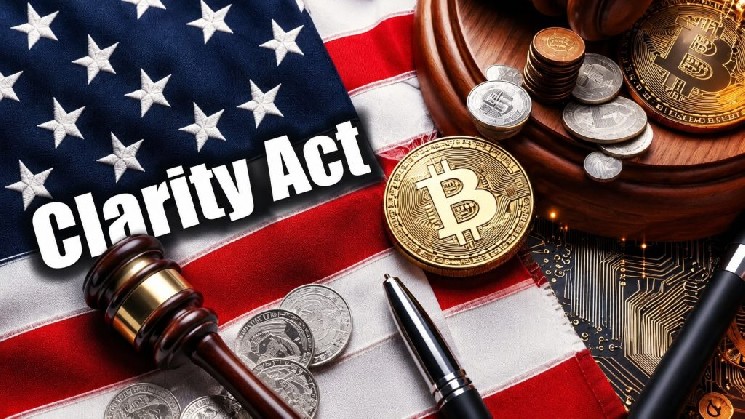
    The CLARITY Act, legislation designed to establish a comprehensive regulatory framework for the cryptocurrency market in the United States, encounters a significant obstacle ahead of a pivotal Senate procedural vote expected on September 15. Two Republican senators have signaled that the bill may not pass in its current form, raising the prospect of a substantial delay for federal crypto regulation.

    Republican Senators Express Doubts on Bill’s Viability

    Speaking to Semafor, Senator Mike Rounds (R-SD) indicated that the current state of the CLARITY Act “does not look positive for its future.” His colleague, Senator Thom Tillis (R-NC), issued a more explicit warning, stating that the legislation’s fate hinges entirely on negotiations with the White House. Tillis cautioned that if the administration does not act to resolve disputes over ethics provisions, “the CLARITY Act will fail.” This marks the first time a Republican lawmaker has publicly assessed the bill as likely to fail in next week’s proceedings.

    Ethics Provisions Emerges as Key Sticking Point

    The primary friction point centers on ethics regulations covering the president and his family—a core demand from Democratic lawmakers. Two Democratic officials informed Semafor that minimal progress has been made on this front. Democrats are insisting that specific ethics clauses addressing cryptocurrency holdings and activities for the president and his family be incorporated into the Act.

    White House Maintains Support Amid Impasse

    Despite the mounting skepticism on Capitol Hill, the White House maintains its commitment to the legislation. A spokesperson affirmed that President Donald Trump is “committed to seeing the law pass through Congress” and emphasized that the United States “must protect its competitiveness in the digital asset space.”

    September 15 Procedural Vote Requires 60-Vote Threshold

    The Senate is scheduled to hold a critical procedural vote on the CLARITY Act next week. To advance past this initial stage, the bill must secure at least 60 votes. A failure to reach this threshold would significantly delay the effort to create comprehensive federal oversight for the digital asset industry, making the upcoming vote a decisive moment for the future trajectory of U.S. crypto regulation.

    This article does not constitute investment advice.