Tag: Vlad Tenev

  • Robinhood CEO says issuers should not have veto over tokenized stocks

    Robinhood CEO says issuers should not have veto over tokenized stocks

    Robinhood CEO Vlad Tenev argued Friday that companies should not hold veto authority over tokenized stock products that leave shareholder rights, issuer obligations, and official stock ledgers unchanged.

    In a post on X, Tenev framed the issue of issuer consent around whether a tokenized product alters the rights attached to underlying shares or creates new obligations for the company or its transfer agent. If it does, he stated the issuer should be involved. However, Tenev contended that if the product creates a separate financial instrument holding or referencing freely transferable shares without changing the issuer’s rights, obligations, or shareholder record, consent should not be required.

    Response to AMC Entertainment Criticism

    The comments followed criticism from AMC Entertainment CEO Adam Aron on Sept. 4. Aron said AMC had no affiliation with Robinhood’s tokenized stock offerings and would ask securities counsel to review them.

    Tenev explained that Robinhood Stock Tokens use a third-party structure with separately issued instruments backed 1:1 by underlying shares. The products provide economic exposure to stocks and exchange-traded funds without altering an issuer’s cap table or the rights attached to its shares.

    “Going onchain shouldn’t give the issuer a veto it never had offchain,” Tenev said.

  • AMC CEO Challenges Robinhood’s 1:1 Token Backing Claim

    AMC CEO Challenges Robinhood’s 1:1 Token Backing Claim

    AMC CEO Adam Aron Challenges Robinhood’s 1:1 Stock Token Backing Claims

    AMC Entertainment CEO Adam Aron has publicly questioned whether Robinhood’s stock tokens maintain true one-for-one backing if the underlying shares are lent to short sellers. In a series of posts on X dated Sept. 12–13, Aron directed pointed questions to Robinhood CEO Vlad Tenev and Chief Legal Officer Dan Gallagher, following their recent public defense of the company’s tokenized stock products.

    Aron Calls Stock Token Model “Abhorrent”

    In his latest post, Aron called the stock token model “abhorrent” and argued that it conflicts with the purpose of public share ownership. He questioned whether customers could misunderstand the rights attached to the products when Robinhood promotes them using the names and prices of listed companies.

    “If those tokens are theoretically backed 1:1 by real shares, but hypothetically some of those underlying real shares are in turn lent out to short sellers, are the tokens really backed 1:1 in fact?”

    Aron wrote. The question concerns the assets Robinhood holds against its token liabilities. Robinhood’s stock token documentation says Robinhood Assets Jersey Limited issues tokenized debt securities that provide economic exposure to an underlying security.

    How Robinhood’s Stock Tokens Work

    Robinhood says each public-company stock token is backed by a corresponding share. Its documents do not say that the token itself represents legal ownership of the underlying equity. A token holder instead holds a claim against the Jersey issuer. Aron did not cite Robinhood records, custody statements, or onchain evidence showing that the corresponding shares had been lent. His post asked Robinhood to disclose how the backing operates if securities lending occurs.

    Token Holders Lack Shareholder Rights

    Under Robinhood’s structure, the investor receives exposure to movements in the referenced stock’s price. The product can account for distributions such as dividends, but the holder does not appear on the public company’s shareholder register. Token owners lack voting rights attached to the referenced shares. Robinhood’s Key Information Document characterizes the product as a derivative and identifies Robinhood Assets Jersey Limited as its manufacturer.

    The document warns that investors depend on the issuer’s ability to meet its obligations. Ownership of a token therefore differs from direct ownership of AMC common stock, even when the token’s value tracks an AMC share.

    European Rollout and U.S. Regulatory Questions

    Robinhood introduced stock tokens for European customers as part of an international expansion announced in 2025. The company later connected the product line with Robinhood Chain, its blockchain network for tokenized assets. The products are not offered to U.S. persons. Robinhood’s expansion announcement says the stock tokens are issued through Robinhood Assets Jersey Limited and provide exposure to U.S.-listed securities.

    Aron questioned why Robinhood’s U.S. website promotes the concept when domestic customers cannot purchase the products. He described the Jersey structure as an offshore operation designed to function outside U.S. securities laws. Robinhood has not accepted that description.

    Tenev: Companies Cannot Veto Referenced Tokens

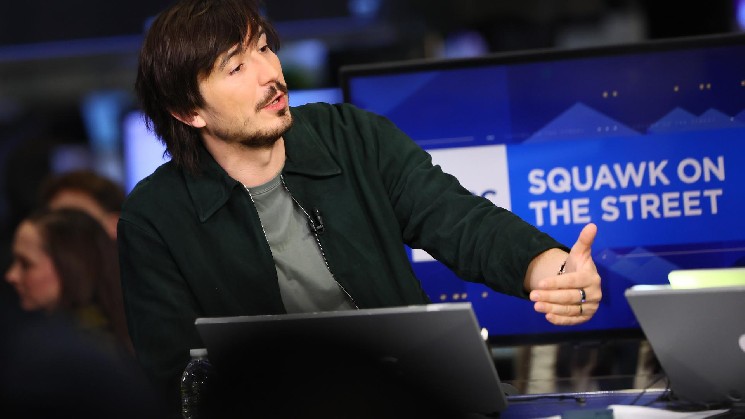
    Tenev defended the stock token model during a Sept. 9 CNBC “Squawk Box” interview. He argued that issuers control the rights and duties attached to shares they issue but do not control every separate financial product referencing their stock.

    “Issuers should have control and do have control over the rights and obligations of the stock that they issue, but that doesn’t mean they control everything about it,”

    Tenev said. Tenev stated that issuer consent “depends on what exactly you’re doing.” He maintained that Robinhood’s products “should not automatically require issuer consent,” although no cited court or U.S. regulatory decision has settled that position for Robinhood’s structure. Aron previously said AMC did not authorize, endorse, or participate in the creation of its referenced token. In a prior statement, he called on Robinhood to stop offering the product and said AMC would consult securities lawyers about possible legal and regulatory action.

    Gallagher Rejects AMC Demand

    Gallagher rejected the demand publicly.

    “We know a little something about the U.S. securities laws and will not ‘DECIST,’”

    he wrote on X, reproducing a misspelling in Aron’s earlier post. Gallagher invited AMC to send its lawyers. No public lawsuit filed by AMC over Robinhood’s stock tokens had been identified by Sept. 13. The U.S. Securities and Exchange Commission had not announced an enforcement action involving the AMC-linked product.

    Share Lending and Voting Remain Open Questions

    Robinhood’s public material explains how token prices follow referenced securities, but its available summaries provide limited detail about the custody and possible lending of each backing share. Aron’s latest post asks the company to state whether reserve shares are kept unencumbered or can enter securities-lending transactions.

    A securities loan transfers shares temporarily to a borrower under a separate agreement. Aron’s hypothetical question does not establish that Robinhood uses this arrangement for stock token collateral. A direct answer would require information from Robinhood or its custodian concerning the treatment of reserve shares.

    The company has not published a token-by-token reserve register showing where each corresponding share is held. Its stock token documentation identifies the issuer and product mechanics but does not give token holders direct voting control over the referenced equity. Robinhood therefore controls, directly or through its custody structure, any voting power connected to the underlying shares. Tenev has not announced how votes attached to stock token collateral are exercised.

    Regulatory Warnings and Comparable Cases

    European regulators have raised separate concerns about products that track shares without transferring legal ownership. The European Securities and Markets Authority has warned that tokenized instruments may create investor confusion when buyers do not receive the governance rights attached to conventional shares, Reuters reported.

    OpenAI raised a comparable ownership distinction in 2025 after Robinhood promoted a token tied to the private company. OpenAI said the instrument was not its equity and had not received the company’s endorsement, according to Reuters.

    Robinhood Maintains 1:1 Backing Description

    Robinhood maintains that its tokens can give eligible international customers economic exposure to U.S. securities. The company is developing Robinhood Chain to support tokenized assets, while crypto.news reported that its architecture creates a revenue stream for Arbitrum through chain-related fees.

    As of Sept. 13, Robinhood continued to describe its public-company tokens as one-for-one backed. Neither Tenev nor Gallagher had publicly answered Aron’s specific question about whether shares assigned to that backing may be lent to short sellers.

  • Robinhood CEO: Companies Should Not Hold Veto Power Over Stock Tokens Amid AMC Feud

    Robinhood CEO: Companies Should Not Hold Veto Power Over Stock Tokens Amid AMC Feud

    Robinhood’s Tenev and AMC’s Aron Clash Over Synthetic Equity Products

    A public disagreement between Robinhood Markets CEO Vlad Tenev and AMC Entertainment CEO Adam Aron highlights a growing tension in financial markets over how traditional stocks are represented on blockchain networks. The dispute centers on whether companies should control financial products that reference their shares without altering the underlying securities.

    The Core Disagreement

    Tenev argues that issuer consent should not be required for products that merely reference existing shares. In a written statement, he drew a clear line between synthetic instruments and products that modify the shares themselves:

    “If it creates a separate financial instrument that holds or references freely transferable shares without changing the issuer’s rights, obligations, or authoritative shareholder record, issuer consent should not be required,” Tenev wrote.

    Aron takes a sharply different view. He has characterized Robinhood’s offering as a “fictitious synthetic equity market” and warned that such products could undermine AMC’s ability to raise capital, confuse investors about their rights, and create a market using the AMC name without corporate consent.

    Existing Market Precedents

    Tenev countered that current markets already permit similar structures. He pointed to options contracts, unsponsored American depositary receipts (ADRs), and structured products as examples of instruments that reference public shares without granting the underlying company control over the derivative product.

    However, Tenev acknowledged a boundary where issuer involvement becomes necessary. He specified that products altering shareholder rights, replacing the official stock ledger, or creating new obligations for the issuer or its transfer agent should require company approval:

    “If a product purports to change the rights attached to the underlying shares, replaces the company’s official stock ledger, or imposes new obligations on the company or its transfer agent, the issuer should be involved,” he wrote.

    Broader Implications for Tokenized Assets

    The debate extends beyond the two companies. Financial firms are actively exploring multiple approaches to bringing stock exposure onto blockchains. These range from synthetic derivatives and custodial arrangements holding conventional shares to issuer-backed securities recorded directly on distributed ledgers. The outcome of disputes like this one could shape regulatory frameworks and market standards for tokenized assets going forward.

  • Beyond the Crypto Rally: 4 Trends to Watch This Cycle

    Beyond the Crypto Rally: 4 Trends to Watch This Cycle

    When crypto prices surge, market commentary often focuses on green candles and central bank policy. But beneath the immediate rally, a deeper structural shift is unfolding on-chain.

    Robinhood CEO Vlad Tenev brought global attention to this shift with the launch of Robinhood Chain, joining a broader movement by major platforms to bring mainstream retail equity investors directly into native on-chain execution.

    Macroeconomic stress provides the backdrop, but technological innovation is the catalyst. Beneath the price action, four key trends are defining the current crypto cycle and reshaping how global wealth is owned, accessed, and stored.

    Trend 1: The Retail Ownership Supercycle

    At a recent White House summit, Vlad Tenev summarised his platform’s mission in a single word: “ownership.” Broad asset ownership is essential to a free and prosperous society, and Robinhood Chain is putting that principle into practice.

    Novel mechanisms such as The Index illustrate how this model works. Holding the single token automatically delivers fractional tokenised equities directly to a user’s wallet. In just a few clicks, crypto-native traders can gain diversified exposure to traditional stock portfolios, extending their investments beyond crypto alone.

    Retail culture is a crucial force behind this movement. Memecoins such as Popcat, Pepe, and Doge demonstrated strong mass-market retail appetite on tier-one exchanges. Today, that same energy is driving on-chain execution.

    On Robinhood Chain, Cashcat has emerged as the leading token and unofficial mascot. Coinbase’s listing of Basecat on Base, together with community-led initiatives built around Cate on Solana, points to a broader, multi-chain “cat season.”

    These community movements are becoming a primary onboarding engine for crypto and tokenised real-world asset ownership.

    Trend 2: CeDeFi and Infrastructure Convergence

    While Robinhood Chain renewed retail interest in on-chain markets, another major development was taking shape at the infrastructure level. In previous cycles, centralised exchanges focused on building isolated, walled-garden blockchains and proprietary wallets. This cycle marks a fundamental shift toward Centralised-Decentralised Finance, or CeDeFi, through direct liquidity integration.

    Two parallel moves demonstrate this trend: Robinhood’s integration of Lighter and VALR’s integration of Hyperliquid.

    If Robinhood’s mission is to expand ownership for everyday retail investors, VALR’s focus is global access. By connecting directly to Hyperliquid’s high-performance order book, VALR gave more than two million users across Africa and emerging markets seamless access to over 200 liquid markets spanning crypto, equities, stock indices, commodities, precious metals, and foreign exchange.

    Trend 3: The Two-Phase Transformation of Money

    This expansion of global market access is laying the foundation for a much larger monetary transition. The evolution of money is unfolding in two distinct phases.

    Phase 1 is already taking place through stablecoins. While the long-term outlook for fiat currency appears bleak, stablecoins make it easier to store, transfer, and spend value. They are becoming practical payment and settlement rails for everyday users, global companies, and international trade.

    However, stablecoins only digitise fiat currency; they do not protect against chronic currency debasement. When it becomes clear to everyone that inflation is indeed not transitory, but long-lasting and ever-worsening, Phase 2 will take hold. The transition to sound money will be swift and violent, with stablecoins providing the off-ramp.

    Tokenised gold such as XAUt and, fundamentally, Bitcoin are natural destinations for this capital. The transition is still in its early stages.

    Trend 4: Agentic Finance and Human Purpose

    Alongside the evolution of money, agentic finance is gaining momentum. Autonomous AI agents and algorithmic execution systems are expected to handle increasingly complex market mechanics, liquidity deployment, and trading strategies.

    The full impact of AI on the global economy is still unfolding. Personally, I would rather focus on painting and tending a rose garden, letting the world figure out the question of AI and robots. Optimistically, that is the true promise of technology anyway: outsourcing the mundane to machines so humans can focus on service, kindness, creativity, and contemplation.

    Beyond Rotation: The Conviction Cycle

    Speculative token-hopping and short-term player-versus-player trading have shaped much of recent crypto culture. Yet, amid this cycle of constant rotation, a simple phrase is taking root: “believe in something.”

    The platforms, protocols, and participants that endure through the next phase of the market will not be those chasing fleeting trends. In addition to ownership and access, this cycle will be defined by conviction.

    About the Author

    Ben Caselin is Chief Marketing Officer at VALR.com, Africa’s largest crypto exchange and infrastructure provider by trade volume. Headquartered in Johannesburg, VALR serves over 1900 corporate and institutional clients and more than 1.9 million traders worldwide.

    Drawing on years of experience in the digital asset sector, primarily in Hong Kong, the UAE, and South Africa, Ben focuses on driving Bitcoin adoption in emerging markets. He advocates for an approach to innovation grounded in spiritual principles.

    Source: cryptonews.net