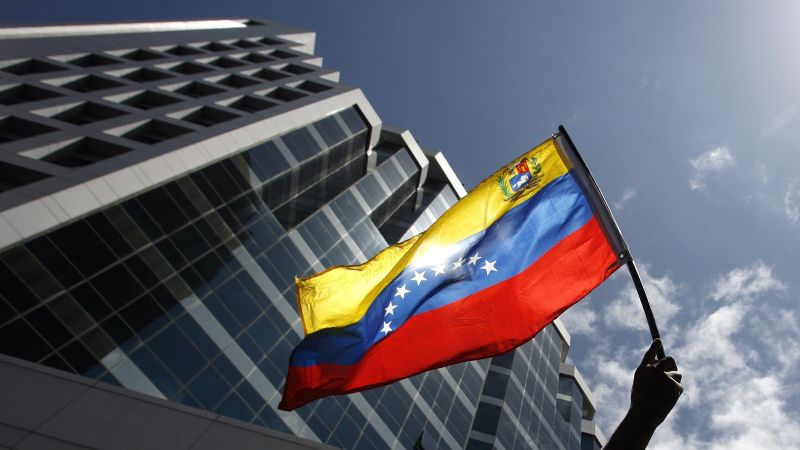
The Bolivarian National Police in Venezuela recently arrested three young men in Maracaibo, accusing them of running an illicit currency arbitrage ring through the peer-to-peer (P2P) platform of the cryptocurrency exchange Binance. The enforcement action has ignited a critical discussion among local crypto traders about where lawful P2P transactions end and criminal activity begins under Venezuelan law.
How the Alleged Binance P2P Scheme Operated
According to law enforcement authorities, the arrested individuals—identified as 18-year-old Adrián Jesús Gómez, 19-year-old José Ángel Hernández, and 22-year-old Guillermo José Roldán—operated out of a residence in the Francisco Eugenio Bustamante parish of Maracaibo. Police officials claim the trio belonged to an organized group dubbed ‘Los Binanceros’ and executed a highly structured financial loop:
- Acquisition: The suspects acquired U.S. dollars at the subsidized, official rate through regulated exchange houses and official Central Bank of Venezuela (BCV) auctions.
- Conversion: They deposited these funds into the Binance platform to purchase the dollar-pegged stablecoin $USDT.
- Liquidation: Finally, they sold the stablecoin on the Binance P2P marketplace in exchange for local currency (bolivars) at the unofficial parallel market rate, which sits significantly higher than the government’s controlled rate.
Following the raid, police confiscated several mobile phones, a laptop, and a motorcycle. The suspects and the seized physical evidence have been transferred to the jurisdiction of the Public Prosecutor’s Office for formal prosecution.
Why Venezuelan Authorities Regulate Exchange Rate Arbitrage
The core of the legal issue lies in Venezuela’s dual-rate currency system. Because the BCV strictly controls and rations foreign currency at a subsidized rate, a substantial gap often opens between the official rate and the parallel market rate. This discrepancy creates an immediate opportunity for risk-free profit: purchasing cheap dollars through government-regulated channels and selling them at the elevated market rate.
Venezuelan regulators do not view this as standard market trading. Instead, they classify it as unauthorized currency arbitrage. Funding parallel-market transactions using state-subsidized currency directly violates local exchange control laws. Furthermore, Venezuela’s robust anti-money laundering policies allow financial prosecutors to freeze and investigate any bank accounts receiving funds linked to these illicit spreads, regardless of whether the account holders are licensed financial agents.
Risks for Everyday P2P Crypto Users in Venezuela
While owning, trading, and utilizing digital currencies like $USDT is entirely legal under Venezuela’s regulatory framework, standard peer-to-peer traders still navigate a landscape filled with potential legal hurdles. The primary risks for everyday users include:
1. High-Frequency Compliance Flags
Engaging in high-volume or rapid-fire P2P trades can trigger automated anti-money laundering (AML) alerts at domestic banking institutions. Even if a trader is not exploiting exchange rate gaps, sudden spikes in account activity can lead to frozen bank accounts and subsequent investigations.
2. Third-Party Payment Vulnerabilities
One of the most common security flaws in P2P trading is accepting payments from bank accounts that do not match the verified identity of the counterparty on the exchange. If those external funds are tied to fraud, extortion, or other criminal activities, the recipient’s account can be flagged for money laundering.
3. Liability of Omission
Under Venezuelan criminal law, individuals can be held liable for failing to act when presented with suspicious activity. Ignoring obvious red flags on incoming payments, rather than actively participating in a crime, can still expose a P2P trader to prosecution for negligence or complicity.
Ultimately, Venezuelan authorities appear to distinguish between citizens using P2P platforms to preserve the purchasing power of their personal savings and those systematically exploiting government-regulated currency channels for parallel-rate profits, as seen in the case of ‘Los Binanceros’. For the average crypto user, maintaining strict transaction hygiene—such as verifying counterparty names and rejecting third-party bank transfers—remains the most effective way to avoid regulatory scrutiny.