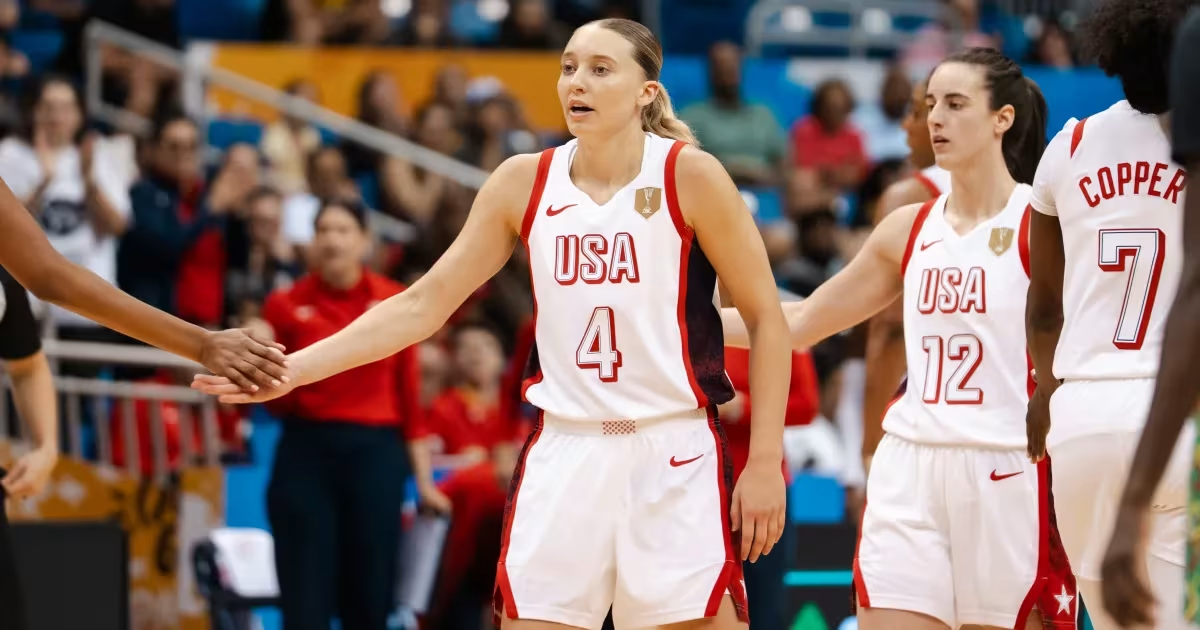
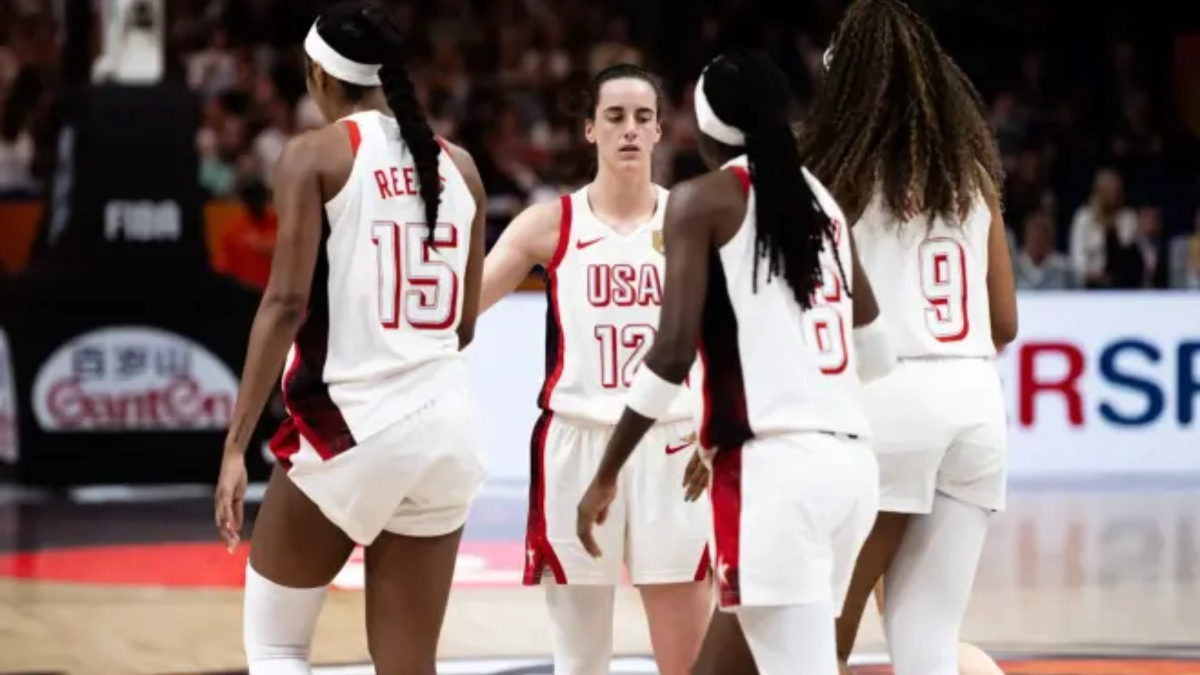
The United States women’s basketball team has long defined dominance in international sport. Eight consecutive Olympic gold medals, four straight FIBA World Cup titles, and a 73‑0 record spanning nearly 20 years paint a statistical portrait of supremacy unmatched in any team sport, men’s or women’s. The program has functioned as a perpetual Dream Team, each iteration seemingly more precise than the last — relentless transition offense, overwhelming physicality, and a depth of talent that crushed opponents by an average of 40 points per game at the last World Cup.
First Cracks in the Armor at Paris 2024
That aura of invincibility wobbled in the Paris 2024 Olympic final. France, playing on home soil, dragged the Americans into a grind-it-out contest and nearly ended the 18‑year unbeaten streak. A 67‑66 escape — decided by a controversial late call — served as the first serious warning that the gap between the U.S. and the rest of the world had narrowed.
Second Warning: Italy Pushes USA to the Brink at 2026 World Cup
The second alarm rang louder in Berlin. Italy, not considered a medal favorite entering the tournament, replicated France’s blueprint: slow the pace, extend possessions, and force the U.S. into half‑court sets where its tactical discipline — often a relative weakness — is tested. The Italians led 51‑50 with three minutes remaining before the Americans survived 55‑52, aided by a missed buzzer‑beating three from Cecilia Zandalasini and a pair of debated officiating decisions. Another low‑scoring affair, another near‑disaster.
Roster Absences Loom Large
When the World Cup roster was announced, analysts fixated on who was missing: Sabrina Ionescu, Kelsey Plum, and, most critically, A’ja Wilson — widely regarded as the best player on the planet and the ultimate safety valve when games turn ugly. Her absence removes the singular figure who “takes out the trash” in crisis moments.
When the team that would play in the World Cup was made public, experts focused more on the absences: Sabrina Ionescu, Kelsey Plum and, above all, A”ja Wilson. They are tremendous absences, especially Wilson’s, the best player on the planet today, the player who, in case of trouble, is always there to take out the trash. That indispensable figure is not on this “Dream Team”.
Production Questions Surround Current Rotation
In Berlin, the offense has lacked a clear go‑to scorer. Jackie Young leads the team at just 11 points per game, followed by Napheesa Collier (9.8) and Breanna Stewart (9.5). While the talent of Caitlin Clark and Paige Bueckers is undeniable, questions persist about the supporting cast — particularly Angel Reese, whom many believe would not have made the squad had the full player pool been available, and veteran Chelsea Gray, who appears past her prime.
On the contrary, on the team that is in Berlin many questions have arisen about the performance of some players, especially in close games. Jackie Young is their top scorer, averaging 11, with Napheesa Collier, 9.8, and Breanna Stewart behind her on 9.5. The quality of Caitlin Clark is unquestionable, as is that of Paige Bueckers, but there are many doubts about other players such as Angel Reese, who for many would not have a place if everyone had come, or Chelsea Gray, one of the veterans, but far from her prime.
Chemistry and Culture Concerns
Perhaps the most troubling development isn’t tactical — it’s cultural. The squad does not appear cohesive. Body language on the bench suggests friction rather than unity, and the environment lacks the resilience to weather adversity. Observers note a parallel to the internal tensions currently roiling the WNBA: when problems arise, this group seems to amplify them rather than resolve them. That disorder manifests on the court in disjointed stretches and lapses in communication.
FIBA Adaptation Issues Persist
Operational missteps have compounded the on‑court struggles. While every other federation adhered to assigned training schedules and venues, the U.S. staff twice rejected allocated practice slots — including the day before the semifinals — opting instead for alternative courts. The decision to skip a session at Uber Arena ahead of a pivotal knockout game reads as arrogance, or at minimum a failure to respect the tournament’s logistical framework.
Spain Awaits in Semifinals; Global Gap Continues to Shrink
Make no mistake: the United States remains the tournament favorite. A semifinal clash with Spain looms, and should they advance, they will enter the final as the presumed winner. Yet the margins that once measured in blowouts now measure in single digits. Just as the men’s game has seen global parity erode American hegemony, the women’s landscape is shifting. France, Spain, and others are no longer merely participants — they are legitimate threats.
Whether the dynasty falls in Berlin or endures another cycle, one truth is immutable: the chasm has closed. The giant still stands, but the climbers are reaching its shoulders.