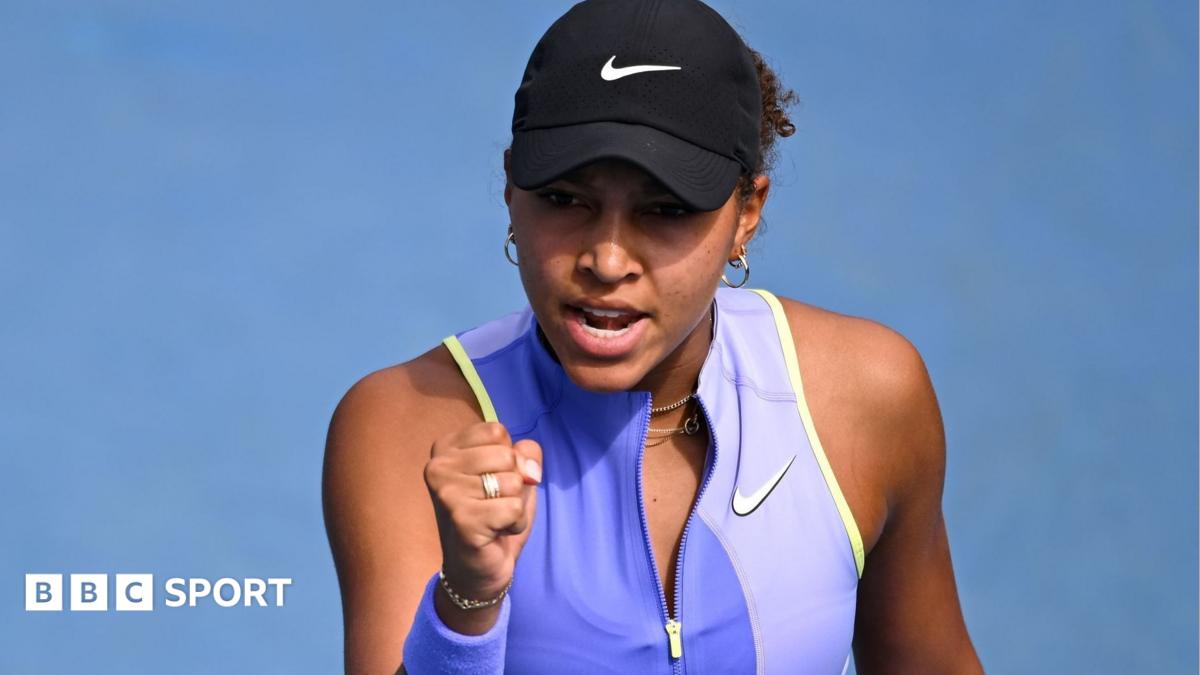
Thea Frodin once portrayed a young Serena Williams on the big screen. Now, the American teenager is preparing to follow in her childhood idol’s footsteps with her US Open main-draw debut.
Five years ago, Frodin was selected as a tennis-playing body double for the actress who played Serena in the Oscar-nominated film King Richard. At the time, the 12-year-old worked alongside Will Smith, who portrayed Richard Williams, the father of Serena and Venus Williams.
“Being able to play the role of somebody that I looked up to for my whole life was super special,”
Frodin told the WTA website.
“I was honoured. She was one of the players that I looked up to most, just when I was starting to play.”
“She’s such an inspiration to me.”
Frodin will now make her main-draw singles debut at her home Grand Slam. Serena and Venus Williams are also set to team up in the US Open doubles this year, adding further significance to the occasion.
The teenager faces a formidable first-round opponent in world number two Elena Rybakina, a two-time major winner and the reigning Australian Open champion.
“I’m trying to stay in the moment as much as possible,” said Frodin. “This is a huge opportunity for me to enjoy the moment, have fun and see what I can do. “The atmosphere, how loud the crowd will be, I feel like I fit well in that environment.”
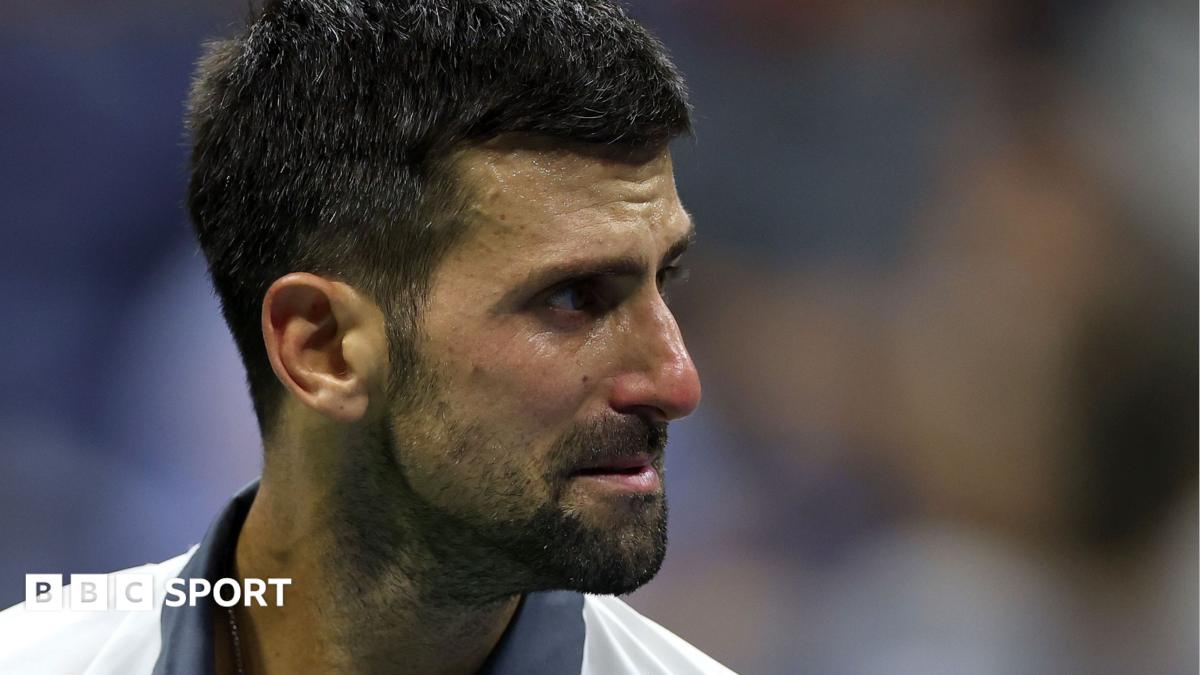
Novak Djokovic made a promising start against Mariano Navone, breaking the Argentine’s serve at the first opportunity. However, his 4-1 lead quickly disappeared as he began to struggle in the humid conditions at Arthur Ashe Stadium.
A lengthy rally appeared to drain Djokovic’s energy, leaving him unable to recover between points. His serve and groundstrokes lost speed, and after the ninth game he called for the doctor and requested tablets to ease the problem.
Djokovic struggles in humid conditions
Djokovic continued to look distressed as the opening set reached a tie-break. He wearily bowed his head and bent over between points while Navone stayed focused and struck first after one hour and 13 minutes.
An eerie hush fell over Arthur Ashe Stadium as the crowd grew increasingly concerned for the four-time champion. Djokovic’s physical problems persisted, but he improved enough—apparently aided by the cooler conditions under the roof—to level the match.
His more animated start to the third set suggested that Djokovic was beginning to feel more like himself. He also took advantage of a poor service game from Navone to break for 5-4 and move ahead.
Those are the positions from which Djokovic would normally go on to win, even when struggling physically. His inability to close out the match against Navone, who had never progressed beyond the second round in New York, offered another indication of the 38-year-old’s declining powers.
What had been a closely contested match quickly slipped away from Djokovic, becoming a difficult watch for the thousands of spectators still inside Ashe as midnight approached local time.
The atmosphere became subdued once again as it became clear that Djokovic would not be able to escape trouble on this occasion.
It was here in New York that the name of a lanky, acne-scarred 17-year-old from Leganés first began to attract attention. “Creo que lo he conseguido gracias a mi mentalidad y a mi forma de ser. Las cosas no salían, así que he dado un paso adelante”, Rafa Jódar said after overturning a junior final against Norway’s Budkov Kjaer, who had arrived at that tournament as the top seed and overwhelming favourite.
That afternoon, the Madrid-born player offered an early glimpse of what might lie ahead: a determined competitor who strikes without hesitation. Today, that teenager remains just as relentless, but his life has changed dramatically. Jódar is now targeting the top 10, while little has been heard from his Nordic rival. Budkov Kjaer is ranked 149th in the world, which is no small achievement, but that is where his progress has stalled.
“Tengo muy buenos recuerdos de aquella semana, porque pude desarrollarme como jugador aquí, en un Grand Slam, y eso ayuda mucho. Estoy muy contento de estar de vuelta”, the Spaniard said two days before this year’s tournament began.
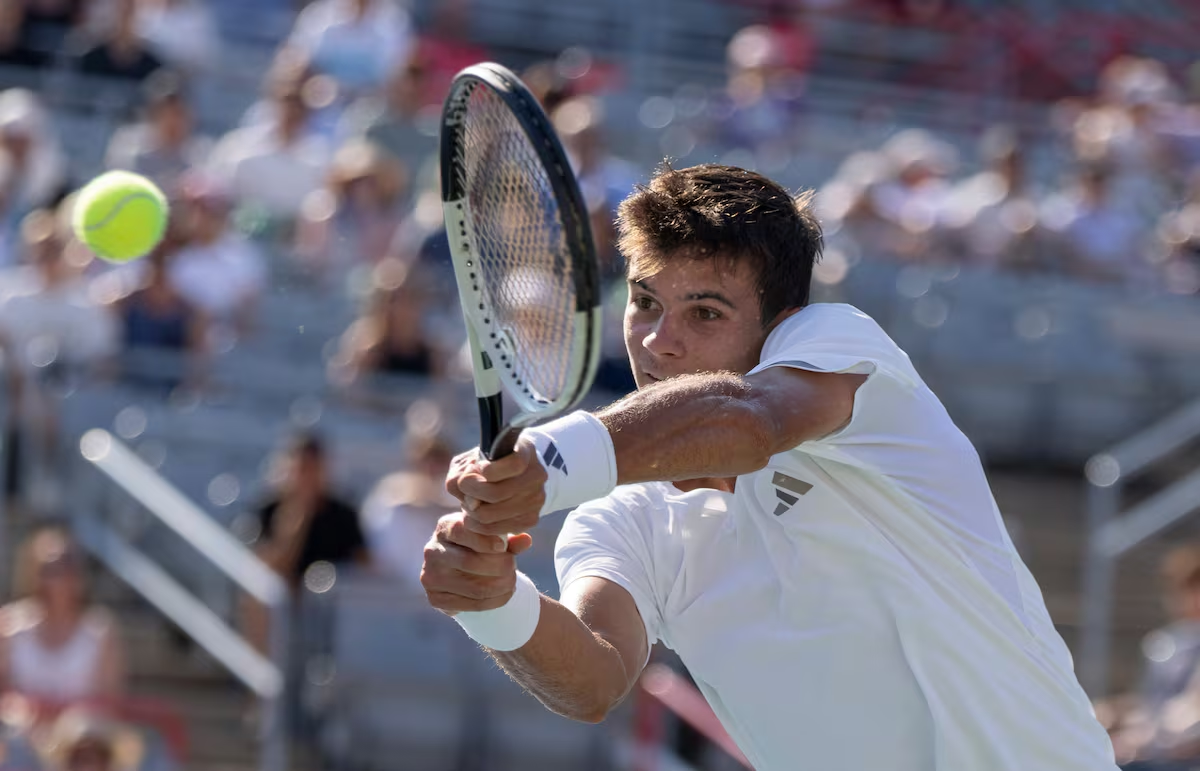
This is Jódar’s first US Open in the senior draw, and he arrives in clear ascendancy. He has emerged as the season’s major breakthrough player, producing results that would have been difficult to predict. His rise of 152 ranking places has become a major talking point, even attracting the attention of Roger Federer. Speaking on Saturday during his induction into the Hall of Fame in Newport, Federer said: “Lo que está haciendo es increíble. Hace unos meses, nada hubiera imaginado que pudiera hacerlo. La manera en la que está consiguiendo mantener su nivel es sencillamente increíble”.
Jódar keeps pushing after breakthrough season
Jódar continues to build momentum and is hoping for another surge at the final Grand Slam of the season after shining since January. He has already played 50 matches and, despite suggestions that he should have eased off, believes every second on court is valuable.
“Estar jugando contra los mejores jugadores del mundo cada semana, incluso entrenando con ellos, hace que tu nivel mejore mucho”, he said; “si puedes aguantar el ritmo y estar ahí cada semana, física y mentalmente, también mejoras mucho. Al final, cuando juegas tantos partidos y juegas tantas semanas, siempre estás pensando y en modo torneo en tu cabeza. Estoy haciendo un gran trabajo fuera de la pista, cuando acaban los partidos; es importante recuperar bien”.
Since 2024, Jódar has maintained the same reserved style, in clear contrast to many young players eager to build their profiles both on and off the court. He is more satisfied by his daily work and constant improvement than by public attention, a mindset that has taken him to 13th in the rankings.
His arrival at the top level was only a matter of time: the rankings said one thing, while his tennis suggested another. Still with considerable room to improve, Jódar continues to learn about elite competition without lowering his guard or showing the slightest complacency.
13 matches in 22 days
“Si juego muchos partidos es buena señal; significa que estoy avanzando en los torneos”. “De momento tengo mucho ritmo de competición, lo cual es muy bueno para un jugador tan joven como yo”, the Spaniard said as he makes the most of his first summer competing at the highest level.
Jódar reached the Washington final, the Montreal semi-finals and the Cincinnati round of 16, playing 13 matches over a 22-day period. Although signs of fatigue have appeared at times, he and his father believe the benefits of this breakthrough phase far outweigh the physical strain.
Jódar serving during a match in Washington.WILL OLIVER (EFE)
“Sé que la temporada está yendo bien, que estoy mejorando mucho y al final es un proceso de aprendizaje. Todo es nuevo para mí. Es mi primer año, así que todavía queda mucho; si no es este, intentaré conseguirlo en los próximos”, Jódar said when reminded that he is currently ninth in the annual race.
That position leaves him in contention to finish the season among the top eight and qualify for the ATP Finals in November. Before then, on September 19 and 20, he will also lead Spain in its Davis Cup tie in Santiago, Chile.
It has been a dream season in which Jódar has never taken his foot off the accelerator. He will not do so at Flushing Meadows, a venue that holds special memories for him. His professional and emotional connection with the United States is well established: he spent a year developing his game at the University of Virginia before moving onto the ATP Tour, and it was also where he announced himself as a junior two years ago.
With his father still beside him as mentor and trusted support, Jódar remains focused. “Estoy contento de la evolución. Sé que quedan seis o siete torneos por delante y voy a intentar hacerlo lo mejor posible”, he said.
He added, with full focus on his New York campaign: “Yo lo que me enfoco es en el primer partido. Voy a intentar mostrar mi mejor nivel”.
The emergence of Mérida
To put Jódar’s demanding schedule into context, several leading players competed in a similar number of matches during their first year at the top level. Carlos Alcaraz played 49 in 2021, Rafael Nadal played 47 in 2004, Novak Djokovic 22 in 2005 and Roger Federer 30 in 1999.
Jódar will make his US Open debut on Tuesday at 5 p.m. against Thanasi Kokkinakis. Three Spanish players competed on the opening day. Pablo Carreño lost to Jiri Lehecka 6-1, 7-6(5), 4-6, 6-2, while Jaume Munar recovered from a difficult contest against Terence Atmane to win 6-7(5), 3-6, 6-1, 7-6(4), 7-5. Dani Mérida also advanced, defeating Marton Fucsovics 6-4, 6-4, 6-2.
The Mallorca native spent four hours and 54 minutes on court and overcame a bizarre episode in which his opponent suffered cramps while leading by two sets. “Vengo de meses con muy poca preparación, así que lo de hoy es un paso adelante muy grande”, Munar said. He will next face another Frenchman, Arthur Rinderknech.
Mérida will play either Marin Cilic or Andrey Rublev after securing his first win in New York and adding further momentum to his confidence. The world No. 39, who began the year ranked 163rd, summed up his performance as follows: “He sabido hacer lo que había que hacer en cada momento”.
The match between Martín Landaluce and Britain’s Jacob Fearnley was suspended because of rain and will resume on Monday. Carlos Alcaraz will also play that day at 7:30 p.m. against Roman Safiullin, while Cristina Bucsa faces Sara Bejlec at 5 p.m. and Oksana Selekhmeteva meets Aoi Ito at the same time.
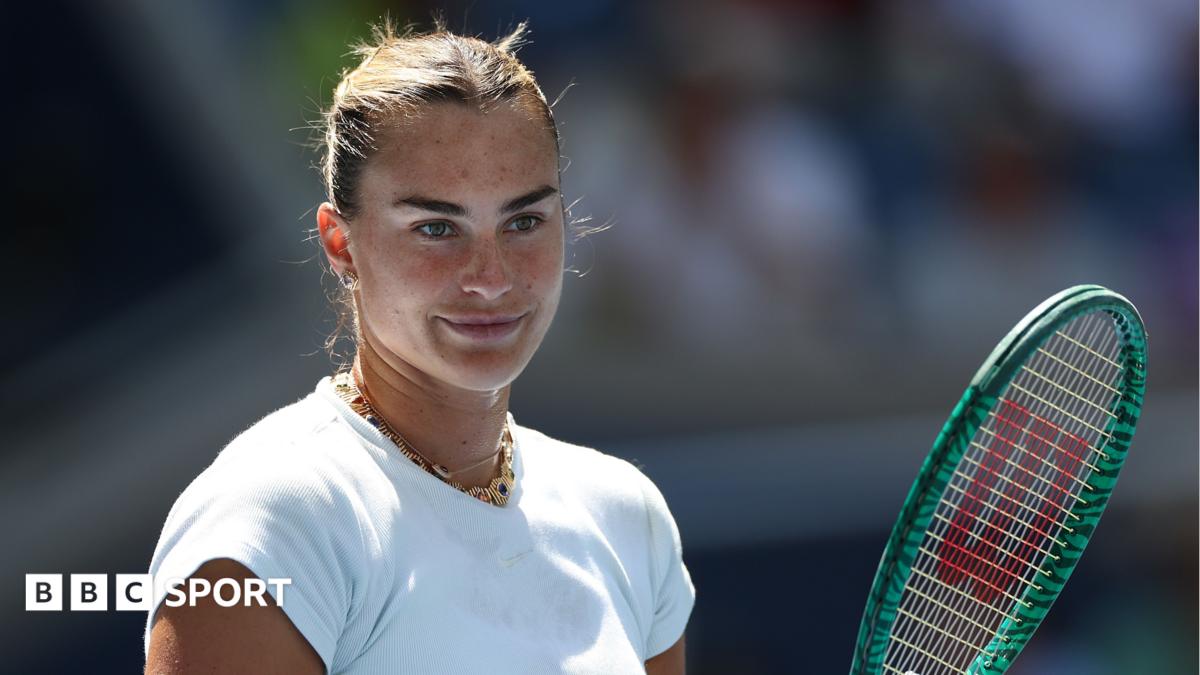
Sabalenka’s four Grand Slam singles titles—two Australian Open victories and two US Open triumphs, all on hard courts—are an achievement most players can only dream of. However, the Belarusian has also lost four major finals and six semi-finals, underlining a level of consistency on tennis’s biggest stages that is unrivalled among her peers.
In recent months, the main concern has been Sabalenka’s mental focus in less pressurised situations. That weakness was exposed again at the Cincinnati Open, where she suffered a fourth-round defeat by 20-year-old Czech player Sara Bejlek.
Sabalenka led 5-1 in the first-set tie-break and 4-1 in the second set, but struggled to maintain composure during the rallies as Bejlek fought back to win 7-6 (9-7) 6-4.
Sabalenka searching for greater mental consistency
At her previous tournament in Toronto, Sabalenka lost to Russian world number 19 Ekaterina Alexandrova in the last 16 after her serve collapsed.
Her difficulties also emerged during the clay-court season. Sabalenka surrendered the opening set before losing to Hailey Baptiste in Madrid, Sorana Cirstea in Rome and, most notably, Diana Shnaider at Roland Garros.
“I work on my mental side of the game. I’ve been trying to reset my mind and to come back stronger,” a bullish Sabalenka said in New York.
Most tournaments prioritise their own national players when awarding wildcards, but places are also offered to players likely to bring commercial value to an event. Hale also refers to agreements as ‘trades’ with other national federations or agencies such as IMG, which manages players and, until recently, also owned the Miami and Madrid Opens.
The clearest example of a ‘trade’ is the reciprocal wildcard agreement between the USTA, Tennis Australia and the French Tennis Federation. Each of the three Grand Slam nations offers one men’s and one women’s wildcard to the other two, ensuring that two of their players benefit when their counterparts host the tournament.
Changing wildcard rules for past champions
The Open Golf Championship has reduced opportunities for former champions to return. Twenty years ago, champions under 65 could play whenever they wished. Now, winners can return only until they are 55, potentially opening places in the field for younger, higher-ranked professionals.
Golfers can remain competitive for much longer, but tennis has no equivalent age limit. Martina Navratilova received wildcards for both the 2004 French Open and Wimbledon when she returned to the sport at 47, winning a round on the grass.
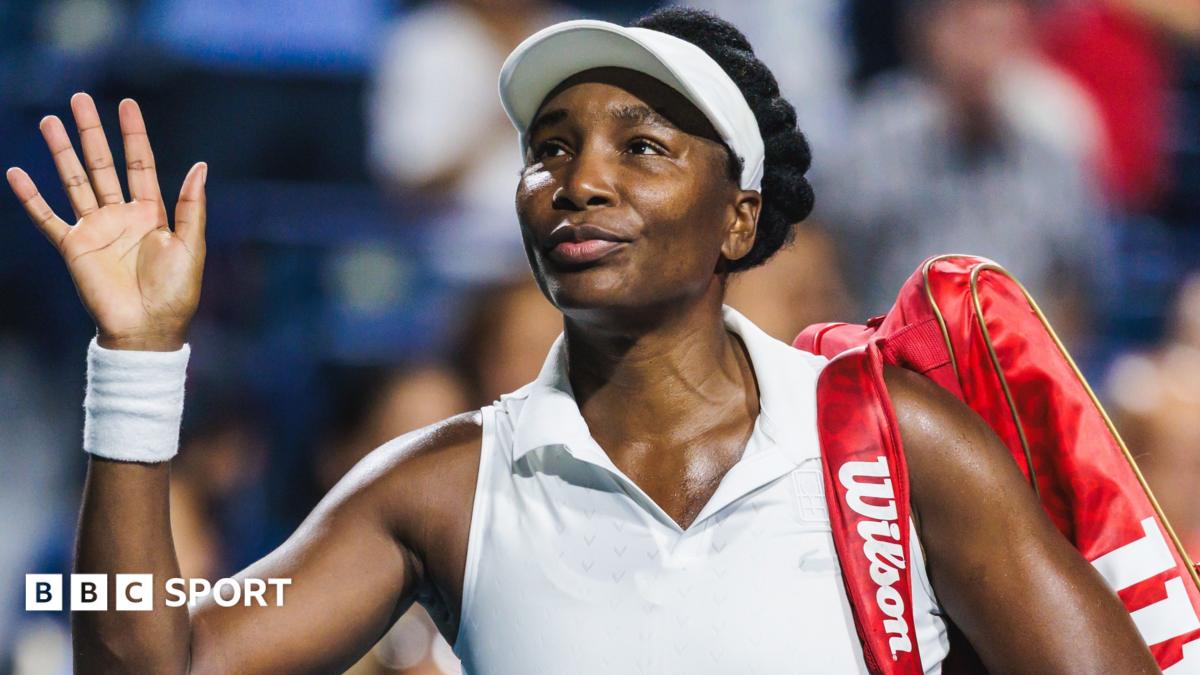
“You never want to put a player out there that you are unsure about,” said Hale, who believes Williams is still capable of winning matches.
“Venus lost 6-4 6-1 to Kamilla Rakhimova, and the first set was really competitive. She’s still competitive, but just not winning these matches.”
Should Venus Williams face a wildcard limit?
The question is whether there should be a point when a tournament director gives a wildcard to a higher-ranked player seeking to advance their career.
“When the time comes that Venus is not competitive in sets, then I think she will make that call,” Hale responded.
“Venus and Serena have done so much for women’s tennis and the sport that they should be able to play as long as they want.”
“I’m very happy they are continuing and they make their decision when they are ready, or each tournament makes their decision when they are ready.”
British number one Katie Boulter expressed a similar view after partnering the “absolute icon” in the Madrid doubles in April.
“Venus has given so much to our sport that she deserves to get what she needs back,” she said then.
“We have to be grateful that she is still out there, doing the best she can.”