Tag: Tron

  • Billionaire Claiming He Paid $4.5 Million to Marry Actress Seeks Refund After Romance Ends

    Billionaire Claiming He Paid $4.5 Million to Marry Actress Seeks Refund After Romance Ends

    Key Highlights

    • Tron founder Justin Sun is suing former fiancée Jing Tian to recover a $4.5 million dowry paid to her parents, alleging she demanded $50 million for a surrogacy arrangement before cutting contact.
    • Sun’s lawyer Zhang Qihuai confirmed a court has approved the lawsuit; Sun also consulted Anthropic’s AI tool Claude about the surrogacy demand, which reportedly advised against compliance.
    • Tian responded on social media stating “Time will prove everything” and that she “believes in the law” while denying she would “trade love or her soul for money,” per the South China Morning Post.

    Billionaire Crypto Founder Takes Legal Action Over Failed Engagement

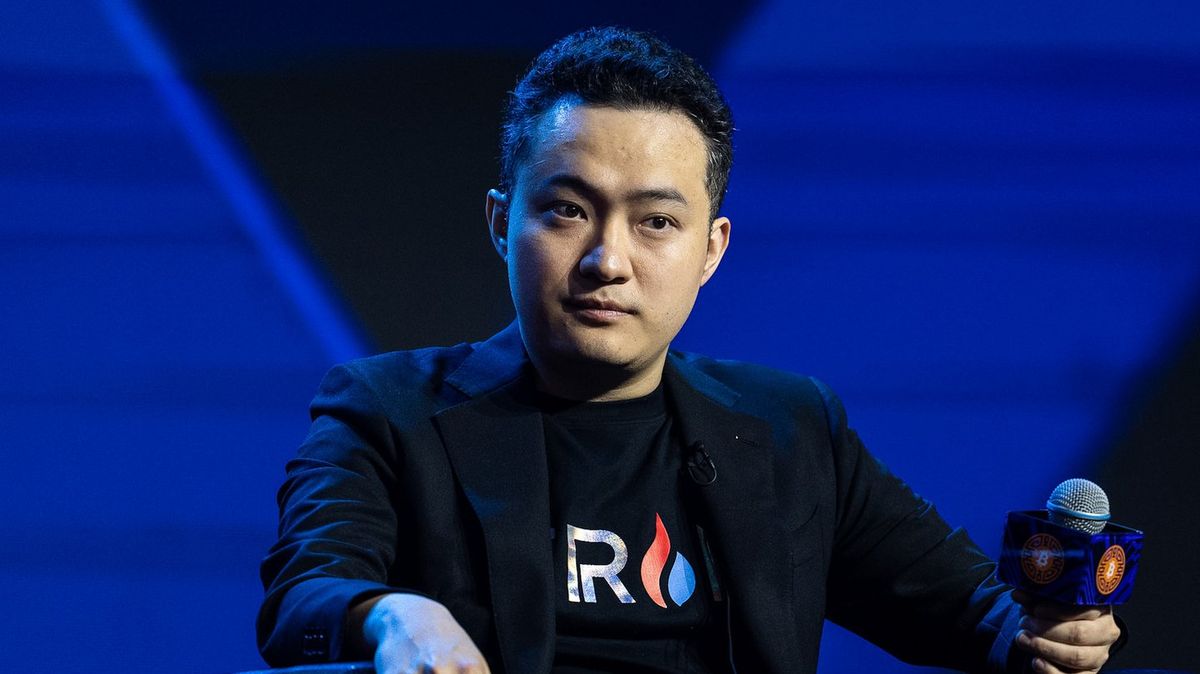
    Justin Sun, the 36-year-old founder of blockchain platform Tron and a figure Forbes values at $8.5 billion, has initiated a high-profile lawsuit against Chinese actress Jing Tian, 38, seeking the return of a $4.5 million “bride fee” he allegedly paid to her parents during their engagement. The legal dispute, first reported by the Wall Street Journal, centers on the collapse of a relationship that Sun says was explicitly oriented toward marriage. “We dated with marriage in mind,” the cryptocurrency tycoon told the Wall Street Journal in a short statement. According to Sun’s attorney, Zhang Qihuai, the payment was made to Tian’s family under the assumption the couple would wed, but the engagement unraveled during discussions about having a child via a U.S. surrogate.

    Surrogacy Demand and AI Consultation Preceded Split

    Sun alleges that Tian demanded $50 million to proceed with surrogacy plans, a request he refused. He further claims that after declining the demand, Tian severed communication. In an unusual detail, Sun said he consulted Anthropic’s AI tool Claude regarding the surrogacy payment and that the tool encouraged him not to comply. “The engagement could no longer proceed,” Sun told the Journal, while his lawyer Qihuai claimed that a court has given the lawsuit against his ex the green light to proceed. The case highlights the intersection of personal wealth, family law, and reproductive technology among ultra-high-net-worth individuals in China’s entertainment and tech circles.

    Actress Responds With Defiant Social Media Posts

    Tian, known for roles in Pacific Rim: Uprising, Kong: Skull Island, and the 2016 Zhang Yimou epic The Great Wall alongside Matt Damon, has not directly addressed the specific financial allegations. However, she posted a response on social media that was reported by the South China Morning Post, referencing her “poor judgment in men and insufficient wisdom” and adding brutally that she “would never trade love or her soul for money.” In a subsequent statement, “Time will prove everything,” Tian said, while going on to say she ‘believes in the law’ and that ‘justice and fairness will ultimately prevail’. The phrasing suggests a calculated public posture as the legal process advances.

    Sun’s Public Narrative Shifts After Detailed X Post

    Adding complexity to the public record, Sun published a lengthy post on X titled “My Girlfriend Jing Tian,” recounting his longstanding admiration for the actress, a date at a privately hired cinema, and the payment to her parents. The post appeared to serve as his version of events but concluded with a striking disclaimer: “This article is entirely fictional; any resemblance to actual events or persons is purely coincidental.” The retraction raises questions about the evidentiary value of the post and Sun’s media strategy. Sun previously drew global attention in 2024 when he purchased Maurizio Cattelan’s conceptual banana artwork for $6.2 million and promptly ate the fruit, a stunt that cemented his reputation for headline-grabbing behavior.

    Why This Matters

    This dispute transcends celebrity gossip, touching on several consequential domains. First, it tests the enforceability of substantial pre-marital financial transfers—often termed “bride prices” or dowries—in Chinese civil courts when a marriage does not materialize, a recurring flashpoint in family law. Second, the involvement of a U.S. surrogate and a nine-figure demand introduces cross-border reproductive rights and contract law complexities. Third, Sun’s citation of an AI tool (Claude) as a factor in a high-stakes personal decision may foreshadow how generative AI is increasingly woven into human decision-making narratives, including legal defenses. Finally, the case underscores the reputational risks for public figures when private negotiations become public litigation, especially in an era where social media posts serve as both evidence and performance.

    Frequently Asked Questions

    What is the exact amount Justin Sun is trying to recover, and what was it for?

    Sun is seeking the return of $4.5 million he characterizes as a “bride fee” paid to Jing Tian’s parents during their engagement, which he says was made with the understanding the couple would marry.

    Has a court officially accepted the lawsuit?

    Yes. According to Sun’s lawyer Zhang Qihuai, a court has given the lawsuit the green light to proceed, meaning the case has passed the initial filing threshold and will move toward hearings.

    How has Jing Tian responded to the allegations?

    Tian has not directly contested the financial claims in a formal legal filing as of this reporting. Publicly, she posted on social media that “Time will prove everything,” affirmed she “believes in the law,” and stated that “justice and fairness will ultimately prevail,” while also declaring she would “never trade love or her soul for money.”

  • Chainflip Loses 736,442 USDT in TRON Exploit

    Chainflip Loses 736,442 USDT in TRON Exploit

    Chainflip Loses $736,442 in USDT Through TRON Memo Exploit

    Cross-chain protocol Chainflip suffered a security breach resulting in the loss of 736,442.17 USDT after an attacker exploited how the platform processes TRON transaction memos. The incident occurred during the early hours of September 12, prompting the protocol to pause operations while developers investigated and prepared a fix, according to a September 13 incident update.

    An update on yesterday’s exploit affecting Tron $USDT.736,442.17 $USDT was taken. All other funds are unaffected and secure, and impacted users will be made whole.The network stays paused while we finalise the fix and the restart plan.Full update: https://t.co/LTWSqLBOn3
    — CHAINFLIP (@Chainflip) September 13, 2026

    How the TRON Memo Exploit Worked

    Unlike other supported blockchains where Chainflip receives swap instructions through dedicated contract functions, the protocol’s TRON USDT integration relies on transaction memos to read swap instructions attached to TRON transfers. According to the incident report, the attacker discovered a method to attach a new memo to a transaction that Chainflip validators had already signed.

    The protocol’s systems interpreted the added memo as a separate swap instruction. When this new instruction appeared to fail, Chainflip issued a refund — but the original deposit had already produced a payout. Processing the altered memo therefore caused the protocol to pay against the same deposit a second time.

    Chainflip attributed the flaw to its own processing of TRON transaction memos and confirmed that the TRON blockchain, the USDT smart contract, and Tether’s reserve system were not compromised.

    Attack Timeline and Detection

    The attacker repeated the exploit method eight times over approximately 90 minutes. Early attempts used small amounts, with each subsequent attempt nearly doubling the previous one. Only six attempts produced unauthorized payouts totaling 736,442.17 USDT.

    The protocol detected the incident after subsequent USDT payments began failing. Developers traced the failures to the repeated processing of deposits through altered memos. Chainflip suspended network activity to examine whether the vulnerability could affect other assets or integrations. A preliminary review found the exploit was limited to TRON USDT, with remaining vault funds secure.

    The project described this as its first critical security event involving funds taken from protocol vaults, noting that earlier operational problems had not caused comparable losses.

    User Impact and Repayment Plans

    One legitimate user swap worth 115,654.41 USDT remains unpaid, though the funds are still held in Chainflip’s vault and can be released after the network restarts. This transaction is not counted among the six unauthorized payouts.

    Chainflip stated that affected users would be made whole, though the reimbursement method had not been selected or published as of September 13. Several options remain under review. The protocol has notified relevant parties about the stolen funds to track or recover proceeds as they move between addresses and services, but did not name those parties or confirm whether any USDT had been frozen.

    Tether can freeze addresses holding its tokens when acting under applicable legal or enforcement processes. No public statement from Tether or TRON concerning the Chainflip attack had been identified by publication time.

    Network Restart Targeted for Monday

    Chainflip reported that the underlying fix had been completed, but developers still needed to finalize the exact restart procedure. The network will remain paused “until Monday at the earliest,” making September 14 the earliest possible restoration date rather than a confirmed launch time.

    Before reopening, the team plans to finalize a technical restart plan designed to avoid further processing problems. Chainflip has not disclosed whether validators will need new software, a coordinated upgrade, or a governance vote.

    Once the system resumes, the protocol expects to process the pending 115,654.41 USDT swap and begin handling compensation for users whose funds were paid to the attacker. A complete technical report will follow after the restart plan is locked down and the network is operating securely, though no publication deadline has been announced.

  • New TRX ETF Launches on CBOE with a Surprisingly Quiet Start

    New TRX ETF Launches on CBOE with a Surprisingly Quiet Start

    Canary Staked TRX ETF Debuts on CBOE With Zero First-Day Net Flows

    The first spot TRX exchange-traded fund in the United States, launched by Canary Capital, began trading on September 10 at the Chicago Board Options Exchange (CBOE). The debut registered no net inflows and minimal trading activity, contrasting sharply with the enthusiasm seen in other recent crypto ETF launches.

    First-Day Performance Metrics

    According to data from SoSoValue, the Canary Staked TRX ETF (TRXS) closed its opening session with:

    • Zero net flows
    • Trading volume of approximately $16,700
    • Net assets under management of $50.38 million
    • Management fee of 1.10%

    The fund supports both cash creation and redemption as well as in-kind transactions, providing operational flexibility for authorized participants.

    TRX Token Price Unaffected by Launch

    The underlying asset, TRX, traded around $0.338 at launch, reflecting a 3% gain over the prior week. However, the token showed no discernible price reaction to the ETF’s debut. Price action remained consolidated within a narrow $0.33–$0.34 range during the week preceding the launch, with no movement in either direction following the event.

    Fee Structure May Influence Early Adoption

    The 1.10% management fee could weigh on early adoption. Cost-sensitive investors have access to alternative crypto investment vehicles with lower expense ratios, potentially limiting initial inflows into TRXS.

    Structural Significance vs. Market Demand

    The launch represents a significant structural milestone: TRON now has a formal presence in the U.S. ETF market, broadening traditional investors’ access to TRX without requiring direct custody. However, first-day figures reveal that institutional and retail demand has yet to materialize in any concrete form.

    The market appears to be in a wait-and-see mode, assessing whether the product can gain traction in the coming weeks. The absence of opening-day flows does not condemn the fund’s long-term prospects, but it sends a clear initial signal: the infrastructure is active, regulatory access exists, and the remaining question is whether genuine investor interest will follow the structure.