Tag: Toronto International Film Festival

  • Wild Horse Nine Review: Is John Malkovich at the Center of a Meta Puzzle?

    Wild Horse Nine Review: Is John Malkovich at the Center of a Meta Puzzle?

    Key Highlights

    • Martin McDonagh’s Wild Horse Nine reunites the filmmaker with Sam Rockwell for a third time and pairs him with John Malkovich as CIA operatives in pre-coup Chile, opening in theaters November 6 after a TIFF premiere.
    • The film deliberately echoes McDonagh’s earlier In Bruges and the actors’ past roles—including Malkovich’s Burn After Reading CIA memoirist and Rockwell’s Confessions of a Dangerous Mind operative—creating a meta-commentary on repetition and history.
    • Set days before the 1973 Chilean coup, the dark comedy uses Easter Island’s moai and wild horses as visual metaphors for imperial hubris, with cinematography by Ben Davis and supporting turns from Steve Buscemi, Parker Posey, and Tom Waits.

    A Familiar Darkness in New Territory

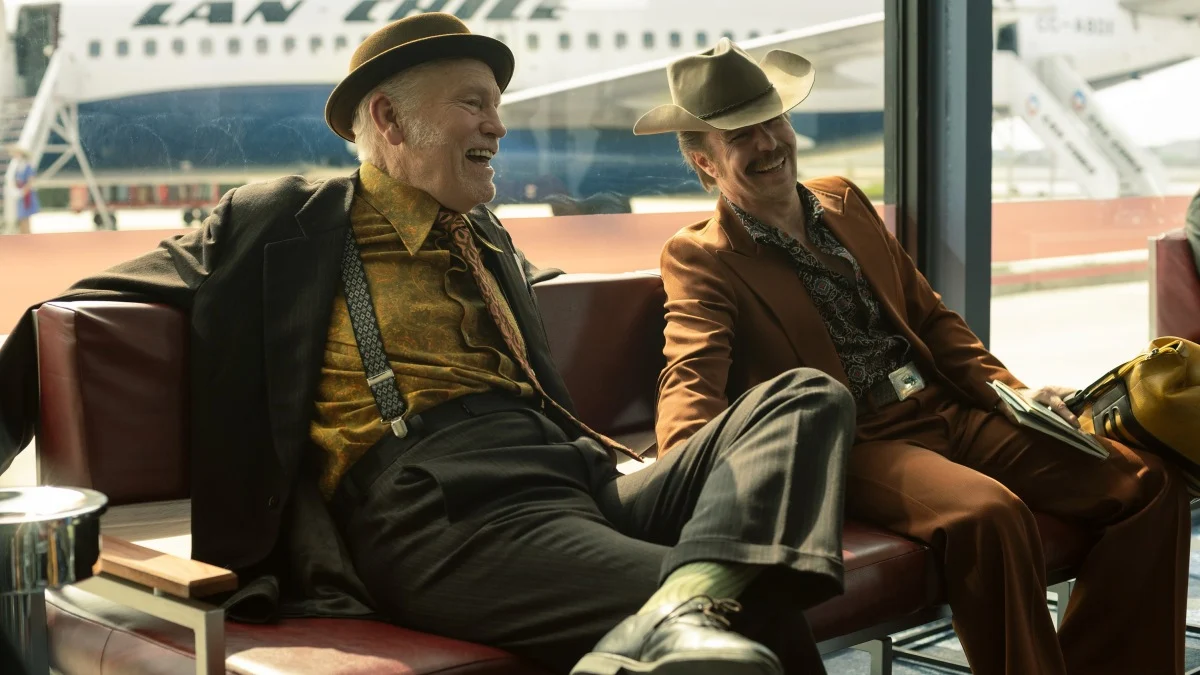
    Martin McDonagh’s Wild Horse Nine arrives at the Toronto International Film Festival carrying the unmistakable DNA of its creator—the blisteringly macabre humor forged in The Pillowman, In Bruges, Seven Psychopaths, Three Billboards Outside Ebbing, Missouri, and The Banshees of Inisherin. As a comedy, it works fine. As a Martin McDonagh comedy, it feels deliberately redundant, and that redundancy may be precisely the point. The premise echoes In Bruges with surgical precision: two contract killers with an uneasy friendship, a picturesque vacation spot, and a deadly outcome looming. This time, the hitmen are CIA agents Chris (John Malkovich) and Lee (Sam Rockwell), dispatched to Santiago shortly before the 1973 Chilean coup d’état to destabilize the newly elected government before killing time on Easter Island, because Chris wants to see “the big heads.”

    The Ugly American as Tragic Clown

    Chris is unapologetically an Ugly American—loud, obnoxious, and breathtakingly cynical. When tourists urge him to call the island’s giant stone statues “moai,” the name the Indigenous people gave them, he scoffs. When two female college students express excitement over their women’s rights march, he breezily informs them their efforts will be for naught because of a U.S. operation that will topple their president. “Your country is gonna get fucked,” he tells them. The characterization mirrors the racist cop Rockwell played in Three Billboards, with one critical exception: Chris is no fool. His cynicism stems from knowing too much—so much that his chief (Steve Buscemi) is ready to silence him permanently. Both men know this trip is likely Chris’s last. Within their half-hearted tourism, Chris reflects on a lifetime of murders with not sadness but a shrugging resignation that Malkovich sculpts into a darkly funny portrayal. He becomes beguiled by wild horses roaming the lush landscape and attempts to flirt with one of the coeds he outraged earlier, his meanderings deepening the film through repetition rather than mere reiteration.

    Echoes Across Filmographies

    The repetition in Wild Horse Nine operates on multiple meta-textual levels. This marks Rockwell’s third McDonagh film following Seven Psychopaths and Three Billboards (he also starred in McDonagh’s 2010 Broadway play A Behanding in Spokane). More specifically, Rockwell previously played a swaggering, gallows-humored CIA operative in George Clooney’s Confessions of a Dangerous Mind. Malkovich, meanwhile, has not just played a CIA employee before—in both Wild Horse Nine and the Coen Brothers’ Burn After Reading, he portrays an agent looking to turn top-secret exploits into a memoir. Most joltingly, as Lee tries to protect Chris from an increasingly hostile world, cinephiles may recall Of Mice and Men, in which Malkovich played Lennie in the 1992 adaptation directed by and co-starring Gary Sinise. Buscemi’s furious CIA chief, Parker Posey as Lee’s glibly unfaithful wife, and Tom Waits snarling from Monument Valley’s depths all carry their own filmographic ghosts. Whether these resonances are intentional or the viewer’s own pattern-seeking, they reinforce the film’s thesis: history keeps repeating, for better or mostly worse.

    Craft and Release

    Ben Davis’s cinematography is gorgeous, framing these gruff conquerors in an untamed surroundings that mocks their mundane ambitions for control. Rockwell delivers greasy suavity in McDonagh’s signature caustic dialogue. Buscemi, Posey, and Waits pop with crackling outrage. Mariana di Girolamo and Ailín Salas bring fresh-faced exuberance that proves a terrific foil to Malkovich’s world-weariness. Malkovich himself is wickedly compelling as an infuriatingly blasé killer—his resignation expressed not through dull sullenness but an intoxicating levity, as if he can feel the fall coming and is all too happy to lift his wings. Wild Horse Nine urges audiences to look back on the filmographies of its makers just as Chris looks back on his life, understanding how history repeats while acknowledging there might still be something worthwhile in the present moment. The film opens in theaters on November 6.

    Why This Matters

    Wild Horse Nine represents a significant evolution in McDonagh’s filmography: his first period political thriller, his first Latin American setting, and his most explicit engagement with American imperial history. By casting actors whose previous roles explicitly echo their current ones, McDonagh transforms casting into commentary—suggesting that performers, like nations and spies, are trapped in cycles of repetition. The Chilean coup backdrop, still raw in collective memory, grounds the meta-textual play in real atrocity. The November 6 theatrical release positions it squarely in awards season conversation, where McDonagh’s previous work has excelled. For audiences, the film offers both accessible dark comedy and a dense intertextual puzzle rewarding multiple viewings.

    Frequently Asked Questions

    When and where can I watch Wild Horse Nine?
    The film premiered at the Toronto International Film Festival and opens in theaters on November 6.
    How does Wild Horse Nine connect to Martin McDonagh’s previous films?
    The premise structurally echoes In Bruges (two killers, a vacation spot, impending death), while casting creates deliberate resonances: Rockwell’s third McDonagh collaboration, Malkovich echoing his Burn After Reading CIA memoirist, and Rockwell recalling his Confessions of a Dangerous Mind operative.
    What historical event frames the story?
    The film is set shortly before the September 11, 1973 Chilean coup d’état that overthrew democratically elected President Salvador Allende, with the CIA agents in Santiago to destabilize the government before a getaway to Easter Island.
  • Babies Review: Child-Free Couples Finally Have a Comedy That Doesn’t Make Them a Punchline

    Babies Review: Child-Free Couples Finally Have a Comedy That Doesn’t Make Them a Punchline

    Key Highlights

    • Lauren Miller Rogen’s directorial debut Babies world premiered at the Toronto International Film Festival, starring Anna Kendrick and Seth Rogen as a child-free couple confronting societal pressure and personal ambivalence about parenthood.
    • The comedy balances raunchy humor with a grounded subplot about caring for a parent with dementia, challenging the stereotype that child-free adults lack significant caregiving responsibilities.
    • Rather than succumbing to external expectations from friends or family, the central couple’s decision about children emerges from their own values, offering rare on-screen representation of child-free life without regret or tragedy.

    The Premise: A Comedy Born from Real-Life Pressure

    “When are you going to put a baby in there?!” This was the question an acquaintance asked me as she grabbed my belly with both of her hands and and shook it, while a gaggle of mothers and grandmothers smiled on approvingly. That was just the first time this happened. While aggressive pressure to become a parent didn’t always involve a near-stranger rattling my vacant uterus, it was always uncomfortable.

    Thankfully, Babies has come for those of us who have endured the bizarre barrage of personal questions that come from the heteronormative assumption that all married couples must procreate. Written and directed by Lauren Miller Rogen, and co-starring her husband Seth Rogen opposite Anna Kendrick, this hilarious comedy explores what it means to be the only child-free couple left when all your friends have gone the breeder route.

    Meta Context and Creative Pedigree

    From For A Good Time, Call… to Babies

    Babies carries a can’t-miss meta context. In 2021, Miller Rogen co-wrote the sidesplitting buddy comedy For A Good Time, Call… in which she starred with Ari Graynor as two twenty-somethings running a phone sex line to make a living in New York City. First off, if you missed that movie, seek it out. It’s one of the funniest buddy comedies ever made, and criminally underseen. Secondly, Miller Rogen takes the wit and irreverence shown in that funny film and channels it into an exploration of what it means to consider the kids question.

    Life Imitating Art

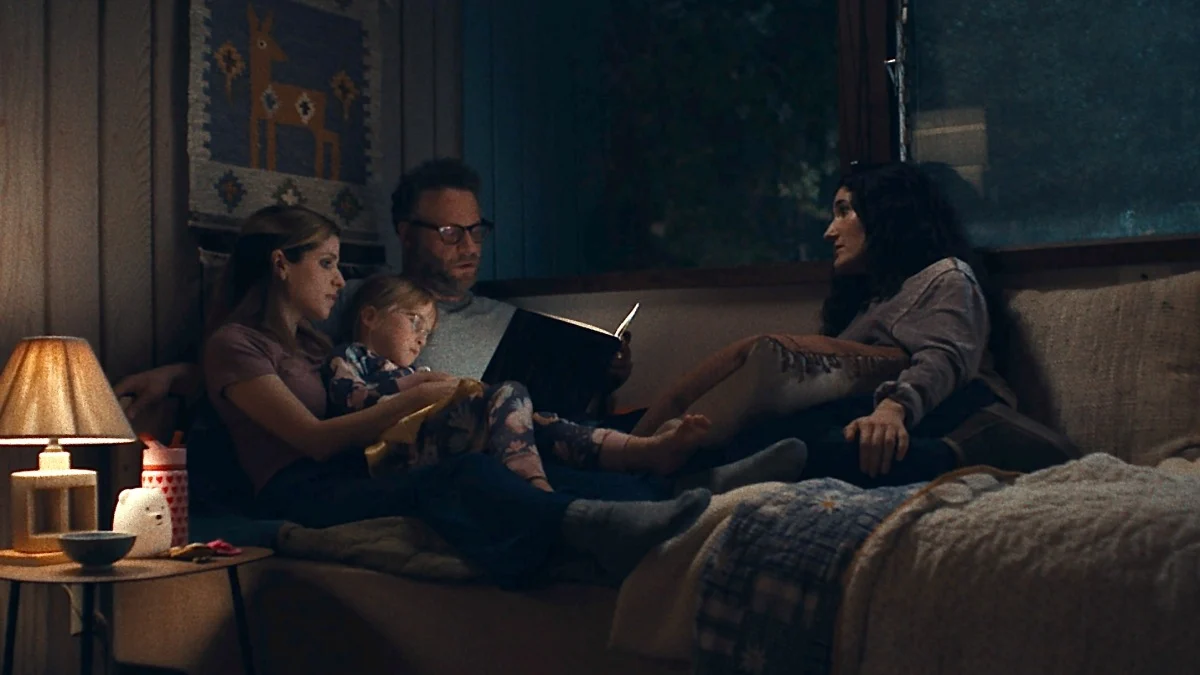
    Kendrick stars as the writer/director’s alter ego, Annie, while Seth Rogen plays the happy-go-lucky husband, Aaron. Fans of the Rogens will recognize some similarities, as Babies‘ central couple is child-free, loves making pottery, and smoking weed. Plus, Annie, like Miller Rogen, has a mother who’s suffering from debilitating dementia. Knowing any or all of this will enrich Babies, as it gives Annie and Aaron’s inner-monologue narrations an inherently more personal feel.

    Dual Portraits of Motherhood: The Dream and the Nightmare

    Don’t be mistaken. Babies isn’t taking the Knocked Up route, splitting the focus between Rogen’s chuckling dude and his anxious partner. Most of the movie is firmly on Annie, revealing how she’s trying to build her own art gallery while juggling the needs of her friends, who are both moms with a lot going on.

    Blissful Becky (Issa Rae) seems initially like a poster girl for moms, radiant while pregnant, adored by her husband (Zach Cherry), and patiently balancing the demands of her daughters with the rigors of her work. Meanwhile, high-strung Eliza (Kate Berlant) is a real estate agent with a quirky kiddo that she shares with a mirthful manchild (Dan Stevens) that she’s steadily growing to hate. With these two figures, Miller Rogen deftly sets up the dream of motherhood — and a nightmare of it. What if she can’t live up to the example of the former? What if becoming the latter would destroy her relationship with her partner?

    Test-Driving Parenthood: Babysitting as Social Experiment

    Annie and Aaron’s ambivalence about parenthood is tested when they’re trusted to babysit a friend’s kid for months. It becomes like a sampling of parenthood, which they respond to with a mix of amusement, irritation, and horror. But whether they’re learning the quirks of potty training or the pleasures of playtime, Babies keeps things fun.

    When Comedy Gets Serious: The Elder Care Subplot

    Dementia Care as Counter-Narrative

    Babies gets smartly serious. Through a running inner monologue, Annie expresses to the audience the less-than-socially acceptable fears and frustrations about motherhood. Miller Rogen’s terrific script brings bite and humanity to her humorous heroine, making for side-splitting observations. However, as Annie visits with her folks, Babies steps into another challenging part of growing up: caring for elderly parents.

    Annie’s mother is no longer ambulatory, can’t speak or eat on her own. She’s cared for by her husband (David Straitharn) and a health aide. This subplot swiftly dispels the notion that the child-free have no substantial personal responsibilities. Plus, these scenes — tender, tense, and occasionally heart-breaking — suggest how what was right for our parents might not be right for us, and vice versa. Heart-to-heart conversations with her dad push Annie to consider not only what she wants for her life, but what he needs for his. And in this collision, both grow closer, even in the face of grief.

    Tone and Resolution: Absurdity Meets Meaning

    This thoughtful dose of drama amid poop jokes and comically high-energy crashouts gives Babies an added dimension that reflects how even the silliest moments can have deep meaning, while defining, dramatic moments can also be absurd. This awareness makes Babies feel like a breath of fresh air, as the Rogens and their ensemble of rightly celebrated actors refuse to make a punchline out of the desires of the child-free.

    This all leads to a climax that’s silly and satisfying. What Aaron and Annie choose won’t be determined by pressure of friends or family, or the fears of what might come. And in that, this comedy is not just terrifically entertaining and heartwarming, but also a welcomed representation of living child-free without regrets.

    Why This Matters

    Babies arrives at a cultural moment when reproductive autonomy and the validity of child-free lives are increasingly visible in public discourse, yet remain underrepresented in mainstream cinema. By centering a child-free couple whose narrative arc isn’t defined by tragedy, infertility, or eventual capitulation to pressure, the film expands the emotional vocabulary available to audiences navigating similar choices. The dementia-care subplot simultaneously addresses the looming “elder care crisis” facing millennials and Gen X, reframing caregiving as a universal human experience rather than one exclusive to parents. Premiering at the Toronto International Film Festival signals industry recognition for a comedy that refuses to flatten its characters into archetypes, instead letting Anna Kendrick’s Annie occupy the messy, funny, contradictory space where most real decisions are made. For viewers, the film offers both catharsis and a rare cinematic mirror: proof that a life chosen deliberately — not by default — can be the punchline and the victory.

    Frequently Asked Questions

    Who stars in Babies and who directed it?
    The film is written and directed by Lauren Miller Rogen. Anna Kendrick stars as Annie, Seth Rogen as Aaron, with Issa Rae as Becky, Kate Berlant as Eliza, Dan Stevens as Eliza’s partner, Zach Cherry as Becky’s husband, and David Straitharn as Annie’s father.
    Where did Babies premiere?
    Babies had its world premiere at the Toronto International Film Festival (TIFF).
    What are the main themes of Babies?
    The film explores societal pressure on married couples to have children, the ambivalence of reproductive choice, the realities of dementia caregiving, friendship dynamics across diverging life paths, and the validity of a child-free life chosen without regret.
  • A Talent for Murder Review: Alden Ehrenreich Delivers Sexy Menace in Patricia Highsmith-Inspired Thriller

    A Talent for Murder Review: Alden Ehrenreich Delivers Sexy Menace in Patricia Highsmith-Inspired Thriller

    Key Highlights

    • Helen Mirren delivers a “deranged delight” as Patricia Highsmith in A Talent For Murder, opening in theaters October 23 after its Toronto International Film Festival premiere.
    • The film, directed by Anton Corbijn and adapted by Joanna Murray-Smith from her play Switzerland, imagines a fictional 1995 encounter between the reclusive author and an ambitious young fan, Edward Ridgeway (Alden Ehrenreich).
    • Co-starring Olivia Cooke as heiress Clementine and Juliet Stevenson as a miserly aunt, the thriller blends Highsmith’s signature themes of sex, deception, and murder with meta-commentary on her creative process.

    A Literary Thriller Comes to Life

    Patricia Highsmith’s shadow looms large over cinema. From Carol and Deep Water to Strangers on a Train and The Talented Mr. Ripley, her “lurid tales of sex, deception, and murder” have inspired filmmakers for decades. Now, with A Talent For Murder, the author herself steps into the frame as a character in the very genre she defined. Adapted for the screen by Australian playwright Joanna Murray-Smith from her own stage play Switzerland, the film posits a tantalizing what-if: what happens when Highsmith’s biggest fan secures a meeting with his idol?

    The setup unfolds on a train cutting through the Swiss Alps—a deliberate nod to Strangers on a Train. Edward Ridgeway (Tony winner Alden Ehrenreich) cuts a figure seemingly ripped from a Ripley novel’s opening chapter: “a handsome young man with carefully coiffed dark hair, a strong jaw, a pressed shirt, and polished glasses, but little poise.” Opposite him sits Clementine Harriet Balfour (Olivia Cooke), “pretty, with a bouncy brunette bob, and a fashion sense that hints at an old-money family and independent ambitions.” Their meeting in a small Swiss village—where she visits a miserly dowager aunt (Juliet Stevenson) and he carries a contract for a sixth Ripley novel—springs a trap that director Anton Corbijn loads with glittering promise. “A handsome couple flirts, while wealth and opportunity glitter on the horizon. What might they do to get there?”

    Mirren’s Commanding Performance as Highsmith

    Enter Helen Mirren. The English Dame has traversed Shakespeare, Prime Suspect, Queen Elizabeth II, a Fast and Furious villain, and most recently a sultry spy in The Thursday Murder Club. But her Highsmith carries “no lightness.” Set in 1995 atop a Swiss mountain, this version of the heralded author has curdled into an eccentric recluse, dogged by rumors she “poisoned a neighbor’s dog for barking too much, and to have driven an American man so mad he fled her home while only wearing his pajamas.”

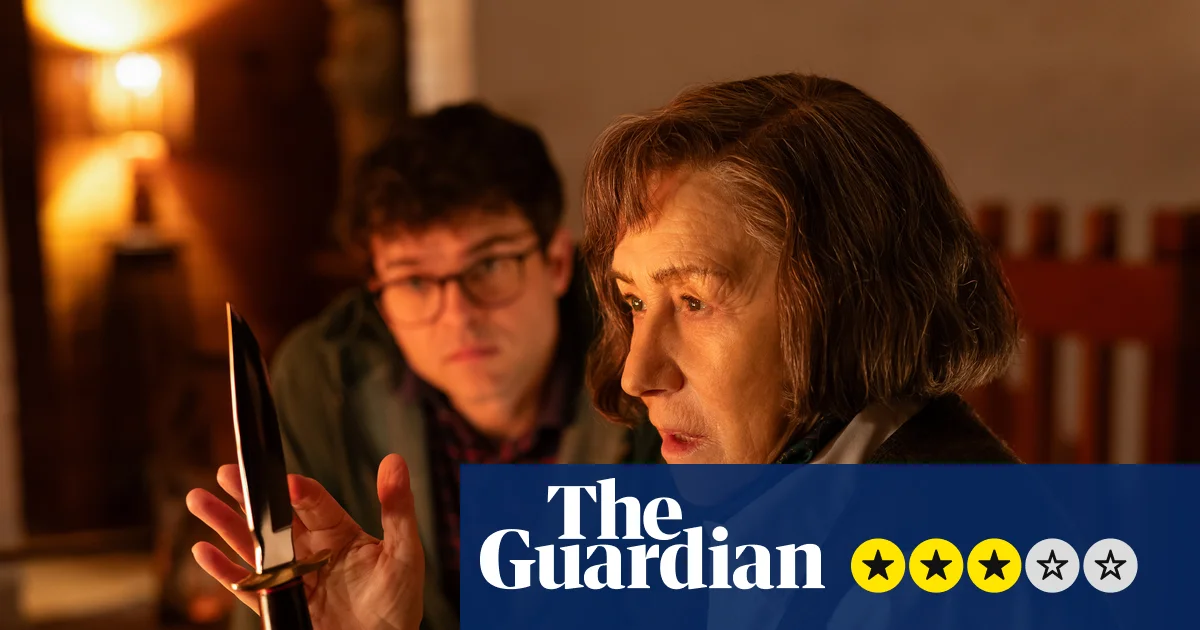
    Costumed in “men’s slacks, a crisp men’s dress shirt, a cravat and vest, paired with a fuck-off bob,” Mirren’s Highsmith imposes herself immediately—introduced ironing a shirt. When Edward arrives eager with compliments, gifts, and talk of opportunity, “she regards him with such scorching disdain the audience at the Toronto International Film Festival gasped and guffawed.” The screenplay replicates “the ruthless wit of the Ripley novels,” and Mirren “makes the most of every line, savoring the sharp barbs.” Her performance channels a “snarling cruelty” reminiscent of Tilda Swinton in Problemista—delicious in its precision.

    Ehrenreich’s Slippery Anti-Hero

    Ehrenreich, fresh off a Tony-winning Broadway turn in Becky Shaw, proves an ideal foil. His Edward shares DNA with that stage character: “Young men who’ve come from a family with no means and no reputation worth a damn, who both cozy up to a wealthy family, determined not just to enter their world but to rule it.” Visually, he echoes Matt Damon’s Ripley from the 1999 adaptation—”His hair floppy but fashionable. His smile earnest but awkward. The eyeglasses, a perfect twin.” This mirroring feels intentional, prodding Highsmith fans to wonder whether this eager climber harbors “the root of evil.”

    Smartly, the script avoids painting Edward as a rube. He arrives prepared to impress, even “tantalizing her with twisted tales from his past, and the possibility of criminally corrupting him.” Enticed, Highsmith collaborates with him on a murder mystery about a blue-collar boy seducing an old-money girl to seize her family’s fortune. Their thought experiment bleeds into reality as Highsmith haunts his nights and steers him toward treating the reckless Clementine as source material. From there, the film “blurs what’s real and imagined in pursuit of bringing fresh blood to Highsmith’s typewriter.”

    A Trio of Twisted Desires

    Ehrenreich burns on two registers. As Edward, he “trembles with insecurity, particularly in a scene where he’s delicately called out by an Irish lady (Brid Brennan), who spots him as an outsider from his shoes alone.” In the imagined novel sequences, he acquires “the smoothness of Ripley, his confidence edged with a misanthropic disgust at all who aren’t as clever and calculating as he.” Cooke, despite a slimmer role, refuses to be outshone—whether playing “a yearning virgin” in the manuscript or “a spoiled rich girl looking for a cheap thrill” in reality, she brings “a full-blooded verve to this girl.”

    Together, the trio weaves “a tale of sex, death, and desire that touches on the best of Highsmith’s works, without feeling like a shallow retread of them.” The film plays “like a superb fan fiction, imagining the inner world and grisly desires of the seminal author, without idolizing her or whitewashing her well-documented defects.” As the review concludes: “A Talent For Murder is darkly funny, freshly thrilling, and unrepentantly seductive. It’s not a Ripley sequel, but it’s damn close.“

    Why This Matters

    A Talent For Murder arrives at a fertile moment for Highsmith adaptations. The author’s work has sustained a remarkable cinematic afterlife—from Hitchcock’s Strangers on a Train (1951) and Clément’s Purple Noon (1960) to Minghella’s The Talented Mr. Ripley (1999), Haynes’s Carol (2015), and the recent Showtime series Ripley (2024). Corbijn, a photographer-turned-filmmaker known for Control (2007), The American (2010), and Life (2015), brings a visual rigor suited to Highsmith’s precise, unsettling prose. Murray-Smith’s adaptation of her own play ensures theatrical tension translates to screen. The TIFF premiere positions the film for awards-season conversation, particularly for Mirren—already an Oscar, Emmy, and Tony winner—whose transformation into the misanthropic genius could earn her another nomination. The October 23 theatrical release counters streaming saturation, betting on adult audiences craving literary thrillers.

    Frequently Asked Questions

    When and where can I watch A Talent For Murder?
    The film opens in theaters on October 23, 2025, following its world premiere at the Toronto International Film Festival.
    Is this a sequel to The Talented Mr. Ripley or the Ripley series?
    No. The film is an original meta-fiction imagining a 1995 encounter between Patricia Highsmith (Helen Mirren) and a fictional aspiring writer, Edward Ridgeway (Alden Ehrenreich). It engages with Highsmith’s themes and the Ripley mythology but does not continue Tom Ripley’s story.
    Who wrote and directed the film?
    Anton Corbijn directed from a screenplay by Joanna Murray-Smith, adapted from her own play Switzerland.
  • A Talent for Murder Review: Helen Mirren Chills as Viperous Patricia Highsmith in Uneven Thriller at Toronto Film Festival 2026

    A Talent for Murder Review: Helen Mirren Chills as Viperous Patricia Highsmith in Uneven Thriller at Toronto Film Festival 2026

    Helen Mirren and Alden Ehrenreich Star in Patricia Highsmith Thriller A Talent for Murder

    The pandemic sparked a wave of contained chamber-piece thrillers—films where a handful of characters gather in remote settings and dialogue drives the tension. While titles like Kevin Williamson’s Sick stood out and Sam Levinson’s Malcolm & Marie disappointed, few matched the ingenuity of pre-pandemic classics such as Sleuth and Deathtrap. Both were stage adaptations starring Michael Caine, built on twisty, talky plots indebted to Agatha Christie’s legacy. A Talent for Murder, premiering at the Toronto International Film Festival, attempts to revive that high-wire formula with a fictionalized Patricia Highsmith at its center.

    A Highsmith Homage Built on Performance

    Helen Mirren plays the notoriously cantankerous, bigoted author in 1995, drinking herself toward death in a remote Swiss chalet surrounded by snails and a barely seen cat. Alden Ehrenreich is Edward, an ambitious New York editor dispatched to coax her into writing another Tom Ripley novel. Highsmith refuses to become a “hooker for hire” for an “underling,” but eventually proposes a test: if Edward can help her plot a worthy murder, she’ll resurrect Ripley.

    The script, adapted by Joanna Murray-Smith from her own play, then splits into three strands. Ehrenreich’s character invents a sleek American preying on a wealthy heiress (Olivia Cooke) in Rome—a fantasy sparked by a woman he met on the train—while simultaneously pursuing the real woman. This structure makes Ehrenreich the true lead, with Mirren off-screen for long stretches.

    Sharp Performances, Uneven Writing

    Mirren delivers a hoot of a performance, relishing a rare substantial challenge. Ehrenreich continues his post-Star Wars pivot into darker, more complex roles—following turns in Fair Play, Weapons, and the stage play Becky Shaw—showcasing a charm that curdles into something unknowable and unsettling. He reads like a natural audition for the inevitable Ripley reboot.

    Yet the writing rarely matches the actors’ caliber. Highsmith’s worldview is hateful but expressed in broadly obvious lines: “Happiness is overrated,” she says like an emo teen. The film softens her vilest views, and the invented murder plot feels too generic to bear Highsmith’s name. The meta-narrative blurs fact and fiction, but without enough back-and-forth to make the creative process compelling.

    Direction and Atmosphere

    Director Anton Corbijn, returning to narrative features after 2015’s Life, captures the glossy allure of the fake Ripley sequences in Italy but struggles to animate Highsmith’s Swiss home. Despite memorabilia and an armoury of weapons, the location remains stagey and atmosphere-free—a contrast to the meticulous interior work in recent chamber pieces like Olivia Wilde’s The Invite.

    Twists That Tug, Not Pull

    The film leads viewers down a road of reversals, but the rug is never truly pulled—only gently tugged. Knives are plunged, drinks spiked, and guns fired, yet A Talent for Murder lacks real blood. Mirren and Ehrenreich form a formidably talented duo, but they aren’t given anything truly vicious to work with.

    A Talent for Murder opens in U.S. cinemas on October 23, in the U.K. on November 20, and in Australia on December 26.

  • A Long Winter Review: Fred Hechinger Leads Beautiful, Unmissable Queer Drama

    A Long Winter Review: Fred Hechinger Leads Beautiful, Unmissable Queer Drama

    Andrew Haigh’s ‘A Long Winter’ Premieres at TIFF: A Quietly Queer Coming-of-Age Story Set in 1950s Colorado

    English writer-director Andrew Haigh, known for Weekend and All of Us Strangers, returns with A Long Winter, a film that explores the heartbreak of realizing our parents aren’t who we imagined—and how one might grow from that agony. The film, which centers on a quietly queer protagonist, had its Canadian premiere at the Toronto International Film Festival (TIFF).

    Plot Adapted from Colm Tóibín’s Short Story

    Adapted from Colm Tóibín’s short story of the same name, A Long Winter unfolds in the brutally cold mountains of Colorado during the early 1950s. Fred Hechinger (Fear Street) stars as Mike, who enjoys a blissful existence maintaining the house and farm animals alongside his younger brother (Kit Connor of Heartstopper), his mother Louise (Caitríona Balfe of Outlander), and his father Lester (Ebon Moss-Bachrach of The Bear).

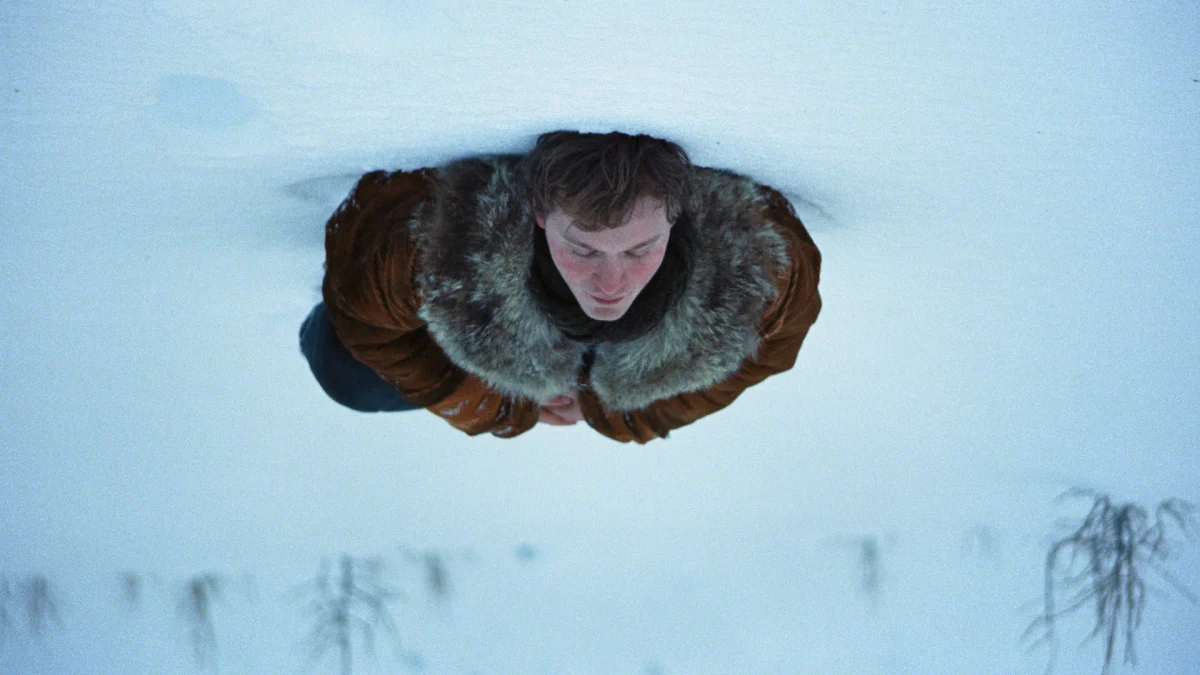
    That stability fractures when Mike’s brother takes a job far away. Mike witnesses another side of his parents—one tarnished by regret and recrimination. As another winter approaches, Louise’s smiles turn to snarls. Her empty water glass reeks of alcohol, and her fury at her hard-headed husband boils over. One day, she wanders off with their dog Sandy. Hours later, a blizzard turns the familiar hills into treacherous, frigid white.

    For months, Mike searches for her—in the not-so-near town, an abandoned mine, the home of his posh uncle (Martin Freeman), and again and again across the long, blank expanse of the mountain. In his search, he reflects and comes to a better understanding of who his mother was, who his father is, and what he wants for his own life. Along the way, he forms a connection with Jimmy (D’Pharaoh Woon-A-Tai of Reservation Dogs), an abandoned teen Lester brings on to do the “women’s work” on the property that neither he nor his son has any talent for.

    Fred Hechinger Delivers a Career-Best Performance

    Hechinger first caught attention in 2021 as the chaotically charismatic Simon in Fear Street: Part One – 1994, bringing Matthew Lillard vibes with unapologetically gawky confidence and sharp comedic timing. He earned praise as Quinn on White Lotus Season 1, then appeared in a string of diverse 2024 roles: a doting grandson in Thelma, a friendly face amid abusive staff in Nickel Boys, a villain opposite Joseph Quinn in Gladiator II, and Dmitri “Chameleon” Smerdyakov in Kraven The Hunter.

    In A Long Winter, Hechinger packs away his goofy grin for a restrained yet brilliantly alive performance. In the first act, Mike recounts missing home while away for contracted work, his voice carrying a folksy touch and simple word choice. But after weeks without his mother and months without his brother, with Jimmy in the bed beside him, Mike’s accent softens and he uses words like “cope”—feeling out of place in his father’s idea of mountain masculinity. These diction shifts reflect how Mike’s vision for himself becomes less reliant on his father’s example, even as his is the only one around.

    Supporting Cast and Directorial Comparisons

    Moss-Bachrach’s portrayal of the tough guy father frustrates at times; his bluster feels flaccid, making the years his wife submitted to his demands perplexing. In scenes facing off with Hechinger, the film struggles when Moss-Bachrach cannot match the younger actor’s onscreen intensity, even though Hechinger plays openness rather than rage.

    Keen performances by Balfe, Freeman, and Woon-A-Tai bolster the vision of this world—cold but wondrous. Hechinger, previously a stellar supporting player, proves his leading man chops by shouldering the film in scenes of delicate dialogue, earnest confrontation, and solitary moments against the wilderness that has likely consumed his lost mother.

    A Sister Film to ‘All of Us Strangers’

    A Long Winter works as a sister film to All of Us Strangers. Both center on a gay man learning to trust himself and his desire while making sense of who his parents are or were. Where All of Us Strangers encapsulates the first stage of such scary journeys with ghost story elements that make it a soft horror movie, A Long Winter‘s arc is less rigorous because Mike—unlike Andrew Scott’s hero—is not alone.

    All of Us Strangers plays like a haunted house movie because of its protagonist’s isolation. While Haigh brings some surreal and spooky elements to A Long Winter, it isn’t horror. Instead, he lets the reality of a scene bend to reflect the yearning of his hero, who’s coming to realize that death—like winter—is a part of life that is unavoidable but not inherently bad.

    There’s a profound maturity in Haigh’s latest as he trusts Hechinger to infuse mood and growth without genre flourishes or the actor’s signature mirth. It is not a tearjerker, but a rapturous and meditative look at growing up and growing into ourselves.

  • ‘Bitter Christmas’ Review: Pedro Almodóvar Returns with Cerebral, Semi-Autobiographical Drama

    ‘Bitter Christmas’ Review: Pedro Almodóvar Returns with Cerebral, Semi-Autobiographical Drama

    Pedro Almodóvar’s ‘Bitter Christmas’ Explores Artistic Cannibalism at TIFF 2026

    Spanish auteur Pedro Almodóvar returns to semi-autobiographical territory with Bitter Christmas, a companion piece to his 2019 film Pain and Glory. The film premiered at the Toronto International Film Festival ahead of a November theatrical release in the United States.

    Parallel Narratives Across Two Decades

    Almodóvar, who wrote and directed the feature, structures the story across two timelines. Leonardo Sbaraglia portrays Raúl, a filmmaker seeking inspiration for a new screenplay in 2025. His creative circle includes younger partner Santi (Quim Gutiérrez) and longtime manager Mónica (Aitana Sánchez-Gijón).

    Interwoven with Raúl’s journey is the fictional screenplay he writes, set in 2004. There, once-revered art-house director Elsa (Bárbara Lennie) attempts to pivot from commercials back to screenwriting. Both protagonists navigate May-December romances and draw creative fuel from a friend’s personal tragedy, raising questions about artistic exploitation.

    Visual Style and Ensemble Performances

    The film maintains Almodóvar’s signature aesthetic — vivid color palettes dominated by reds, magentas, golds, and ambers. Production design emphasizes lived-in textures: thoughtfully organized bookshelves, elegant illustrations, and a women’s strip club blending chic and sleazy elements.

    Sbaraglia delivers a nuanced performance as Raúl, conveying passion and low-burning frustration. Lennie’s Elsa embodies the classic Almodóvar heroine — strong-willed, defiant, and ruthlessly devoted to her art. The younger partners, Santi and Bonifacio (Patrick Criado), are characterized by congeniality and sex appeal, though Gutiérrez brings more depth to Santi than Criado’s Bonifacio receives.

    Mónica Emerges as Central Figure

    Aitana Sánchez-Gijón’s Mónica ultimately commands the film’s most compelling arc. Initially presented as the devoted manager handling every logistical detail for the sensitive artist, she unexpectedly requests a sabbatical — unusual for a clear workaholic. Her revelation about a friend’s devastating personal loss mirrors themes from Almodóvar’s previous film, The Room Next Door.

    The narrative ignites when Raúl immediately repurposes this confidence for his fiction, both in his screenplay and his life. A garden café confrontation where Mónica challenges Raúl’s selfishness becomes the film’s emotional peak, arguing for privacy and a friend’s dignity.

    Restraint and Unresolved Tension

    Despite compelling parallel stories, both Raúl and Elsa often feel subdued, observing their lives from a distance rather than fully inhabiting them. This restraint may be intentional, but it creates a sense of the film holding its breath. When emotional release arrives through Mónica’s confrontation, the movie ends shortly after without satisfying resolution — a delay perhaps reserved for Almodóvar’s next project.

    Meta-Commentary and Legacy Context

    At one point, Raúl acknowledges that even a minor work from him will loom large for devotees — a moment that reads as both self-awareness and preemptive defense. For general audiences, Bitter Christmas may feel slight. For Almodóvar scholars, it functions as a Rosetta stone illuminating the filmmaker’s broader body of work and his ongoing negotiation with artistic cannibalism.

    Release Information

    Bitter Christmas opens in New York City and Los Angeles on November 13 before expanding nationwide on November 25.

  • Back in Black Review: Christopher Walken Delivers Hilarious Performance as Quirky Undertaker

    Back in Black Review: Christopher Walken Delivers Hilarious Performance as Quirky Undertaker

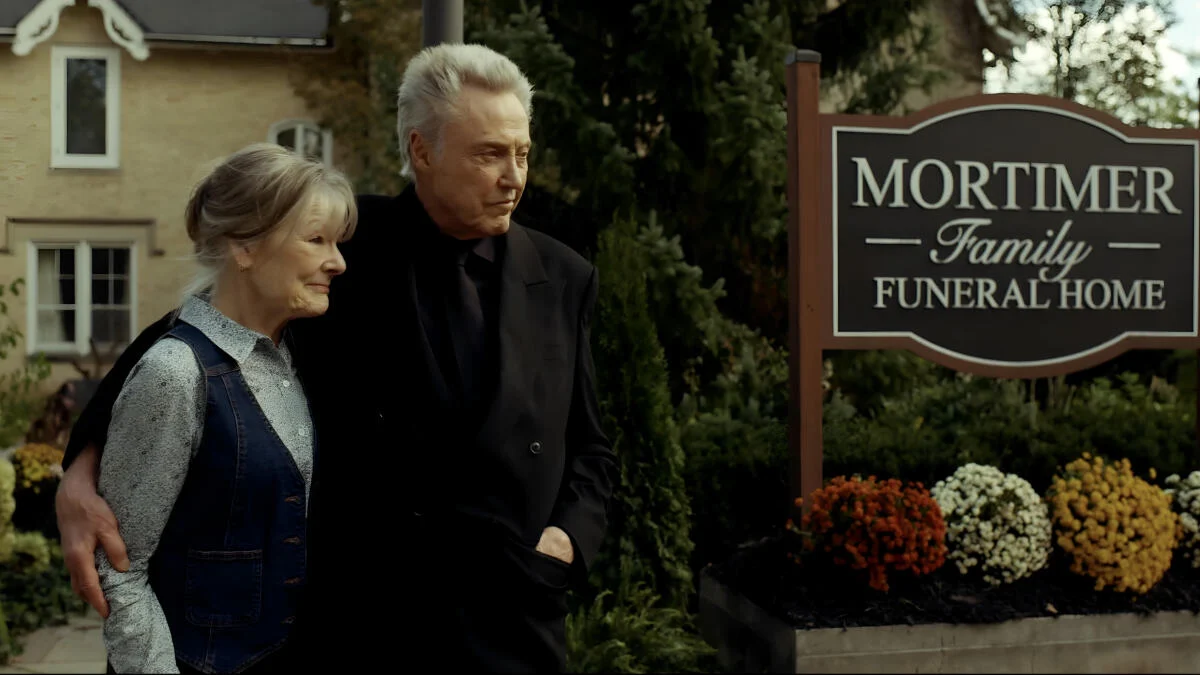
    Christopher Walken delivers a performance only he could pull off in Back in Black, the off-kilter dark comedy that premiered at the Toronto International Film Festival. Written by Ron Murphy and Nick Torokvei and directed by Murphy, the film stars Walken as Clyde Mortimer, an undertaker from a long line of undertakers who runs Mortimer’s Family Funeral Home alongside his chipper wife Autumn (Jane Curtin) and their orphaned granddaughter Sam (Ella Ballentine).

    A Funeral Home in Crisis

    Business is bad in their charming small town because, as Clyde furiously points out, no one is dying lately. He insists that no one dying is no way to live! The COVID-19 pandemic should have been a boom time for morticians, but the sharp decline in in-person gatherings prevented that windfall. Enter Sam with a plan—and a handy screwdriver.

    Dexter Meets Cozy Crime

    The opening shot establishes the tone: Sam uses a screwdriver to build a coffin, a telling image for what follows. With the family facing financial ruin, Sam employs her engineering know-how to strategically loosen screws around town, orchestrating a series of fatal accidents at grocery stores, construction sites, and motel swimming pools. To the average observer, it looks like a string of bad luck. But Deputy Donna (Louise Lambert) suspects otherwise, even if her sheriff (Tony Nappo) dismisses her theory.

    Silent Protagonist, Loud Heart

    The cat-and-mouse element remains a subplot. The main story centers on Sam’s relationship with her grandparents and the romances sparked by the first murder victim’s funeral. Sam meets Kevin (Giamo Alfredi), a needy nephew of the deceased, and Charlotte (Watson Rose), a raven-haired beauty who offers to help prepare the dead.

    Sam doesn’t speak. She is the Teller to her garrulous grandfather’s Penn. Ballentine proves a masterful scene partner, using a coyly comic series of countenances to express excitement, doubt, consternation, and pleasure. Walken repeatedly tells her, Shut up. Far from a denouncement, it comes across as a playful I see you. Sam doesn’t need words for her grandfather to know her heart, even if he doesn’t know her secrets.

    No Comforting Compromise

    Murphy refuses to make a joke of murder. Unlike Dexter, where the anti-hero targets other killers, Back in Black offers no such moral safety net. Sam kills whoever is convenient—good people included. The first victim, Dale (Stuart Hughes), is a grocery store manager kind to employees and customers alike. When a sabotaged lock traps him in a walk-in freezer, the audience watches him realize he’s going to die—no colorful hues or playful production design soften the blow, as in Bryan Fuller’s Pushing Daisies.

    Subsequent deaths bring loved ones lamenting their losses in front of Sam, unaware of her role. Each kill forces laughter and pain simultaneously, challenging viewers through a morally complicated anti-hero they might root for even while shocked and appalled.

    Feel-Good Tone, Deadly Consequences

    Despite deadly content, Murphy maintains a small-town feel-good movie tone that makes every kill freshly shocking. The collision of wicked and nice creates a film that is delightfully odd, unapologetically macabre, and a hell of a good time. Sam’s silent, doll-faced killer recalls Mia Wasikowska in Park Chan-wook’s Stoker, but Back in Black is neither as dark nor as dry.

    Back in Black was reviewed out of the Toronto International Film Festival. The movie’s theatrical release date is TBD.

  • Courteney Cox Remembers Hayden Panettiere as Fun, Happy, and Smart

    Courteney Cox Remembers Hayden Panettiere as Fun, Happy, and Smart

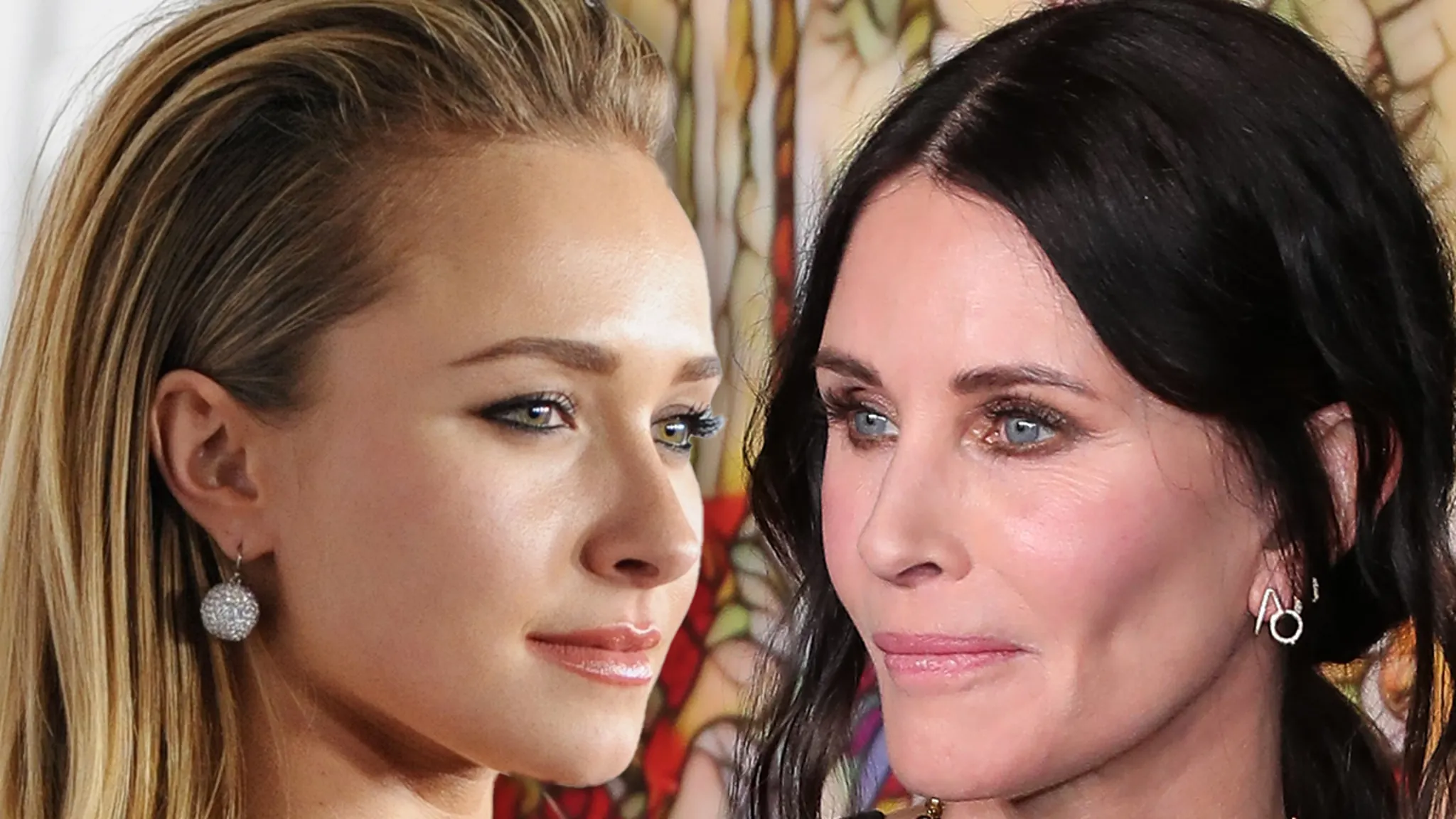
    Courteney Cox is reflecting on her time working alongside Scream franchise costar Hayden Panettiere, sharing memories of their collaboration following reports of Panettiere’s passing last month. Cox spoke with Entertainment Weekly at the Toronto International Film Festival, where she discussed their shared history on the horror series.

  • ‘Julián Is a Mermaid’ Film Review: A Wonderful Movie Adaptation

    ‘Julián Is a Mermaid’ Film Review: A Wonderful Movie Adaptation

    Animated Film Julián Delivers a Vibrant, Heartfelt Celebration of Identity and Community

    Amid a crowded 2026 animation slate packed with sequels like The Super Mario Galaxy Movie, Toy Story 5, Minions & Monsters, Avatar Aang: The Last Airbender, and PAW Patrol: The Dino Movie—alongside original titles such as GOAT, Hoppers, and Swapped—one film stands out as a likely favorite for the year: Julián. Produced by the acclaimed Irish studio Cartoon Saloon (The Secret of Kells, Wolfwalkers, The Breadwinner) and directed by Louise Bagnall, this adaptation of Jessica Love’s bestselling children’s book Julián Is a Mermaid expands a 40-page picture book into an 85-minute feature that feels both intimate and expansive.

    A Summer in Brooklyn: Plot and Character Dynamics

    Set during a Brooklyn summer, Julián follows a cheerful, imaginative Afro-Latino boy (voiced by Knyght Darius Jack) who loves the ocean and makes glorious messes while playing. His father Javi (Anthony Sardinha) embraces his son’s exuberance, but his Dominican American abuela (Milcania Diaz-Rojas) operates on a strict my way or the highway parenting style. The friction is immediate: in a sequence that echoes Paddington’s chaotic charm, Julián turns the bathroom into a disaster zone while trying to be a good guest.

    Bagnall stages these missteps with empathy for both characters, allowing the audience to understand the grandmother’s rigidity and the boy’s boundless spirit. The story deepens when Julián meets three local girls designing their mersonas for Coney Island’s annual Mermaid Parade. Abuela and her friends, however, heteronormatively assume he’s a lady killer. When Julián asks her to do his hair to show off to girls, he envisions long braids; the short-cropped cut she gives him to show off [his] handsome face reduces him to tears.

    No Labels, Just a Child Being Told He Is Wrong

    The film never forces Julián to articulate a queer identity or come out. He is simply a kid who loves what he loves—mermaids, sparkle, color—and is told that desire is wrong. After the haircut incident, Abuela begins to understand. She sews the vibrant, shimmering costume he dreams of, yet in a moment of pique she warns him about being too much, reflecting the protective but stifling gender norms that leave him isolated and ashamed.

    That tension—between a child’s irrepressible light and the world’s attempt to dim it—drives the emotional core. The young voice actor’s choked-up performance and the animation’s shift from fluid, spirited movement to stilted, confined gestures (as Julián literally locks his imaginary friend in a jewelry box) make the heartbreak palpable.

    A Distinct Visual Language: Markers, Crayons, and Imagination

    Bagnall rejects the near-mandatory 3D CGI theatrical look, instead crafting a style that imitates the texture of markers and crayons—fitting for a protagonist who loves to draw. Vibrant colors render the Afro-Latino Brooklyn neighborhood as warm and alive. Soft edges and round, bouncy character designs mirror Julián’s Super Ball energy.

    When the world transforms to reflect his imagination, watery fish fly, an aquatic goddess rises, and a whale shark with a star-filled belly soars alongside the boy mermaid. These sequences evoke the playful camaraderie of Craig of the Creek, the fluid sprite work of Spirited Away and Ponyo, and the sun-soaked tenderness of Luca—yet Julián never feels derivative. It stands as a solid stone in the cathedral those works collectively build to the glory of animation as an art form.

    Expanding the Source Material: From Gentle Walk to Rousing Chase

    Where Love’s book ends with a gentle hand-in-hand walk to the beach, the film’s final act becomes a rousing action sequence. Julián runs away from home to join his friends at the Mermaid Parade, triggering a race against time. His pursuing abuela is on a determined mission to mend what she fears she’s broken. The parade itself bursts with wonder: a cast of characters as varied and vivid as Steven Universe’s Crystal Gems—big, colorful hair in pinks, greens, blues, and magentas; bodies of all shapes, none from a cookie cutter.

    When the children call on strangers for help, a trio of queer-coded mermaids (some with facial hair) aid them kindly and easily. That moment—recognition, community, unconditional acceptance—elicited tears of joy. While the film acknowledges moments of homophobia, it overwhelmingly blooms with love.

    Premiere and Verdict

    Julián premiered in North America at the Toronto International Film Festival. It is a deeply charming, visually distinctive, and emotionally resonant film about a child fighting for his individuality—supported, ultimately, by the family and community that learn to celebrate him exactly as he is.

  • ‘Your Mother Your Mother Your Mother’ Review: Mahershala Ali Flashes Blade in Epic Thriller

    ‘Your Mother Your Mother Your Mother’ Review: Mahershala Ali Flashes Blade in Epic Thriller

    Mahershala Ali stars in Bassam Tariq’s genre-blending thriller Your Mother Your Mother Your Mother, a film that transforms personal grief into a visceral exploration of faith, fatherhood, and violence. Premiering at the Toronto International Film Festival, the movie opens in select theaters September 25 before expanding nationwide in October.

    From Blade Development to an Original Antihero

    When Marvel’s Blade reboot stalled during development, director Bassam Tariq and two-time Academy Award winner Mahershala Ali channeled their creative energy into an original project. Your Mother Your Mother Your Mother casts Ali as Latif, a Muslim family man and hit man dedicated to protecting his community with a sword. After his wife dies unexpectedly, Latif abandons a job mid-cleanup to care for their three children, setting off a collision between his violent vocation and the tender, overwhelming demands of single parenthood.

    The film’s title originates from a Quranic passage recited over the opening sequence: an unseen girl reads how the Prophet was asked who to honor after Allah, and three times the prophet said, “Your mother,” before he said, “Your father.” This theological framework anchors Latif’s impossible quest to fill a maternal void he was never equipped to replace.

    A Hybrid of Gangster Drama, Action Spectacle, and Family Portrait

    Tariq’s screenplay refuses simple categorization. The narrative weaves together a gangster’s attempted exit strategy — complicated by a handler’s demand for “one last job” — with a Christian cult leader’s violent crusade, played with unsettling charm by John Cho. Simultaneously, the film tracks Latif’s desperate search for breast milk for his infant and his strained communication with his teenage daughter Adia (a breakout performance by Adia) about her emerging sexuality.

    The director cites Eastern masters Akira Kurosawa and Hayao Miyazaki as influences, particularly in deploying ma — the Japanese concept of negative space or pause. A pivotal mosque scene captures Latif holding his hungry infant while silently weeping during prayer, surrounded by his community. The stillness allows audiences to inhabit his shattered faith before violence inevitably returns.

    Ali’s Physicality Meets Emotional Precision

    Ali brings the muscle memory from months of Blade preparation to fight sequences that are both brutal and balletic. In one standout moment, he improvises a weapon from lubricant and broken glass on leather gloves. Yet the actor’s most powerful work occurs in stillness: a coiled posture before violence erupts, a stiffness when asking for help that reverberates with Latif’s fear of inadequacy.

    “How can he compare to his wife when it comes to caring for their children?” the review notes. “His fear of failing them drives every moment, major and seemingly mundane. But Ali makes sure no moment feels mundane.”

    John Cho’s Cult Leader Redefines Screen Menace

    Cho avoids the typical brash villain archetype. His cult leader wears a platinum grill with diamonds forming a cross on each tooth, alongside flashy cowboy attire bedecked with Christian iconography. These visual details “speak loud, so he can speak in a deceitfully folksy whisper.” The dissonance between his warm tone and horrifying rhetoric creates a predator who feels disturbingly plausible.

    Father-Daughter Dynamic Anchors the Film’s Heart

    The relationship between Latif and Adia provides the emotional core. She steps into a surrogate maternal role for her younger brother (Jahleel Kamara), generating tension and guilt in Latif. Their shared disillusionment with Islam — rooted in their mother’s cruelty — adds theological complexity. Yet Tariq balances heavy themes with authentic levity, including a perfectly timed dad joke before the climactic battle that reaffirms exactly what Latif is fighting for.

    Visual Language and Theatrical Release

    Tariq employs a saturated palette — vivid reds, golds, blues, and greens — across locations ranging from mosques to strip clubs to a tacky mansion. Each frame operates as an invitation for audience interpretation, from the blade constantly at Latif’s side to the saucy video his daughter watches on stolen WiFi.

    Your Mother Your Mother Your Mother premiered at the Toronto International Film Festival. The film opens in select theaters on September 25 and expands everywhere in October. Far from a “not-Blade Blade movie,” it stands as a blisteringly original achievement — one of 2026’s most striking cinematic experiences.