Tag: Tokenized stocks

  • Real Stocks Finally Come to Blockchain as SEC Outlines Regulatory Framework

    Real Stocks Finally Come to Blockchain as SEC Outlines Regulatory Framework

    Key Highlights

    • The SEC has introduced an exemption allowing qualifying venues to operate Tokenized Securities Venues (TSVs) where tokenized stocks trade via blockchain-based liquidity pools and smart contracts instead of traditional order books.
    • The framework enables banks, brokers, and crypto firms to experiment with a new market structure for regulated U.S. equities while maintaining regulatory oversight.
    • The exemption does not authorize leverage or lending activities on TSVs, focusing strictly on trading and settlement innovation.

    SEC Opens Door for Blockchain-Based Stock Trading Venues

    The U.S. Securities and Exchange Commission has established a regulatory pathway that could fundamentally reshape how equities trade in the United States. Under a new exemption, qualifying platforms designated as Tokenized Securities Venues (TSVs) can facilitate trading of tokenized stocks through blockchain-based liquidity pools governed by smart contracts. This marks a significant departure from the conventional exchange model, which has long relied on central limit order books to match buyers and sellers. By permitting this alternative structure, the SEC is effectively allowing the traditional financial industry to test cryptocurrency-native trading infrastructure—specifically automated market makers and on-chain liquidity pools—on regulated U.S. securities.

    How Tokenized Securities Venues Differ From Traditional Exchanges

    In the current market structure, a retail or institutional investor places an order through a broker-dealer, which then routes that order to an exchange where it interacts with a central limit order book. The TSV model upends this workflow. Under the SEC’s exemption, an eligible investor can trade a token representing a regulated stock directly through a blockchain venue. Instead of matching against other orders in a book, the trade executes against a pool of tokenized assets managed by pre-set algorithms or smart contracts. This mechanism mirrors the automated market maker (AMM) model pioneered in decentralized finance, but it operates within a regulated, permissioned framework designed for compliant securities.

    Broader Implications for Settlement and Interoperability

    Industry proponents argue that migrating securities onto blockchain rails unlocks efficiencies beyond the trading venue itself. Tokenized shares could enable faster settlement cycles, seamless movement between compatible financial platforms, and eventual use as collateral in other on-chain transactions. These capabilities stem from the programmable nature of blockchain infrastructure, where ownership transfer and settlement can occur simultaneously—known as delivery-versus-payment—without the multi-day clearing processes typical of legacy systems. However, the SEC’s current exemption is narrowly scoped: it does not permit leverage, lending, or rehypothecation of assets on TSVs, limiting the initial use case to spot trading and settlement.

    Why This Matters

    The SEC’s TSV exemption represents a watershed moment in the convergence of traditional finance and blockchain technology. For years, regulators have maintained a strict separation between crypto markets and regulated securities markets. This framework acknowledges that blockchain-based trading mechanics—particularly liquidity pools and smart-contract execution—may offer legitimate structural advantages for certain asset classes. By creating a controlled sandbox, the SEC allows established financial institutions and crypto-native firms to gather real-world data on liquidity formation, price discovery, and operational risk in a tokenized equity environment. The outcomes of these experiments will likely inform future rulemaking on digital asset securities, custody standards, and the potential modernization of the National Market System. Market participants should watch for the first TSV applications and the types of assets—likely large-cap, highly liquid equities—selected for initial tokenization.

    Frequently Asked Questions

    What is a Tokenized Securities Venue (TSV)?

    A TSV is a qualifying venue approved under the SEC’s exemption that allows investors to trade tokenized representations of regulated U.S. stocks through blockchain-based liquidity pools governed by smart contracts, rather than through a traditional central limit order book.

    Does the SEC exemption allow margin trading or lending on TSVs?

    No. The exemption explicitly does not permit leverage, lending, or rehypothecation of assets on Tokenized Securities Venues. The framework is limited to spot trading and settlement of tokenized equities.

    Who can participate in trading on a TSV?

    Only eligible investors—as defined by the specific venue’s participation criteria and consistent with securities regulations—can trade tokenized stocks on a TSV. The venues themselves must qualify under the SEC’s exemption and operate in a regulated, controlled manner.

  • Solana Tokenized Stock TVL Surges to $87.4M Amid DeFi Boom

    Solana Tokenized Stock TVL Surges to $87.4M Amid DeFi Boom

    Solana DeFi Growth Accelerates as Tokenized Stock TVL Hits $87.4 Million

    Solana is making significant strides in the decentralized finance sector, with its total value locked (TVL) in tokenized stocks reaching $87.4 million, according to data highlighted by CryptoTwitter commentator @tokenterminal. This marks a substantial increase from previous levels and signals burgeoning interest in tokenized assets within Solana’s ecosystem.

    Solana Captures 35.2% of Tokenized Stock Market

    The surge reflects a broader DeFi trend where innovative financial products are attracting fresh capital. As of the latest data, Solana accounts for approximately 35.2% of the total TVL in tokenized stocks, underscoring its critical role in this segment.

    This growth is particularly noteworthy because the total value locked across all tokenized stocks in DeFi has skyrocketed by over 1,960% in the past year, reaching $247.8 million. The dominance of chains like Solana, Robinhood, and BNB Chain—which collectively hold 89.5% of this market—highlights the increasingly competitive landscape in decentralized finance.

    Why Solana’s Infrastructure Matters for Tokenized Assets

    Solana is a blockchain platform designed for decentralized applications, facilitating fast and low-cost transactions. Its architecture within the DeFi ecosystem is significant, as its infrastructure supports a variety of tokenized assets, positioning it as a key player in the evolving financial landscape. The ongoing growth in Solana’s stablecoin supply further cements its position as a critical player in emerging markets.

    Key Levels for Traders to Monitor

    Market participants should keep a close eye on Solana’s developments in the DeFi space, especially as it continues to attract significant capital into tokenized stocks. With TVL rising, analysts may look for potential resistance levels around $90 million as a significant benchmark.

    The growing interest in Solana’s ecosystem may also lead to increased volatility, making it essential for traders to monitor not only price movements but also broader market sentiment.

    Data referenced in this article is based on current market trends and on-chain metrics.

  • Binance Highlights Community Engagement in New Announcements

    Binance Highlights Community Engagement in New Announcements

    Binance bStocks Surpass $500 Million AUM as Exchange Doubles Down on Community-Driven Development

    Binance has announced a significant milestone for its tokenized stock product, bStocks, which has now surpassed $500 million in assets under management. The achievement comes alongside a series of new feature announcements that underscore the exchange’s strategic pivot toward deeper community engagement and user-driven product development.

    Community Feedback Shapes Product Roadmap

    The $500 million AUM milestone for bStocks signals strong user adoption and trust in Binance’s tokenized equity offerings. According to the exchange, this growth reflects a deliberate strategy of integrating community feedback directly into the product development lifecycle. By aligning new features with expressed user preferences, Binance aims to foster greater platform loyalty and participation.

    This approach arrives at a pivotal moment for the broader cryptocurrency market, which continues to show mixed signals. Binance’s emphasis on community-centric development may serve as a differentiator in an increasingly competitive exchange landscape, where user experience and trust are paramount.

    Upcoming Features Target Enhanced User Experience

    Binance has outlined upcoming features designed to further embed users into the platform’s evolution. While specific feature details were not disclosed in the announcement, the exchange indicated that future rollouts will continue to prioritize mechanisms for community input. This suggests a product philosophy where user governance and feedback loops become structural components of service design rather than afterthoughts.

    Market Implications and Trader Outlook

    The success of bStocks may establish a precedent for how centralized exchanges leverage community sentiment to shape financial product offerings. Traders and market observers are now watching two key vectors: the implementation timeline and adoption rate of Binance’s newly announced features, and the potential impact on trading volumes and user retention metrics.

    Analysts suggest that sustained growth in tokenized asset products like bStocks could influence broader market sentiment, particularly if community-driven development translates into measurable improvements in liquidity, product diversity, and platform usability. However, external factors—including regulatory developments and macroeconomic conditions—remain critical variables that could affect platform dynamics regardless of internal strategy.

    About Binance

    Binance operates as a leading global cryptocurrency exchange, offering trading across a wide range of digital assets alongside innovative financial services. Its growing suite of tokenized products, including bStocks, represents an effort to bridge traditional equity markets with blockchain-based infrastructure.

  • Robinhood Says Shares, Voting Rights Coming for Stock Tokens

    Robinhood Says Shares, Voting Rights Coming for Stock Tokens

    Robinhood plans to allow holders of its Stock Tokens to redeem them for actual shares and exercise voting rights on those shares, according to the company’s crypto chief. Johann Kerbrat, senior vice president and general manager of international and crypto at Robinhood, outlined the roadmap in a post on X Monday morning.

    Roadmap Announced on Social Media

    Kerbrat posted at 11:17 a.m. ET, addressing the most requested features directly: “What about in-kind redemption and voting rights? Not yet, but they’re coming,” he wrote. “Step one is to scale adoption of Stock Tokens. We’re actively working on redemptions for shares 1:1 with voting for eligible Stock Token holders on the roadmap.”

    CEO Vlad Tenev amplified the message, reposting the thread at 1:12 p.m. ET with the line: “In-kind redemption and voting are coming for Robinhood Stock Tokens.” The two posts had attracted 244,000 and 294,700 views respectively by mid-afternoon. The company has not issued a formal press release on the planned changes.

    Current Structure: Cash-Settled Debt Securities

    Delivering either feature requires rewriting the offering documents that govern the product. Robinhood Stock Tokens are not shares; they are tokenized debt securities issued from Jersey under a prospectus that settles every redemption in cash. The shares backing the tokens can be lent to a borrower who retains the voting rights.

    The base prospectus, dated June 25 and approved by the Financial Market Authority Liechtenstein, answers the redemption question explicitly. Under the heading “Can I physically receive the Underlying at redemption?” it states: “No. Investors are not entitled to receive physical delivery of the relevant Underlying. At redemption, the Investors will be entitled to receive the Redemption Amount, payable in the Specified Currency as cash.”

    The same document reinforces the point in its terms and conditions: “Physical delivery of the Underlying and/or Collateral is excluded and Investors’ interests will be settled in the Specified Currency as cash in the event of a redemption or termination.”

    Robinhood’s consumer-facing Stock Tokens page notes that holders “can also redeem them directly with the Issuer, where there is no authorized participant,” subject to know-your-customer and anti-money-laundering checks. That redemption pays cash. The issuer’s product page sets the redemption fee at zero for the first 90 days after issuance and 0.05% thereafter.

    The insolvency disclosure on the same page describes the same cash-settlement mechanism. If the issuer fails, “an independent security agent will sell the underlying shares, and arrange for the cash proceeds to be paid to token holders.”

    No Shareholder Rights Under Current Terms

    On voting, the prospectus is equally explicit: “The Investors in a Product are not entitled to any rights or claims to the relevant Underlying aside from those described in the Terms and Conditions. In particular, the Investors do not have shareholder rights in respect of the relevant Underlying. Accordingly, Investors do not have voting rights, participation or attendance rights, pre-emption rights in offers for subscription of securities relating to the relevant Underlying, any right to share in the profits of an issuer of such Underlying.”

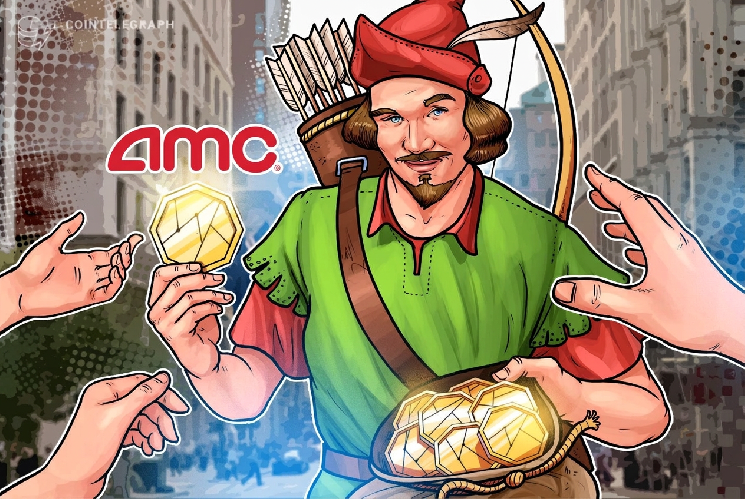
    That language became central to a public dispute this month when AMC Entertainment CEO Adam Aron criticized the AMC stock token. Chief Legal Officer Dan Gallagher responded by telling Aron to “send your lawyers and we’ll educate them,” sparking a broader sector debate over which tokenized stock model prevails. Competitors have taken different approaches: Ondo Global Markets has added proxy voting through Broadridge outside the U.S., while Dinari’s dShares can be burned for redemption at market value.

    Shares Are Lent Out, Complicating Vote Pass-Through

    The final terms for individual tokens add a second structural obstacle to passing votes through to token holders. The Apple series, Series 14, states that “the Underlying may be lent out to the Prime Borrower, who is permitted to further lend the Underlying to End Borrowers and is obliged to provide an equivalent amount of Collateral to the Issuer.”

    During a loan, the prospectus specifies that “the borrower retains all incidents of ownership of the Lent Underlyings,” and “the Issuer waives voting rights and any rights to consent or take action with respect to the Lent Underlyings during the loan term.”

    The final terms also qualify the backing claim. Kerbrat wrote that “all Robinhood Stock Tokens are backed 1:1 with real shares in secure custody.” However, the Apple final terms clarify that where shares have been lent, “the Products in respect of such Series will not, to a greater extent, be backed or secured by the relevant Underlying themselves. Instead, the Prime Borrower is required to provide equivalent cash or other Eligible Financial Instruments as Collateral, in an amount equal to at least 100% of the market value of the Lent Underlyings.”

    The prospectus says the issuer “will provide information regarding the amount of Lent Underlyings on a regular basis on the Issuer Website.” The issuer site includes sections for corporate actions, price deviations, an FAQ, product details, service providers, restricted jurisdictions, and disclosures. None currently publishes a lending figure.

    Custody and Service Providers Disclosed

    The custody partner left unnamed on Robinhood’s marketing page is identified in the service provider list: Alpaca Securities LLC of New York, which acts as both custodian and broker. Bitstamp Global Ltd, a British Virgin Islands entity in the group Robinhood finished acquiring on June 2, 2025, serves as the authorized participant. Security Agent Services AG of Zug is the security and verification agent, and JPMorgan Chase Bank’s London branch holds the paying account.

    Say by Robinhood Cited as Voting Mechanism

    Kerbrat pointed to an existing Robinhood asset as the potential mechanism for enabling voting. “We run a shareholder engagement platform, Say by Robinhood, which allows shareholders to participate in actions like voting,” he wrote. Robinhood acquired Say Technologies in August 2021. The platform’s page for companies offers to “reach shareholders with proxy materials, prospectuses, shareholder meeting information, company updates, livestream Q&A, and other regulated communications.”

    Stock Token holders hold a claim on the issuer rather than the share itself. They are identified to Robinhood only if they complete the issuer’s KYC checks, and the tokens are not sold to residents of the United States, Canada, the United Kingdom, or Switzerland.

    Volume Figures and Market Context

    Kerbrat opened his thread with two key metrics: “Stock Tokens TVL reaching over $170M and nearly $50B in DEX volume on the Robinhood Chain.”

    According to CoinGecko, the Robinhood Chain stocks ecosystem holds $168.47 million across its tokens, with $212.08 million in 24-hour volume. The largest tokens by value are tokenized SPY at $24.6 million, NVDA at $22.4 million, and SpaceX at $11.2 million.

    The $50 billion figure is chain-wide. DefiLlama data shows Robinhood Chain processed $12.25 billion of decentralized exchange volume over seven days and $32.74 billion over 30 days, with total value locked at $916.6 million. Uniswap handles approximately 84% of that volume. The Defiant reported in July that the chain had surpassed Solana in tokenized stock volume, driven by memecoin pairs, and noted this month that tokenized equities traded $1.01 billion over a weekend with U.S. exchanges closed.

    Robinhood lists more than 190 Stock Tokens. HOOD shares traded at $113.85 at 2:35 p.m. ET, up 1.1% on the day, per CNBC.

    Onchain figures via DefiLlama and CoinGecko as of 18:30 UTC on Sept. 14. Legal terms via the RHJ base prospectus dated June 25, 2026 and the final terms for Series 14 (ISIN JE00BX9H9M76).

  • Robinhood CEO says issuers should not have veto over tokenized stocks

    Robinhood CEO says issuers should not have veto over tokenized stocks

    Robinhood CEO Vlad Tenev argued Friday that companies should not hold veto authority over tokenized stock products that leave shareholder rights, issuer obligations, and official stock ledgers unchanged.

    In a post on X, Tenev framed the issue of issuer consent around whether a tokenized product alters the rights attached to underlying shares or creates new obligations for the company or its transfer agent. If it does, he stated the issuer should be involved. However, Tenev contended that if the product creates a separate financial instrument holding or referencing freely transferable shares without changing the issuer’s rights, obligations, or shareholder record, consent should not be required.

    Response to AMC Entertainment Criticism

    The comments followed criticism from AMC Entertainment CEO Adam Aron on Sept. 4. Aron said AMC had no affiliation with Robinhood’s tokenized stock offerings and would ask securities counsel to review them.

    Tenev explained that Robinhood Stock Tokens use a third-party structure with separately issued instruments backed 1:1 by underlying shares. The products provide economic exposure to stocks and exchange-traded funds without altering an issuer’s cap table or the rights attached to its shares.

    “Going onchain shouldn’t give the issuer a veto it never had offchain,” Tenev said.

  • AMC CEO Challenges Robinhood’s 1:1 Token Backing Claim

    AMC CEO Challenges Robinhood’s 1:1 Token Backing Claim

    AMC CEO Adam Aron Challenges Robinhood’s 1:1 Stock Token Backing Claims

    AMC Entertainment CEO Adam Aron has publicly questioned whether Robinhood’s stock tokens maintain true one-for-one backing if the underlying shares are lent to short sellers. In a series of posts on X dated Sept. 12–13, Aron directed pointed questions to Robinhood CEO Vlad Tenev and Chief Legal Officer Dan Gallagher, following their recent public defense of the company’s tokenized stock products.

    Aron Calls Stock Token Model “Abhorrent”

    In his latest post, Aron called the stock token model “abhorrent” and argued that it conflicts with the purpose of public share ownership. He questioned whether customers could misunderstand the rights attached to the products when Robinhood promotes them using the names and prices of listed companies.

    “If those tokens are theoretically backed 1:1 by real shares, but hypothetically some of those underlying real shares are in turn lent out to short sellers, are the tokens really backed 1:1 in fact?”

    Aron wrote. The question concerns the assets Robinhood holds against its token liabilities. Robinhood’s stock token documentation says Robinhood Assets Jersey Limited issues tokenized debt securities that provide economic exposure to an underlying security.

    How Robinhood’s Stock Tokens Work

    Robinhood says each public-company stock token is backed by a corresponding share. Its documents do not say that the token itself represents legal ownership of the underlying equity. A token holder instead holds a claim against the Jersey issuer. Aron did not cite Robinhood records, custody statements, or onchain evidence showing that the corresponding shares had been lent. His post asked Robinhood to disclose how the backing operates if securities lending occurs.

    Token Holders Lack Shareholder Rights

    Under Robinhood’s structure, the investor receives exposure to movements in the referenced stock’s price. The product can account for distributions such as dividends, but the holder does not appear on the public company’s shareholder register. Token owners lack voting rights attached to the referenced shares. Robinhood’s Key Information Document characterizes the product as a derivative and identifies Robinhood Assets Jersey Limited as its manufacturer.

    The document warns that investors depend on the issuer’s ability to meet its obligations. Ownership of a token therefore differs from direct ownership of AMC common stock, even when the token’s value tracks an AMC share.

    European Rollout and U.S. Regulatory Questions

    Robinhood introduced stock tokens for European customers as part of an international expansion announced in 2025. The company later connected the product line with Robinhood Chain, its blockchain network for tokenized assets. The products are not offered to U.S. persons. Robinhood’s expansion announcement says the stock tokens are issued through Robinhood Assets Jersey Limited and provide exposure to U.S.-listed securities.

    Aron questioned why Robinhood’s U.S. website promotes the concept when domestic customers cannot purchase the products. He described the Jersey structure as an offshore operation designed to function outside U.S. securities laws. Robinhood has not accepted that description.

    Tenev: Companies Cannot Veto Referenced Tokens

    Tenev defended the stock token model during a Sept. 9 CNBC “Squawk Box” interview. He argued that issuers control the rights and duties attached to shares they issue but do not control every separate financial product referencing their stock.

    “Issuers should have control and do have control over the rights and obligations of the stock that they issue, but that doesn’t mean they control everything about it,”

    Tenev said. Tenev stated that issuer consent “depends on what exactly you’re doing.” He maintained that Robinhood’s products “should not automatically require issuer consent,” although no cited court or U.S. regulatory decision has settled that position for Robinhood’s structure. Aron previously said AMC did not authorize, endorse, or participate in the creation of its referenced token. In a prior statement, he called on Robinhood to stop offering the product and said AMC would consult securities lawyers about possible legal and regulatory action.

    Gallagher Rejects AMC Demand

    Gallagher rejected the demand publicly.

    “We know a little something about the U.S. securities laws and will not ‘DECIST,’”

    he wrote on X, reproducing a misspelling in Aron’s earlier post. Gallagher invited AMC to send its lawyers. No public lawsuit filed by AMC over Robinhood’s stock tokens had been identified by Sept. 13. The U.S. Securities and Exchange Commission had not announced an enforcement action involving the AMC-linked product.

    Share Lending and Voting Remain Open Questions

    Robinhood’s public material explains how token prices follow referenced securities, but its available summaries provide limited detail about the custody and possible lending of each backing share. Aron’s latest post asks the company to state whether reserve shares are kept unencumbered or can enter securities-lending transactions.

    A securities loan transfers shares temporarily to a borrower under a separate agreement. Aron’s hypothetical question does not establish that Robinhood uses this arrangement for stock token collateral. A direct answer would require information from Robinhood or its custodian concerning the treatment of reserve shares.

    The company has not published a token-by-token reserve register showing where each corresponding share is held. Its stock token documentation identifies the issuer and product mechanics but does not give token holders direct voting control over the referenced equity. Robinhood therefore controls, directly or through its custody structure, any voting power connected to the underlying shares. Tenev has not announced how votes attached to stock token collateral are exercised.

    Regulatory Warnings and Comparable Cases

    European regulators have raised separate concerns about products that track shares without transferring legal ownership. The European Securities and Markets Authority has warned that tokenized instruments may create investor confusion when buyers do not receive the governance rights attached to conventional shares, Reuters reported.

    OpenAI raised a comparable ownership distinction in 2025 after Robinhood promoted a token tied to the private company. OpenAI said the instrument was not its equity and had not received the company’s endorsement, according to Reuters.

    Robinhood Maintains 1:1 Backing Description

    Robinhood maintains that its tokens can give eligible international customers economic exposure to U.S. securities. The company is developing Robinhood Chain to support tokenized assets, while crypto.news reported that its architecture creates a revenue stream for Arbitrum through chain-related fees.

    As of Sept. 13, Robinhood continued to describe its public-company tokens as one-for-one backed. Neither Tenev nor Gallagher had publicly answered Aron’s specific question about whether shares assigned to that backing may be lent to short sellers.

  • Nasdaq Invests $100M in Kraken Parent Payward at $21B Valuation

    Nasdaq Invests $100M in Kraken Parent Payward at $21B Valuation

    Nasdaq’s venture arm is investing $100 million in Payward, the parent company of cryptocurrency exchange Kraken, in a deal that values the firm at $21 billion, according to a Bloomberg report citing people familiar with the matter.

    Partnership Extends to Tokenized Stock Distribution

    The investment extends a partnership originally struck in March. Under the arrangement, Kraken will distribute Nasdaq’s tokenized stocks on its platform, giving customers access to Nasdaq-listed equities in token form. These tokenized shares carry the same voting rights as ordinary shares traded on the exchange.

    Nasdaq’s Tokenized Equity Model Differs from Competitors

    Most tokenized equity products provide holders with price exposure only. Nasdaq’s design takes a different approach by putting issuers at the center. The exchange operator has been building a gateway with Kraken to move tokenized equities between regulated and on-chain venues. Kraken already offers these products through Payward Services, its business-to-business arm.

    Wave of Traditional Exchange Investment in Crypto Platforms

    Nasdaq is the third established exchange operator to take a stake in a crypto exchange this year. In March, Intercontinental Exchange — owner of the New York Stock Exchange — invested in OKX at a $25 billion valuation, taking a board seat and agreeing to open NYSE tokenized equities markets to OKX’s 120 million accounts. The following month, Deutsche Börse paid $200 million for a 1.5% stake in Payward.

    According to Bloomberg’s sources, Nasdaq plans to launch its own token in the second quarter of next year.

    Payward’s Valuation Fluctuations and IPO Delays

    Payward’s valuation has shifted across recent transactions. The company raised $800 million at a $20 billion valuation last November and used that figure again in April when agreeing to buy derivatives exchange Bitnomial. Deutsche Börse’s stake, purchased the same month, implied a valuation of about $13.3 billion by Bloomberg’s calculation.

    The firm’s path to public markets has faced delays. Payward filed a confidential S-1 registration statement in November but shelved the listing in March — the same month Kraken became the first crypto firm granted access to the Federal Reserve’s core payments system.

  • Breaking: Official Statement on Altcoin Triggers Volatility Spike

    Breaking: Official Statement on Altcoin Triggers Volatility Spike

    Pump.fun, the Solana-based platform known for streamlined token creation and memecoin trading, appears to be broadening its scope. On-chain data reveals the emergence of new trading pairs linked to traditional equities, signaling a potential pivot toward tokenized stock exposure.

    Stock-Linked Pairs Surface on Pump.fun

    Blockchain analytics indicate that currency pairs referencing stock prices have begun appearing on the Pump.fun interface. The platform has not yet issued a comprehensive official statement clarifying the nature of these assets. It remains uncertain whether the listings represent directly tokenized shares or synthetic derivatives that track equity price movements on-chain.

    Sector Momentum Builds Around Tokenized Equities

    The development coincides with accelerating interest in tokenized share products across the digital asset industry. Robinhood has rolled out tokenized stock offerings for European users, while xStocks, a venture linked to Kraken, is expanding in the same vertical. Additionally, the London Stock Exchange Group (LSEG) recently announced plans to develop blockchain-based representations of UK shares in partnership with Payward, the parent company of Kraken.

    PUMP Token Reacts with Heightened Volatility

    Following the appearance of the equity-linked pairs and the broader wave of tokenized stock announcements, the native PUMP token experienced a notable increase in trading volatility. Market participants are closely monitoring whether the integration represents a permanent product expansion or a limited test deployment.

  • xStocks Announces $790.9M in Tokenized Assets

    xStocks Announces $790.9M in Tokenized Assets

    xStocks Issues $790.9 Million in Tokenized Assets, Signaling Institutional Shift to Blockchain Finance

    xStocks has executed a significant issuance of $790.9 million in tokenized assets, according to data reported by Token Terminal. The offering comprises $779.9 million in tokenized stocks and $11 million in tokenized commodities, underscoring a growing institutional appetite for digital asset classes and a potential structural shift in how traditional securities integrate with blockchain infrastructure.

    Breakdown of the Tokenized Asset Issuance

    The issuance highlights concentrated demand across several leading tokenized equities. The top three assets by value include STRCx at $147.8 million, CRCLx at $80.5 million, and MSTRx at $70.5 million. This distribution signals strong investor interest in gaining exposure to major public equities through on-chain representations.

    A notable structural detail is the dominance of the Solana blockchain, which hosts 65.8% of the total tokenized assets issued by xStocks. This concentration may influence future blockchain adoption patterns within traditional finance, positioning Solana as a primary settlement layer for tokenized securities.

    Market Context and Institutional Implications

    While the broader cryptocurrency market continues to send mixed signals, the scale of xStocks’ issuance stands out as a distinct indicator of maturing demand for digital securities. Despite the absence of significant price movements tied to the announcement, the volume of tokenized assets entering circulation reflects a growing appetite among institutional players seeking regulated, blockchain-based exposure to equities and commodities.

    This trend could catalyze increased trading activity in tokenized markets as more institutions allocate capital to these instruments. The activity further legitimizes the use of blockchain technology in core financial market functions, moving beyond speculative use cases into regulated asset issuance and custody.

    xStocks Platform and Regulatory Landscape

    xStocks operates as a platform dedicated to offering tokenized assets, effectively bridging traditional finance and blockchain technology. The current regulatory environment has enabled platforms like xStocks to innovate, providing investors with novel mechanisms to engage with familiar asset classes through digital infrastructure. This regulatory clarity is critical as the market for tokenized securities continues to mature.

    Key Levels and Developments to Monitor

    Market participants should closely monitor the downstream implications of this issuance. The continued growth of tokenized asset supply may introduce new volatility dynamics in related markets, particularly as institutional workflows adapt to these emerging asset classes. Additionally, the performance and reliability of Solana and Ethereum as hosting platforms will serve as key indicators for the future trajectory of asset tokenization at scale.

  • Robinhood Chain Sets Record with $875M in DEX Volume as Tokenized Stocks Surge

    Robinhood Chain Sets Record with $875M in DEX Volume as Tokenized Stocks Surge

    Robinhood Chain processed a record 5.52 million transactions on Aug. 30 as decentralized exchange activity and tokenized stock trading reached new highs.

    DEX volume on the network climbed to a record $875 million, according to the Wu Blockchain Data Center. Uniswap v4 accounted for $432 million of the total, while Uniswap v3 generated a further $357 million.

    Activity also surged on Pons, Robinhood Chain’s largest token launchpad. The platform recorded 22,600 token creations and $187 million in trading volume on Aug. 30, with both figures representing all-time highs.

    Source: Wu Blockchain Data Centre

    Tokenized Stocks Drive New DEX Volume

    The most significant development may be the source of the network’s growing activity.

    Data from Token Terminal shows that the seven most-traded tokenized stocks generated $4.3 billion in decentralized exchange volume over the past 30 days. Three of those assets are traded on Robinhood Chain.

    Uniswap alone has processed approximately $1.5 billion in tokenized stock volume on Robinhood Chain in around six weeks.

    Source: Token Terminal

    The figures point to a broader shift in the real-world asset market. Tokenized equities give investors blockchain-based access to traditional securities while also generating trading fees for decentralized exchanges, issuance revenue for asset providers, and transaction demand for the networks that support them.

    For decentralized finance, tokenized stocks create a new category of activity beyond crypto-native assets. Decentralized markets can increasingly capture trading tied to securities originating in traditional finance, rather than competing only for memecoin, stablecoin, or perpetual-futures volume.

    Robinhood Chain Revenue Surges

    The impact is already visible in blockchain application revenue. On Aug. 31, applications on Robinhood Chain generated $2.66 million over 24 hours, ahead of Hyperliquid L1 at approximately $1.7 million and Ethereum at $1.27 million.

    Robinhood Chain’s 24-hour revenue was also nearly six times higher than Base’s approximately $438,000 during the same period.

    A single day of revenue does not establish a lasting lead, particularly against networks with deeper liquidity and longer operating histories. However, the figures show how quickly tokenized securities can influence blockchain economics when trading volumes reach scale.

    Robinhood Chain’s recent growth suggests that tokenized stocks could become more than a distribution product for investors. They may also develop into a significant source of fees, liquidity, and transaction demand across the decentralized finance ecosystem.