Tag: Tokenized assets

  • XRP Ledger Batch Upgrade Delayed to Oct. 9 After Validator Support Reset

    XRP Ledger Batch Upgrade Delayed to Oct. 9 After Validator Support Reset

    Key Highlights

    • The XRP Ledger’s Batch upgrade, originally slated for Sept. 29 activation, has been delayed by at least 10 days after validator support temporarily dropped below the required threshold.
    • The corrected amendment, BatchV1_1, regained support from 30 of 35 trusted validators on Sept. 25, initiating a new two-week countdown targeting an Oct. 9 activation around 14:46 UTC.
    • RippleX engineering head Ayo Akinyele confirmed projects are already being developed with Batch capabilities, which enable atomic settlement of up to eight transactions for tokenized asset trades.

    Validator Threshold Miss Delays XRPL Batch Feature Rollout

    The XRP Ledger’s anticipated Batch amendment has missed its projected Sept. 29 activation window after validator support briefly dipped below the 80% supermajority required by the network’s amendment process. The feature, designed to allow users to bundle up to eight transactions into a single atomic operation, represents a significant infrastructure upgrade for tokenized asset settlement on the ledger.

    Technical Mechanism Enables Atomic Settlement

    Batch introduces an all-or-nothing execution model that could transform how tokenized assets change hands on the XRP Ledger. By grouping payment and delivery legs into one indivisible transaction set, the feature eliminates counterparty risk where one side of a trade executes while the other fails. This capability is particularly relevant for institutional workflows involving real-world asset tokenization, where simultaneous transfer of cash and securities is a regulatory and operational requirement.

    RippleX Confirms Ecosystem Development Underway

    RippleX’s head of engineering, Ayo Akinyele, previously indicated that development teams are actively building applications anticipating Batch functionality. “Some projects are already being built with Batch in mind, so activation would allow that work to move closer to production,” he said. Akinyele did not disclose specific partners or project timelines, though his comments suggest asset managers are among the early adopters preparing for the feature’s availability.

    Amendment Process Resets With Strong Validator Consensus

    Following the brief support shortfall, the revised amendment—formally designated BatchV1_1—secured endorsements from 30 of the 35 validators on the Unique Node List (UNL) as of Sept. 25, according to the XRPL amendment dashboard. This 85.7% approval rate comfortably exceeds the threshold, triggering a fresh two-week validation window. If support remains stable, the earliest possible activation is Oct. 9 at approximately 14:46 UTC.

    Why This Matters

    The Batch amendment is a foundational upgrade for the XRP Ledger’s expanding role in institutional finance. As major financial institutions explore blockchain-based settlement for tokenized funds, bonds, and repos, atomic multi-transaction execution becomes a prerequisite for regulatory compliance and operational efficiency. The delay, while brief, underscores the decentralized governance model of the XRPL: amendments require sustained validator consensus, not merely developer deployment. The rapid recovery to 30-of-35 support signals strong validator alignment on the feature’s utility. Market participants should monitor the amendment dashboard through the countdown period, as any erosion of support below 80% would reset the timeline again.

    Frequently Asked Questions

    What does the Batch feature actually do?

    Batch allows users to submit up to eight transactions as a single atomic unit. All transactions in the batch either succeed together or fail together, enabling simultaneous payment and asset delivery—critical for tokenized asset trades where settlement finality must be guaranteed.

    When is the new expected activation date?

    If current validator support holds, BatchV1_1 will activate on Oct. 9 at approximately 14:46 UTC, following a mandatory two-week validation period that began Sept. 25.

    Why did the activation get delayed?

    Validator support temporarily fell below the 80% supermajority required by the XRP Ledger’s amendment process. The network requires sustained approval from trusted validators on the Unique Node List before any protocol change takes effect.
  • Circle Mints $500M USDC on Solana in 6 Hours

    Circle Mints $500M USDC on Solana in 6 Hours

    Key Highlights

    • Circle minted approximately $500 million USDC on the Solana blockchain within a six-hour window, signaling strong stablecoin demand.
    • The minting activity was flagged by on-chain analyst @SolanaFloor and coincides with Solana’s expanding role in tokenized finance and DeFi.
    • Increased USDC supply on Solana is expected to boost network liquiduity, potentially influencing trading volumes and DeFi protocol activity.

    Circle Accelerates USDC Supply on Solana Amid Growing Ecosystem Demand

    Circle Internet Financial has minted roughly $500 million worth of USD Coin (USDC) on the Solana blockchain over a six-hour period, according to on-chain data highlighted by prominent crypto commentator @SolanaFloor. The substantial issuance underscores accelerating demand for dollar-pegged stablecoins within Solana’s rapidly expanding decentralized finance (DeFi) and tokenized asset ecosystem. As one of the two dominant regulated stablecoins globally—alongside Tether’s USDT—USDC’s supply dynamics on high-throughput chains like Solana serve as a real-time barometer for institutional and retail capital flows into on-chain financial applications.

    Strategic Liquidity Expansion in a Mixed Market Environment

    The minting surge arrives while the broader cryptocurrency market exhibits divergent momentum across major assets such as Bitcoin and Ether. Circle’s decision to preemptively expand USDC supply on Solana appears to be a proactive liquidity management strategy, ensuring adequate stablecoin reserves are available for trading, lending, and settlement as Solana continues to attract capital allocated to tokenized real-world assets (RWAs), payment rails, and high-frequency DeFi strategies. The Solana network’s sub-second finality and low transaction fees have positioned it as a preferred execution layer for market makers and quantitative funds rotating stablecoin inventories across venues.

    USDC’s Regulatory Framework and Cross-Chain Utility

    Issued by Circle under a regulated framework that includes regular attestations of reserve assets—primarily short-term U.S. Treasuries and cash held at regulated financial institutions—USDC maintains a 1:1 peg to the U.S. dollar. This regulatory clarity, combined with native issuance on networks including Ethereum, Solana, Arbitrum, Polygon, and Avalanche, allows USDC to function as interoperable settlement infrastructure. The latest Solana minting reinforces Circle’s multi-chain distribution strategy, which aims to meet demand where transaction activity concentrates rather than relying solely on cross-chain bridges that introduce latency and smart-contract risk.

    Why This Matters

    Stablecoin minting volumes on high-performance blockchains like Solana are increasingly viewed as leading indicators of on-chain economic activity. A $500 million injection in six hours suggests market participants are positioning for elevated trading volumes, new DeFi protocol launches, or expanded tokenized treasury and money-market fund offerings on Solana. For traders and liquidity providers, deeper USDC pools reduce slippage on decentralized exchanges such as Orca and Raydium and improve capital efficiency for basis trades and funding-rate arbitrage. For the broader industry, the move signals confidence in Solana’s infrastructure maturity following network upgrades that have improved reliability and throughput consistency.

    Frequently Asked Questions

    Who reported the $500 million USDC minting on Solana?

    The on-chain activity was identified and publicized by @SolanaFloor, a widely followed CryptoTwitter commentator and analytics account that tracks Solana ecosystem metrics in real time.

    What does a large USDC mint typically indicate?

    Large minting events generally reflect anticipation of increased demand for the stablecoin—whether for trading, DeFi lending, payments, or as collateral for tokenized asset issuance—rather than immediate circulation. Circle mints USDC in response to authorized institutional redemption requests.

    How might this affect Solana’s DeFi ecosystem?

    Additional native USDC supply deepens liquidity on Solana-based decentralized exchanges and lending protocols, potentially lowering borrowing costs, tightening spreads, and enabling larger position sizes for market makers and yield strategies operating on the network.

  • Frax Partners with Gearbox to Launch RWA Leverage Market

    Frax Partners with Gearbox to Launch RWA Leverage Market

    Key Highlights

    • Frax Finance integrates frxUSD as the foundational stablecoin for Gearbox Protocol’s new real-world asset (RWA) leverage market, targeting institutional liquidity.
    • The collaboration creates a one-click automated solution for DeFi users to gain leveraged exposure to RWAs, bridging traditional finance mechanisms with decentralized infrastructure.
    • Market observers are monitoring frxUSD adoption rates and liquidity dynamics within Gearbox’s RWA market as a potential benchmark for future DeFi–TradFi integrations.

    Frax Finance and Gearbox Protocol Launch RWA Leverage Market Powered by frxUSD

    Frax Finance has formally announced a strategic collaboration with Gearbox Protocol that positions frxUSD as the core stablecoin underpinning a newly launched real-world asset (RWA) leverage market. The integration, revealed via the projects’ official Twitter channels, is designed to streamline institutional access to DeFi-native leverage while deepening liquidity for tokenized real-world assets. By anchoring Gearbox’s leverage architecture to frxUSD, the partnership aims to reduce friction for capital allocators seeking automated, on-chain exposure to yield-bearing RWAs without navigating fragmented liquidity pools or manual rebalancing processes.

    Technical Architecture and Institutional Focus

    Gearbox Protocol, recognized for its generalized leverage framework that allows users to borrow against deposited collateral to amplify positions, will deploy frxUSD as the primary denomination for its RWA-specific credit markets. This design choice leverages frxUSD’s dual-collateral model—partially backed by Frax’s algorithmic monetary policy and partially by exogenous reserves—to provide a stable, deep-liquidity unit of account suited for institutional-scale transactions. The collaboration reflects a broader industry shift where DeFi primitives are being repurposed to accommodate regulated asset classes, including tokenized treasuries, corporate credit, and structured products, all of which require predictable settlement layers and capital-efficient leverage tooling.

    Market Context and Competitive Positioning

    The announcement arrives amid heightened institutional interest in RWA tokenization, with major asset managers and custodians actively exploring blockchain-based fund administration and distribution. Frax Finance’s frxUSD has recently gained traction as a DeFi-native stablecoin capable of supporting complex financial engineering, while Gearbox’s leverage engine offers composable, permissionless credit lines that can be customized for specific asset risk profiles. Together, the two protocols address a critical infrastructure gap: the ability to deploy leveraged strategies on RWAs within a fully on-chain, auditable environment that meets the operational standards of professional allocators.

    Why This Matters

    The Frax–Gearbox integration signals a maturation point for the DeFi sector, where stablecoin design and leverage protocols are converging to replicate—and potentially improve upon—traditional prime brokerage services. By standardizing frxUSD as the settlement and margin asset for RWA leverage, the partnership reduces counterparty fragmentation and creates a reference market for pricing leveraged RWA positions on-chain. Success metrics such as total value locked (TVL) in the new market, frxUSD borrow utilization rates, and the diversity of RWA collateral types onboarded will serve as leading indicators for whether DeFi can sustainably absorb institutional-grade credit demand. Regulatory clarity around tokenized securities and stablecoin issuance in key jurisdictions will further influence adoption velocity over the coming quarters.

    Frequently Asked Questions

    What role does frxUSD play in Gearbox’s new RWA leverage market?
    frxUSD serves as the underlying stablecoin for the market, functioning as the primary unit of account, margin collateral, and settlement asset for leveraged positions on tokenized real-world assets within Gearbox Protocol’s credit architecture.
    How does this collaboration benefit institutional participants?
    The integration provides institutions with a streamlined, automated pathway to access leveraged RWA exposure on-chain, reducing operational complexity, consolidating liquidity around a single stablecoin denominator, and enabling composable credit strategies without traditional prime broker intermediaries.
    What metrics should observers track to evaluate the partnership’s impact?
    Key indicators include frxUSD borrow utilization rates within Gearbox’s RWA markets, total value locked across supported RWA collateral types, institutional onboarding velocity, and the stability of frxUSD’s peg under leveraged demand conditions.
  • S&P Global Agrees to Acquire Smart Contract Security Firm OpenZeppelin

    S&P Global Agrees to Acquire Smart Contract Security Firm OpenZeppelin

    Key Highlights

    • S&P Global has entered a definitive agreement to acquire OpenZeppelin, a leading smart contract security and auditing firm widely used across Ethereum and DeFi ecosystems.
    • Financial terms of the acquisition were not disclosed, and the transaction remains subject to customary closing conditions.
    • The deal signals a strategic convergence of traditional financial risk analytics and blockchain infrastructure security as tokenized assets move into mainstream finance.

    S&P Global Expands Digital Asset Capabilities Through OpenZeppelin Acquisition

    S&P Global, one of the world’s largest providers of credit ratings, market data, and financial analytics, has announced a definitive agreement to acquire OpenZeppelin, the blockchain security firm best known for its smart contract libraries, auditing services, and development tools that underpin a significant portion of the Ethereum and decentralized finance (DeFi) landscape. The announcement, made via an S&P Global press release dated September 17, 2026, marks a pivotal moment in the integration of crypto-native security expertise into traditional financial risk infrastructure. While financial terms were not disclosed, the strategic rationale underscores a fundamental shift: as financial products increasingly migrate onto blockchain rails, code-level vulnerabilities are being reclassified as systemic financial risks.

    Blockchain Risk Enters the Traditional Risk Framework

    Historically, S&P Global’s business has centered on helping investors and institutions assess creditworthiness, market dynamics, and financial exposure through conventional instruments. However, the proliferation of tokenized bonds, stablecoins, and institutional-grade blockchain networks has introduced a new variable into the risk equation: smart contract integrity. A tokenized security may mirror a familiar financial product in economic terms, but its ownership, transfer, and settlement logic now depend on immutable code deployed on public or permissioned ledgers. Vulnerabilities in that code—whether reentrancy bugs, access control flaws, or upgradeability risks—can result in direct financial loss, regulatory scrutiny, and reputational damage. By bringing OpenZeppelin’s deep technical bench in-house, S&P Global gains a specialized layer of expertise to evaluate the software infrastructure that increasingly sits beneath financial products themselves.

    OpenZeppelin’s Evolution from DeFi Guardian to Institutional Infrastructure

    Founded in 2015, OpenZeppelin established itself as a cornerstone of smart contract security, providing reusable, battle-tested libraries—most notably the ERC-20 and ERC-721 implementations—that became de facto standards across Ethereum. Its audit practice has reviewed code for major protocols including Coinbase, Uniswap, and the Ethereum Foundation. Five years ago, smart contract audits were primarily a concern for DeFi projects seeking to avoid exploits. Today, the same technical primitives secure tokenized treasuries, central bank digital currency pilots, and regulated security token platforms. This expansion of use cases has pushed smart contract security into a vastly larger addressable market, one that now includes banks, asset managers, and market infrastructure providers—precisely the clientele S&P Global serves.

    Why This Matters

    The acquisition reflects a broader maturation of crypto infrastructure from a niche concern to a systemic component of global finance. As regulators in the U.S., EU, and Asia advance frameworks for tokenized assets and blockchain-based settlement, the demand for standardized, institutionally credible security assurances will grow. S&P Global’s move positions it to potentially develop new rating methodologies or risk scores that incorporate smart contract audit quality, formal verification coverage, and ongoing monitoring—analogous to how it evaluates credit risk today. For OpenZeppelin, the deal provides distribution into the core of traditional finance, accelerating adoption of its security tooling beyond native crypto teams. The transaction, which has not yet closed, remains subject to regulatory approvals and customary conditions. If completed, it will represent one of the most significant crossovers between a legacy financial data giant and a native blockchain security firm to date.

    Frequently Asked Questions

    What is OpenZeppelin and why is it significant?

    OpenZeppelin is a leading blockchain security company known for developing widely adopted open-source smart contract libraries (such as ERC-20 and ERC-721 standards) and providing professional audit services for major Ethereum and DeFi projects. Its code secures billions in digital asset value across the ecosystem.

    Why is S&P Global acquiring a crypto security firm?

    As financial instruments move onto blockchain infrastructure, smart contract vulnerabilities become direct financial risks. S&P Global aims to integrate OpenZeppelin’s technical expertise to evaluate and rate the code-layer security of tokenized assets, stablecoins, and institutional blockchain networks—extending its traditional risk analytics into the digital asset domain.

    Has the deal closed?

    No. The acquisition is subject to customary closing conditions, including regulatory approvals. Financial terms were not disclosed in the September 17, 2026 announcement from S&P Global.

  • Stellar Activates Protocol 28 as Network Hits Record Throughput, RWA Value Surges

    Stellar Activates Protocol 28 as Network Hits Record Throughput, RWA Value Surges

    Key Highlights

    • Stellar activated Protocol 28 on Sept. 17 following a scheduled mainnet upgrade vote, introducing CAP-85 and CAP-86 to streamline smart contract management and data migration for Soroban developers.
    • The network recorded a sustained throughput of over 211 transactions per second across 100 consecutive blocks — its highest on record — though Chainspect analysis indicates this milestone reflects prior infrastructure work rather than Protocol 28 itself.
    • Economic activity continues to expand: stablecoin supply nears $884 million, DeFi total value locked stands at roughly $294 million, and tokenized real-world assets reach approximately $3.3 billion in market capitalization, ranking Stellar third among blockchains for RWAs.

    Protocol 28 Activation and Technical Upgrades

    Stellar’s mainnet transitioned to Protocol 28 on Sept. 17, one day after validators approved the upgrade through a scheduled governance vote. The release delivers two major Capability Improvement Proposals — CAP-85 and CAP-86 — designed to address operational friction that emerges as Soroban smart contract applications scale in complexity and value. Both features are opt-in, requiring developers to explicitly adopt the new architectures within existing or future contracts.

    Smart Contract Management Improvements

    CAP-85 targets protocols that operate multiple instances of the same smart contract. Previously, updating code across dozens or hundreds of contract instances required individual migrations, creating windows where some contracts ran patched logic while others remained on vulnerable or outdated versions. Under the new model, developers can configure contracts to reference an externally managed executable. Updating that single shared reference moves every participating contract to new code in a single atomic operation, dramatically narrowing the risk surface during security patches or version upgrades.

    CAP-86 addresses a parallel challenge: evolving the structure of data already stored by live contracts. As applications mature, schema changes become inevitable — adding fields, deprecating others, or restructuring records. The new sparse-map functions allow contracts to read and write data with missing or additional fields, enabling progressive migration rather than forcing an immediate, all-at-once conformance to a new schema. This reduces downtime risk and complexity for applications managing significant asset volumes.

    Consensus Changes and Performance Milestone

    Protocol 28 also introduces consensus-layer improvements through CAP-83. The design permits validators to advance through consensus phases without waiting for complete transaction sets to arrive, while providing a mechanism to discard late or invalid sets. This lays groundwork for parallel transaction-set downloading, a feature Stellar is enabling gradually across the network.

    The upgrade coincided with a notable performance milestone. Blockchain analysis firm Chainspect reported that Stellar averaged more than 211 transactions per second across 100 consecutive blocks — the highest sustained throughput recorded for the network. However, Stellar’s core development teams have clarified that this peak should not be attributed to Protocol 28 itself. The parallel downloading capability remains in phased rollout, meaning the 211-TPS figure reflects existing infrastructure capacity rather than the newly activated consensus changes. Protocol 28 builds the foundation; the performance gains will materialize as the feature set fully activates.

    Growing Financial Activity Raises Operational Stakes

    The technical upgrades arrive against a backdrop of accelerating on-chain economic activity. Data from DeFiLlama shows stablecoin supply on Stellar has climbed to nearly $884 million over the past year, positioning the network among the larger chains for dollar-denominated assets. DeFi total value locked followed a similar upward trajectory, peaking at roughly $319 million in August before settling near $294 million.

    Tokenized real-world assets represent an even larger footprint. Token Terminal ranks Stellar as the third-largest blockchain by RWA market capitalization at approximately $3.3 billion, a figure that grew by $149.4 million in the preceding 30 days alone. This concentration of value amplifies the practical importance of CAP-85 and CAP-86: applications controlling billions in tokenized assets face significantly higher operational stakes when patching code or migrating data structures, turning these technical features into commercial necessities.

    Native token XLM rose roughly 4% in the 24 hours surrounding the activation, reaching $0.1863 before retreating toward $0.18. While the price movement coincided with the upgrade, no causal link has been established between Protocol 28 and the short-term price action.

    Why This Matters

    Stellar’s trajectory increasingly centers on institutional-grade asset tokenization and stablecoin infrastructure, with major issuers and financial institutions leveraging the network for real-world asset deployment. As the volume and diversity of tokenized assets grow — spanning treasury bills, money market funds, credit instruments, and commodity-backed tokens — the ability to upgrade contract logic and data schemas without service disruption becomes a competitive differentiator. Protocol 28’s opt-in adoption model means the network’s resilience will be tested not by the code’s existence, but by how swiftly major issuers, DeFi protocols, and RWA platforms integrate these capabilities. The coming months will reveal whether Stellar’s developer ecosystem treats these tools as optional enhancements or as foundational infrastructure for the next phase of on-chain finance.

    Frequently Asked Questions

    What are CAP-85 and CAP-86 in Stellar Protocol 28?
    CAP-85 allows multiple instances of the same Soroban smart contract to reference a single externally managed executable, enabling atomic code upgrades across all instances. CAP-86 introduces sparse-map functions that let contracts handle data with missing or extra fields, supporting progressive schema migrations without requiring immediate full conformance.
    Did Protocol 28 cause Stellar’s 211 TPS record?
    No. Chainspect recorded the sustained throughput milestone around the time of activation, but Stellar developers confirm the 211 TPS figure reflects pre-existing network capacity. Protocol 28’s consensus changes (CAP-83) enable parallel transaction-set downloading, which is rolling out gradually and not yet fully active.
    How large is Stellar’s tokenized real-world asset market?
    As of the reporting period, Token Terminal ranks Stellar third among blockchains by RWA market capitalization at approximately $3.3 billion, with $149.4 million in growth over the prior 30 days.
  • Deutsche Bank Bets Big on Digital Assets, Potentially Reshaping European Crypto

    Deutsche Bank Bets Big on Digital Assets, Potentially Reshaping European Crypto

    Deutsche Bank Prepares Digital Asset Custody Launch for European Institutions

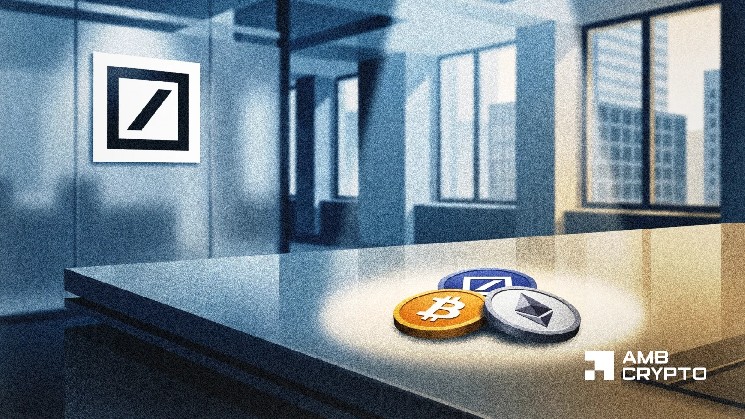
    Deutsche Bank is advancing into digital assets with plans to offer custody services to institutional and corporate clients across Europe later this year. The bank will hold wallets and private keys, enabling clients to safeguard and transfer Bitcoin (BTC), Ether (ETH), USD Coin (USDC), EURC, and EURAU without building their own custody infrastructure.

    Banking Framework for Digital Asset Access

    The service aims to place digital assets within a regulated banking framework, incorporating key protections such as private key storage, wallet control, and transaction approval controls. This approach could provide European institutions an easier entry point into crypto markets through existing banking relationships. While the initial asset list remains limited, tokenized financial instruments are expected to follow at a later stage.

    Regulatory approval remains a prerequisite between the announcement and launch, making the approval process and subsequent adoption critical developments to monitor.

    Regulated Custody Demand Driven by Institutional Allocation Trends

    Institutional interest has shifted beyond simple investment exposure to focus on regulated access mechanisms. According to a 2026 Coinbase-EY survey of over 350 decision-makers, 73% plan to increase allocations to digital assets. Within that study, 81% preferred spot exposure through registered vehicles such as ETFs and ETPs.

    This preference creates strong demand for regulated custody providers. Although hundreds of European-based MiCA-authorized cryptocurrency companies currently operate, very few major banks function as custodians. Deutsche Bank can therefore bridge crypto custody with established banking relationships across Europe, targeting asset managers, hedge funds, brokers, corporations, and sovereign institutions.

    Stablecoins Could Transform Custody into Recurring Settlement Channel

    Stablecoins have the potential to evolve Deutsche Bank’s custody service from a static storage product into an active settlement rail. USDC currently maintains approximately $74 billion in circulation, according to DeFiLlama data, demonstrating deep existing demand.

    EURC provides institutions a euro-denominated alternative within the same custody framework. Together, these stablecoins could support treasury transfers, business payments, and cross-border settlements alongside basic asset storage. If repeated transfers materialize, the activity would generate transaction flows beyond passive custody.

    Tokenized Assets May Extend Financial Rail Functionality

    Future addition of tokenized assets could further expand the service’s utility. Purchases, redemptions, and transfers of tokenized instruments would create additional flow opportunities. Consequently, stablecoins and tokenization combined could position a custody service provider as an active financial rail for institutional clients.

  • New XRPL Upgrade Could Shift XRP Ownership from Retail Wallets to Banks

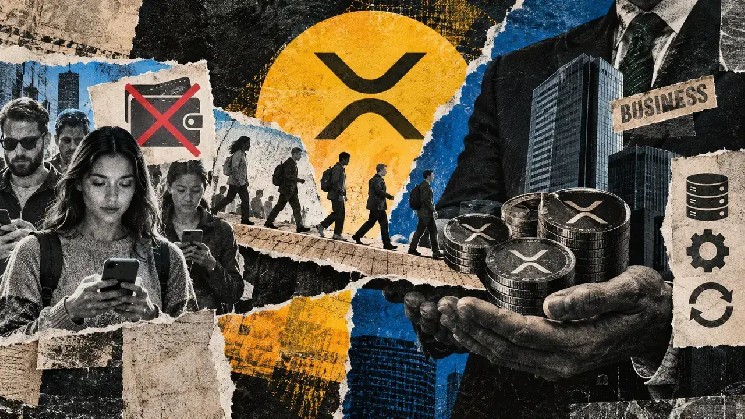
    New XRPL Upgrade Could Shift XRP Ownership from Retail Wallets to Banks

    Proposed XRPL Sponsor Amendment Could Shift $XRP Costs From Consumers to Institutions

    A proposed upgrade to the XRP Ledger (XRPL) would allow banks and fintech companies to absorb $XRP transaction fees and account reserves on behalf of their customers, potentially removing a significant friction point for mainstream adoption. Known as the Sponsor amendment and based on the XLS-68 Sponsored Fees and Reserves proposal, the change would let a sponsoring entity pay network costs while the end user retains full control of their account and private keys.

    Removing the $XRP Acquisition Barrier for End Users

    Currently, interacting with the XRPL requires every account to hold a base reserve of 1 $XRP plus additional reserves for trust lines and other ledger objects. Transaction fees, paid in $XRP, are also burned upon settlement. For financial institutions deploying tokenized assets, payments, or other applications, requiring every customer to acquire and manage $XRP beforehand creates onboarding friction.

    Jazzi Cooper, Ripple’s head of product, said the feature is designed so a sponsor such as a bank, issuer or platform can cover those costs on behalf of users. That could allow consumer-facing applications and institutional platforms to keep the underlying $XRP mechanics largely out of the customer experience.

    Capital Requirements Shift to the Sponsor’s Balance Sheet

    The trade-off moves the capital requirement to the sponsor. Account reserves must still be funded in $XRP, and transaction fees continue to be paid in the token and destroyed when transactions settle. Businesses effectively become the $XRP holders supporting customers who own none.

    Under current network parameters, XRPL requires a base reserve of 1 $XRP per account and 0.2 $XRP per standard owner-reserve unit, though validators can adjust these parameters. Under sponsorship, the $XRP allocated to a user’s reserve remains in the sponsor’s account while the ledger records which party is responsible for the obligation.

    A business sponsoring 1,000 otherwise empty customer accounts would therefore carry roughly 1,000 $XRP of additional base-reserve requirements alongside its own reserve. If those customers funded their accounts themselves, the same 1,000 $XRP requirement would be distributed among them. This distinction becomes significant if banks, payment companies, or tokenization platforms deploy XRPL products to millions of users. A firm serving 1 million users could theoretically carry about 1 million $XRP of base-account reserve obligations before accounting for trust lines, token-related objects, optional sponsorship relationships, and transaction fees.

    Optional Sponsorship Entries Add Complexity

    Optional Sponsorship ledger entries allow businesses to establish prefunded sponsorship relationships rather than signing every subsidized transaction individually, but each entry also consumes reserve capacity. This arrangement means wider XRPL adoption would not necessarily create an equivalent number of new retail $XRP holders. A bank could onboard a large customer base while purchasing and managing $XRP centrally, effectively concentrating the network’s reserve requirements among a smaller group of institutional sponsors.

    That structure could make $XRP easier to integrate into products where banks prefer customers to see only the asset or service they use, such as tokenized deposits, bonds, or money-market instruments. Ctrl Alt, which has worked on the sponsorship proposal alongside Ripple and XRPL developers, has described the model as a way for institutions to manage $XRP requirements internally while customers interact with tokenized assets without acquiring $XRP themselves.

    Sponsorship Creates Balance-Sheet and Capital-Management Challenges

    The same design introduces a capital-management problem for sponsors. An $XRP reserve remains committed while the sponsored account or ledger object still depends on it. A company cannot necessarily assume the $XRP becomes available immediately when a customer stops actively using its service.

    Under the proposed SponsorshipTransfer mechanism, a sponsorship can be ended or reassigned, but account sponsorship carries conditions. A beneficiary taking over its own reserve needs enough $XRP to satisfy the requirement. This creates a complication for the very users the feature is intended to support: a customer who never acquired $XRP may be unable to take over the reserve when a bank wants to stop sponsoring the account.

    The sponsor could transfer enough $XRP to the customer to cover the shortfall, but doing so creates a separate cost. The customer could also arrange for another sponsor to assume the obligation, with the incoming sponsor’s consent. Account deletion offers another exit when applicable. Once relevant blockers are cleared, a sponsored account can be deleted and the reserve obligation released, with remaining account $XRP directed as specified under the proposed rules.

    Object sponsorship adds further uncertainty. A code change merged into XRPL’s development branch in August adds reserve checks when certain sponsorships end, but that behavior is gated behind the separate fixCleanup3_4_0 amendment. Its eventual mainnet status will determine how freely some reserve commitments can be unwound.

    Those mechanics mean banks considering sponsorship would need to model more than the initial cost of acquiring $XRP. They would also need to estimate customer churn, average reserve requirements, transaction-fee consumption, and how much $XRP could remain committed to inactive but still-open accounts.

    Market Demand Depends on Deployment, Not Just Formula

    The proposal could create a new institutional use for $XRP without establishing how much fresh buying would follow. An existing $XRP holder could allocate tokens already on its balance sheet to sponsored customers without purchasing additional supply. New market demand would depend on the gap between that inventory and the reserve and fee commitments the institution chooses to assume.

    That makes eventual deployment data more important than the headline reserve formula. The number of sponsored accounts, sponsor balances, transaction volumes, and reserve units tied to tokenized assets would reveal whether businesses are accumulating $XRP to support the service or primarily recycling existing holdings.

    Validator Approval Remains the First Hurdle

    The proposal remains some distance from activation. As of press time, XRPScan data showed only six validators supporting the amendment, short of the 29-validator threshold, with no activation date scheduled.

    If the Sponsor amendment gains sufficient support and clears the required activation period, banks and platforms would then have to decide whether removing $XRP from their customer experience is worth carrying the token themselves. For companies planning large-scale tokenized-asset products, that calculation could ultimately turn $XRP from something every customer has to manage into an infrastructure cost concentrated on the institution’s own balance sheet.

  • Ethereum Layer 1 Sets Record 25.9 TPS as Q2 Transactions Hit 203.9 Million

    Ethereum Layer 1 Sets Record 25.9 TPS as Q2 Transactions Hit 203.9 Million

    Ethereum’s Layer-1 network achieved fresh usage milestones in the second quarter of 2026, even as the count of monthly active users contracted sharply. According to Token Terminal data, the blockchain processed 203.9 million transactions during the quarter, representing a 68.4% increase year-over-year. Average throughput also hit a record high of 25.9 transactions per second.

    Transaction Volume Surges Despite User Decline

    Despite the surge in on-chain activity, monthly active users fell 30% quarter-over-quarter to 9.2 million. This divergence indicates that the remaining user base generated significantly more transactions per capita. Network fees climbed 31.6% to $52.5 million, while ETH burn revenue more than doubled to $17.1 million, underscoring the intensified economic activity on the base layer.

    Tokenization Bolsters Ethereum’s Dominance

    Ethereum’s position as the primary settlement layer for tokenized assets strengthened further. The market for tokenized assets on Ethereum averaged $203.1 billion during Q2. Stablecoins continued to dominate this segment, accounting for $176.8 billion, while tokenized funds reached $20.8 billion. Notably, tokenized U.S. Treasury funds hit a record average of $7.5 billion.

    The network retained the largest share of both stablecoins and tokenized funds among leading blockchain ecosystems. Total value locked (TVL) across Ethereum’s ecosystem averaged $287.2 billion, though this figure declined 9.2% compared to the previous quarter.

    Staking Growth Signals Network Confidence

    Participation in network security reached a new high, with Ethereum’s staking ratio climbing to a record 32%. The number of addresses holding ETH also expanded, rising 6.6% to 312.1 million. These metrics suggest a deepening commitment from token holders to secure the proof-of-stake consensus mechanism.

    ETH Price Reaction and Outlook

    At the time of reporting, ETH trades around $2,538, marking a 1.18% gain over the preceding 24 hours. The combination of stronger network usage, rising staking participation, and expanding tokenization activity could provide fundamental support for Ethereum’s long-term market position.

    Related: Strive Adds 469 BTC, Bringing Bitcoin Holdings to 25,000

  • Robinhood CEO: Companies Should Not Hold Veto Power Over Stock Tokens Amid AMC Feud

    Robinhood CEO: Companies Should Not Hold Veto Power Over Stock Tokens Amid AMC Feud

    Robinhood’s Tenev and AMC’s Aron Clash Over Synthetic Equity Products

    A public disagreement between Robinhood Markets CEO Vlad Tenev and AMC Entertainment CEO Adam Aron highlights a growing tension in financial markets over how traditional stocks are represented on blockchain networks. The dispute centers on whether companies should control financial products that reference their shares without altering the underlying securities.

    The Core Disagreement

    Tenev argues that issuer consent should not be required for products that merely reference existing shares. In a written statement, he drew a clear line between synthetic instruments and products that modify the shares themselves:

    “If it creates a separate financial instrument that holds or references freely transferable shares without changing the issuer’s rights, obligations, or authoritative shareholder record, issuer consent should not be required,” Tenev wrote.

    Aron takes a sharply different view. He has characterized Robinhood’s offering as a “fictitious synthetic equity market” and warned that such products could undermine AMC’s ability to raise capital, confuse investors about their rights, and create a market using the AMC name without corporate consent.

    Existing Market Precedents

    Tenev countered that current markets already permit similar structures. He pointed to options contracts, unsponsored American depositary receipts (ADRs), and structured products as examples of instruments that reference public shares without granting the underlying company control over the derivative product.

    However, Tenev acknowledged a boundary where issuer involvement becomes necessary. He specified that products altering shareholder rights, replacing the official stock ledger, or creating new obligations for the issuer or its transfer agent should require company approval:

    “If a product purports to change the rights attached to the underlying shares, replaces the company’s official stock ledger, or imposes new obligations on the company or its transfer agent, the issuer should be involved,” he wrote.

    Broader Implications for Tokenized Assets

    The debate extends beyond the two companies. Financial firms are actively exploring multiple approaches to bringing stock exposure onto blockchains. These range from synthetic derivatives and custodial arrangements holding conventional shares to issuer-backed securities recorded directly on distributed ledgers. The outcome of disputes like this one could shape regulatory frameworks and market standards for tokenized assets going forward.

  • Fidelity Launches FIDD Stablecoin for On-Chain Finance

    Fidelity Launches FIDD Stablecoin for On-Chain Finance

    Fidelity Digital Assets Renews Institutional Push for Fidelity Digital Dollar ($FIDD)

    Fidelity Digital Assets reinforced its institutional strategy for the Fidelity Digital Dollar ($FIDD) on September 9, positioning the Ethereum-based stablecoin for payments, settlement, and tokenized markets. The company’s public dashboard showed approximately 50.09 million $FIDD outstanding, giving the token a market capitalization of about $50.09 million at its $1 redemption value.

    The announcement expands on $FIDD’s intended use cases rather than introducing a new token. Fidelity originally unveiled the stablecoin in January 2026 and began publishing reserve reports in February. Its latest communication frames $FIDD as a bridge between conventional financial accounts and blockchain-based markets.

    The future of finance is on-chain. Fidelity Digital Dollar ($FIDD) is a dollar-backed stablecoin designed with institutional-standards and built to meet institutions’ evolving needs in an increasingly digital financial landscape.

    — Fidelity Digital Assets (@DigitalAssets) September 9, 2026

    Issuance Structure and Reserve Management

    Fidelity Digital Assets, National Association issues $FIDD and allows eligible customers to purchase or redeem each unit for $1. The national trust bank manages token issuance, custody, and trading, while Fidelity Management & Research Company oversees the assets backing the circulating supply.

    According to Fidelity’s published terms, reserves may include:

    • Treasury securities with no more than three months remaining to maturity
    • Overnight reverse repurchase agreements
    • Government money market funds
    • Deposits at regulated U.S. banks

    Fidelity states the assets remain in segregated accounts, including accounts at Bank of New York Mellon. Notably, $FIDD does not distribute interest earned from reserves to token holders; Fidelity Digital Assets retains the income. The terms also clarify that $FIDD is not legal tender, receives no FDIC or SIPC insurance, and carries no government agency guarantee.

    Payment-Focused Design for Institutional and Retail Use

    Fidelity describes $FIDD as a payment instrument rather than an investment vehicle designed to generate returns. The company identified several target applications:

    • Continuous settlement
    • Account funding
    • Capital transfers
    • Tokenized real-world assets

    The stablecoin operates as an ERC-20 token on Ethereum. Holders can transfer it to eligible Ethereum addresses, though network gas fees apply. Fidelity reserves the right to restrict addresses or freeze associated tokens when it suspects sanctions violations, fraud, criminal activity, or other legal and operational risks.

    Eligible customers can buy or sell $FIDD through Fidelity Digital Assets, Fidelity Crypto, and Fidelity Crypto for Wealth Managers. The token is also available on Kraken and Bullish, extending access beyond Fidelity’s proprietary platforms.

    Redemption Process and Eligibility Requirements

    Direct redemption remains subject to eligibility requirements. Holders need an approved Fidelity account and must complete identity verification, anti-money laundering, and sanctions checks. Fidelity says qualifying redemptions generally settle almost immediately but may require up to two business days.

    Daily Disclosures and Monthly Reserve Attestations

    Fidelity publishes $FIDD’s circulating supply and reserve net asset value after each business day. It also prepares monthly reserve reports examined by PricewaterhouseCoopers under standards established by the American Institute of Certified Public Accountants.

    These reports assess whether the reserve value equals or exceeds the nominal value of outstanding $FIDD on a specified reporting date. The process constitutes an attestation of management’s reserve information, not a full audit of Fidelity Digital Assets’ financial statements.

    At the time of review, Fidelity’s dashboard showed $FIDD trading at $1 with about 50.09 million units outstanding. CoinGecko also placed the token close to its intended peg. However, Fidelity’s terms warn that prices on third-party markets may temporarily move above or below $1.

    Competitive Landscape in a Concentrated Market

    $FIDD enters a dollar-stablecoin market dominated by Tether’s USDT and Circle’s USDC. Fidelity is competing through its custody, trading, and asset-management infrastructure rather than through the size of $FIDD’s current circulation.

    Institutional stablecoin services continue expanding across lending markets. As crypto.news reported, Compound opened a USDC lending market with defined collateral requirements and loan-to-value ratios reaching 87%. Stablecoin lending is also expanding internationally; Coinbase recently extended USDC lending into Brazil through Morpho-powered markets, demonstrating how dollar tokens are integrating into regional financial services.

    Key Questions for $FIDD Adoption

    The next test for $FIDD is whether Fidelity can generate regular use beyond exchange trading and transfers between customer accounts. The company indicated additional exchanges may support the token but provided no listing timetable, circulation target, or expected transaction volume.

    Future daily disclosures will show whether $FIDD’s supply grows, while monthly reserve reports will provide evidence about its backing. Adoption will depend on exchange distribution, institutional integrations, and whether clients use $FIDD for settlement rather than holding it primarily as on-chain cash.