Key Highlights
- Polygon permanently burned 100 million $POL tokens—approximately 1% of total supply—worth roughly $10.22 million on September 23.
- $POL has surged nearly 12% since the burn, trading near $0.113, but faces immediate resistance at the $0.115 level.
- The burn introduces a community-governed, fee-funded mechanism linking future token removal directly to Polygon network activity.
Polygon Executes Major $POL Token Burn, Removing 1% of Supply
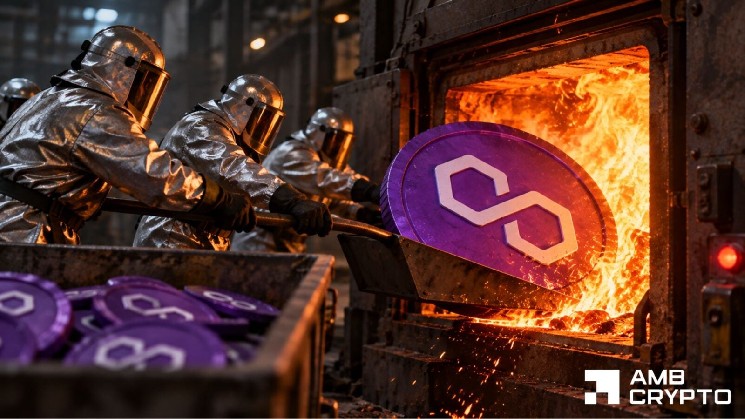
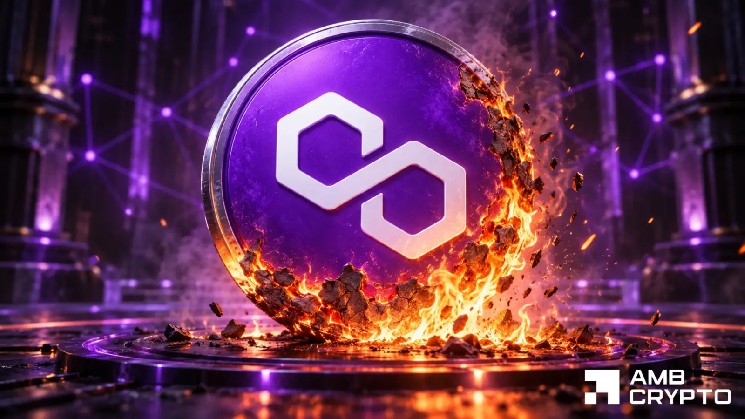
Polygon has completed a significant token burn, permanently removing 100 million $POL from circulation on September 23. The transaction, confirmed by Polygon Foundation CEO Sandeep Nailwal, destroyed tokens valued at approximately $10.22 million at the time of execution. This reduction represents roughly 1% of the token’s total supply and marks the activation of a new deflationary mechanism designed to tie future burns directly to network usage fees.
Fee-Funded Burn Mechanism Links Supply Reduction to Network Activity
The burned tokens originated from network fees accumulated within Polygon’s fee-collection system. Beyond the immediate supply reduction, the event inaugurates a process allowing the community to trigger subsequent fee-funded burns. This governance feature creates a direct feedback loop: as transaction activity on the Polygon network generates fees, the community can vote to destroy a portion of those fees, dynamically adjusting supply in response to real-time demand for blockspace.
$POL Price Action Tests Critical Resistance at $0.115
Since the burn, $POL has appreciated approximately 11.6%, climbing to the $0.113 area at the time of writing. The token briefly touched $0.11497 during the most recent session but failed to sustain momentum above the $0.115 threshold. Technical analysts identify this level as the nearest hurdle for buyers; a decisive break could open a path toward the $0.12 price level. However, the $0.12–$0.125 zone may present stiffer resistance, as the market previously staged a sharp rejection there earlier in September.
Support Levels and Demand Dynamics Will Determine Next Move
On the downside, the $0.107–$0.110 range serves as the first critical support. Holding this band would signal that buyers remain committed to the post-burn recovery. A breakdown below that area could see price retrace toward $0.102, near the launch point of the current advance. While the burn strengthens Polygon’s supply-reduction narrative, sustained price appreciation remains contingent on sufficient demand to defend and build upon recent gains.
Why This Matters
Polygon’s shift to a programmatic, fee-based burn model represents a maturation of tokenomics for a major Layer 2 scaling solution. Unlike one-time manual burns, the new mechanism embeds deflationary pressure into the protocol’s ongoing operations, aligning tokenholder incentives with network adoption. For investors and developers, the key metric to monitor will be whether rising Polygon network activity—measured in transaction fees—translates into consistent community-approved burns that meaningfully contract supply over time. The immediate price test at $0.115 will also serve as an early gauge of market confidence in this revised economic design.
Frequently Asked Questions
How many $POL tokens were burned and what was their value?
Polygon permanently destroyed 100 million $POL tokens, worth approximately $10.22 million at the time of the September 23 transaction.
What makes this burn different from previous token burns?
This burn activates a recurring, community-governed process that allows future burns to be funded directly from network transaction fees, linking supply reduction to actual Polygon network usage.
What are the key price levels to watch for $POL after the burn?
Immediate resistance sits at $0.115; a break could target $0.12, though the $0.12–$0.125 region has previously rejected price. Key support lies between $0.107 and $0.110, with a deeper floor near $0.102.