Tag: Tipping culture

  • ‘Doctors Don’t Get a Tip, Why You Want Tips?’: Server Says She’d Prefer 20% Tip After Table of 6 Women Leaves Little

    ‘Doctors Don’t Get a Tip, Why You Want Tips?’: Server Says She’d Prefer 20% Tip After Table of 6 Women Leaves Little

    Key Highlights

    • TikTok creator @Andjjj.7 posted a video on May 8, 2025, showing itemized tips from a table of six women, revealing multiple $0 tips on bills ranging from $32 to $60.
    • The video amassed 12.7 million views, 802,500 likes, and 21,700 comments, igniting a polarized debate over tipping expectations versus earned gratuity.
    • A separate viral clip from creator @lovee.leahh_ captured a retail customer refusing a tip prompt with “Hell no!” — further fueling the national conversation on tip fatigue.

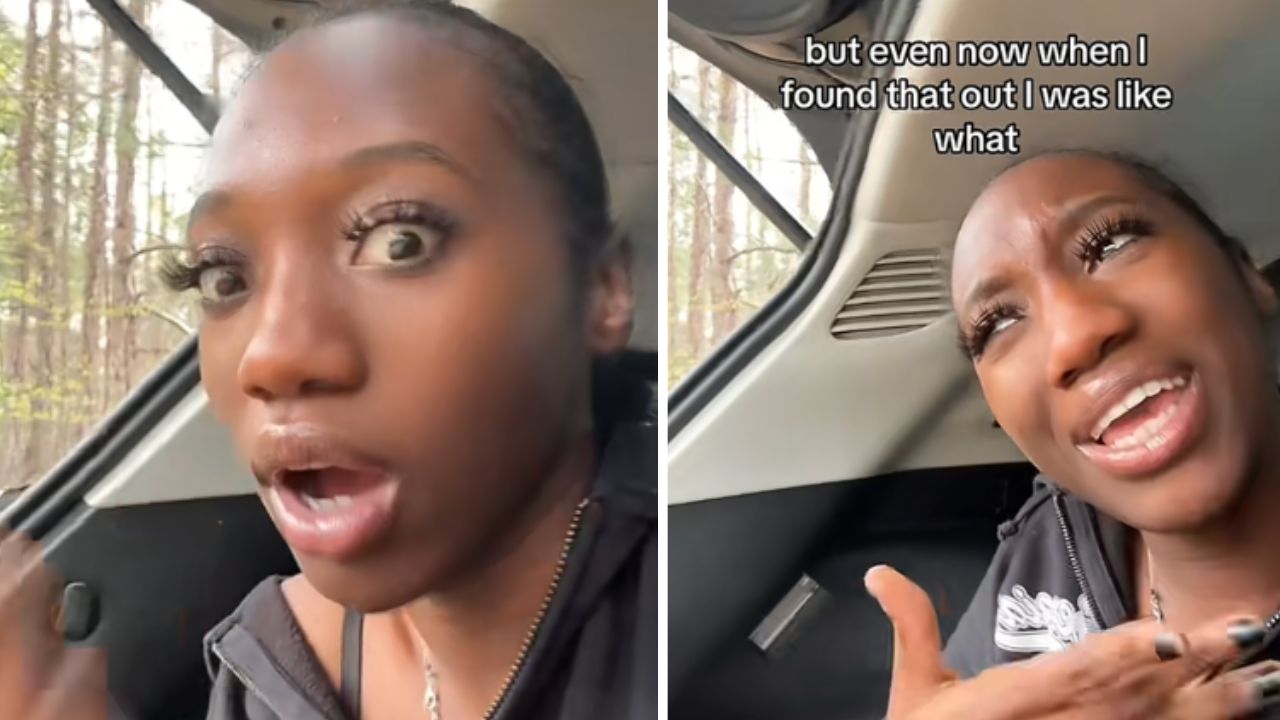
    Server’s Itemized Receipt Breakdown Sparks Massive Tipping Debate

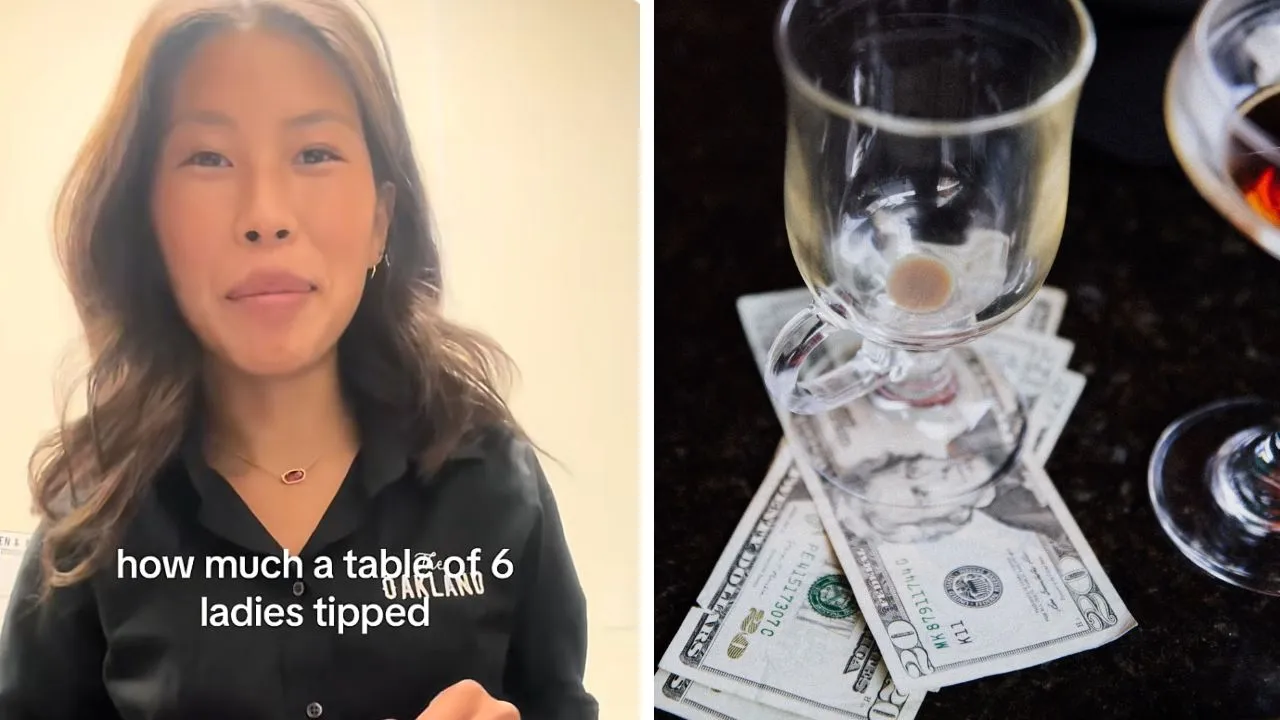
    TikTok user @Andjjj.7 — identified in the video as a server in restaurant uniform — uploaded a clip on May 8, 2025, that has since garnered 12.7 million views, 802,500 likes, and 21,700 comments. In the video, she flips through six separate checks from a single table of six women, narrating the tip amount left on each. The first bill, $51, carried a $9 tip. The second, $32, received $0. The third, $55, also received $0. The fourth, $60, left a $6 tip. A $21 bill yielded a $7 tip, and a final $23 bill left $4. Summarizing the experience, she stated directly to the camera:

    “I am grateful for any tip but will prefer 20 percent.”

    The on-screen caption accompanying the post read:

    @andjjj.7 their bill was $250. tipping culture may have gotten out of hand but I didn’t know we’re normalizing no tips. ♬ original sound – Andj

    Comment Section Erupts With Divergent Views on Gratuity Norms

    The comment section quickly became a battleground for opposing philosophies on tipping culture. One user challenged the expectation of tips altogether, writing:

    “doctors dont get a tip; why u want tips? Bruh.”

    Another commenter echoed the sentiment that gratuity should reflect service quality, not obligation:

    “You earn tips not expect them.”

    A third contributor offered a detailed personal anecdote illustrating a performance-based approach:

    “There’s only been one time I haven’t tipped a server and it was because he never refilled my drink. there was no one else in the restaurant to serve I gave him the change he brought me back which was like 9cents. I’ll give a $20 tip on a $50 total just because the server was amazing. you leave me to eat without a drink to wash it down your getting Pennies.”

    Yet another voice acknowledged systemic issues while defending the practice of tipping service workers:

    “I get that the tipping culture is getting out of hand but not tipping servers is crazyyyyyy.”

    Parallel Viral Moment: Retail Tip Prompt Rejection Goes Viral

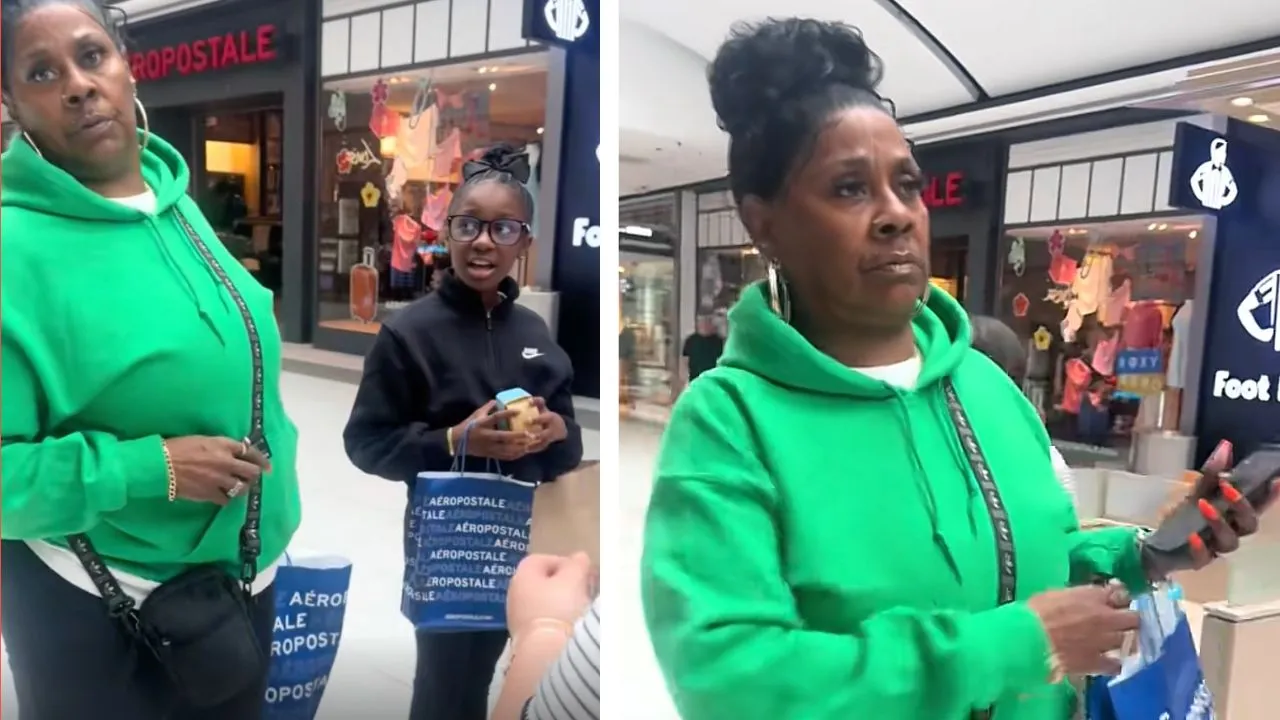
    The discourse gained additional momentum from a separate TikTok posted by creator @lovee.leahh_ (Leah Danzy), which documented a confrontation at a mall retail counter. In the clip, a female customer completes a purchase when the shop employee asks twice, “Do you want to tip?” The customer responds emphatically:

    “Hell no!”

    She continues, “No tip.” After the shopkeeper replies, “Ok! I just asked,” the customer counters, “I know, and I just told you,” and begins walking away. She adds, “Thank you! Have a good day,” then turns toward the camera and appears to address the person filming:

    ‘They are talking about f—- tip,’

    before the video ends. Danzy captioned the post: “I still can’t get over this? Ariel was so embarrassed #fypシ゚viral #fyp #grandmagonewild ♬ original sound – Leah Danzy.”

    Why This Matters

    The dual viral moments underscore a growing cultural flashpoint in the United States: the expansion of tip prompts beyond traditional full-service dining into counter service, retail, and self-checkout environments. While the federal tipped minimum wage remains $2.13 per hour in many states — making tips essential income for servers — consumers increasingly report “tip fatigue” amid inflation and ubiquitous digital prompts. The @Andjjj.7 video highlights the tension between servers who depend on 20% gratuity as a professional standard and diners who view tipping as discretionary or excessive. Meanwhile, the @lovee.leahh_ clip illustrates how tip requests in non-service contexts can provoke hostility. Neither TikTok experience has been independently verified by The Daily Dot, but together they reflect a nationwide debate over who should be tipped, how much, and whether the burden of fair wages should fall on customers or employers.

    Frequently Asked Questions

    What were the exact tip amounts left by the table of six women in the @Andjjj.7 video?

    The server showed six checks: $51 bill with $9 tip; $32 bill with $0 tip; $55 bill with $0 tip; $60 bill with $6 tip; $21 bill with $7 tip; $23 bill with $4 tip. The total bill was approximately $250.

    How did the retail customer in the @lovee.leahh_ video respond when asked to tip?

    The customer said “Hell no!” and “No tip.” After the employee said “Ok! I just asked,” she replied “I know, and I just told you,” wished them a good day, and told the camera, “They are talking about f—- tip.”

    Has The Daily Dot verified the events shown in these TikTok videos?

    No. The Daily Dot explicitly stated it was “unable to independently verify the experiences described by commenters on this video” and noted the details reflect the creators’ stated views and commenters’ individual accounts as shared on TikTok.
  • TikToker Tips $20 on $249 Bill at LA Restaurant, Posts Receipt — Comments Do the Math and React

    TikToker Tips $20 on $249 Bill at LA Restaurant, Posts Receipt — Comments Do the Math and React

    Key Highlights

    • TikTok creator @captain.t.roll posted a receipt from Ember & Vine in Los Angeles showing a $249 subtotal and a handwritten $20 tip, sparking a viral debate over tipping norms.
    • The creator argues tipping should be a flat dollar amount based on service effort, not a percentage of the bill, stating the industry has “brainwashed” diners into treating 20% as mandatory.
    • Commenters were divided, with some calculating a 20% tip would equal $58 ($50/hour for the server), while a self-identified cook criticized servers for expecting large tips while kitchen staff endure harder conditions.

    TikTok Receipt Ignites Debate Over Percentage-Based Tipping Culture

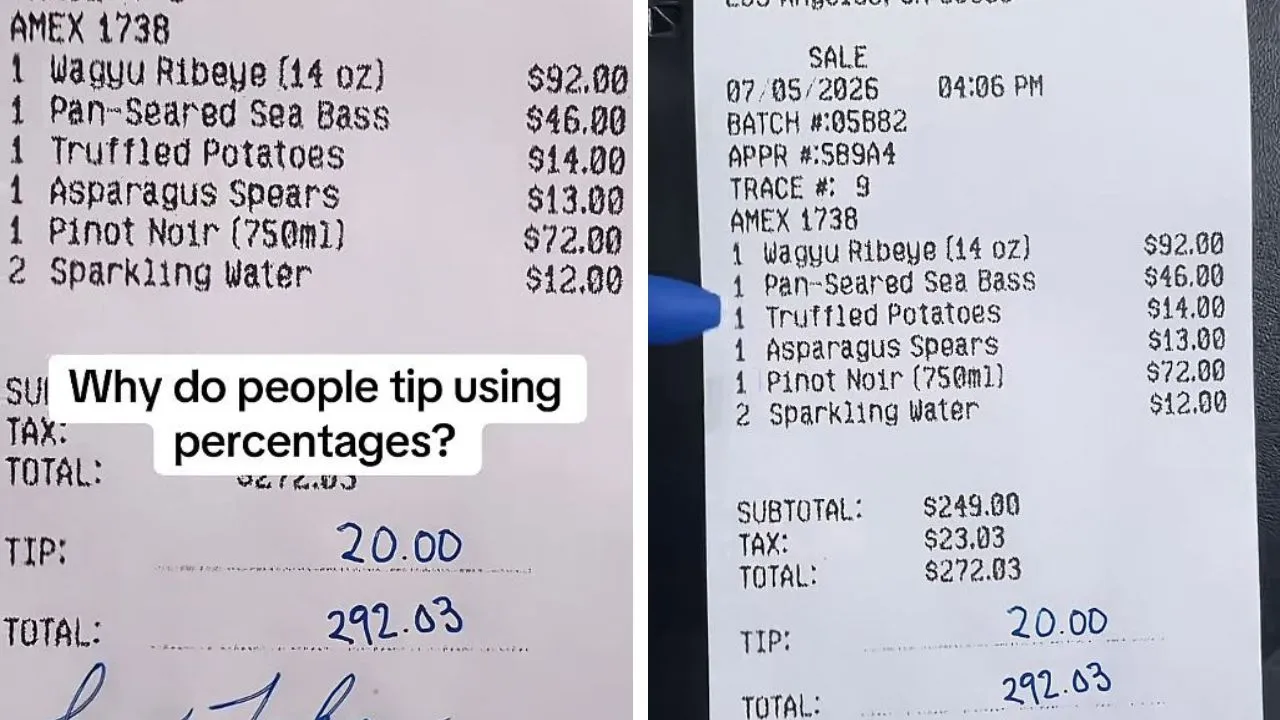
    A viral TikTok posted by user @captain.t.roll has reignited a heated conversation about American tipping customs after the creator shared a receipt from Ember & Vine, a restaurant in Los Angeles. The bill showed a subtotal of $249 for a meal that included a wagyu ribeye, pan-seared sea bass, truffled potatoes, asparagus spears, and a bottle of Pinot Noir. After tax, the total reached $272.03, and the diner added a handwritten tip of $20, bringing the final amount to $292.03. As of publication, the video had amassed more than 43,600 likes, 8,000 comments, and 6,700 shares, according to The Daily Dot.

    Creator Argues Service Effort Does Not Scale With Menu Prices

    In the video, @captain.t.roll challenged the prevailing expectation that tips should be calculated as a fixed percentage of the total bill. He argued that diners have been “brainwashed by the restaurant industry” into treating 20 percent as a mandatory standard rather than a voluntary gesture. The creator explained that he calculates tips based on the subtotal, not the post-tax total, and that his $20 tip represented less than 10 percent of the $249 subtotal. He maintained that this logic applies universally, whether dining at a fast-casual establishment or a higher-end venue like Ember & Vine, because the physical service—carrying food from the kitchen to the table—remains the same regardless of the restaurant’s pricing tier.

    The TikToker further contended that a higher-priced dish does not require additional labor from the server. “Any added value tied to a more expensive dish belongs to the kitchen staff who prepared it, not the person delivering it,” he stated, adding that his $20 tip equated to $20 an hour if his table was the only one served during that period. He pushed back against the notion that tipping norms are immutable, asserting that diners are free to set their own standard for what constitutes appropriate compensation for table service.

    Comment Section Erupts With Competing Calculations and Perspectives

    The comment section quickly became a forum for competing arithmetic and ideological positions. One commenter calculated that a 20 percent tip on the $292 total would amount to $58, remarking that the server “just made $50 an hour to carry out food to you.” Another user agreed with the creator’s premise, arguing that a $75 bottle of wine requires the same effort to serve as a $20 bottle, and therefore the tip should remain consistent rather than fluctuate with the menu price.

    A commenter identifying as a cook introduced a different dimension to the debate, criticizing the focus on server compensation while kitchen staff labor under more difficult conditions. The commenter wrote that servers expecting large tips ignore kitchen workers who are “sweating hot standing getting yelled at having to cook” while servers wait on tables and use their phones between orders. The Daily Dot noted it was unable to independently verify the identity of the customer in the video, the server involved, or the accuracy of the receipt shown, and emphasized that the details reflect the creator’s account and commenters’ opinions as shared on TikTok.

    Why This Matters

    The viral spread of this receipt underscores a growing cultural friction point in the United States: the expanding expectation of tipping across more service categories and at higher percentage thresholds, often termed “tipflation.” As menu prices rise with inflation, percentage-based tipping automatically increases server earnings without a corresponding increase in service labor, fueling arguments that the model is outdated. Simultaneously, the disparity between front-of-house and back-of-house compensation remains a structural issue in the restaurant industry, with kitchen staff often earning significantly less than servers who receive tips. The debate touches on broader questions about wage fairness, the responsibility of employers versus customers to compensate workers, and whether social pressure has transformed a voluntary gratuity into a de facto mandatory surcharge.

    Frequently Asked Questions

    What was the total bill and tip amount shown in the viral TikTok?

    The receipt from Ember & Vine in Los Angeles showed a subtotal of $249, a total of $272.03 after tax, and a handwritten tip of $20, bringing the final total to $292.03.

    What is the creator’s argument against percentage-based tipping?

    @captain.t.roll argues that tipping should be a flat dollar amount reflecting the labor of service, which does not change based on menu prices. He calculates tips on the subtotal, not the post-tax total, and believes diners have been “brainwashed by the restaurant industry” into treating 20% as mandatory.

    Has the receipt or the identities involved been verified?

    The Daily Dot reported it was unable to independently verify the identity of the customer in the video, the identity of the server, or the accuracy of the receipt shown. The details reflect the creator’s account and commenters’ opinions as shared on TikTok.

  • Woman Shocked by How Much Servers Rely on Tips: ‘It Shouldn’t Be On You to Pay Them’

    Woman Shocked by How Much Servers Rely on Tips: ‘It Shouldn’t Be On You to Pay Them’

    Key Highlights:

    • TikTok creator @smoothoperator3k went viral after admitting she was unaware that many U.S. restaurant servers depend on tips to reach minimum wage, sparking a debate with over 566,000 likes and 12,800 comments.
    • Federal law permits a $2.13/hour direct cash wage for tipped employees under a “tip credit” provision, provided tips bring total compensation to at least the $7.25/hour federal minimum; state laws often mandate higher base wages.
    • Restaurant workers in the comments clarified that even when paid a base wage, servers frequently “tip out” support staff and credit-card fees from their sales, meaning a zero-tip table can cost the server money out of pocket.

    The Viral Video That Exposed a Knowledge Gap

    A TikTok creator known as @smoothoperator3k ignited a widespread conversation about the economics of restaurant labor after posting a video confessing her surprise at learning how heavily servers rely on gratuities. In the clip, she explained that she had long assumed restaurants paid their employees a full wage and that tips were merely an optional bonus. The revelation that many servers operate under a tip-credit system—where employers count a portion of tips toward minimum-wage obligations—prompted her to share her newfound understanding with her audience. The video rapidly amassed more than 566,000 likes and 12,800 comments, turning a personal realization into a public forum on wage policy.

    How the Tip-Credit System Works Under Federal and State Law

    The discussion brought the mechanics of the Fair Labor Standards Act (FLSA) into sharp focus. Under current federal regulations, employers may pay eligible tipped workers a direct cash wage as low as $2.13 per hour, provided the employee’s tips raise their total hourly earnings to at least the federal minimum wage of $7.25 per hour. If tips fall short, the employer is legally required to make up the difference. However, state laws vary significantly: many states mandate higher direct cash wages, and several—including California, Oregon, and Washington—prohibit a tip credit entirely, requiring employers to pay the full state minimum wage before tips. This patchwork of regulations contributed to the confusion evident in the video’s comment section.

    Restaurant Workers Correct the Record on Pay Structures

    Current and former restaurant employees quickly entered the conversation to clarify how compensation actually functions on the floor. Several commenters who identified as Olive Garden servers disputed the creator’s assertion that the chain “doesn’t pay their servers anything.” One wrote, “Wait, no, I work at Olive Garden and we do indeed get paid minimum wage and tip.” Another added, “So they DO get paid… not JUST the tip…” A third server provided operational context: “And as a server, specifically for Olive Garden, you only get 3 tables so when you sit at my table for 4+ hours you’re also affecting their money.”

    Beyond base pay, servers detailed the hidden costs built into the tipping model. One commenter explained the “tip-out” structure: “If you tip me zero I still have to tip out the bar/bussers/food runners/credit card tax from the sales amount of everything you ordered. At that point I’m paying out of my own pocket to serve you.” Another highlighted the tax burden on the sub-minimum cash wage: “As a server we get paid around 2-3 dollars an hour, that gets taken in taxes. The legal loophole is that the tip plus the hourly should equal to minimum wage so they get away with it.” These firsthand accounts illustrated why many workers say they “survive mostly on their tips” even when a base wage is provided.

    Consumer Frustration and the Broader Tipping Debate

    The exchange also surfaced growing consumer fatigue with the current system. One TikToker shared that the pressure to tip had driven her away from dining out altogether: “That’s why I don’t eat out anymore. I’m tired of that system and feeling bad for only affording the food.” The sentiment reflects a broader national debate over whether the responsibility for a living wage should rest with employers or customers. While the Daily Dot noted it was unable to independently verify the specific claims made in the original video—since they are based solely on @smoothoperator3k’s account—the ensuing discussion underscores how little public awareness exists about the legal framework governing tipped labor.

    Why This Matters

    The viral moment highlights a structural opacity in the U.S. service economy: millions of diners participate in a tipping custom without understanding the wage laws that make tips a de facto wage subsidy rather than a pure gratuity. With the federal tipped minimum wage frozen at $2.13 since 1991 and inflation eroding its value, the gap between the direct cash wage and a living income has widened. Meanwhile, state-level reforms—such as ballot initiatives to eliminate the tip credit in places like Washington, D.C., and Chicago—signal a shifting policy landscape. For workers, the stakes are immediate: a zero-tip table can result in a net loss after mandatory tip-outs and credit-card processing fees. For consumers, the debate raises ethical questions about whether voluntary generosity should underwrite a legal wage floor.

    Frequently Asked Questions

    What is the federal tipped minimum wage?
    The federal cash wage for tipped employees is $2.13 per hour, provided tips bring total compensation to at least $7.25 per hour. If they do not, the employer must cover the shortfall.
    Do all states follow the federal tip-credit rule?
    No. Many states require a higher direct cash wage, and at least seven states—including California, Oregon, and Washington—prohibit a tip credit entirely, meaning servers receive the full state minimum wage plus tips.
    What does “tipping out” mean for servers?
    “Tipping out” refers to the practice of servers sharing a percentage of their sales or tips with support staff such as bussers, food runners, bartenders, and sometimes covering credit-card processing fees. If a customer leaves no tip, the server may still owe these tip-outs, effectively paying to serve that table.
  • Woman Says ‘Hell No’ to Mall Kiosk Tip Request; Cashier Replies ‘I Just Asked’

    Woman Says ‘Hell No’ to Mall Kiosk Tip Request; Cashier Replies ‘I Just Asked’

    Key Highlights

    • A TikTok video capturing a woman’s blunt refusal to tip at a mall retail counter has amassed over 3 million views, igniting widespread debate about tipping expectations in non-service settings.
    • The exchange, recorded by user @lovee.leahh_, shows the customer responding “Hell no!” when asked twice if she wanted to leave a tip, prompting the cashier to reply, “Ok! I just asked.”
    • Commenters overwhelmingly supported the shopper, with many arguing tipping should be reserved for traditional service roles like restaurant servers and stylists, not retail transactions.

    Viral Mall Encounter Sparks Renewed Tipping Culture Debate

    A routine checkout at a mall retail shop has become the latest flashpoint in America’s ongoing conversation about tipping fatigue. In a video posted by TikTok creator Leah Danzy under the handle @lovee.leahh_, a woman identified only as a shopper is heard declining a tip prompt with striking candor. The clip, which had garnered 3 million views and 3,244 comments at the time of publication, captures a moment that resonated deeply with viewers frustrated by the proliferation of tip requests across consumer transactions.

    The Exchange at the Counter

    The video opens with the woman standing at a payment counter, preparing to pay for her purchases. The shop employee can be heard asking twice, “Do you want to tip?” The customer responds immediately and emphatically: “Hell no!” followed by “No tip.”

    The cashier replies, “Ok! I just asked.” Unfazed, the woman counters, “I know, and I just told you,” and begins to walk away. A young girl accompanying her—identified in the caption as Ariel—watches the interaction with her mouth open in apparent surprise. As she exits, the shopper tells the employee, “Thank you! Have a good day.” She then turns toward the camera and remarks, ‘They are talking about f—— tip,’ before the video ends.

    The caption reads: “I still can’t get over this. Ariel was so embarrassed.”

    Comment Section Reflects Broad Frustration

    The response in the comments section was swift and largely sympathetic to the shopper. One user wrote, “I’m done with tips. Only at restaurants, and that’s all.” Another asked, “Everyone getting tips! Can I get one at my corporate job? Damn.” A third commenter questioned the context: “What did she purchase? I feel like tips are for restaurant servers and stylists.” A fourth summed up the prevailing sentiment: “She’s not wrong she just spent her money to purchase an item what does she need a tip for ?”

    The discourse mirrors a growing national sentiment that tipping prompts have overreached beyond traditional hospitality roles into retail, counter-service, and even self-checkout scenarios.

    Context: A Pattern of Tipping Controversies

    This incident follows a prior Daily Dot report on TikTok creator @gemma.moro, a waitress who shared a video detailing a table of eight that allegedly left a $10 tip on a bill exceeding $300. That video accumulated over 780,000 views and 6,100 comments. In her car after the shift, @gemma.moro expressed frustration that the large party occupied her section for hours, preventing her from serving other tables that might have tipped more generously. She stated she would have been less bothered by the low amount if the table had been easier to serve. Her video included the pointed caption: “Don’t go out to eat if you can’t afford to tip sorry ??”

    The Daily Dot was unable to independently verify the total bill amount, the tip left, or the identities of the family described in the @gemma.moro video. The details reflect the accounts shared by @lovee.leahh_ and @gemma.moro on TikTok.

    Why This Matters

    The viral spread of the mall encounter underscores a critical inflection point in U.S. tipping culture. As point-of-sale systems increasingly default to tip prompts—often with preset percentages of 15%, 20%, or 25%—consumers are confronting gratuity requests in contexts where no table service, personal care, or customized labor occurs. Retail workers, unlike tipped restaurant servers, typically earn at least the standard minimum wage, raising questions about whether tip screens serve as a subtle wage subsidy shift from employers to customers. The backlash captured in the comments suggests a growing consumer pushback against what many perceive as “tip creep,” with potential implications for how businesses configure payment terminals and how policymakers might address wage transparency in service-adjacent roles.

    Frequently Asked Questions

    Who posted the viral video of the woman refusing to tip at the mall?
    The video was posted by TikTok user @lovee.leahh_ (Leah Danzy).
    What exactly did the woman say when asked if she wanted to tip?
    She responded, “Hell no!” followed by “No tip.”
    How did the cashier react to the refusal?
    The cashier replied, “Ok! I just asked.”
  • Woman Defends Tipping Culture Despite Making Just $5 an Hour: ‘The Money Can Be Really Good’

    Woman Defends Tipping Culture Despite Making Just $5 an Hour: ‘The Money Can Be Really Good’

    A TikTok video from bartender Dana May, known as @ayedanamay, has reignited the debate over tipping culture in the United States. The clip, which had garnered 24,900 likes and 1,125 comments at the time of reporting, captures May explaining why she believes tipping remains essential — both for service workers and for consumers’ wallets.

    The Economics Behind a $5 Hourly Wage

    May earns a base pay of just $5 per hour at her bartending job. Like many tipped employees, she relies on customer gratuities to make a living wage. She argues that without tips, restaurants would be forced to raise menu prices significantly to cover higher labor costs, ultimately passing the expense to diners anyway.

    “In a perfect world, the restaurant would pay her a living wage,” the video narrative explains, “she believes that isn’t realistic.” May contends that eliminating tipping would not lower costs for customers; instead, it would shift the burden directly onto the bill.

    Anticipating Backlash

    May acknowledged she expected criticism for her stance. She emphasized that her low base wage is not her fault and that tips allow her to support herself. She also noted that bartending can be financially rewarding when tipping culture functions as intended. However, she warned that a widespread rejection of tipping could fundamentally alter the restaurant industry’s economy, affecting both workers and patrons.

    TikTok Commenters Split on Tipping Obligations

    The comments section reflected deep division. Some users outright rejected the expectation to tip.

    “I never tip, it’s not required,”

    one commenter wrote. Another challenged:

    “Show me that tipping is mandatory.”

    May replied directly, calling the opinion “brave” to share publicly.

    Others pointed out that food prices are rising regardless of tipping practices, suggesting higher bills are inevitable. Fellow service workers weighed in with support for May’s perspective.

    “As a bartender, if we were paid a “livable wage” and tipping wasn’t a thing anymore, I would not be in the industry anymore. You think I’m getting paid ~$15/hr to be HARASSED by MEN??,”

    one commenter stated, highlighting the non-monetary challenges of the job that tips help offset.

    Broader Implications for the Service Industry

    The discourse underscores a national tension: how much responsibility should fall on customers to compensate service staff? While May and other industry workers view tips as a critical component of their income — and a mechanism that keeps base menu prices lower — a growing segment of diners questions the fairness of a system that shifts wage obligations onto patrons.

    The Daily Dot was unable to independently verify the details described in the TikTok video. The information above is based solely on Dana May’s account of her experience and views on tipping culture.