Tag: TikTok

  • Woman Shares What Went Wrong During Her First Au Pair Job in Spain: ‘I Should Have Never Done This’

    Woman Shares What Went Wrong During Her First Au Pair Job in Spain: ‘I Should Have Never Done This’

    Key Highlights

    • TikTok creator @briellehardman’s video detailing her difficult first au pair experience in Spain has garnered 5.4 million views and over 1,000 comments.
    • Brielle alleges a dispute over a water bottle, language barriers, and being paid $75 weekly escalated into the father yelling at her and the children threatening to withhold family meals.
    • The Daily Dot was unable to independently verify the events, which are based solely on Brielle’s account; commenters were largely sympathetic but noted au pair experiences vary widely.

    TikTok Creator Details Alleged ‘Au Pair Horror Story’ From Spain

    A viral TikTok video posted by user @briellehardman has ignited a widespread conversation about the realities of working as an au pair abroad. In a “get ready with me” style storytime post that has accumulated 5.4 million views and more than 1,000 comments, Brielle recounts what she describes as a deteriorating living and working arrangement with a host family in Spain. The Daily Dot was unable to independently verify the events described, which are based solely on Brielle’s first-person account.

    Initial Optimism Gives Way to Friction

    Brielle explains that the arrangement began with high hopes. After searching for months, she connected with a family with two daughters, aged eight and nine. “I had been searching for months and I finally came across this perfect family. There were two daughters. One was nine and one was eight. Basically, I had a phone call with them and they were perfect. So we ended up signing the contract. So I started at the beginning of June,” she says. The trip also marked her first time traveling to Europe; she met her brother in Italy for a week before heading to Spain.

    Upon arrival, Brielle says she immediately liked the father and discovered they had mutual friends, a coincidence she found strange. Initially, things appeared to go well with the children, but tension arose over sleeping arrangements. “One of the daughters moved in with her sister so they were sharing a room and I took [the older] daughter’s room. So obviously she’s not used to that and she had been living in her own room this whole time and now has to get up and move her stuff for me. And I think that is where our first issue started,” she recalls.

    Weekend Autonomy, Language Barriers, and a Water Bottle Dispute

    According to Brielle, the first week proceeded smoothly, and she exercised typical au pair weekend autonomy, including going out and returning home around 3 a.m., which she says the parents accepted. Conflict emerged during a weekend phone call with her mother. Brielle emphasizes she was not working at the time and notes she was earning relatively little for the arrangement. One daughter repeatedly interrupted the call despite being asked to stop.

    The situation escalated when the child accused Brielle of stealing her water bottle. Brielle states she had a receipt proving she purchased the bottle herself. Communication difficulties compounded the dispute. “Mind you they are not fluent in English at all so us translating had to do a lot with translating on the phone and just trying to figure out things with our hands,” she recalls. The disagreement reportedly continued for hours.

    Frustrated by the persistent accusations, Brielle says she eventually lost her composure. “I get mad and I’m like, okay, can you please leave. I’m being very polite, mind you she’s still accusing me of things and I’m just getting really annoyed,” she says. She admits to a moment she regrets: “So finally, I should have never done this, but I was just like, ‘Out,’” adding that she pointed toward the door. The child reportedly retaliated by threatening to tell her father that Brielle could not have dinner with the family if she refused to spend time with her.

    Allegations of Host Father Outburst and Low Pay Draw Viewer Ire

    Brielle claims the water bottle incident was only the beginning, alleging that the father later yelled at her, which she believes further damaged her relationship with the children. A specific detail regarding compensation—$75 a week—drew sharp reactions in the comment section.

    Viewers largely sided with Brielle. One user wrote, “I feel like Au Pairs are expected to do so much outside of working hours and it’s SO stressful living with another family like omg.” Another reacted to the pay rate: “$75 a week?! Hell nah I would’ve quit right there the moment that man yelled. How much did they think they were paying you? That is WILD.” However, experiences differed; a commenter currently working as an au pair in France wrote, “this makes me so sad bc i’m an au pair with my family in france right now and i love them.”

    Why This Matters: The Precarious Nature of Au Pair Arrangements

    Brielle’s viral story highlights the inherent vulnerabilities in the au pair model, which sits at the intersection of cultural exchange, domestic labor, and informal family dynamics. Unlike standard employment, au pairs often live in their employer’s home, blurring the lines between work hours and personal time, and are frequently young adults navigating a foreign country, language, and legal system alone. The alleged $75 weekly stipend—far below minimum wage thresholds in many Western countries—underscores ongoing debates about whether the “pocket money” model exploits young caregivers under the guise of cultural immersion. Language barriers, as described by Brielle, can isolate au pairs further, making conflict resolution and boundary-setting exponentially harder. While many au pairs report positive, life-changing experiences, the lack of standardized oversight and the power imbalance inherent in the live-in arrangement mean negative experiences can escalate quickly with limited recourse for the worker.

    Frequently Asked Questions

    How much was Brielle allegedly paid for her au pair work in Spain?

    According to Brielle’s account and subsequent commenters referencing her video, she was earning $75 per week. This figure sparked significant outrage among viewers who considered it extremely low for full-time childcare and live-in domestic work.

    Has the host family responded to these allegations?

    No. The Daily Dot reports that they were unable to independently verify the events described in the video, which are based solely on @briellehardman’s account. There is no public statement from the host family identified in the source material.

    Are all au pair experiences negative?

    No. As noted in the TikTok comments and the source article, experiences vary significantly. One commenter explicitly stated they are currently an au pair in France and “love them,” referring to their host family. The article emphasizes that every au pair and host-family arrangement is different, and Brielle’s experience reflects her own account.


  • Quavo and Takeoff’s ‘Hotel Lobby’ Performance Transformed by the Latest AI Trend

    Quavo and Takeoff’s ‘Hotel Lobby’ Performance Transformed by the Latest AI Trend

    Key Highlights

    • The “Hotel Lobby” AI trend is based on Quavo and Takeoff’s COLORS performance of “Hotel Lobby.”
    • AI videos replace Quavo and Takeoff with two different people while recreating the performance setup.
    • The trend gained popularity on TikTok and X/Twitter from the middle to late September 2026.

    What Is the Quavo and Takeoff “Hotel Lobby” AI Trend?

    The Quavo and Takeoff “Hotel Lobby” AI trend is a video format inspired by the pair’s COLORS show performance of the song “Hotel Lobby.” In the original performance, Quavo and Takeoff sing over an orange background while sharing a microphone suspended from the ceiling.

    Using artificial intelligence, creators adapt the recognizable performance by replacing Quavo and Takeoff with two other people. The AI-generated versions retain the central visual concept: two performers singing together against the distinctive orange backdrop and using the hanging microphone setup.

    How the “Hotel Lobby” Trend Spread Online

    The trend was popularized across social media platforms including TikTok and X/Twitter. Its online growth took place from the middle to late September 2026, as users shared AI-generated adaptations of the Quavo and Takeoff performance.

    The format is built around a clearly identifiable music-video presentation rather than a new recording of “Hotel Lobby.” By substituting the performers while preserving the arrangement associated with Quavo and Takeoff’s COLORS appearance, the trend gives creators a consistent template for producing and sharing variations.

    Why This Matters

    The “Hotel Lobby” trend illustrates how AI video tools can transform a recognizable music performance into a repeatable social-media format. Quavo and Takeoff’s orange-background COLORS performance provides the visual framework, while AI enables users to place different people into that framework. Its spread on TikTok and X/Twitter shows how a music performance can become the basis for platform-driven video adaptations.

    Frequently Asked Questions

    What is the Quavo and Takeoff “Hotel Lobby” AI trend?

    It is an AI video trend based on Quavo and Takeoff’s COLORS show performance of “Hotel Lobby.”

    What does AI change in the videos?

    AI is used to replace Quavo and Takeoff with two other people while recreating the performance format.

    When and where did the trend become popular?

    The trend became popular on platforms including TikTok and X/Twitter from the middle to late September 2026.

  • Country Star Ella Langley Rejects Fan’s Date Request Amid Tucker Wetmore Romance Rumors

    Country Star Ella Langley Rejects Fan’s Date Request Amid Tucker Wetmore Romance Rumors

    Key Highlights

    • Country artists Langley and Wetmore were photographed departing the Nashville Songwriter Awards together.
    • Both performers are active figures in the contemporary country music scene.
    • The joint appearance signals connection within Nashville’s songwriting community.

    Industry Event Appearance

    Country music artists Langley and Wetmore were recently spotted leaving the Nashville Songwriter Awards in each other’s company. The sighting places both performers at one of Music City’s premier annual gatherings dedicated to honoring the craft of songwriting. The Nashville Songwriter Awards, presented by the Nashville Songwriters Association International (NSAI), recognize outstanding achievement in the profession and serve as a focal point for the city’s creative community each year.

    Rising Country Artists

    Langley and Wetmore each represent the current wave of country talent building careers through a blend of traditional storytelling and modern production. Their presence at an event specifically celebrating songwriters underscores the importance both artists place on the written foundation of the genre. While neither artist was cited as a nominee or winner in the available report, attendance alone marks participation in the professional rituals that sustain Nashville’s ecosystem.

    Songwriter Community Recognition

    The Nashville Songwriter Awards function as more than a ceremony; they operate as a nexus where artists, publishers, and writers converge. For performers like Langley and Wetmore, visibility at such events reinforces relationships with the writers whose material may shape future projects. The joint departure suggests a shared professional orbit, whether through co-writing sessions, label affiliations, or touring circuits that frequently intersect in Nashville’s tightly knit industry.

    Why This Matters

    The Nashville Songwriter Awards stand as a cornerstone event for the genre’s creative infrastructure. Unlike performer-centric ceremonies, this program directs attention to the architects of the songs that define country radio and streaming playlists. When recording artists attend, it validates the symbiotic relationship between those who write the material and those who bring it to audiences. For emerging acts, these gatherings offer access to decision-makers and collaborators who can influence career trajectory. The appearance of Langley and Wetmore together hints at the informal networking that often precedes formal announcements—writing appointments, tour partnerships, or label showcases—that drive the business forward.

    Frequently Asked Questions

    Who are Langley and Wetmore?

    Langley and Wetmore are both country music artists active in the Nashville scene. Each has released original music and performs within the contemporary country genre.

    What is the Nashville Songwriter Awards?

    The Nashville Songwriter Awards is an annual ceremony hosted by the Nashville Songwriters Association International (NSAI) that honors achievement in songwriting across multiple categories. It is a key industry event attended by writers, artists, publishers, and music executives.

    Why is their joint appearance notable?

    Public sightings of artists together at industry functions often signal professional alignment—shared management, publishing deals, writing collaborations, or touring plans. In Nashville’s relationship-driven market, visibility at songwriter-centric events carries particular weight for career development.

  • Social Media Platforms Refuse Paid Ads for Musk Documentary

    Social Media Platforms Refuse Paid Ads for Musk Documentary

    Key Highlights

    • Alex Gibney’s four-hour documentary Musk faces advertising bans on YouTube, TikTok, Meta, and X just two weeks before its October 9 theatrical release.
    • Platforms cited “political content” for rejecting the trailer, though the film is a documentary, not a political campaign; Meta has rejected an appeal while YouTube and TikTok are reviewing.
    • Universal Pictures reaffirmed commitment to international distribution after reported hesitation, while the incident mirrors Amazon MGM Studios dropping a film on OpenAI’s Sam Altman.

    Documentary Premieres to Acclaim but Hits Promotion Wall

    Alex Gibney’s highly anticipated four-hour documentary Musk premiered to rave reviews at the Venice International Film Festival, setting the stage for a domestic theatrical rollout by Bleecker Street on October 9. However, the distributor is encountering an unprecedented promotional blockade: major social media platforms have refused to accept paid advertising for the film’s trailer. According to reporting by The Hollywood Reporter, YouTube, TikTok, and Meta—which owns Instagram and Facebook—have all declined to run the promotional spots. Notably, X, the platform owned by the film’s subject Elon Musk, has also reportedly refused advertising for Bleecker Street’s other upcoming releases.

    Platforms Cite “Political Content” Policies

    The platforms justified the rejections by classifying the trailer as “political content.” TikTok and Meta maintain policies prohibiting paid political and campaign ads, with Meta’s restrictions tracing back to the fallout from the Cambridge Analytica scandal. YouTube does permit political advertising provided it includes “paid for” disclosures. While the Musk trailer contains references to the 2024 election, the film itself is a documentary examination of the tech billionaire, not a political campaign advertisement. Bleecker Street has formally appealed the decisions across all three platforms. As of the latest reports, Meta has rejected the appeal outright, while YouTube and TikTok are still considering the distributor’s request.

    Universal Reaffirms International Commitment Amid Industry Jitters

    The advertising snub is the latest turbulence for the production. Universal Pictures, handling international distribution, reportedly grew hesitant about releasing the film. However, Evan Langweiler, Universal’s Executive Vice President of Global Communications and Media Relations, clarified the studio’s position to The Hollywood Reporter, stating, “the studio remains committed to releasing [Musk] in theaters internationally.” The situation highlights a growing friction point in the entertainment industry regarding the portrayal of powerful tech figures. The incident recalls Amazon MGM Studios’ decision to drop Luca Guadagnino’s Artificial, a fall release centered on OpenAI CEO Sam Altman. Additionally, Aaron Sorkin’s The Social Reckoning, targeting Meta CEO Mark Zuckerberg, is also slated for release this fall, suggesting a broader trend of scrutiny facing Silicon Valley leadership.

    Why This Matters

    The refusal by major social platforms to carry advertising for a critically acclaimed documentary raises significant questions about the intersection of content moderation, political advertising definitions, and corporate influence over information flow. When the platform owned by the documentary’s subject (X) and the platforms owned by his peers (Meta) or competitors align to restrict promotional reach, it creates a de facto “shadow ban” on cultural discourse surrounding powerful individuals. The broad application of “political content” policies to journalistic or documentary works threatens the ability of distributors to market non-fiction films that examine public figures involved in politics. With Universal recommitting to the international release and similar films on Sam Altman and Mark Zuckerberg in the pipeline, the industry is testing the boundaries of platform accountability and the definition of political speech in the 2024 election cycle.

    Frequently Asked Questions

    When does Musk hit theaters?
    The documentary opens in U.S. theaters on October 9, distributed by Bleecker Street. Universal Pictures is handling the international theatrical release.
    Why did YouTube, TikTok, and Meta reject the trailer ads?
    The platforms classified the trailer as “political content.” TikTok and Meta ban paid political ads entirely, while YouTube allows them with disclosures. The trailer references the 2024 election, but the film is a documentary, not a campaign ad.
    Has the distributor appealed the decision?
    Yes, Bleecker Street has appealed. Meta has rejected the appeal outright. YouTube and TikTok are currently reviewing the appeal.
  • Ella Langley Rejects Fan Who Asked Her Out, Delivers Deadpan Reply

    Ella Langley Rejects Fan Who Asked Her Out, Delivers Deadpan Reply

    Key Highlights:

    • Country artist Ella Langley went viral on TikTok after a fan publicly asked her out during what appears to be a live interaction.
    • Langley delivered a sharp, humorous rejection that resonated widely across social media platforms.
    • The moment highlights the increasing visibility of rising country stars on short-form video platforms and their direct engagement with fans.

    Ella Langley’s Viral TikTok Exchange Captures Social Media Attention

    Rising country music artist Ella Langley became the center of a viral social media moment after a fan identified as TikTok user Tiki boldly attempted to ask her out during an apparent live or recorded interaction. The exchange, captured and shared on TikTok, quickly gained traction as viewers reacted to Langley’s quick-witted and blunt response, which has been described by observers as both “devastating” and “hilarious.” The clip underscores the unscripted nature of artist-fan interactions on platforms like TikTok, where moments can escalate from casual engagement to widely shared entertainment in minutes.

    The Fan’s Bold Approach and the Artist’s Sharp Reply

    According to the footage circulating online, Tiki seized a moment of direct access to shout his proposal at Langley, referencing her song “Choosin’” in the process. While the exact wording of Langley’s retort is preserved in the original video, accounts describe it as a decisive shutdown delivered with comedic timing that left the fan—and the audience—stunned. The interaction exemplifies the high-risk, high-reward dynamic of shooting one’s shot in a public digital forum, particularly when the target is a performer known for lyrical candor and stage presence.

    Social Media Amplifies Unfiltered Celebrity Moments

    TikTok’s algorithmic reach ensured the clip spread rapidly beyond Langley’s existing follower base, landing on “For You” pages of users unfamiliar with her music. Comment sections filled with reactions praising her composure and humor, while others sympathized with Tiki’s public rejection. For an artist in the growth phase of her career, such organic virality offers exposure that traditional promotion cannot buy, even if the context is a lighthearted personal boundary being enforced. The incident also reflects a broader trend where country artists, historically reliant on radio and touring, are leveraging short-form video to build personality-driven connections with younger demographics.

    Why This Matters

    Ella Langley’s viral moment is more than a fleeting joke—it signals the shifting power dynamics between country musicians and their audiences. In an era where TikTok drives music discovery and chart performance, artists who can navigate live, unfiltered interactions with authenticity gain a competitive edge. Langley, who has been building momentum with releases like “Choosin’” and collaborations with artists such as Riley Green, benefits from the clip reinforcing her brand as relatable, sharp, and unafraid to set boundaries. For the industry, it’s a reminder that the next generation of country stars is being shaped not just in writers’ rooms or on tour buses, but in real-time comments sections and duet videos.

    Frequently Asked Questions

    Who is Ella Langley?
    Ella Langley is an American country music singer-songwriter from Alabama, known for tracks like “Choosin’” and “If You Have To Ask.” She has gained recognition for her blend of traditional country storytelling with a modern, rock-influenced edge.
    What song was referenced in the TikTok interaction?
    The fan, Tiki, referenced Langley’s song “Choosin’” during his attempt to ask her out, tying his proposal to the track’s themes.
    Where can the original viral video be found?
    The clip was originally posted on TikTok by the user Tiki and has since been widely shared across the platform and reposted on entertainment news outlets covering the moment.
  • Woman Says Dating in NYC Has Become Complicated: ‘Why Is Everyone in New York in the Most Evil Situationship?’

    Woman Says Dating in NYC Has Become Complicated: ‘Why Is Everyone in New York in the Most Evil Situationship?’

    Key Highlights

    • TikTok creator @groovyrockerchick questioned why New York City dating culture appears dominated by undefined “situationships” rather than committed relationships, garnering 49,300 views.
    • Commenters shared polarized views: some called NYC dating “impossible” for commitment-seekers, while others defended the freedom to choose non-traditional relationship structures.
    • The discussion highlighted generational divides, with commenters noting shifting priorities in one’s 40s and the declining centrality of marriage amid expanded life and career options.

    TikTok Creator Sparks Debate Over New York City’s ‘Situationship’ Culture

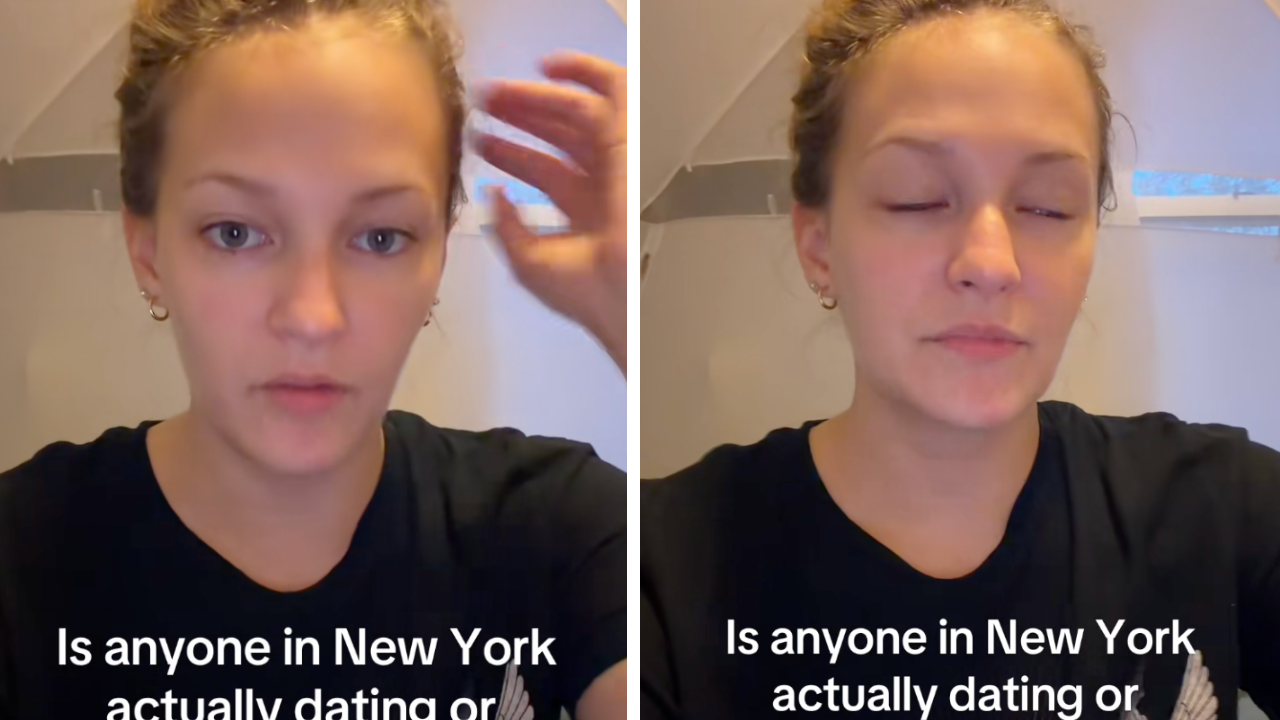
    TikTok creator @groovyrockerchick ignited a widespread conversation about modern dating dynamics in New York City after posting a video questioning the prevalence of ambiguous romantic arrangements. The video, which accumulated 49,300 views and 253 comments as of publication, struck a nerve with viewers who recognized the pattern she described. Her central inquiry was direct and pointed: “Why is everyone in New York in the most evil situationship of all time?”

    Defining the ‘Situationship’ Phenomenon

    The term “situationship” has entered mainstream lexicon to describe romantic or intimate connections that lack clearly defined expectations, labels, or traditional relationship milestones. According to @groovyrockerchick, this dynamic has become a recurring theme in her interactions with New Yorkers, particularly those in their late 30s and early 40s. She recounted a familiar exchange: when asking whether a date was a boyfriend or if the connection was official, the response was frequently evasive. “I can tell they’re gonna tell me some bulls— ’cause they pull this face,” she said. “I’m like, ‘What the f— are you about to tell me?’ They go, ‘Um, it’s kind of, like, complicated. It’s kind of like this. On again, off again.’” She underscored the disconnect between pop-culture fantasies and reality, adding, “This is not Sex in the City.”

    Viewer Responses Reflect a Spectrum of Frustration and Acceptance

    The comment section quickly became a forum for competing narratives about dating in the city. One commenter painted a bleak picture for those seeking long-term partnership: “The dating scene is different. Nobody young is looking for commitment in NY, just fun and flirting. And the people looking for it can’t find it.” Another went further, advising against dating in the city entirely: “Dating in New York is impossible, genuinely don’t date unless you leave New York. You will not find someone there.”

    Not all perspectives centered on younger daters. A commenter addressing midlife dating offered a sobering assessment: “If you are single in your 40s, there is very little chance of finding a serious relationship,” suggesting that priorities often shift toward peace and independence over partnership. The conversation also expanded into broader philosophical territory regarding relationship structures. One viewer defended autonomy in choosing non-committal paths: “So if you don’t wanna be in a committed relationship — you’re free to do so! Marriage isn’t the center of the world anymore when your options for life, career, etc are as big as you can dream them to be.”

    Why This Matters: Shifting Relationship Norms in Urban Centers

    The viral discussion reflects deeper sociological shifts in how intimacy and commitment are negotiated in major metropolitan areas like New York City. High cost of living, transient populations, demanding career cultures, and the proliferation of dating apps have all been cited in academic and journalistic analyses as factors contributing to delayed marriage and the rise of label-less relationships. The concept of “situationships” has been explored by relationship therapists and sociologists as a response to ambiguity aversion and the paradox of choice — where abundant options can lead to decision paralysis rather than fulfillment. The Daily Dot noted it was “unable to independently verify the broader claims about New York City’s dating culture, which are based on @groovyrockerchick’s observations and the personal experiences shared by commenters.” However, the volume of engagement signals that the creator’s question resonated with a widely felt, if anecdotal, reality. As demographic data shows declining marriage rates and rising median age of first marriage nationwide, conversations like this one on social media serve as real-time barometers of changing cultural scripts around love, commitment, and personal freedom.

    Frequently Asked Questions

    What is a ‘situationship’?

    A situationship is a romantic or intimate relationship that lacks clearly defined expectations, labels, or traditional commitment markers such as exclusivity or long-term planning. It occupies a gray area between casual dating and a formal partnership.

    Who is @groovyrockerchick?

    @groovyrockerchick is a TikTok content creator who posted a video critiquing New York City’s dating culture, specifically the prevalence of undefined “situationships” among people in their late 30s and early 40s. Her video received 49,300 views and 253 comments.

    Is dating in New York City really harder than other cities?

    The experiences shared in the video and comments are anecdotal and not independently verified by The Daily Dot. However, common factors cited in urban dating difficulties include high cost of living, transient populations, career-focused lifestyles, and the paradox of choice created by dating apps. Experiences vary widely by individual.

  • Man Warns: Never Share “Your Personal Business” With Coworkers

    Man Warns: Never Share “Your Personal Business” With Coworkers

    Key Highlights:

    • TikTok creator Elian (@dailydoseofelian) went viral advising workers to “lie like your life depends on it” to coworkers, arguing colleagues are not family and personal privacy must be protected.
    • The video amassed over 218,800 views and 3,600 comments, sparking debate about workplace boundaries, with many users sharing elaborate personal fabrications they maintain at work.
    • Commenters also highlighted alternative strategies—strict information minimalism—and warned that lies can become unsustainable when real-life circumstances change.

    TikTok Creator Sparks Debate on Workplace Transparency

    TikTok personality Elian, known by the handle @dailydoseofelian, ignited a widespread conversation about professional boundaries after posting a video that bluntly advised viewers to deceive their colleagues whenever possible. In the clip, which has garnered 218,800 views and 3,622 comments, Elian argued that coworkers do not merit the same level of honesty reserved for family, urging his audience to guard their private lives aggressively. “Lie like your life depends on it,” he wrote in the caption, adding that “coworkers are not family, so people do not necessarily need to be completely honest with them.” The post, tagged with #corporatelife, #workplace, #officehumor, and #9to5life, quickly became a lightning rod for contrasting philosophies on office disclosure.

    Commenters Embrace Fabrication as a Privacy Shield

    The response in the comment section revealed a spectrum of tactics, with many users endorsing active deception as a form of self-protection. One commenter summarized the prevailing sentiment: “A polite reminder your colleagues ain’t your friends.” Others treated the practice as a creative exercise, inventing entirely separate backstories for different audiences. “In fact different stories to everyone, tell one you’re married, tell one you are gay and tell your boss you are single,” one user joked. Another confessed, “I’m thinking of putting a ring on and telling them that I’m engaged just because I love lying for no reason sometimes,” while a third admitted, “Am a liar, especially when asked questions that don’t concern them.” Perhaps the most elaborate example came from a user who wrote, “My favorite hobbies. At my previous job I was a widow with 2 kids. Mind you that man is very much alive heish.” These anecdotes illustrate a community that views strategic misinformation as both a defensive necessity and, for some, an amusing pastime.

    Others Caution Against the Complexity of Lies

    Not all participants advocated for falsehoods. Several commenters described being “in too deep” after oversharing early in their employment. “Teach me your ways, they even know my birthmark,” one TikTok user lamented, while another confessed, “Started a new job last week they already know my whole history.” A different faction promoted radical minimalism instead of invention. “I just do my job and go home. My colleagues know NOTHING about me. Last Friday, they were shocked to hear from someone that my birthday is the next day. I even sit alone during lunch. It works for me,” one person wrote. Another agreed: “The moment I realized that the only thing my colleagues should know about me is my name and my appearance, it serves me better.” Skeptics also warned that lies carry maintenance costs: “I was single and hated men but now in real life I’m pregnant, they’re shocked,” shared one commenter, highlighting how real-life developments can expose or complicate fabricated narratives.

    Why This Matters

    The viral discussion underscores a growing tension in modern work culture between performative collegiality and genuine privacy. As open-plan offices, Slack channels, and team-building rituals blur professional and personal lines, employees are increasingly questioning how much of themselves they must surrender to belong. The debate also reflects generational shifts: younger workers, shaped by gig economies and remote onboarding, often view loyalty to an employer as transactional rather than familial. Meanwhile, HR experts caution that while discretion is prudent, deliberate deception—especially on matters that could affect benefits, leave policies, or workplace safety—may carry legal or ethical risks. The conversation Elian sparked is likely to persist as organizations navigate hybrid norms and employees recalibrate the boundaries of trust.

    Frequently Asked Questions

    Who is Elian and what platform does he use?
    Elian is a TikTok content creator who posts under the username @dailydoseofelian. His videos cover a wide range of topics, and the clip discussed here focuses on workplace privacy.
    What was the exact advice Elian gave in his viral video?
    Elian advised viewers to “lie like your life depends on it” when interacting with coworkers, stating in the caption that “coworkers are not family, so people do not necessarily need to be completely honest with them.”
    Did The Daily Dot verify the personal stories shared in the comments?
    No. The Daily Dot explicitly stated it “was unable to independently verify the personal experiences shared in the comments, which are based on individual users’ accounts of their workplaces and relationships with coworkers.”
  • TikTok, Reels Memes Visualize Friend Group Separation

    TikTok, Reels Memes Visualize Friend Group Separation

    Key Highlights

    • The “When the Friend Group Is Separated So Everyone Is Experiencing Their Own Arc” meme trend emerged in December 2024 and gained sustained traction across TikTok and Instagram Reels throughout 2026.
    • The format uses video clips of individuals pursuing solo activities, humorously framed as narrative “arcs” typically reserved for fictional character development.
    • The trend reflects a broader internet culture shift toward applying storytelling tropes to everyday social dynamics, particularly around friendship group evolution.

    Origin and Viral Spread of the Meme Format

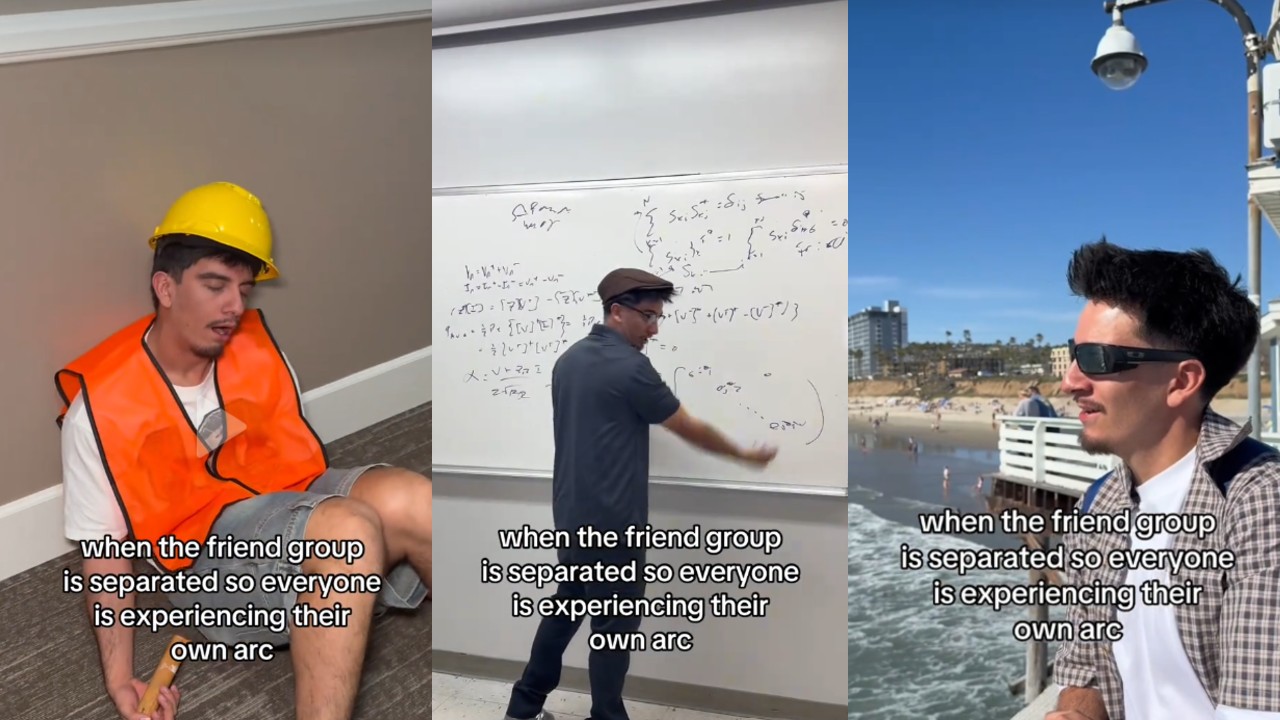
    The meme captioned “When the Friend Group Is Separated So Everyone Is Experiencing Their Own Arc” first achieved viral momentum in December 2024. The format centers on a relatable social scenario: a friend group disperses, and each member embarks on a distinct, often mundane or absurdly specific personal journey. Creators on platforms like TikTok and Instagram Reels adopted the template to juxtapose the collective identity of a friend group against the sudden, individualized “plotlines” that unfold when they are apart.

    Structure and Recurring Themes in User Content

    Versions of the meme typically compile short video clips—skits, vlog snippets, or edited montages—showing people doing things independently. These actions range from picking up a niche hobby and changing a fashion style to navigating a specific personal crisis or simply eating a meal alone. The unifying narrative device is the caption, “When the friend group is separated so everyone is experiencing their own arc.” By borrowing the literary term “character arc,” the trend humorously elevates ordinary life events into structured narrative progressions, suggesting that physical separation from the group triggers a protagonist moment for each member.

    Platform Dynamics and Longevity Through 2026

    While the initial spike occurred in late 2024, the meme demonstrated unusual staying power, remaining a staple of short-form video culture throughout 2026. Its adaptability fueled longevity; the template works equally well for genuine “glow-up” documentation, ironic depictions of failure, or surreal humor. The algorithm-driven ecosystems of TikTok and Instagram Reels amplified the trend by serving variations to users based on engagement with similar “relatable humor” or “friend group dynamic” content categories. The format’s reliance on a fixed caption structure allowed for infinite permutation without losing the core joke.

    Why This Matters

    The persistence of this meme highlights how internet users increasingly process real-life social shifts through the lens of media literacy and storytelling frameworks. Applying the concept of a “character arc”—a staple of screenwriting and literature—to the dissolution of a friend hangout session reveals a generation fluent in narrative theory. It also underscores the role of short-form video in codifying shared emotional vocabulary; the caption functions as a shorthand for the bittersweet, sometimes chaotic transition from collective identity to individual agency. As friend groups naturally evolve due to relocation, life stages, or drifting apart, this meme provides a communal language to frame that experience not as loss, but as plot progression.

    Frequently Asked Questions

    When did the “Experiencing Their Own Arc” meme start?

    The trend first went viral in December 2024 and continued to be popularized across TikTok and Instagram Reels throughout 2026.

    What does “experiencing their own arc” mean in this context?

    It humorously applies the literary concept of a “character arc”—a transformation or inner journey—to the real-life activities of friends after they separate, turning mundane or random solo actions into defined narrative storylines.

    What platforms is this meme most associated with?

    The meme is primarily associated with TikTok and Instagram Reels, where the short-form video format suits the quick-cut compilation style of the trend.

  • ‘Much Cheaper to Just Get a New Girlfriend’: Woman Posts Video of Boyfriend Buying New Couch Because She Cheated on Old One

    ‘Much Cheaper to Just Get a New Girlfriend’: Woman Posts Video of Boyfriend Buying New Couch Because She Cheated on Old One

    Key Highlights

    • A TikTok video posted by @sonogoodmorning showing a woman’s boyfriend buying a replacement couch after she admitted to cheating on their original one has garnered over 307,000 likes and sparked intense debate.
    • The comment section overwhelmingly criticized the woman’s framing of the gesture as a relationship goal, with top comments questioning why the cheater wasn’t the one making reparative efforts.
    • The viral discourse highlights shifting social media norms around public admissions of infidelity and the gendered expectations of accountability in relationships.

    Viral TikTok Reframes Infidelity as ‘Relationship Goals,’ Sparking Backlash

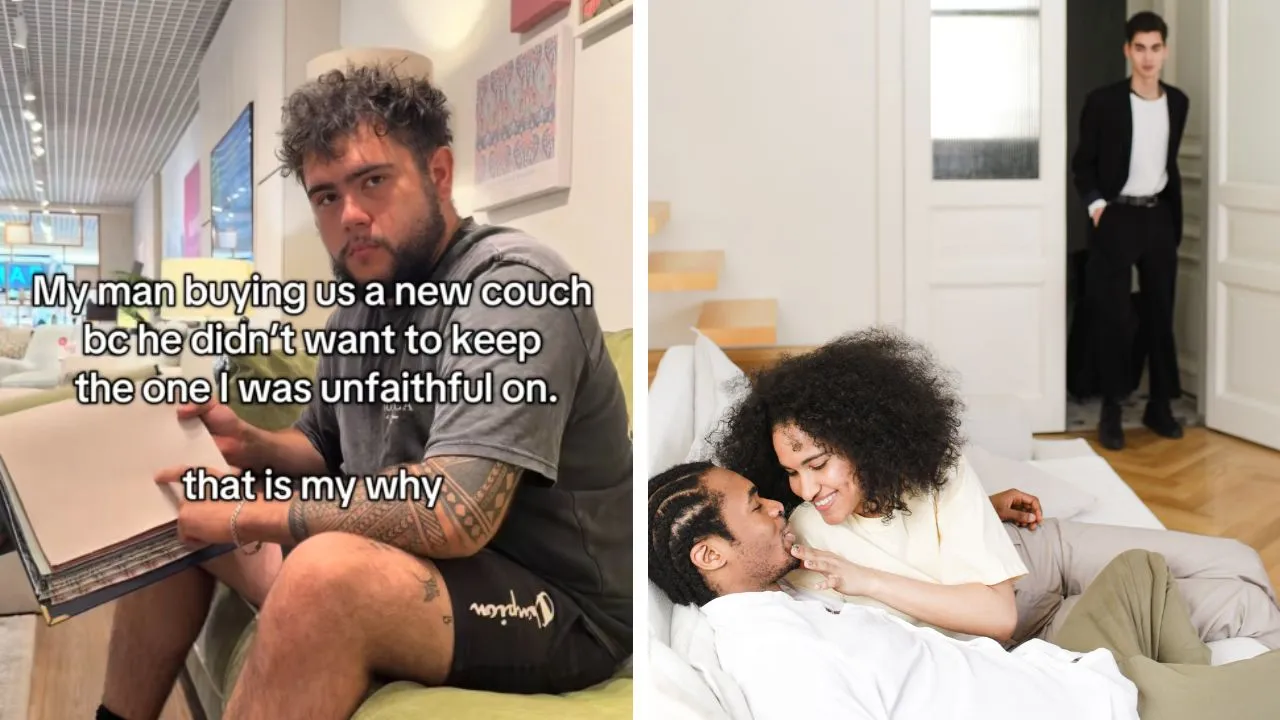
    A video posted to TikTok by user @sonogoodmorning has ignited a fierce conversation about accountability, gender dynamics, and the performative nature of relationship content on social media. The clip, which has accumulated more than 307,000 likes, depicts a couple browsing a furniture store. A text overlay on the video reads: “my man buying us a new couch because he didn’t want to keep the one I was unfaithful on.” A subsequent overlay adds: “that is my why,” referencing a popular trend where users share the reasons behind their long-term partnerships. The account’s caption reinforced the narrative: “real men stay and work things out.”

    Visual Cues Contradict the Narrative

    While the on-screen text attempts to frame the man’s actions as a noble gesture of forgiveness, the visual evidence tells a more complicated story. In the footage, the man appears visibly upset—he does not smile, avoids celebratory affect, and continues looking at his partner as if seeking validation or reassurance. He points out fabric samples dutifully, but his demeanor suggests resignation rather than the generous spirit implied by the caption. The woman recording, by contrast, smiles and pans the camera toward him with an expression of satisfaction and gratitude. The dissonance between the curated caption and the raw body language became the focal point for thousands of commenters.

    Comment Section Rejects the ‘Flex’

    The response in the comments was swift and largely condemnatory of the woman’s perspective. The top-liked comment, earning over 7,700 likes, stated bluntly: “This is not the flex you think it is.” Another user wrote: “Much cheaper and easier to just get a new girlfriend, brother,” while a third asked: “Why are people just admitting to cheating lately? Did it stop being the most embarrassing thing ever?”

    A significant thread of discussion emerged from women who expressed frustration at being placed in a position where they felt compelled to “side with a man.” One commenter articulated the tension: “I would like to be a ‘girl’s girl’ but genuinely believed that ‘cheating is not okay.’” Another addressed the creator directly: “Girl, why do you make me side with a man?” This sentiment underscores a broader cultural friction: the expectation of gender solidarity clashing with a baseline moral rejection of infidelity.

    Debate Centers on Burden of Repair

    Beyond the initial outrage, a more nuanced critique took hold regarding the distribution of reparative labor. Multiple commenters argued that if reconciliation was the genuine goal, the effort should originate from the partner who violated the trust. As one user put it, the woman “should be the one buying the couch, if at all, and also consistently make efforts and gestures to show him that she genuinely wants to be in this relationship and carry on with him.” Another injected dark humor into the critique: “Every time you want something new, be unfaithful on it.”

    The Daily Dot was unable to independently verify the events described in this video. The details above reflect the account shared by @sonogoodmorning on TikTok. The identities of those shown in the video have not been confirmed.

    Why This Matters

    This incident exemplifies how TikTok’s algorithm incentivizes vulnerable or controversial personal disclosures as content fodder. The “that is my why” trend, originally intended to celebrate enduring love, has been co-opted to aestheticize trauma bonding and uneven power dynamics. The viral backlash also reflects a growing public fatigue with narratives that recast accountability as optional—particularly when the labor of repair falls disproportionately on the wronged party. As social media continues to blur the line between authentic sharing and performative storytelling, audiences are increasingly literate in spotting the difference between a genuine gesture of repair and a content opportunity.

    Frequently Asked Questions

    Who posted the original TikTok video?

    The video was posted by TikTok user @sonogoodmorning. The account shared the footage with the caption “real men stay and work things out.”

    What was the specific reason given for buying a new couch?

    According to the text overlay in the video, the boyfriend purchased the new couch “because he didn’t want to keep the one I was unfaithful on.”

    Has the authenticity of the video been verified?

    No. The Daily Dot explicitly stated it “was unable to independently verify the events described in this video” and noted that “the identities of those shown in the video have not been confirmed.”

  • TikToker Tips $20 on $249 Bill at LA Restaurant, Posts Receipt — Comments Do the Math and React

    TikToker Tips $20 on $249 Bill at LA Restaurant, Posts Receipt — Comments Do the Math and React

    Key Highlights

    • TikTok creator @captain.t.roll posted a receipt from Ember & Vine in Los Angeles showing a $249 subtotal and a handwritten $20 tip, sparking a viral debate over tipping norms.
    • The creator argues tipping should be a flat dollar amount based on service effort, not a percentage of the bill, stating the industry has “brainwashed” diners into treating 20% as mandatory.
    • Commenters were divided, with some calculating a 20% tip would equal $58 ($50/hour for the server), while a self-identified cook criticized servers for expecting large tips while kitchen staff endure harder conditions.

    TikTok Receipt Ignites Debate Over Percentage-Based Tipping Culture

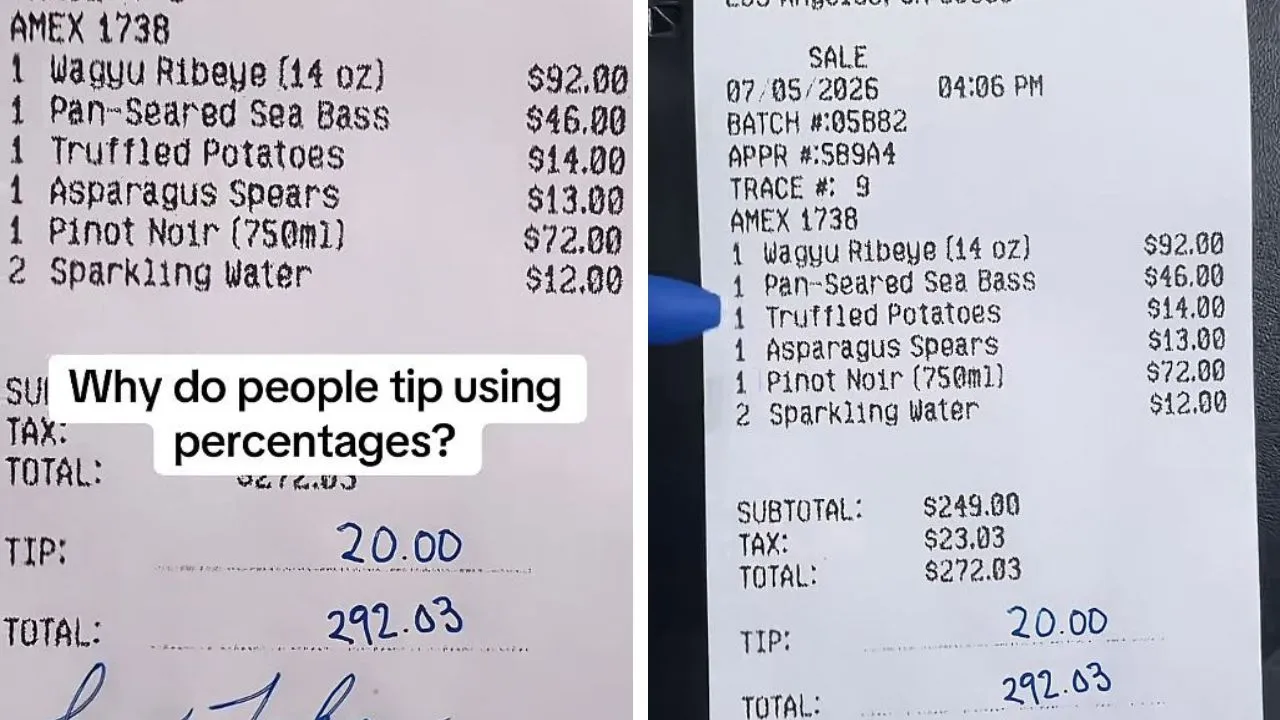
    A viral TikTok posted by user @captain.t.roll has reignited a heated conversation about American tipping customs after the creator shared a receipt from Ember & Vine, a restaurant in Los Angeles. The bill showed a subtotal of $249 for a meal that included a wagyu ribeye, pan-seared sea bass, truffled potatoes, asparagus spears, and a bottle of Pinot Noir. After tax, the total reached $272.03, and the diner added a handwritten tip of $20, bringing the final amount to $292.03. As of publication, the video had amassed more than 43,600 likes, 8,000 comments, and 6,700 shares, according to The Daily Dot.

    Creator Argues Service Effort Does Not Scale With Menu Prices

    In the video, @captain.t.roll challenged the prevailing expectation that tips should be calculated as a fixed percentage of the total bill. He argued that diners have been “brainwashed by the restaurant industry” into treating 20 percent as a mandatory standard rather than a voluntary gesture. The creator explained that he calculates tips based on the subtotal, not the post-tax total, and that his $20 tip represented less than 10 percent of the $249 subtotal. He maintained that this logic applies universally, whether dining at a fast-casual establishment or a higher-end venue like Ember & Vine, because the physical service—carrying food from the kitchen to the table—remains the same regardless of the restaurant’s pricing tier.

    The TikToker further contended that a higher-priced dish does not require additional labor from the server. “Any added value tied to a more expensive dish belongs to the kitchen staff who prepared it, not the person delivering it,” he stated, adding that his $20 tip equated to $20 an hour if his table was the only one served during that period. He pushed back against the notion that tipping norms are immutable, asserting that diners are free to set their own standard for what constitutes appropriate compensation for table service.

    Comment Section Erupts With Competing Calculations and Perspectives

    The comment section quickly became a forum for competing arithmetic and ideological positions. One commenter calculated that a 20 percent tip on the $292 total would amount to $58, remarking that the server “just made $50 an hour to carry out food to you.” Another user agreed with the creator’s premise, arguing that a $75 bottle of wine requires the same effort to serve as a $20 bottle, and therefore the tip should remain consistent rather than fluctuate with the menu price.

    A commenter identifying as a cook introduced a different dimension to the debate, criticizing the focus on server compensation while kitchen staff labor under more difficult conditions. The commenter wrote that servers expecting large tips ignore kitchen workers who are “sweating hot standing getting yelled at having to cook” while servers wait on tables and use their phones between orders. The Daily Dot noted it was unable to independently verify the identity of the customer in the video, the server involved, or the accuracy of the receipt shown, and emphasized that the details reflect the creator’s account and commenters’ opinions as shared on TikTok.

    Why This Matters

    The viral spread of this receipt underscores a growing cultural friction point in the United States: the expanding expectation of tipping across more service categories and at higher percentage thresholds, often termed “tipflation.” As menu prices rise with inflation, percentage-based tipping automatically increases server earnings without a corresponding increase in service labor, fueling arguments that the model is outdated. Simultaneously, the disparity between front-of-house and back-of-house compensation remains a structural issue in the restaurant industry, with kitchen staff often earning significantly less than servers who receive tips. The debate touches on broader questions about wage fairness, the responsibility of employers versus customers to compensate workers, and whether social pressure has transformed a voluntary gratuity into a de facto mandatory surcharge.

    Frequently Asked Questions

    What was the total bill and tip amount shown in the viral TikTok?

    The receipt from Ember & Vine in Los Angeles showed a subtotal of $249, a total of $272.03 after tax, and a handwritten tip of $20, bringing the final total to $292.03.

    What is the creator’s argument against percentage-based tipping?

    @captain.t.roll argues that tipping should be a flat dollar amount reflecting the labor of service, which does not change based on menu prices. He calculates tips on the subtotal, not the post-tax total, and believes diners have been “brainwashed by the restaurant industry” into treating 20% as mandatory.

    Has the receipt or the identities involved been verified?

    The Daily Dot reported it was unable to independently verify the identity of the customer in the video, the identity of the server, or the accuracy of the receipt shown. The details reflect the creator’s account and commenters’ opinions as shared on TikTok.