Key Highlights
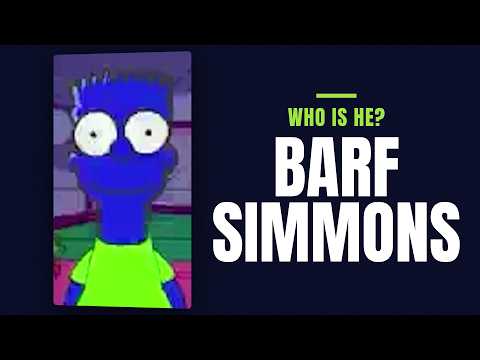
- Barf Simmons is a meme series built around a distorted, blue-skinned, elongated version of Bart Simpson from The Simpsons.
- The character is sometimes referred to as “Barf Symptons” across online communities.
- The meme leans into a deliberately unsettling, “creepy” aesthetic that contrasts sharply with the original cartoon’s style.
The Emergence of a Surreal Internet Icon
In the constantly evolving landscape of internet humor, few phenomena illustrate the appetite for surreal reinterpretation as clearly as Barf Simmons. The meme series takes Bart Simpson—one of the most recognizable animated characters in television history—and warps him into a figure that is simultaneously familiar and deeply uncanny. By stretching his proportions to unnatural lengths and recoloring his skin a sickly blue, creators have transformed a mainstream pop-culture staple into an avatar of the “creepy aesthetic” that thrives on platforms devoted to bizarre, dreamlike, or deliberately off-putting humor.
Visual Language and the “Creepy Aesthetic”
The power of the Barf Simmons format lies in its visual dissonance. The original Bart Simpson is defined by sharp yellow geometry, a mischievous grin, and a voice that has echoed through three decades of broadcast television. Barf Simmons discards all of that: the elongated limbs and torso suggest a body pulled like taffy, while the blue palette evokes bruising, cold, or digital corruption. This deliberate ugliness is not accidental; it signals membership in a subculture that values the unsettling over the polished, the glitched over the pristine. The alternate spelling “Barf Symptons”—which appears interchangeably in community posts—adds a layer of phonetic corruption, reinforcing the sense that the character exists in a degraded, copy-of-a-copy space where canonical spelling no longer applies.
Spread, Variation, and Community Adoption
Because the source material is a single, easily reproducible image template, Barf Simmons has proven highly mutable. Editors drop the figure into unlikely backgrounds, pair him with nonsensical captions, or animate him in jerky, low-frame-rate loops that amplify the unease. The meme travels across imageboards, social-media timelines, and video-editing discords without a central author or release date, behaving more like folklore than a marketed product. Each iteration reinforces the core rule: the character must remain blue, elongated, and vaguely nauseating—hence the “Barf” prefix—while everything else is fair game for irony, absurdity, or outright horror.
Why This Matters
Barf Simmons exemplifies how internet communities remix corporate intellectual property into folk art that the original rights holders neither authorize nor control. The Simpsons has been a particularly fertile target for such remixing—consider earlier waves like “Simpsons Wave” vaporwave edits or the “Steamed Hams” surreal edits—because its visual language is universally recognized, lowering the barrier to entry for creators. The “creepy aesthetic” branch, of which Barf Simmons is a recent representative, reflects a broader cultural comfort with body horror, glitch art, and post-irony among younger digital natives. As platforms continue to prioritize short-form, algorithmically amplified visual content, templates that can be produced in seconds yet carry dense subcultural signaling will remain dominant vectors for collective creativity.
Frequently Asked Questions
- What exactly is Barf Simmons?
- Barf Simmons is a meme series that depicts a blue, extremely elongated distortion of Bart Simpson from The Simpsons, rendered in a deliberately unsettling “creepy aesthetic.”
- Why is the character sometimes called “Barf Symptons”?
- “Barf Symptons” is an alternate, phonetically corrupted spelling used interchangeably in online posts, reinforcing the meme’s glitched, copy-degraded vibe.
- Where did the meme originate?
- The exact origin point is diffuse; like much folk internet art, Barf Simmons emerged organically across imageboards and social feeds without a single credited creator or launch date.