Tag: Supreme Court

  • Supreme Court Rules Against Surrogate McKenna West in Battle Over Baby Boy

    Supreme Court Rules Against Surrogate McKenna West in Battle Over Baby Boy

    Key Highlights

    • Surrogate McKenna West’s petition for Supreme Court review of her custody battle with the biological parents was rejected by Justice Elena Kagan on Tuesday.
    • The decision effectively ends West’s legal challenge at the federal level, leaving lower court rulings in favor of the biological parents intact.
    • The case centered on a surrogacy agreement dispute after West gave birth and sought to retain parental rights contrary to the contract terms.

    Supreme Court Declines to Hear Surrogate’s Custody Appeal

    Surrogate McKenna West has exhausted her highest judicial avenue after Justice Elena Kagan, acting in her capacity as the Circuit Justice for the Ninth Circuit, denied her application for a stay pending certiorari review on Tuesday. The ruling marks the final chapter in a closely watched legal dispute that pitted a gestational carrier against the intended parents of the child she carried and delivered. TMZ first reported the development, noting that the Supreme Court’s refusal to intervene leaves the existing lower court judgment fully in force.

    Legal Battle Stemmed from Surrogacy Agreement Dispute

    The litigation originated from a surrogacy arrangement in which West agreed to carry a child for the biological parents. Following the birth, West initiated legal proceedings seeking to establish parental rights over the infant, challenging the enforceability of the surrogacy contract she had signed. Lower courts consistently ruled in favor of the biological parents, upholding the validity of the agreement and awarding them legal custody. West’s legal team subsequently petitioned the U.S. Supreme Court, arguing that the case presented novel constitutional questions regarding the rights of gestational carriers versus the enforceability of assisted reproduction contracts.

    Justice Kagan’s Unilateral Rejection Ends Federal Prospects

    As the Circuit Justice overseeing emergency matters arising from the Ninth Circuit, Justice Kagan possessed the authority to rule on the emergency application unilaterally without referring it to the full Court. Her denial of the stay application signals that the Court found insufficient grounds to disturb the lower court’s custody determination while the petition for a writ of certiorari was pending. In practical terms, the rejection means the biological parents retain full legal custody of the child, and West’s attempt to overturn the surrogacy agreement through the federal judiciary has concluded.

    Why This Matters

    This outcome underscores the current judicial tendency to enforce gestational surrogacy contracts as written, prioritizing the contractual intent of the intended parents over a surrogate’s post-birth change of heart. While surrogacy laws vary significantly by state, the Supreme Court’s decision not to intervene suggests a reluctance to federalize what has traditionally been a matter of state family law. For the assisted reproductive technology industry, the ruling provides a degree of certainty that properly executed agreements will withstand constitutional challenge at the highest level. Future disputes will likely continue to be adjudicated in state courts unless a clear circuit split emerges on federal constitutional grounds.

    Frequently Asked Questions

    Who is McKenna West?
    McKenna West is a gestational surrogate who entered into a surrogacy agreement with the biological parents of a child she carried and gave birth to. She subsequently challenged the contract in court seeking parental rights.
    What was Justice Elena Kagan’s role in this decision?
    As the Circuit Justice assigned to the Ninth Circuit, Justice Kagan ruled unilaterally on West’s emergency application for a stay pending Supreme Court review. Her denial effectively ends the case at the federal level.
    Does this ruling set a national precedent for surrogacy disputes?
    No. The denial of a stay application is not a ruling on the merits and does not create binding precedent. Surrogacy law remains primarily governed by individual state statutes and case law.
  • Baby Rumi’s Parents Fight Surrogate McKenna West’s Supreme Court Bid

    Baby Rumi’s Parents Fight Surrogate McKenna West’s Supreme Court Bid

    Key Highlights

    • Intended parents Nausheen Gilkar and Omar are opposing surrogate McKenna West’s emergency Supreme Court petition in their ongoing surrogacy dispute.
    • The parents argue West’s requested emergency relief could jeopardize their infant son’s health and well-being.
    • Legal representatives for Gilkar and Omar have filed a formal response challenging West’s latest court maneuver.

    Surrogacy Dispute Escalates to State Supreme Court

    The legal battle surrounding a surrogacy arrangement involving surrogate McKenna West and intended parents Nausheen Gilkar and Omar has intensified, with the case now reaching the state Supreme Court. Attorneys representing Gilkar and Omar have formally pushed back against West’s latest filing, which seeks emergency judicial relief. According to court documents, the parents contend that the specific relief West is requesting poses a direct risk to their newborn son’s health, adding urgent medical dimensions to an already complex custody and contractual dispute.

    Parents Challenge Emergency Petition Citing Infant Health Concerns

    In their response to the Supreme Court, legal counsel for Gilkar and Omar emphasized that the emergency measures sought by West could disrupt the infant’s current care environment and medical stability. The filing argues that the child’s immediate physical well-being must take precedence over procedural or contractual arguments advanced by the surrogate. While the specific nature of West’s emergency petition remains under seal in portions of the record, the parents’ opposition brief characterizes it as an attempt to alter the child’s living situation or medical decision-making authority in ways their doctors advise against.

    Legal Background and Contractual Framework

    The dispute originates from a gestational surrogacy agreement between West and the intended parents. Such arrangements typically involve detailed contracts governing parental rights, medical decision-making, and post-birth custody transitions. When disagreements arise — whether over compensation, medical choices, or the termination of parental rights — courts are tasked with interpreting these agreements alongside the best interests of the child standard. In this case, the escalation to the state’s highest court suggests significant unresolved questions about the enforceability of specific contract provisions or the applicability of state surrogacy statutes to the facts at hand.

    Why This Matters

    This case highlights the evolving legal landscape surrounding gestational surrogacy, where advances in reproductive technology have outpaced uniform statutory frameworks. States vary widely in their recognition and regulation of surrogacy contracts, and disputes involving emergency medical concerns for infants introduce constitutional due process considerations alongside family law principles. The Supreme Court’s eventual ruling could establish precedent for how courts balance contractual obligations between surrogates and intended parents against the immediate health needs of children born through assisted reproduction. For families pursuing surrogacy, the outcome may influence contract drafting, choice-of-forum decisions, and the definition of “emergency” circumstances warranting judicial intervention.

    Frequently Asked Questions

    Who are the parties in this surrogacy dispute?
    The intended parents are Nausheen Gilkar and Omar. The surrogate is McKenna West. The case involves their infant son.
    What is the core of the current legal conflict?
    McKenna West has filed an emergency petition with the state Supreme Court seeking immediate relief. Nausheen Gilkar and Omar oppose this petition, arguing through their attorneys that the requested relief could endanger their son’s health.
    Why has this case reached the state Supreme Court?
    The filing of an emergency petition directly with the Supreme Court suggests the matter involves urgent legal questions — potentially regarding jurisdiction, irreparable harm, or the interpretation of surrogacy law — that warrant the highest court’s immediate attention before lower courts rule.
  • ‘The Steal’: How Conservatives Took Over the Supreme Court

    ‘The Steal’: How Conservatives Took Over the Supreme Court

    How Four Conservative Architects Reshaped the Federal Judiciary During the Reagan Era

    Recent Supreme Court decisions—from the overturning of Roe v. Wade to the end of affirmative action and the curtailment of federal regulatory power—have fundamentally reshaped American law. According to political analyst Alex Wagner, this rightward shift was not happenstance. In her upcoming book, The Steal: Four Right-Wing Hard-Liners, One Republican Presidency, and the Raid on America’s Courts, Wagner argues it was the result of a well-planned, “harebrained” but disciplined long game to build conservative institutions that gained momentum during the Ronald Reagan years.

    Those efforts helped elevate organizations such as the Heritage Foundation, the architect of Project 2025, and the Federalist Society, which became a key pipeline for conservative judicial talent. Every current Republican-appointed Supreme Court justice has ties to the Federalist Society. In this exclusive excerpt, Wagner introduces the four men who conceived, developed, funded, and built the institutions that have fundamentally changed today’s courts.

    Ed Meese: The Inside Man

    Ed Meese was moving into a corner office in the White House. Ronald Reagan had seized the presidency in a landslide, and his conservative foot soldiers were no longer barbarians at the gate. They had stormed past it—in the most spectacular fashion imaginable. They had won the White House, the Senate and, most importantly, the American public.

    It was 1980, and the right wing was going to make sure that this decade would be their decade. The rest of the country had turned its attention to Dallas and was glazing its eyeballs over something called Pac-Man. Up until this point, liberals thought the second half of the 20th century would be theirs to shape—through civil rights, equal rights and sexual freedom. But Reagan’s ascension had thrown cold water all over the smugness and self-confidence with which the hippies believed they would inevitably shepherd the progress of this great country. The left lost.

    Meese, named the head of the new administration’s transition effort the day after the 1980 election, had the enviable task of rounding up the sharpest and shrewdest minds in conservative America and offering them White House positions. The man himself was disheveled and disorganized, a middle-aged former DA who worshipped cops and hated protesters, an individual who did not cut an imposing figure on the national stage but would be an instrumental player nonetheless. He was ruthlessly effective at quelling rebellion, summoning the troops and keeping his eye on the ball.

    President-elect Reagan had chosen a former George Bush man, a darling of the establishment named Jim Baker, to be his chief of staff, but Meese had the real power: both the confidence of the president and the trust of the right-wing hardliners who formed the bedrock of Reagan’s support. Inside the White House, Meese was dubbed the “Prime Minister.”

    He was ambitious and clear-eyed, one of Reagan’s right-hand men during his time as governor of California who was subsequently imported to the Beltway once Reagan won the presidency. The two men had been aligned in their conservative vision from the start.

    A Law-and-Order Conservative Before It Was Mainstream

    While other Yale graduates were self-radicalizing in the middle sixties, newly awoken to the Civil Rights Movement and campaigning for social justice, Meese was not. In 1966, at the ripe old age of 35, Meese already believed American society to be in steep decline, a free-for-all where the rules no longer applied.

    Giving the keynote address to the International Association of Auto Theft Investigators—a room clearly primed for this kind of message—Meese warned:

    “Too often a concept of permissiveness has pervaded society, which no longer holds individuals responsible for their actions nor penalizes those who commit transgressions against the rest of society.”

    Meese, even as a young man, was an avatar of law-and-order conservatism in the middle of the Mamas and the Papas bohemianism, a crew-cut antidote to the liberalism of the day.

    “We must return to a social climate where the law is respected and obeyed, where the individual is held responsible for his acts, and where criminal offenses are followed by just punishments.”

    In 1967, his first year in office, Governor Reagan hired Meese, a deputy district attorney and army reservist, as his “extradition and clemency secretary.” Meese would not look to soften criminal sentences. He aimed to make them tougher, as someone who believed that “deterrents to criminality” had been removed to the degree that “the dedicated lawbreaker knows he has a good chance of escaping any type of real punishment.”

    As Governor Reagan looked to reorient the justice system away from leniency and rehabilitation, and toward harsher sentencing and more cellblocks, Meese was his man, heading up initiatives like Project Safer California in the mid-1970s, and acting as an adviser for a “fixed-term sentencing” task force at the end of the decade. This focus on the courts and the decisions granted within them ultimately led Meese to what would become, in many ways, the focus of his years in the Reagan White House: the judges themselves.

    Meese knew that the gavel was the hinge point in determining whether a society was protected or not, whether its citizens followed a wholesome path or were lured astray. Judges could set precedents and parameters, act as guardrails or remove them entirely. For Meese, they were the whole ballgame.

    While Reagan was still governor, Meese worked to enhance the quality of judicial nominees, ensuring that the men and women who sat on the California bench met a rigorous standard and “understood and believed in the law,” however Governor Reagan decided to define that.

    Once Reagan was elected president, this project would become a mission. Meese himself would later call his work to overhaul the judiciary “one of the most important and constructive legacies of the Reagan era.”

    He was not wrong.

    The Blueprint: Targeting the Judicial Branch

    By the end of 1980, Republicans controlled the executive branch. They had made significant inroads in capturing the legislative branch, as well: The GOP held the Senate and the New Right had begun influencing policymaking in Congress. But the judicial branch—and the federal courts, specifically—were virgin territory with extraordinary potential. These courts ran independent of an election season; their rulings held far more permanence than legislation that could be amended or repealed depending on who was in power and what was the vanguard of the day.

    From his perch just down the hall from President Reagan—evidence of his established authority in Reagan’s inner circle—Meese was well-positioned to remake American law and justice, but he needed help. He’d get it. Before Reagan’s first year in office was complete, Meese would ensure that the Justice Department was fully engaged in the battle for the bench.

    The Builders: Money, Power, and Activism

    The work of transforming the courts would require money, power and activism. The men who helped Ed Meese in this mission were not formally engaged in his plot, but they worked in concert all the same.

    On the outside, there was Joe Coors, the wealthy Colorado beer magnate who detested the desegregation and secularization of the country almost as much as he hated organized labor. When he wasn’t trying to break unions, Coors was supporting nascent conservative campaigns—like Ronald Reagan’s presidential one—and bankrolling movement efforts to unwind civil rights and social progress. One of Coors’ main investments was in Paul Weyrich.

    Weyrich was young, not yet 35, a railroad enthusiast and former radio reporter from Racine, Wisconsin, a deeply religious conservative who was once described as having the manner of a “formal, slightly constipated owl.” Weyrich was a Barry Goldwater acolyte who became a deep skeptic of squish conservatives like Richard Nixon and Gerald Ford. His party had gone soft and so Weyrich would dedicate his life to finding its backbone—by working outside the system to force change within it.

    Judge Robert Bork of the U.S. Court of Appeals for the D.C. Circuit, a Marxist-turned-Marine-turned-conservative radical, would be the man on the ground, embedded in the heart of conservative law circles. By the time Reagan was measuring drapes in the White House, Bork was a semi-famous professor at Yale Law School—where he served as a faculty adviser to a fledgling conservative law school student group that was calling itself the Federalist Society.

    In this small circle of unlikely warriors—a disheveled police enthusiast with a punitive streak; an ultrareligious college dropout with a thing for trains; a joyless, paranoid beer magnate who believed that ZIP codes were an insidious government plot; a testy conservative contrarian who was a onetime advocate for the New Deal—the plan to take the courts was put in play. Meese was the Inside Man, the one who could operate from the center of the machine they were all trying to rewire. Weyrich would draw the blueprints and Coors would fund the larger operation with his bottomless pockets. Bork’s jurisprudence was a compass and his lawyerly pipeline an army of recruits to help execute the plan.

    The Results: A Conservative Judicial Monolith

    Like the best heists, the work of these men was stealthy: Their progress mostly remained unnoticed until the alarm bells began ringing, long after they had left the building. While America’s system of justice was slowly being perverted, the country Aqua-Netted its hair and traded stocks, snorted coke and danced to Boy George—laughing at Reagan or praising him over the course of a decade, never really understanding that the red-sweatered president was merely a sunny figurehead atop a movement more cutthroat and angry than the glasnost-and Madonna-loving public could ever imagine.

    The full effect of the work of these strange thieves would not be understood for decades to come, but it was in the shadows of the Reagan White House that the foundations were laid for the conservative judicial monolith that has, nearly half a century later, reoriented American society away from its expected magnetic north. As you read this, the conservative majority of the Supreme Court has finally overturned Roe v. Wade, brought religion back into the public square, ended landmark civil rights protections and sanctioned discriminatory policies across the country.

    It is an outcome more spectacularly effective than even Weyrich and Meese and Bork and Coors could have imagined, back when they began their work in earnest, in 1981: a federal judiciary so deeply at odds with American public opinion—to say nothing of the last half century of social progress—that to envision it would have been, perhaps, delusional.

    Excerpted by permission of Flatiron Books, a division of Macmillan Publishers, from The Steal: Four Right-Wing Hard-Liners, One Republican Presidency, and the Raid on America’s Courts. Copyright © 2026 Alex Wagner. No part of this excerpt may be reproduced or reprinted without permission in writing from the publisher.

    Read Newsweek’s interview with Alex Wagner here.

  • John Roberts Often Defers to Trump—but Not on the White House Ballroom Project

    John Roberts Often Defers to Trump—but Not on the White House Ballroom Project

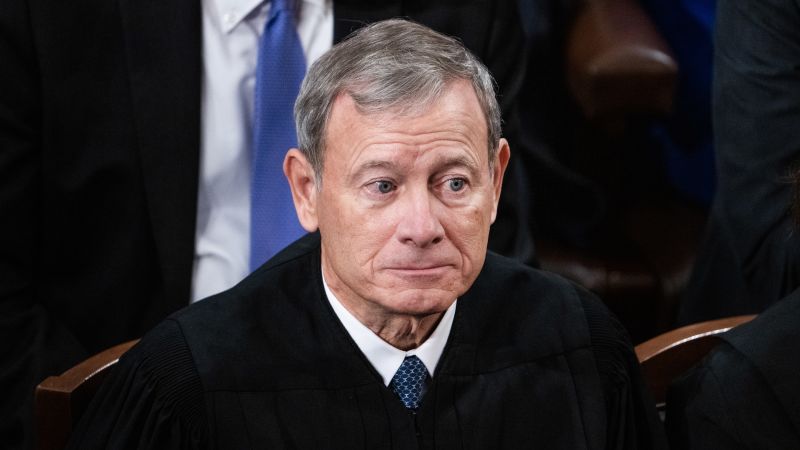
    Chief Justice John Roberts broke with Donald Trump and the Supreme Court’s other conservative justices on Monday, objecting to the president’s plan to build a massive ballroom at the White House.

    “The White House is not just any building.”

    Roberts has often deferred to Trump’s executive authority, but his dissent marked a rare break from a president whose policies have dominated the court’s docket. Roberts has authored major opinions supporting Trump, including the 2024 ruling granting him immunity from criminal prosecution and last June’s decision allowing him to fire the heads of independent agencies.

    Even in dissent, Roberts used the historically minded rhetoric for which he is known. His six-page statement invoked the history and architecture of Washington, quoting Theodore Roosevelt and Winston Churchill on the importance of iconic public buildings.

    “‘We shape our buildings, and afterwards our buildings shape us,’” Roberts wrote, lifting a line from a 1943 Churchill war speech.

    He added, “All the more reason to ensure that those responsible follow the rules in deciding what to tear down and what to build up at the People’s House.”

    Roberts invokes the White House’s historic role

    Roberts, who often tells audiences that he once planned to pursue a history Ph.D. rather than a law degree at Harvard, highlighted the symbolism of Washington’s historic architecture.

    He noted that when Roosevelt thanked Congress in 1902 for funding additions to the East and West wings, the president referred to “the stately simplicity” of the original architecture and the importance of preserving “such buildings as historic monuments which keep alive our sense of continuing with the Nation’s past.”

    Throughout his opinion, Roberts showed his own appreciation for the White House’s architecture, much as he has expressed pride in the Supreme Court’s columned building. The Supreme Court did not have its own building until 1935, more than a century after the White House and US Capitol were constructed.

    Roberts’ position did not affect the outcome and came at no apparent cost to Trump. His five conservative colleagues formed a majority that allowed construction of the ballroom to continue. The project has been underway for nearly a year and is nearing completion.

    Still, Monday’s statement adds another dimension to Roberts’ record as chief justice during Trump’s aggressive second-term agenda. The president’s cases have shaped the court’s work and will form a significant part of Roberts’ legacy.

    Roberts has approved many Trump policies, but last session he voted against two of the president’s most far-reaching initiatives: sweeping tariffs on foreign goods imposed without congressional approval and an effort to restrict birthright citizenship, the long-standing practice granting US citizenship to children born in the country.

    Trump’s plans to reshape Washington

    The case’s focus on American history also underscored Roberts’ role as chancellor of the Smithsonian Institution. The position is largely ceremonial because he serves as chief justice, but Roberts has presided over Smithsonian board meetings and observed the Trump administration’s continuing effort to reshape the nation’s leading public museums.

    Trump’s campaign to transform Washington in his own image has included adding his name to the John F. Kennedy Center for the Performing Arts and proposing a 250-foot triumphal arch. The arch is planned for the traffic circle between the entrance to Arlington National Cemetery and the Lincoln Memorial.

    The lawsuit was brought by the National Trust for Historic Preservation. The organization argued that demolishing the East Wing and constructing a 90,000 square-foot ballroom and security structure required congressional approval.

    Lower federal courts initially sided with the Trust and allowed the case to proceed. The judges found that the organization had “standing” to sue because it had shown a significant injury. The Trust cited Alison Hoagland, a longtime Trust leader and member and an architectural historian, who said the project had harmed her enjoyment of the White House.

    The Supreme Court’s majority rejected that reasoning, writing that “mere offense, disagreement, or distaste does not qualify as a concrete and particularized injury” for purposes of bringing a lawsuit. The majority issued its ruling per curiam, Latin for “by the court,” as is common in appeals arriving through the court’s emergency docket. Justices Clarence Thomas, Samuel Alito, Neil Gorsuch, Brett Kavanaugh and Amy Coney Barrett did not sign separate opinions.

    Roberts disagreed that Hoagland’s claim was minor. Liberal Justices Sonia Sotomayor, Elena Kagan and Ketanji Brown Jackson joined his opinion.

    “The White House is not just any building, and – when it comes to historic preservation – Hoagland is not just any person.”

    Roberts said earlier court decisions had recognized injury based on “esthetic interests.” He cited a 1992 precedent in which, as Roberts described it, “a desire to … observe an animal species like a particular crocodile, even for purely esthetic purposes was undeniably a cognizable interest for purposes of standing.”

    Roberts says ballroom project is likely unlawful

    In the case before the court, Roberts declared, “A historic preservationist such as Hoagland can be aesthetically injured in a concrete, particularized way by the transformation of a historic building that she frequently enjoys, just as an environmentalist can sustain a concrete, particularized aesthetic injury from the extinction of a particular animal or the transformation of a particular forest or river that he regularly enjoys.”

    Monday’s ruling addressed only the question of standing. The majority said it was not deciding whether the ballroom project itself was lawful. Roberts, however, made clear that he viewed the broader construction effort skeptically.

    He wrote that Congress had expressly prohibited construction on such federal property “without express authority of Congress.”

    “That construction is likely unlawful,” he said, adding that the usual appropriation for White House maintenance “likely does not authorize the President to use hundreds of millions of dollars in private donations to tear down the East Wing and construct a ballroom in its stead.”

  • Supreme Court Rejects Trump Plan to Limit Mail-In Voting in Midterm Elections

    Supreme Court Rejects Trump Plan to Limit Mail-In Voting in Midterm Elections

    The Supreme Court on Monday rejected President Donald Trump’s controversial plan to change how mail ballots are sent to voters nationwide, blocking a proposal that election officials warned would have caused catastrophic consequences for the 2026 midterms.

    In one of the most significant cases on the court’s emergency docket in years, a majority of justices halted a procedure that would have granted the U.S. Postal Service unprecedented authority to withhold potentially millions of mail ballots. Even some Republican election officials cautioned the proposal could trigger chaos and mass disenfranchisement.

    The court ruled the administration “is unlikely to succeed on the merits of its challenge” but provided minimal reasoning in its three-sentence, unsigned order. Conservative Justices Samuel Alito and Clarence Thomas dissented.

    Major Setback for Trump’s Mail Voting Crusade

    The decision marks a significant loss for the president, who has spent years attacking mail voting with false claims of widespread fraud while continuing to vote by mail himself. The administration framed its proposal as a “modest” regulatory tweak intended to protect against alleged fraud. Critics, however, labeled it an unconstitutional power grab the Postal Service was unprepared to execute.

    CNN has reached out to the White House for comment.

    Kavanaugh Concurs on Timing, Leaves Door Open for Future

    Justice Brett Kavanaugh, part of the court’s conservative wing, wrote a concurrence stating he believed the proposal might fall within USPS authority, but that “state and local election officials do not have sufficient time to reasonably implement the rule before the elections.”

    His reasoning acknowledged a flood of briefs from election officials arguing there was simply not enough time to implement the order this late in the cycle. The concurrence also suggested Kavanaugh could side with Alito and Thomas to approve similar changes for a future election.

    Alito Dismisses Practical Concerns, Cites Postal Authority

    In dissent, Alito argued the practical implementation concerns raised by election officials were insufficient grounds for the plaintiff states and voting rights groups to prevail.

    “The government has a strong interest in enforcing the rule, and implementing it will also ‘en­hance the visibility of Federal Ballot Mail’ in order to better detect election fraud,” Alito wrote. “On the other side of the balance, the plaintiff States invoke the practical ef­fects of implementing the rule close to the midterm elec­tions. I take that problem very seriously, but it is not enough to convince me to deny the application.”

    “That Hail Mary pass is unlikely to be successfully completed here,” Alito wrote. “The Postal Service has broad authority to regulate the mail.”

    Bipartisan Coalition Warned of Last-Minute Chaos

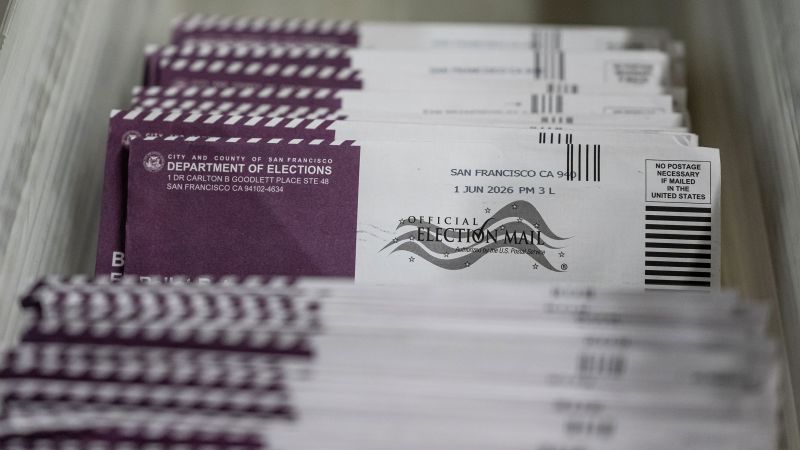
    Beyond the Democratic-led states and voting rights groups that challenged the proposal, a bipartisan coalition of election administrators, former governors, and others warned the justices against last-minute changes to mail ballot procedures. The Postal Service rule required states to upload massive voter datasets to an online portal that was not yet operational. It also mandated changes to ballot envelopes that had already been purchased and, in many states, already mailed to voters.

    Officials Celebrate Ruling as Defense of Democracy

    The plaintiffs praised the court’s decision late Monday.

    “Trump’s attempt to sabotage the 2026 elections has failed,” said Colorado Secretary of State Jena Griswold, a Democrat.

    California Attorney General Rob Bonta, also a Democrat, called the high court’s decision a “victory for our democracy and a powerful affirmation of the rule of law.”

    The administration argued the changes were necessary to secure ballots and ensure only eligible voters receive them. A coalition of two dozen Democratic-led states and voting groups countered the effort was a power grab by a president who has long falsely alleged widespread voter fraud in mail ballot systems.

    Court Prioritizes Voter Harm Over Administrative Burden

    In recent emergency docket rulings, the court has often found the Trump administration harmed when lower courts block controversial policies. In this case, however, the court determined that “equitable factors”—the potential harm to voters—outweighed those concerns.

    The emergency appeal, filed last week, was the third time the administration raced to the Supreme Court on this policy. In late August, the court allowed the president to proceed on technical grounds related to lawsuit timing. A lower federal court blocked the changes days later.

    Under the Constitution, states and Congress determine voting procedures—not the White House or the post office.

    Order Required Voter Lists, Barcodes, and Prosecution Threats

    The president’s order required states to submit eligible voter lists to the USPS. The agency would then be barred from delivering ballots to anyone not on those lists. It also mandated tracking barcodes on ballot envelopes and “prioritized” federal prosecution of state election officials who send or receive ballots to non-citizens or other ineligible voters.

    Whistleblower Warned of Mass Ballot Withholding

    While the Supreme Court deliberated, a Postal Service whistleblower issued stark warnings. The whistleblower’s report revealed that if a single ballot had a barcode issue, officials would decline to deliver the entire batch of mailings containing that envelope. The report also described a rushed effort to launch an online data-sharing system that could make the complex plan even more vulnerable to mass disenfranchisement.

    No Evidence of Widespread Fraud; Multiple Courts Rejected Plan

    Trump has long promoted conspiracy theories about mail voting to discredit the 2020 presidential election he lost. Improper voting remains exceedingly rare, and the administration has never produced evidence of widespread fraud capable of influencing the 2020 outcome or any other contest.

    Multiple federal courts rejected the proposal. Over the weekend, U.S. District Judge Carl Nichols, a Trump nominee in Washington, D.C., became the latest to pause the USPS rule for the midterms.