Tag: Spanish Grand Prix

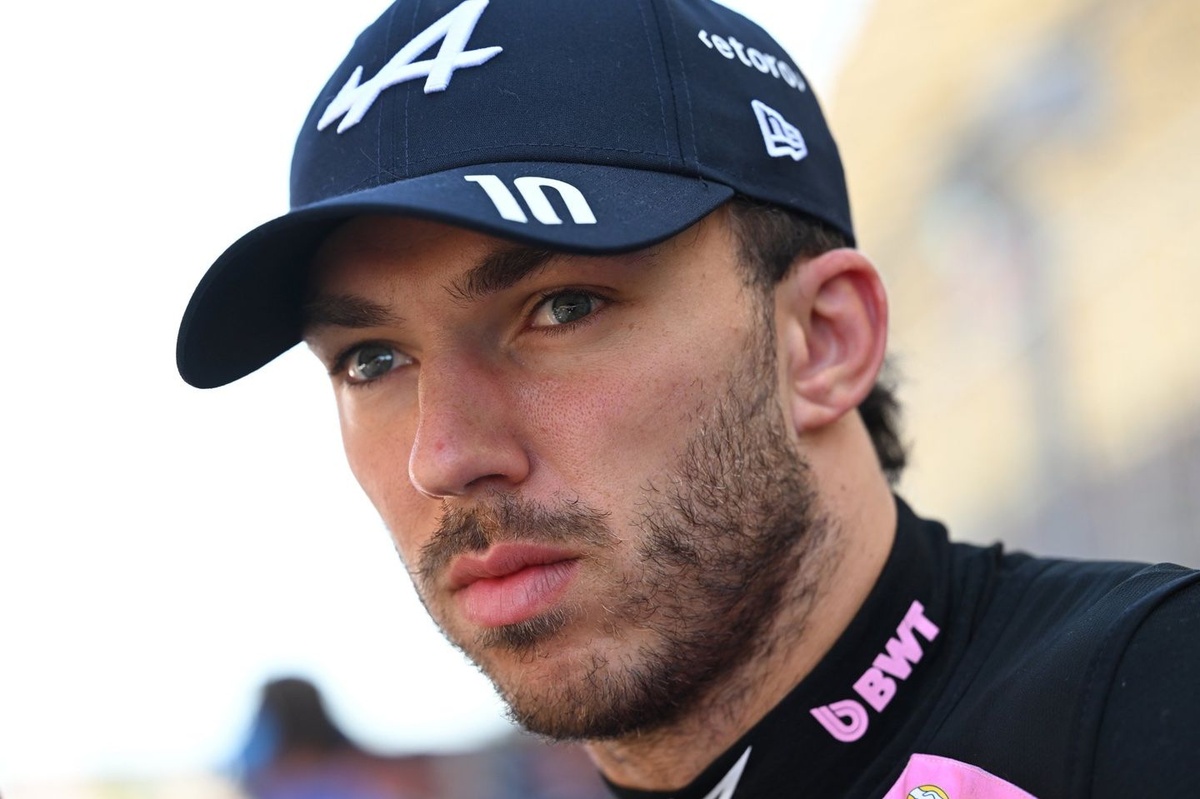
  • Pierre Gasly Condemns Social Media Abuse as “Completely Inappropriate” After Franco Colapinto Spanish GP Incident

    Pierre Gasly Condemns Social Media Abuse as “Completely Inappropriate” After Franco Colapinto Spanish GP Incident

    Key Highlights

    • Pierre Gasly revealed he and his family received social media abuse and threats after the Spanish Grand Prix incident with Alpine teammate Franco Colapinto.
    • Both drivers addressed the issue in Baku, with Colapinto condemning the abuse and urging fans to support the team constructively rather than attack drivers.
    • The on-track incident has been resolved internally at Alpine, with both drivers confirming discussions took place and no team order for a position swap was issued.

    Gasly Details Disturbing Scale of Online Abuse After Spanish GP

    Pierre Gasly has disclosed the disturbing extent of social media abuse directed at him, his family, and his girlfriend following the Spanish Grand Prix, where an on-track situation with Alpine teammate Franco Colapinto sparked a wave of online vitriol. Speaking to media including Motorsport.com in Baku on Wednesday, the French driver described the threats and attacks as “completely inappropriate” and called on Formula 1 to address a culture where lines are crossed “too many times” by fans hiding behind keyboards.

    The incident occurred during the closing stages of the Madrid race when Colapinto, on fresher tyres, caught Gasly, who was managing worn rubber ahead of a scheduled pit stop. Despite team warnings about his teammate’s approach, Gasly held his line and requested the pit wall not distract him. Colapinto subsequently called for a position swap over team radio. Gasly pitted at the end of the lap, allowing Colapinto to inherit seventh place ahead of McLaren’s Oscar Piastri.

    Drivers Unite in Condemnation of Toxic Fan Behavior

    In the Azerbaijan paddock, both drivers presented a united front against the subsequent harassment. Gasly emphasized the personal toll when abuse extends beyond the driver to loved ones.

    “I think personally I find it a little bit disturbing for our sport. I think to the extent you know I’m a top athlete, so I know I’m exposed, it’s always been the case. But to that extent of threats and attacks, I find it a little bit, well even completely inappropriate, especially when it reaches out to family members, girlfriend, etc,”

    Gasly reflected on the changing landscape of fan interaction since his Formula 1 debut, urging the sport to foster a healthier environment.

    “I don’t think that should be the case. I leave it there, but things were not that way in the past and I think as a sport we just need to find a way to make it a healthier place because you’re exposed.” Gasly said. “You’re going to be attacked, you can be liked, you can be disliked, it’s completely fine. But there is a certain line that should not be crossed just because you’re behind the screen on a keyboard and these lines are crossed a bit too many times.”

    Colapinto, who has attracted a massive and passionate Argentine following since his arrival in F1, explicitly condemned the abuse targeting his teammate. He drew parallels to previous incidents, including the online attacks directed at Yuki Tsunoda following their clash in Austria last year and the abuse received by stewards after the Zandvoort race.

    “We are always working as a team, and it’s not nice to see it, so hopefully they can stop it,” Colapinto said. “The same that happened to other drivers, Yuki [Tsunoda following a clash in Austria] last year was quite bad as well at one point, and talked about it, and the stewards, I think after Zandvoort, went to see them as well, they had some abuse after the penalty they gave me.

    “It happens a lot with fans in Formula 1, in any sport, nowadays it’s something very common, unfortunately that shouldn’t be common, and definitely should be taken more care about the things, the words that they come out of the keyboards of everyone.

    “The way to support us as a team is to push the team forward and stay strong together, and yeah, hopefully it doesn’t keep happening, but it’s something tricky with fans in the sport, and it’s not just my fans. I’ve got some very passionate ones, and they want me to do well, and hopefully they can enjoy the good results I’m having.”

    On-Track Incident Resolved Internally at Alpine

    Beyond the social media fallout, both drivers confirmed the racing incident itself has been addressed behind closed doors at Alpine. Colapinto stated the matter was handled by the team with a focus on learning, while Gasly clarified the nature of the team communications during the race.

    “I think it was handled by the team, and I think we always try to learn from those things and those situations, so hopefully we learn and we can move forward,”

    “We obviously discussed it with the team. There wasn’t a call for an actual swap, it’s all been discussed with the team and it’s all clear.”

    Why This Matters

    The Gasly-Colapinto episode highlights a growing crisis in Formula 1 regarding online harassment. As the sport’s popularity surges—driven by Netflix’s Drive to Survive and expanding global audiences—the volume and toxicity of social media interactions have escalated. Drivers including Lando Norris, Charles Leclerc, and Nicholas Latifi have previously spoken about death threats and abuse targeting families. The FIA and Formula 1 have launched initiatives like the “Drive Out Hate” campaign, but enforcement remains challenging across decentralized platforms. For teams like Alpine, managing internal driver dynamics while protecting personnel from external toxicity has become a critical operational concern. The fact that both drivers publicly aligned on condemning the abuse—and clarified the racing incident was a misunderstanding resolved internally—signals a maturing approach to team cohesion under pressure.

    Frequently Asked Questions

    What exactly happened between Gasly and Colapinto at the Spanish Grand Prix?

    During the final laps, Franco Colapinto caught Pierre Gasly on older tyres. Gasly held his position despite team warnings about his teammate’s pace, prompting Colapinto to request a position swap over radio. Gasly pitted shortly after, allowing Colapinto to finish seventh.

    Did Alpine issue a team order for Gasly to let Colapinto pass?

    No. Gasly explicitly confirmed in Baku: “There wasn’t a call for an actual swap.” The matter was discussed internally and resolved.

    Has Formula 1 taken action against online abuse of drivers?

    Formula 1 and the FIA have launched campaigns such as “Drive Out Hate” and work with social media platforms to identify and remove abusive content. However, drivers continue to report that threats—especially those targeting family members—remain prevalent and often go unpunished.
  • Formula 1 Approves Shorter Races for 2027 to Align with Revised Power Unit Regulations

    Formula 1 Approves Shorter Races for 2027 to Align with Revised Power Unit Regulations

    Key Highlights

    • The Formula 1 Commission has approved a 15 km reduction in grand prix race distance for 2027, dropping the standard from 305 km to 290 km pending FIA World Motor Sport Council ratification.
    • Power unit regulations shift toward combustion: the internal combustion engine (ICE) output rises to 420 kW while MGU-K deployment falls to 300 kW (350 kW in overtake mode), supported by a 5% fuel flow increase.
    • Race stoppage rules are overhauled: the three-hour maximum window for red-flagged events is replaced by a hard stop time based on daylight, and race directors gain authority to extend free practice sessions after prolonged interruptions.

    F1 Commission Greenlights 2027 Race Distance Reduction

    The Formula 1 Commission convened in London on Monday and rubber-stamped a package of regulatory changes for the 2027 season, headlined by a decision to shorten every grand prix by 15 kilometres. The standard race distance will fall from 305 km to 290 km, a move that translates to roughly three fewer laps at most circuits on the calendar. The measure still requires formal approval from the FIA World Motor Sport Council (WMSC) before it enters the sporting regulations.

    Power Unit Rebalance Drives Chassis and Fuel Strategy Changes

    The distance cut is a direct consequence of the 2027 power unit framework agreed earlier. To re-balance the formula and curb the level of “superclipping” and energy harvesting that characterised recent seasons, the Commission confirmed that the internal combustion engine will be upscaled to a 420 kW peak output. Simultaneously, the maximum power drawn from the MGU-K is reduced to 300 kW during standard running, with the overtake mode retaining a 350 kW ceiling. Delivering the extra combustion output demands a 5% increase in fuel flow.

    Rather than mandate larger fuel cells to accommodate the higher flow rate—which would entail costly chassis redesigns—the FIA and Formula One Management (FOM) opted to trim race distances. The shorter races minimise the risk of drivers running dry in the closing laps while keeping the current fuel tank specification intact. It remains an open question whether the 290 km format will persist into 2028, when the regulations evolve again: ICE output is slated to climb to 450 kW, fuel flow will rise by 13% overall, and the combustion-to-electric energy split shifts to 60/40, a configuration that will necessitate a larger fuel tank.

    Race Stoppage Protocol Overhauled for Daylight Constraints

    Beyond powertrain matters, the Commission forwarded a significant rewrite of the race suspension clock to the WMSC. The existing two-hour race-time limit remains, but the three-hour absolute window that currently governs red-flag stoppages will be eliminated. In its place, a hard stop time tied to daylight conditions will be enforced for any delayed or rain-affected grand prix. The FIA communique explained the rationale directly: “these changes were introduced to ensure that the spectators have the best possible chance to enjoy a full race if disruptions occur.”

    Race directors will also receive expanded authority to extend free practice sessions when extended red-flag periods eat into track time. The rule change was motivated by the Spanish Grand Prix FP3 session, which lost approximately 30 minutes after separate incidents involving Lewis Hamilton and Ollie Bearman. Hamilton’s impact at Turn 22 required roughly 25 minutes of barrier repairs, and Bearman’s late-session crash truncated the remaining running by a further five minutes.

    Gearbox Development Unlocked for 2027 Season

    In a move welcomed by manufacturers, gearbox homologation has been rescinded for 2027. The decision allows suppliers to continue developing their transmissions throughout next season rather than freezing specifications. The Commission’s document also alluded to additional minor technical regulation tweaks for 2025, alongside undisclosed updates to the sporting and financial regulations for the current championship year.

    Why This Matters

    The 2027 rule package represents the most substantial regulatory reset since the ground-effect era began in 2022. By dialing up combustion output and dialing down electrical deployment, the FIA aims to restore a more traditional power delivery profile while containing costs through the race-distance reduction rather than chassis redesigns. The shift to a hard stop time for red-flagged races addresses long-standing criticism that the three-hour window created scheduling uncertainty for broadcasters and promoters, particularly at venues with limited daylight or tight curfews. Free practice extensions give teams a safeguard against lost preparation time, a practical response to the increasing frequency of session-stopping incidents. Finally, lifting gearbox homologation acknowledges that transmission development remains a meaningful performance differentiator and prevents a premature technology freeze ahead of the 2028 power unit evolution.

    Frequently Asked Questions

    How much shorter will 2027 Formula 1 races be?
    Each grand prix will be reduced by 15 km, from the current 305 km standard to 290 km. At most circuits this equates to approximately three fewer laps.
    Why is the race distance being cut instead of increasing fuel tank size?
    The 2027 power unit rules raise ICE output to 420 kW and increase fuel flow by 5%. Enlarging fuel tanks would require costly chassis modifications; shortening races achieves the same fuel-margin safety net without structural changes.
    What changes are being made to red-flag and race stoppage rules?
    The three-hour maximum window for a red-flagged race is replaced by a hard stop time based on daylight. Race directors also gain the power to extend free practice sessions after prolonged interruptions, a direct response to the truncated FP3 session at the 2024 Spanish Grand Prix.
  • Williams Accepts 2026 F1 Development Compromise, Shifts Focus to 2027

    Williams Accepts 2026 F1 Development Compromise, Shifts Focus to 2027

    Key Highlights

    • Williams Racing has accepted a developmental compromise for the remainder of the 2026 Formula 1 season, having redirected the majority of its engineering resources toward the 2027 campaign.
    • Team principal James Vowles confirmed two new chassis and aerodynamic upgrades will debut at the Azerbaijan Grand Prix to address car mass limits, but warned the updates will not be sufficient to consistently score points given the pace of rival development.
    • A difficult Spanish Grand Prix at the new Madring circuit—where Alex Albon finished 15th and Carlos Sainz retired with floor damage—exposed the extent of Williams’ current performance deficit relative to the midfield.

    Vowles Acknowledges Difficult Spanish Grand Prix Reality

    Williams team principal James Vowles offered a candid assessment of the squad’s trajectory during his post-race “Vowles Verdict” debrief following a challenging Spanish Grand Prix at the brand-new Madring circuit. The weekend underscored the Grove outfit’s current struggles: Alex Albon and Carlos Sainz qualified 16th and 17th respectively, before Sainz incurred a three-place grid penalty for impeding, dropping him to 20th on the grid. Albon managed only 15th at the finish, while Sainz retired after 43 laps due to floor damage.

    “For us, a difficult grand prix. We knew it was going to be difficult going into it,” Vowles explained. “It’s just exaggerating the issues we have at the moment, and we haven’t added performance to the car for far too long and have fallen back relative to teams around us.”

    Baku Upgrades Offer Limited Relief

    Looking ahead to the Azerbaijan Grand Prix, Vowles outlined a technical plan aimed at extracting immediate gains. “We have Baku coming up next, and it’s a race we’ve been looking forward to for a while. We’re going to be bringing two new chassis to that event in a bid to get our car mass below the limit. So that should be a strong step up in performance for us. And in addition to that, we’ll have some aerodynamic upgrades that go with it.”

    However, the team principal tempered expectations regarding the impact of those updates. “There is a however. The field has moved on so significantly and these upgrades, whilst powerful, simply won’t be what we are looking for in order to consistently score points.”

    Strategic Pivot Toward 2027 Season

    The fundamental constraint, Vowles revealed, is a resource allocation decision made months ago. “We’ve invested a lot already into next year and beyond, and the resultant behind this is that we accept the compromise to this year, and it stems from what happened over the winter, and we weren’t able to recuperate to the level we wanted. So, a positive step forward but really we need more, and it will come into next year.”

    This strategic pivot means Williams has effectively conceded the remainder of the 2026 championship, accepting a period of limited competitiveness to accelerate development for the 2027 regulation cycle.

    Why This Matters

    Williams’ situation illustrates the brutal resource allocation dilemma facing midfield teams under Formula 1’s cost cap and aerodynamic testing restrictions. With development bandwidth finite, teams must choose between fighting for points in the current season or investing early in the next regulatory cycle—a decision that can define competitiveness for years. For Williams, a historic constructor seeking to return to the front, the 2027 regulation changes represent a potential inflection point. The team’s willingness to endure a barren second half of 2026 signals high internal confidence in their 2027 concept, but also carries reputational and commercial risk if the projected gains fail to materialize. The Baku upgrades will serve as a litmus test for whether the new chassis can at least stabilize the car’s platform before the long pivot to next year.

    Frequently Asked Questions

    Why is Williams bringing two new chassis to the Azerbaijan Grand Prix?
    Williams is introducing two new chassis in Baku to reduce the car’s mass below the regulatory minimum weight limit, which Vowles described as a “strong step up in performance” for the team.
    Will the Baku upgrades make Williams competitive enough to score points regularly?
    No. Vowles explicitly stated that while the upgrades are “powerful,” the development rate of rival teams means they “simply won’t be what we are looking for in order to consistently score points.”
    What caused Williams to accept a compromise for the rest of the 2026 season?
    The team shifted the majority of its engineering resources to the 2027 project during the winter, and Vowles acknowledged they “weren’t able to recuperate to the level we wanted” for the current campaign, forcing a strategic acceptance of reduced competitiveness in 2026.
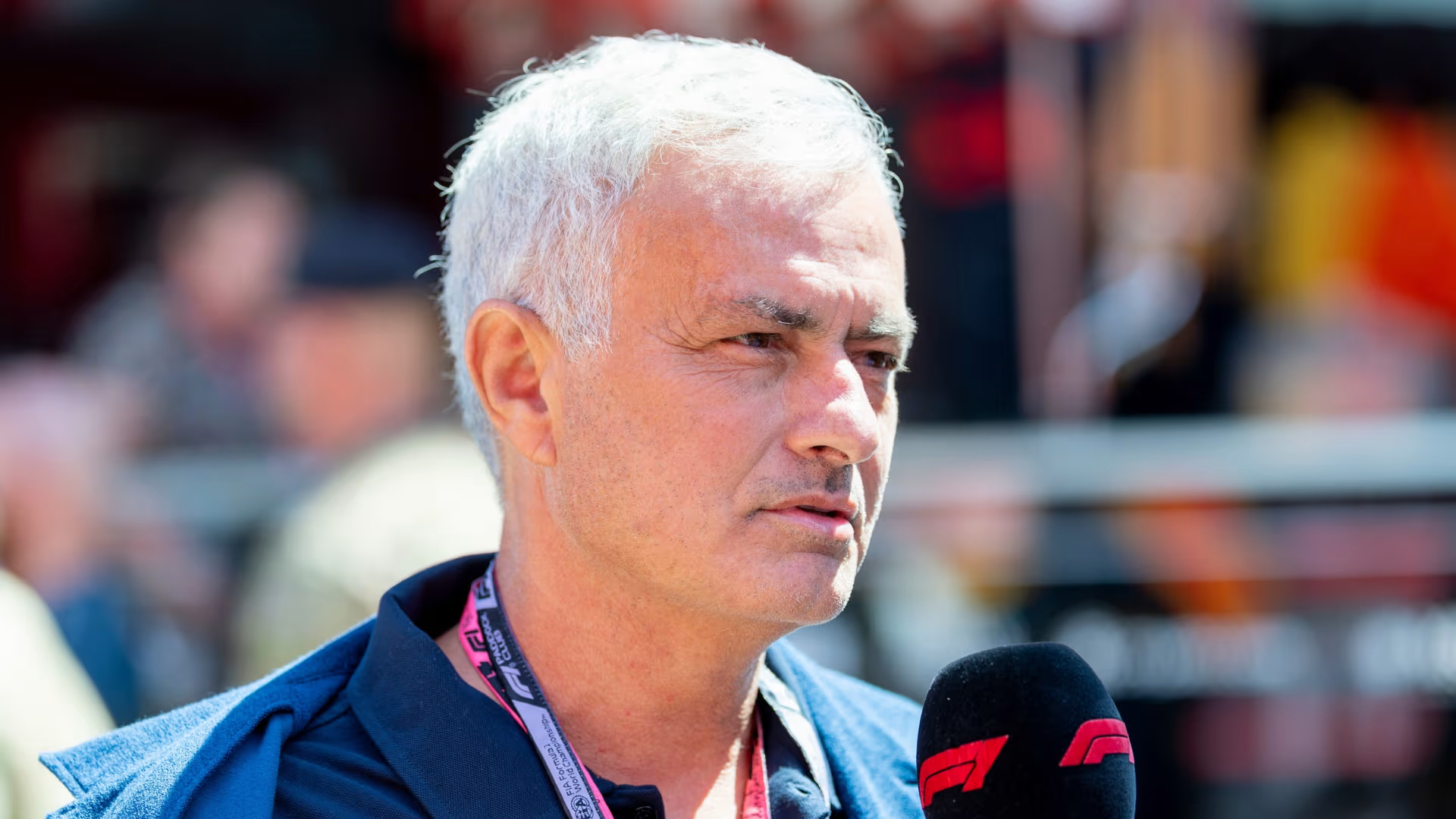
  • EXCLUSIVE: José Mourinho on His Love for F1, How Racing Compares to Football, and the Madring’s First Grand Prix

    EXCLUSIVE: José Mourinho on His Love for F1, How Racing Compares to Football, and the Madring’s First Grand Prix

    Key Highlights

    • José Mourinho attended the inaugural Spanish Grand Prix at the Madring circuit, located less than four kilometres from Real Madrid’s training ground, following a 4-1 La Liga victory over Rayo Vallecano.
    • The veteran coach argued football must learn from Formula 1’s approach to high-pressure environments, specifically citing drivers’ ability to engage with media and fans before “fighting for their lives” in the car.
    • Mourinho dismissed immediate prospects of becoming an F1 team principal but confirmed a close relationship with F1 CEO Stefano Domenicali and drivers like Max Verstappen, expressing a preference for attending qualifying and free practice sessions.

    Mourinho Experiences the Inaugural Madrid Grand Prix at Madring

    From Bernabéu Victory to the F1 Paddock

    Two sporting worlds collided at the Madring circuit last weekend as legendary football manager José Mourinho visited Formula 1’s newest venue for the inaugural Spanish Grand Prix in Madrid. The hybrid street-permanent facility, constructed around the IFEMA Exhibition Centre, sits mere kilometres from Real Madrid’s Valdebebas training complex where Mourinho currently works. His arrival came just 12 hours after overseeing a commanding 4-1 La Liga win over Rayo Vallecano at the Santiago Bernabéu—a match that saw Kylian Mbappé and Jude Bellingham propel Los Blancos level on points with FC Barcelona at the summit of the table. For the Portuguese tactician, a long-time F1 enthusiast who has attended events including the 2024 British Grand Prix, the Madring debut carried unique personal significance.

    “I’ve enjoyed it [F1] for a while, and I’ve been to a few races, but of course this is the first one [at the Madring],” Mourinho told F1.com. “Because I work just around the corner, every day that I was coming to work or leaving work, I was following it, the building [process], and the more we were approaching this day, [there was] more emotion for everybody.”

    Pressure, Preparation, and Lessons from the Grid

    Drawing on a managerial career spanning Benfica, Porto, Chelsea, Inter Milan, Real Madrid, Manchester United, and Roma—yielding over 25 major trophies including two UEFA Champions League titles—Mourinho offered a nuanced comparison between the psychological demands of elite football and Formula 1. While acknowledging the shared intensity of top-level competition, he identified a critical divergence in how athletes manage the moments preceding peak performance.

    “You know, it’s huge pressure for both,” he says thoughtfully. “When you have sports at the highest level, we are always speaking about huge pressure. But I feel that they [F1] are one step ahead of us in terms of the way they approach the big moments. [In football] we close each other [off], I believe, too much, also because of tradition.“

    He elaborated on the contrasting pre-event rituals, highlighting the accessibility mandated in the F1 paddock. “These guys [the drivers], [there’s] huge pressure, but before that [time in the car], they are together, they meet people, they do a little bit of PR, they do a little bit of media. I think we have to learn with them, the way they can be relaxed, and half an hour later they can be in the car fighting for their lives, because they take risks.”

    The Hypothetical Team Principal Role and Paddock Relationships

    When pressed on the hypothetical scenario of transitioning from the technical area to the pit wall as an F1 team boss, Mourinho responded with characteristic candor. “I have no idea!” Mourinho responds, with his eyes widening at the prospect. “I just have to learn. I learn with [F1 President and CEO] Stefano Domenicali; I ask him lots of questions. I tried to learn with all of them [the people I meet], and I like very much to come [to watch F1].”

    He clarified that his matchday commitments prevented a Saturday paddock visit, but outlined his preferred mode of engagement for future events. “It was not possible [on Saturday], because I had a match day, but I like to come for the Qualifyings, I like to come for the training sessions [Free Practices], because then clearly you can be closer, and you can interact more. Today is their day, and it’s the day I like to respect their privacy.”

    Mourinho’s paddock currency remains high, bolstered by longstanding friendships with key figures including Domenicali and four-time World Champion Max Verstappen, who received his 2025 British Grand Prix pole position award from the coach at Silverstone. “I know almost all of them, and everybody [has been] so nice to me over so many years,” Mourinho continues. “Now we’re coming to some new people, to some new generations, but I always had great respect from them. Because, as a family, we are so close to Stefano, it is of course a great way to be invited – we invited ourselves! – and to have always the reception that we have.”

    Why This Matters

    The arrival of the Spanish Grand Prix at the Madring circuit represents a strategic expansion for Formula 1 into the Spanish capital, leveraging the massive global footprint of Real Madrid and the broader Madrid metropolitan area. Mourinho’s presence underscores the growing crossover appeal between elite football and motorsport, a trend accelerated by Netflix’s Drive to Survive and the increasing movement of athletes and owners across both ecosystems. His specific commentary on pressure management and “open” versus “closed” cultures offers a rare, high-level tactical perspective from a serial winner in football applying lessons from a different high-performance domain. With a 10-year contract securing Madrid’s place on the calendar until at least 2035, the Madring venue is poised to become a permanent fixture for sporting VIPs, further blurring the lines between the football and motorsport establishments.

    Frequently Asked Questions

    Why was José Mourinho at the Spanish Grand Prix in Madrid?
    Mourinho attended the inaugural Spanish Grand Prix at the Madring circuit as a long-time Formula 1 fan. The venue is located less than four kilometres from Real Madrid’s training ground where he works, allowing him to follow the circuit’s construction process daily.
    What did Mourinho say about the difference between pressure in football and F1?
    Mourinho stated that while both sports operate under “huge pressure,” F1 is “one step ahead” in handling big moments. He noted that footballers “close each other off” too much due to tradition, whereas F1 drivers engage with media, PR, and fans before getting in the car, allowing them to be relaxed before facing life-threatening risks.
    Did Mourinho meet any F1 drivers or executives during the weekend?
    Yes, Mourinho met with F1 President and CEO Stefano Domenicali—whom he considers a close family friend—and four-time World Champion Max Verstappen. He presented Verstappen with the pole position award at the 2025 British Grand Prix and maintains friendships with many current and former drivers.
  • Nico Rosberg Proposes Major F1 VSC Rule Change After Lando Norris’ Spanish GP Setback

    Nico Rosberg Proposes Major F1 VSC Rule Change After Lando Norris’ Spanish GP Setback

    Key Highlights

    • 2016 Formula 1 World Champion Nico Rosberg has proposed closing the pitlane or drastically reducing the pitlane speed limit during Virtual Safety Car (VSC) periods to eliminate the unfair advantage gained by drivers who pit under VSC conditions.
    • The suggestion comes after the inaugural Spanish Grand Prix at the Madring circuit, where McLaren’s Lando Norris lost a likely victory after an ill-timed VSC deployed for Lance Stroll’s stranded Aston Martin allowed rivals to make cheaper pit stops.
    • Norris, who started from pole and built a lead over Mercedes’ Kimi Antonelli, had just passed the pit entry when the VSC was called, forcing him to stay out while Antonelli and Red Bull’s Max Verstappen pitted under neutralized conditions, ultimately finishing third behind race winner Antonelli and Verstappen.

    Rosberg Highlights Fundamental Flaw in VSC Pit Stop Delta

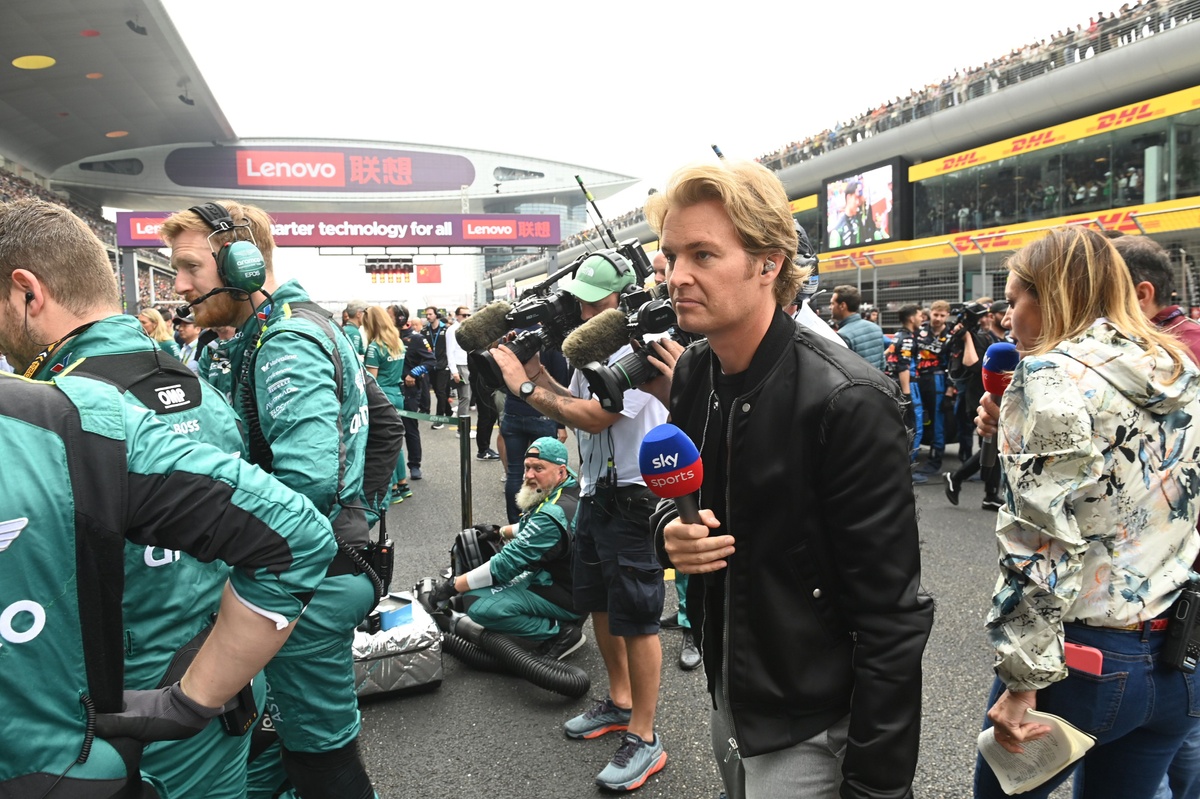
    Speaking on Sky Sports’ The F1 Show, 2016 Formula 1 World Champion Nico Rosberg dissected the strategic inequity exposed during the first-ever Spanish Grand Prix held at the Madring circuit. The race saw McLaren driver Lando Norris dominate the early stages from pole position, building a comfortable margin over Mercedes rookie Kimi Antonelli. However, the complexion of the Grand Prix shifted irrevocably when a Virtual Safety Car was deployed to retrieve Lance Stroll’s Aston Martin. Because Norris had just crossed the pit entry threshold, he was denied the opportunity to pit under the reduced time-loss delta that the VSC affords, while his primary rivals—including eventual race winner Antonelli and Red Bull Racing’s Max Verstappen—dived into the pits and emerged ahead.

    Former Champion Advocates for Structural Rule Changes

    Rosberg acknowledged the inherent lottery of neutralizations but argued the sport must explore regulatory fixes to preserve sporting fairness. “No, it’s just really unlucky,” Rosberg explained. “That’s the way it is. And it swings and roundabouts with the VSC and safety car deployments. You’re always going to have good luck or bad luck. It’s always horrible when that happens because he deserved to win, and it sucks that he lost it just because of a VSC.” He emphasized that while the VSC was introduced to avoid the spectacle-killing procession of a full Safety Car—“The problem is we hate seeing cars going round and round behind a safety car. It’s the most boring thing in the world of motorsport. And that’s why the VSC has been brought in so that we can reduce speed out there for minor dangers.”—the current rules create a perverse incentive where pitting under VSC yields a massive time gain relative to green-flag racing.

    Two Concrete Proposals to Neutralize the Pit Stop Advantage

    The German outlined two specific mechanisms to equalize the time loss of a pit stop regardless of track status. “Either the pitlane stays closed during a VSC, which then doesn’t give anybody the opportunity to take advantage during it or even why not something like: during a VSC, the pitlane speed limit gets reduced massively because it’s all about the time lost during a pitstop.” Rosberg explained the physics of the disparity: “The problem is during a VSC, the pitstop time lost is so much less because everybody on track is driving so slowly, so by going in the pits you lose a lot less race time, and that is the big problem, why then it becomes unfair.” His second proposal targets that delta directly: “But if you somehow find a way to make the pitstop time lost during a VSC as much time lost as when there’s no VSC, so you need to somehow slow people down who are going for the pitstop, that could be an idea. So then it’s all fair and equal for everybody.”

    Why This Matters

    The debate touches on a long-standing tension in Formula 1 between safety protocol integrity and competitive equity. The VSC was implemented precisely to minimize race neutralization time for minor incidents, yet its very efficiency—slowing cars on track without bunching the field—creates a “free” pit stop window that can overturn a driver’s legitimate on-track performance. The Madring race serves as a high-profile case study: Norris lost a near-certain win not through error or pace deficit, but through the geometric misfortune of track position relative to the pit entry at the moment of VSC deployment. As F1 evaluates its sporting regulations for future seasons, Rosberg’s proposals—closing the pitlane or mandating a drastically lower pitlane speed limit during VSC—represent practical, enforceable levers the FIA could pull to align the time cost of a pit stop with green-flag conditions, thereby removing the “lottery” element without reverting to full Safety Car deployments that degrade the spectacle.

    Frequently Asked Questions

    Why did Lando Norris lose the lead at the Spanish Grand Prix?

    A Virtual Safety Car was deployed to recover Lance Stroll’s Aston Martin just after Norris had passed the pit entry. This allowed rivals Kimi Antonelli and Max Verstappen to pit under VSC conditions—losing significantly less time relative to the field—while Norris was forced to stay out, dropping him to third by the finish.

    What specific rule changes did Nico Rosberg propose?

    Rosberg suggested two options: either keep the pitlane closed for the duration of a VSC, or drastically reduce the pitlane speed limit during a VSC so that the time lost during a pit stop equals the time lost under green-flag racing, neutralizing the unfair advantage.

    Was this the first Spanish Grand Prix at the Madring circuit?

    Yes, the race referenced was the inaugural Spanish Grand Prix held at the Madring circuit.

  • Fred Vasseur shuts down claims Ferrari split Spanish GP strategy to separate drivers

    Fred Vasseur shuts down claims Ferrari split Spanish GP strategy to separate drivers

    Key Highlights

    • Ferrari Team Principal Fred Vasseur dismissed suggestions that split tire strategies for Charles Leclerc and Lewis Hamilton at the Spanish Grand Prix were designed to keep the teammates apart on track.
    • Vasseur cited identical strategy splits at McLaren, Mercedes, and Red Bull as evidence the approach was standard racecraft, not internal conflict management.
    • Hamilton retired early with a braking issue on soft tires, while Leclerc’s hard-tire gamble for a late safety car did not materialize, leaving Ferrari without points in Madrid.

    Vasseur Rejects Narrative of Manufactured Separation

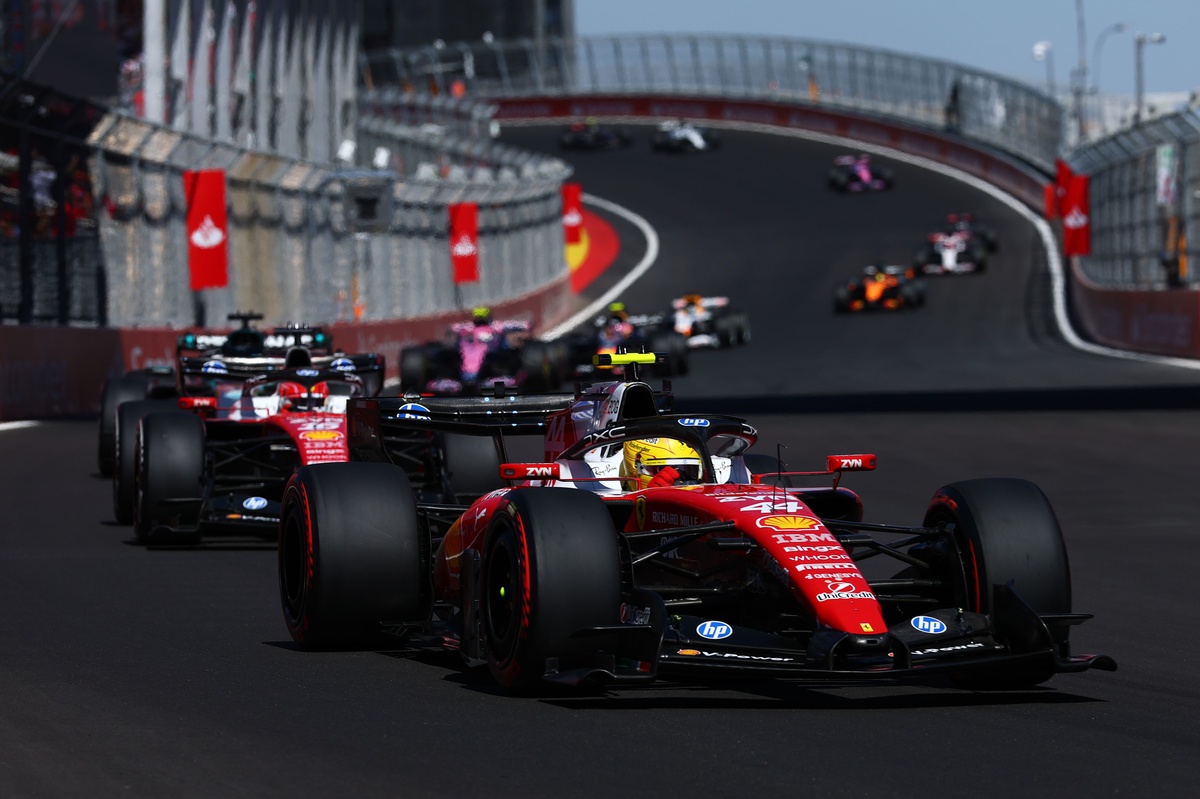
    Ferrari Team Principal Fred Vasseur moved decisively to quash speculation that the Scuderia’s divergent tire strategies for Charles Leclerc and Lewis Hamilton at the Spanish Grand Prix were a tactical maneuver to prevent on-track friction between the pair. The scrutiny followed a tense run of races: in Zandvoort, Hamilton pleaded for team orders to pass Leclerc, and at Monza, the duo collided on the opening lap, derailing Hamilton’s afternoon. Against that backdrop, the decision to start Hamilton on soft compounds and Leclerc on hards in Barcelona invited immediate questions about whether Ferrari was engineering separation.

    Comparisons to Rivals Underscore Standard Practice

    Addressing reporters after Sunday’s race, Vasseur pointed to the grid at large to contextualize the call. “Have a look. [Lando] Norris, [Oscar] Piastri did the same. [George] Russell, [Kimi] Antonelli did the same. [Max] Verstappen, [Liam] Lawson did the same,” he said. “I don’t think they [McLaren] were scared to have a crash between Norris and Piastri.” The comparison framed the split strategy as a routine response to marginal qualifying positions—Hamilton fourth, Leclerc fifth—rather than a relationship-management tool.

    Divergent Race Outcomes Highlight Strategic Gamble

    The race itself rendered the strategic debate largely academic. Hamilton’s afternoon ended prematurely when a braking issue prevented him from exploiting the soft tire’s early-life advantage, forcing retirement after only a handful of laps. Leclerc, meanwhile, committed to a long first stint on the hard compound, banking on a late safety car that would allow a cheap pit stop for fresh rubber. That caution period never arrived, leaving the Monegasque to finish outside the points.

    Leclerc Stands by Hard-Tire Call Despite Result

    Leclerc offered a robust defense of the approach post-race, emphasizing the lack of overtaking opportunities at the Madring circuit. “We could have done many different things, but I think the best thing for us today was what we did. If I had to do the race again I would do exactly the same thing. Because starting on the soft at the beginning wouldn’t have given me the opportunity to do anything special,” he explained. “I would have ended up in the same strategy as the guys in front of me and wouldn’t have been very helpful, considering there were no overtakes. So, the hard soft was the right strategy and waiting for the safety car at the end was also the right thing to do. But, unfortunately, it never came.”

    Why This Matters

    The episode underscores the intense external pressure on Ferrari’s driver lineup, where every tactical decision is parsed for signs of internal discord. While Vasseur’s data-driven rebuttal—highlighting identical splits at McLaren, Mercedes, and Red Bull—is factually sound, the team’s zero-point weekend in Spain amplifies scrutiny of its strategy group. With the Constructors’ Championship battle tightening, Ferrari cannot afford weekends where both cars finish empty-handed, regardless of the strategic rationale. The next round will test whether the Leclerc-Hamilton dynamic stabilizes or continues to overshadow the Scuderia’s technical performance.

    Frequently Asked Questions

    Did Ferrari split strategies to keep Leclerc and Hamilton apart?

    No. Team Principal Fred Vasseur explicitly denied this, noting that McLaren, Mercedes, and Red Bull all employed the same soft/hard split for their driver pairings in Spain, indicating it was a circuit-specific tactical choice rather than a relationship-management measure.

    Why did Hamilton retire from the Spanish Grand Prix?

    Lewis Hamilton suffered a braking issue early in the race that prevented him from extracting performance from his soft-compound tires, leading to his retirement after only a few laps.

    What was Leclerc’s strategy and why did it not work?

    Charles Leclerc started on hard tires aiming for a long first stint, hoping a late safety car would allow a cheap stop for softs. The safety car did not deploy, leaving him on a one-stop strategy that yielded no points at a circuit where overtaking was extremely difficult.

  • Lewis Hamilton Denies Claims He’s Pushing Ferrari to Replace Key Staff

    Lewis Hamilton Denies Claims He’s Pushing Ferrari to Replace Key Staff

    Key Highlights

    • Lewis Hamilton has categorically denied Italian media reports claiming he pressured Ferrari to replace key on-track personnel following frustrating race executions.
    • The seven-time world champion affirmed his commitment to empowering his current team, stating he has “never asked for anyone on my team to be replaced.”
    • Hamilton’s 2026 season has shown significant improvement with a maiden Ferrari victory in Barcelona and a current third-place championship standing.

    Hamilton Refutes Corriere della Sera Claims of Internal Pressure

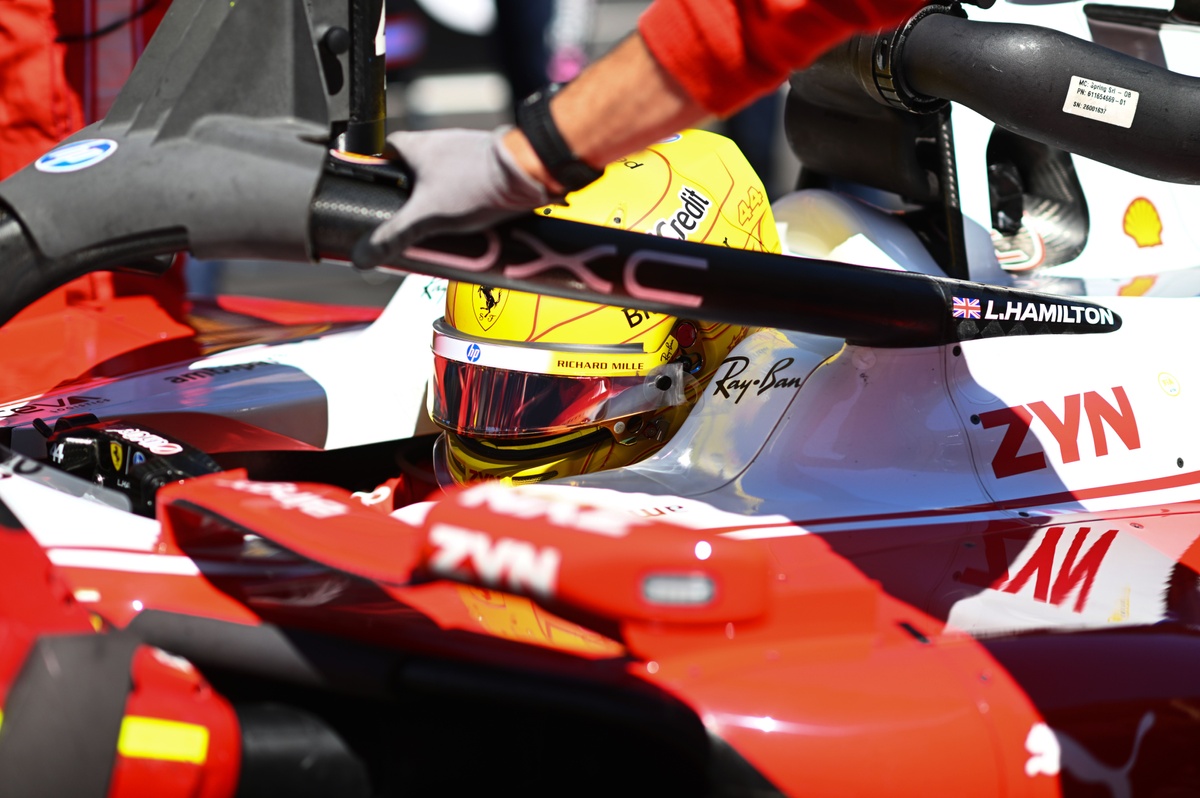
    Lewis Hamilton has moved swiftly to quash speculation emanating from the Italian press regarding his relationship with the Scuderia Ferrari operation. A report published by Corriere della Sera alleged that the British driver had been advocating for the removal of several key members of his on-track engineering and strategy group. The newspaper did not identify the specific personnel targeted by these alleged demands but linked the supposed friction to Hamilton’s visible frustration over race execution during recent Grand Prix weekends.

    The publication cited two specific flashpoints from the 2026 campaign. At the Dutch Grand Prix in August, Hamilton expressed exasperation over team radio regarding the strategic decision to keep him behind teammate Charles Leclerc for an extended period while hunting for a podium finish. Subsequently, at the Italian Grand Prix in Monza, the 40-year-old was reportedly displeased with a first-lap collision involving Leclerc, suggesting the onus was on Team Principal Fred Vasseur to manage the intra-team dynamic. Corriere della Sera further speculated that the long-standing professional relationship between Hamilton and Vasseur—dating back to their GP2 championship collaboration in 2006—had become strained under the weight of these incidents.

    Driver Issues Direct Denial Via Social Media Channels

    Addressing the rumors head-on, Hamilton utilized his official social media platforms to issue a comprehensive rebuttal. The statement preserved the driver’s exact wording and intent:

    “I’ve seen some of the stories that have gone out and I want to clear it up here. I’ve never asked for anyone on my team to be replaced. Everyone I work with works hard every day and their dedication is what moves us forward. I always try to empower and lift people to be the best versions of themselves or at least see the best in themselves. I may not always achieve that but it’s my intention and what I’m here to do. We all work together and that will continue.”

    The forceful denial underscores a leadership philosophy centered on collective development rather than personnel upheaval. Hamilton’s emphasis on “empower and lift people” aligns with his public persona as a mentor figure within the paddock, contrasting sharply with the narrative of a driver engineering a purge of his support staff.

    Context: A Season of Transition and Resurgence

    While the current rumors have been dismissed, the background context reveals a driver actively reshaping his technical environment. Heading into the 2026 season, Hamilton implemented structural changes to his engineering group following a disappointing debut campaign with Ferrari in 2025. That inaugural year saw him finish sixth in the Drivers’ Championship, 86 points adrift of Leclerc in fifth, without securing a single podium finish.

    In response, the team executed a notable shuffle: race engineer Riccardo Adami was replaced by a dual-engineer structure comprising Carlo Santi and Cedric Grosjean. Additional, unspecified “tweaks” were made to the operational setup. The early returns on this restructuring have been positive. Hamilton secured his maiden victory for the Scuderia at the Spanish Grand Prix in Barcelona in June, executing a decisive three-stop strategy after 14 rounds with the team. He currently sits third in the 2026 Drivers’ Standings, though he trails championship leader Kimi Antonelli of Mercedes by a substantial 101-point margin.

    Why This Matters

    The episode highlights the intense scrutiny faced by high-profile driver transfers, particularly when a champion of Hamilton’s stature joins a historic manufacturer like Ferrari. The Italian media landscape is notorious for amplifying paddock rumors, and Corriere della Sera‘s report reflects the pressure narrative that often accompanies periods of underperformance or visible on-track frustration. Hamilton’s direct engagement with fans via social media to correct the record represents a modern approach to narrative control, bypassing traditional press channels. For Ferrari, maintaining a stable, high-functioning engineering environment around both Hamilton and Leclerc remains critical as they chase both Drivers’ and Constructors’ titles against a dominant Mercedes package led by Antonelli.

    Frequently Asked Questions

    Did Lewis Hamilton ask Ferrari to fire his race engineer or strategy team?
    No. Hamilton explicitly stated on social media: “I’ve never asked for anyone on my team to be replaced.” He denied the Corriere della Sera report entirely.
    What changes did Hamilton make to his engineering team for 2026?
    Following a difficult 2025 debut season, Hamilton replaced race engineer Riccardo Adami with a two-engineer structure: Carlo Santi and Cedric Grosjean. Other unspecified operational tweaks were also implemented.
    How is Hamilton performing in the 2026 season compared to 2025?
    Significantly better. He achieved his first Ferrari win at the Spanish Grand Prix in Barcelona and currently sits third in the Drivers’ Championship, whereas he finished sixth in 2025 without a podium.
  • Lando Norris Spotted Driving Ferrari F40 in London Following 2025 Crash

    Lando Norris Spotted Driving Ferrari F40 in London Following 2025 Crash

    Key Highlights

    • Formula 1 champion Lando Norris has returned his rare Ferrari F40 to public roads in London following a January 2025 crash in Monaco that left the supercar damaged.
    • The F40, one of only 1,311 produced between 1987 and 1992, was being driven by a friend when it lost traction and struck guardrails while Norris was away.
    • Norris’s sighting comes after a third-place finish at the inaugural Spanish Grand Prix at Madring, while seven-time champion Lewis Hamilton has also recently acquired an F40.

    Norris’s Ferrari F40 Returns to London Streets After Monaco Crash Repair

    McLaren Formula 1 driver and 2025 world champion Lando Norris has been filmed driving his Ferrari F40 through London, marking the supercar’s first public appearance since a high-profile accident in Monaco earlier this year. The sighting follows Norris’s podium finish at the inaugural Spanish Grand Prix held at the new Madring circuit, where he secured third place. Footage circulating on social media shows the British driver behind the wheel of the iconic red supercar, confirming that extensive repairs have been completed since the January incident.

    Details of the January 2025 Monaco Accident

    The Ferrari F40 was involved in a crash on roads outside Monaco in January 2025 while Norris was traveling. According to reports, a friend was driving the vehicle when it lost traction exiting a left-hand corner and made contact with guardrails. The incident drew significant attention given the car’s rarity and historical significance. Norris addressed the situation shortly after it occurred, telling The Sun: “No [it is not back to normal]. It was when I was away. I wasn’t happy at all,” Norris told The Sun at the time. The 2025 champion took delivery of the F40 during the fourth quarter of 2024, adding it to a collection that already included multiple McLaren hypercars, a Porsche Carrera GT, and a Lamborghini Miura P400.

    Engineering Icon: The Ferrari F40 Legacy

    The crashed vehicle represents a significant piece of automotive history. Produced between 1987 and 1992, only 1,311 examples of the F40 were ever built. It holds the distinction of being the last road car personally overseen by Enzo Ferrari before his death in 1988, and it was the first street-legal production car to break the 200 mph barrier. The model’s twin-turbocharged V8 engine, lightweight composite construction, and raw driving dynamics have cemented its status as one of the most collectible supercars ever made, with values regularly exceeding several million dollars at auction.

    Fan Reaction and the Hamilton Connection

    Social media reaction to the London sighting was immediate and enthusiastic. On Instagram, one follower commented: “Good to see this car on the road again, after one of his friends crashed it some time ago,” while another praised: “Unbelievable taste in cars.” A third user drew a parallel to Norris’s Mercedes-powered rival, writing: “Are Lando and Lewis car sharing? Velcro on the back of the number plates?” The remark references Lewis Hamilton, the seven-time Formula 1 world champion who recently joined Scuderia Ferrari. Hamilton unveiled his own newly acquired Ferrari F40 ahead of the Italian Grand Prix at Monza, having previously sold his entire private car collection. The coincidence of both British F1 champions owning the same ultra-rare model has fueled discussion among motorsport and automotive enthusiasts alike.

    Why This Matters

    The return of Norris’s F40 to the road underscores the deep intersection between Formula 1 drivers and high-end automotive collecting. As brand ambassadors with substantial incomes and technical appreciation for engineering excellence, drivers like Norris and Hamilton serve as highly visible custodians of automotive heritage. The F40’s status as the final Enzo Ferrari–approved road car makes its preservation and active use particularly significant for marque historians and collectors. Furthermore, the Monaco crash and subsequent restoration highlight the specialized expertise required to repair carbon-fiber and Kevlar bodywork on a vehicle where original panels are irreplaceable. With both Norris and Hamilton now piloting F40s, the model’s cultural relevance within the F1 paddock has been reinforced, potentially influencing market values and collector interest in the coming years.

    Frequently Asked Questions

    When and where did Lando Norris’s Ferrari F40 crash?
    The crash occurred in January 2025 on public roads outside Monaco. A friend of Norris was driving when the car lost traction exiting a left-hand corner and struck guardrails. Norris was away at the time.
    How many Ferrari F40s were produced, and why is the model significant?
    Only 1,311 Ferrari F40s were built between 1987 and 1992. It was the last road car personally overseen by Enzo Ferrari and the first street-legal production car to exceed 200 mph, making it a landmark in automotive history.
    Does Lewis Hamilton also own a Ferrari F40?
    Yes. Seven-time Formula 1 champion Lewis Hamilton, who now drives for Scuderia Ferrari, recently acquired a Ferrari F40 after selling his previous car collection. He unveiled the purchase ahead of the Italian Grand Prix at Monza.
  • Was Cadillac “faster” than Williams in Madring F1 Race?

    Was Cadillac “faster” than Williams in Madring F1 Race?

    Key Highlights

    • Sergio Perez showed strong race pace at the Spanish Grand Prix, matching and briefly surpassing Alexander Albon’s Williams before a water leak forced his retirement.
    • Teammate Valtteri Bottas struggled with significant tire degradation and brake management, highlighting a performance disparity within the Cadillac squad.
    • Cadillac targets improvement at the Azerbaijan Grand Prix, where the Baku circuit’s low-downforce nature may mask the MAC-26’s current aerodynamic deficiencies.

    Perez Finds Encouraging Pace Amid Reliability Woes

    Cadillac’s maiden Formula 1 campaign has largely been defined by backmarker status, but the Spanish Grand Prix at the new Madrid circuit—referred to as Madring—offered a glimmer of competitiveness from Sergio Perez. The Mexican driver qualified 18th but made a lively start, jumping past Yuki Tsunoda and Carlos Sainz to sit 16th. More importantly, his race pace proved genuinely competitive against the midfield benchmark.

    Perez spent the entirety of his race shadowing Alexander Albon’s Williams, running a near-identical strategy of mediums to hards under the Virtual Safety Car. “I was pretty much the same pace as [Alexander] Albon all the way through,” Perez commented. “I was within a second or two until we had the issue. So a really strong weekend for the team in terms of pace. We pushed everything, we were on the limit with the brakes, but we pushed to the very limit, and [I’m] happy with that.” Telemetry backed his assessment: while Perez was 0.403 seconds per lap slower on the medium compound over 11 representative laps, he turned the tables on the hard tire, lapping 0.351 seconds quicker than Albon over eight laps before a terminal water leak and blue flags ended his challenge.

    Bottas Highlights Degradation and Durability Deficits

    The picture was starkly different for Valtteri Bottas. The Finn languished at the rear of the field, managing excessive brake temperatures with persistent lift-and-coast throughout the afternoon. “We know we need to improve,” the Finn nervously chuckled. “The car is still not robust enough, and we need to make it a lot faster. And the deg today highlights how much we’re lacking, it’s like way more than the competition.” Cadillac’s reliability record underscores the struggle: the team has suffered 11 retirements or non-starts in the 2026 season, fewer than Aston Martin’s 15 but significantly more than Williams’ seven.

    When presented with Perez’s positive comparison to Albon, Bottas offered a nuanced counterpoint. “In the beginning we can be there, we’ve seen, but as the race progresses, the deg gets worse. But actually for the next event, I’m more hopeful that we can be there. Baku, the only high-speed corners, they are flat out; otherwise it’s slow- or medium-speed.” His assessment points to a fundamental aerodynamic inefficiency on the MAC-26 that punishes the car disproportionately on conventional circuits.

    Why This Matters: A Two-Tier Trajectory for a Rookie Team

    The divergent weekends of Perez and Bottas expose the volatile nature of Cadillac’s development curve. Perez’s ability to match a race-winning midfield outfit like Williams—albeit over a limited sample—suggests the underlying potential of the chassis and power unit package exists, provided the car is in its optimal window. Conversely, Bottas’s experience confirms that the operational window remains dangerously narrow, with tire degradation and thermal management acting as primary performance limiters. With 11 DNFs already on the board, reliability is not merely a statistical blemish but a barrier to data accumulation. The upcoming Azerbaijan Grand Prix represents a critical calibration opportunity: Baku’s unique layout, dominated by long straights and low-speed corners, reduces the downforce demand that currently plagues the MAC-26. A strong showing there would validate the team’s aerodynamic diagnosis and provide momentum heading into the European swing, but it would not solve the fundamental lack of robustness that Bottas emphasized.

    Frequently Asked Questions

    How did Sergio Perez’s pace compare to Alexander Albon at the Spanish Grand Prix?

    On the opening medium stint, Perez lapped 0.403 seconds slower per lap than Albon. After both switched to hard tires under the Virtual Safety Car, Perez was 0.351 seconds per lap quicker over eight representative laps before a water leak and blue flags intervened.

    What are Cadillac’s main technical issues according to Valtteri Bottas?

    Bottas cited insufficient car robustness, excessive tire degradation relative to rivals, and persistent brake temperature management issues requiring significant lift-and-coast throughout the race.

    Why is the Azerbaijan Grand Prix seen as a better opportunity for Cadillac?

    The Baku circuit features predominantly slow- and medium-speed corners with only flat-out high-speed sections, reducing the downforce demand that currently exposes the MAC-26’s aerodynamic deficiencies on conventional tracks.

  • Kimi Antonelli and Mercedes Make Their Own Luck in Madrid

    Kimi Antonelli and Mercedes Make Their Own Luck in Madrid

    How Kimi Antonelli and Mercedes Mastered the VSC to Win the Spanish Grand Prix

    Kimi Antonelli’s victory at the Formula 1 Spanish Grand Prix appeared to hinge on a stroke of luck when a Virtual Safety Car (VSC) was triggered by Lance Stroll’s retirement. However, a deeper look at the telemetry and team radio reveals a calculated masterclass in racecraft and strategy from the Mercedes rookie and his pitwall.

    The VSC Moment That Changed the Race

    The neutralisation period arrived at the precise moment to flip the script on a race that Lando Norris seemed destined to win. Norris had already passed the pitlane entry when the VSC was deployed, eliminating his chance to stop. Antonelli, conversely, managed to dive into the pits at the last second. He emerged with the “virtual” lead, slotting in just behind Charles Leclerc, who had yet to make his stop.

    While the timing was fortunate, it was not accidental. Mercedes had anticipated the neutralisation, and Antonelli manipulated his pace to buy the team the critical seconds required to execute the stop.

    Telemetry Reveals Deliberate Pace Management

    Data analysis highlights exactly how Antonelli created his own opportunity. The moment yellow flags flew for Stroll’s stranded Aston Martin at Turn 20, race engineer Peter Bonnington alerted the Italian. Antonelli immediately backed off—significantly more than required by the regulations.

    Comparing Lap 13 vs. Lap 14

    • Turn 19: Antonelli entered 29 km/h slower than on the previous lap.
    • Turn 20 Braking Zone: He arrived 24 km/h slower, lifting off the throttle much earlier.

    This deliberate deceleration cost him several tenths against Norris and Max Verstappen on track, but it gifted his strategists the time window needed to confirm the VSC and call him in.

    Antonelli vs. Verstappen Under Identical Conditions

    The contrast is stark when comparing Antonelli’s telemetry to Verstappen, who was running six seconds behind under the same yellow flags before the VSC was officially deployed:

    • Verstappen was 15 km/h faster through Turn 19.
    • Verstappen reached the Turn 20 braking point 18 km/h quicker, lifting later.

    Antonelli was not merely adhering to the yellow flag delta; he was actively managing the gap to the pit entry to ensure he would be in position if—and when—the race was neutralised.

    Driver and Pitwall in Perfect Sync

    Antonelli confirmed the pre-emptive nature of his actions after the race, crediting the early warning from his engineer.

    “In my case, the timing was perfect: Bono warned me in the final sector that a virtual safety car might come out, so I lifted off,” Antonelli said after the race. “I slowed down a bit on purpose to see if I could catch the VSC right before the pit entry, and it worked out great.”

    The Mercedes pitwall had already flagged a high probability of a VSC based on real-time analysis of Stroll’s incident. This foresight allowed the strategy group to initiate the communication chain before Race Control made the official call.

    Three-Second Decision Making

    Team principal Toto Wolff praised the speed of the internal process, estimating the entire chain—from strategy identification to driver execution—took roughly three seconds.

    “The chain of command, the process was great,” Wolff said. “The strategy group had it on their mind, obviously, and then someone said, ‘That’s not going to clear quickly with the Aston Martin in the wall’. And then it was strategy to Bono, Bono double-checked, Bono to Kimi, and that was all. We’re talking about three seconds.”

    Racecraft Beyond the Years

    It remains impossible to quantify exactly how many tenths Antonelli’s deliberate lifting contributed to the successful stop versus the VSC timing itself. However, the episode serves as a compelling case study in the 18-year-old’s ability to read a race dynamically. By anticipating the neutralisation and adjusting his speed proactively, he handed his team the margin required to execute a race-winning strategy.