Tag: Solana

  • Jito Rises 16% After Asian Expansion Announcement – JTO Short Sellers at Risk

    Jito Rises 16% After Asian Expansion Announcement – JTO Short Sellers at Risk

    Key Highlights

    • JTO price surged 16% as Jito’s Block Assembly Marketplace celebrated its one-year mainnet milestone and JitoSOL expanded access in Asia via PDAX in the Philippines and Naver Pay in Korea.
    • Derivatives volume jumped 107.04% to $135.90 million and open interest rose 28.96% to $55.53 million, with Binance top traders showing a long/short ratio of 2.3462, indicating aggressive long positioning.
    • Technical analysis reveals a cup-and-handle pattern on the weekly chart targeting resistance at $0.6075, though dense liquidation liquidity at $0.54–$0.55 creates near-term downside risk.

    Jito Ecosystem Milestones Fuel JTO Rally

    Jito’s native token JTO rallied 16% in the recent session, driven by a confluence of ecosystem developments that reinforced its presence within the Solana ecosystem. The project’s Block Assembly Marketplace (BAM) marked its one-year mainnet anniversary, providing a fundamental catalyst for renewed market attention. Simultaneously, JitoSOL—Jito’s liquid staking token—broadened its Asian footprint through new integrations with PDAX in the Philippines and Naver Pay in Korea. These expansions widened retail and institutional access to Jito’s liquid-staking ecosystem, coinciding with a sharp increase in spot trading volume, which pumped 114.22% to nearly $78 million as participation surged alongside the price advance.

    Derivatives Activity Surges as Leverage Builds

    Derivatives markets mirrored the spot rally with heightened speculative activity. According to data from CoinGlass, derivatives volume surged 107.04% to $135.90 million, while open interest climbed 28.96% to $55.53 million, validating the narrative that investors added fresh exposure. The long positioning strengthened notably among Binance’s top trader accounts, which recorded a long/short ratio of 1.4414, with an even stronger ratio of 2.3462 for their positions. However, the broader 24-hour market remained more balanced, with an overall long/short ratio of 0.7995. Total liquidations reached nearly $221,000, split between $119,930 in longs and $101,070 in shorts. The growing leverage supported participation but also expanded JTO’s exposure to sharp price swings.

    Weekly Chart Shows Cup-and-Handle Formation

    Technical analysis from TradingView indicates a broad cup-and-handle structure has developed on JTO’s weekly chart after the token reversed from its early-2026 lows. Price recently rebounded from the handle’s descending lower boundary, pushing toward $0.5763 and approaching the $0.6075 resistance level directly above. Beyond that, $0.6712 resistance presents another hurdle before the larger $0.8241–$0.8793 resistance region. The Relative Strength Index (RSI) recovered to 51.78, moving above its average at 50.04, with the indicator’s reversal above the neutral area accompanying the rebound from the handle’s lower boundary. A strong move beyond $0.6075 could validate a price continuation setup toward $0.6712, while rejection could shift focus to $0.5225 support before the deeper $0.4000 level.

    Liquidation Heatmap Highlights Downside Risk

    Despite the improving weekly structure, JTO’s liquidation heatmap from CoinGlass reveals a near-term obstacle. Dense liquidation liquidity has accumulated beneath the prevailing price, specifically around the $0.54–$0.55 region, with further concentration stretching toward the $0.52 area. This creates a potential downside pull if bulls fail to defend the recent recovery. Smaller upper clusters are also visible around $0.58–$0.59 as JTO traded at $0.576 at reporting time. The token therefore faces liquidity on both sides, though the stronger nearby cluster remains below current market value. A sweep lower could test the recovery before JTO makes another challenge at the weekly resistance region; alternatively, continued buying could push the token through upper liquidity toward the $0.6075 resistance, clearing which would give the cup-and-handle structure stronger validation.

    Why This Matters

    Jito’s rally underscores the growing maturity of liquid staking infrastructure on Solana. The Block Assembly Marketplace’s first anniversary signals operational stability for a key MEV-management tool, while Asian exchange integrations with PDAX and Naver Pay represent a strategic push into high-growth retail markets. The derivatives surge—particularly the outsized long positioning among Binance’s top traders—suggests sophisticated market participants are betting on sustained upside, likely driven by anticipation of further Solana ecosystem adoption and Jito’s revenue capture from MEV. However, the dense liquidation clusters below current price highlight the fragility of leveraged rallies; a flush of long positions could accelerate a correction before the technical breakout confirms. For the broader Solana DeFi landscape, JTO’s price action serves as a barometer for confidence in liquid staking derivatives and MEV commoditization.

    Frequently Asked Questions

    What drove JTO’s 16% price increase?
    The rally was catalyzed by Jito’s Block Assembly Marketplace reaching its one-year mainnet milestone and JitoSOL expanding access in Asia through PDAX (Philippines) and Naver Pay (Korea), which widened the liquid-staking ecosystem’s user base and triggered a 114% surge in spot trading volume.
    What are the key technical levels for JTO?
    Immediate resistance sits at $0.6075, with subsequent hurdles at $0.6712 and the $0.8241–$0.8793 region. Downside support lies at $0.5225 and $0.4000, while dense liquidation liquidity at $0.54–$0.55 acts as a magnetic zone for potential price sweeps.
    How does derivatives activity affect JTO’s price outlook?
    Derivatives volume and open interest surged over 100% and 28% respectively, with Binance top traders showing a 2.3462 long/short ratio, indicating strong conviction among large participants. However, the overall market long/short ratio remains below 1 (0.7995), and the high leverage increases vulnerability to volatile moves in either direction.

  • Peter Brandt Labels XRP “Fool Coin” in Controversial Comments

    Peter Brandt Labels XRP “Fool Coin” in Controversial Comments

    Key Highlights

    • Veteran trader Peter Brandt reiterated his long-standing skepticism toward XRP, labeling it a “dumb coin” and questioning its tokenomics despite Ripple’s expanding bank partnerships.
    • Brandt draws a sharp fundamental distinction between Bitcoin as a “store of value” and XRP as a transaction-focused asset, arguing utility alone does not drive token price appreciation.
    • The trader expressed a more favorable view on Ethereum and Solana, calling Ethereum a “good asset” with upside potential, while maintaining Bitcoin as his preferred core portfolio holding.

    Brandt Doubles Down on XRP Skepticism Amid Ripple Progress

    Senior market trader Peter Brandt has reaffirmed his bearish stance on XRP, stating that recent developments within the Ripple ecosystem—including widespread collaborations with global banking institutions—have failed to alter his fundamental assessment of the asset. During a recent interview, Brandt was pressed on whether Ripple’s institutional momentum and technological advancements warranted a reassessment. He responded by maintaining his skepticism, emphasizing that structural questions surrounding the token’s supply dynamics and value accrual mechanism remain unresolved.

    A Fundamental Taxonomy: Store of Value vs. Transaction Utility

    Central to Brandt’s thesis is a categorical distinction between crypto assets based on their primary utility. He characterizes Bitcoin primarily as a “store of value,” acknowledging its current speculative trading nature while attributing to it monetary properties akin to digital gold. In contrast, he views XRP as an asset designed explicitly for transactional throughput and cross-border settlement. This classification leads him to a blunt appraisal: he directly referred to XRP as a “dumb coin,” arguing that its transactional efficiency does not inherently translate into investment merit.

    Utility Does Not Equal Value Accrual

    When challenged on XRP’s proven ability to facilitate cheap, rapid transactions, Brandt conceded the technical point but rejected the investment conclusion. He cited the U.S. dollar as a parallel: a fiat currency used globally for highly effective transactions that no holder expects to appreciate in value solely because of its velocity. “Just because something can be used in transactions doesn’t automatically mean it has to be more valuable,” Brandt stated. He posited that the critical unanswered question for XRP is at what inflection point transactional volume converts into genuine economic value for the token itself, rather than merely benefiting the Ripple network infrastructure.

    Diverging Views on Ethereum and Solana

    Brandt’s critique does not extend uniformly across the altcoin landscape. He spoke positively of Ethereum, describing it as a “good asset” and expressing confidence that both Ethereum and Solana possess the potential to reach higher valuation levels. He places these networks in a separate category from both Bitcoin and XRP—platforms upon which applications are built—suggesting they warrant a distinct valuation framework. Ultimately, Brandt disclosed a personal portfolio preference heavily weighted toward Bitcoin, reinforcing his conviction in the premier cryptocurrency’s monetary role over utility-focused alternatives.

    Why This Matters

    Peter Brandt’s commentary carries weight due to his decades-long track record in commodity and futures trading, offering a traditional market perspective on digital asset classification. His insistence on separating “store of value” narratives from “utility token” mechanics highlights a persistent debate in crypto valuation methodologies. As Ripple continues to secure regulatory clarity—most notably the July 2023 court ruling that XRP is not inherently a security—and expands its On-Demand Liquidity (ODL) corridors with financial institutions, the market is actively testing whether enterprise adoption creates token holder value. Brandt’s dollar analogy underscores a critical tokenomics question: velocity and utility are necessary but not sufficient conditions for price appreciation without a mechanism capturing that value (e.g., fee burns, staking yields, or supply constraints). Meanwhile, his endorsement of Ethereum and Solana reflects growing institutional comfort with smart contract platforms as programmable settlement layers, a narrative driving ETF filings and allocation shifts in 2024.

    Frequently Asked Questions

    What specific concerns did Peter Brandt raise about XRP’s tokenomics?
    Brandt highlighted “question marks regarding the total supply and whether it would expand in the future,” suggesting uncertainty over XRP’s emission schedule and escrow release mechanism undermines its credibility as a scarce store of value.
    How does Brandt differentiate Bitcoin from XRP and Ethereum?
    He categorizes Bitcoin as a “store of value” asset, XRP as a transaction-focused utility token, and Ethereum (alongside Solana) as an application platform layer—arguing each requires a distinct valuation framework rather than a one-size-fits-all approach.
    Does Peter Brandt hold any XRP or recommend it as an investment?
    No. Brandt explicitly maintained his skepticism, called XRP a “dumb coin,” and stated he prefers Bitcoin for the majority of his cryptocurrency portfolio. The source includes a disclaimer: “This is not investment advice.”
  • Solana Deploys 150-Millisecond Settlement Upgrade to Second Public Test Network

    Solana Deploys 150-Millisecond Settlement Upgrade to Second Public Test Network

    Key Highlights

    • Solana’s Alpenglow upgrade targets approximately 150-millisecond transaction finality, a dramatic reduction from the current 12.8 seconds.
    • The upgrade is now live on both Solana’s devnet and testnet, allowing developers to test applications before mainnet deployment.
    • Anza, Solana’s core software developer, announced the devnet transition on September 25, following the testnet migration a day earlier.

    Alpenglow Upgrade Reaches Public Developer Networks

    Solana’s ambitious Alpenglow consensus upgrade has advanced to its public developer network (devnet), marking a critical milestone in the blockchain’s push to achieve sub-second transaction finality. The upgrade, which targets a finality window of roughly 150 milliseconds compared to the existing 12.8-second baseline, is now accessible for application teams to stress-test integrations using valueless tokens before the changes reach mainnet.

    Anza Leads Core Software Transition

    Anza, the primary engineering firm building Solana’s core validator software, announced the devnet activation on September 25. The move came one day after the separate testnet environment completed its own transition to the Alpenglow protocol. According to the Solana Foundation’s official upgrade tracking page, Alpenglow is now listed as active on both networks, signaling that the core networking and consensus layers are functioning under the new parameters.

    Distinct Roles for Devnet and Testnet

    The two networks serve complementary but distinct purposes in the validation pipeline. Developers utilize devnet to verify application logic, wallet integrations, and user-facing flows with tokens that carry no monetary value. Meanwhile, the testnet environment is reserved primarily for stress-testing validator operations, networking throughput, and consensus stability under load. Running Alpenglow concurrently on both ensures that both application-layer compatibility and infrastructure resilience are vetted in parallel.

    Implications for Exchanges and Payment Applications

    If the 150-millisecond target holds on mainnet, the practical impact could be significant for centralized exchanges and merchant-facing payment apps. Exchanges could credit user deposits almost instantly after on-chain confirmation, eliminating the current wait tied to Solana’s 12.8-second finality window. Similarly, point-of-sale and e-commerce payment processors could notify merchants of settlement finality in near real-time, closing a latency gap that has historically favored traditional card networks or faster-finality blockchains.

    Why This Matters

    The Alpenglow upgrade represents Solana’s most substantial consensus overhaul since its inception, aiming to replace the existing Tower BFT finality gadget with a more efficient mechanism rooted in the underlying proof-of-history clock. Achieving deterministic finality in ~150ms would place Solana among the fastest-settling public blockchains, directly addressing a long-standing criticism regarding reorg risk and deposit latency. However, the path to mainnet activation remains contingent on successful devnet and testnet validation, a formal governance proposal, and a coordinated validator upgrade. The coming weeks will focus on monitoring for edge-case bugs, measuring real-world finality distribution under load, and ensuring backward compatibility for existing programs.

    Frequently Asked Questions

    What is the difference between devnet and testnet in this context?
    Devnet allows developers to test application logic and user flows with valueless tokens, while testnet is used primarily to stress-test validator software, networking, and consensus stability under heavy load.
    When will Alpenglow activate on Solana mainnet?
    No mainnet activation date has been announced. The upgrade must first pass extended testing on devnet and testnet, followed by a governance proposal and coordinated validator software upgrade.
    How does 150-millisecond finality compare to the current 12.8 seconds?
    The target represents roughly an 85x improvement in finality speed, potentially enabling near-instant deposit crediting on exchanges and real-time settlement confirmation for payment applications.
  • Tokenized Shareholders Surge to 4.3 Million, Up 43x in a Year

    Tokenized Shareholders Surge to 4.3 Million, Up 43x in a Year

    Key Highlights

    • Tokenized stock wallet addresses surged 43-fold year-over-year to 4.3 million, with BNB Chain (1.8M), Robinhood Chain (1.3M), and Solana (997K) dominating holder counts.
    • Trading volume exploded from $237 million in January to $7.9 billion in August, while BNB Chain and Robinhood Chain captured 88.2% of tracked on-chain volume by September.
    • The SEC granted a conditional Innovation Exemption on September 17 for limited on-chain trading of NMS stocks, while Binance’s zero-maker-fee promotion ends September 30, testing demand sustainability.

    Tokenized Equity Adoption Accelerates Across Major Blockchains

    The race to bring public equities on-chain has moved decisively from niche experiment to mainstream infrastructure competition. Data from Token Terminal shows wallet addresses holding tokenized stocks have ballooned from roughly 100,000 a year ago to 4.3 million as of late September, a 43-fold increase that underscores rapidly growing user engagement. BNB Chain leads with 1.8 million holders, followed by Robinhood Chain at 1.3 million and Solana at 997,000. A parallel tracker, RWA.xyz, recorded 3.89 million holders by September 25, reflecting a 70.9% month-over-month jump.

    Token Terminal highlighted the milestone in a September 25 post: Tokenized stock holders have grown from ~100K a year ago to 4.3M today, led by $BNB Chain with 1.8M, Robinhood Chain with 1.3M, and Solana with 997K pic.twitter.com/MysBNJWacP — Token Terminal 📊 (@tokenterminal) September 25, 2026

    Incentive Programs Drive Wallet Growth, Not Necessarily Unique Investors

    The raw holder numbers require careful interpretation. Blockchain addresses are not verified individuals; a single user operating multiple wallets is counted repeatedly. Cryptopolitan noted earlier in August that the record spike coincided with Binance’s zero-maker-fee campaign and the launch of Robinhood Stock Tokens, suggesting promotional incentives are a primary catalyst for wallet creation rather than organic investor acquisition. The two chains together accounted for approximately 73% of total holders in August, a concentration that persisted into September.

    Trading Volume and DeFi Utility Outpace Asset Growth

    Market activity is expanding even faster than the holder base. Binance Research pegged the market capitalization of active tokenized equity at roughly $4 billion as of September 9, a 314% increase since the start of the year. Monthly trading volume surged from $237 million in January to $7.9 billion in August. The combined share of tracked chain volume commanded by BNB Chain and Robinhood Chain rocketed from 2.3% in June to 88.2% in September month-to-date.

    Utility is beginning to match speculation. Total value locked (TVL) in decentralized finance protocols tied to tokenized equities has jumped 1,242% year-to-date to $289.1 million. Of that, 65.4% sits in liquidity pools and 28.1% in lending markets, indicating these assets are increasingly functioning as collateral and on-chain liquidity sources rather than idle holdings.

    Regulatory Frameworks and Structural Risks Take Shape

    SEC Innovation Exemption Sets Guardrails for On-Chain Equities

    Regulators are actively shaping the market’s plumbing. On September 17, the U.S. Securities and Exchange Commission approved a temporary, conditional Innovation Exemption permitting limited trading of tokenized National Market System (NMS) stocks on selected on-chain venues. The framework includes volume caps, symbol limits, and information disclosure requirements. Commissioner Mark Uyeda stated the exemption will enable regulators and market participants to “experiment responsibly, learn, and translate old protections to new contexts.”

    Ownership Rights and Legal Ambiguities Persist

    Token ownership does not equate to direct equity ownership. Research from Crypto.com explains that tokens may be backed by assets held in custody or created synthetically, but holders typically do not receive shareholder voting rights or direct claim on the underlying stock. An International Monetary Fund note has warned about risks surrounding the legal link between a token and its reference asset. Meanwhile, the European Central Bank launched Project Pontes on September 21 to enable wholesale tokenized-asset transactions to settle in central bank money, signaling institutional infrastructure development.

    Why This Matters

    The tokenized equity sector is at an inflection point where retail-driven speculative growth, fueled by aggressive fee subsidies, is colliding with emerging regulatory guardrails and the gradual build-out of DeFi utility. The 43-fold wallet growth and near-$8 billion monthly volume demonstrate genuine demand for on-chain exposure to traditional stocks, but the concentration on two incentivized chains and the looming expiration of Binance’s zero-fee promotion on September 30 create a near-term stress test for retention. Citi’s Tokenization 2030 report frames the long-term prize: a base case of $5.5 trillion and an upside scenario of $8.5 trillion in tokenized asset value by 2030, with a potential $2.6 trillion demand catalyst if just 10% of U.S. retail allocations shift on-chain. The weeks following the incentive roll-off will reveal whether the current momentum reflects durable product-market fit or transient mercenary capital.

    Frequently Asked Questions

    What is the difference between a tokenized stock holder count and actual investor count?

    Holder counts track unique blockchain addresses, not verified individuals. One person using multiple wallets is counted multiple times, and incentive programs like zero-fee trading can inflate wallet creation without reflecting a proportional increase in unique investors.

    Do tokenized stock holders receive dividends or voting rights?

    Typically, no. Owning a tokenized stock token generally does not confer direct ownership of the underlying equity, shareholder voting rights, or dividend entitlements. Tokens may be backed by custodial assets or synthetic structures, but the legal link varies by issuer.

    What happens when Binance’s zero-maker-fee promotion ends on September 30?

    The promotion’s expiration will test how much of the recent wallet and volume growth is sustainable without fee subsidies. A significant drop in activity would suggest the surge was primarily incentive-driven, while stability would indicate stronger organic demand for on-chain equity exposure.

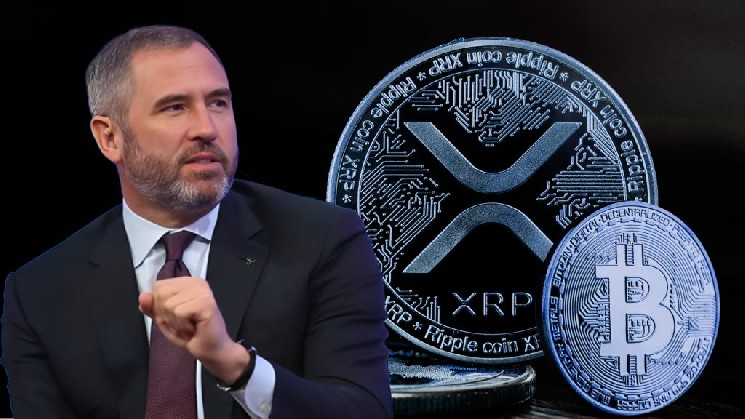
  • Ripple CEO Brad Garlinghouse Unveils 5-Year Crypto Strategy Featuring Bitcoin, XRP, Three Altcoins

    Ripple CEO Brad Garlinghouse Unveils 5-Year Crypto Strategy Featuring Bitcoin, XRP, Three Altcoins

    Key Highlights

    • Ripple CEO Brad Garlinghouse proposes a simple five-year “buy and hold” strategy focusing on the top five cryptocurrencies by market capitalization: Bitcoin, Ethereum, Tether, BNB, and XRP.
    • Garlinghouse emphasizes he is not an “XRP maximalist,” reveals he personally holds a small amount of Solana, and argues different blockchain projects can succeed simultaneously without being direct competitors.
    • The executive cites “trust, utility, speed, and liquidity” as the fundamental drivers of XRP’s long-term value, asserting that the most liquid assets tend to become the most valuable over time.

    Garlinghouse Unveils Long-Term ‘Top Five’ Crypto Portfolio Strategy

    Speaking at a recent industry event, Ripple CEO Brad Garlinghouse outlined a straightforward investment thesis for long-term cryptocurrency holders, suggesting that a diversified basket of the five largest digital assets by market capitalization could yield “great results” over a five-year horizon. The strategy moves away from concentrated bets on single tokens, instead advocating for exposure to the established market leaders: Bitcoin (BTC), Ethereum (ETH), Tether (USDT), BNB, and XRP.

    XRP Inclusion Notable Amid ‘Non-Maximalist’ Stance

    The inclusion of XRP in Garlinghouse’s proposed top-five basket draws particular attention given his previous public stance. The Ripple chief has explicitly stated in the past that he does not define himself as an “$XRP maximalist,” signaling a broader market perspective rather than singular allegiance to the token native to the Ripple ecosystem. This approach underscores a philosophy of market-cap-weighted diversification rather than thematic or ecosystem-specific concentration.

    Solana Acknowledged as Valid, Non-Competitive Peer

    Addressing the inevitable comparisons between XRP and other high-throughput blockchains, specifically Solana (SOL), Garlinghouse declined to frame the relationship as a zero-sum competition. When asked why an investor should prefer XRP over Solana, he stated he was not trying to convince anyone to choose one over the other. He revealed he personally owns a small amount of Solana and maintains a positive view of various cryptocurrencies for different reasons. “He stated that he does not see Solana as a direct competitor to $XRP and that different crypto projects can be successful simultaneously,” reinforcing a multi-chain future thesis.

    Liquidity, Trust, and Utility Cited as XRP Value Drivers

    Concluding his remarks, Garlinghouse expressed strong optimism regarding XRP’s specific fundamentals. He argued that the determinants of a currency’s enduring value are “trust, utility, speed, and liquidity“—effectively, how liquid the asset is. He posited a direct correlation between liquidity and value, asserting that the most liquid currencies tend to be the most valuable because liquidity is the primary reason investors seek to hold an asset. This framework positions XRP’s design for institutional cross-border payments as its core competitive advantage.

    Why This Matters

    Garlinghouse’s comments arrive as institutional adoption of digital assets accelerates, with major financial firms increasingly treating cryptocurrency as a distinct asset class requiring diversified allocation strategies rather than speculative single-token bets. His “top five” framework mirrors traditional finance index-investing principles applied to the crypto market cap leaderboard. Furthermore, his explicit refusal to engage in tribalistic “maximalist” rhetoric—and his acknowledgment of holding Solana—signals a maturing industry leadership mindset focused on interoperability and collective ecosystem growth. For market participants, the remarks reinforce the narrative that regulatory clarity (particularly surrounding XRP’s status in the U.S.) and deepening liquidity pools are critical milestones for the next phase of crypto market development.

    Frequently Asked Questions

    What are the five cryptocurrencies Brad Garlinghouse includes in his proposed long-term strategy?
    The basket consists of Bitcoin (BTC), Ethereum (ETH), Tether (USDT), BNB, and XRP, ranked by current market capitalization.
    Does Brad Garlinghouse consider himself an XRP maximalist?
    No. Garlinghouse has previously stated he does not define himself as an “$XRP maximalist,” and he confirmed he personally holds a small amount of Solana (SOL).
    What fundamental factors does Garlinghouse believe drive XRP’s value?
    He cites “trust, utility, speed, and liquidity” as the primary drivers, arguing that the most liquid assets tend to become the most valuable over time.
  • Stonk Narrative Around LaunchOnSF Surges Amid Growing Competition

    Stonk Narrative Around LaunchOnSF Surges Amid Growing Competition

    Key Highlights

    • LaunchOnSF is rapidly gaining market traction on Solana, directly challenging Pumpfun’s established dominance in the token launch sector.
    • The narrative shift is driven by holder rewards and systematic buyback mechanisms creating a positive feedback loop for participant incentives.
    • Influential analyst @SolanaFloor has highlighted the evolving trader sentiment, signaling a potential restructuring of trading strategies across the ecosystem.

    LaunchOnSF Challenges Pumpfun as Solana Token Launch Narrative Shifts

    The competitive landscape of Solana-based token launch platforms is undergoing a notable transformation as LaunchOnSF accelerates its market presence, mounting a credible challenge to Pumpfun‘s long-standing dominance. This development has been underscored by prominent market commentator @SolanaFloor, who identifies a measurable shift in trader sentiment and capital allocation patterns. The emerging narrative centers on LaunchOnSF’s structural incentives—specifically recurring holder rewards and protocol-level buyback programs—which analysts suggest are generating a self-reinforcing demand cycle distinct from the purely speculative dynamics that have characterized the sector.

    Holder Incentives and Buyback Mechanics Drive New Feedback Loop

    Unlike traditional launchpad models that rely heavily on initial hype cycles, LaunchOnSF’s architecture integrates continuous value accrual mechanisms for token holders. The platform’s reward distribution framework, combined with automated buyback operations funded by protocol revenue, creates a dual incentive structure: immediate yield participation and long-term supply compression. Market observers note this design directly addresses a persistent criticism of earlier generation launch platforms—namely, the misalignment between platform success and token holder returns. As capital rotates toward models demonstrating sustainable tokenomics, the competitive pressure on established players like Pumpfun to adapt or risk market share erosion intensifies.

    Market Context: Cautious Optimism Amid Mixed Sector Signals

    The broader cryptocurrency market continues to display divergent momentum across major assets, creating a backdrop of selective risk appetite. Within this environment, LaunchOnSF’s traction is particularly significant because it represents a fundamentals-driven narrative shift rather than a purely momentum-based rally. While specific price data for LaunchOnSF’s native assets remains limited in public discourse, on-chain analytics suggest growing wallet concentration and increased interaction with the platform’s reward contracts. This accumulation pattern, occurring alongside the highlighted buyback activity, implies that sophisticated participants are positioning ahead of a potential broader retail recognition phase.

    Why This Matters: The Evolution of Solana’s Launch Infrastructure

    The rivalry between LaunchOnSF and Pumpfun encapsulates a broader maturation of the Solana token launch ecosystem. For over a year, Pumpfun has functioned as the de facto standard for low-barrier token deployment, capturing immense volume but facing criticism for enabling high-turnover, low-accountability projects. LaunchOnSF’s rise signals market demand for infrastructure that aligns platform incentives with long-term community value. If the current trajectory holds, the sector may bifurcate: one tier optimizing for volume and speed (Pumpfun’s model), and another competing on sustainability, holder alignment, and narrative depth (LaunchOnSF’s model). This segmentation would mirror the evolution seen in Ethereum’s launchpad landscape, where platforms like Polkastarter and DAO Maker eventually differentiated on vetting rigor and post-launch support. For traders and builders, the immediate implication is a need to reassess platform-specific risk parameters—liquidity depth, contract audit status, and tokenomic durability—rather than treating all Solana launches as a monolithic asset class.

    Frequently Asked Questions

    What is LaunchOnSF and how does it differ from Pumpfun?

    LaunchOnSF is a token launch platform operating within the Solana ecosystem that emphasizes holder rewards and protocol-driven buybacks as core tokenomic features. Unlike Pumpfun, which prioritizes frictionless, high-volume token deployment, LaunchOnSF structures its incentives around long-term holder alignment and supply dynamics, aiming to create sustainable demand rather than purely speculative launches.

    Why is @SolanaFloor’s commentary significant for this narrative?

    @SolanaFloor is a widely followed on-chain analyst and market commentator focused on the Solana ecosystem. Their endorsement of the LaunchOnSF narrative signals to a large audience of active traders and developers that the platform’s momentum is backed by observable on-chain behavior—specifically holder accumulation and buyback execution—rather than social media hype alone.

    What should traders monitor in the coming weeks regarding this competition?

    Key metrics to watch include: (1) wallet growth and holder retention rates on LaunchOnSF versus Pumpfun, (2) the consistency and scale of buyback executions relative to protocol revenue, (3) any response from Pumpfun—such as new incentive programs or tokenomic adjustments—and (4) volatility spikes during high-profile launches on either platform, which will test liquidity depth and market structure resilience.

  • Circle Mints $500M USDC on Solana in 6 Hours

    Circle Mints $500M USDC on Solana in 6 Hours

    Key Highlights

    • Circle minted approximately $500 million USDC on the Solana blockchain within a six-hour window, signaling strong stablecoin demand.
    • The minting activity was flagged by on-chain analyst @SolanaFloor and coincides with Solana’s expanding role in tokenized finance and DeFi.
    • Increased USDC supply on Solana is expected to boost network liquiduity, potentially influencing trading volumes and DeFi protocol activity.

    Circle Accelerates USDC Supply on Solana Amid Growing Ecosystem Demand

    Circle Internet Financial has minted roughly $500 million worth of USD Coin (USDC) on the Solana blockchain over a six-hour period, according to on-chain data highlighted by prominent crypto commentator @SolanaFloor. The substantial issuance underscores accelerating demand for dollar-pegged stablecoins within Solana’s rapidly expanding decentralized finance (DeFi) and tokenized asset ecosystem. As one of the two dominant regulated stablecoins globally—alongside Tether’s USDT—USDC’s supply dynamics on high-throughput chains like Solana serve as a real-time barometer for institutional and retail capital flows into on-chain financial applications.

    Strategic Liquidity Expansion in a Mixed Market Environment

    The minting surge arrives while the broader cryptocurrency market exhibits divergent momentum across major assets such as Bitcoin and Ether. Circle’s decision to preemptively expand USDC supply on Solana appears to be a proactive liquidity management strategy, ensuring adequate stablecoin reserves are available for trading, lending, and settlement as Solana continues to attract capital allocated to tokenized real-world assets (RWAs), payment rails, and high-frequency DeFi strategies. The Solana network’s sub-second finality and low transaction fees have positioned it as a preferred execution layer for market makers and quantitative funds rotating stablecoin inventories across venues.

    USDC’s Regulatory Framework and Cross-Chain Utility

    Issued by Circle under a regulated framework that includes regular attestations of reserve assets—primarily short-term U.S. Treasuries and cash held at regulated financial institutions—USDC maintains a 1:1 peg to the U.S. dollar. This regulatory clarity, combined with native issuance on networks including Ethereum, Solana, Arbitrum, Polygon, and Avalanche, allows USDC to function as interoperable settlement infrastructure. The latest Solana minting reinforces Circle’s multi-chain distribution strategy, which aims to meet demand where transaction activity concentrates rather than relying solely on cross-chain bridges that introduce latency and smart-contract risk.

    Why This Matters

    Stablecoin minting volumes on high-performance blockchains like Solana are increasingly viewed as leading indicators of on-chain economic activity. A $500 million injection in six hours suggests market participants are positioning for elevated trading volumes, new DeFi protocol launches, or expanded tokenized treasury and money-market fund offerings on Solana. For traders and liquidity providers, deeper USDC pools reduce slippage on decentralized exchanges such as Orca and Raydium and improve capital efficiency for basis trades and funding-rate arbitrage. For the broader industry, the move signals confidence in Solana’s infrastructure maturity following network upgrades that have improved reliability and throughput consistency.

    Frequently Asked Questions

    Who reported the $500 million USDC minting on Solana?

    The on-chain activity was identified and publicized by @SolanaFloor, a widely followed CryptoTwitter commentator and analytics account that tracks Solana ecosystem metrics in real time.

    What does a large USDC mint typically indicate?

    Large minting events generally reflect anticipation of increased demand for the stablecoin—whether for trading, DeFi lending, payments, or as collateral for tokenized asset issuance—rather than immediate circulation. Circle mints USDC in response to authorized institutional redemption requests.

    How might this affect Solana’s DeFi ecosystem?

    Additional native USDC supply deepens liquidity on Solana-based decentralized exchanges and lending protocols, potentially lowering borrowing costs, tightening spreads, and enabling larger position sizes for market makers and yield strategies operating on the network.

  • US Banks Shift From Bitcoin to Altcoins as Three Tokens Gain Attention

    US Banks Shift From Bitcoin to Altcoins as Three Tokens Gain Attention

    Key Highlights

    • Bitcoin’s share of US banks’ cryptocurrency exposure dropped sharply from 75.8% to 44.2%, according to new Basel Committee on Banking Supervision data cited by Ledger Insights.
    • Ethereum’s allocation surged to 38.5%, while Solana (7.8%) and XRP (5.6%) entered bank portfolios as notable holdings.
    • Client-driven crypto transaction volumes at American banks jumped 93% to €6.4 billion, contrasting with a 25% decline in Europe to €1.9 billion.

    US Banks Drastically Reduce Bitcoin Exposure in Favor of Ethereum, Solana, and XRP

    New regulatory data published by the Basel Committee on Banking Supervision (BCBS) reveals a profound rotation in how financial institutions across the Americas are allocating capital across digital assets. According to analysis by Ledger Insights, Bitcoin’s ($BTC) dominance within bank cryptocurrency risk portfolios has nearly halved, falling from 75.8% to 44.2% — a shift that signals growing institutional comfort with alternative Layer 1 networks and a diversification away from the original cryptocurrency as a sole reserve asset.

    Ethereum Emerges as Primary Beneficiary of Portfolio Rebalancing

    The decline in Bitcoin’s weighting has coincided with a substantial rise in Ethereum ($ETH) exposure, which now accounts for 38.5% of banks’ crypto risk portfolios in the Americas. This near-parity with Bitcoin marks a watershed moment for institutional adoption of the second-largest blockchain by market capitalization. Additionally, Solana ($SOL) and XRP have established measurable footholds, registering 7.8% and 5.6% allocations respectively. The presence of these assets in regulated bank portfolios suggests evolving risk frameworks that now accommodate a broader spectrum of crypto assets beyond Bitcoin.

    Total Crypto Risk Exposure Remains Stable Amid Allocation Shift

    Notably, the BCBS data indicates no material change in the aggregate cryptocurrency risk held by banks during the reporting period. This stability implies that the observed rebalancing reflects strategic asset rotation rather than a net reduction in digital asset engagement. Banks appear to be actively managing concentration risk by redistributing exposure across multiple protocols, a development consistent with maturing institutional custody and risk management practices.

    Client-Driven Trading Activity Surges in Americas, Contracts in Europe

    Beyond proprietary holdings, the data captures a sharp divergence in client-facing crypto activity. Transaction volumes executed by banks on behalf of customers in the Americas surged 93% period-over-period, reaching €6.4 billion. In contrast, European banks saw a 25% decline in similar client flows, falling to €1.9 billion. The asymmetry underscores differing regulatory climates and market appetites across jurisdictions, with U.S. institutions capturing a growing share of institutional and high-net-worth crypto order flow.

    Why This Matters

    The BCBS portfolio data offers the most transparent window yet into how globally systemically important banks are treating digital assets under the evolving Basel III prudential framework. The rotation from Bitcoin toward Ethereum, Solana, and XRP suggests that regulatory capital rules — which assign higher risk weights to less liquid or more volatile assets — may be influencing allocation decisions as much as market conviction. Meanwhile, the explosion in Americas-based client volumes signals that U.S. banks are increasingly acting as on-ramps for institutional capital, even as Europe’s Markets in Crypto-Assets (MiCA) regime continues to take shape. Future BCBS disclosures will be critical for tracking whether this diversification trend accelerates or stabilizes.

    Frequently Asked Questions

    What does the BCBS data measure exactly?
    The data tracks the composition of cryptocurrency risk exposures held by banks in the Americas, expressed as percentage allocations across specific assets, as reported under Basel Committee supervisory standards.
    Did banks sell Bitcoin to buy Ethereum, Solana, and XRP?
    The data shows a shift in portfolio weightings but does not confirm net buying or selling of any specific asset, as total crypto risk exposure remained stable. The rebalancing could reflect valuation changes, new allocations, or a combination of both.
    Why did client transaction volumes rise in the Americas but fall in Europe?
    The divergence likely reflects differences in regulatory clarity, institutional adoption curves, and market structure. The U.S. has seen growing custodial and prime brokerage services for crypto, while Europe’s MiCA framework is still being implemented.
  • Donald Trump’s Single Word Sparks 300% Altcoin Surge

    Donald Trump’s Single Word Sparks 300% Altcoin Surge

    Key Highlights

    • Solana-based memecoin Super Inu surged over 300% following President Donald Trump’s United Nations General Assembly remarks endorsing “super intelligence” for artificial intelligence.
    • The token’s market capitalization reached approximately $7.23 million post-surge, with reports indicating it is paired with tokenized NVIDIA shares via the Stonk platform.
    • No official connection exists between Super Inu and the U.S. government, Donald Trump, or the Trump family, underscoring the speculative volatility of low-cap memecoins.

    Trump’s UN Address Sparks Memecoin Frenzy

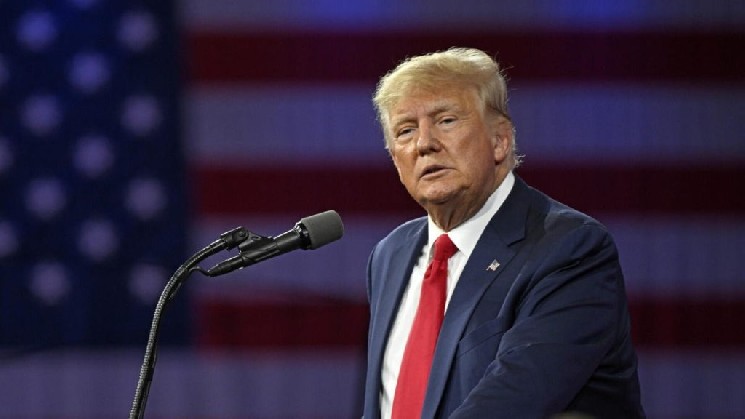
    During his address to the United Nations General Assembly, President Donald Trump declared that his administration would not restrict artificial intelligence but instead encourage “super intelligence”. The President further announced that the term “Super Intelligence” would be officially adopted for artificial intelligence in U.S. government documents. While the remarks centered on national technology policy, cryptocurrency markets reacted almost immediately, demonstrating the outsized influence political rhetoric can exert on speculative digital assets.

    Super Inu Token Surges 300% on Solana

    Within a short window following the President’s speech, Super Inu, a memecoin built on the Solana blockchain, experienced a price surge exceeding 300%. Market data indicates the token’s total market capitalization climbed to roughly $7.23 million at the peak of the rally. According to on-chain analysis and platform disclosures, Super Inu is allegedly paired with tokenized NVIDIA shares and was issued through the Stonk platform, a detail that adds a layer of synthetic asset exposure to the token’s structure.

    No Official Ties to Government or Trump Entity

    Despite the dramatic price action, the President’s UN address made no mention of the Super Inu token, cryptocurrency, or blockchain technology. There is no confirmed official link between the asset and the United States government, Donald Trump, or any member of the Trump family. The rally appears driven entirely by speculative narrative trading, where traders associate keywords from high-profile political speeches with similarly named tokens, regardless of fundamental connections.

    Low-Cap Memecoin Mechanics Amplify Risk

    The Super Inu episode illustrates the inherent mechanics of low-market-capitalization memecoins. Because liquidity pools are shallow, even relatively small buy orders can trigger exponential price increases. Conversely, the same structural fragility means that selling pressure can precipitate equally rapid and severe price collapses, often wiping out late-entry retail investors. Market observers caution that such assets function more as sentiment-driven lottery tickets than as investments tied to underlying utility or adoption.

    Why This Matters

    The Super Inu rally highlights a recurring pattern in cryptocurrency markets where political figures’ public statements—particularly those involving technology buzzwords—act as catalysts for ephemeral speculative bubbles. As the 2024 U.S. election cycle intensifies and AI policy remains a dominant theme, traders and automated bots increasingly scan speeches for trigger terms. This dynamic raises concerns about market manipulation, investor protection, and the broader reputation of the digital asset sector. Regulators and exchange operators may face renewed pressure to monitor or restrict tokens that appear to exploit political branding without authorization.

    Frequently Asked Questions

    Did Donald Trump endorse the Super Inu token?
    No. President Trump’s UN General Assembly speech referenced “super intelligence” as a government policy term for artificial intelligence and did not mention Super Inu, cryptocurrency, or any digital asset.
    What is the Stonk platform’s role in Super Inu?
    According to the source data, Super Inu was issued via the Stonk platform and is allegedly paired with tokenized NVIDIA shares, suggesting a synthetic asset structure rather than a standard memecoin launch.
    Is Super Inu a safe investment?
    The source explicitly states this is not investment advice and warns that low-market-cap memecoins can rise and fall extremely quickly due to thin liquidity, making them highly speculative and risky.
  • Crypto Giants Resume Buying Bitcoin, Ethereum, and Solana, On-Chain Data Shows

    Crypto Giants Resume Buying Bitcoin, Ethereum, and Solana, On-Chain Data Shows

    Key Highlights

    • Strategy (formerly MicroStrategy) added 950 BTC to its treasury, raising total holdings to 846,000 BTC, while also repurchasing $174 million in STRC preferred shares.
    • Bitmine, the largest corporate Ethereum holder, acquired 27,562 ETH to reach 5.98 million ETH (4.9% of circulating supply), valuing its total crypto-asset portfolio at $17.1 billion.
    • Nasdaq-listed DeFi Development Corp. increased its Solana position by 101,381 SOL, bringing total holdings to 2.49 million SOL for staking and validator operations.

    Corporate Treasury Accumulation Accelerates Across Major Crypto Assets

    Bitcoin, Ethereum, and Solana have all registered significant price appreciation in recent sessions, coinciding with a renewed wave of institutional buying from publicly listed treasury companies. The coordinated accumulation signals growing conviction among corporate allocators that the digital asset bull cycle is entering a mature expansion phase, particularly as macroeconomic headwinds ease and tokenization narratives gain traction.

    Strategy Extends Bitcoin Lead With Fresh 950 BTC Purchase

    Strategy, the world’s largest publicly traded Bitcoin holder, resumed its acquisition program after a multi-week pause. According to a statement by Strategy founder Michael Saylor, the company purchased an additional 950 Bitcoin, lifting its aggregate treasury to 846,000 BTC. In parallel, Strategy repurchased STRC preferred shares valued at $174 million. Saylor noted that Strategy holds assets worth $6.09 billion, adding that the company’s dollar-denominated assets could cover current preferred stock dividends and interest payments for approximately 3.8 years.

    Bitmine Deepens Ethereum Dominance With 27,562 ETH Acquisition

    Bitmine, recognized as the world’s largest corporate holder of Ethereum, disclosed last week that it purchased an additional 27,562 ETH, bringing its total holdings to 5,983,940 ETH. According to the announcement, this represents 4.9% of the total circulating ETH supply. The official statement also noted that Bitmine’s total assets, including cryptocurrency, cash, marketable securities, and strategic investment assets, have reached $17.1 billion. This figure includes 5.98 million ETH, 212 Bitcoin, $714 million in cash and marketable securities, $180 million worth of Beast Industries shares, and $105 million worth of Aitco Holdings shares. Assuming an ETH price of $2,688, Bitmine’s ETH holdings are estimated to be worth approximately $16.1 billion.

    Bitmine Chairman Tom Lee Outlines Bull Market Thesis

    Bitmine Chairman Tom Lee stated, “We believe a crypto bull market is continuing, driven by several factors, including the shift from AI to crypto that began in late June, the strengthening of crypto fundamentals around both tokenization and AI, and finally, the end of the 4-year cycle. In our view, $ETH’s tremendous performance in Q3 2026 is seen as a harbinger of potentially even stronger growth in Q4 2026. Given that institutions kept their crypto investments low in early 2026, partly due to the superior performance of AI stocks in early 2026, we expect institutions to significantly increase their crypto investments in the final three months of 2026.”

    DeFi Development Corp. Expands Solana Infrastructure Bet

    Last week, Nasdaq-listed company DeFi Development Corp. announced it had purchased an additional 101,381 Solana tokens, bringing its total SOL holdings to 2.49 million. The company also added that it plans to use its SOL holdings for staking, validator operations, and on-chain financial infrastructure, depending on market conditions and risk management standards.

    Why This Matters

    The simultaneous accumulation across Bitcoin, Ethereum, and Solana by three distinct public companies illustrates a broadening institutional adoption curve that extends beyond single-asset exposure. Strategy’s continued Bitcoin stacking reinforces its role as a de facto Bitcoin proxy for equity investors, while Bitmine’s outsized Ethereum position — now approaching 5% of circulating supply — underscores growing confidence in ETH’s staking yield and tokenization utility. DeFi Development Corp.’s validator-focused Solana strategy highlights a shift toward active network participation rather than passive holding. Collectively, these moves suggest corporate treasurers are diversifying across the layer-one spectrum, positioning for a cycle where yield-bearing staking assets and programmable infrastructure tokens command premium valuations alongside Bitcoin’s store-of-value narrative.

    Frequently Asked Questions

    How much Bitcoin does Strategy now hold after its latest purchase?

    Strategy holds 846,000 BTC following the acquisition of an additional 950 Bitcoin.

    What percentage of Ethereum’s circulating supply does Bitmine control?

    Bitmine’s 5,983,940 ETH represents 4.9% of the total circulating ETH supply.

    What is DeFi Development Corp.’s stated purpose for its Solana holdings?

    The company plans to use its 2.49 million SOL for staking, validator operations, and on-chain financial infrastructure, subject to market conditions and risk management standards.