Tag: Sleep

  • People Report Ads Invading Their Dreams; Expert Explains Why

    People Report Ads Invading Their Dreams; Expert Explains Why

    Key Highlights

    • New survey data from The Media Image reveals 61% of Americans report experiencing advertisement-like content in their dreams over the past year, with 38% saying it occurs frequently.
    • Experts attribute the phenomenon to heightened daily ad exposure via social media and the brain’s natural memory consolidation processes during REM sleep, not covert marketing technology.
    • Clinical Lead Dr. Daniel Atkinson recommends a digital curfew of at least one hour before bed and engaging in mindful activities like crafting to reduce dream intrusions.

    Surge in Reports of ‘Dream Advertising’ Sparks Online Discussion

    A growing chorus of voices on social media platforms is describing a surreal modern experience: watching commercials while asleep. On the Dreams subreddit, one user asked, “Has dream advertising started?” before revealing that “for the last year or so, every dream [they have had] has revolved over some kind of product.” The sentiment was echoed by another Redditor who described a “very specific” advert in their dream that felt “almost like product placement.” They added, “Not the first time this has happened. I’ve had ads pop up right in the middle of a dream just like YouTube ads. They’ve infiltrated the dream world. Honestly not surprised, it was gonna happen at some point.” Similar accounts appeared on Facebook, where one person wrote, “My dreams have commercials in them, I’ve noticed recently that between different dreams I will have a dream that’s an advertisement for things. Maybe it’s because I sleep with the TV on but it seems like this just started happening the past three or four days.”

    Survey Data Quantifies the Phenomenon

    Anecdotal reports are now backed by quantitative research. Data released this year by The Media Image indicates that a significant majority of the U.S. population is experiencing this phenomenon. The survey found that 61 percent of Americans say they have had dreams that include ad-like content in the last year. For a substantial minority, this is a recurring event: 38 percent report it happens frequently, ranging from once a month to every day. Perhaps most tellingly, 41 percent admitted that they think ads are actively infiltrating their dreams, suggesting a widespread perception that marketing has breached the final frontier of mental privacy.

    Expert Analysis: Neuroscience Over Nefarious Tech

    While the frequency of these reports evokes comparisons to dystopian fiction, medical experts offer a grounded neurological explanation. Dr. Daniel Atkinson, Clinical Lead at Treated, dismissed the idea of direct dream-hacking technology. “One reason is exposure. Previously, adverts were something we consumed comparatively infrequently: when watching television, reading magazines or newspapers or travelling past a billboard. Now, we’re seeing adverts much more often as we engage with social media and use online tools for day-to-day activities, at pretty much any time of day.” He added a second factor: “Another reason is novelty. Again, advertising has evolved to a point where elaborate, fantastical imagery is more common because it’s easier to pull off from a production standpoint.”

    How the Brain Processes Ads During Sleep

    Dr. Atkinson detailed the specific cognitive mechanics that transform daytime scrolling into nighttime narratives. “The brain processes and catalogues images and and information during the day and stores this in the thalamus, and often more deeply processes data that’s catchy or repetitive in the cerebral cortex,” he explained. “The prefrontal cortex and hippocampus effectively decide whether or not to ‘keep’ something for later, and it’s at this point that associations with that memory begin to be matched to emotions and motivations (‘I want to buy one of those’). When you enter REM sleep at night, the brain is working to further process this information, and this is why images might infiltrate dreams.” He noted that certain creative formats are stickier than others: “Animated content, or campaigns utilising bright colours with a higher level of contrast, have a higher visual salience and are usually easier to recall, and these might be prioritised by the brain because they’re more striking than other images we’ve seen throughout the day.”

    Why This Matters

    The prevalence of advertising in dreams underscores the sheer volume of media consumption in the digital age. With the average person encountering thousands of marketing messages daily—via algorithmic feeds, video pre-rolls, and native advertising—the brain’s nightly “defragmentation” process inevitably sorts through this backlog. This phenomenon highlights a shift in cognitive load; the boundary between waking consumption and subconscious processing is thinning not because of invasive tech, but because the sheer density of visual stimuli has saturated working memory. For the advertising industry, it serves as an unintended metric of creative salience: campaigns that penetrate dreams are those achieving the highest visual and emotional encoding. For public health, it reinforces the link between screen hygiene and sleep quality, framing digital boundaries as a neurological necessity rather than a lifestyle preference.

    Frequently Asked Questions

    Are companies using technology to insert ads directly into people’s dreams?

    No. According to Dr. Daniel Atkinson, there is no evidence of “Black Mirror”-style mind infiltration. The phenomenon is explained by the brain’s natural memory consolidation processes during REM sleep, fueled by the unprecedented volume of advertising imagery encountered during waking hours.

    How common is it to see advertisements in dreams?

    It is remarkably common. Survey data from The Media Image indicates that 61% of Americans have experienced ad-like content in their dreams over the past year, with 38% reporting it happens frequently (monthly to daily).

    What can I do to stop dreaming about ads?

    Dr. Atkinson recommends implementing a digital curfew of at least one hour before bed and engaging in mindful, tactile activities—such as drawing, crafting, or embroidery—to help the brain filter out the day’s visual noise before sleep onset.

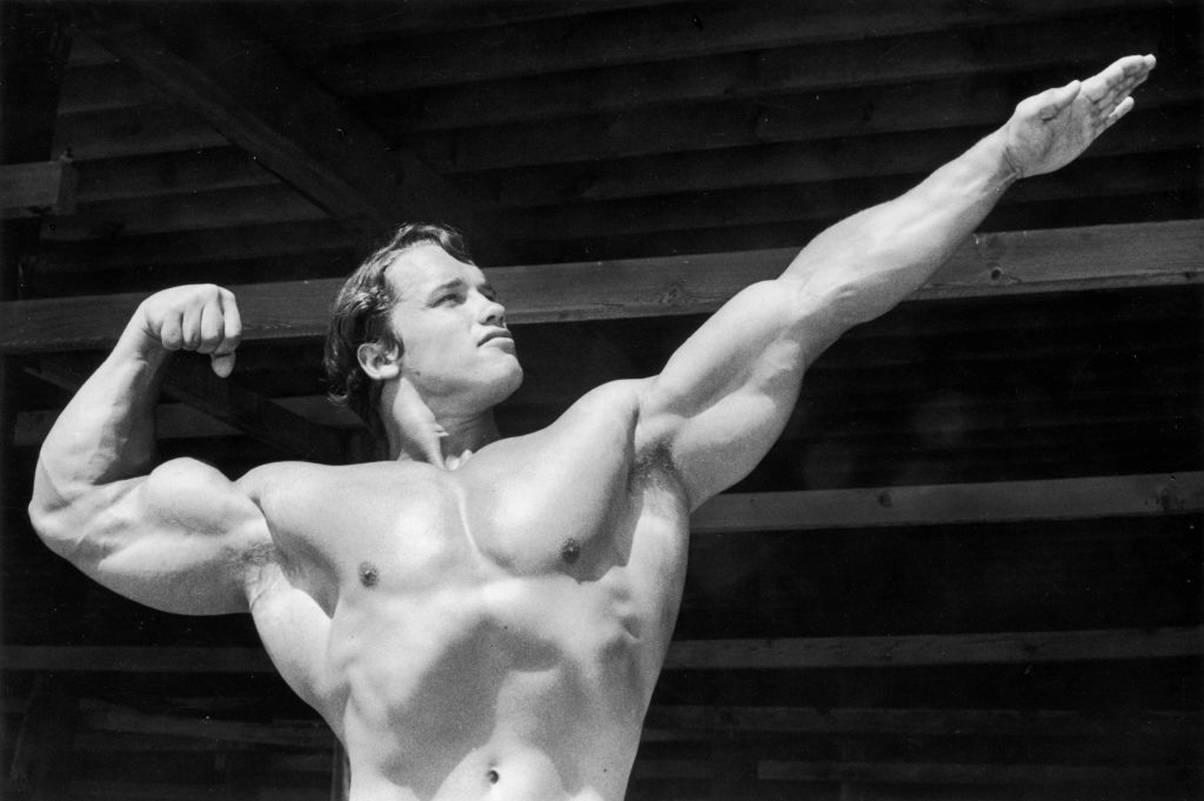
  • Arnold Schwarzenegger issued warning to anybody that goes to the fitness center at evening


    Actor and bodybuilding legend Arnold Schwarzenegger has shared some recommendation to health fanatics in terms of the timing of their exercises.

    In case you’re a fitness center rat, you are in all probability going to pay attention if Arnie speaks up, because the 78-year-old despatched out a stark warning to those that favor to get their pump on within the evening time.

    The seven-time Mr. Olympia title winner revealed all in an version of Arnold’s Pump Membership e-newsletter, relating the rise in recognition of late-night exercises.

    With 24/7 gyms changing into an increasing number of fashionable with the calls for of labor and socialising usually taking on day-to-day life, a variety of workplace employees can solely discover a second to train lengthy after most individuals have gone house.

    However in line with Schwarzenegger, this will not be the most effective time to get your good points.

    Arnold Schwarzenegger is aware of a factor or two about gaining muscle (Hulton Archive/Getty Pictures)

    The Terminator star wrote: “Scientists discovered that arduous exercises inside 4 hours of bedtime can delay sleep, shorten sleep, and stress your nervous system, however gentle or reasonable night classes are normally positive.”

    He shared some scientific analysis to again his level up additional, referencing a research carried out by Monash College which was published within the Nature Communications journal.

    It discovered that these trying to go all-out for a late evening fitness center session would not profit as a lot, as a result of means the physique recovers.

    The research analysed how 14,689 lively adults have been affected by exercise pressure and timing, by variables resembling period, sleep onset, resting coronary heart fee and coronary heart fee variability (HRV).

    It was discovered that intense classes nearer to bedtime may cause the physique to be extra lively when actually, try to be winding down for mattress.

    The research defined: “Partaking in maximal train as a substitute of sunshine train is related to a 36.0-minute later sleep onset if the train ended 2-h earlier than routine sleep onset, and an 80.0-minute later sleep onset if the train ended 2-h after routine sleep onset.”

    Schwarzenegger delved into exercises which went past regular bedtimes, saying: “An 80-minute delay in sleep onset, 43 minutes misplaced in sleep, and HRV down 33 %.”

    He additionally identified: “However in the event you completed coaching at the very least 4 hours earlier than mattress, even intense exercises had no detrimental results. And inside that four-hour window, lighter or shorter classes have been far simpler on sleep and restoration.”

    Intense work outs too near mattress time can hinder progress (Getty Inventory Picture)

    Clearly, some individuals can not help their schedules, with the Hollywood star advising: “If night is your solely time to coach, don’t stress – simply be strategic.

    “If potential, schedule your hardest exercises for earlier within the day. Or, emphasise lighter or reasonable exercises for later at evening. And if that’s not potential, emphasise different strategies that allow you to wind down at evening to enhance your sleep.”

    All these small modifications will help restoration, Schwarzenegger mentioned, even revealing that it could possibly affect ‘how good you’re feeling tomorrow’.

    As per BBC Science Focus, he beforehand highlighted: “You develop whenever you sleep, not whenever you prepare.”

    It is because the human development hormone (HGH) is launched by the physique whenever you’re getting some shut-eye, serving to with muscle tissue and reseting vitality programs.

    It implies that unhealthy sleep can have an effect on restoration, immune perform, and even energy good points.

    So to expertise the most effective outcomes, train strategically and sleep loads.

  • Knowledgeable shares stunning which means behind dreaming your tooth are falling out


    A sleep professional has revealed what various kinds of desires may really imply.

    Let’s face it, we have all skilled the identical few desires – whether or not it’s attempting to flee a harmful scenario or the sensation that you simply’re falling, there’s a proof behind all of it.

    Because of Netflix, a brand new survey has been commissioned forward of its upcoming movie In Your Goals, revealing a few of the commonest desires.

    They did this by asking 2,000 Brits about what they dreamt about, noting what the preferred solutions had been.

    An professional then went by them, explaining what they could all imply, as it is not so simple as taking them at face worth.

    Apparently, the most typical dream is the sensation of falling, which is alleged to be skilled by greater than half of the inhabitants.

    The most typical desires have been revealed (Getty Inventory Picture)

    Delphi Ellis, a certified counsellor, mindfulness practitioner and writer of Solutions In The Darkish: Grief, Sleep and How Goals Can Assist You Heal, mentioned that desires are ‘like a buddy’.

    Talking to the Day by day Mail, she said: “They’ll softly nudge us within the route of what we would like, level us in the direction of what may assist us heal, or supply perception – even solutions – into an issue that is occupying our thoughts. It is one motive we are saying, ‘sleep on it’.”

    She added that it is as much as us to ‘acknowledge or ignore them’ however that we should always take heed to what our desires need to say – so listed below are a few of the hottest.

    Dreaming about falling

    Talking about falling, Ellis mentioned that such a dream can imply you feel unsure about one thing, including: “It is particularly widespread after redundancy, retirement and different main life adjustments. The journey awaits, however could be scary as we enterprise into the unknown.”

    She mentioned that this is not to be confused with that ‘jolt’ you may get as you are falling asleep, which could be brought on by tiredness to the purpose of stress.

    Tooth falling out in desires

    Transferring onto this terrifying dream, it may be an terrible one to expertise should you do not realise that you simply’re not in actuality because it’s occurring.

    In keeping with the survey, 21 % of us have skilled this one time or one other and it is mentioned that this may occasionally symbolise our issues with standing or wealth.

    She defined: “Within the West we typically alternate our tooth for cash after we are little… in some cultures, dreaming of tooth as they actually are (as bone) might symbolise anxiousness about dropping somebody important.”

    Waking up from certainly one of these desires could cause an actual shock (Getty Inventory Picture)

    Not having the ability to run

    The survey revealed that just about half of individuals have had a dream the place they’re being chased however they merely cannot run – this will mirror emotions that you do not need to be caught, or that you simply’re struggling to catch up.

    She added that this will symbolise being ‘caught’ or that the progress in a facet of your life could also be too gradual, or {that a} concern of one thing may ‘catch up’.

    Flying in desires

    If solely we may fly in actual life, eh?

    Ellis mentioned that such a dream can depend upon how the person felt whereas it was going, explaining: “If the dream is optimistic and so they’re loving it – ‘flying excessive’ might signify somebody having fun with a interval of success.”

    The counsellor mentioned that if the sensation was unfavourable, then you could be at a interval of your life the place you ‘must be extra wise and preserve their ft firmly on the bottom’.