Tag: Server tips

  • Server Reveals Better Way to Greet Tables Than Introducing Yourself: ‘Meet Their Needs First’

    Server Reveals Better Way to Greet Tables Than Introducing Yourself: ‘Meet Their Needs First’

    Key Highlights:

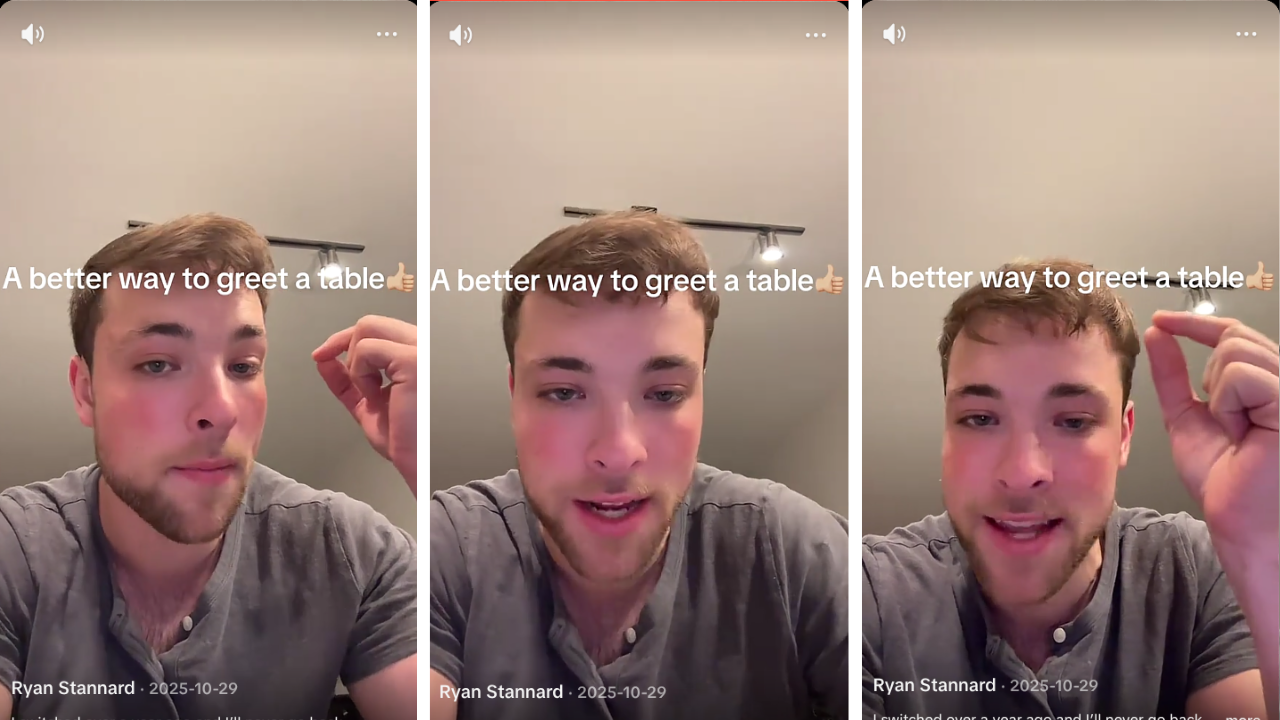
    • TikTok creator Ryan Stannard (@ryan_stannard4) argues servers should greet tables with “Hey guys. How’s our day going?” instead of introducing themselves first, claiming the standard introduction gets servers forgotten.
    • Stannard’s method prioritizes taking food and drink orders before revealing his name, citing a psychological principle that people remember names better after their immediate needs are met.
    • The video sparked debate, with some commenters supporting the approach while others—including self-identified guests—said they prefer efficient service without small talk.

    Server’s Viral TikTok Challenges Standard Restaurant Greeting Script

    TikTok creator Ryan Stannard, known as @ryan_stannard4, has ignited a conversation about restaurant service etiquette with a video that has amassed over 1.6 million views and nearly 1,000 comments. Drawing on his experience as a server, Stannard contends that the industry-standard greeting—introducing oneself by name before taking orders—is a strategic error that causes servers to blend into the background and potentially lose tips.

    The Case Against the Standard Introduction

    Stannard opened his critique by targeting the ubiquitous server script. “Hi, my name is __, I’ll be taking care of you today,” he said, characterizing this approach as a bad start. His reasoning centers on volume and differentiation: with multiple servers working the same floor, all using near-identical language, none of them stand out. He argues that a greeting must sound different from everyone else’s to capture attention and build rapport quickly.

    In place of the scripted introduction, Stannard demonstrated his preferred opener: “Hey guys. How’s our day going?” He explained that opening with a question forces engagement. The table almost invariably responds in kind—“And how’s your day going?”—creating a natural opening for the server to reply with energy. Stannard suggested responses such as “Phenomenal” or “Fantastic” or “Stupendous. Thank you for asking.” At that point, he said, “you now have their attention.”

    Psychological Timing: Orders First, Name Later

    The core of Stannard’s method is a deliberate reordering of the interaction sequence. He does not disclose his name until after taking the guests’ food and drink orders. He frames this as a psychological fact: a person is more likely to remember a server’s name after their immediate needs—deciding what to eat and drink—have been addressed. If the server introduces themselves first, Stannard argues, the guests are mentally preoccupied with the menu and forget the name within minutes.

    He also described his approach as more natural and less “carbon-copied” than the standard introduction. He said it saves time and makes the interaction more efficient while keeping the conversation “short, sweet, and to the point.” Waiting to introduce himself, he believes, makes it more likely that guests will remember his name when it matters—at tip calculation time.

    Why This Matters: Service Psychology Meets Social Media Scrutiny

    The debate Stannard sparked reflects a longstanding tension in hospitality between scripted consistency and authentic connection. Corporate training programs have long mandated the name-first introduction as a brand standard, equating it with professionalism and accountability. Stannard’s challenge, amplified by TikTok’s algorithm, puts that orthodoxy to a public stress test. The reaction split—some servers adopting the tactic, some guests rejecting the forced familiarity—highlights that “good service” is not a monolith. For operators, the takeaway may be less about adopting one viral script and more about empowering staff to read the table and adapt, rather than reciting a line that guests have heard a thousand times. The Daily Dot was unable to independently verify the claims made in the video, which are based solely on @ryan_stannard4’s experience and perspective as a restaurant server, as shared on TikTok.

    Frequently Asked Questions

    What is Ryan Stannard’s suggested alternative to the standard server greeting?
    He recommends opening with “Hey guys. How’s our day going?” and delaying his name introduction until after taking food and drink orders.
    Why does Stannard believe introducing yourself first hurts tips?
    He argues guests are focused on the menu and forget the server’s name within minutes; psychologically, people retain names better after their own needs are met.
    How did commenters react to the video?
    Reactions were mixed. One commenter wrote, “I usually get interrupted with ‘Waters to start please.’” Another guest responded, “Please no! As a guest… I don’t want to answer small talk questions. Just get my order right, bring the sauces I asked for, and refill my drink before it’s completely empty and we’re golden!”
  • ‘Doctors Don’t Get a Tip, Why You Want Tips?’: Server Says She’d Prefer 20% Tip After Table of 6 Women Leaves Little

    ‘Doctors Don’t Get a Tip, Why You Want Tips?’: Server Says She’d Prefer 20% Tip After Table of 6 Women Leaves Little

    Key Highlights

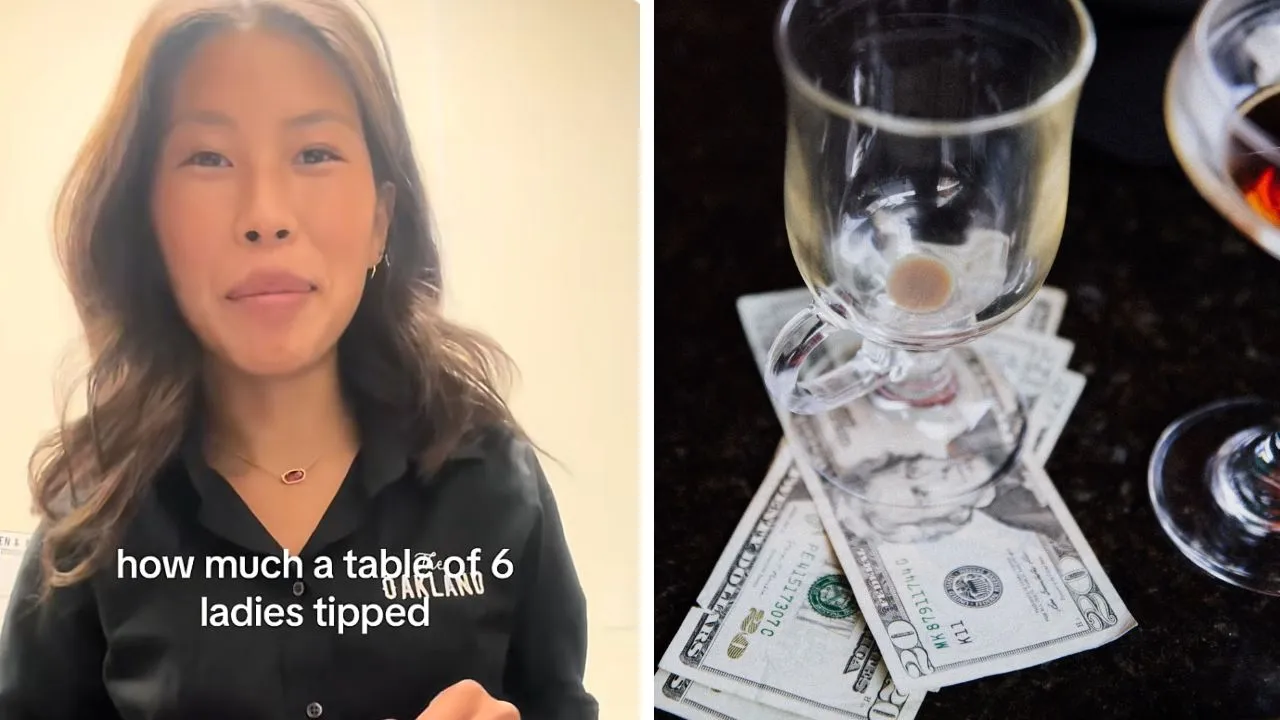
    • TikTok creator @Andjjj.7 posted a video on May 8, 2025, showing itemized tips from a table of six women, revealing multiple $0 tips on bills ranging from $32 to $60.
    • The video amassed 12.7 million views, 802,500 likes, and 21,700 comments, igniting a polarized debate over tipping expectations versus earned gratuity.
    • A separate viral clip from creator @lovee.leahh_ captured a retail customer refusing a tip prompt with “Hell no!” — further fueling the national conversation on tip fatigue.

    Server’s Itemized Receipt Breakdown Sparks Massive Tipping Debate

    TikTok user @Andjjj.7 — identified in the video as a server in restaurant uniform — uploaded a clip on May 8, 2025, that has since garnered 12.7 million views, 802,500 likes, and 21,700 comments. In the video, she flips through six separate checks from a single table of six women, narrating the tip amount left on each. The first bill, $51, carried a $9 tip. The second, $32, received $0. The third, $55, also received $0. The fourth, $60, left a $6 tip. A $21 bill yielded a $7 tip, and a final $23 bill left $4. Summarizing the experience, she stated directly to the camera:

    “I am grateful for any tip but will prefer 20 percent.”

    The on-screen caption accompanying the post read:

    @andjjj.7 their bill was $250. tipping culture may have gotten out of hand but I didn’t know we’re normalizing no tips. ♬ original sound – Andj

    Comment Section Erupts With Divergent Views on Gratuity Norms

    The comment section quickly became a battleground for opposing philosophies on tipping culture. One user challenged the expectation of tips altogether, writing:

    “doctors dont get a tip; why u want tips? Bruh.”

    Another commenter echoed the sentiment that gratuity should reflect service quality, not obligation:

    “You earn tips not expect them.”

    A third contributor offered a detailed personal anecdote illustrating a performance-based approach:

    “There’s only been one time I haven’t tipped a server and it was because he never refilled my drink. there was no one else in the restaurant to serve I gave him the change he brought me back which was like 9cents. I’ll give a $20 tip on a $50 total just because the server was amazing. you leave me to eat without a drink to wash it down your getting Pennies.”

    Yet another voice acknowledged systemic issues while defending the practice of tipping service workers:

    “I get that the tipping culture is getting out of hand but not tipping servers is crazyyyyyy.”

    Parallel Viral Moment: Retail Tip Prompt Rejection Goes Viral

    The discourse gained additional momentum from a separate TikTok posted by creator @lovee.leahh_ (Leah Danzy), which documented a confrontation at a mall retail counter. In the clip, a female customer completes a purchase when the shop employee asks twice, “Do you want to tip?” The customer responds emphatically:

    “Hell no!”

    She continues, “No tip.” After the shopkeeper replies, “Ok! I just asked,” the customer counters, “I know, and I just told you,” and begins walking away. She adds, “Thank you! Have a good day,” then turns toward the camera and appears to address the person filming:

    ‘They are talking about f—- tip,’

    before the video ends. Danzy captioned the post: “I still can’t get over this? Ariel was so embarrassed #fypシ゚viral #fyp #grandmagonewild ♬ original sound – Leah Danzy.”

    Why This Matters

    The dual viral moments underscore a growing cultural flashpoint in the United States: the expansion of tip prompts beyond traditional full-service dining into counter service, retail, and self-checkout environments. While the federal tipped minimum wage remains $2.13 per hour in many states — making tips essential income for servers — consumers increasingly report “tip fatigue” amid inflation and ubiquitous digital prompts. The @Andjjj.7 video highlights the tension between servers who depend on 20% gratuity as a professional standard and diners who view tipping as discretionary or excessive. Meanwhile, the @lovee.leahh_ clip illustrates how tip requests in non-service contexts can provoke hostility. Neither TikTok experience has been independently verified by The Daily Dot, but together they reflect a nationwide debate over who should be tipped, how much, and whether the burden of fair wages should fall on customers or employers.

    Frequently Asked Questions

    What were the exact tip amounts left by the table of six women in the @Andjjj.7 video?

    The server showed six checks: $51 bill with $9 tip; $32 bill with $0 tip; $55 bill with $0 tip; $60 bill with $6 tip; $21 bill with $7 tip; $23 bill with $4 tip. The total bill was approximately $250.

    How did the retail customer in the @lovee.leahh_ video respond when asked to tip?

    The customer said “Hell no!” and “No tip.” After the employee said “Ok! I just asked,” she replied “I know, and I just told you,” wished them a good day, and told the camera, “They are talking about f—- tip.”

    Has The Daily Dot verified the events shown in these TikTok videos?

    No. The Daily Dot explicitly stated it was “unable to independently verify the experiences described by commenters on this video” and noted the details reflect the creators’ stated views and commenters’ individual accounts as shared on TikTok.