Tag: Sergio Perez

  • Five Quick Takeaways from the Azerbaijan Grand Prix

    Five Quick Takeaways from the Azerbaijan Grand Prix

    Key Highlights

    • George Russell converted pole position into victory in Baku, modestly improving his Formula 1 championship prospects.
    • Isack Hadjar delivered a strong Red Bull comeback, qualifying fourth and supporting Max Verstappen on the way to the podium.
    • Franco Colapinto’s restart mistake damaged Alpine’s points chances, while Sergio Perez impressed on the Baku street circuit.

    George Russell makes the most of Mercedes’ Baku advantage

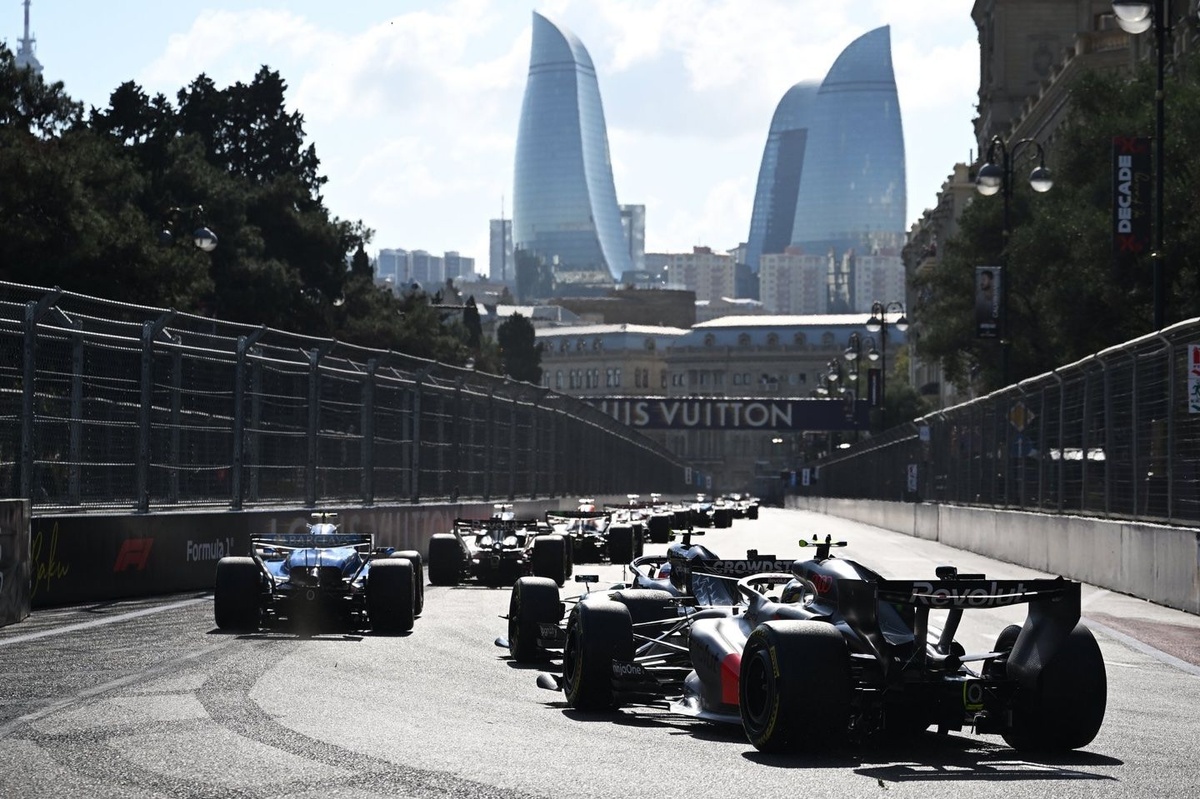
    George Russell produced one of his most convincing weekends of the year at the Azerbaijan Grand Prix, converting a dominant pole position into victory and taking full advantage of a rare difficult weekend for Mercedes team-mate Kimi Antonelli.

    The result does not transform Russell’s Formula 1 championship prospects. His chances may have increased from roughly one percent to about two percent, but there is still no clear championship battle. Given Mercedes’ advantage over its rivals in Baku, expectations of a major title resurgence would be excessive.

    Even so, Russell did everything required of him. He secured pole by a substantial margin, controlled the race and capitalised on Antonelli’s early Q1 mistake, which prevented the Italian from showing his full potential. The weekend was arguably Russell’s strongest of the season apart from Australia.

    Russell’s victory does not prove that he can still win the championship this year. It does, however, serve as an important reminder that the Mercedes driver remains quick and should not be dismissed completely.

    Isack Hadjar validates Red Bull’s long-term confidence

    Isack Hadjar’s position at Red Bull was not considered under serious threat during his recovery from a wrist injury. However, the contract extension handed to the French driver before his Formula 1 return prompted questions about the source of the team’s confidence.

    His performance in Baku provided a strong answer. Hadjar qualified fourth and stayed close to the action after Max Verstappen encountered mechanical problems. He then followed Red Bull’s strategic expectations in the race, giving up a promising position early on to support his team-mate.

    Hadjar acted as Verstappen’s wingman and even urged the reigning Red Bull driver to increase his pace, a dynamic not seen since Sergio Perez’s early years with the team. He handled two Safety Car restarts and pressured Oscar Piastri into a mistake before following Verstappen onto the podium.

    The result marked an impressive comeback for Hadjar and demonstrated why Red Bull has selected him as a long-term team-mate for Verstappen.

    Williams’ FW48 B-spec shows promise but falls short

    Williams arrived in Baku with significant expectations surrounding its long-awaited FW48 B-specification car. The package included an all-new, lighter chassis and a redesigned floor, although the team had described the update as a step toward stronger performance in 2027 rather than a revolutionary transformation.

    The Azerbaijan weekend broadly confirmed that assessment. Williams returned to the midfield fight, and Carlos Sainz progressed to Q3, providing encouragement after a period away from the competitive centre of the field.

    However, the high-speed Baku street circuit appeared well suited to the Mercedes-powered team’s natural strengths. With that advantage, remaining well outside the points picture on Saturday felt like a missed opportunity. The FW48’s performance at the higher-downforce circuits in Malaysia and Singapore will offer a clearer indication of whether the B-spec package can deliver consistent progress.

    Alpine loses points after Franco Colapinto’s costly error

    Alpine appeared set to secure another strong result as the leading team behind the frontrunners for a third consecutive race weekend. Both Franco Colapinto and Pierre Gasly were on course to score points, but the Baku race demonstrated how quickly Formula 1 fortunes can change.

    Following the Safety Car period caused by Alex Albon’s crash, Colapinto arrived too quickly at Turn 1 during the restart. He hit Gasly, who then made contact with Lando Norris’s McLaren, turning a promising Alpine result into a costly setback.

    Colapinto quickly apologised to Gasly and the entire Alpine team. The incident came while Alpine is engaged in a close battle with Racing Bulls for fifth place in the constructors’ championship, increasing the significance of the lost opportunity.

    The team’s response will attract attention after the tension between Gasly and Colapinto at the end of the previous race in Madrid, followed by online abuse aimed at Gasly. Alpine’s handling of the latest incident, both internally and publicly, will be closely watched.

    Sergio Perez underlines his strength on street circuits

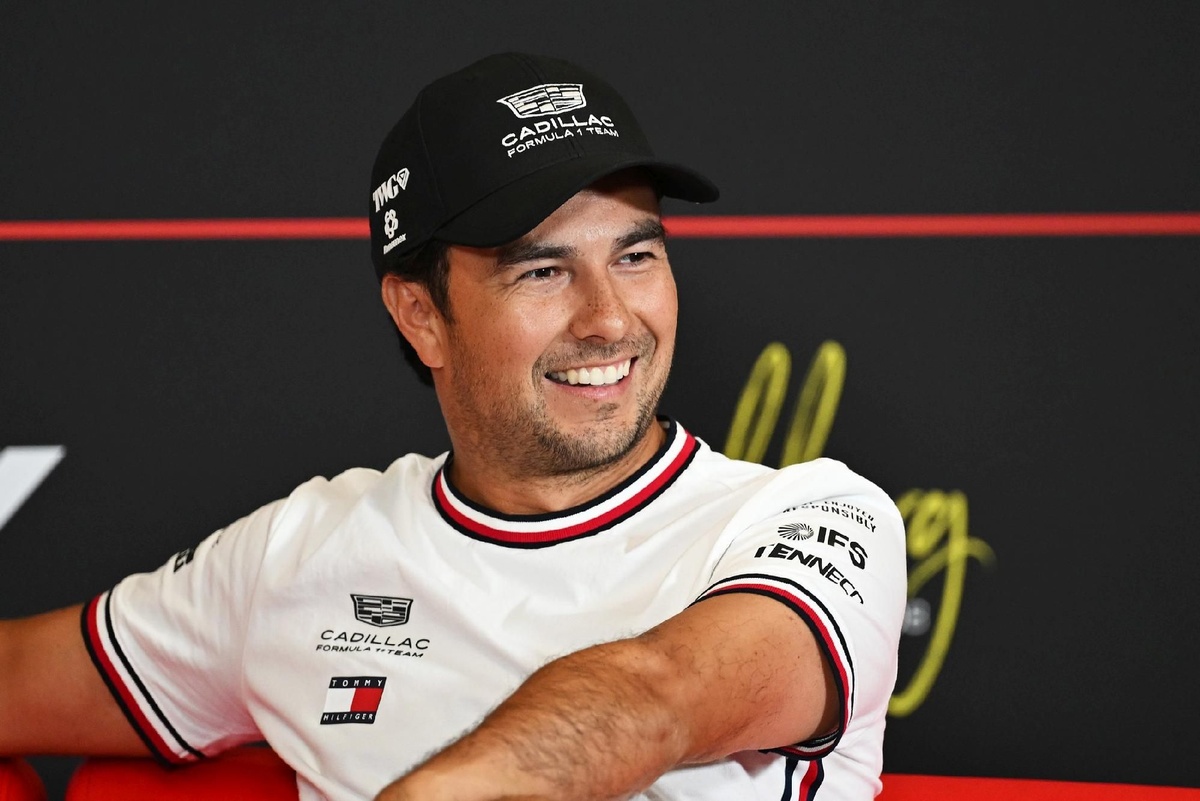
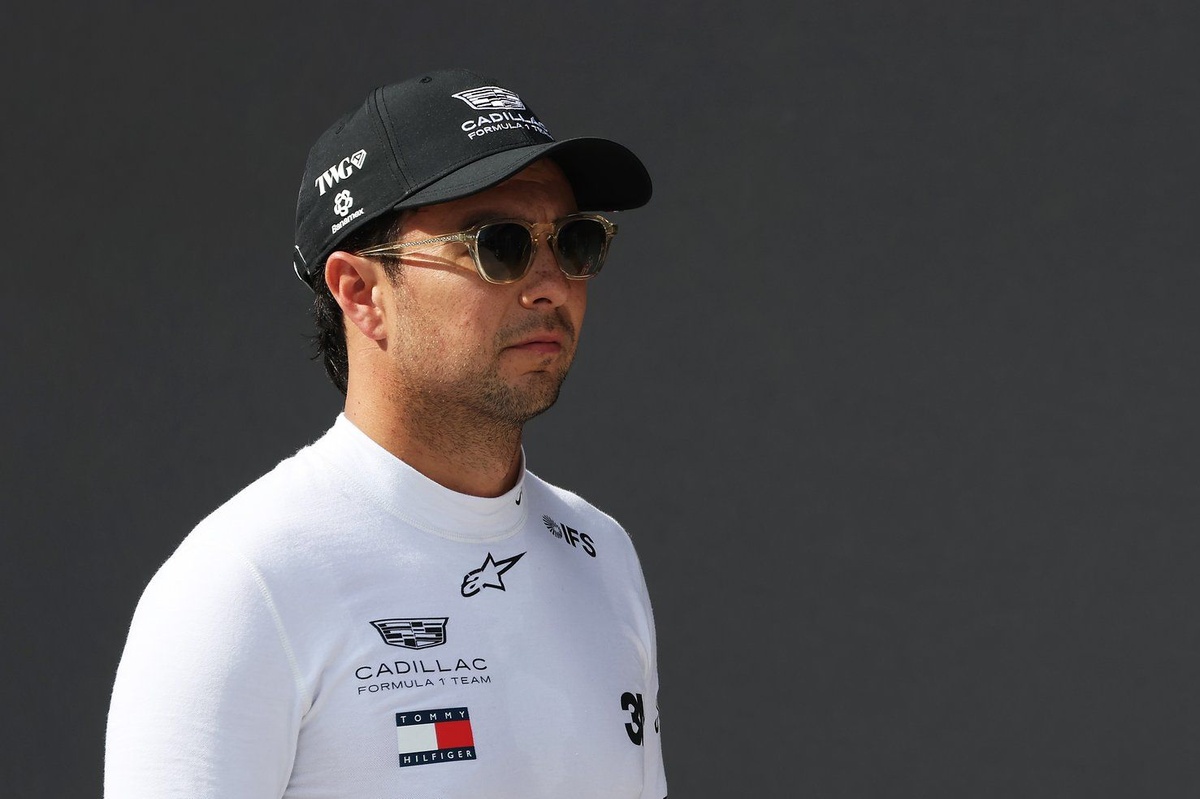
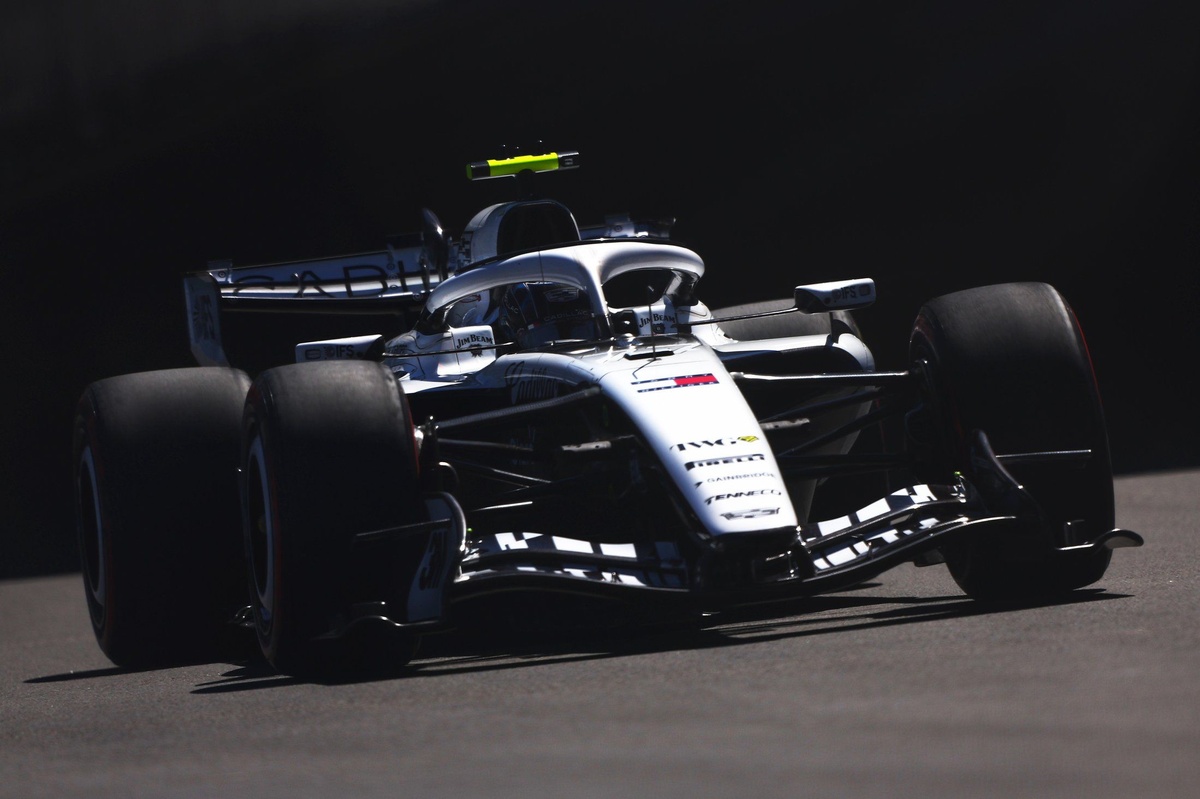
    Sergio Perez showed his street-racing expertise in Baku, finishing 13th in Thursday’s second practice session and running one second per lap faster than Cadillac team-mate Valtteri Bottas. Bottas had a new floor and dampers for qualifying, which he described as transformative, but Perez was significantly stronger in the race, pulling away from him by between one and two seconds per lap.

    Perez’s precise driving style is particularly effective on street circuits. He can manipulate the rear axle into a controlled slide without putting the car into the barriers, and he has moved beyond the unruly approach that characterised the early part of his Formula 1 career. His ability to manage his tyres has made him an archetypal ‘tyre whisperer’.

    While watching FP2 from the Cadillac garage, the team observed Perez’s technique closely. At one stage, race engineer Carlo Pasetti asked Perez about what appeared to be an unusual braking approach into Turn 1.

    “Baku style,” replied Perez, keeping a few secrets in his box.

    In the race, Perez initially shadowed the Audi cars and opened a gap of more than 20 seconds to Bottas. The Safety Car disruption briefly gave him an opportunity to take 13th place from faster cars, but Gabriel Bortoleto and Oscar Piastri eventually passed him.

    Perez finished 15th, a modest result that did not reflect the quality of his drive. His performance received less attention because the focus was on the leading battle between George Russell and Max Verstappen, but the large gap to Bottas before the Finn’s final-lap crash was notable for the Cadillac pit wall.

    Why This Matters

    The Baku weekend highlighted several important trends across the Formula 1 field. Russell’s win keeps a small possibility of a championship recovery alive while confirming that Mercedes can exploit its performance advantage when its lead driver executes cleanly. Red Bull’s confidence in Hadjar was also reinforced by a podium-supporting performance under pressure.

    Further down the field, Williams still needs to establish whether its FW48 B-spec can provide reliable gains beyond circuits naturally suited to its package. Alpine’s clash showed how quickly points can disappear in a constructors’ battle, while Perez’s pace underlined the value of street-circuit expertise even when the final result does not reflect the quality of the performance.

    Frequently Asked Questions

    Did George Russell become a serious championship contender after winning in Baku?

    No. Russell’s victory modestly improved his already small title prospects, but it did not create a clear championship battle.

    Why was Isack Hadjar’s Red Bull performance significant?

    Hadjar qualified fourth, supported Max Verstappen during the race, handled two Safety Car restarts and finished on the podium. The result supported Red Bull’s decision to extend his contract and plan for him as Verstappen’s long-term team-mate.

    What happened between Alpine’s Franco Colapinto and Pierre Gasly?

    Colapinto arrived too quickly at Turn 1 during a Safety Car restart and hit Gasly. Gasly then made contact with Lando Norris, costing Alpine a strong chance of scoring points.
  • Max Verstappen’s blunt reaction to F1 Monaco GP sprint race: “No emotion attached to it”

    Max Verstappen’s blunt reaction to F1 Monaco GP sprint race: “No emotion attached to it”

    Key Highlights

    • Formula 1 has confirmed a 2027 calendar featuring 10 sprint weekends, including the season opener in Bahrain and the finale in Abu Dhabi.
    • The designation of Monaco as a sprint venue caught drivers by surprise, with Sergio Perez learning of the decision via the drivers’ WhatsApp group.
    • Max Verstappen reiterated his opposition to sprint races regardless of venue, while Arvid Lindblad argued Baku would be a far more suitable sprint location.

    Monaco Sprint Selection Shocks Paddock as F1 Unveils 2027 Sprint Calendar

    Formula 1’s recently presented 2027 calendar reveals a logical sequence of grands prix, yet the selection of sprint race venues has sparked considerable debate within the paddock. The sport has not only expanded the number of sprint weekends to 10 — a move widely viewed as commercially inevitable — but has also chosen locations that challenge conventional thinking about the format’s suitability. Notably, both the season-opening Bahrain Grand Prix and the season-closing Abu Dhabi Grand Prix have been designated as sprint weekends, a significant shift in how the championship’s bookend events will be structured.

    However, the inclusion of the Monaco Grand Prix as a sprint venue generated the most immediate astonishment. During media day in Baku, Cadillac driver Sergio Perez disclosed that he only became aware of the decision through the flurry of reactions in the Formula 1 drivers’ WhatsApp group. “I found out through our [WhatsApp] group, actually. There were some comments there,” Perez said, smiling. “It was a bit busy in the group! I didn’t pay much attention, other than what happened in the group. And that stays in the group, as you can imagine.” The revelation underscores how unexpected the choice was even for the participants themselves.

    Drivers Debate Risk vs. Reward on Monte Carlo’s Streets

    On the record, driver opinions on a Monaco sprint are divided. Proponents argue the format brings the intensity of qualifying to the principality’s streets twice, theoretically doubling the spectacle. Critics, however, point to the fundamental disruption of the traditional weekend build-up. On a circuit where drivers traditionally leave margin during Friday practice and progressively push closer to the barriers at corners like Tabac and Piscine before the Saturday qualifying crescendo, the sprint format compresses that progression.

    Racing Bulls driver Arvid Lindblad articulated the strategic dilemma: “Maybe you take a bit less risk… If you’re P15, maybe you don’t try as hard, but the top teams, they’d always have to push. I think it would just mean that you can’t build as nicely as you’d want towards qualifying. You just have to get outside your comfort zone a bit earlier in the weekend.” With overtaking virtually impossible in Monaco, a poor sprint qualifying result effectively locks in a non-points finish for both the sprint and the main race, incentivizing caution over aggression for much of the field.

    Verstappen Remains Unmoved: ‘I Have No Emotion Attached to Winning a Sprint Race’

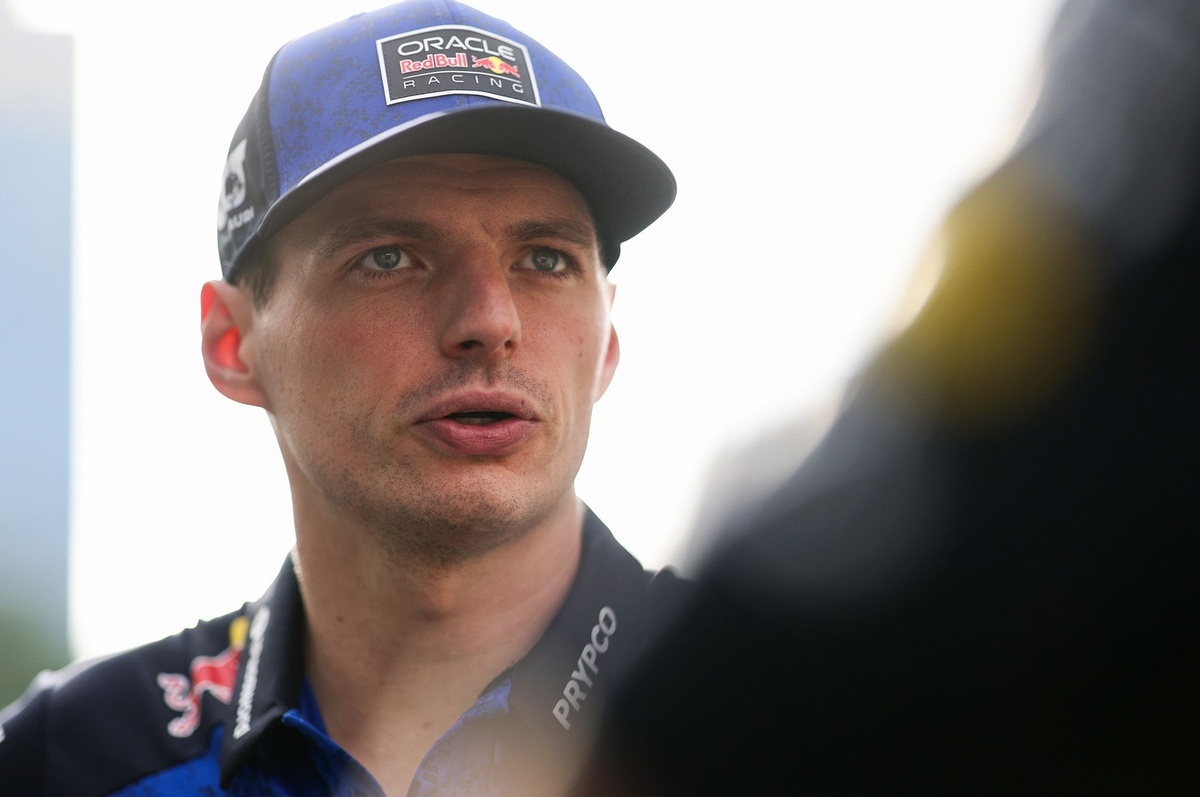
    Four-time world champion Max Verstappen offered the most definitive rejection of the format, irrespective of venue. “Yeah, more sprint races… Personally, I’m not a fan of it, but I understand the reasoning behind it, of course,” Verstappen stated in Baku. “It brings more action throughout the weekend, so yeah, we’ll participate… But, for me, I always think about the grand prix and that’s where my main focus is.”

    The Dutchman views sprint races as a spoiler for Sunday’s main event — a concern amplified in Monaco where two processional races would replace one. “About the sprint in Monaco, yeah, it’s the same scenario as what happens in the main race, right? Like, you are excited for the start and then you can’t pass. That’s quite straightforward.” Asked if the Monaco selection surprised him, Verstappen dismissed the relevance of location entirely: “I don’t know. For me, I honestly don’t care where the sprint races are… I just participate and of course you try to do the best you can. But I have no emotion attached to winning a sprint race or not winning it. From when I was a kid, you look forward to the grand prix. That’s normally on a Sunday or sometimes on a Saturday,” he added, referencing the 2024 Azerbaijan Grand Prix’s Saturday scheduling.

    Lindblad Champions Baku as Ideal Sprint Venue

    While Monaco’s selection perplexes many, Lindblad argued that the Baku City Circuit — absent from the sprint calendar for both 2026 and 2027 — possesses the characteristics the format demands. “This should be a sprint, this would be an amazing sprint race… In the end, it’s a track we can pass and the whole point of a sprint race is the idea of a flat-out race and passing. I think this should be one.” The Racing Bulls driver highlighted Baku’s combination of entertaining qualifying and genuine overtaking opportunities as the antithesis of Monaco’s limitations.

    Why This Matters

    The 2027 sprint calendar reveals Formula 1’s strategic priorities: maximizing commercial inventory through high-profile weekends in Bahrain and Abu Dhabi, and leveraging the unique prestige of Monaco despite its unsuitability for sprint racing’s core premise — overtaking. The drivers’ reactions expose a growing tension between the format’s commercial rationale and its sporting integrity. Verstappen’s emotional detachment and Lindblad’s tactical concerns about risk management in Monaco illustrate how the format alters competitive incentives. With Baku excluded through 2027, F1 appears to prioritize marketable venues over circuits that naturally produce the “flat-out race and passing” Lindblad identifies as the sprint’s purpose. The upcoming seasons will test whether fans accept processional sprints at iconic venues as a worthwhile trade-off for increased weekend content.

    Frequently Asked Questions

    How many sprint weekends are scheduled for the 2027 Formula 1 season?

    Ten sprint weekends are scheduled for the 2027 Formula 1 season, an increase from the current format.

    Which races have been confirmed as sprint weekends for 2027?

    The season opener in Bahrain and the season finale in Abu Dhabi are confirmed as sprint weekends, along with the Monaco Grand Prix. The full list of ten venues was referenced but not exhaustively detailed in the source material.

    Why are drivers critical of a sprint race in Monaco?

    Drivers criticize the Monaco sprint because overtaking is virtually impossible at the circuit, rendering the sprint a procession that duplicates Sunday’s race. The format also disrupts the traditional progressive build-up to qualifying, forcing drivers out of their comfort zone earlier with little reward for risk-taking given the likelihood of a non-points starting position.

  • Was Cadillac “faster” than Williams in Madring F1 Race?

    Was Cadillac “faster” than Williams in Madring F1 Race?

    Key Highlights

    • Sergio Perez showed strong race pace at the Spanish Grand Prix, matching and briefly surpassing Alexander Albon’s Williams before a water leak forced his retirement.
    • Teammate Valtteri Bottas struggled with significant tire degradation and brake management, highlighting a performance disparity within the Cadillac squad.
    • Cadillac targets improvement at the Azerbaijan Grand Prix, where the Baku circuit’s low-downforce nature may mask the MAC-26’s current aerodynamic deficiencies.

    Perez Finds Encouraging Pace Amid Reliability Woes

    Cadillac’s maiden Formula 1 campaign has largely been defined by backmarker status, but the Spanish Grand Prix at the new Madrid circuit—referred to as Madring—offered a glimmer of competitiveness from Sergio Perez. The Mexican driver qualified 18th but made a lively start, jumping past Yuki Tsunoda and Carlos Sainz to sit 16th. More importantly, his race pace proved genuinely competitive against the midfield benchmark.

    Perez spent the entirety of his race shadowing Alexander Albon’s Williams, running a near-identical strategy of mediums to hards under the Virtual Safety Car. “I was pretty much the same pace as [Alexander] Albon all the way through,” Perez commented. “I was within a second or two until we had the issue. So a really strong weekend for the team in terms of pace. We pushed everything, we were on the limit with the brakes, but we pushed to the very limit, and [I’m] happy with that.” Telemetry backed his assessment: while Perez was 0.403 seconds per lap slower on the medium compound over 11 representative laps, he turned the tables on the hard tire, lapping 0.351 seconds quicker than Albon over eight laps before a terminal water leak and blue flags ended his challenge.

    Bottas Highlights Degradation and Durability Deficits

    The picture was starkly different for Valtteri Bottas. The Finn languished at the rear of the field, managing excessive brake temperatures with persistent lift-and-coast throughout the afternoon. “We know we need to improve,” the Finn nervously chuckled. “The car is still not robust enough, and we need to make it a lot faster. And the deg today highlights how much we’re lacking, it’s like way more than the competition.” Cadillac’s reliability record underscores the struggle: the team has suffered 11 retirements or non-starts in the 2026 season, fewer than Aston Martin’s 15 but significantly more than Williams’ seven.

    When presented with Perez’s positive comparison to Albon, Bottas offered a nuanced counterpoint. “In the beginning we can be there, we’ve seen, but as the race progresses, the deg gets worse. But actually for the next event, I’m more hopeful that we can be there. Baku, the only high-speed corners, they are flat out; otherwise it’s slow- or medium-speed.” His assessment points to a fundamental aerodynamic inefficiency on the MAC-26 that punishes the car disproportionately on conventional circuits.

    Why This Matters: A Two-Tier Trajectory for a Rookie Team

    The divergent weekends of Perez and Bottas expose the volatile nature of Cadillac’s development curve. Perez’s ability to match a race-winning midfield outfit like Williams—albeit over a limited sample—suggests the underlying potential of the chassis and power unit package exists, provided the car is in its optimal window. Conversely, Bottas’s experience confirms that the operational window remains dangerously narrow, with tire degradation and thermal management acting as primary performance limiters. With 11 DNFs already on the board, reliability is not merely a statistical blemish but a barrier to data accumulation. The upcoming Azerbaijan Grand Prix represents a critical calibration opportunity: Baku’s unique layout, dominated by long straights and low-speed corners, reduces the downforce demand that currently plagues the MAC-26. A strong showing there would validate the team’s aerodynamic diagnosis and provide momentum heading into the European swing, but it would not solve the fundamental lack of robustness that Bottas emphasized.

    Frequently Asked Questions

    How did Sergio Perez’s pace compare to Alexander Albon at the Spanish Grand Prix?

    On the opening medium stint, Perez lapped 0.403 seconds slower per lap than Albon. After both switched to hard tires under the Virtual Safety Car, Perez was 0.351 seconds per lap quicker over eight representative laps before a water leak and blue flags intervened.

    What are Cadillac’s main technical issues according to Valtteri Bottas?

    Bottas cited insufficient car robustness, excessive tire degradation relative to rivals, and persistent brake temperature management issues requiring significant lift-and-coast throughout the race.

    Why is the Azerbaijan Grand Prix seen as a better opportunity for Cadillac?

    The Baku circuit features predominantly slow- and medium-speed corners with only flat-out high-speed sections, reducing the downforce demand that currently exposes the MAC-26’s aerodynamic deficiencies on conventional tracks.

  • Cadillac Fined Twice After Sergio Perez FP1 Infringements in Madrid

    Cadillac Fined Twice After Sergio Perez FP1 Infringements in Madrid

    The Cadillac Formula 1 team has received two fines after Sergio Perez was caught speeding in the pit lane during the first free practice session (FP1) at the Spanish Grand Prix in Madrid.

    Perez Breaches Pit Lane Speed Limit Twice

    The Mexican driver exceeded the mandatory 80 km/h pit lane speed limit on two separate occasions during the opening session of the weekend. FIA stewards penalized the American outfit for breaching Article B1.6.3a.i of the FIA F1 regulations.

    • First offence: A fine of €700 after Perez was clocked at 86.7 km/h, exceeding the limit by 6.7 km/h.
    • Second offence: A heavier penalty of €1,000 after Perez was recorded travelling at 96.7 km/h, exceeding the limit by 16.7 km/h.

    Difficult Debut Season Continues for Cadillac

    The infractions come amid a challenging inaugural campaign for the Cadillac squad. As the team works to adapt to the championship, it has grappled with significant reliability issues. In the drivers’ standings, Perez currently sits 23rd while his team-mate Valtteri Bottas occupies 22nd place; both drivers have yet to score a point.

    Madrid Debut: The Madring Circuit

    The first practice session in Madrid also marked the first time Formula 1 drivers tackled the Madring circuit. Built around the IFEMA Madrid exhibition centre and the nearby Valdebebas district, the venue operates a semi-street circuit layout. The track features a mix of tight zones and high-speed straights, highlighted by a banked, sweeping curve named “La Monumental”.

    Perez: “A Proper Race Track”

    Speaking to the media ahead of the race weekend, Perez offered his initial impressions based on simulator work:

    “The track itself is a proper race track, from what I’ve seen,” Perez told the media ahead of the race weekend. “I haven’t been on the circuit yet, but from what I’ve seen on the simulator, it’s a proper track.
    “It’s a bit scary, I’ll say. It reminds me a bit of Jeddah. Good, proper track, really happy to be here, and I think the atmosphere here is going to be one of the best.”

    FP1 Results

    The 36-year-old concluded the session with the 21st fastest time, finishing only ahead of team-mate Bottas.

  • Sergio Perez Trying to Help Cadillac Lure F1 Personnel

    Sergio Perez Trying to Help Cadillac Lure F1 Personnel

    Sergio Perez says he has tried to “influence” some of Cadillac’s recruitment decisions ahead of the team’s first Formula 1 season, offering feedback on potential targets and highlighting personnel he believes could strengthen the new American outfit.

    Cadillac’s arrival as Formula 1’s 11th team has expanded the championship’s employment market, while also intensifying competition for engineers and other staff. That competition was one reason several established teams reacted negatively to the prospect of a new entrant.

    Perez has driven for Sauber, McLaren, Force India/Racing Point and Red Bull, giving him working relationships with a significant portion of the F1 paddock. He therefore has a strong understanding of which potential recruits could provide Cadillac with a substantial boost.

    Perez offers Cadillac recruitment advice

    Speaking on the F1 Beyond the Grid podcast, Perez explained that he does not have the authority to make hiring decisions but has been prepared to make recommendations as interest in Cadillac continues to grow.

    “I mean, I obviously know a lot of good people out there, you know, I’ve been in this paddock for a long time,” Perez said.

    “I’ve been trying to get a few people, of course, but at the end of the day, you have to also know your position. And I am not the one that takes those decisions on who I bring and who I hire.

    “It is not my role. But I obviously try to influence and try to tell the team, I mean, ‘I think this guy will be good if he comes’ and so on. And all I can see is that the appetite for Cadillac around the paddock is rising every time.

    “And that’s something good to have as a Formula 1 team.”

    Sergio Perez, Cadillac

    Perez also believes General Motors’ arrival in Formula 1 has been a major benefit for Cadillac. He pointed to the US automotive giant’s extensive motorsport experience across its various brands as another potential advantage for the team.

    According to Perez, knowledge from other racing series could introduce new ideas and methods to Formula 1. He compared that potential cross-series benefit with the relationship between McLaren’s Formula 1 and IndyCar operations.

    “I do believe [in GM’s operational set-up] because GM, it’s a manufacturer that has done motorsport for their entire career,” Perez said. “And the level of competitiveness in the US, it’s extremely high.

    “I mean, they’ve been very helpful in a lot of ways. We’ve been able to learn stuff from them. I think as a team, we have to be open.

    “You know, there’s a lot we can learn from other series, other ways of doing things. For example, McLaren was able to get advantage from their IndyCar team a few years ago with how they were treating the ride and stuff like that. So there’s always room to improve and learn things.

    “I think as long as you have your mechanism very clear and you are able to deliver the idea quickly to the track, then that’s positive.”

  • Sergio Perez “had conversations” with Other Formula 1 Teams

    Sergio Perez “had conversations” with Other Formula 1 Teams

    Sergio Perez says he remains committed to Cadillac despite his management holding talks with rival Formula 1 teams about a possible move for the 2027 season.

    Reports had linked Perez with Williams if Carlos Sainz decided to leave the team. However, Sainz signed a multi-year contract extension with the Grove-based outfit, removing that potential opportunity.

    The Mexican driver was also associated with Alpine, although the team is expected to retain Franco Colapinto for 2027 after the Argentine improved during his first full season with the Enstone-based squad.

    Despite the speculation, Perez told Formula 1’s Beyond the Grid podcast that he wants to remain part of Cadillac and help the American team develop beyond its debut season.

    “For me, nothing has changed,” he said. “Of course, we’ve had conversations with other teams and here and there, a few teams have been calling and stuff, but for me, nothing has changed. 

    “I see this as my project and I want to be part of Cadillac. I really believe [in it].

    “I don’t think this is a one-year project. I think this is a long-term project that I want to be part of. Obviously, there will be some discussions, but this is where I want to be and nothing has changed from my side.”

    Sergio Perez, Cadillac Racing

    Perez said he wants to see Cadillac make further progress and is also keen to assess the impact of new team principal Marcin Budkowski. Budkowski replaced Graeme Lowdon, who was released by Cadillac during the summer break.

    For Perez, improving Cadillac’s results will require more than simply increasing the car’s on-track performance. He also highlighted the team’s operational work, including pit stops, race strategy and tyre management.

    “I want to see more progress. Closing out the gap to the teams ahead of us,” he said. “I don’t know who’s ahead at the moment, I don’t know if it’s Williams, Aston seems to have become part [of the midfield] and being able to mix with them more in the races. 

    “Being able to close that gap will only allow us to start next year in a much better shape. And that’s something I want to see. Obviously, I’m looking forward to work with Marcin and see his leadership. 

    “I think there’s a lot of room for improvement. Not just on performance, operationally, pitstops, strategy, tyres. 

    “There’s so much still – we’ve only done the 11th race in our history. So there’s a lot of things. But I want to see much more progress. Closing out the gap and then I think that will give us a massive boost to start next year.”

  • 7 F1 Drivers Who Staged Remarkable Comebacks After Stellar Substitute Performances

    7 F1 Drivers Who Staged Remarkable Comebacks After Stellar Substitute Performances

    The final Dutch Grand Prix at Zandvoort delivered a major talking point: Yuki Tsunoda’s return to a race seat with Racing Bulls. After losing his Red Bull drive following a difficult 2025 campaign, the Japanese driver had been relegated to test and reserve duties. He seized the chance to stand in for Liam Lawson, who had himself been promoted to the senior team to cover for an injured Isack Hadjar. Tsunoda finished a strong eleventh, just shy of the points.

    “I did everything I could today and I really enjoyed it,” Tsunoda said after just missing out on points in P11. Whether the performance earns him a full-time grid return remains to be seen, but Formula 1 history offers several precedents where a standout substitute drive reignited a career.

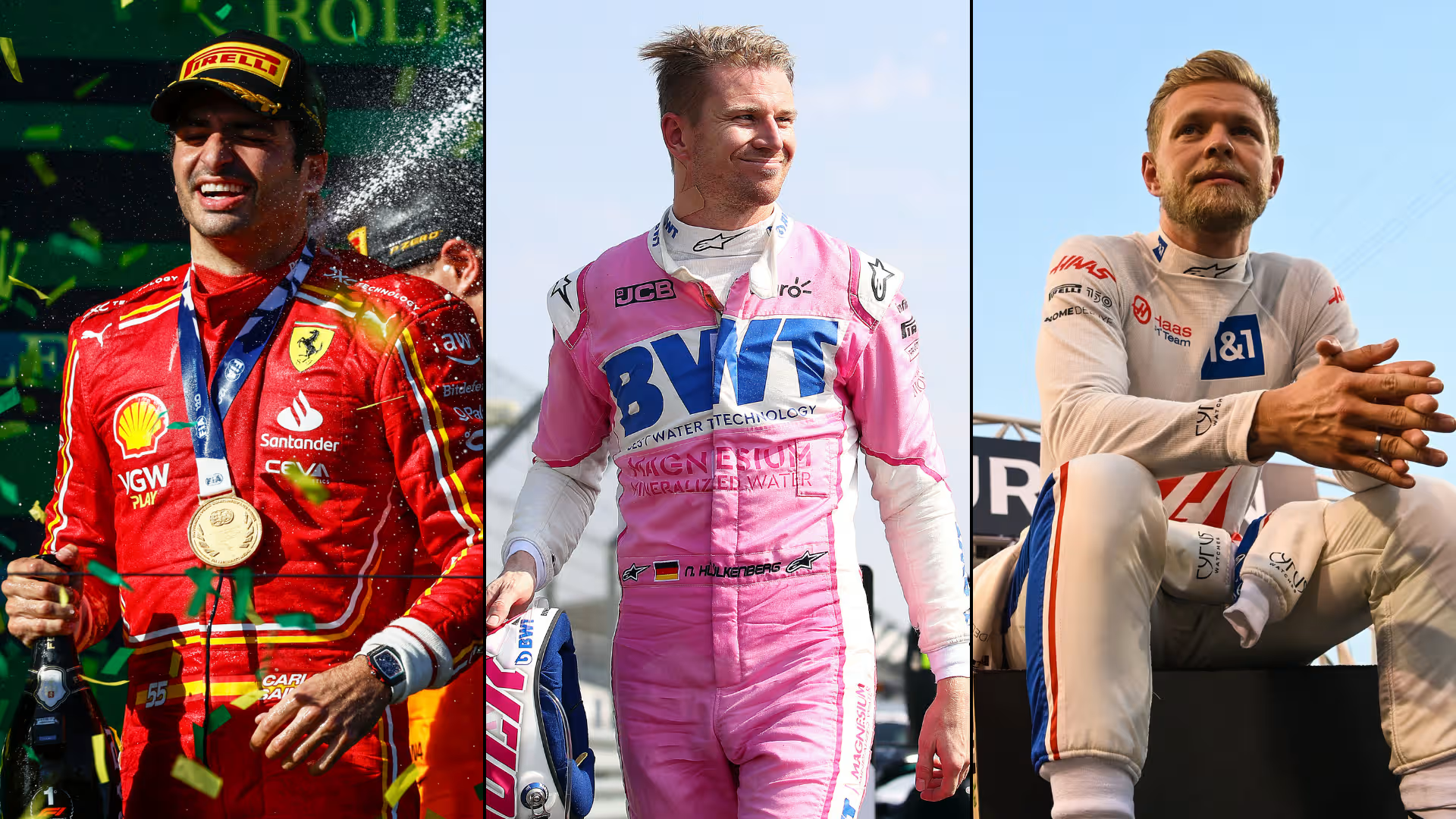
    Nico Hulkenberg: The ultimate super-sub

    Finishing just ahead of Tsunoda in Zandvoort was Nico Hulkenberg, a driver intimately familiar with the power of a stand-in appearance. After being dropped by Renault at the end of 2019, Hulkenberg made three substitute starts for Racing Point during the 2020 season when Sergio Perez and Lance Stroll contracted Covid-19. A car issue prevented him from starting his first outing at Silverstone, but one week later at the 70th Anniversary Grand Prix he qualified third behind the Mercedes cars and finished seventh. His third appearance at the Nürburgring saw him charge from the back of the grid to eighth place.

    Those drives secured him a reserve role for 2021, two further stand-in weekends in 2022, and ultimately a full-time comeback with Haas in 2023. The 39-year-old has since thrived, moving to the then Kick Sauber outfit—now Audi—and scoring a long-awaited maiden podium at the 2024 British Grand Prix.

    Carlos Sainz: Turning a forced exit into a victory lap

    Unlike Tsunoda and Hulkenberg, Carlos Sainz has not been sidelined in F1, but he entered the 2024 season knowing he would leave Ferrari at year’s end. The blockbuster announcement that Lewis Hamilton would join the Scuderia for 2025 caught many off guard—perhaps including Sainz, who would make way for the seven-time champion. Complicating matters, appendicitis surgery forced him to miss the Saudi Arabian Grand Prix, prompting a memorable substitute debut from then-F2 driver Ollie Bearman.

    Sainz returned two weeks later in Australia and produced a stunning comeback: second on the grid and his third career victory. The performance reminded the paddock of his calibre, attracting multiple suitors for 2025 before he signed with Williams.

    Alain Prost: Sabbatical leads to a fourth title

    Alain Prost’s split with Ferrari was far more acrimonious. After moving from McLaren, his 1990 debut season with the Scuderia ended in controversial title defeat to Ayrton Senna. Tensions escalated in 1991 as Prost publicly criticized the team’s declining competitiveness, leading to his dismissal before the season concluded. With no time to secure a 1992 seat, the “Professor” took a sabbatical.

    He returned with Williams for 1993 and announced his intent immediately, converting pole position into victory at the season opener in South Africa. Six more wins followed, delivering his fourth World Championship before he retired at the campaign’s close.

    Mika Salo: Filling Schumacher’s shoes at Ferrari

    Mika Salo debuted late in 1994 with Lotus and raced for Tyrrell and Arrows before losing his seat for 1999. An opportunity arose when he replaced an injured Ricardo Zonta at BAR for three races, but the bigger call came when Ferrari drafted him to substitute for Michael Schumacher after the German broke his leg at Silverstone.

    Despite the daunting task, Salo impressed with ninth on his Ferrari debut in Austria. At Hockenheim one round later, he qualified fourth, led the race, and moved aside for teammate Eddie Irvine—who was battling Mika Häkkinen for the title—to finish second for his first career podium. A second rostrum at Monza helped Ferrari secure the Constructors’ Championship, and Salo’s form earned a full-time Sauber drive for 2000.

    Valtteri Bottas: “Bottas 2.0” rises from a dark place

    Valtteri Bottas endured a winless 2018 season, dropping to fifth in the standings while teammate Lewis Hamilton claimed a sixth title. The Finn later revealed he contemplated leaving the sport after falling into a “dark place,” but used the winter to regroup. The revival was instant: at the 2019 Australian Grand Prix, he overtook polesitter Hamilton into the first corner and dominated to win by 20 seconds.

    Over the radio, he famously declared, “To whom it may concern, f*** you!”—a message he later admitted was “just all the frustration from the year before coming out.” That victory launched his strongest F1 season, yielding four wins and a career-best second place in the Drivers’ Championship.

    Kevin Magnussen: The “Viking comeback”

    Kevin Magnussen’s return after a year away mirrors the stand-in narrative. After four seasons with Haas (2017–2020), he was replaced for 2021 by rookies Nikita Mazepin and Mick Schumacher. Magnussen competed in other series until a late call from Haas to replace Mazepin for 2022. Despite the hiatus, he qualified seventh on his return in Bahrain and converted it to fifth on race day.

    Team Principal Guenther Steiner hailed it as “some f****** Viking comeback.” Magnussen later added a shock pole position in São Paulo and remained with Haas through 2024 before moving to the World Endurance Championship.

    Sergio Perez: From seat loss to maiden win and a Red Bull drive

    Sergio Perez has raced in F1 since his 2011 Sauber debut, spending 2013 with McLaren before joining Force India. His future turned uncertain when Sebastian Vettel signed for the team’s 2021 rebrand as Aston Martin, leaving Perez without a contract. He responded emphatically: a second place in Turkey for Racing Point, followed by a spectacular maiden victory in Sakhir after a first-lap incident dropped him to the back of the field.

    The win made him the first Mexican driver to win since Pedro Rodriguez in 1970. That recovery drive undoubtedly strengthened his case for a 2021 seat, leading to a four-year tenure with Red Bull.

    Each of these drivers turned a moment of uncertainty—whether a substitute appearance, a forced sabbatical, or a sudden seat loss—into a career-defining resurgence. Tsunoda’s determined drive at Zandvoort suggests he may yet join their ranks.

  • Sergio Perez: “I want three more years with Cadillac”

    Sergio Perez: “I want three more years with Cadillac”

    Sergio Perez believes he has “maybe three more years” left in Formula 1 and wants to use that time to help Cadillac establish itself in the sport.

    The Mexican driver left F1 at the end of 2024 after Red Bull released him following a difficult season. Perez had finished second in the 2023 drivers’ championship, but his form declined after a strong start to the campaign. He then slipped to eighth in the 2024 standings, recording only four podium finishes.

    After spending a year away from Formula 1, Perez returned when Cadillac signed him to partner Valtteri Bottas. The new team has opted for an experienced driver line-up as it prepares to enter the championship, with both drivers bringing knowledge of leading F1 operations to the project.

    Sergio Perez embraces Cadillac’s Formula 1 project

    Speaking on the F1 Beyond the Grid podcast, Perez said he is enjoying his role in helping shape Cadillac’s future. He described himself as “more than a driver” because of his involvement in development and the team’s wider direction.

    He added that only a small number of drivers have the opportunity to help build a Formula 1 team from the ground up.

    “I really feel like this is a project. And I really feel like I’m part of this project of this new era, like building something from scratch,” Perez said.

    “Of course, I want to win championships and be fighting at the front. But if you don’t have that opportunity, I think Cadillac, it’s something that motivates me a lot. It’s like building a team from scratch and starting basically from last to see how far we can go together.

    “And like you say, you know, I feel like here I’m much more than a driver. At the same time, they listen a lot to me on different things, on development and stuff. Only a few drivers can get that in their careers, and it’s the first time I can have this.”

    Perez says motivation will determine when he retires

    Perez later discussed his long-term future and explained that the key sign it is time to stop racing will be a decline in his “will” and concentration. He said a driver’s focus on the car, engineers and pursuit of performance eventually reveals whether the desire to compete is fading.

    For now, Perez believes the Cadillac project is providing enough motivation to keep him focused. He estimates that he could have approximately three years of racing remaining before turning his attention to interests outside Formula 1.

    “I think there’s a certain age where you start to drop,” he added. “I think it’s the engine inside you. It’s the will, and you see it from the outside, when you’re not in the car, how much you’re thinking on your engineers, on your car.

    “When you go away and you start thinking less and less on that, that’s the first alarm, I would say. It’s going away. Because when you’re young, all what you’re thinking, it’s what’s coming next, how you will be driving better, what different techniques you can use, and that sort of thing.

    “But as you get older and older – and some drivers are different. Some drivers, it happens at late 20s, mid-30s, mid-40s, and others – we might see Fernando until he’s 60! He’s still driving at a very high level. But I think Fernando is different.

    “He has that engine inside him still. You can see him whenever there is an opportunity, like whenever there is anything he can take advantage of, he still has that.

    “And you can see it. But everyone is different. I don’t think that there is a number, that there is an age. Although Formula 1 is very physical, very demanding, training is not a limitation like other sports, like within football or tennis. Here, I think, it’s more the brain or the vision.

    “I think at the same time, it’s really hard for a driver to realise it’s enough, that I’m not as competitive as I wish or as I want to be and you need to call it off. And I think to take that decision as a driver is not so easy.

    “But at the end, you need to be very honest with yourself and grateful, you know, to that kid that started everything and you need to be able to say, you know, it’s time to do something else.

    “It’s hard to tell you a number. Obviously, I don’t have much in it. Say, maybe three years more. I want to see this project moving forward. I think that requires a bit more time.

    “But yeah, I mean, I respect a lot what Fernando has done in the sport and the motivation he has. But for me, it wouldn’t be that long because I want to do other things out of Formula 1.”

    Fernando Alonso, Aston Martin Racing, Sergio Perez, Cadillac Racing. Photo by Guido De Bortoli / LAT Images via Getty Images.
  • Sergio Perez Admits Disappointment With Cadillac’s First F1 Season

    Sergio Perez Admits Disappointment With Cadillac’s First F1 Season

    Sergio Perez says Cadillac’s recent development stall has made the past few Formula 1 races “a disappointment”, but believes the team can still find another second of performance in 2026.

    Cadillac made significant progress during the opening part of the season, pulling clear of struggling Aston Martin and regularly beating the Silverstone-based team to avoid the back of the grid and the wooden spoon.

    That progress has slowed in recent races. Aston Martin’s own upgrades, including aerodynamic developments introduced in Hungary and the Netherlands, combined with Honda’s efforts to improve power, have delivered a notable increase in lap time and left Cadillac behind.

    Perez believes Cadillac has more potential. Speaking on Formula 1’s Beyond the Grid podcast, he said a new team should be improving constantly, but acknowledged that Cadillac’s recent form had flatlined.

    “On everything, I think the last few races have been a disappointment. There’s a lot of disappointment because we haven’t been developing. We haven’t been improving,” Perez said.

    “Us being a new team, this is what we should be doing, like every time. So I felt like there was a bit of a stalling in the last few races.

    “And that’s why we had to review on things, how we were doing everything. Obviously, being a new team, there’s a lot of things that we are constantly learning.”

    Sergio Perez, Cadillac Racing
    Sergio Perez, Cadillac Racing. Photo by: Andy Hone/ LAT Images via Getty Images

    Perez measured Cadillac’s shortfall in lap-time terms, suggesting the team has found roughly one second of performance during the opening half of the year, rather than the two seconds it had expected.

    Even so, he believes Cadillac is “not that far” from the established teams. Finding another second could transform the team’s competitiveness and allow it to put pressure on Williams, Haas and Aston Martin.

    “I don’t think we have improved as much as we hoped for,” Perez added. “[We have found] I don’t know, a second? But probably we were looking for two seconds.

    “The most important is we understand and we look at our processes, why it hasn’t come, that second? Why we haven’t improved in all those different areas?

    “Because it’s not only one thing, being a new team, there’s a lot of things that are in there. And I can see them, you know. If we improve our load, our ride, a lot of things, all of a sudden, we are not that far.

    “We are at the back, but half a second, one second will change our life completely at this stage, you know? And I feel like for us being a new team, it’s in there. It’s possible.”