Tag: September Fed meeting

  • Tom Lee Makes a “Massive Bull” Bitcoin and Ethereum Prediction With One Condition

    Tom Lee Makes a “Massive Bull” Bitcoin and Ethereum Prediction With One Condition

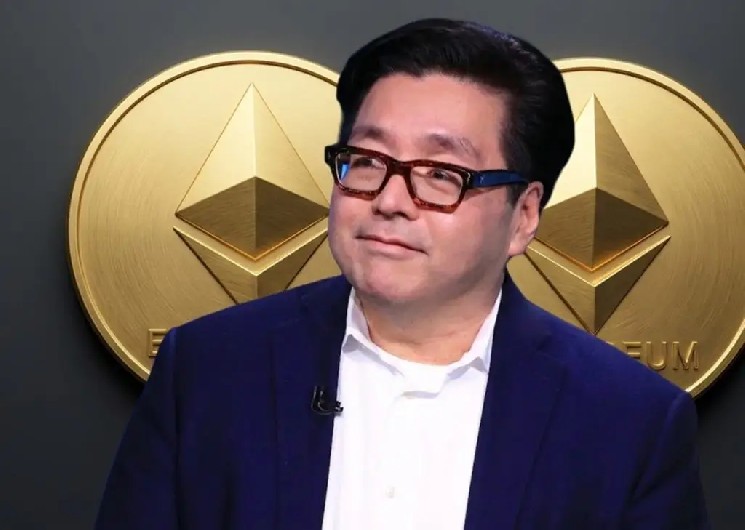
    Tom Lee, Fundstrat’s head of research and chief investment officer, outlined his latest outlook for the Federal Reserve’s September policy decision, U.S. stocks and global markets in an interview with CNBC.

    Although September has historically been a weak month for financial markets and uncertainty remains over the path of interest rates, Lee said markets could deliver an upside surprise contrary to prevailing expectations.

    September Fed meeting seen as market turning point

    Lee described the Fed meeting on September 15th as a critical turning point. He said that if the central bank leaves interest rates unchanged, stock markets could trigger a very strong rally.

    According to Lee, a major market correction could be delayed until October. Alternatively, stocks could see only a limited pullback after the S&P 500 rises above the 8,000-point level.

    Crypto market recovery could accelerate

    Lee also said the periodic slowdown in the cryptocurrency market, often referred to as a “crypto winter,” had been relatively shallow and was approaching its end. He noted that crypto assets became the best-performing macro asset class during the third quarter of the year.

    With institutional investors increasingly turning to crypto stocks, Lee said investor interest could return quickly as the four-year crypto cycle reaches its conclusion in the coming days.

    The analyst identified potential regulatory changes as the sector’s biggest catalyst, stating:

    “If the CLARITY Bill passes Congress this year, Bitcoin and Ethereum will have an extremely strong and massive fourth quarter.”

    This is not investment advice.

  • September Fed Rate Hike Fears Look Overblown as Probability Stands at Just 58%, Not 90%

    September Fed Rate Hike Fears Look Overblown as Probability Stands at Just 58%, Not 90%

    Inflation concerns are weighing more heavily on Federal Reserve policy expectations than labor-market trends, according to Warsh, who said inflation is unlikely to return to the central bank’s target without intervention.

    Warsh pointed to the Federal Reserve’s preferred inflation gauge, the Personal Consumption Expenditures (PCE) index, which stood at 3.7%. He described the reading as “are more concerning” relative to the Fed’s 2% inflation target.

    Broad-based price increases raise Fed concerns

    Over the past year, more than half of the goods and services tracked by the government recorded price increases of 3% or more. That compares with roughly one-third experiencing similar increases during the two decades before the pandemic.

    The comments were quickly interpreted as hawkish, or supportive of higher interest rates, fueling expectations on social media that the Fed could deliver a 25-basis-point rate hike in September. The benchmark borrowing rate currently stands in a range of 3.5% to 3.75%.

    Bitcoin fell 3% to below $77,000 on Friday, marking its first significant pullback after a sharp rally from approximately $63,000 to more than $80,000 earlier this month. Gold also declined, while the U.S. Dollar Index and Treasury yields both increased.

    Analysts question rate-hike fears

    Bianco is not alone in downplaying concerns about a potential rate increase. Firms including ABN AMRO Investment Solutions and Brandywine Global Investment Management have expressed similar skepticism.

    Robin Brooks, a senior fellow at the Brookings Institution and former chief economist at the IIF, said a possible rate hike would be intended to calm volatility in the Treasury market rather than represent outright monetary-policy tightening.

    Such a move could reinforce confidence in the Fed’s commitment to controlling inflation, potentially reducing the additional premium investors demand to hold long-term bonds and limiting further increases in Treasury yields.

  • Fedwatch Turns Hawkish as Odds of a September Rate Increase Reach 57%

    Fedwatch Turns Hawkish as Odds of a September Rate Increase Reach 57%

    The focus has shifted to the Federal Reserve’s September 16 federal funds rate decision. CME’s FedWatch Tool, which converts federal funds futures trading into implied policy probabilities, currently gives a 57% chance of a 25-basis-point rate hike that would lift the target range to 3.75%-4%. The probability of holding rates at the current 3.5%-3.75% range stands at 43%. With uncertainty elevated, forecasts for the next Federal Open Market Committee decision remain highly divided.

    September Fed Rate Hike Bets Rise Sharply

    The shift is even more striking compared with trader expectations just one week earlier. CME data showed that the probability of a rate hike was only 39.9% on Aug. 21. By Aug. 28, following the Jackson Hole speech, that figure had climbed to 57%, while bets on a September rate cut had almost disappeared.

    Prediction markets have not fully embraced the hawkish outlook. As of this weekend, Polymarket traders assigned a 52% probability to the Fed holding rates and 48% to a 25-basis-point hike. More than $66.6 million has changed hands on the wager, while the once-common rate-cut position now carries odds of just 1%.

    Traders on the prediction marketplace Kalshi are seeing similarly close odds. Its September Fed market, with more than $23.8 million in volume, puts the probability of no change at 52%, compared with 48% for a quarter-point hike.

    Another Kalshi betting contract gives the Fed a 67% chance of raising the federal funds rate at some point before 2027.

    Warsh Highlights Persistent Inflation Risks

    The market probabilities shifted significantly after Warsh’s keynote at the Jackson Hole Economic Policy Symposium. He avoided promising a September rate hike but repeatedly emphasized persistent inflation and the Federal Reserve’s responsibility to restore price stability.

    “There should be no misunderstanding: The Fed’s price-stability objective of 2 percent, as measured by the personal consumption expenditures (PCE) price index, is a firm, fixed target,” Warsh stressed.

    He also made clear that short-term interest rates remain the Fed’s primary tool for achieving that objective.

    The inflation figures Warsh cited help explain why traders interpreted his remarks as hawkish. The Fed’s preferred 12-month PCE inflation measure is running at 3.7%, while the six-month reading is higher at 4.1%. Neither figure is close to the central bank’s fixed 2% target, although some Fed critics believe that level will never be reached again.

    Warsh also described an economy that gives policymakers little reason to fear the effects of higher interest rates. Business investment is rising rapidly, particularly in the artificial intelligence (AI) sector. S&P 500 profits have increased more than 20% over the past year, while real consumer spending has grown more than 2% over four quarters. Unemployment remains at 4.1%.

    Markets Face a Close September Fed Decision

    That combination of persistent inflation and solid economic growth creates a difficult environment for federal funds rate doves. Higher rates can cool demand and inflation, while continued growth and employment give policymakers more room to tighten monetary policy without immediately damaging the labor market.

    Warsh still declined to commit to a rate hike, saying:

    “I stand here today committed to a discipline, not to a decision.”

    The message was deliberate: Markets can speculate about September, but the Federal Reserve does not intend to provide traders with an answer weeks before the meeting. For investors, the decision has become a genuine coin toss, with substantial money positioned on both outcomes. CME futures currently favor a hike, while Polymarket and Kalshi narrowly lean toward a rate hold.

    Inflation and labor-market reports will now carry even greater weight, and either could shift the balance before Fed officials meet in mid-September.

    Source: cryptonews.net
  • Will the Fed Raise Interest Rates in September? Latest Probability Figures Revealed

    Will the Fed Raise Interest Rates in September? Latest Probability Figures Revealed

    Expectations that the Federal Reserve could raise interest rates at its September meeting have increased sharply after cautious comments on inflation from Fed Chairman Kevin Warsh. The probability of a rate hike in forecasting markets has reached one of its highest levels in recent months, while U.S. Treasury yields have also risen significantly.

    Rate hike expectations shift ahead of September Fed meeting

    Market expectations are changing rapidly ahead of the Federal Reserve’s monetary policy meeting on September 16. Data from forecasting markets indicate that the probability of the Fed keeping interest rates unchanged is about 55%, while a 25-basis-point rate hike is priced at approximately 46%. The probability of a larger increase is estimated at only about 1%.

    CME Group’s FedWatch tool shows that investors have raised the probability of a rate hike at the September meeting to 55.7%, an increase of approximately 20 basis points in a single day.

    Warsh says inflation trend has not improved significantly

    Speaking at the Jackson Hole symposium in Wyoming, Federal Reserve Chairman Kevin Warsh said inflation remains elevated.

    Warsh acknowledged that inflation data released during the summer was more positive than expected but said it did not demonstrate a lasting improvement in underlying inflation trends.

    Warsh stated, “While inflation data released this summer was better than expected, it doesn’t indicate a significant improvement in underlying trends.”

    The Fed chairman added that policymakers must ensure inflation is moving clearly and quickly enough toward the level targeted by the central bank.

    Warsh indicated that the Fed could otherwise need to tighten monetary policy further, saying, “Otherwise, we have more work to do. This is our duty, our authority, and our responsibility.”

    However, Warsh did not provide direct guidance on how the Fed will act at upcoming meetings or offer a definitive framework for the economic data that will determine future interest rate decisions.

    U.S. Treasury yields rise after Warsh’s remarks

    Following Warsh’s speech, U.S. stock indexes rose, while selling pressure emerged in the bond market.

    The yield on the 2-year U.S. Treasury note, which is highly sensitive to expectations for Federal Reserve interest rate policy, climbed approximately 8 basis points to 4.31%. That was the highest level for the 2-year yield since the end of July.

    The increase in short-term Treasury yields suggests that investors increasingly expect the Fed to pursue tighter monetary policy in the coming period.

    With approximately two and a half weeks remaining before the September meeting, upcoming inflation and employment data are expected to be critical in determining the direction of interest rate expectations. If inflation remains stronger than expected, the likelihood of a rate hike will increase. A significant slowdown in price pressures, however, could reinforce expectations that the Fed will leave interest rates unchanged.

    This is not investment advice.