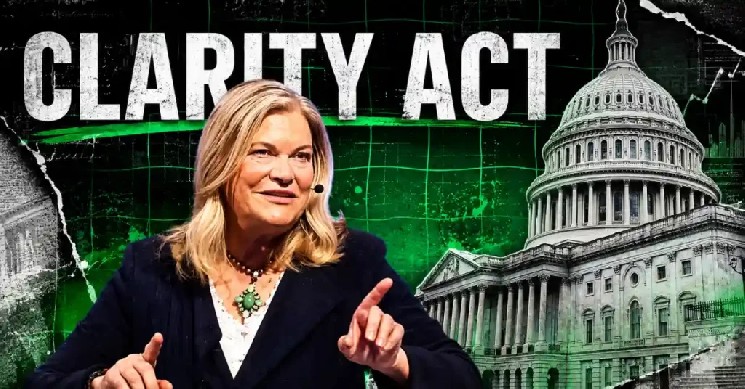
Tag: Senate cloture vote

  • Senate Cloture Vote on H.R. 3633 Falls 11 Votes Short as Four Republicans Oppose

    Senate Cloture Vote on H.R. 3633 Falls 11 Votes Short as Four Republicans Oppose

    The U.S. Senate failed to advance the Digital Asset Market Clarity Act on Tuesday, rejecting a procedural motion to begin debate on the legislation by a narrow 49-50 vote. The measure, formally known as H.R. 3633, required 60 votes to overcome a filibuster and fell 11 votes short of the threshold needed to proceed.

    Party Lines Fracture on Procedural Vote

    Every senator voting in favor of the motion was a Republican. However, four Republican senators broke with their party to vote against proceeding: Susan Collins of Maine, Josh Hawley of Missouri, Jerry Moran of Kansas, and Thom Tillis of North Carolina. No Democrat or independent supported the motion. Senator Chris Coons of Delaware did not cast a vote.

    The vote occurred at 2:19 p.m. ET and was recorded as Roll Call 234. Because the motion to proceed failed, the Senate never took up the bill for debate, amendment, or a final passage vote.

    Bill Would Define Crypto Oversight and Restrict CBDC

    The Digital Asset Market Clarity Act aimed to establish a regulatory framework dividing oversight of digital commodities between the Securities and Exchange Commission (SEC) and the Commodity Futures Trading Commission (CFTC). The legislation also included provisions prohibiting Federal Reserve banks from offering products directly to individuals and barring the use of a central bank digital currency (CBDC) in monetary policy operations.

    Bitcoin ETFs See $160 Million Inflow as Ether Products Extend Gains

    In market activity on Monday, U.S. spot bitcoin exchange-traded funds (ETFs) recorded a net inflow of $160.04 million, reversing four consecutive sessions of outflows from the prior week. Ether ETFs continued their positive momentum with a second straight day of inflows, adding $121.02 million.

    BlackRock’s IBIT dominated bitcoin fund flows, attracting $134.35 million. Fidelity’s FBTC followed with $53.33 million in inflows. Ark and 21Shares’ ARKB was the notable exception, posting a $41.95 million outflow.

    According to SoSoValue data, total bitcoin ETF trading volume reached $2.69 billion for the session. Combined net assets across the funds rose back above the $100 billion milestone to $100.09 billion after dipping below that level during last week’s selling pressure.

    BlackRock’s ETHA Leads Ether Inflows; XRP and Solana Funds Gain

    BlackRock’s ETHA paced ether ETF inflows with $80.50 million. XRP-focused ETFs added $11.26 million, all directed to Bitwise’s XRP fund. Solana ETFs attracted $11.01 million in new capital.

    Weekly Context Shows Volatility Amid Institutional Accumulation

    The Monday inflows follow a turbulent week for bitcoin ETFs, which posted $462.7 million in net outflows for the week ending Sept. 12 — the first weekly reversal after three straight weeks of inflows. Thursday alone saw $282.7 million exit the funds, marking the largest single-day withdrawal since July.

    Despite the weekly outflows, on-chain data from Arkham Intelligence shows BlackRock’s IBIT accumulated approximately $1.08 billion worth of bitcoin over the preceding 20 days, with inflows recorded on seven of those sessions. By comparison, Grayscale’s GBTC shed a net $254.7 million during the same period.

  • Will the CLARITY Act Pass the Senate Today?

    Will the CLARITY Act Pass the Senate Today?

    Connor Brown, Executive Director of the Bitcoin Policy Institute and former Senate staffer, outlined the stakes as the Senate prepares for a cloture vote today on the CLARITY Act. With Republicans holding 53 seats and two potentially absent, the measure requires 7 to 9 Democrats to cross the aisle to reach the 60-vote threshold. This procedural vote does not decide the bill’s final passage; it determines only whether the Senate can proceed to debate and an eventual up-or-down vote.

    Years of Legislative Groundwork

    Brown characterized the vote as the culmination of years of legislative effort, tracing the lineage back to the Token Taxonomy Act and the Lummis-Gillibrand framework on which he worked during his Senate tenure. He described the current text as Republicans’ “final and best offer” to pass comprehensive digital asset legislation before the election, with only a handful of session days remaining.

    “This really is sort of a buzzer-beater moment,” Brown said, “for this legislative package and for a clear set of lasting rules for the digital asset industry.”

    Ethics Compromise Breaks Logjam

    The provision that stalled negotiations longest—government ethics restrictions—shifted significantly when former President Trump agreed to approximately 80% of Democratic requests. Brown called the resulting compromise “pretty compelling,” noting it extends restrictions to officials’ spouses and grants individual states authority to pursue exchanges and seek injunctions against the Justice Department.

    “80% of the way there,” Brown said, “sounds like a pretty good deal for something that otherwise would be 0% of the way there.”

    Congress vs. Agency Rulemaking

    Brown framed the vote as a fundamental choice: allow regulatory agencies like the SEC and CFTC to write industry rules unilaterally, or give Congress a direct role in shaping the regulatory framework. With Senator Cynthia Lummis’s updated draft reportedly incorporating 115 Democratic-requested changes, Brown argued the question facing senators today is not whether the bill is perfect, but whether Congress wants a seat at the table or prefers to default to agency rulemaking.

  • Trump Meets Advisers on CLARITY Act Ahead of Tuesday Vote

    Trump Meets Advisers on CLARITY Act Ahead of Tuesday Vote

    President Donald Trump convened advisers on Friday, September 11, to negotiate the ethics language holding up the Digital Asset Market Clarity Act, four days before a pivotal Senate cloture vote that requires 60 votes to advance the legislation. Politico first reported the closed-door session, citing two people familiar with the talks. Neither the White House nor the negotiators disclosed the outcome. By Sunday, no revised text had circulated. Trump’s crypto policy adviser, Patrick Witt, struck an upbeat tone the following day, writing that it was a “Bad day to be a Clarity Act doomer.” He did not specify what had changed. With the Senate returning Monday, lawmakers have one working day before taking a public position on Tuesday.

    One paragraph of ethics text stalls a 630-page bill

    Lawmakers resolved most of the CLARITY Act months ago. The sole remaining obstacle is a conflict-of-interest provision targeting officials who profit from digital assets—a clause that describes the sitting president with uncomfortable precision. Trump previously accepted a version brokered by Senator Cynthia Lummis, but Senate Democrats and at least one Republican, Thom Tillis, deemed it too weak to secure their votes. Tillis has warned the bill collapses without a White House agreement. The current draft bars officials and their spouses from issuing tokens, yet permits them to hold crypto personally, exempts their children, and sunsets in 2029.

    Trump family collects 75% of $WLFI sale proceeds

    The Trump family launched World Liberty Financial in September 2024, with Donald Trump Jr., Eric Trump, and Barron Trump serving as its web3 ambassadors. The venture operates a governance token, $WLFI, and a dollar-pegged stablecoin, USD1, backed by Treasuries and custodied by BitGo. Under the project’s own disclosures, an entity tied to Trump and family members receives 75% of $WLFI sale proceeds after reserves, and the family holds billions of tokens directly. Trump reported more than $1 billion in crypto income for 2025, including roughly $515 million from $WLFI sales. Senator Elizabeth Warren said the draft does nothing to stop him from “vacuuming up his next $1.4 billion in crypto profits.”

    The token has punished outside buyers, trading below $0.06 while early investors remain locked out of most of their holdings. In August, the Office of the Comptroller of the Currency granted a World Liberty affiliate preliminary approval to pursue a national trust bank charter, which would tie the family’s finances to a federally regulated bank for the first time.

    CLARITY Act splits crypto oversight between SEC and CFTC

    Stripping away the politics, the bill draws the regulatory line the two agencies have contested for a decade. A maturity test determines which regulator governs a token: the network must be fully operational, no single entity may control more than 20% of supply or voting power, and founders cannot hold unilateral upgrade authority. Tokens clearing that threshold move from securities law to commodities law, sharply altering their compliance burden.

    How the maturity test works

    • Network status: Fully operational
    • Control threshold: No single holder controls more than 20% of supply or votes
    • Founder authority: No unilateral upgrade power

    Payment stablecoins fall into a shared SEC-CFTC category, with core rules already established by the GENIUS Act.

    Cloture requires 60 votes; Republicans hold 53

    Tuesday’s vote is a procedural cloture motion to begin debate, not final passage. The arithmetic remains unforgiving. Republicans need at least seven Democrats to cross over, and the likeliest Democratic supporters tied their backing to stronger ethics language that never materialized during the recess. The House demonstrated this coalition can hold when the ethics fight subsides, passing the bill 294–134 in July 2025 with 78 Democrats in favor. The Senate Banking Committee advanced its version 15–9 in May. The floor is where personal stakes become explicit, and where Senator Ruben Gallego is drafting a compromise no one has yet endorsed.

    Cloture math at a glance

    Category Count
    Votes needed to proceed 60
    Republican senators 53
    Additional Democrats required 7+

    Key senator positions

    • Rand Paul (R): Firm no
    • Josh Hawley (R): Firm no
    • Thom Tillis (R): Conditional
    • 7 pro-crypto Democrats: Undecided
    • Kirsten Gillibrand (D): Hard line on ethics

    Disclosure without divestment leaves conflict intact

    The administration’s proposed compromise leans on transparency: officials would report crypto holdings rather than divest. Watchdogs argue disclosure does little when assets are liquid and volatile, because knowing what a president owns does not prevent those tokens from moving on the policies he signs. Warren’s committee staff found the provisions riddled with loopholes and noted enforcement would fall to a Justice Department he appoints. Transparency International reached the same conclusion. Friday’s meeting did not visibly close that gap.

    Failed vote hands crypto to agency rulebooks until at least 2029

    Prediction markets have priced in the difficulty. Polymarket odds of 2026 passage slid from 82% in February to roughly 16% by late August, and Galaxy Digital cut its estimate near 10%. A failed cloture vote would end the bill’s legislative year and leave the industry under regulation by enforcement, with the SEC, CFTC, and OCC each writing pieces of the rulebook on their own terms. The SEC has already proposed exempting certain token offerings from securities registration. That reality has fueled the argument that crypto regulation can advance even if CLARITY stalls—a view gaining traction among executives who would prefer a statute but expect to operate without one. Europe’s MiCA regime is already live and licensing firms, and a prolonged U.S. stalemate cedes that ground abroad.

    A calendar problem looms beyond Tuesday

    A timing issue the vote counts rarely mention compounds the uncertainty. The House has canceled its late-September voting weeks to focus on the midterm campaign, meaning even a Senate substitute would need identical House text or a lame-duck session after the November 3 elections to reach the president’s desk. Tuesday reads less as a finish line than as a signal of whether a 2026 deal remains mathematically alive.

  • Ripple CLO Urges Senate to Hear Crypto Holders on CLARITY Act

    Ripple CLO Urges Senate to Hear Crypto Holders on CLARITY Act

    Ripple CLO Urges Senators to Hear From 67 Million Crypto Holders Before CLARITY Act Vote

    Ripple Chief Legal Officer Stuart Alderoty has called on undecided and opposing senators to meet with American cryptocurrency holders before a critical procedural vote on the CLARITY Act scheduled for September 15. In a public post, Alderoty said he contacted the offices of lawmakers who either oppose the bill or have not committed to a position, asking them to engage directly with constituents who own digital assets.

    Appeal Centers on Retail Holder Impact

    Alderoty argued that senators should listen to individual holders rather than limiting their discussions to lobbyists, industry executives, and trade groups. He based his appeal on research from the National Cryptocurrency Association, which estimates that about 67 million people in the United States own cryptocurrency. According to the association’s 2026 survey, around one in four American adults holds some form of digital asset.

    The Ripple executive said the size of the holder population gives individuals a direct stake in legislation that could change how tokens, trading platforms, and other crypto services operate in the United States. His request adds a retail-focused argument to a lobbying campaign that has largely centered on companies, banks, and Washington policy groups.

    Grassroots and Banking Campaigns Intensify

    Reuters reported on September 9 that Stand With Crypto supporters called or emailed members of Congress nearly 50,000 times during August. The advocacy group also arranged meetings and placed opinion articles in local newspapers as senators spent their recess working from their home states.

    Banking organizations have run their own campaign. According to Reuters, the Independent Community Bankers of America has asked local bankers to contact senators over provisions that the group believes could let digital tokens compete with bank deposits and reduce funds available for lending.

    CLARITY Act Faces 60-Vote Cloture Threshold

    The Senate’s September 15 action will not decide whether the CLARITY Act becomes law. Senators are expected to vote at about 2:15 p.m. ET on cloture for the motion to proceed, a step that would allow the chamber to begin formal debate on the legislation. Cloture requires support from 60 senators.

    Republicans hold 53 seats, meaning the bill needs votes from at least seven Democrats or independents, even if every Republican supports moving forward. Full Republican support is not assured, however. As crypto.news reported on September 8, some members of the party have raised concerns about presidential ethics rules, stablecoin rewards, and the treatment of decentralized finance. Republican defections would increase the number of opposition-party votes needed to cross the threshold.

    Senate Majority Leader John Thune filed cloture on the motion to proceed before the August recess, according to a recent bill breakdown. The filing placed the vote one day after senators are scheduled to return to Washington, leaving limited time for negotiations before the chamber acts.

    If cloture succeeds, senators could debate the bill, propose amendments, and later hold a separate vote on passage. Failure to secure 60 votes would prevent the chamber from taking up the measure under the scheduled process.

    Legislative Path and Market Structure Framework

    The legislation would create a federal market structure for digital assets and divide oversight duties between the Securities and Exchange Commission and the Commodity Futures Trading Commission. Its rules would also help determine when a digital asset falls under securities law and when it should be treated as a commodity.

    After passing the House by 294 votes to 134 in July 2025, the measure advanced from the Senate Banking Committee in May 2026 by a 15–9 vote. Only two Democrats supported it at the committee stage, according to the earlier report, leaving Senate leaders with a more difficult calculation for the floor vote.

    Ethics Dispute Threatens Bipartisan Support

    Presidential ethics provisions remain one of the main obstacles in the Senate negotiations. Democrats have sought tighter restrictions on digital-asset activities involving the president, senior government officials, and their families. Their concerns have included crypto businesses connected to President Donald Trump and his relatives, including World Liberty Financial and the Official Trump meme coin. Democratic senators have argued that the pending language does not provide enough protection against conflicts of interest, illicit finance, and possible influence over federal policy.

    Republican lawmakers have offered competing views on whether enough compromise has already been made. Sen. Cynthia Lummis, one of the bill’s main supporters, has blamed Democratic demands for putting the legislation at risk while maintaining that the remaining differences can still be resolved.

    Sen. Mike Rounds gave a more cautious assessment, saying the bill’s prospects don’t look good right now. Sen. Thom Tillis also warned that the measure would fail if lawmakers and the White House showed no interest in closing the gap over ethics provisions.

    Stablecoin Rewards and DeFi Protections Debated

    Stablecoin rewards have created another dispute. Community banks contend that rewards offered on stablecoin balances could draw deposits away from insured banks, while crypto companies oppose restrictions that would prevent third parties from offering such payments.

    Lawmakers have also debated legal protections for decentralized finance software developers. Some senators want stronger safeguards for developers who do not control customer assets, while others have sought rules intended to address money laundering and other illicit financial activity.

    Implications for US Token Holders

    For American token holders, the bill’s division of authority between the SEC and CFTC could affect how trading platforms list assets and which federal rules apply to their transactions. The legislation would also set requirements for intermediaries operating in the U.S. digital-asset market.

    Supporters say a statutory framework would replace part of the uncertainty created when agencies apply existing securities and commodities laws to crypto products. Critics, including several Senate Democrats, have said any framework must include stronger consumer, financial-crime, and ethics protections.

    Ripple Leadership Pushes for Regulatory Certainty

    Ripple executives have repeatedly supported congressional action on crypto market structure. Earlier in September, CEO Brad Garlinghouse called for lawmakers to finish the country’s regulatory framework while saying that making the United States a global center for crypto remained within reach.

    Tight Timeline for Reconciliation

    Even if senators approve the motion to proceed and later pass the bill, the legislative process would not be complete. Any Senate text that differs from the House-approved version would need to be reconciled between the two chambers before it could go to the president.

    The House is scheduled to have only four legislative days in session after September 15 before another recess, giving lawmakers little time to review and approve any changes adopted by the Senate.


  • Sen. Lummis: CLARITY Act Won’t Fail on Ethics, but Democrats Could Kill Bill

    Sen. Lummis: CLARITY Act Won’t Fail on Ethics, but Democrats Could Kill Bill

    Senator Lummis Defends CLARITY Act Amid Ethics Debate, Warns of Democratic Opposition

    Senator Cynthia Lummis insists the CLARITY Act will not fail over ethics concerns, but warns the bipartisan digital asset legislation could collapse if Democrats refuse to support what she describes as a consumer protection framework. The Wyoming Republican frames the upcoming Senate vote as a pivotal choice between advancing American innovation or ceding financial leadership to China.

    Bipartisan Committee Victory Sets Up September 15 Cloture Vote

    The CLARITY Act cleared the Senate Banking Committee with a 15-9 bipartisan vote, signaling initial cross-party support. However, the legislation now faces a critical procedural hurdle: a cloture motion scheduled for 2:15 p.m. ET on September 15 that requires 60 votes to advance to formal debate.

    With Republicans holding 53 Senate seats, at least seven Democrats or independents must join them if the GOP votes unanimously. Failure to reach the 60-vote threshold would likely stall the bill for the remainder of the congressional session, increasing pressure on negotiators to reach a compromise.

    Lummis: Ethics Not the Obstacle, Democratic Demands Are

    Addressing speculation that ethics provisions could derail the bill, Lummis directly attributed potential failure to Democratic reluctance.

    “If this bill fails, it won’t be because of ethics,” “It will be because Democrats didn’t join Republicans in embracing a bipartisan bill that protected consumers, cements America’s leadership in digital assets, and empowered law enforcement to clamp down on illicit finance.”

    The senator argued that Democratic amendments seek to grant future regulators excessive authority over the cryptocurrency industry, a move she characterizes as overreach that could stifle innovation.

    CLARITY Act Would Split Oversight Between CFTC and SEC

    The legislation aims to establish regulatory clarity by dividing digital asset oversight between the Commodity Futures Trading Commission (CFTC) and the Securities and Exchange Commission (SEC). Lummis emphasized the bill’s consumer protection provisions, particularly in light of the FTX collapse.

    She highlighted that FTX customers endured years of bankruptcy proceedings because existing law lacked a framework for digital assets. Under the CLARITY Act, digital commodities would be classified as customer property in bankruptcy proceedings.

    FTX customers waited for years for bankruptcy courts to claw back their money because current law never built a framework for digital assets. The Clarity Act makes digital commodities customer property in bankruptcy, ensuring consumers are protected and made whole.

    — Senator Cynthia Lummis (@SenLummis) September 8, 2026

    Warning of Decade-Long Delay If Bill Fails

    Lummis has previously cautioned that failure to pass the CLARITY Act could push the next major market structure effort to 2030, costing the United States jobs, investment, and tax revenue. With the cloture vote one week away, she issued a stark choice to her colleagues.

    “Next week, my colleagues have a choice: they can choose American innovation and strong consumer protections, or cede the future of finance to China.”

    The standoff underscores a broader legislative impasse: while both parties acknowledge the need for digital asset regulation, fundamental disagreements over regulatory scope and agency authority threaten to derail the most significant crypto market structure bill in years.