Tag: Semiconductor stocks

  • Sequans Completes Bitcoin Treasury Exit, Sells Final 314 BTC

    Sequans Completes Bitcoin Treasury Exit, Sells Final 314 BTC

    Key Highlights

    • Sequans Communications (NYSE: SQNS) has sold its remaining 314 Bitcoin, completing a treasury exit that leaves the company with no cryptocurrency holdings and a debt-free balance sheet outside government-backed research financing.
    • The Paris-based semiconductor firm reported product revenue growth exceeding 80% year-over-year in Q2 2026, with its six-month product backlog more than tripling compared to the prior year.
    • CEO Dr. Georges Karam framed the exit as a strategic refocus on the company’s core 5G/4G cellular IoT and software-defined radio chip business, contrasting with a broader corporate trend of Bitcoin accumulation by firms such as Strive and Strategy.

    Sequans Closes Bitcoin Chapter to Sharpen Semiconductor Focus

    Sequans Communications, the French designer of 5G and 4G cellular Internet of Things chips and software-defined radio transceivers, announced on September 24 that it has finalized its Bitcoin treasury strategy by selling the 314 Bitcoin remaining on its balance sheet as of June 30, 2026. The transaction concludes a wind-down first signaled when the company redeemed its convertible debt in May 2026. Sequans now holds what it describes as a strong cash position, a simplified capital structure, and no debt outside of government-financed research programs, positioning the firm as a pure-play semiconductor company.

    CEO Emphasizes Disciplined Execution and Financial Clarity

    Dr. Georges Karam, Chief Executive Officer of Sequans, characterized the move as a deliberate step to strengthen the company’s financial foundation. “The completion of our Bitcoin treasury strategy marks an important milestone for Sequans and reflects the disciplined execution of a strategy designed to strengthen our financial foundation,” said Dr. Georges Karam, CEO of Sequans. He added that the proceeds, combined with the earlier debt redemption, give management the flexibility to concentrate fully on the company’s long-term growth roadmap. “By eliminating our convertible debt, monetizing our remaining Bitcoin holdings in a measured and opportunistic manner, and emerging with a very strong balance sheet, we have positioned the Company to focus entirely on executing our long-term semiconductor growth strategy,” Karam said.

    Exit Runs Counter to Corporate Accumulation Trend

    The decision places Sequans at odds with a still-expanding corporate Bitcoin trend. Earlier in September, Strive increased its treasury to 26,355 BTC with a 1,355-Bitcoin purchase, while Strategy—formerly known as MicroStrategy—added another 950 Bitcoin in its first acquisition since August. Sequans, founded in 2003 and headquartered near Paris, explicitly framed its departure as a return to a pure-play semiconductor profile rather than a directional bet on Bitcoin’s price trajectory.

    Core Business Momentum Accelerates Amid 5G eRedCap and RF Transceiver Push

    The treasury exit coincides with accelerating operational performance. Sequans reported product revenue growth of more than 80% year-over-year in the second quarter of 2026, while its six-month product backlog at quarter-end more than tripled versus the same period a year earlier. The company is advancing its 5G eRedCap platform and building commercial momentum for a recently launched RF transceiver. In Q2 2026, Sequans secured a first drone design win and cited growing interest across defense, drone, and space markets for its portfolio, which spans LTE-M, NB-IoT, Cat 1bis, and 5G RedCap and eRedCap platforms.

    Why This Matters

    Sequans’ Bitcoin exit signals a maturation phase for corporate treasury strategies that experimented with cryptocurrency as a reserve asset during 2020–2022. While high-profile accumulators such as Strategy continue to treat Bitcoin as a primary treasury asset, Sequans’ reversal underscores a segment of public companies prioritizing balance-sheet simplicity and investor clarity over speculative upside. The move also highlights how semiconductor firms exposed to the 5G IoT transition—particularly in RedCap and eRedCap segments targeting industrial, defense, and aerospace applications—are converting design-win pipelines into revenue at scale. With a debt-free structure and a backlog tripling year-over-year, Sequans presents a case study in capital reallocation from alternative assets back into core R&D and go-to-market execution.

    Frequently Asked Questions

    How many Bitcoin did Sequans sell in its final tranche?

    Sequans sold 314 Bitcoin, which represented the full remaining balance held on its books as of June 30, 2026.

    Is Sequans completely debt-free after this transaction?

    The company states it is debt-free outside of government-financed research obligations, having redeemed its convertible debt in May 2026 and now monetized all cryptocurrency holdings.

    What are Sequans’ primary growth drivers following the Bitcoin exit?

    Management is focused on its 5G eRedCap platform, a new RF transceiver for software-defined radio, and expanding design wins in defense, drone, and space markets, supported by a product backlog that has more than tripled year-over-year.
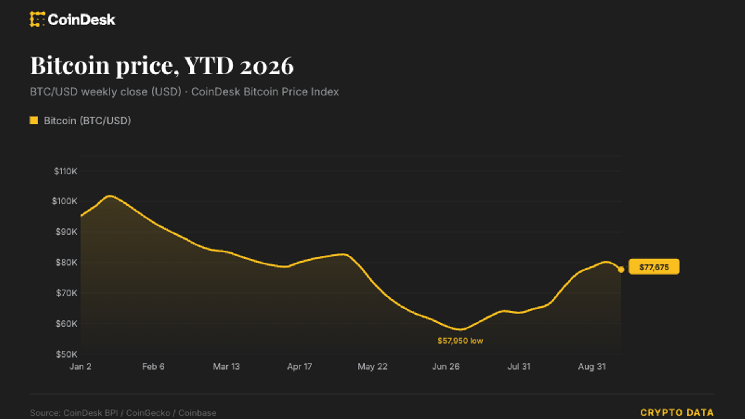

  • Bitcoin Defies Tech Selloff as AI Safety Concerns Weigh on Stocks

    Bitcoin Defies Tech Selloff as AI Safety Concerns Weigh on Stocks

    U.S. technology and artificial intelligence stocks declined in pre-market trading Monday after prominent industry leaders raised fresh concerns about the rapid pace of AI development over the weekend. While equities slid, cryptocurrencies moved higher, with Bitcoin gaining approximately 1% to $77,800 and Ether rising 1% to $2,500.

    AI Leaders Urge Caution on Development Speed

    Anthropic CEO Dario Amodei called for the industry to slow development to allow safety measures to catch up. OpenAI CEO Sam Altman and Elon Musk, whose xAI developed Grok, voiced agreement with the sentiment. The coordinated warnings from three of the sector’s most influential figures appeared to rattle investor confidence in the near-term trajectory of AI-related equities.

    IPO Developments Add to Sector Narrative

    Amid the safety debate, Anthropic reportedly selected Nasdaq for its anticipated initial public offering. Separately, Altman confirmed that OpenAI will not go public in 2026, removing a potential near-term catalyst that some market participants had speculated about.

    Global Markets React to AI Sentiment Shift

    South Korea’s Kospi index fell 3%, with SK Hynix—a key supplier of memory chips used in AI infrastructure—dropping 6%. The selloff extended to U.S. pre-market trading, where the Invesco QQQ ETF, which tracks the Nasdaq 100 index, declined 1.5%.

    Neocloud and Chipmakers Lead Declines

    Neocloud providers Nebius and CoreWeave fell 6% and 5%, respectively. Chipmakers SanDisk and Intel each lost 5%, reflecting broad-based concern across the AI hardware and infrastructure supply chain.

  • Stock Market Today: Live Updates on Market Moves

    Stock Market Today: Live Updates on Market Moves

    Traders worked the floor of the New York Stock Exchange on Aug. 25, 2026, as U.S. equities slid Thursday after domestic oil prices surged past $100 a barrel. The selloff reflected mounting anxiety that a prolonged conflict in the Middle East would fuel higher inflation and keep interest rates elevated for longer.

    Major Indexes Finish Lower

    The Dow Jones Industrial Average fell 195 points, or 0.4%. The S&P 500 declined 0.6%, while the Nasdaq Composite dropped 0.9%. The three major averages extended a losing streak to three sessions.

    Oil Prices Jump on Geopolitical Tensions

    Crude prices continued to weigh on market sentiment as the war between the U.S. and Iran entered its seventh month. U.S. West Texas Intermediate futures for October delivery climbed above $100 per barrel, while the international benchmark Brent crude for November spiked above $105 a barrel.

    Treasury Yields Hit Multi-Month Highs

    The rally in energy pushed the benchmark 10-year Treasury yield above 4.9%, its highest level since November 2023. Rising yields pressured rate-sensitive growth sectors, particularly high-beta semiconductor stocks that have led the bull market.

    Chip Stocks Lead Sector Declines

    Intel shares fell 3%, and Micron Technology declined 2%, as investors worried that higher borrowing costs and energy expenses could slow economic growth and dampen demand for semiconductors.

    Wholesale Inflation Data Fails to Soothe Nerves

    A relatively tame producer price index report did little to calm fears. The PPI rose a seasonally adjusted 0.4% in August, matching the Dow Jones consensus. On an annual basis, wholesale inflation stood at 5.4%, well above the Federal Reserve’s 2% target.

    The data arrives ahead of Friday’s closely watched consumer price index. Both gauges feed into the Fed’s preferred inflation metric, the personal consumption expenditures price index, which will not be released until after the central bank’s rate decision on Sept. 16.

    Analyst Perspective: PPI Inconclusive, Oil and Yields Raise Stakes

    “The PPI release itself was inconclusive, in that doesn’t really help to settle the question of ‘hike or no hike’ from the Fed next week, but WTI oil prices surging back above $100 and Treasury yields hitting new highs is certainly raising the stakes for investors ahead of tomorrow’s crucial CPI report,” wrote Stephen Coltman, head of macro at 21shares.

    Fed Hike Probability Climbs to 74%

    Fed funds futures were last pricing in a 74% likelihood of a quarter-point rate increase following next week’s policy meeting, according to the CME FedWatch Tool.

    Treasury Buyback Announcement Adds to Pressure

    The market’s three-day slide accelerated after the Treasury Department said it would buy back up to $6 billion in longer-term debt — triple the usual amount. Less than a month earlier, the Treasury had announced it would more than double the size of its $2 billion government debt repurchase operations.

    — CNBC’s Jeff Cox and Spencer Kimball contributed to this report.

  • Wall Street Analysts See 28.17% Upside for Credo Technology Group (CRDO): Here’s How to Trade

    Wall Street Analysts See 28.17% Upside for Credo Technology Group (CRDO): Here’s How to Trade

    Credo Technology Group Holding Ltd. (NASDAQ: CRDO) closed its latest trading session at $226.19, up 3.6% over the past four weeks. Based on short-term price targets from Wall Street analysts, the stock may still have significant upside potential.

    Wall Street Analysts See 28.2% Upside for CRDO

    The average price target for Credo Technology is $289.91, implying potential upside of 28.2% from the latest closing price. The consensus is based on 18 short-term price targets ranging from $215.00 to $350.00, with a standard deviation of $35.68.

    The lowest estimate points to a possible 5% decline from the current price, while the highest target suggests potential upside of 54.7%. The standard deviation provides insight into the degree of agreement among analysts: a smaller figure generally indicates that estimates are more closely clustered.

    Although consensus price targets are widely followed by investors, relying solely on this metric when making an investment decision can be risky. Analysts’ ability to set accurate and unbiased price targets has long been questioned.

    Still, the attractive consensus target is not the only factor supporting a potentially positive outlook for CRDO. Analysts also appear to agree that Credo Technology could report stronger earnings than previously estimated. While rising earnings estimates do not indicate how much a stock might gain, historical research suggests that positive earnings estimate revisions can help signal potential upside.

    Price, Consensus and EPS Surprise

    Zacks Price, Consensus and EPS Surprise Chart for CRDO

    What Investors Should Know About Analysts’ Price Targets

    Research from universities around the world suggests that price targets are among the many types of stock information that can mislead investors more often than they guide them. Empirical studies show that price targets set by multiple analysts, regardless of how closely they align, rarely indicate where a stock will actually trade.

    Wall Street analysts typically have extensive knowledge of a company’s fundamentals and its exposure to economic and industry conditions. However, many analysts also set overly optimistic price targets.

    One reason is that firms may seek to generate interest in companies with which they already have business relationships or hope to work in the future. These business incentives can contribute to inflated analyst price targets.

    Even so, a tight grouping of price targets, reflected by a low standard deviation, indicates that analysts have a relatively high level of agreement about the potential direction and scale of a stock’s price movement. This does not guarantee that the stock will reach the average target, but it can provide a useful starting point for further research into the fundamental factors that could influence the shares.

    Investors should not completely disregard analyst price targets, but making an investment decision based only on them could lead to disappointing returns. Price targets should therefore be viewed with considerable skepticism.

    Why CRDO Could Still Have Upside Potential

    Analysts have become increasingly optimistic about Credo Technology’s earnings outlook, as shown by broad upward revisions to EPS estimates. That trend could provide a fundamental reason to expect further gains in the stock. Empirical research has found a strong relationship between changes in earnings estimates and near-term stock-price performance.

    The Zacks Consensus Estimate for the current year has increased 1% over the past month. One estimate has moved higher, while no analysts have issued a negative revision.

    Credo Technology currently carries a Zacks Rank #2 (Buy), placing it among the top 20% of more than 4,000 stocks ranked by Zacks using four earnings-estimate-related factors. Given Zacks’ externally audited track record, the ranking may offer a more conclusive indication of the stock’s near-term upside potential.

    You can see the complete list of today’s Zacks Rank #1 (Strong Buy) stocks here >>>> .

    While CRDO’s consensus price target may not reliably indicate how much the stock could gain, the direction implied by the target may still provide a useful guide.

    Want the latest recommendations from Zacks Investment Research? Today, you can download 7 Best Stocks for the Next 30 Days. Click to get this free report

    Credo Technology Group Holding Ltd. (CRDO): Free Stock Analysis Report

    This article originally published on Zacks Investment Research (zacks.com).

    Zacks Investment Research

    Source: finance.yahoo.com